Contemplative Inquiry

This blog is about contemplative inquiry

Tag: Paganism

IOLO MORGANWG: 3 RAYS OF AWEN

According to Kristoffer Hughes, the three ray symbol for Awen, as it appears today: “is mostly inspired by the efforts of one individual, a Welsh bard of the late eighteenth and early nineteenth centuries called Edward Williams, who took the bardic name of Iolo Morganwg*”.

Hughes goes on to tell us something of Iolo’s story: “I touch briefly on the Awen-filled story of this remarkable individual, for it sings loudly of the power of Awen to transform, not just an individual, but the future. His symbol for the Awen has become directly associated in Neopaganism with Cerridwen, making an exploration of his influence a valuable exercise in our understanding of Awen in the modern world.

“Iolo Morganwg was a stonemason from South Wales, an imaginative, poetic genius who made elaborate claims of ancient documents and wisdom that he had discovered and preserved for the world to see. Blighted by ill health, he was addicted to the narcotic laudanum for over fifty years of his life, spending most of his days in a drug-induced state, and yet poems in their thousands fell from his frenzied mind onto scraps of parchment. He composed elaborate poetry, inspired prose, but falsely claimed that some of the poems were written by ancient bards. … And yet through all of the accusations of forgery and deception, Iolo dreamed something into being that those in the different streams of Celtic spirituality today, both monotheistic and polytheistic, are descendants of. He dreamed a new mythology into being and planted seeds that would gestate a profound wisdom in the future.

“In a time of great social crisis, he dreamed an identity for the Welsh that took as its foundation that the bardic tradition of Wales was a direct line to the ancient Druids of Britain, who he perceived as the true ancestors of the Welsh. He longed for his people to connect to the might and power that the Romantic movement imagined the Druids to express. And, in doing so, he deliciously imagined a new identity that the Welsh could be proud of: he blended fact with fiction, legend with history, myth with reality. His bewildering array of notes and journals continue to baffle modern academics who strive to make sense of this enigmatic figure.”

Reflecting on Iolo’s story, Hughes concludes that, “in a profoundly logocentric world where new thoughts and ideas were expected to be substantiated by manuscripts, Iolo simply invented a past that we, as the Welsh, could be proud of . … He carried the seeds of Awen and profoundly influenced a future he could not have imagined. In the twenty-first century, those drawn to the Cerridwen and Taliesenic mysteries (2) who may artistically express, understand, or wear the symbol of the Awen all carry the dream of Iolo Morganwg. He is testament to the Awen’s consistent stream and how it too changed its countenance to meet the needs of different people at different times. The period he occupied was a cauldron of new ideas, with the new era of bardic tradition in its infancy and occult fascination among the learned of the time increasing in popularity”.

(1) Kristoffer Hughes Cerridwen: Celtic Goddess of Inspiration Woodbury, MN: Llewellyn Publications, 2021. See also my review at: https://contemplativeinquiry.blog/2021/03/26/book-review-cerridwen-celtic-goddess-of-inspiration/

(2) See also: John Matthews Taliesin: Shamanism and the Bardic Mysteries in Britain and Ireland London: Aquarian Press, 1991. It includes a complete English translation of the Hanes Taliesin (Story of Taliesin) and English translations of the major poems of Taliesin Pen Beirdd from The Book of Taliesin as well as other medieval Welsh and Irish material. In the Taliesin story, the three rays of Awen become three drops from the brew in Cerridwen’s cauldron).

*NOTE: Iolo Morganwg (=Ned of Glamorgan, his native county). In his own words, the Awen sign /|\ is “a symbol of God’s name from the beginning”. He goes on to say: “from the quality of this symbol proceed every form and sign of voice, and sound, and name, and condition”. It is when God pronounced his Name that “all the universe leapt together into existence of life, with the triumph of a song of joy. The same song was the first poem that was ever heard, and the sound of the song travelled as far as God and His existence are, and the way in which every other existence, springing in unity with Him, has travelled for ever and ever. And it sprang from inopportune nothing; that is to say, so sweetly and melodiously did God declare his name, that life vibrated through all existence, and through every existing materiality”. J. William Ab Ithel (editor) The Bardas of Iolo Morganwg: A Collection of Original Documents, Illustrative of the Theology, Wisdom, and Usages of the Bardo-Druidic System of the Isle of Britain Forgotten Books, 2007 http://www.forgottenbooks.org (First published 1862, from notes and journals left by Iolo on his death at 79 years of age in 1826).

THE COMING OF AUTUMN

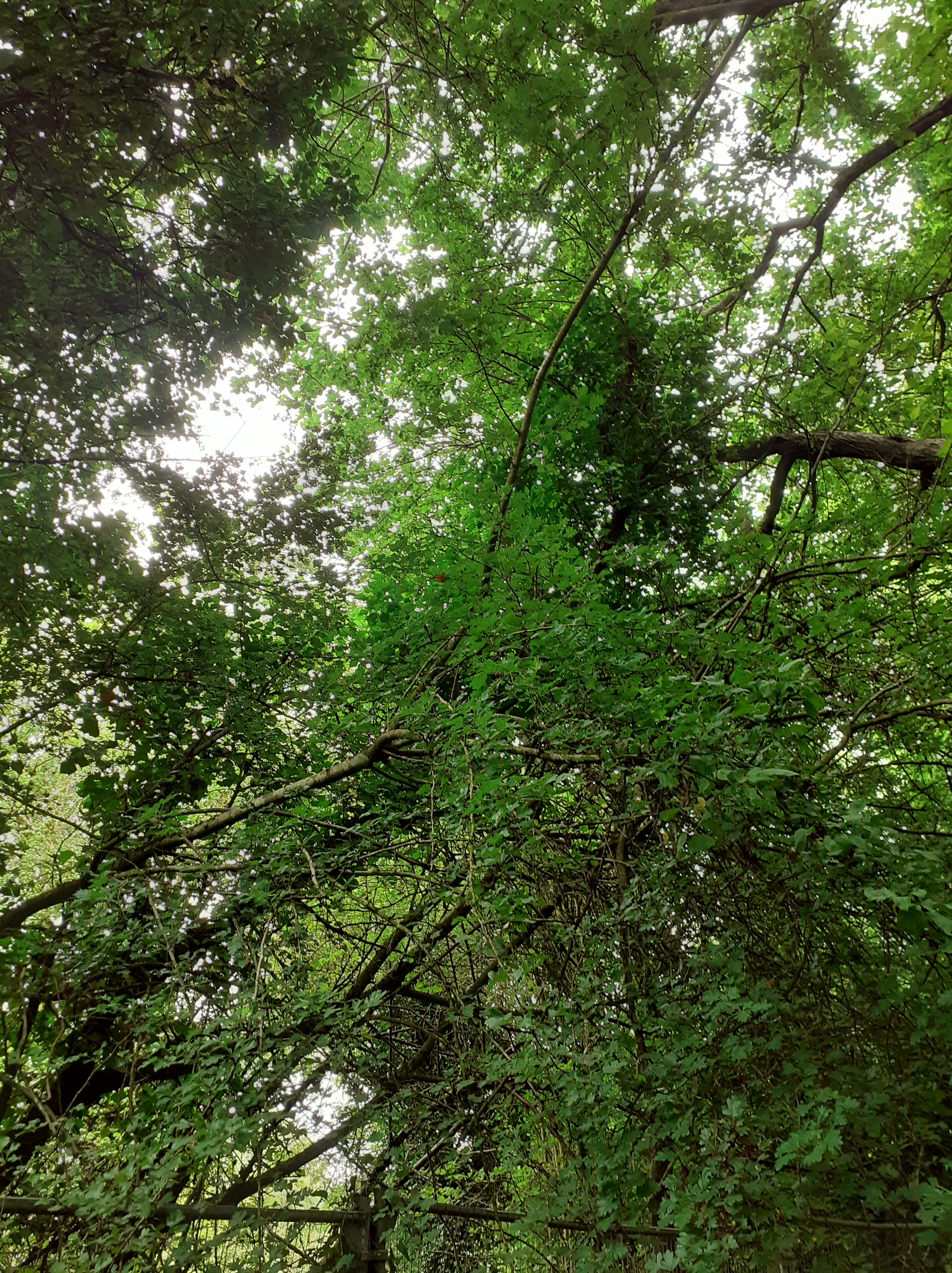
Walking in the woods yesterday I saw the coming of autumn, in the sky and in the trees. I felt it too, and not just in my physical sensation of coolness. I experienced a mood of loss and ending, not limited to the summer of 2021.

The natural wheel of the year, where I live, has classically been one of soft transitions. Our seasons have merged gently into each other, with September as a modified extension of summer. Leaves gently turn, but there is not much of a fall. For much of my life I enjoyed the sense of a predictable pattern in the the turning of the wheel. That sense has eroded in recent years and has now reached vanishing point. Hence the feeling of loss.

Summer 2021 seemed to die in August, after a short and faltering life. It may be succeeded by a once unseasonable hot spell, or it may not. Considering the effects of the climate crisis in other parts of the world, this is hardly dramatic. But this weird summer season, including a background awareness of developments elsewhere, has ended my already weakened feeling of security. The phrase ‘winds of change’ comes to mind. I think, what next? And when?

I feel challenged to be open to whatever happens, without obsolete expectations to confuse me. In the state of openness, I find that an inner peace and clarity are present. They act as my guides through a shifting, changing, world.

PEACE AS PURPOSE

This image, the 3 of Wands from The Druidcraft Tarot (1), is one of purposeful effort beginning to be rewarded. The process is gradual but the promise is there. A young man looks with confidence at the world in front of his eyes. He seems at ease with himself, a young man resting in peace.

He has never really died in me, despite the ups and downs of life. Indeed I am better connected with him now than when I was actually young. I sometimes bubble up with an energetic optimism unlinked to any particular context. Delusional? I don’t think so. It is more the sense of a true nature, ageless and timeless, sustaining me in every time and season.

The image on the card suggests a wider resiliency of nature and organic growth. The purpose and intention of the fire element is in alliance with the regenerative powers of the earth. The sun is seen indirectly in the health of the plant kingdom, and indeed of the young man himself.

I consider my own purpose at this time of my life. I think of some old Druid liturgy that I have re-written for my own practice, without much changing the original meaning: “Deep within my innermost being I find peace. Silently, within the stillness of this space, I cultivate peace. Heartfully, within the wider web of life, may I radiate peace”. I understand ‘peace’ to be an active agent in human affairs and not a passive or negative absence of conflict. It is a value, and stance, to understand and act on more deeply over time.

At the level of personality, I do not consider myself a natural for this form of witnessing and action. I am a work in progress, to say the least. Hence the importance of formal spiritual points of reference and a formal practice. I need these kinds of support. Writing this blog helps too. I see it as contributing to a peer community conversation. This community is not closely defined and is subject to change. It does not, in itself, provide any identity or role other than the reading and writing of posts. But it is good to have a purpose working within it. I aim, overall, heartfully to radiate peace, at least at the level of discourse and values.

(1) Philip and Stephanie Carr-Gomm The DruidCraft Tarot: Use the Magic of Wicca and Druidry to Guide Your Life London: Connections, 2004. Illustrated by Will Worthington.

DION FORTUNE: THE SEA PRIESTESS

I like to attune myself, imaginally, to significant moments in time, place and culture. I have always done this but I now think of it as an aspect of my Druidry. I have become more conscious about it.

Here I am contemplating an alignment of 1930’s Britain, Brean Down on the North Somerset coast (Bell Head in the book), and the occultist Dion Fortune. I am especially thinking of her determination to “bring back into modern life something that has been lost and forgotten and that is badly needed”. Rather than being a review of her book The Sea Priestess (1), this post is a reflection on spiritual ancestry, and an acknowledgement of her project’s success. As the publisher of the 2003 edition happily notes, “The Sea Priestess is a classic occult teaching novel with romantic overtones, and a foundation work for modern Wicca, paganism, and ritual magic”.

Gareth Knight outlines the main theme in his foreword to the 2003 edition. “The story concerns a high initiate, Vivien Le Fay Morgan – or Morgan Le Fay as she comes to be called – who is about to undertake a major work of sea and moon magic for which purpose she needs to find a suitable location upon which to build a temple complete with living accommodation. At the same time she needs to find a man suitable to train as her assistant in the magical work. With commendable economy of means, she kills two birds with one stone by selecting a local real estate agent, Wilfred Maxwell, who has the necessary professional contacts to find a location, together with sufficient skills to help her refurbish and redecorate it appropriately. He also has the temperament and personal circumstances that can make him a capable, if unlikely, magical apprentice.”

Wilfrid and Morgan get to know each other at weekends where he is busy turning an old army fort at the point of Bell Head, named Bell Knowle, into Morgan’s temple. They become close. But Morgan’s purpose is not personal. Working under the aegis of the Priest of the Moon, a discarnate being, she seeks to connect herself to “the ultimate spiritual source, known to Qabalists as the Great Unmanifest, the formless power behind the fount of creation itself. This in turn relates to the great zodiacal tides of the precession of the equinox, whereby in the coming Age of the Aquarius the old gods will be coming back, after another manner. Her own part in this is to make the way clear for the realization of the divine feminine as part of the cult of the Great Goddess, who, as our Lady Isis, comprises all goddesses – of the corn, of the dead, of the sea, of the moon”.

Morgan needs Wilfrid’s help in performing a ritual that depends on an exchange of sexual energy without involving physical sex. He needs to be in love with her, or at least infatuated, for the ritual to work. But there is to be no relationship thereafter. Morgan is completely honest about this with Wilfrid, but he finds it too difficult to take in. After the ritual, and the great storm and destruction of the temple that follows, Morgan disappears. Wilfrid is left with a brief letter re-emphasising that there is to be no further contact between them. There is no forwarding address. Wilfrid falls to pieces.

But this is not the end. Morgan has scrupulously adhered to an ethic of reciprocity in work of this kind. She has subtly nudged events so that he makes a connection with a young woman – his secretary at the estate agency – and they marry. There are pragmatic reasons for this too. Molly needs to escape from a violent and chaotic step father. Wilfrid (now aged 36) needs to stop living with his mother and older sister; he also needs to sort out his post-ritual depression and alcohol problems. Marriage as a solution is enabled by Wilfrid’s domestic neediness and Molly’s compulsive care-giving, shaky emotional foundations for a life-partnership. Morgan’s contribution is to lay the ground work for greater possibilities. She has already arranged to leave her magically imbued sapphires for Wilfrid’s wife to be.

After their marriage, the newly weds move out of town to Bell Head, where Morgan’s caretakers had kept a small farm. Morgan’s temple is ruined, but they inherit her books and magical working records. These influences inspire Molly to start “talking to the moon”. She begins to take on her own priestess role. Wilfrid recollects: “it was all different here from the fort, and yet it was taking on a life of its own. There was more of earth and less of the sea than out on the point, just as there was more of earth in Molly than in Morgan; yet it was cosmic earth, and I remember that the Great Goddess ruled both moon and earth and sea. Molly would never be a Sea Priestess, like Morgan, but there was awaking in her something of the primordial woman, and it was beginning to answer to the need in me.”

At the end of the book, on a midsummer’s night, the couple light a fire of cedar, sandalwood and juniper. Such a fire is known as a Fire of Azrael, first prepared by Wilfrid when working with Morgan. It enables trance states and communication with the ‘inner planes’, especially if blended with moonlight. Molly receives an extended transmission from the Priest of Moon, and her subtle sexual energies are enlivened. For “the Astral plane is ruled by the moon and the woman is her priestess; and when she comes in her ancient right, representing the moon, the moon-power is hers and she can fertilise the male with vitalising magnetic force”. Molly initiates the consummation of the couple’s magical relationship. They have now received the touch of Isis and the gates of the inner life are open.

I experience The Sea Priestess now, on the third of three readings separated by many years, as a voice from long ago. In some ways it isn’t. My parents were born within a few years of the fictional Molly, and had nowhere near this sense of gender, sexuality or spirituality, let alone magic. I suppose my own sense of temporal distance is partly due to the dynamic evolution of her influence, and that of others like her, in successive generations – not least in the thirty years since I first read The Sea Priestess. If she now seems old-fashioned, it is a back-handed tribute to the creative power she helped to unleash. Before we think of her being old-fashioned even today, we have to ask ourselves: compared to whom?

(1) Dion Fortune The Sea Priestess Boston, MA & York Beach, ME: Weiser, 2003 (Copyright 1935 Society of the Inner Light)

A TAROT CONTEMPLATION

An attentive juggler keeps two coins in the air. As I contemplate the coins, they speak to me of well-being, health, and blessing, rather than every day money. They are coins of a different order, and they draw me into the card.

I was glad to pick the two of pentacles, from The Druidcraft Tarot (1), in my first use of cards for many months. I knew I wanted only one card in the moment of picking it up. The image, when I saw it, gave me the pleasure of recognition, of something about this feeling right for me. A relaxed juggling of no more than two coins seemed spacious and doable. I thought, ‘I can walk into the picture and be the figure on the shore-line. I can put myself into this flow of movement and attention with these coins’.

Now within the image, I notice that I have my back to the sea, and I assume a prior knowledge that the boats are friendly and capable of outrunning bad weather. I experience pentacles as having a protective resonance, so long as I am active in my own protection. I feel that, somehow, my juggling of the coins is a part of that protection, and protects the boats as well. I do not have a story about why this should be the case, but I trust that it is. That is all I need to do.

Bringing myself back into my normal state, I feel trust in my current direction, even though I cannot fully articulate it. I feel trust in my existing resources, of which the Tarot and my ease with it are two. I think about moving between different states of attention, in ways that are spacious and not overloaded. My contemplative inquiry is not now about asking fundamental questions or exploring new avenues. It seems more to be about balance and flow and living from an underlying stillness.

(1) Philip and Stephanie Carr-Gomm The DruidCraft Tarot: Use the Magic of Wicca and Druidry to Guide Your Life London: Connections, 2004. Illustrated by Will Worthington.

HIGH SUMMER 2021

It is some time since the solstice. Where I live, the time between sunrise and sunset has shortened by about 20 minutes. Though the change is still slow, it is noticeable now. But I do not yet feel a pull towards Lughnasadh/Lammas. I took these pictures on 11 July, and this is its own time, a time of abundance and ripening. They give me the sense of a summer that has kept its promise and is managing to mature despite a year of patchy weather.

At this stage, the willows below, early to leaf, remain majestic in their abundance – whilst hinting at a tiredness that will manifest in late summer, when energy starts to withdraw, and turn inwards.

But this isn’t the case with the treescape as a whole. In the woods I continue to find the fresh green of a vigorous life energy. It is the time when I get the strongest sense of a canopy, even in a relatively small and modestly wooded space. It hints at the glories of old forest, even though it isn’t one.

Whilst there is a sense of flora moving into new stages of their cycle, the process is gradual. There is time and leisure for slow change. There is no sense of having to be perfectly one thing and then, immediately, perfectly another.

Above all. I notice subtle differences in shape and colour within a setting of predominantly green growth. My gaze is drawn by intricacies of variation, contrast and patterning within this always astonishing display of life, and its natural will to be and become.

In mid-July, life rests in its moment, with harvesting some way off.

TREE MANDALA: GORSE

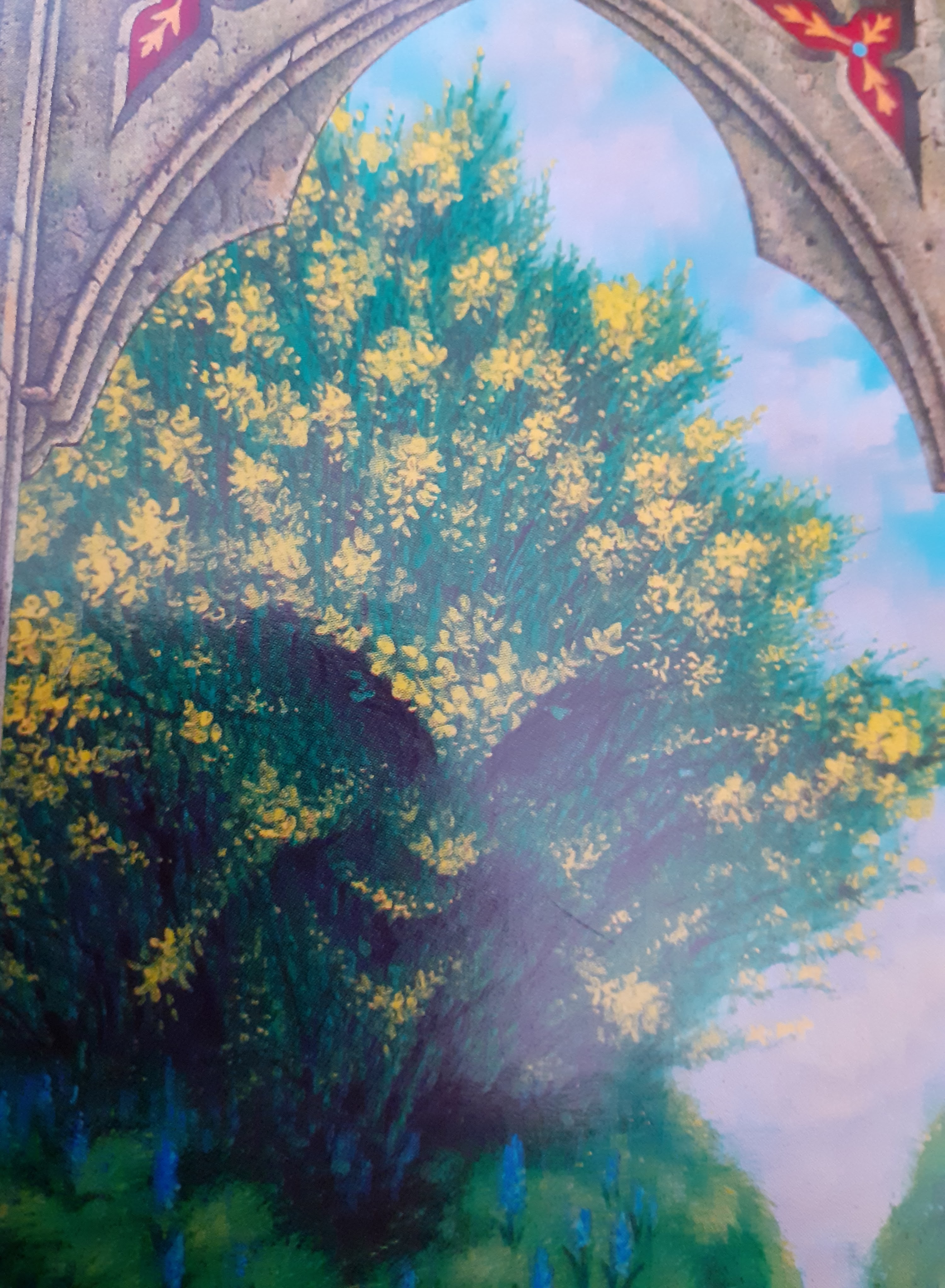
In my wheel of the year tree mandala (1), gorse covers the period from 9-31 July. It is the last tree of the summer quarter, handing over to apple at Lughnasadh/Lammas on 1 August. The illustration is from The Green Man Tree Oracle (2).

I know from my childhood that gorse can make a tame, gently sloping hill seem wild and edgy. Navigating through gorse requires an eye to self-care. Flowering gorse is not confined to summer, but for me it is anchored to summer in memory. Seen from afar, gorse was a vivid harbinger of the summer holidays with days of warmth (rising to heat) and freedom to roam. It carried a hint of adventure and disinhibition. Sometimes the promise was fulfilled. Sometimes there was a hot heavy dullness broken by only storms, and a degree of frustration. July days were unpredictable.

Gorse (ogham name Onn) was sacred to the Irish god Lugh, and thus to light, to all manner of skills, and to the fire in the head of ecstatic creativity. Lugh has a trickster aspect, and can be seen in certain lights as more a god of lightning than of the sun. He has a cousinship with the Brythonic Lleu Llaw Gyffes, the warrior magician of the fourth branch of the Mabinogi. He has also been linked to the Norse Loki, for tricksterism is an aspect of the smouldering fertile mind.

Gorse makes good fuel and so has an obvious role in fire festivals. In Brittany, 1 August was marked by the Festival of the Golden Gorse and gorse has has strong associations with the faery folk. It is a plant of power. We cannot make assumptions about how we stand with it. A wary respect might be wise.

NOTE: This post brings to an end a year in which I have featured the sixteen trees in this mandala. I began on 16 July 2020 with an out-of-sequence Rowan (3), because I had had a vivid encounter with a rowan tree in the woods. (Its time in the mandala is 9-31 October.). Then I moved on to apple (4) and blackberry (5). From the Autumn Equinox (1) the enterprise became more systematic. As a blogger, I won’t be repeating the cycle in the same way in the coming year. Once for the record feels enough.

(1) This mandala is based on my personal experience of trees in the neighbourhood as well as traditional lore. Moving around the summer quarter from Beltane, 1 May, the positions and dates of the four trees are: Hawthorn, south-east, 1-23 May; Beech & Bluebell, south-south-east, 24 May – 15 June; Oak, south, 16 June – 8 July; Gorse, south-south-west, 9 – 31 July. The autumn quarter then starts with Apple at Lughnasadh/Lammas. For a complete list of the sixteen trees, see https://contemplativeinquiry.blog/2020/autumn-equinox-2020-hazel-salmon-awen/

(2) John Matthews & Will Worthington The Green Man Tree Oracle London: Connections, 2003

(3) https://contemplativeinquiry.blog/2020/rowan/

(4) https://contemplativeinquiry.blog/2020/three-trees/

(5) https://contemplativeinquiry.blog/2020/mr-bramble/

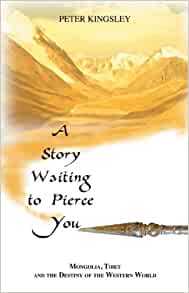
BOOK REVIEW: A STORY WAITING TO PIERCE YOU

Peter Kingsley is a scholar of early Greek philosophy, and A Story Waiting to Pierce You (1) links Pythagoras (ca 590-470 BCE) with central Asian shamanism. Pythagoras got most of his own education outside of the Greek cultural sphere, and Kingsley focuses here on his relationship with Abaris the Hyperborean*, using ancient texts to guide him.

Abaris is not a personal name. It places its bearer as an Avar. The Avars are one of the peoples ancestral to modern Mongols. They still and still live under their older name in Dagestan, a Russian republic in the northern Caucasus. Kingsley’s Abaris walked, or in some sense flew, from his homeland to meet Pythagoras. He carried a golden arrow in his hand, though in a way it carried him. For Abaris was a wind walker, and on a mission.

Kingsley explains, using evidence from pre-Buddhist Tibet (where the practice has survived within Buddhism) as well as Mongolia: “Wind walkers could go anywhere; cover enormous distances with apparently effortless ease; find their way over every conceivable obstacle and straight past the most impassable landscapes … in one unbroken trance, holding their god inside them. That single-pointed focus, just like the intense attention required of an arrow maker or demanded of someone shooting arrows at their mark, had to be totally undisturbed”.

Abaris had been shown by the god within him that in Pythagoras he would find a living incarnation of the same god. Greek texts name the god as Apollo –  understood here primarily as a god of healing, trance and prophecy. Abaris gave his arrow, as planned, to Pythagoras, in recognition of his true nature. Through Pythagoras, he hoped, the Greek world would be healed and purified.

Pythagoras had considerable success. He attracted an enthusiastic following, and coined the term philosopher (lover of wisdom) to describe his work. He taught kindness to humans and animals and championed an honest and simple life. He believed in metempsychosis (transmission of the soul after death into a new body, human or animal), and in the explanatory power of number. But he was one teacher among others, and even his enthusiastic followers played down the influence of Abaris and his culture. It did not suit the self-image of the Greeks to recognise nomadic barbarians as possible teachers. They were not alone in this. A similar view prevailed in China.

Why does this matter to us? Because we have kept on making the same mistakes. The early stigmatisation of Hyperborean culture in the ancient world has been repeated in the stigmatisation of the cognate cultures of First Nations people in North America. The Chinese version survives in their current governance of Tibet and Xinjiang. In the spiritual domain, we still maintain a disparaging distinction between shamanism and ‘higher’ traditions. By contrast, Kingsley describes shamanism as “constantly engaged with practising respect and consideration towards all forms of life in an overall framework of concern for both visible and invisible worlds” He adds, “the fact that a transcendent realm beyond the senses happens, in the hands of most true elders and shamans, to be seamlessly interwoven with this world to the point where the two become one is a sign not of inferiority but of a far greater capacity for integration.”

A Story Waiting to Pierce You is not Peter Kingsley’s most recent book, but for me it is the most accessible, in both price and presentation. The first half is written in a simple, spacious, almost mythic style that goes straight to the heart. The second half, comprising notes, offers more than a set of references, looking at scholarly arguments and matters of interpretation. I find this arrangement a satisfying way of handling the material overall. I strongly recommend this book for people interested in the cultural history of spirituality and the issues it raises.

(1) Peter Kingsley A Story Waiting to Pierce You: Mongolia, Tibet, and the Destiny of the Western World Point Reyes, CA: The Golden Sufi Center, 2010

*Hyperborean = from Hyperborea, beyond the north wind.

MIDSUMMER STASIS 2021: A CELEBRATION

A blue sky frames quiet branches. It is the midsummer standstill in my neighbourhood – a period extending over several days. I took the picture on 23 June, in the early afternoon, a time of soft warmth and sunshine, with me able to meet it. I had been prepared to miss it this year, and was delighted when the opportunity came.

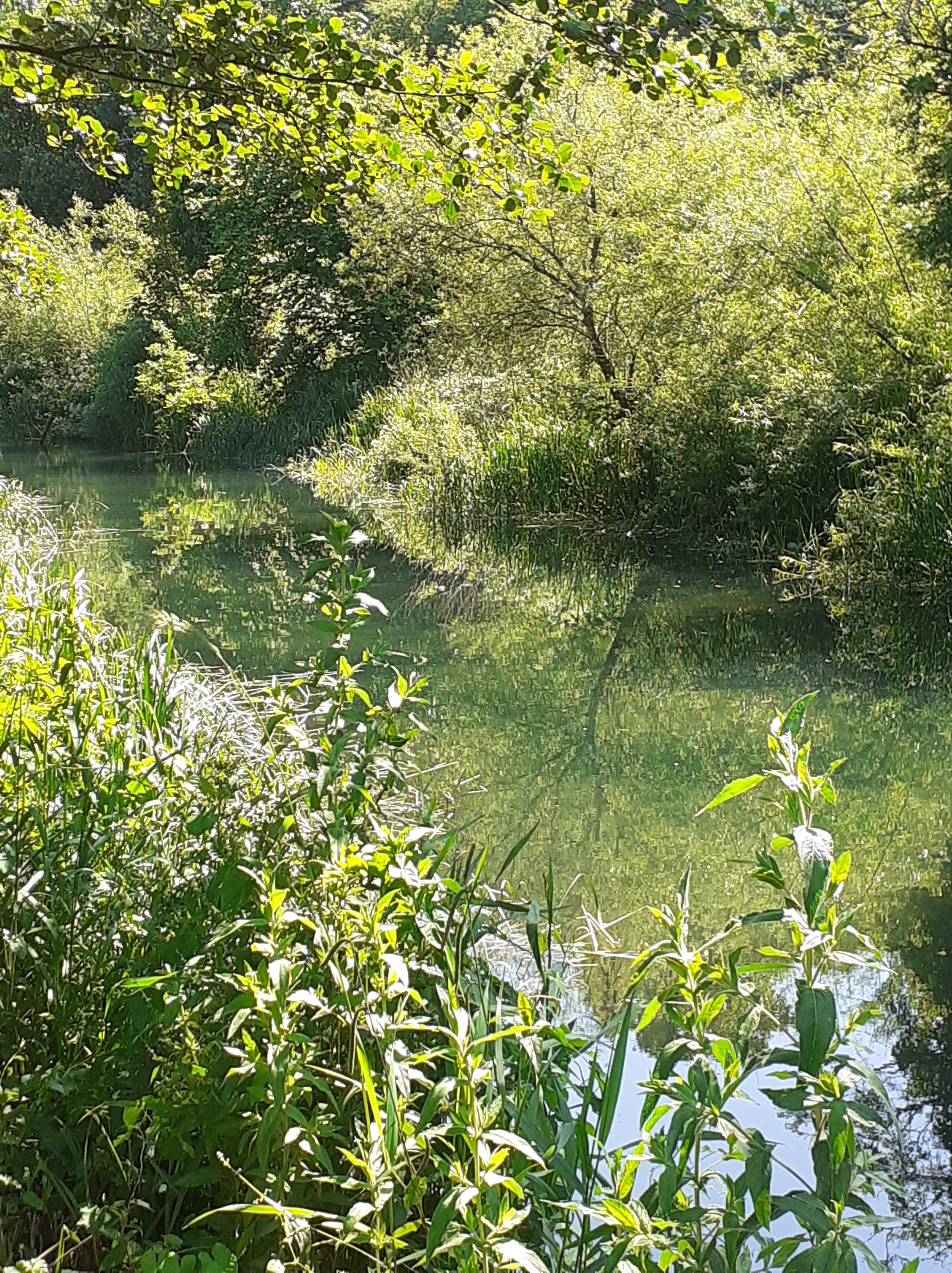
The picture below shows the play of afternoon light and shade in a semi-sheltered spot, where a footbridge crosses a stream.

The next picture makes it clear that there is substantial built environment too here – one of the things I like about this landscape – in the form of weathered railway arches visible behind the foreground green.

The nearby canal looks sleepier than the stream, as if dreaming in the lushness of the moment.

Below, water margin nettles stand out as part of the richness and fecundity of this space, calling for my attention. Clearly capable of being an irritant and seen largely as a nuisance today, the nettle was highly valued by our ancestors for food, fibre and medicine. The Druid Plant Oracle (1) describes it as “a storehouse of goodness” bearing hidden gifts. Nettle tea is widely thought of as health promoting, and modern research confirms that it is rich in antioxidants and vitamins. It is suggested that its polyphenols are helpful in managing chronic illnesses that involve inflammation. I am taking it up as a drink.

There are other, varied riches beside the path, easy to ignore, but also easy to notice and enjoy for their beauty and vitality alone.

I went for this walk without any intention of taking photographs and I travelled quite a way before I began. I felt as though the landscape was persuading me to record the day, and thus bear witness to the midsummer stasis. Yes, it happened in 2021, as it happens every year. Here is the evidence. I am glad I showed up to be part of it,

(1) Philip and Stephanie Carr-Gomm The Druid Plant Oracle: Working with the Magical Flora of the Druid Tradition London: Connections, 2007 (Illustrated by Will Worthington)

A MIDSUMMER DAY’S DREAM

This post is about a midsummer day’s dream in the the Scottish border country, a dream which included a certain kind of waking up. I have written about it before (1,2) but this is the first illustrated version. Fourteen years have passed since that day, which in many ways determined the form which my expression of Druidry would take.

I was near Melrose. The wild rose was one of many on the banks of the Tweed. In this photograph, I am on a riverside path, with my back to the river. I keenly noticed then, as I notice now, the difference between a wild rose and the more familiar cultivated ones. I love both. But I remember feeling a particular delight at the simplicity of the native flower, a sense of easy integration into habitat, and of a plant not committed to being red or white.

Looking more deeply, I have said in my earlier writing how I had a momentary experience in which, gazing at a rose, subject/object distinctions disappeared and it is as if time intersected with eternity. I have identified this with the Seeing experience more systematically explored by Douglas Harding and the community built up around his work (http://www.headless.org). This was the beginning my sense that direct experience of the world, manifesting through a form of nature mysticism, would be my way forward, eventually becoming a contemplative Druidry and the backbone of my contemplative inquiry. I experience this as a direct and simple route to stillness, presence, resting in being., and identifying with source.

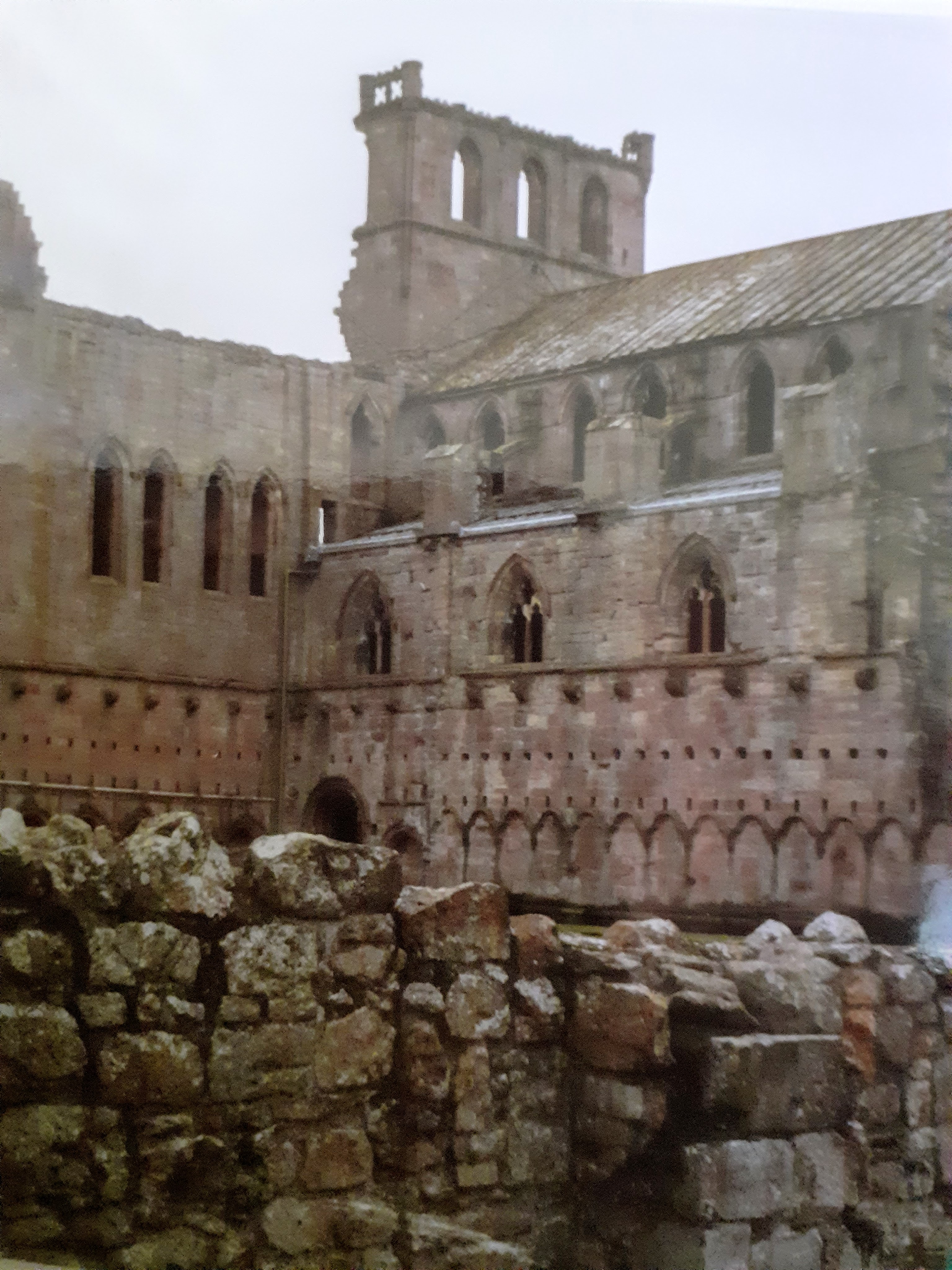
My walk amongst the wild roses had a prequel. Firstly, I had already spent time in the well-preserved ruins of Melrose Abbey. It was a building of Green Man carvings, but, sadly, neither the monks who occupied it nor the iconoclasts who abandoned it had access to the Gospel of Thomas (3) or the words:

“His disciples said to him:

‘When will the dead be at rest?’

‘When will the new world come?’

He answered them:

What you are waiting for has already come,

but you do not see it.” (3)

Here I see the abbey as a solid, material buildings, built with love and care. Even today, it belongs in its landscape, as much as the Tweed or the nearby Eildon Hills, with a semi-wild orchard of apple, pear and cherry trees. What I haven’t written before, in times when I was busy making distinctions between available paths, is that time and eternity intersect in this place too. But, on the day in question, I didn’t have that experience in the abbey grounds. I had it only among the wild roses, down by the river.

The Eildon Hills are also part of the same landscape, indeed a more primal one. But they are fairy hills and they can hide themselves. On that day, they hid from me. There was no invitation – or, rather command – from the Queen of Elfland, who had once ridden out to summon Thomas the Rhymer to her service:

“But you maun go wi’ me now Thomas

True Thomas ye maun go with me

For ye maun serve me seven years

Through weel or wae as may change to be.” (4)

At midsummer in 2007 I was looking for a spiritual home that offered both depth and simplicity. The grim half hidden hills were not appealing to me and I was closed to their magic, with an invitation or without one. I did not want to court danger by ascending into their conceivably treacherous mists. The low road by the river was the one for me.

It was a good decision, and good came of it. But I do also understand that on a different day, those hills could be seen in a different light. I do not now feel constrained to make a neat choice between a broad road, a narrow road and a bonny road. Two cycles of seven years on, well rooted in a nourishing life and practice, I find myself in a more open space, wondering what lessons this Otherworld might yet offer.

(1) James Nichol Contemplative Druidry: People, Practice and Potential Amazon/Kindle, 2014 See: https://www.amazon.co.uk/contemplative-druidry-people-practice-potential/dp/1500807206/

(2) https://contemplativeinquiry.blog/2019/07/16/seeing-contemplative-druidry/

(3) The Gospel of Thomas: the Gnostic Wisdom of Jesus (Translation from the Coptic, introduction and commentary by Jean-Yves LeLoup. English translation by Joseph Rowe. Foreword by Jacob Needleman) Rochester, VT: Inner Traditions, 2005

(4) R. J. Stewart The Underworld Initiation: A Journey Towards Psychic Transformation Wellingborough: The Aquarian Press, 1985

Earth Eclectic

music that celebrates Earth and speaks to the heart

Sarah Fuhro Star-Flower Alchemy

Follow the Moon's Cycle

Muddy Feet

Meeting nature on nature's terms

Rosher.Net

A little bit of Mark Rosher in South Gloucestershire, England

Becoming Part of the Land

A monastic polytheist's and animist’s journal

selkiewife

Selkie Writing…

Charlotte Rodgers

Images and words set against a backdrop of outsider art.

Prof Jem Bendell

living purposefully during metacrisis and collapse

Towint

The pagan path. The Old Ways In New Times

The Druids Garden

Spiritual journeys in tending the living earth, permaculture, and nature-inspired arts

The Blog of Baphomet

a magickal dialogue between nature and culture

This Simple Life

The gentle art of living with less

Musings of a Scottish Hearth Druid and Heathen

Thoughts about living, loving and worshiping as an autistic Hearth Druid and Heathen. One woman's journey.

Wheel of the Year Blog

An place to read and share stories about the celtic seasonal festivals

Walking the Druid Path

Just another WordPress.com site

anima monday

Exploring our connection to the wider world

Grounded Space Focusing

Become more grounded and spacious with yourself and others, through your own body’s wisdom

The Earthbound Report

Good lives on our one planet

Hopeless Vendetta

News for the residents of Hopeless, Maine