Contemplative Inquiry

This blog is about contemplative inquiry

Tag: Paganism

BOOK REVIEW: WHEN A PAGAN PRAYS

jhp5322da8f27f31Highly recommended When a Pagan Prays by Nimue Brown is an ambitious book, and a courageous one. On my reading it blends two voices. The first offers a cool appraisal of prayer by a Pagan Druid strongly influenced by existentialist philosophy. It tells us that value and meaning are not written in the stars: we have to provide them for ourselves, and it’s our responsibility as self-aware humans to do so. The second voice describes a personal journey, essentially a recovery story centred on re-connection with the “numinous”. This leads to a re-frame of scepticism about prayer and a hard-won willingness to say: “I like prayer. I’m not angry with it any more. I’ll keep doing it, keep asking and searching, doubting and wondering”.

I will start with the second voice, for me the predominant voice of the book, though it takes a while to be heard. This is at least in part because of the author’s decision not to make retrospective changes to early chapters in which this “somewhat agnostic Druid took an academic interest in prayer” and had not yet found that this “wasn’t going to work”. The shift came when she began an experimental practice and stayed with it long enough for it to bear fruit. She was helped by Thich Nhat Hanh’s view of how prayer affects us: “when love and compassion are present in us, and we send those outwards, then that is truly prayer”. This allowed a move away from an originally limited framing of prayer as petitionary prayer to named Deity/Deities) into something more spacious and allowing. As a Druid, she was also partly influenced by the idea of kami – the spirits or phenomena revered in Japanese Shinto. As spirits of the elements in nature, or ancestors, or animals, creationary forces in the universe, part of nature and not separate from it, such beings seemed on a scale approachable through attunement, potentially available for conversation.

At night and on the edge of sleep, the author decided to see what happened when she opened her heart and sought peace with herself. She wasn’t seeking “grace or purity”, but “wholeness, wellness, connection”. Prayer became “an act of opening awareness”, of being open to the numinous, open to the divine. She stood before the unknown, holding her mind in a state of readiness, not expecting coherence, in a place that is perhaps beyond both doubt and belief. And she was thus willing, both to say “my prayer has had real and discernable effects for me” and that “this proves nothing”. In the end she says: “there are aspects of being that cannot be usefully discussed in terms of ‘realness’. That may be where the gods live”. A voice that at first has been buried, and then emerged in a hesitant way, can now celebrate re-connecting with the felt numinosity of early life, able to let go of the “defensive rationalism” that for a time played a necessary role.

The rational voice, the first voice, still has its place. This book isn’t all personal story. It considers the nature of prayer, the ethics of prayer, the social functions of prayer, and practicalities of prayer. It looks at the relationships between prayer and ritual, prayer and magic, and the idea of life itself as prayer if lived prayerfully. The author thinks through prayer as a concept (or set of related concepts), and its context, and how most effectively and ethically to pray. This voice too is an honest voice. It does not make assumptions, or hypnotise the reader into agreement. We are asked to think and reflect. In the end, the first voice becomes the servant of the second. It’s questioning both demands and enables the integrity of the author’s personal experiment in prayer. The resulting fruits of practice, and the conclusions of the book, are owed to the presence of both voices, and the author’s willingness to be loyal to them both through a time when they were as yet unreconciled.
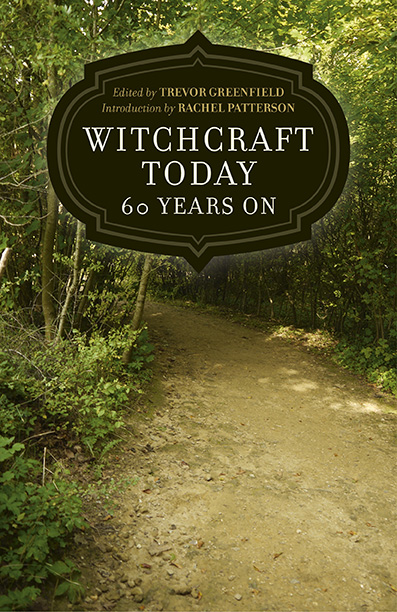
BOOK REVIEW: WITCHCRAFT TODAY – 60 YEARS ON

jhp530b85f08e66fThis is a timely addition to Pagan literature, highly recommended to anyone interested in the modern heritage of witchcraft, paganism and new (or new old) spiritual movements more generally. This book celebrates the 60 years since the publication of Gerald Gardner’s Witchcraft Today in 1954, affirming the confidence, dynamism and increasing openness of this growing tradition from a diverse range of insider perspectives.

The book is divided into two parts. The first, ‘Forms, Themes and Values’, begins with an account by Philip Heselton of how Gardner came to write Witchcraft Today. It goes on to look at ten specific forms of modern witchcraft that diverge from Gardner’s own, starting with Alex Sanders and going on to look at more radical departures like  Seax Wica and the feminist Dianic tradition. Some of the other paths described are less formal and ceremonial than the original models. Some are group based and others solitary.

Some can be distinguished from witchcraft altogether (the Egyptian Magical Tradition and Hekatean practice based on the approach of the Chaldean Oracles, to name two). The same issue arises at the end of the book, where a contributor talks about a journey through an Ovate Grade training in the Order of Bards, Ovates and Druids (OBOD).  In each case, it matters to the practitioner that they are practising these traditions as a form of witchcraft.  Their inclusion in the book affirms the value of self-identification in spirituality and adds to an overall feel of inclusiveness. Any question would be about the potential weakening of the term witchcraft itself, in a context of such porous boundaries.

Part 1 also includes a chapter on the male experience of witchcraft and ends with one on ‘Witchcraft Tomorrow’ by David Salisbury, which demonstrates optimism about future possibilities and explores the issues of community building and leadership. Common themes in Part 1 include tensions between ‘preservation’ and ‘invention’ in lineage development, and ways of reconciling them. Common values include an avoidance of evangelism and a commitment to the ultimate autonomy of the practitioner.

Part 2, ‘Journey on a Crooked Path’, presents ten personal journeys.  It is particularly good at describing the ways in which people sense unmet spiritual needs in early life and make the connections (through reading, significant life events or personal encounters) that lead them on to their chosen paths. Throughout the book, there’s the sense of person and path choosing each other. They know when it’s right – and often have to go to some trouble to find their home.  The finding is reflected in the enthusiasm and commitment of the many people who have contributed to this valuable book.

HOLY WISDOM

The reed beds are flanking in silence the islands

Where meditates Wisdom as she waits and waits;

‘I have kept her secret’, says the Green Man,

‘I have kept her secret’, says he. [1]

This is a dawn image for me, cool, misty, expectant, liminal.  I’m on a lake shore looking out.  I can see the reed beds and an outline of wooded islands.  It’s probably late November or early December, an in-between time, a period of latency between dissolution and awakening.  Not quite the still point at the turning of the world, yet leaning into it.  I don’t see the Holy Wisdom, and so am free of any fixed and limiting image of her.  She may manifest as she wills.  Yet even at a distance, I am aware of her presence.  Holy Wisdom is more than simple sagacity.  She is the fruit of spiritual insight and loving-kindness.  She belongs here as everywhere, connecting to this landscape with a simple English name. Holy has morphed somewhat, over time, from hāliġ or hāleġ; Wisdom has remained the same.

The reed bed image is what remains from my OBOD ‘sacred grove’ work, an active imagination practice in which I would build the core image of the grove and then develop a free-form narrative, often encountering inner world beings and/or moving out into other landscapes and connecting with them.  I began my personal contemplative inquiry when the practice lost its power as a working method for me.  What didn’t lose power was my strong felt sense of contact and guidance from a feminine higher power.  This contact had been initiated in one of the major rituals of my original Ovate grade work – though not planned for in the script.  At times I have thought of her as Sophia, but in the end this hasn’t quite felt authentic for me while practising.  I don’t feel fully engaged in the Gnostic theology and metaphysics which goes with that name.

My contact with Holy Wisdom feels simpler and She asks for a single-pointed clarity of working method – which, paradoxically, I can then relax into.  I’ve adopted an eyes open, real time form of sitting meditation, going to other traditions to get the form, yet always with Holy Wisdom as my ultimate guide.  I dedicate the whole of my morning practice to Her – body/light body work, walking, sitting, and blessing.  But my sense of connection with Her is strongest on entry into sitting meditation, where I feel supported in accessing the presence and attention I need for a free flowing communion with what is.  The reed bed image doesn’t play a direct part in this process.  Yet William Anderson’s quatrain reminds of what my practice is about, and I can slip into this imagery at any time.

[1] Green Man: the archetype of our oneness with the Earth, William Anderson HarperCollins, 1990

Earth Eclectic

music that celebrates Earth and speaks to the heart

Sarah Fuhro Star-Flower Alchemy

Follow the Moon's Cycle

Muddy Feet

Meeting nature on nature's terms

Rosher.Net

A little bit of Mark Rosher in South Gloucestershire, England

Becoming Part of the Land

A monastic polytheist's and animist’s journal

selkiewife

Selkie Writing…

Charlotte Rodgers

Images and words set against a backdrop of outsider art.

Prof Jem Bendell

living purposefully during metacrisis and collapse

Towint

The pagan path. The Old Ways In New Times

The Druids Garden

Spiritual journeys in tending the living earth, permaculture, and nature-inspired arts

The Blog of Baphomet

a magickal dialogue between nature and culture

This Simple Life

The gentle art of living with less

Musings of a Scottish Hearth Druid and Heathen

Thoughts about living, loving and worshiping as an autistic Hearth Druid and Heathen. One woman's journey.

Wheel of the Year Blog

An place to read and share stories about the celtic seasonal festivals

Walking the Druid Path

Just another WordPress.com site

anima monday

Exploring our connection to the wider world

Grounded Space Focusing

Become more grounded and spacious with yourself and others, through your own body’s wisdom

The Earthbound Report

Good lives on our one planet

Hopeless Vendetta

News for the residents of Hopeless, Maine