Contemplative Inquiry

This blog is about contemplative inquiry

Tag: contemplation

POEM: PASSING SHAOLIN HERMITAGE

PASSING SHAOLIN HERMITAGE – TO FRIENDS IN THE CAPITAL

I reined in my horse below a pine ridge

and hiked to the lookout on top

the trail appeared impassable as I started out

but once I arrived I wished it were longer

from the summit I heard a chorus of winds

in the woods I bathed in a secluded stream

the sound of a bell roused me on the Way

the evening chime cleared the clouds and mist

though my visit was brief

I finally saw what caused my troubles

but when I thought about building a hut

I knew it would have to wait for old age.


From In Such Hard Times: the Poetry of Wei Ying-Wu translated by Red Pine, Port Townsend: WA, USA: Copper Canyon Press, 2009

Wei Ying-wu was a poet of the later 8th century CE, as we count time. It was a period when the later-remembered-as-glorious T’ang dynasty had begun to unravel. Translator Red Pine says that “Wei lived his life wondering what went wrong”, giving a melancholy tinge to many of his poems. He was distantly related to the Imperial family, a scholar in both the Buddhist and Confucian traditions who spent many years as a state official without much enjoying it.

This poem was written in 771. (In Britain, that’s 22 years before the Viking sack of the Christian monastery at Lindisfarne.) Shaolin Temple was built in the fifth century for a monk from India in a high mountain basin at the foot of Sungshan’s Shaoshih Peak. The trail from the temple to the top went right by the cave where Bodhidharma, the founder of Chan (Japanese Zen) Buddhism spent nine years in meditation.

The chime to which Wei refers was used in Chan monasteries to mark the end of a meditation period. The use of the term ‘the Way’ (Tao) wasn’t confined to Taoists – ‘Tao’ was also used by Confucians, and by Buddhists as a translation of Sanskrit ‘Dharma’. The last two lines of the poem show a tension between Wei’s Buddhist and Confucian trainings – whether to let go of worldly attachments, or whether to stay in his post and “wait for old age” before building his hut.

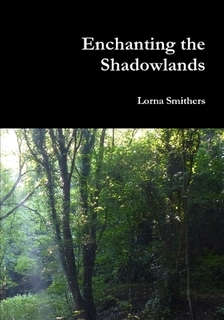
BOOK REVIEW: ENCHANTING THE SHADOWLANDS

product_thumbnailIn formal terms, this is a five star review of Enchanting the Shadowlands, a book of numinous poems and short stories by Lorna Smithers. She describes it as “gathered from my local landscape in response to an imperative from a Brythonic god called Gwyn ap Nudd”. If you have any interest in the lingering subtle resonance of the old Celtic and pre-Celtic world in parts of England like the poet’s native northwest, you will appreciate this volume. If you have any interest in ‘awen’ as an inspirational force or creative current, and what it is to be ‘awenydd’, you will appreciate this volume. If you have any interest in poetry and landscape, or what is now called psycho-geography, you are likely to appreciate this volume. I strongly recommend this book.

More deeply, I am hoping in a small way to share something of the magic of the work as I have experienced it. I find that the best way in is to say that, for me, the resonance of the project, its feeling-tone, can be found in the first two verses of ‘A Journeying Song’, one of the later poems in the collection.

1: Horse and Hound

She will carry me

down invisible horse paths.

He will lead us

to invisible lands.

She will carry me

beyond the stolen skyline.

He will lead us

to where horizons end.

2: The Dreaming Land

The dream is not a dream

it is the life force of the land.

A living memory,

it is the dawn. It is the damned.

The dream is not a sleep.

It is a wakefulness

of past people and their dreams.

It is mistakes and shining laughter.

When I read these lines, I can feel myself riding the mare who will “carry me down invisible horse paths”, led (in my mind’s eye) by a large and shaggy hound. I can easily accept that, surrendering to the instinctive wisdom of these animal powers, I might find myself beyond a “broken skyline” at a place where “horizons end”.  I can settle into the felt apprehension of a Dreaming Land where the dream is not a dream, but “the life force of the land, a living memory” and a “wakefulness of past people and their dreams”. The words are a portal to the living reality of the experience itself. In that sense, these two brief verses stand as a microcosm of the whole book.

Peneverdant/Penwortham, the locality described, is a watery place. Its first human inhabitants are called “The Dwellers in the Water Country”, drawn by the obvious attractions of auroch and deer and also by destiny and “the dream of a bard”.

They came with the splash of oars

and the steady splash of feet

drawn by auroch, deer and destiny,

the dream of a bard

who saw the green hill rising

from a wilderness of carr and marsh.

The awenydd poet’s own seership, her own process of inspired and connected reaching back, is caught in her ‘Prayer for Netholme’.

I write this prayer for the White One

Who loaned to me a mare of mist,

Led me across the marsh of time

And granted me the seer’s gift.

For later periods, the poetry is sometimes dialogical with older texts – such as the Domesday Survey of 1086, or James Flockhart’s ‘De Mowbray:A legend of Penwortham’. The latter is referenced in in ‘St. Mary’s Well, Twilight’ – a poem that also includes finely wrought observation of nature and the meaning it makes for the observer/the observer makes for it.

The setting sun is casting his vast aura

With a majesty I never dreamt him capable of

Enflaming clouds in luminescent orange and red,

Purple like mountains behind the trees.

The birds are singing as if it is their last dusk song.

I enlist bold robin, blackbird and little wren …

As if this is the evening of all evenings

And will be their last so better make it their best.

It is hard to write freshly about sunsets, though I do think this is well-managed even in the first four lines, especially through bringing in a delighted shift in the observer’s perception, and then going on to dare purple poetry. But what makes this section of the poem for me is the succeeding lines, which create a foreground for the majestic sunset background through the activity of the birds and their commitment to Being while it lasts.

Throughout the book we are aware of the interweaving of two worlds. This is done particularly well in the stories, which are every bit as inspired as the poetry. I was especially moved by the last, called ‘The Brown-Eared Hound: Rivington, October 31st. 1917’. It concerns sudden, shocking bereavement and also a direct experience of Gwyn’s wild hunt. I could almost see a novel, or at any rate novella, in this story – bringing together the world of Wilfrid Owen, D.H Lawrence and Virginia Wolf with that of living Brythonic myth. At the same time the piece as written did everything it needed to.

I don’t think it is possible to do this volume justice in a single review. It’s hard, with poetry. So I’m suggesting that readers also have a look at Crychydd’s review in https://barddos.wordpress.com/2015/02/04 and the author’s own discussions about her work and its continuing development at: http://lornasmithers.wordpress.com/

Lorna Smithers Enchanting the Shadowlands Lulu, 2015

MIND AND LIFE INSTITUTE IN EUROPE

In a previous post on https://contemplativeinquiry.wordpress.com/2015/1/02 I wrote about the Mind and Life Institute which can be found on http://www.mindandlife.org/. Founded in 1987 it was largely the inspiration of the current Dalai Lama. Its aim is to bring together contemplative practitioners and the academic community to investigate contemplative states and their value. Although it has a largely Buddhist orientation, it is not confined to Buddhists.

This post is to draw attention to a Mind and Life European Summer Research Institute on Contemplative Practice, Science and Society from 28 August to 3 September 2015 at the Abtei Fraueninsel Chiemsee, Germany.

This will explore the influence of contemplative practices on mind, behaviour, brain function and health, but are also fostering the development of new fields of research known as Contemplative Neuroscience, Contemplative Clinical Science, Contemplative Studies, and Contemplative Education (see www.mindandlife-europe.org for more details, or check out www.mindandlife.org if you wish to learn more about previous SRIs in the USA).


POEM: BRIEF REFLECTION ON MAPS

Albert Szent-Gyorgyi, who knew a thing about maps,

by which life moves somewhere or other

used to tell this story from the war,

through which history moves somewhere or other.

From a small Hungarian unit in the Alps a young lieutenant

sent out a scouting party into the icy wastes.

At once

it began to snow, it snowed for two days and the party

did not return. The lieutenant was in distress: he had sent

his men to their deaths.

On the third day, however, the scouting party was back.

Where had they been? How had they managed to find their way?

Yes, the men explained, we certainly thought we were

lost and awaited our end. When suddenly one of our lot

found a map in his pocket. We felt reassured.

We made a bivouac, waited for the snow to stop, and then

with the map

found the right direction.

And here we are.

The lieutenant asked to see that remarkable map in order to

study it. It wasn’t a map of the Alps

but the Pyranees.

Goodbye.

From On the Contrary and Other Poems by Miroslav Holub (Newcastle-on-Tyne: Bloodaxe Books, 1984 – translated from Czech by Ewald Osers)

MIND AND LIFE INSTITUTE: INQUIRING INTO FEAR AND TRUST IN SELF AND SOCIETY

The Mind and Life Institute can be found on http://www.mindandlife.org/

Founded in 1987 it was largely the inspiration of the current Dalai Lama. Its aim is to bring together contemplative practitioners and the academic community to investigate contemplative states and their value. Although it has a largely Buddhist orientation, it is not confined to Buddhists.

One of their current offerings is the 2015 Mind and Life Summer Research Institute (MLSRI) to be held from 13-19 June 2015 at the Garrison Institute, Garrison NY. The topic is ‘Fear and Trust in Self and Society’. (For anyone interested, the application deadline is 18 February,) The Institute says:

“This is is a week-long program to advance collaborative research among scientists, contemplative scholars, other humanities scholars, and contemplative practitioners, based on a process of inquiry and dialogue. With this unique program, we are not only nurturing a new generation of scientists interested in exploring the influence of contemplative practice and meditation on the mind, but are also fostering the development of new fields of research collectively referred to as the ‘contemplative sciences.’ This year’s institute will be held June 13-19, 2015 and will be located at the Garrison Institute in Garrison, New York, 50 miles north of New York City in the Hudson River Valley.

“The 2015 MLSRI will be devoted to examining fear, trust, and social relationships. Presentations and discussions will draw on research in both the sciences and the humanities, including neuroscience, psychology, anthropology, religion, and contemplative studies. Over the week, we will explore biological and experiential aspects of fear, its influence on our cognition and emotion, and its expression in both healthy states and clinical disorders. Critically, we’ll also be examining the role of trust and interpersonal connection as a counterpoint to fear, so we will also address the protective functions of secure attachment and compassion. Finally, we will ask how contemplative practices might be used to help us work with fear and cultivate social bonds.

“We encourage interested scholars to apply as either a Research Fellow or Senior Investigator:

  • Research Fellow candidates include students in contemplative traditions, as well as undergraduate students, graduate students, and postdoctoral fellows in relevant academic fields.
  • Senior Investigator candidates are established researchers, faculty, teachers, scholars, or practitioners in a relevant field.

“We are now accepting applications online. Applications close on February 18, and applicants will be notified of selection by April 3. There is a $45 application fee. The all-inclusive program cost is $525 for Research Fellows and $775 for Senior Investigators. For more information, please visit our event website: MLSRI 2015.”

Although I sometimes worry about topics like this becoming over-academic, I like the way in which contemplative inquiry is being given increasing attention through initiatives such as  the Mind and Life Institute.

POEM: DEMETER

Where I lived – winter and hard earth.

I sat in my cold stone room

choosing tough words, granite, flint,

to break the ice. My broken heart –

I tried that, but it skimmed,

flat, over the frozen lake.

She came from a long, long way,

but I saw her at last, walking,

my daughter, my girl, across the fields,

in bare feet, bringing all spring’s flowers

to her mother’s house. I swear

the air softened and warmed as she moved,

the blue sky smiling, none too soon,

with the small shy mouth of a new moon.

In The world’s wife: poems by Carol Ann Duffy (London: Picador, 1999)

ETHICS OF EMPATHY: IMMRAM

Ancient Gaelic culture had a tradition of the Imramm – well-described by Caitlin and John Matthews (1). Imramma are “voyage quests, whereby a hero is called to penetrate to the furthest west to find wisdom, healing or paradise. For the Celtic peoples, the lands westward over the Atlantic have ever been the regions of the Blessed Isles, the happy Otherworld from which faery visitants, empowering objects and supra-human wisdom derive. As with the Grail quest, the Imramma are found in both pre- and post-Christian traditions, testifying to their importance, which may have been remnants of a once-coherent ‘book of the dead’ teaching, preparing people for states of existence after death, similar to the Tibetan bardo wisdom”.

I have one which was presented to me as a voyage to discover heaven and hell. I do not know its date or precise origin. The monks – I think they were monks – sailed past many islands in their hard journey into the open sea, their craft small and vulnerable, the conditions variable and sometimes scary. Occasionally they were able to land and refresh themselves – without finding anything much beyond the means of continuing subsistence. Eventually they grew close to a relatively large and inhabited island. They couldn’t see it very well through the mist and rain, but they could hear the cries and shouts of a human-seeming population in distress. Getting closer the voyagers glimpsed large, steaming cauldrons on the shore and the smell coming from these was succulent, not bad at all. Yet angry and emaciated figures were huddled around them – some were snarling, jostling and fighting; others were paralysed with despair and sunken into vacancy and helpless gibbering; yet others were just a little bit more solution focused (as we might now say) and caught up in their own private frustration about how to get food from the cauldrons into their mouths with the very long spoons provided. They were so caught up in this that none of them even noticed the travellers, who found it wisest to back away from this scene before they were discovered in ways that might turn ugly.

The voyage continued … and continued. Eventually, as the story goes, and on a brighter calmer morning, the monks found themselves approaching another island, with an uncanny resemblance to the first. Quite large, with similar human-seeming inhabitants and large, steaming cauldrons on the shore and the same succulent smell. The beings gathered around them even wielded the same awkward, ungainly and very long spoons. The only difference, of course, in the whole scene, is that they were using these spoons to feed each other.

There are three things I particularly like about this story. One is that the ethics of empathy can grow in very pragmatic soil, the soil of enlightened self-interest, the soil of common sense. The turn to co-operation doesn’t have, in itself, to be especially high-minded. So in a way the ethics of empathy, in a fuller sense, can develop out of the experience of simple, practical co-operation. The second is that, although hell is all too easy to get into, it is also quite possible to get out of: no need to abandon hope. The third is that the Otherworld journey takes us straight back into the realm of everyday life and how we do it.

  1. Matthews, Caitlin and John (1994) The encyclopaedia of Celtic wisdom: the Celtic shaman’s sourcebook Shaftsbury, Dorset, UK: Element (also published by Element in Rockport, Massachusetts, USA and Brisbane, Queensland, Australia)

OSHO, GOD AND BEING HUMAN

Some reflections by Osho. I extend the word ‘God’ to include any ego ideal. It brings this piece closer to home.

“Man has always been thinking of himself as the most superior creation in existence. Man has thought of himself only as next to God and feels very happy. That, too, we say just to be polite; deep down you know that God is next to you.

“Even when you are a great worshipper … every moment you are trying to manipulate God according to you. ‘Do my will!’ That’s all your prayer means. That’s all your prayer means. ‘Do according to me. Listen to me’. Your whole effort is to convert God into your servant. You call him ‘Lord’. ‘Master’, but those are just briberies; you are trying to manipulate him. You say, ‘I am nobody, you are all’ – but deep down you know who is who. In fact even when you fight for your God, it is your God. Even when you sacrifice yourself on some pedestal, some altar, it is to your God that you sacrifice. When you bow down to an image of God in a temple, a mosque, in a church, it is to your image that you have created, to your God. You are bowing down to your own creation. You are bowing down as if before a mirror.

“Remember we are fuelling our egos in every way possible – gross or subtle, direct or indirect. And a really religious person is one who knows this, becomes aware of this, and in that awareness the ego disappears. A really religious person has no idea who is superior. A religious person cannot say, ‘I am superior to the tree, I am superior to the animal, I am superior to the bird.’ A religious person cannot say, ‘I am superior’. A religious person has come to know that ‘I am not’ and in that experience of ‘I am not’ joy flows in; the rock has been removed.”

Osho (1990) Tao: the pathless path New York: St. Martin’s Griffin

GROUNDED WISDOM FROM KABIR

I read the songs of Kabir, partly for their power and beauty, partly for their touching humanity and partly to learn something as a contemplative practitioner. The songs themselves, according to John Stratton Hawley, have survived in late manuscripts from different parts of India, modified over time by the region, religion and caste position of their listeners. When it comes to translation, Hawley notes that Robert Bly presents a Kabir who stands for self-reliance (like Emerson), principled disobedience (like Thoreau) “and a set of practices that honors the meeting of mind and body and celebrates the intense emotions that connect them (like Bly himself?)”

So I feel I’m in good company when putting two songs together in a way that makes the second answer the first, in the pursuit of my own inquiry. It’s about this: how do I avoid the trap of working on my small personal narcissism only to embed a larger spiritual narcissism?

Here is the first, scene-setting song.

Friend, please tell me what I can do about this world

I hold to, and keep spinning out!

I gave up sewn clothes, and wore a robe,

But I noticed one day the cloth was well woven.

So I bought some burlap, but I still

Throw it elegantly over my left shoulder.

I pulled back my sexual longings,

And now discover that I’m angry a lot.

I gave up rage, and now I notice

That I am greedy all day.

I worked hard at dissolving the greed

And now I am proud of myself.

When the mind wants to break its link to the world

It still holds on to one thing.

Kabir says: Listen my friend,

There are very few that find the path.

Here, in the second poem, I find a way through – by not going anywhere. I read the “wanting-creature” below to be bound up in ‘Spiritual’ wanting, rather than the average sensual kind.

I said to the wanting-creature inside me:

What is this river you want to cross?

There are no travellers on the river-road, and no road.

Do you see anyone moving about on that bank, or resting?

There is no river at all, and no boat, and no boatman.

There is no tow rope either, and no one to pull it.

There is no ground, no sky, no time, no bank, no ford!

And there is no body, and no mind!

Do you believe that there is some place that will make the soul less thirsty?

In that great absence you will find nothing.

Be strong then, and enter into your own body;

There you have a solid place for your feet.

Think about it carefully!

Don’t go off somewhere else!

Kabir says this: just throw away all thoughts of imaginary things,

And stand firm in that which you are.

Kabir Ecstatic poems Boston, MA: Beacon Press, 1992 (The English translations are free enough for Robert Bly to call them ‘versions by Robert Bly’. There is an earlier set of translations published by MacMillan in New York in 1915 by Rabindranath Tagore assisted by Evelyn Underhill under the title Songs of Kabir. Whilst I don’t follow Bly in calling the English of the earlier work “useless”, I do find that Bly’s interpretation has more passion and power. The Bly work includes an insightful afterword Kabir and the transcendental Bly by John Stratton Hawley).

UPDATE ON CONTEMPLATIVE DRUID EVENTS

After the publication of Contemplative Druidry last October, I set up Contemplative Druid Events together with my partner Elaine Knight, supported by other members of our local group – particularly Nimue Brown, Julie Bond, JJ Middleway and Karen Webb. Our main purpose is to organise, publicise and run a limited number of contemplative Druid events for the wider Druid community and others of like intent. We will also respond to inquiries from people wishing to join a Druid contemplative group or start one of their own.

We have arranged three events for 2015:

  1. A half day introduction to contemplative Druidry in London on Sunday 22 February
  2. A weekend retreat near Malvern from Friday 17- Sunday19 April
  3. A contemplative Druid day in Stroud on Saturday 3 October

For more information, or to arrange a booking please go to our dedicated blog at http://contemplativedruidevents.tumblr.com/

These events are all in southern England. I am open to going further afield, and other colleagues might be. In this regard I am happy to hear proposals from people who are willing to gather together their own group and to negotiate times, programme and costs.

Overall our vision for the contemplative thread in Druidry is that it will develop organically, with initiatives coming from different sources and taking different forms. We don’t seek to own or manage this development under the banner of Contemplative Druid Events, though we do see a value in offering programmes of our own on a modest scale.

Earth Eclectic

music that celebrates Earth and speaks to the heart

Sarah Fuhro Star-Flower Alchemy

Follow the Moon's Cycle

Muddy Feet

Meeting nature on nature's terms

Rosher.Net

A little bit of Mark Rosher in South Gloucestershire, England

Becoming Part of the Land

A monastic polytheist's and animist’s journal

selkiewife

Selkie Writing…

Charlotte Rodgers

Images and words set against a backdrop of outsider art.

Prof Jem Bendell

living purposefully during metacrisis and collapse

Towint

The pagan path. The Old Ways In New Times

The Druids Garden

Spiritual journeys in tending the living earth, permaculture, and nature-inspired arts

The Blog of Baphomet

a magickal dialogue between nature and culture

This Simple Life

The gentle art of living with less

Musings of a Scottish Hearth Druid and Heathen

Thoughts about living, loving and worshiping as an autistic Hearth Druid and Heathen. One woman's journey.

Wheel of the Year Blog

An place to read and share stories about the celtic seasonal festivals

Walking the Druid Path

Just another WordPress.com site

anima monday

Exploring our connection to the wider world

Grounded Space Focusing

Become more grounded and spacious with yourself and others, through your own body’s wisdom

The Earthbound Report

Good lives on our one planet

Hopeless Vendetta

News for the residents of Hopeless, Maine