Contemplative Inquiry

This blog is about contemplative inquiry

Tag: Spirituality

THE EYE OF CONTEMPLATION

In the middle of the ninth century the Irish scholar and contemplative mystic John Scotus Eriugena got into trouble with the leaders of his church. He publicly opposed St. Augustine’s doctrines of original sin (intensifying the consequences of the fall) and predestination (the fall was always in the mind of God, its consequences already decided). He called them “a most cruel and stupid madness”.

John lived in France, working for Charlemagne’s grandson Charles the Bald, King of the West Franks. John’s role was to superintend the palace school and to translate rare Greek texts. Although a layman, he had been educated in an Irish monastic school – the Irish monastic schools at the time being among the very few places in Western Europe where Greek was still taught. He countered the Augustinian orthodoxy with the Neo-Platonist argument that ultimately God, the One, must necessarily contain everyone and everything, or not be the One. His arguments were dismissed, in an interesting choice of calumny, as “pultes Scottorum” (Gaelic porridge – since ‘Scotus’ then referred to a language group rather than a place). Nonetheless he stuck to his position, under the protection of his king, and managed to avoid obeying a summons to Rome to explain himself.

John makes a somewhat pointed statement about the spirit of contemplation versus a certain kind of activism in his Homily on the Prologue to the Gospel of St. John. As I read it, Peter founded the church in Rome is identified with the papacy, whereas John Scotus is modelling himself on the gospel writer. “Peter is always presented as the model of faith and action, while John portrays the type of contemplation and knowledge. The one indeed leans on the bosom of the Lord, which is the sacrament of contemplation, while the other often hesitates, which is the symbol of restless action. For the execution of divine commands, before it becomes habitual, may shatter the pure brilliance of virtue and fall short in its judgements, clouded by the fog of sense-bound thinking. The keenness of profoundest contemplation, on the other hand, once it has perceived the countenance of the truth, neither hesitates, nor slips, nor is darkened by any cloud”. In a sense contemplation becomes a quiet resistance: resistance supported by a way of stillness and insight.

(This story is told in Christopher Bamford’s (2000) The voice of the eagle: the heart of Celtic Christianity: John Scotus Eriugena’s homily on the prologue to the Gospel of St. John Great Barrington, MA: Lindisifarne Books (New translation, with reflections and commentary. Foreword by Thomas Moore.) the book was published in 2000 and there is a Kindle edition.

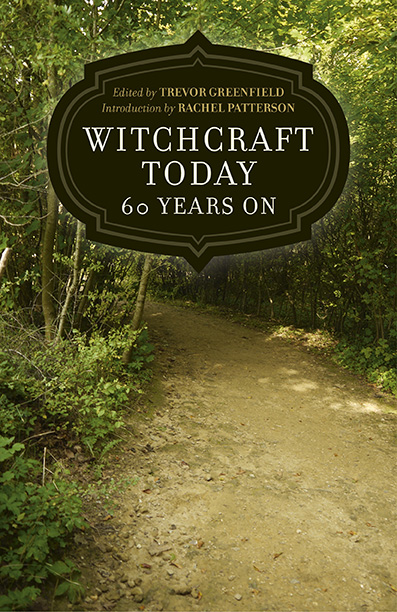
BOOK REVIEW: WITCHCRAFT TODAY – 60 YEARS ON

jhp530b85f08e66fThis is a timely addition to Pagan literature, highly recommended to anyone interested in the modern heritage of witchcraft, paganism and new (or new old) spiritual movements more generally. This book celebrates the 60 years since the publication of Gerald Gardner’s Witchcraft Today in 1954, affirming the confidence, dynamism and increasing openness of this growing tradition from a diverse range of insider perspectives.

The book is divided into two parts. The first, ‘Forms, Themes and Values’, begins with an account by Philip Heselton of how Gardner came to write Witchcraft Today. It goes on to look at ten specific forms of modern witchcraft that diverge from Gardner’s own, starting with Alex Sanders and going on to look at more radical departures like  Seax Wica and the feminist Dianic tradition. Some of the other paths described are less formal and ceremonial than the original models. Some are group based and others solitary.

Some can be distinguished from witchcraft altogether (the Egyptian Magical Tradition and Hekatean practice based on the approach of the Chaldean Oracles, to name two). The same issue arises at the end of the book, where a contributor talks about a journey through an Ovate Grade training in the Order of Bards, Ovates and Druids (OBOD).  In each case, it matters to the practitioner that they are practising these traditions as a form of witchcraft.  Their inclusion in the book affirms the value of self-identification in spirituality and adds to an overall feel of inclusiveness. Any question would be about the potential weakening of the term witchcraft itself, in a context of such porous boundaries.

Part 1 also includes a chapter on the male experience of witchcraft and ends with one on ‘Witchcraft Tomorrow’ by David Salisbury, which demonstrates optimism about future possibilities and explores the issues of community building and leadership. Common themes in Part 1 include tensions between ‘preservation’ and ‘invention’ in lineage development, and ways of reconciling them. Common values include an avoidance of evangelism and a commitment to the ultimate autonomy of the practitioner.

Part 2, ‘Journey on a Crooked Path’, presents ten personal journeys.  It is particularly good at describing the ways in which people sense unmet spiritual needs in early life and make the connections (through reading, significant life events or personal encounters) that lead them on to their chosen paths. Throughout the book, there’s the sense of person and path choosing each other. They know when it’s right – and often have to go to some trouble to find their home.  The finding is reflected in the enthusiasm and commitment of the many people who have contributed to this valuable book.

Earth Eclectic

music that celebrates Earth and speaks to the heart

Sarah Fuhro Star-Flower Alchemy

Follow the Moon's Cycle

Muddy Feet

Meeting nature on nature's terms

Rosher.Net

A little bit of Mark Rosher in South Gloucestershire, England

Becoming Part of the Land

A monastic polytheist's and animist’s journal

selkiewife

Selkie Writing…

Charlotte Rodgers

Images and words set against a backdrop of outsider art.

Prof Jem Bendell

living with metacrisis and collapse

Towint

The pagan path. The Old Ways In New Times

The Druids Garden

Spiritual journeys in tending the living earth, permaculture, and nature-inspired arts

The Blog of Baphomet

a magickal dialogue between nature and culture

Musings of a Scottish Hearth Druid and Heathen

Thoughts about living, loving and worshiping as an autistic Hearth Druid and Heathen. One woman's journey.

Wheel of the Year Blog

An place to read and share stories about the celtic seasonal festivals

Walking the Druid Path

Just another WordPress.com site

anima monday

Exploring our connection to the wider world

Grounded Space Focusing

Become more grounded and spacious with yourself and others, through your own body’s wisdom

The Earthbound Report

Good lives on our one planet

Hopeless Vendetta

News for the residents of Hopeless, Maine

barbed and wired

All content on this site is now located at www.jonberrywriter.co.uk