It is a calendar month since Elaine came home from the Gloucester Royal hospital, after her hip fracture in Gran Canaria on 11 April (1). She is slowly recovering, but still housebound.
Two days before her accident I attended a meeting that signed off on a collection of poetry by local writers (2) to which we had both contributed. Elaine’s haiku below is part of that collection.
(2) Random Writings by the Wrandom Writers Wroclaw, Poland: Amazon Fulfillment, 2024 (Editorial Copyright J.D. Warner; individual poems copyrighted by the authors).
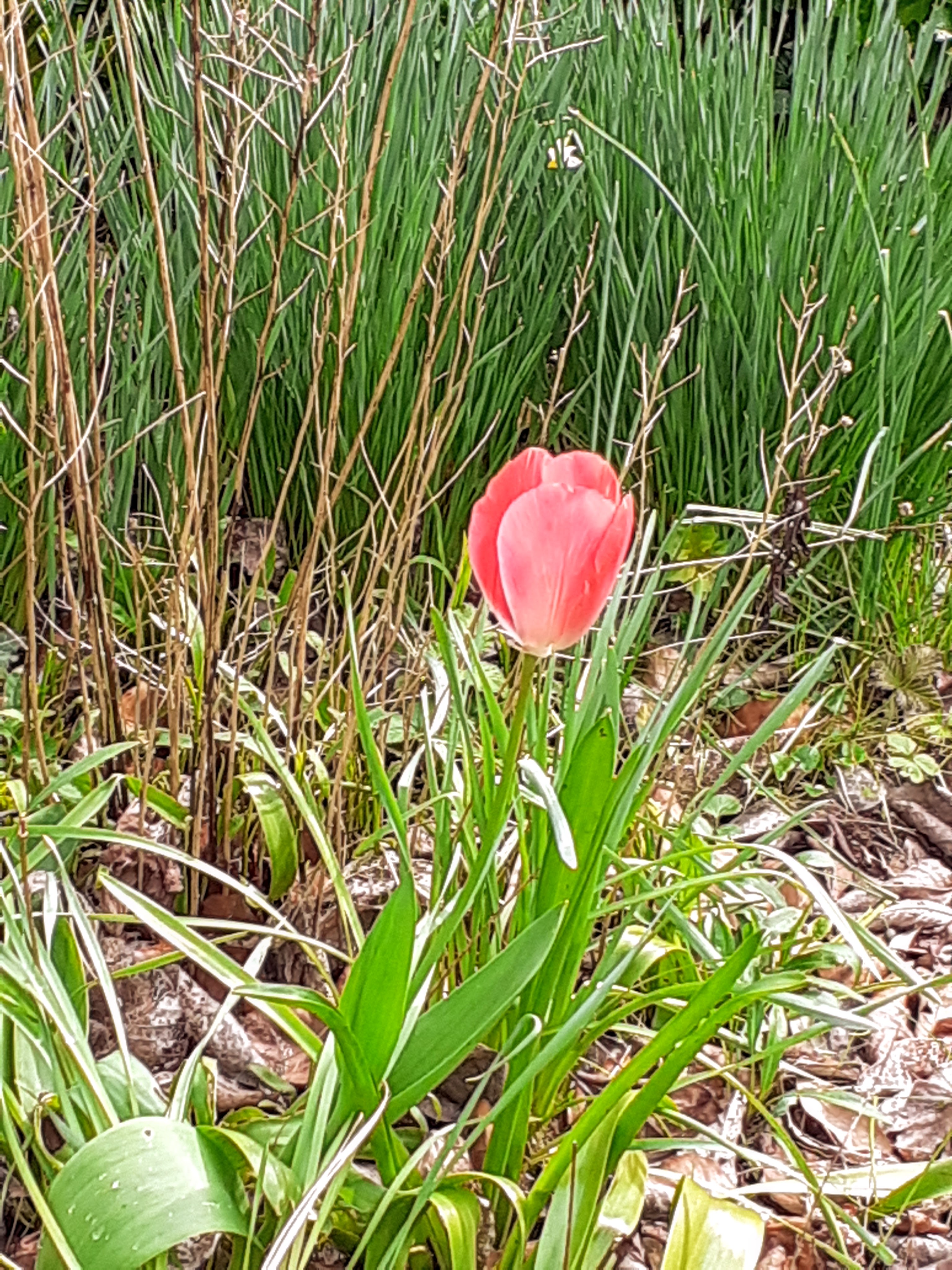
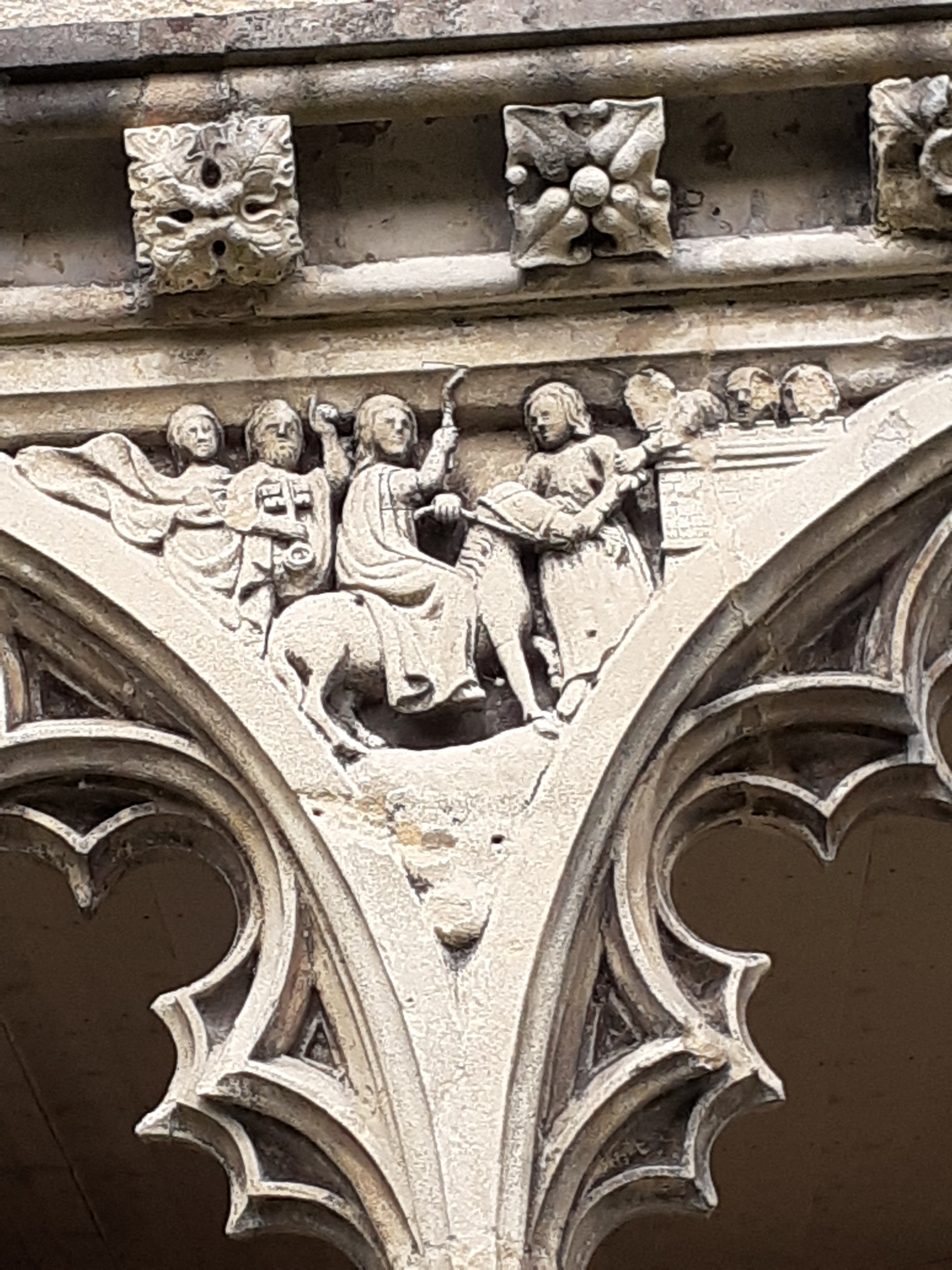
NOTE: At the beginning of April I discovered Hillfield Gardens – a little outside the centre of Gloucester, yet still in easy walking distance (or an easy bus ride) from where I live. Originally the gardens of a large house, Hillfield Gardens are about 1.6 hectares in extent. They are managed by a Friends Group on behalf of Gloucestershire County Council. For me the gardens are a tranquil space, different in feeling-tone from other local parks. Beyond that I don’t yet have a narrative about the gardens – more a set of discreet impressions. The pictures and words above are an attempt to share these impressions. The third picture is a detail from an 18th century gazebo using architectural details from a 14th century market house in Westgate Street demolished in 1780.
Highly recommended to anyone interested in Chinese traditional poetry and culture, and the way it is received in China today. I looked at an aspect of Michael Wood’s In the Footsteps of Du Fu: China’s Greatest Poet (1) in my last post (2). This is a full book review. The back cover provides an accurate basic summary of its contents: “For a thousand years Du Fu (712-70 CE) has been China’s most loved poet. Born into the golden age of the Tang Dynasty, he saw his world collapse in famine, war and chaos. The poet and his family became impoverished refugees, but his profound vision and his empathy for the sufferings of humanity endured, and have endeared him to readers ever since. … Broadcaster and historian Michael Wood follows in Du Fu’s footsteps on a pilgrimage through the physical and emotional landscapes of his life and work”.
The book, lavishly illustrated, is divided into 24 chapters. Many of these are headed by place names. Michael Wood visited most of them on his own journey, talking with scholars and enthusiasts and also taking time to observe the very different China of today. The narrative is somewhat tilted towards the last 15 years of Du Fu’s life, when the War of An Lushan (3) displaced Du Fu and turned him into an internal refugee, constantly on the move, for the rest of his life. It is also seen as the period of his best poetry.
The first chapters of the book emphasise the easy optimism of Du Fu’s early years. A new Emperor, himself a painter, musician and poet, launched a cultural rebirth. He was a patron of libraries and scholars. He ruled a prosperous and peaceful country. Du Fu writes nostalgically of childhood years in which “rice was succulent … the granaries were full, and there was not a robber on the road in all the 9 provinces of China”. Growing up in the city of Gong-yi on the Yellow River, the son of an Imperial official, Du Fu looked forward to a successful life as both official and poet. “I’d read everything and I thought I was superb”. He went to Chang’an and took his exams for the Imperial service.
He failed them. “In the blue sky my wings failed me”. For some years he went on a series of family supported wanderings, honed his poetic skills and became interested in the Chinese version of Mahayana Buddhism. Returning to Chang’an he failed the exams again, but managed to get a lowly official job, married, and began to raise a family. He settled them in Fengxian near the capital, a place that featured hot springs. Although he had to be available at Chang’an, he visited often. At this point his poetry began to show a concern for ordinary people.
Here at the hot spring the emperor entertains his court
And music echoes around the hills.
Only the rich and powerful bathe here.
But the silk they wear was woven by people,
women whose husbands are beaten for their taxes.
In 755, even before war broke out, China was devasted by floods and a resultant famine. Du Fu lost an infant son to starvation and wrote that he was ashamed to be a father. Famine threatened again, on the road, after the rebel victory:
My little girl bit me in her hunger
And fearful that wolves or tigers would hear her cries
I hugged her to my chest, muffling her mouth,
But she struggled free and just cried more.
Michael Wood provides a map of the family’s subsequent movements, generally in the rugged, often spectacular and less populated west of China. They could never settle for very long, as political and military conditions remained volatile and unsafe. I describe Du Fu’s sojourn in Chengdu in my pervious post (2). Towards the end of his life, conditions seemed to be easing and the family began moving back east via the Yangtze river, in gradual steps. This gives Michael Wood the opportunity to describe his own experience of the hyper-modern city of Chongqing, though Kuizhou and the spectacular Three Gorges area are more important to Du Fu and his work. Wood says that, “in the Gorges, though it had been at great cost to himself, Du Fu’s gift was creative and imaginative freedom”. His output was prolific, and drew on a meditatively close encounter with nature.
Crescent moon stilled in the clear night
Half-abandoned to sleep, lamp wicks blossom
In echoing mountains unsettled deer stir
Falling leaves startle locusts.
By this time Du Fu was worn down by asthma, diabetes and years of hardship. Though he got a little further down river, he never made it to his original home. Nonetheless he was able to be defiantly celebratory:
Old and tired, my hair white, I dance and sing out:
Goosefoot cane, no sleep, catch me if you can!
Du Fu died at the age of 58 in Changsha in Hunan Province. Michael Wood went there simply to complete the journey, but was rewarded with a new lens on Du Fu’s work and the creative tradition he came from. He met Professor Yang Wu at the University there. One of her interests is “the living oral tradition of poetry and the possibility of reconstructing the ancient music that might have accompanied it”. Research on ancient poetry and music is an expanding subject in today’s China. Du Fu’s poetry has been preserved in Hunan oral tradition as well as in manuscripts. A local tradition of poetry clubs has survived the early Communist period. Now it is reviving and being encouraged. Professor Wu and her students have been busy with making replica’s of Tang dynasty instruments – for example the qin, a seven-stringed instrument with strings of twisted silk. They are finding manuscript records of early musical settings, and sound-recording local people’s singing. For me this adds another dimension to Du Fu’s work – where he can be understood , in part, as the lyricist for music that was performed in group and public settings.
In the Footsteps of Du Fu is highly informed and engagingly written. For me is also a beautiful artefact, though eminently portable, not at all a coffee table book. I rarely buy printed books now because the print is too small for me. But I was fine with this one and the illustrations are a joy. Another reason for my strong recommendation.
(1) Michael Wood In The Footsteps of Du Fu: China’s Greatest Poet London: Simon and Schuster, 2023
(3) In December 755 An Lushan, a Turkic general in the Imperial service, marched on China’s then capital city, Chang’an, from North China with a quarter of a million men. They inflicted a series of defeats on the Imperial army and occupied Chang’an in July 756. An Lushan was assassinated by his own son in 757 but the war continued for 7 years. Tang dynasty China, whilst nominally lasting for decades longer, was never the same again.
Personal note: Michael Wood’s introduction begins: “if you love literature of any kind, you will have had one of those moments when you encounter a book that opens a window onto a world you never dreamed existed. Mine was at school when I first encountered Du Fu in A. C. Graham’s wonderful Poems of the Late T’ang.” I had my own version of the same experience, and still have my battered old copy. Du Fu is transliterated in that and some other translations as Tu Fu. The price, in the top left corner of the cover (see picture) is 4/- (four shillings, or 20 pence in post-1970 UK money). I have never been a formal student or scholar in this domain, but modern English translations of classical Chinese poetry have left a deep impression on me. Another poem from this collection can be found in this blog at: https://contemplativeinquiry.blog/2016/02/04/poem-a-withered-tree/
Michael Wood In The Footsteps of Du Fu: China’s Greatest Poet London: Simon and Schuster, 2023
This poem welcomes spring and also celebrates arrival at a place of safety. For a brief period in the early 760s the Chinese poet Du Fu (712 – 770 CE) had a cottage and garden in Chengdu, the Brocade City. It was a time of social breakdown in China and although from the landowning and mandarin class, Du Fu and his family had become refugees in their own country. At times, during their wanderings in the rugged terrain of western China, they were shelterless and close to starvation. Nonetheless, Du Fu retained an underlying resilience. Despite everything his capacity to notice, contemplate, feel, care and write were not compromised. One of his earlier poems, written when trapped in the rebel occupied capital Chang’an (City of Eternal Peace, now Xi’an), begins:
“The state is destroyed, but the country remains.
In the City in spring grass and weeds grow everywhere.
Grieving for the times, even the blossom sheds tears
Hating the separation birds startle the heart.”
As part of his following in Du Fu’s footsteps, Michael Wood visited Chengdu and talked to local people and tourists from other parts of China. Why does Du Fu matter to them now? One older local resident said that he came to the garden – now a well kept heritage site – “at least once a month” to reflect on Du Fu’s poetry. “For a long time we suffered, now we are better off, but today society is very materialistic, and spiritual things are going away. But I feel these things still matter, and here in this place you can go right into his mind: the thoughts and feelings of someone from so long ago. To me, this is a miracle. The garden here is big enough to get lost in, away from the public, especially if you come early in the morning. I sit in a corner and recall him, maybe read out one of his poems out loud, and reflect on it”. He described this as his meditation.
Below is an imaginary portrait of Du Fu by the artist Jiang Zhaohe (1904 -1986). It was done in 1959, during Mao’s Great Famine, described by Michael Wood as “one of China’s most shattering disasters”.
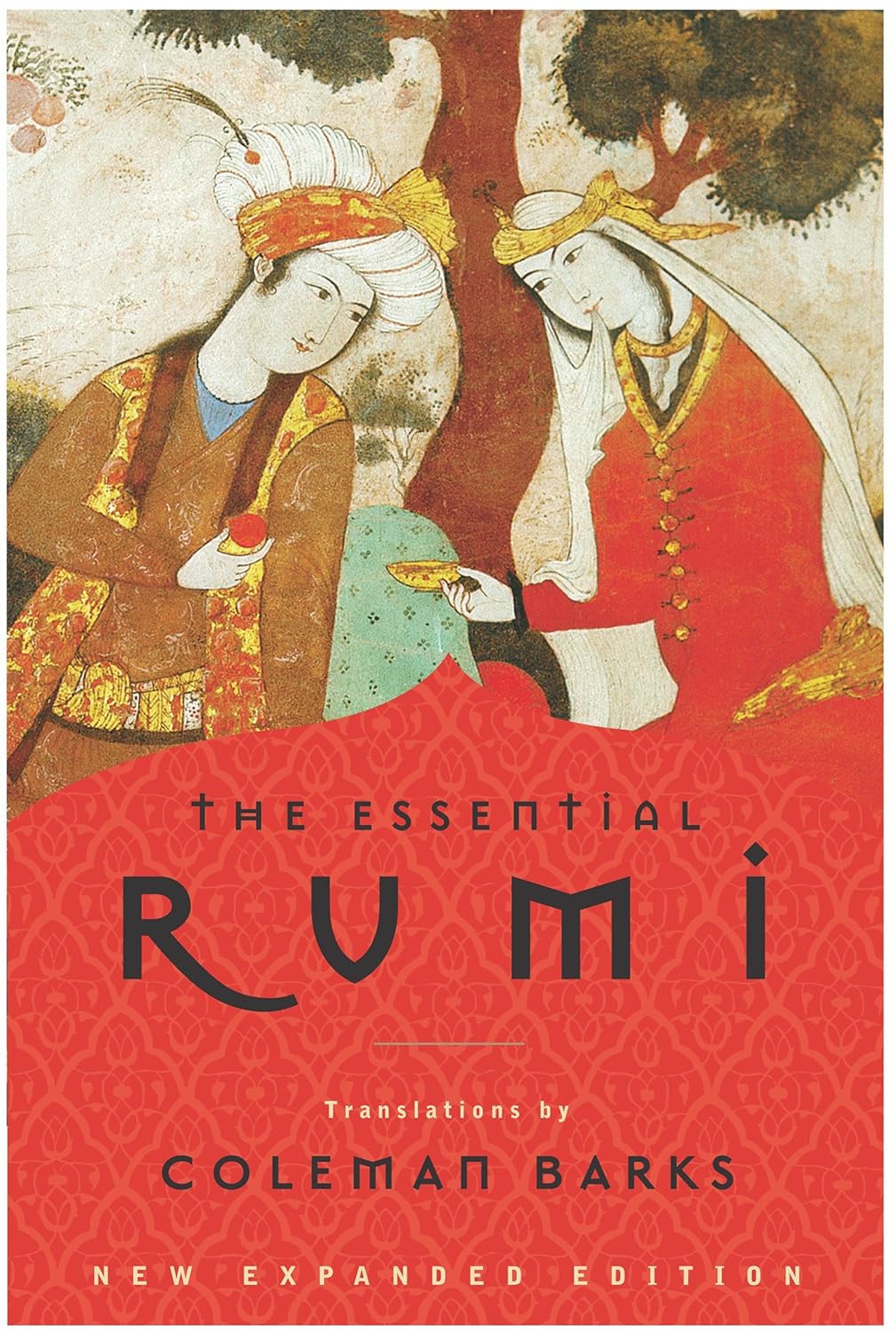
I have long been an admirer of Rumi’s poetry and have recently been dipping into my copy of Coleman Barks’ accessible English translations in his The Essential Rumi (1). This is a substantial volume of poetry and teaching – with the two aspects not really distinguishable.
It is not a new book. My edition is from 2004, and still in print. Coleman Barks provides good information about Rumi in the context of his life and spiritual path as a Sufi Dervish (2), which I have condensed into a note at the end of this post. I think that Barks’ translation works well for people on a spiritual journey, not necessarily Sufis themselves. This seems fitting because Rumi reached out well beyond the world of religious scholars and jurists. He was remarkably ecumenically minded, in a culture where people of many faiths lived side by side.
The poem I offer here is Solomon’s Crooked Crown. Here the archetypal wise ruler, who is also anyone and everyone, learns from his own errors. Solomon doesn’t represent wisdom through being right all the time. He isn’t. He needs to be called out on occasions by his ‘crown’, or higher power. He is wise because he recognises inconvenient truth and answers the call.
“Solomon was busy judging others,
when it was his personal thoughts
that were disrupting the community.
His crown slid crooked on his head,
He put it on straight, but the crown went
awry again. Eight times this happened.
Finally he talked to his headpiece.
‘Why do you keep tilting over my eyes?’
‘I have to. When your power loses compassion,
I have to show what such a condition looks like.’
Immediately Solomon recognised the truth.
He knelt and asked forgiveness.
The crown centered itself on his crown.
When something goes wrong,
Accuse yourself first.
Even the wisdom of Plato or Solomon
can wobble and go blind.
Listen when your crown reminds you
of what makes you cold towards others,
as you pamper the greedy energy inside.”
NOTE (taken largely from Coleman Barks’ introduction, On Rumi)
Rumi was born on September 30, 1207, in Balkh, Afghanistan. Iranians and Afghans call him Jelaluddin Balkhi. At that time, Balkh was part of the increasingly hard-pressed Abbasid Caliphate. Fleeing from invading Mongol armies, his family emigrated to Konya, in modern Turkey, sometime between 1215 and 1220.
The name Rumi means ‘from Roman Anatolia’, now in modern Turkey and already by Rumi’s day long lost to the Romans and their Byzantine successors. Rumi’s father was a theologian, jurist and mystic. On his death Rumi took over the position of sheikh in his dervish (2) learning community in Konya. Rumi’s life seems to have been a fairly normal one for a religious scholar – teaching, meditating, helping the poor – until 1244 when he met the wandering dervish Shams of Tabriz. Shams had spent years travelling throughout the Middle East searching and praying for one who could ‘endure my company’.
Their encounter, and the mystical friendship that ensued, influenced Rumi into becoming the artist we remember. “He turned into a poet. began listening to music, and sang, whirling around, hour after hour” (1). Shams disappeared in 1248. He was most likely murdered with the connivance of one of Rumi’s sons and other disciples. They thought of Shams as a bad influence on Rumi as well as themselves feeling excluded by Rumi and Shams’ relationship.
After the heartbreak of Shams’ death, Rumi went on to compose the Mathnawi, “that great work that shifts so fantastically from theory to folklore to jokes to ecstatic poetry (1)”.
(1) The Essential Rumi Translated by Coleman Barks, with Reynold Nicholson, A. J. Arberry, John Moyne. New York, NY: HarperOne, 2004 expended edition
(2) Dervish – member of a Muslim, specifically Sufi, religious order who has taken vows of poverty and austerity. Dervish orders first appeared in the 12th century CE. The Mevlevi Order of Whirling Dervishes was founded by followers of Rumi.
after we’d bargained our release for gold and incense
leaving only a few coins sewn into an old hat.
But we had come so far
and a theory
can become a story you would wander the world to tell.
We were in trouble, sometimes, misunderstood,
always there for each other – always walking westward,
taken on by an Ethiopian eunuch, even though by then
only one of us was fit to work – slipping away
by night when we sensed we were near.
He was a philosopher and carried his own coffin;
we raided it for myrrh. Took millings
from the edge of one of his ingots,
saved a last joss-stick. We had read our Isaiah.
And we had a theory
that a some place under a setting star
three gifts could be exchanged for peace
passing all understanding. What we ended up giving
were some much-needed hints on run-routes
for a family of refugees.
From the collection Losing Ithaca by Christopher Southgate Nottingham: Shoestring Press, 2023
In the Christian year, the twelve days of Christmas are over. 6 January is the festival commemorating the Epiphany, the manifestation of Christ to the the three Magi, the wise men from the east who came to pay homage to him. Their story is told in the Gospel of Matthew Chapter 2, verses 1-12.
Christopher Southgate is described as “a bio-chemist, a house-husband, a chaplain in university and mental health contexts, and a teacher of theology. He lives with his wife Sandy on the edge of Dartmoor and works at Exeter University”. Elaine and I attended an event at Gloucester Cathedral on the evening of 6 January this year, where he read a selection of his poems, naturally including this one.
The title references T. S. Eliot’s poem on the same theme, Journey of the Magi, but in other ways I find them very different. Southgate’s companions-with-a-theory have a considerably harder time than Eliot’s magisterial Magi. They arrive like refugees and meet with a family about to become refugees. Matthew describes King Herod’s efforts to eliminate any potential rival, as he sees it, to his throne, and the families’ consequent flight to Egypt.
I like the way in which Southgate shows how a somewhat transactional attempt at acquiring a “peace passing understanding” runs up against the realities of the world we live in. I also like the way he doesn’t invalidate the companions’ intent or their journey. They still had a gift to offer, sharing their experience and opening their hearts. Peace was present in that shared space.
Refaat Alareer (23 September 1979 – 7 December 2023)
NOTE: Refaat Alareer was a native of Gaza City who from 2007 taught world literature, comparative literature, and both fiction and non-fiction creative writing at the Islamic University of Gaza. He had an MA in Comparative Literature from University College London and a PhD in English Literature at the Universiti Putra in Malaysia. He was one of a group of Palestinian poets who wrote in the English language. He was killed at home, together with his family, in an Israeli bombing raid on 7 December. The University in which he worked has been completely destroyed.
For me this is an extraordinary example of a poet bearing witness, acting as a voice for his culture in the most extreme conditions – yet retaining a light touch and a certain gentleness even when doing so.
From: In Such Hard Times: the Poetry of Wei Ying-wu Red Pine (Translator) Port Townsend, WA: Copper Canyon Press, 2009
Wei Ying-wu was a poet of the later 8th. century CE, as we count time. It was a period when the later-remembered-as-glorious T’ang dynasty had begun to unravel (a hesitant centre, Mongol incursions, Warlordism at home). Translator Red Pine says that “Wei lived his life wondering what went wrong”, giving a melancholy tinge to many of his poems. He was distantly related to the Imperial family, a scholar in both the Buddhist and Confucian traditions who spent many years as a state official without much enjoying it. This poem was written in 785 – in England, the time of the Venerable Bede and eight years before the Viking sack of the monastery at Lindisfarne.
In the background of this poem is a traditional story about a fisherman who traces peach petals upstream and discovers them coming from a hidden world where people live in peace. But after returning to his village to tell others, the fisherman is unable to find the way there again.
I wrote this piece some months ago, still digesting the experience of the Covid 19 pandemic, the public health response to it, and the continuing presence of the virus in our world. I had also been reflecting on formal political messaging – government as public relations and media theatre, the intense pre-occupation with opinion polls and beauty contest elections – together with halting and inconsistent approaches to real-world problem-solving.
Writing of this kind is part of my Druid path and not a separate activity. My practice might have a contemplative foundation, but contemplation isn’t everything. The inheritance of Bardistry, and engagement with the wider world also matter. Currently, I feel a pull towards working for the healthy use of language, and challenging its corrupt and unhealthy deployments. T. S. Eliot once talked about poets being tasked to ‘purify the dialect of the tribe’. That’s not quite my language, but I can appreciate what he is pointing to.
I have recently been given another nudge, by Naomi Klein’s book Doppelganger: A Trip into the Mirror World (1) where she talks about the rise of ‘conspiracy influencers’ in a world where governments and corporations have deservedly lost our trust. “Conspiracy influencers perform what I have to think of as a doppelganger of investigative journalism, including many of its stylistic conventions, while hopping over its accuracy guardrails”. She goes on to say that “the end result of being surrounded by this kind of discourse is … a state of continuous disbelief” that replaces real threats with distorted versions of themselves. Hence the belief that “the problem with Covid was not a highly infectious disease being fought half-heartedly by for-profit drug companies and hollowed-out states, but an app that wanted to turn you into a slave”.
Klein also helps me to see a connection between the defence of language and contemplative spirituality. She speaks of calm as form of shock resistance. “When people and societies enter into a state of shock, they lose their identities and footing”. In the midst of such break down, the effect of conspiracy culture is to maintain panic and confusion. She suggests that some conspiracy culture influences are simply part of the panic and confusion. Others, more knowingly, manipulate it for ulterior ends. If shock induces a loss of identity, calm returns us to ourselves. “I write to tame the chaos in my surroundings, in my own mind, and – I hope – in the minds of my readers as well. The information is almost always distressing, and, for many, shocking, but in my view the goal should never be to put readers into a state of shock. It should be to pull them out of it”. Of her chosen work overall she says: “the role of the researcher-analyst is plain: to try and create some sense, some ordering of events, maps of power”. Clarity, calm and purpose support each other.
(1) Naomi Klein Doppelganger:A Trip into the Mirror World London: Penguin Random House, 2023
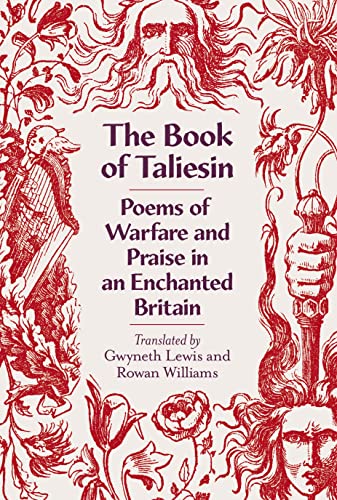
This is my third in a series of posts drawing on Gwyneth Lewis’ and Rowan Williams’ modern English version of The Book of Taliesin (1), an anthology of bardic poetry from medieval Wales. My first post introduced the book and offered extracts from A Song of the Wind (2). The second looked at the importance of ‘The Old North’ (territories in north-west England and southern Scotland that shared the same history, language and culture as the people of Wales) (3). This, final, post looks at the development of the Taliesin figure in the later middle ages. In particular, I focus on the anthology’s section entitled Legendary Poems and on the translators’ understandings of bardic poetry, shapeshifting and awen. I also look at their reasons for interpreting the Taliesin of these poems as “a kind of Christian shaman”.
In these poems, the use of shapeshifting language is presented as being a feature of competition between rival bards. “The Taliesin figure demonstrates his superiority … by spelling out at triumphant length the questions he can answer about which his rivals are ignorant, and by listing the various embodiments he has experienced”. The translators give an example of this in the opening of The Battle of the Trees.
“I was in many forms
Before my release:
I was a slim enchanted sword,
I believe in its play.
I was a drop in air,
The sparkling of stars,
A word inscribed,
A book in a priest’s hands,
A lantern shining
For a year and a half.
A bridge in crossing
Over threescore abers (= estuaries).
I was path, I was eagle,
I was a coracle at sea.
I was bubbles in beer,
I was a raindrop in a shower.
I was a sword in the hand;
I was a shield in battle.
I was a harp string,
Enchanted nine years
In water, foaming.
I was tinder in fire,
I was a forest ablaze”.
The editors comment: “these extraordinary poems reflect a sophisticated and complex understanding of poetic composition in which the concept of awen is central. It would be misleading to translate this idea of inspiration as ‘Muse’: it is better thought of as a state of altered consciousness in which the poet receives knowledge of matters beyond what can routinely be learned. According to Gerald of Wales’ description of the awenyddion, or inspired soothsayers, of the 12th century CE, the gift of awen produces the same kinds of extreme behaviour as are associated with spirit possession: loud shouting, trance and catalepsy, disconnected but also very elaborate speech, narrated experiences of supernatural encounters which trigger the exercise of this gift, and a subsequent inability to remember what was said under its influence”.
Poems like The Battle of the Trees may be “an attempt to reflect the style or register of such ecstatic states of consciousness”. However, the poems themselves may not be “transcriptions of specific compositions originating in altered states”. In cultures that have a “routine ritual space” for “ecstatic phenomena”, the irruption of the supernatural will follow a familiar pattern. “There will be expectations about both the actual expression and the transmission of what has been delivered”. If poetry is to be recognised as the authentic voice of ecstatic perception, “it must follow certain classical, normative exemplars of poetic ecstasy”. The Taliesin of these poems is a composite figure modelling how to speak as an awenydd. He demonstrates a particular way of being a poet and sounding like a poet of this kind.
Religious tensions appear in The Spoils of Annwfn. The bard rails against the ignorance of monks.
“And the monks herd together, a pack of dogs,
In the contest with those
Who have mastered the lore –
Whether wind takes one path,
Whether the sea is one water,
Whether fire’s unstoppable force is one spark.
The monks herd together, a pack of wolves,
In the contest with those who have mastered the lore –
They don’t know how darkness is severed from light,
They don’t know the course of the wind in its rushing,
Where the wind will lay waste, what land it strikes,
How many saints in the sky’s vault, and how many shrines.
I will praise the Prince, the Lord, the Great One.
Let me not be sad: Christ will repay me.”
The translators point out that the shapeshifter Taliesin of the 12th century CE, is “multifaceted” compared to the court bard of the 6th-9th centuries. The later literature links Taliesin “especially with stories involving the figure of the sorcerer Gwydion and the ‘children of Don'”. His status as dewin (sage or sorcerer) or occasionally derwyd (druid) is “so equal in importance to his standing as a poet that the two might more accurately be said to become inseparable”. But he is also shown, as in the extract above, dutifully commending his work to God and as “being familiar with theological questions, most notably those relating to the Incarnation, and with apocryphal traditions surrounding the biblical narratives”.
Lewis and Williams conclude that “this later Taliesin becomes a bridge figure between traditional Welsh lore and the cosmopolitan world of early medieval ecclesiastical learning”. The extract above reflects “a resentment of the new monastic foundations after the Norman Conquest, the Benedictine houses that sprang up in proximity to the new castles and settlements in the Welsh Marches (English/Welsh border counties). Monks from continental Europe are unlikely by this date to have been familiar with or sympathetic to the rather older style of clerical learning represented by the riddling and legendary elaborations of the Christian story found in the Irish or Anglo-Saxon texts of the early Middle Ages; Taliesin thus becomes a mouthpiece for this archaic Christian lore as well as the archetypal bard and seer”. This is why the translators characterise Taliesin in his shape-shifting period as a “Christian shaman”.
(1) Gwyneth Lewis and Rowan Williams The Book of Taliesin: Poems of Warfare and Praise in an Enchanted Britain Penguin Random House UK, 2020 (First published in hardback in Penguin Classics and 2019) Gwyneth Lewis was National Poet in Wales, 2005-6 and teaches at Middlebury College Vermont. Rowan Williams is a former Archbishop of Canterbury, subsequently Master of Magdalene College, Cambridge.