Contemplative Inquiry

This blog is about contemplative inquiry

Tag: Paganism

BOOK REVIEW: SPINNING IN PLACE

4163oG+V32L._AC_US160_Highly recommended: Spinning in Place is a clear and thought-provoking guide to the festival year from the perspective of a humanist/naturalist Pagan. Bart Everson describes it as not so much a ‘how to’ as a ‘why bother’ book, for “no-one can dictate what the festivals mean or how to observe them”.

What he offers is a narrative of how he works the widely adopted eight festival cycle in New Orleans, and “idiosyncratic encouragement” to “spin your own wheel”.  The reader he imagines is “an atheist, or perhaps a pantheist or an agnostic”, someone “without a strong belief in gods or supernatural powers”.  Yet, within this philosophical naturalism, he imagines also an interest in religion and spirituality – perhaps in the form of “being surprised by a sudden awakening” and entering upon “a quest for something more”. For me, it also has a value to anyone with an interest in the Wheel of the Year.

Everson makes two important points about the festivals in general. One is the sense of a holiday as more than a vacation – more than time off for relaxation and recreation, important though these are. A true holiday enshrines values, “reminding us again and again of certain existential truths”. Modern ‘Western’ style societies tend to be “mobile, rootless, divorced from the specific realities of a particular place … it’s my thought that if we spin in one spot for a while, dervish-like, perhaps we’ll corkscrew right down into the Earth and regain our sense of location.”

The second point to remember is that “seasonal variation happens according to its own schedule and not according to any calendar devised by humans.” When festivals become entrenched, “conventions have a tendency to become concretized in our minds, as if they were the primary reality rather than a convenient symbolic expression”. Everson invites an open and fresh approach to ritual celebration. This will of course include the repetition of loved and familiar patterns, but not imprisonment within them.

The book gives a chapter to each season, opening with December: Solstice Connections where the solstice is seen not as a Solar event (nothing happens to the sun) but an Earth-Solar event. Everson’s ritual year is about Earth and its cycles, celebrating an Earth spirituality. January/February: Searching the Depths remind us that there is no Nordic winter in New Orleans, and a Carnival season starting at Twelfth Night, with Mardi Gras any time from 3 February – 9 March. For Everson, it is the time for Candlemas and Brighid crosses. March: Spring in the Subtropics, Spring in the Self – and oak pollen on the porch a sure sign of the equinox. A theme of balance rather than excess: purification understood as “feeling good, staying strong, promoting vitality, improving focus, and nurturing inspiration”. April/May:  May Day x2 The Worker’s holiday matters as much as Beltane to Everson: celebration of revolutionary political desire, the notion of power to the imagination, the spiritual dimension of politics – “the sense of connection to Earth and humanity fuels outrage at manifest injustices”.

To begin the second half of the year we have June: Flowers to Flame, a time of sunshine and superabundance – yet at the same time, acknowledging limits set by nature. Flowers coming to full form, and flowers given over to the bonfire’s flames. Then comes July/August: How Lammas Changed my Life The warmth of the year has continued to increase. Everson remembers his first link to a local Pagan group, a Paganism for kids event to which he took his daughter. Making corn dollies. Still making them, and baking bread together. September: The Other Equinox is elusive as a season, though it is getting darker and it is the time of Lycoris radiata – naked ladies, red magic lilies, hurricane lilies locally. The hurricane season peaks on 10 September and goes on to 1 November. Themes of loss and darkness, yet also gratitude (rather than fear or denial). Making ‘gratitude garlands’, since gratitude is always for something and to someone. Finally, we have October/November: Dead Time where All Saints, All Souls and Dia de los Muertos are all celebrated locally. Everson talks both of celebrating ancestors’ night and what he calls “surfing the new spooky” – “there is something delectable about the spooky, something desirable, something necessary”.

Spinning in Place shows how to create a wheel of the year which honours tradition, place and personal history. This approach allows fluidity and responsiveness to environment, community and culture both past and present. It clearly works for Bart Everson. Spinning in Place does not offer an off the peg set of rituals. Rather, it asks readers to wonder what we might do, in our place, using our histories and our forms of expression. That’s what makes it inspiring.


Bart Everson Spinning in place: a secular humanist embraces the wheel of the year New Orleans, LA: Frowning Cat Books, 2016 (E-book available on Amazon Kindle)


BOOK REVIEW: RAGNAROK

The book is A. S. Byatt’s Ragnarok: the end of the gods (1) and I highly recommend it. A labour of love, this piece is part review, part celebration, and part reflection.

Ragnarok is sparely and powerfully written. Above all, it shows a people held in the trance of their own dominant myth. Prediction is predestination. What must be, must be.

“This, they thought, was how it would be when the Fimbulwinter came. The fat sun was dull red, sullen, like embers. She gave little light, and what there was was ruddy or bloody. They longed in their bones and their brains for clear light, for a warm wind, for buds, for green leaves. The winter stretched into another year, and another. The seas froze: icebergs clashed by the coasts, and floated into the bays. This was, they began to understand, not a likeness of the Fimbulwinter, but the thing itself. Wind time, Wolf time, before the world breaks up.”

For the gods, it is a little different. They are better situated, and have some apparent agency. Odin can gather information and consider options. But Asgard is weakening; the health of the world tree is compromised; there is paralysis and decay.

“In Asgard the sheen on the gold was dulled, but the magic boar could still be eaten at night and reborn for the next feast. Yggdrasil was shaking all over, leaves were falling, branches were wilting, but the tree still stood. Odin went down to the well at its roots and spoke to Mimir’s head under the black ruffled water. No one ever knew what he learned, but he came back set and cold. They waited. They did not act, they did not think, perhaps could not think. Idun lay, curled in her wolfskin. The apples of youth were withered and puckered.”

In the end, all they can do is to continue what they have been doing all along, which is to follow the course that confirms their fate, in the guise of an attempt to resist it. They ride out for their last battle, already compromised and doomed.

“The gods went over the bridge, Bifröst, the rainbow bridge that linked Asgard and Midgard. They were damaged already, when they set out. Tyr had lost his arm to the wolf, Odin his eye to Mimir, Freyer had given away his magic sword, Thor’s wife, Sif, had seen all her magical hair fall away from her bald head. Thor himself, according to some poets, had lost the hammer he had thrown after the Midgard-serpent. Baldur had lost his life. There are two ways, in stories, of winning battles – to be supremely strong, or to be a gallant forlorn hope. The Ases were neither. They were brave and tarnished. Yggdrasil drooped. Its leaves hung and flapped. Its roots were shrinking.  … Black birds spun away from the branches into a red sky.” The outcome is the expected one, as everyone had known it would be.

Myths are different from fairy tales, and both are different from stories about real people or ‘imaginary real people’, according to the author. “The thin child, reading and re-reading the tales, neither loved nor hated the people in them – they were not ‘characters’ into whose doings she could insert her imagination. As a reader, she was a solemn, occasionally troubled, occasionally gleeful onlooker. But she almost made an exception of Loki. Alone among all these beings he had humour and wit. His changeable shapes were attractive. His cleverness had charm. He made her uneasy, but she had feelings about him, whereas the others, Odin, Thor, Baldur the beautiful were as they were, their shapes set. Wise, strong, lovely.”

In Byatt’s rendition, there are no new heaven and earth to follow the destruction. This is because she first encountered the story in a version that dropped this as a late Christian interpolation, imposing redemption where it did not belong. Yet it was her childhood favourite, and Byatt brings her childhood self into the book as “the thin child”. It is war time, in Yorkshire. She knows that the story is a Viking one, and that Yorkshire was once a Viking place. So, “these are her stories”. Her book is a translation from a German one, so it talks about the old Germanic world with its secrets and wonders. She asks herself, “who were these old Germans, as opposed to the ones overhead, now dealing death out of the night sky?” She thinks of the latter as Odin’s wild riders. She lives in fear that her own father, another flier, will never come home. Indeed, she is certain of it – though he does eventually, “his red-gold hair shining, gold wings on his tunic, his arms out to hold her as she leaped at him”. The old Ragnarok story, perhaps because of its pessimism, has helped her through World War II.

Ragnarok: the end of the gods was published in 2011, when the historical context had changed again. Byatt’s adult fascination with Loki is if anything greater than before. She says:

“There are no altars to Loki, no standing stones, he had no cult. In myths he was a third of the trio Odin, Hodur, Loki. In myths, the most important comes first of three. But in fairy tales and folklore, where these gods also play their parts, the rule of three is different; the important player is the third, the youngest son, Loki.”

“When I came to write this tale I realised that Loki was interested in Chaos – his stories contain flames and waterfalls, the formless things inside which chaos theorists perceive order inside disorder. He is interested in the order in destruction and the destruction in order. If I were writing an allegory he would be the detached scientific intelligence which could either save the earth or contribute to its rapid disintegration.”

In a section of Thoughts on myths at the end of her book, Byatt says: “If you write a version of Ragnarok in the 21st century, it is haunted by the imagining of a different end of things. We are a species of animal which is bringing about the end of the world we were born into. Not out of evil or malice, or not mainly, but because of a lopsided mixture of extraordinary cleverness, extraordinary greed, extraordinary proliferation of our own kind, and a biologically built-in short-sightedness.” She muses about the humanness of the Norse gods. “They know Ragnarok is coming but are incapable of imagining any way to fend it off, or change the story. They know how to die gallantly but not how to make a better world … Loki is the only one who is clever and Loki is wayward and irresponsible and mocking.”

The great Norse myth offers no salvation, and nor does A.S. Byatt. She ends with the sentence: “As it is the world ends because neither the all too human gods, with their armies and quarrels, nor the fiery thinker know how to save it.” And yet … she does show how we can see beyond our myths. The imagination is bigger than any of them. It is creative and flexible. It is subtle, shifting, multi-perspectival and articulate. For me, an unstated hope lies in the work itself.

(1) Byatt, A. S. Ragnarok: the end of the gods Edinburgh: Canongate Books, 2011


NATURALLY INQUIRING

Recently I reviewed Godless Pagans: Voices of Non-Theistic Pagans (1) which I enjoyed very much. There’s a growing community of Pagans clearly identified as ‘humanistic’ and/or ‘naturalistic’ – see https://humanisticpaganism.com – and I am wondering about how I sit with this approach.

I am dedicated to contemplative inquiry. I see it as naturalistic. But I am also aware of the way in which terms like ‘empiricism’, ‘science’ and even ‘humanism’ can be mobilized for a certain type of fighting talk. This says that valid knowledge can be based only on third-person, objectifying inquiry conducted on a hypothesis-experiment-results model. I am engaged in a first person inquiry, which also extends to community and culture, as in my Contemplative Druidry book (2), so for me this is a potential problem.

In response I pick up a book off my shelves, and dust it off. The title says Qualitative Research in Counselling and Therapy (3). A half-remembered store of magic words is laid out before me in the accessible form of chapter headings: qualitative inquiry, hermeneutics, phenomenology, ethnographic approaches, grounded theory, conversation, narrative and discourse analysis, bricolage. I used to work in the field of public health and health research, with sexual health, mental health and ageing as my main focus at different times: all areas where lived experience and issues of culture, meaning and value are of great importance.  So I’ve long had a concern with an extended epistemology, which takes these areas into account.

There have been many attempts to bring different pathways to knowledge together and identify what the togetherness might look like. One of the most recent is Ken Wilber’s Quadrants model (4), which sits as the Q in a larger system called AQAL. The quadrants look like this:


INTERIOR/INDIVIDUAL: ‘I SPACE’


The subjective life world – thoughts, feelings, meanings, meditative states

Explored in the domains of literature, arts, therapy and spirituality


An exemplary text would be: In Search of Lost Time, Marcel Proust


EXTERIOR/INDIVIDUAL: ‘IT SPACE’


Atoms, brains, bodies, behaviours, organism

Explored in natural science, scientific medicine, philosophy of science


An exemplary text would be: Consciousness Explained, Daniel C. Dennett


INTERIOR/COLLECTIVE; ‘WE SPACE’


Shared meanings, relationships, mutual understanding, the influence of culture, media, community

Explored in the domains of literature, arts, therapy and spirituality; also philosophy and ‘qualitative’ social science


An exemplary text would be: The History of Sexuality, Michel Foucault

EXTERIOR/COLLECTIVE; ‘ITS’ SPACE


Systems, environments, technology, cosmology

Explored in the domains of natural science, philosophy of science and ‘quantitative’ social science


An exemplary text would be: A Universe from Nothing, Lawrence M. Krauss


The basic outline above is Wilber’s. I have added the bits that suggest subject domains and key texts which I know well enough to put in the boxes – in both of the multi-volume works on the left, the first volume makes to point on its own. I value all the quadrants, whilst having a clear bias towards the left hand. My contemplative inquiry is in the upper left quadrant, though my beliefs in no separate self and interdependence push me out, especially towards the lower left hand but to an extent over to the right as well. In this perilous Anthropocene era, how could they not?

Contemplative inquiry in the narrower sense is about consciousness and conscious being. Here I follow James Hillman in suggesting “suggesting a poetic basis of mind and a psychology that starts neither in the physiology of the brain, the structure of language, the organization of society, nor the analysis of behaviour, but in the processes of imagination” (5). Hillman places himself in a western lineage going back from Jung, “through Freud, Dilthey, Coleridge, Schelling, Vico, Ficino, Plotinus and Plato to Heraclitus”. All I can say is that from a subjective lifeworld perspective this makes complete sense to me, though in my reading I’d emphasize the term ‘starts from’ – the third person perspective also matters and all the other factors mentioned clearly have their role.

In taking this stand I have recently gained comfort from an unexpected source, the neuroscientist and consciousness researcher Sam Harris. A friend and associate of the philosopher Daniel Dennett, Harris is not persuaded that Dennett’s Consciousness Explained (6) albeit a brilliant and fascinating book, has fully lived up to its title, or could be expected to. Harris says (7):

“We know of course that human minds are the product of human brains. There is simply no question that your ability to decode and understand this sentence depends on neurophysiological events taking place inside your head at this moment. But most of this mental work occurs entirely in the dark, and it is a mystery why part of this process should be attended by consciousness. Nothing about a brain, when surveyed as a physical system, suggests that it is a locus of experience. Were we not already brimming with consciousness ourselves, we would find no evidence for it in the universe – nor would we have any notion of the many physical states it gives rise to. The only proof that it is like something to be you at this moment is the fact (obvious only to you) that it is like something to be you.”

Harris is well versed in both contemplative practice and scientific investigation, and so is at ease both with the exterior and interior approaches to consciousness. He has experience of the self-less state and is also clear about describing selflessness as “not a ‘deep’ feature of consciousness, but right on the surface. And yet people can meditate for years without recognizing it”: no need to invoke divinity-as-subject or traditionally mystical views of ‘enlightenment’ as heroic attainment. I for my part experience Headlessness, very available in the Douglas Harding method -see website at headless.org  – as perfectly containing the poetry of mind. It’s ‘only’ natural. How miraculous nature is!

(1) Halstead, J. (ed.) (2016) Godless Paganism: voices of non-theistic Pagans com (Foreword by Mark Green)

(2) Nichol, J. (2014) Contemplative Druidry: people, practice and potential Amazon/KDP (Foreword by Philip Carr-Gomm)

(3) McLeod, J. (2001) Qualitative research in counselling and psychotherapy London: Sage

(4) Wilber, K. (et al) (2008) Integral Life Practice: a 21st century blueprint for physical health, emotional balance, mental clarity, and spiritual awakening Boston & London: Integral Books

(5) Hillman, J. (1990) The essential James Hillman: A blue fire London: Routledge. (Introduced and edited by Thomas Moore)

(6) Dennett, D. (1990) Consciousness explained London: Penguin

(7) Harris, S. (2014) Waking up: searching for spirituality without religion London: Transworld Publishers


BOOK REVIEW: GODLESS PAGANISM

Highly recommended. Godless Paganism: voices of Non-Theistic Pagans is the fruit of a substantial pioneering project. The book has 75 chapters, with only a small number of contributors writing more than one. The chapters are arranged in 10 themed sections, with a substantial introduction that surveys the territory as a whole. I think that anyone with an interest in modern Paganism could gain something from this book.

The book exists thanks to the efforts of John Halstead and colleagues at HumanisticPaganism.com. (I notice that, in the text, ‘Naturalistic Paganism’ seems to be the more favoured term). Money was raised by supporters and the book is published by Lulu.com.

Godless Paganism is fresh and alive, and introduces many voices – the voices people who are moving and changing, engaged in experiential exploration, open to new ways of sense-making. Culturally, it has as U.S. centre of gravity, though contributors from other parts of the world are included.

Some contributors report being challenged by fundamentalist Pagans over their right to call themselves Pagan, and this is presented as a problem emerging in the 21st. century rather than an inheritance from the 20th. This may help to explain why Godless Paganism has, for me, a remarkably deity-focused feel. Brendan Myers writes a chapter called The worship of the Gods in not what matters but the book has no overall sense of saying, ‘let’s base our spirituality on a different focus – our response to nature, perhaps, or to suffering’. Approaches like this are represented in the book, but it is more usual for contributors either to present reframed understandings of ‘deity’ and ‘belief’, or to celebrate the play of deity yoga without belief. All fine by me – yet this does suggest a concern with responding to perceived fundamentalist challenges rather than an actual departure from theistic language and theistic frames of reference.

Having said that, I strongly welcome Godless Paganism and what it represents. I hope that it strengthens the confidence and community standing of those who identify as ‘naturalistic Pagans’. I salute the people who have made this happen, and I look forward to future collections on this topic.


John Halstead (editor) Godless Paganism: voices of non-theistic Pagans Lulu.com 2016 (Foreword by Mark Green)

CONTEMPLATIVE DRUID PRACTICE: SIMPLE AND PROFOUND?

People of like intent working together. That was an early principle of our Druid contemplative retreat days, when we started in July 2012. We didn’t have to be like-minded, in the sense of having a common doctrine, or even of entering a common spiritual trance. That’s one reason for choosing plain, open and simple practices.

We have carried on in that spirit ever since, and it means that people who have otherwise diverse practices and views can comfortably share our contemplative space. My sense over the years has been that, essentially, this way of working has a restorative and regenerative role for people who live with the pressures of busy and/or challenging lives. That would include most of us, Druids or not.

Then there is the thought of being ‘simple and profound’. The ‘simple’ is easy to describe. We are very sparse in our use of ritual or mythic narrative. Rather, we enter into more conscious relationship with the space we are in and with each other. We are attentive to where we stand in the wheel of the year, what the actual conditions are like, what we notice around us and the effects on us. On retreat days we make sure of including time outdoors. We spend time side by side in solo meditative silence, turning within. We also spend time in a more outwardly attuned collective silence (Awen space), from within which we may speak or sing out. Sometimes we have specific activities like toning, chanting, meditative exercises, or contemplative drawing.

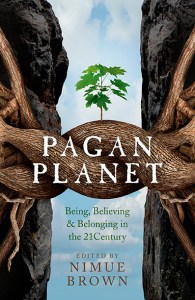
What about the ‘profound’? In Moon Book’s recently published Pagan Planet (1) I wrote a short piece called Living Presence in a Field of Living Presence: Practicing Contemplative Druidry.  For me, being ‘living presence within a field of living presence’, and living this presence more consciously, is the key to any deepening that we may find in our simplicity. It enables both the transformative potential of ‘knowing’ ourselves a little more, and does so within a context of interconnectedness.

I find that when I cut to the chase, and get to this experiential level, I need have no worries about working the Headless Way or how it fits with Druidry. My solo practices and meaning-making have indeed undergone a shift, yet Druid contemplative sessions and retreat days remain a highly appropriate and nourishing vehicle for practice and community.

(1) Nimue Brown (ed.) Pagan Planet: Being, Believing & Belonging in the 21st. Century Winchester, UK & Washington, USA: Moon Books, 2016


CONTEMPLATIVE DRUIDS UPDATE

2016-01-10 16.50.19Update on our presence at public events in 2016. These are the Pagan Federation Wessex Conference on 9 April, the Barmoor Druid Weekend 19-21 August, and our own Day Retreat at Stroud on 1 October. Here are the details.

Elaine and I will be on a stall at the Pagan Federation Wessex Annual Conference for the morning and part of the afternoon. The conference is on Saturday 9 April at The Village Hall, Whitminster, Gloucestershire. If you are going you are welcome to have a chat to us in between the talks, pick up a leaflet or buy a book or an original art work. Doors will open at 09:45 with the opening ceremony performed by the PF Wessex Team taking place at 10:15. The talks are scheduled to end at 17:15.

In the evening the doors will open at 19:30. A fully licensed bar will be available and entertainment will be provided by Tinkerscuss and Finnegans Wok Ceilidh Band.
Tickets for the whole event costs £20 for Pagan Federation members and £24 for non-members. You can also purchase tickets for just the day or the evening. Further details here: http://conference.pfwessex.org.uk/

Barmoor Weekend 2016 On their Facebook page Barmoor Druid Weekend the organizers make this invitation: “For all those on a druid/pagan/nature-based spiritual path, please join us for the 4th annual Barmoor Weekend at Hutton-le-Hole, a delightful village in the North Yorkshire Moors National Park near Pickering. The dates are Friday 19 – Sunday 21 August 2016. The main theme this year is divination but there will also be a variety of other workshops”. One of those workshops will be a contemplative session lead by Elaine and me, and thus far scheduled for the Saturday morning.

The weekend is about sharing friendship, sharing our skills, our dreams and spiritual practices. The cost is £45 all-inclusive of vegetarian meals and accommodation. There is a facility to message the organizers on the Facebook page. Hannah Silcock is the primary contact.

On 1 October we are offering a dedicated Contemplative Day Retreat in Stroud, Gloucestershire, in the group room of the former St. Luke’s Medical Centre. led by James Nichol, Elaine Knight, Nimue Brown and Tom Brown. Tom is an addition to the 2015 team and will be offering a session on contemplative drawing. The day will also include contemplative walking outdoors and our ‘Awen space’ practice. Arrive at St. Luke’s Medical Centre from 10 a.m. for 10.30 start, ending at 4.30 pm. £30 full, £15 concessionary. For full details see http://contemplativedruidevents.tumblr.com and for questions and booking write to grovelight@hotmail.co.uk 2016-01-10 16.50.19

BOOK REVIEW: BRIGID

jhp563383c26ba72

Timely and highly recommended. Brigid: Meeting the Celtic Goddess of Poetry, Forge and Healing Well is shortly due for release in Moon Books’ Pagan Portals series. Author Morgan Daimler describes it as “a resource for seekers of the pagan goddess specifically”, offering “both solid academic material and anecdotes of connecting with Brigid in a format that is accessible and designed to be easy to read”. On my reading, this is an accurate description, and in my estimation Brigid takes its place as a valuable addition to modern pagan literature.

As Daimler points out, the Celtic Goddess Brigid is well known and popular. In the Gaelic-influenced world, she has an alter ego as a powerful Christian saint. Yet what we know, or think we know, is selective and potentially confusing for today’s pagan seeker. “The lore of the Catholic saint is attributed to the pagan Goddess, and some people see shadows of the Goddess in the saint. For many people new to Brigid, or to studying Celtic or Irish mythology, it can be extremely confusing to try to sort out the old beliefs from the modern, to tell the Irish from the Scottish. The end result is that some people who are drawn to honor the Goddess Brigid find themselves lost in a seemingly endless assortment of possibilities”. Yet, in an intentionally short and simple book, Daimler does a great deal to sort out potential points of confusion and help her readers to find their way. She also includes an important chapter on Brigid by Other Names – which include the Brythonic Brigantia, the Gaulish Brigandu and the name Ffraid in Welsh.

Brigid devotes considerable attention to mythology, and to traditional lore and festivals (including a reference to the American groundhog day). But, as a modern Polytheist Pagan, she also has a lot to say about Brigid as she is today, including modern versions of practices like the making of offerings, flame-tending, the creation of altars, divination, meditation and prayer. There is a complete chapter on Prayers, Chants and Charms. Above all, Daimler shares something of her own journey, and the numinous experiences she has had through her Brigid connection from the beginning of adolescence to a present in which she is devising Imbolc rituals with her children. Standing as she does in Irish Reconstructionist Polytheism, she says that “I do not think that the religious framework we use to connect to the Gods matters as much as the effort to honor the old Gods itself. I think that we can all do this respectfully and with an appreciation of history without the need for any particular religion”. Brigid: Meeting the Celtic Goddess of Poetry, Forge and Healing Well amply fulfills its author’s aim of helping its readers to benefit from time spent “getting to know Brigid”.


CONTEMPLATIVE DRUIDRY IN 3 SENTENCES

Elaine and I were recently asked by a non-Druid local group to define contemplative Druidry in 3 sentences.  This is what we came up with.

“Contemplative practice in Druidry supports what has been called ‘the Nature mysticism of modern Druidry’. Our understandings of what this means are provisional and inquiring – those of us who follow the Druid way are encouraged to craft our own practices in accordance with our inner guidance, our needs and wishes. Practices in the Stroud-based group include group meditation, personal sharing, outside walking meditation, chanting and contemplative arts.”

This mix of practices also forms the basis of our retreat days for the wider Druid and fellow-travelling community. This year we are running two such days – one in London on Sunday 7 February and the other in Stroud on Saturday 1 October together with Nimue and Tom Brown. See also http://contemplativedruidevents.tumblr.com

We owe the phrase ‘the Nature mysticism of modern Druidry’ to Philip Carr-Gomm, who leads the Order of Bards, Ovates and Druids (OBOD), who used it in his foreword to Contemplative Druidry: People Practice and Potential. He also pointed out that the Druid way as a whole is one where we take responsibility for crafting our own practices. We see this a something we need to emphasise, since this approach is still unusual in spiritual movements as a whole.


BOOK REVIEW: PAGAN PLANET

jhp55ddc04c930d1“For this reason I am doing what I do, working towards …. the more beautiful world our hearts know is possible”. Simon Wakefield is a biologist, Druid and contributor to Pagan Planet: Being, Believing and Belonging in the 21st Century. He talks about the “most profound experience of my life” when observing a nesting sea turtle on a starlit Greek beach. “Putting aside all the requirements to measure and monitor I decided just to be present, and I opened up to an experience of deep time and an ancient longing by another creature simply to be, to express its uniqueness, which has never left me”.

For me, Simon has expressed a point of unity in this diverse collection of essays edited by Nimue Brown and published by Moon Books. The authors come from a variety of Pagan traditions, though with a tilt towards Druidry. Many stand witness to a growing movement of Pagan activism, where people find themselves involved in the demanding, draining and potentially perilous work of resistance, protection and defence. The value of Simon’s words (which he attributes originally to Charles Eisenstein) is to keep an eye on the prize: “the more beautiful world our hearts know is possible”. Beauty, of course, depends on our ability to perceive, name and cherish it. Reading the essays in Pagan Planet, I come away with a sense of this as a unifying Pagan commitment.

What moves me most, I think, is an overall sense of resilience and optimism – not so much an optimism of calculation as an optimism of the heart. In his piece about the foundation of PaganAid, Ian Chandler says: “I have heard people’s stories that make me cry, I have seen destruction that has brought me to my knees with despair. But I have also met people whose dedication against all odds fills me with awe. I have seen achievements that make me want to sing and dance in the street. Now is not the time for us to give up on the future – it is time for us to decide what we want and to make that future happen”. Edwina Hodkinson talks about the frontline herbalism of the Wild Sistas in anti-fracking protection camps. “We dispensed tinctures, teas, creams, cough syrups, health advice, general nurturing and lots of first aid. Protectors who had been injured from interaction with the police wanted treatment for badly bruised ribs and groins, sprained wrists, and grazes … people had great faith in what we did, compliance was good and the results of the herbs spectacular … I’ve come to believe that when we go out of our comfort zones and are prepared to make some kind of sacrifice for ourselves and the earth, the earth responds and works with us”. One of their successes was the ‘warrior drops’ created to deal with trauma, stress and anger on the front line. “Protectors said that these really made a difference in calming them down” and one said “it grounded him and reminded him why he was doing the protest”.

A number of the essays stand witness to the creative energy of Pagan vision and life practice at this moment in history. These include Lorna Smithers’ visionary evocation of Castle Hill, Penwortham, described as “a magical place, in spite of the damage”, whose “alternative story” has been passed on “by its spirits, by decree of the fay king”. Hearth Moon Rising says that “my vision for some time has been to ground modern witchcraft more completely and more concretely in the natural world, to create a deeper understanding of what it means to have an animistic practice”.  Other people are exploring roads less travelled, like Laura Perry in Walking the Modern Minoan Path or Calantirniel in Working with Tolkien, where part of the purpose is to integrate the “Christ energy” into a Pagan path. Irisanya from the Reclaiming tradition offers a piece on Lifestyle/Work/Relationships which is centred on overlapping considerations of gender and peer communication and the magic of knowing how to track the energy in a conversation, when to listen, when to speak up and how to be supportive of voices that are not being heard. There are a number of pieces about the family context, including supporting dependent elders and raising children. In The Teachings of Children, Romany Rivers reports that people ask her whether her spirituality affects her parenting; her view is that it’s the other way round – her parenting affects her spirituality. “I realised how one small person’s emotional state can impact an entire environment. I have learned more about Reiki from working with my children during times of pain and stress, peace and snuggles. I have discovered new reasons to meditate. I have reconnected with the power of imagination. I have found new creative expressions”. She concludes, “I believe that is my children who are Pagan, and it is they who raise me.”

There is much more. I’ve got a piece called Living Presence in a Field of Living Presence: Practicing Contemplative Druidry. I would certainly have thought of it as supporting “the more beautiful world that our hearts know is possible” at the levels of perception, recognition and cherishing. But I didn’t think of it, and have only done so now as a result of reading the rest of this book: the value of community! Because of my involvement, I’m not going to review the book outside this blog or award points. I hope instead that I’ve been able to demonstrate something of its energy, diversity and commitment – and that the Modern Pagan movement from which it comes.


Nimue Brown (ed.) Pagan Planet: Being, Believing & Belonging in the 21st Century Moon Books, 2016

CONTEMPLATIVE DRUIDRY 2016

The next month is a busy one for contemplative Druidry. Our group in Stroud has its first meeting next Tuesday. Towards the end of January Elaine and I will be working with another local group that meets to explore sacred traditions. Then on 7 February we are running  a Dark of the Moon Workshop day retreat in London, at Treadwell’s Bookshop’s workshop space, 33 Store Street, London WC1 E7BS. Our specific intent is to  greet the dark of the moon at the time of Imbolc and the first stirrings of the Earth. The programme will include contemplative exercises, subtle energy work, silent sitting and Awen space group meditation. As with all of our public events, anyone willing to work within a Druid framework for the day is welcome.

The end of January also sees the publication of a new Moon Books anthology Pagan Planet: Being Believing and Belonging in the 21st. Century – see http://www.moon-books.net  and Nimue Brown’s presentation of the book. I have a piece in it on practising contemplative Druidry. Since I wrote it I have become even more convinced that contemplative Druidry is not a distinct form of Druidry, but rather a flavour, or way of working within it. We can create specific environments and practice frameworks that enable contemplative practice, and understand them as an option within a range of options.

More broadly, I think that the contemplative meme is now well recognised. My 2014 book Contemplative Druidry: People Practice and Potential is still finding new audiences. The Contemplative Druidry Facebook group, which I stopped administering in 2013, continues to thrive, now with a membership of over 1100. Elaine’s blog at http://contemplativedruidevents.tumblr.com/ and the Contemplative Druid Events Facebook page have received increasing increasing attention in the last couple of months, perhaps in part due to the Contemplative Druidry article in the Samhain 2015 edition of Pagan Dawn. Other events are planned for later in the year.

I’ll continue writing about these and other developments in this blog.

Earth Eclectic

music that celebrates Earth and speaks to the heart

Sarah Fuhro Star-Flower Alchemy

Follow the Moon's Cycle

Muddy Feet

Meeting nature on nature's terms

Rosher.Net

A little bit of Mark Rosher in South Gloucestershire, England

Becoming Part of the Land

A monastic polytheist's and animist’s journal

selkiewife

Selkie Writing…

Charlotte Rodgers

Images and words set against a backdrop of outsider art.

Prof Jem Bendell

living with metacrisis and collapse

Towint

The pagan path. The Old Ways In New Times

The Druids Garden

Spiritual journeys in tending the living earth, permaculture, and nature-inspired arts

The Blog of Baphomet

a magickal dialogue between nature and culture

Musings of a Scottish Hearth Druid and Heathen

Thoughts about living, loving and worshiping as an autistic Hearth Druid and Heathen. One woman's journey.

Wheel of the Year Blog

An place to read and share stories about the celtic seasonal festivals

Walking the Druid Path

Just another WordPress.com site

anima monday

Exploring our connection to the wider world

Grounded Space Focusing

Become more grounded and spacious with yourself and others, through your own body’s wisdom

The Earthbound Report

Good lives on our one planet

Hopeless Vendetta

News for the residents of Hopeless, Maine

barbed and wired

All content on this site is now located at www.jonberrywriter.co.uk