Contemplative Inquiry

This blog is about contemplative inquiry

Tag: Eco-Spirituality

NATURAL AND RITUAL PATTERNING

At the winter solstice, I began a year of enhanced attention to the wheel of the year. I have re-introduced the circle as container for my morning practice. The directions and elements are conventional for my location and tradition. The references are all naturalistic – with ‘heaven’ as the dome of the sky.

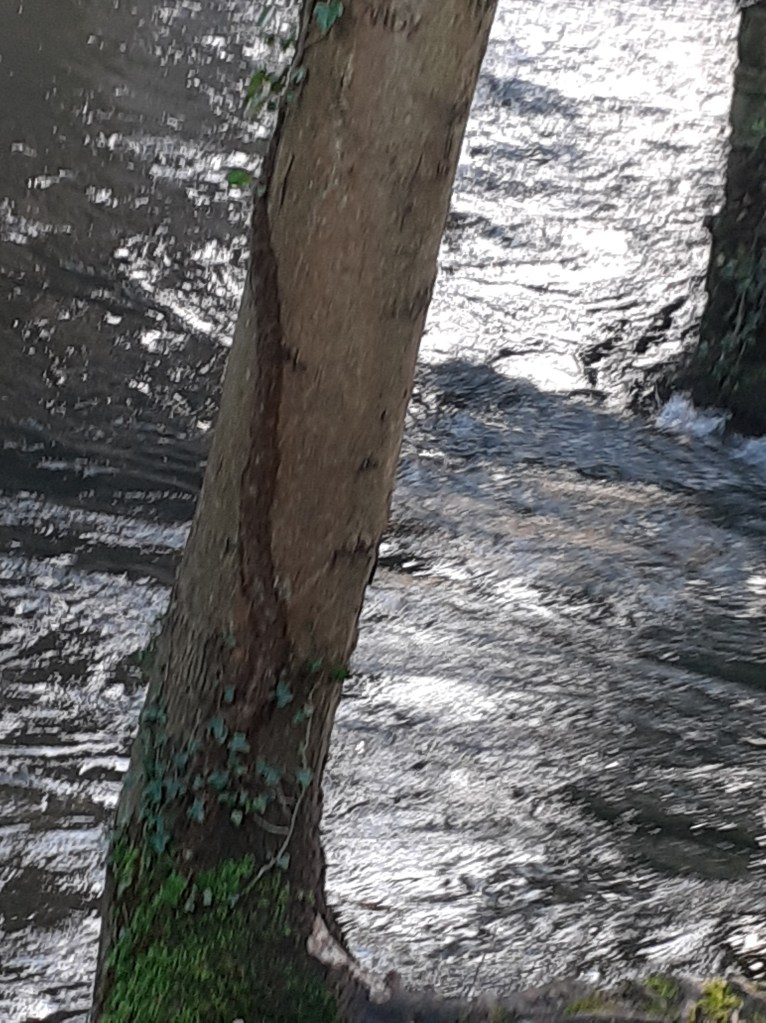
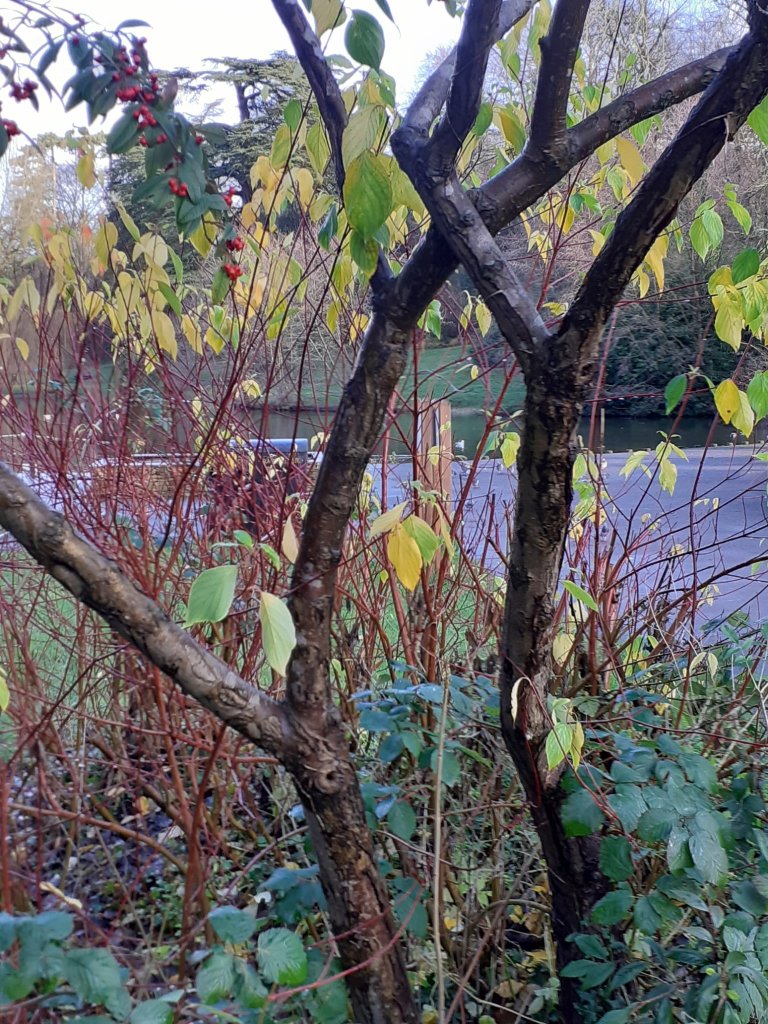
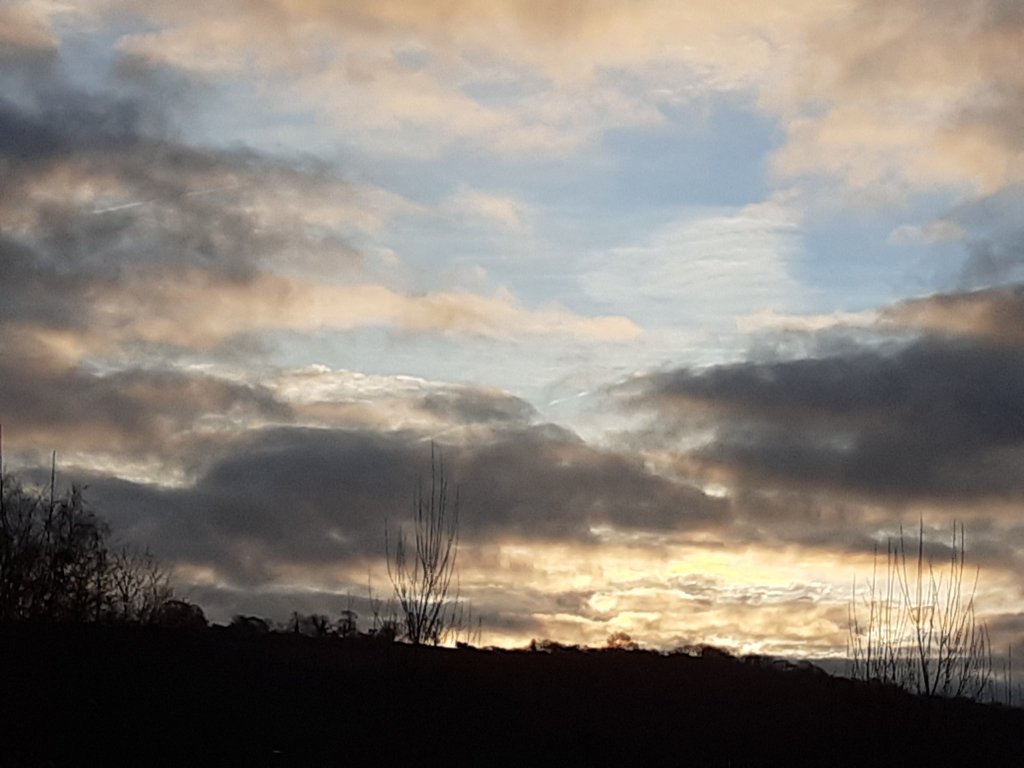
The journey around my circle begins and ends at the midwinter moment, in the north, domain of the powers of earth. The patterning is minimalist, though it still took awhile to get a language that feels just right. Now it grows in power and resonance with familiarity and repetition. For me, ritual patterning scarcely competes with complexity and flow of natural patterning, as I look at the pictures above and below. Compared with these, it is something of an abstraction. Yet I value it all the same. This simple patterning embodies my commitment. It will walk with me through the year.

I stand, north, facing south, ring my bells and say: I arise today through the strength of heaven, light of sun, radiance of moon, splendour of fire, speed of lightning, swiftness of wind, depth of sea, stability of earth and firmness of rock.

North, facing outwards: I greet the powers of the north, element of earth, season of winter, time of dying and regeneration. Hail and welcome!

East, facing outwards: I greet the powers of the east, element of air, season of spring, time of early growth. Hail and welcome!

South, facing outwards: I greet the powers of the south, element of fire, season of summer, time of ripening. Hail and welcome!

West, facing outwards: I greet the powers of the west, element of water, season of autumn, time of bearing fruit. Hail and welcome!

Spiralling in to centre: I greet the power at the centre, the one world tree, giver of life and teacher of wisdom. Hail and welcome! Back north, I begin a full round of the circle, sunwise, and say I cast this circle in the sacred grove of Wisdom. May there be peace throughout the world!

My closing is a reversal of the opening, with an uncasting of the circle, a repetition of the opening words and a final ringing of the bells. In the address to the directions, the words ‘thank and ‘farewell’ replace ‘greet’ and ‘welcome’. I have noticed that the other parts of my morning practice are subtly enriched by this new container.

‘ABOUT’ FOR 2020

A happy New Year to all readers, as we begin to navigate the 2020’s! May we find compassionate and creative ways to flourish in the days ahead.

As my contemplative inquiry evolves, I update the ‘About’ section for this blog. Below is my revision for the beginning of 2020.

“I am James Nichol and I live in Stroud, Gloucestershire, England. The Contemplative Inquiry blog started in August 2012, and includes personal sharing, discursive writing, poetry and book reviews. I began my contemplative inquiry within modern British Druidry and my book, Contemplative Druidry: People, Practice and Potential, was published in 2014.  https://www.amazon.co.uk/contemplative-druidry-people-practice-potential/dp/1500807206/

“Over time my inquiry became a wider exploration of contemplative spirituality, identified for a period as a Sophian Way. It drew on the enduring wisdom of many times and places and I came to experience it as a path of healing, peace and illumination. In particular, my inquiry identified an ‘at-homeness’ in the flowing moment. Such at-homeness is not dependent on belief or circumstance, but on the ultimate acceptance that this is what is given. I have found that, for me, the realisation of this at-homeness has supported a spirit of openness, an ethic of interdependence and a life of abundant simplicity.

“The discovery of at-homeness emerged from an inward inquiry arc: noticing myself perceiving, making meaning, and finding a language to articulate my experience. Now I am on an outward arc. I am turning to a greater focus on relationships, community, culture, and the wider web of life. Druidry, as a modern eco-spirituality receptive to ancient wisdom, is renewing its importance in my life.”

MIDWINTER MORNING

Happy Yule/Winter Solstice/Alban Arthan! A time I experience as an extended movement over two days starting on 21 December. Midwinter doesn’t have to be bleak and barren. This morning, 21 December 2019, I took these pictures to celebrate and contemplate a bright moment in Stroud. A small miracle of blue sky broke through the rain, cloud and gloom.

APPROACHING THE YEAR’S TURN

We have a small patch of garden at the front of our house, remodelled only a week ago. It has a modestly zen pagan reference, with just a hint of spiral. In the bigger picture, where I live, we are rapidly approaching the turn from an inward to an outer arc of life energy. The Winter Solstice is very close.

I’m not experiencing deep stillness this year. It feels more like an extended pause for breath – a time for taking stock and regrouping. I’m peering in to the 2020s. Calendar numbers might be arbitrary, but they are numbers of power in our culture. They award shape and identity to years and decades. Part of me sees the 2020s as pure science fiction, with an increasingly dystopian tilt. Themes of alarm, determination, resourcing and resilience come up for me at multiple levels.

I have checked out older resources which have been neglected for awhile. One of these is the popular and respected Wildwood Tarot. I bought it years ago but didn’t much engage. Now its time has come round, prompted by an impulsive consultation. It happened in the early hours of a recent morning, at a rare time of sleeplessness. I spent several hours getting to know it. Here it is enough to say that I am drawn by its strong wheel of the year orientation, by its choice of imagery for the major trumps in particular, and by its own focus on resiliency.

I am going to live the year from 22 December with heightened attention to the wheel of the year, and with this resource as my companion. My current warm up process is already changing the way I think and feel about contemplative inquiry and will re-shape how I do it. In the meantime I enjoy the front garden and await the return of the sun.

Mark Ryan & John Matthews The Wildwood Tarot Wherein Wisdom Resides London: Connections, 2011. Illustrations by Will Worthington

EMPTINESS AND INTERBEING

At this point in my inquiry I want to refine my understanding of ’emptiness’. The Buddhist teacher Thich Nhat Hanh is a great help here, in his final commentary on the Prajnaparamita Heart Sutra .

Thich Nhat Hanh discusses Buddha’s teaching that everything is “a manifestation of causes and conditions” and that nothing is permanent or unchanging. This applies to the whole cosmos, and not just to the apparent world. “Whether you call it atman (the soul) or Brahman (ultimate divinity), whether you call it the individual self or the universal self, you cannot find anything there”. Buddha’s teaching was aimed at undermining both of these notions. Nothing has any ‘self-nature’ (we might use the term ‘essence’).

Thich Nhat Hanh pursues this right into the territory of emptiness. “There are still many people who are drawn into thinking that emptiness is the ground of being, the ontological ground of everything. But emptiness, when understood rightly, is the absence of any ontological ground. … We must not be caught by the notion of emptiness as an eternal thing. It cannot be any kind of absolute or ultimate reality. This is why it can be empty. Our notion of emptiness should be removed. It is empty.”

He goes on to say: “the insight of interbeing is that nothing can exist by itself alone, that each thing exists only in relation to everything else … looking from the perspective of space we call emptiness ‘interbeing’; looking from the perspective of time we call it ‘impermanence’ … to be empty is to be alive, to breathe in and breathe out. Emptiness is impermanence; it is change … we should celebrate. … When you have a kernel of corn and entrust it to the soil, you hope it will be a tall corn plant. If there is no impermanence, the kernel of corn will remain a kernel of corn forever and you will never have an ear of corn to eat. Impermanence is crucial to the life of everything”.

This is one side of an age old controversy within spiritualities of Indian origin. In this blog, I have given friendly attention to the other side as well – particularly Direct Path teachers like Rupert Spira and Greg Goode and the Indian influenced Douglas Harding. In the end I don’t make an absolute judgement about it. My Sophian ‘At-Homeness in the flowing moment’ is compatible with both views. But I’m now finding greater energy and aliveness in the framework here presented by Thich Nhat Hanh.

Increasingly, when I do Direct Path exercises I experience a breaking down of assumptions about experience itself, and a tremendous opening out … but no container called ‘Awareness’ to fill a God sized hole. It’s similar for me with the Harding exercises. My experience is broadly the same, but my felt sense has shifted, and my narrative with it. I’m moving away from big picture truth claims about this, because I have become sceptical that exercises like this provide any grounds for them, one way or the other. Rather, I lean in to an evolving personal understanding, always provisional, of my contemplative experiences.

As a shorthand, I can talk about the tension between a ‘Oneness’ framing and an ‘interbeing’ framing of what people call non-duality. The difference can seem subtle – and it may be best to use ambiguous, open-ended words like ‘Tao’ and preserve a sense of mystery. But at this turning of the year, ‘interbeing’ is my preferred term. It fits better with the eco-spirituality which I take from my Druid journey, and affirms the relational basis of my Sophian Way.

(1) Thich Nhat Hanh The Other Shore: a New Translation of the Heart Sutra with Commentaries Berkeley, CA: Parallax Press, 2017

See also: https://contemplativeinquiry.wordpress.com/2017/10/21/the-uses-of-emptiness/ an earlier post that I’ve been able to draw on here.

THE BLESSINGS OF TIME

The wheel of the year, particularly now, prompts me to attend to time and the blessings of being time-bound. In John Cowper Powys’ Porius (1), Myrddin Wyllt (Merlin) is an incarnation of Saturn, Cronos, Old Father Time. By the end of the book Porius its main protagonist understands himself as a devotee: “there are many gods; and I have served a great one”. Earlier he reflects on “a delicious human satisfaction, in defiance of so many austere and implacable metaphysicians, in thinking of Time, the alter-ego of crooked-counselling Cronos, as the creator of all the value and beauty there was in Space, if not of Space itself.”

This is directly contrasted with the view of the priest Minnawc Gorsant in the same story. “Upon what great word … does our Christian faith depend? … Eternity! … What eternity destroys – swallows up, rather! – is this contemptible, this miserable, this wretchedly human thing, Time!” Gorsannt goes on to assert that “the human race wasn’t created to be happy, or To be good, or to improve its lot. The human race was created, purely, solely, exclusively, arbitrarily, for the glory of God, and for that alone.”

If there is any meaning in the word eternity, it has proved to be the enabler of time, at least in this universe. Through time I am given life, relationship and agency, however transient they may be. They are the greatest gifts imaginable. If, at times, I also experience them as compromised, then I can look at negative experiences and their roots – physical, psychological, relational, social or ecological. I experience the ‘spiritual’ dimension as living in all of these, not as a separate realm. So distresses and dysfunctions need to be compassionately acknowledged, addressed, perhaps accommodated, perhaps challenged and transformed, at their own level. If I find myself seeing the world (rather than my limited and illusory sense of it) as a prison to bust out of, then something has gone very wrong, because for me there is nowhere else to go.

When I pay attention to the wheel of the year, I experience a day-by-day process where the festivals act as markers. They are not a prime focus, and I have even known them to become another way of being distracted from distraction by distraction. Following the wheel helps me to acknowledge both time and place. Whilst no two years are alike, this way of living in time emphasises the cyclic rather than linear, always with an ebb and flow, a dying away and (where I live, thus far) a promise of renewal.

The effect on me is to slow it down, localise it, and better allow me to discern patterns, rhythms and tides. I find it very suited to an earth-oriented eco-spirituality, and at chosen times it can become a meeting place between stillness and movement. Perception becomes richer and the desire to share this richness becomes stronger. It is a sacrament that collapses the distinction between sacred and secular. It is entirely dependent on time, If Time is a god, it is indeed a “great one”.

(1) John Cowper Powys Porius: a Romance of the Dark Ages Overlook Duckworth, 2007. Edited by Judith Bond and Morine Krissdottir, with a foreword by Morine Krissdottir. The first abbreviated edition was published in 1951.

WINTER MORNING LIGHT

This is 7 December where I live, a little after 8 am, itself a little after the moment of dawn. The sunrise is still early in its process, fifteen days before the turn of the year. I took the pictures on one of my regular canal walks, this time between Stroud and Brimscombe in Gloucestershire, England.

This year I am paying close attention to the dance of place and time. It is part of my re-grounding after my adventures in non-duality, yet retaining the learning they brought. I surrender to the experience of winter sunlight. I breathe it in, and it fills the world, enacting a primal awareness. At the same time I acknowledge the particularity of time and place, of movement and change in nature. I also know that my observation of this winter light, at this time and in this place, is unique. It will never happen again in quite this way. It makes me glad to be alive and here for it. This gift is all the greater, and all the more to be treasured, for that very vulnerability, personal and collective, of which I am also conscious.

INTEGRATION

This is my grail image. I can see a chalice against a formless yet shape-creating background, or I can see two beings, with an enabling space between them. Two worlds; one image. Flicking rapidly between them, there comes a point where I can see them both, in the same place, at the same time.

I see the whole as an image of integration. Myth making just a little, I can point to a primal void, from which I am in no way separate, a cosmic mother, from whom I am distinct yet also in no way separate, and the birth of multiple individual forms of which I am one. With individuality comes otherness – and a world of connection/separation, community/exile, love/hate, joy/fear, generosity/contraction, conflict/co-operation, solidarity/predation. By integration I don’t here mean making the bad stuff go away, though efforts in that direction are immensely important. I am pointing, rather, to a capacity to hold all experience in presence and awareness: the deep experiential acceptance that all of the above, right up to void and creation, are happening here and happening now. They are the reality within which I awaken.

The Christian grail quest, which concerns the healing of the soul and its opening into spirit, partly evolved from older stories about the healing of the land, and maintains a wasteland motif. In Mahayana Buddhism enlightenment makes no sense if any sentient being is left behind. The modern Western Mystery tradition provides ways of bringing these stories together, with more of a tilt at this point in our history towards the collective dimension. I have written before that “for me the grail represents the presence and energy of Sophia”*, and has power for me on my Sophian Way. On this way, the ‘inner’ and ‘outer’ work go hand in hand: these are in any case conventional and limiting terms.

I understand the future as demanding cultures of resilience. Because of that I am glad that I have retained a foothold in Druidry and Paganism, because I see them as cultures of possibility in this regard. My Sophian Way has been a personal one, arising unexpectedly within my Druid education, and given some scope for recognition because of the way my Druid education worked. It fits better into the OBOD community, with its Universalist opening and invitation to learn from all traditions, than into any Christian, Gnostic or New Age community that I know of.

Yesterday I made a symbolic re-connection with OBOD (for I had never really left) by taking out a subscription to its magazine Touchstone after a lapse. Here at least I can name the Sophian Way unequivocally as a Goddess devotion without going through flips and twists about what ‘divine feminine’ might mean. At the same time, the name Sophia does reference insights and influences from other traditions, including secular philosophy, as befits a Goddess of Wisdom. For me, this is another kind of integration, whose fruits will manifest over time.

THE FLOW OF INQUIRY

There’s a saying that we never see the same stream twice. It’s true, from a certain perspective. The water is always different. In this recent picture there’s more of it than is usual. The flow is faster and more energised. But in another sense, it is clearly the same stream. There’s a pattern and a placing that make it the same. Not forever. But enough to give it an identity of its own. Enough for us to recognise it, and to be in relationship with it over time.

I think of my inquiry in the same way. It is clearly a process of inquiring, not a thing. It has changed a lot over the years. But I notice, looking back, that it does also have characteristic points of reference and recurring themes. It has its own kind of flow. I see for example that whilst taking up practices of self-inquiry linked to non-dualist movements, I have not embraced the movements. I have gone to them for insight, not belonging. Instead, I have naturalised the insight and reframed it in my own terms – such as stilling into presence, or finding home in the flowing moment. The central focus on Sophia, and the naming of a Sophian Way, has helped here. In my world, contemplative inquiry is a core Sophian practice.

I have also kept a least half a foot in the cultural matrix of modern Druidry, Paganism, animism and eco-spirituality. These movements are closer to my heart and imagination, and feel more like my cultural home. For me, emptiness only has meaning as a home to fullness and and an exuberant multiplicity of forms. The Sophia card (Major Arcana II) in the Byzantine Tarot has a vision of Sophia as present in all of creation and the natural world, and also “watching over the steps of the Holy Fool on his journey and guiding those who seek her blessing to find their own path through the world”*. I am not at all sure about the word ‘holy’, but I see Sophia in the stream, and sense the guidance there.

*John Matthews and Cilla Conway The Byzantine Tarot: Wisdom of an Ancient Empire London: Connections, 2015

BOOK REVIEW: GREENING THE PARANORMAL

I recommend this book to anyone concerned with deep ecology, animism, or the kinds of phenomena we describe as ‘paranormal’. It opens with two substantial framing pieces, a foreword by Paul Devereux and an introductory chapter by editor Jack Hunter. These are followed by 16 chapters from a diverse range of contributors, mostly seeking to combine direct witness with a workable form of academic analysis. To an extent this book is a story of how to face this difficult challenge. Very early, in his foreword, Paul Devereux shows how the challenge can come from the ‘phenomena’ themselves.

“We were trying to geographically map generations of old accounts of fairy paths we had uncovered in the verbatim records of University College Dublin. Suddenly, standing in the grass, there was a figure, between two and three feet tall. It was anthropomorphic and fully three dimensional (as we could clearly determine while we were drifting slowly past. It had sprung its appearance out of nowhere, and it caught my wife’s and my own transfixed attentions simultaneously.

The figure was comprised of a jumble of very dark green tones, as if composed of a tight dense tangle of foliage rather like the stand of woodland a hundred yards or so beyond the sward of grass. It didn’t seem to quite have a face, just a head with deep set eyes appearing out of the green tangle. It presented a distinctly forbidding appearance. As we crawled past in our car, the figure started to turn its head in our direction, but then vanish.

“Charla called out, ‘Oh, shit!’ We looked at each other, both of us wide-eyed and thoroughly disconcerted. ‘You saw that!’ I asked rhetorically. The whole episode had lasted for only about half a minute or so, but it was unequivocally an actual. if transient, objective observation.”

The running inquiry question throughout the book is, what do we make of experiences like this, if we are determined to honour rather than dismiss them? Devereux senses four major themes in the suggested ‘greening of the paranormal’ in our time. The first is animism, the ‘Big Step for our culture to take’: the sense that the elements of the non-human world are animate in some way – rocks, rivers, soil, as well as plants and living organisms. This involves a deep relationship with the land beyond utility and subsistence. The second theme is the vision quest, a wilderness journey which is more about paying attention and being open to what unfolds, rather than posing questions. The third concerns the ‘liminal’ places that seem to support our breaking through into other-world realms or altered mind states. The fourth is inter-species communion with the animal and plant kingdoms. In the language used by Jack Hunter, we find ourselves dealing with a “profoundly mindful, sentient and agentic world” and the potential re-opening of lost forms of communication and connection.

Many of the contributors believe that we are unlikely to get through the climate crisis if we continue to ignore dimensions of experience from which our cultural filters have exiled us. Some of them live or work in countries that have been colonised by Europeans, but where pockets of traditional indigenous wisdom remain. They recognise that in some cases there are invitations to share in this. There are also concerns about appropriation and the dynamics of the researcher/subject relationship. There is a questioning of the word ‘shamanism’ as currently used – and arguably over-extended and suspect.

This book does not read like a novel. Although I have read it all, there were two or three chapters which didn’t speak to me. Others were riveting. I see it as an excellent book to own and keep for reference. The foreword and first chapter each stand alone and I recommend reading both of them. The other chapters can be cherry picked according to taste or need. Overall there’s a strong invitation to wake up to the aspects of world, life and experience that are being pointed to. The book suggests that they are needed for our personal, social and global healing.


Earth Eclectic

music that celebrates Earth and speaks to the heart

Sarah Fuhro Star-Flower Alchemy

Follow the Moon's Cycle

Muddy Feet

Meeting nature on nature's terms

Rosher.Net

A little bit of Mark Rosher in South Gloucestershire, England

Becoming Part of the Land

A monastic polytheist's and animist’s journal

selkiewife

Selkie Writing…

Charlotte Rodgers

Images and words set against a backdrop of outsider art.

Prof Jem Bendell

living with metacrisis and collapse

Towint

The pagan path. The Old Ways In New Times

The Druids Garden

Spiritual journeys in tending the living earth, permaculture, and nature-inspired arts

The Blog of Baphomet

a magickal dialogue between nature and culture

This Simple Life

The gentle art of living with less

Musings of a Scottish Hearth Druid and Heathen

Thoughts about living, loving and worshiping as an autistic Hearth Druid and Heathen. One woman's journey.

Wheel of the Year Blog

An place to read and share stories about the celtic seasonal festivals

Walking the Druid Path

Just another WordPress.com site

anima monday

Exploring our connection to the wider world

Grounded Space Focusing

Become more grounded and spacious with yourself and others, through your own body’s wisdom

The Earthbound Report

Good lives on our one planet

Hopeless Vendetta

News for the residents of Hopeless, Maine