Contemplative Inquiry

This blog is about contemplative inquiry

Tag: Earth spirituality

THE PEACE OF SOPHIA

This post is about contemplation and peace – peace as lived experience, rather than as hope or idea. I am discovering the peace of Sophia.

In my practice I experience Sophia as a psychopomp or inner guru. Conventionally she is a guide of light. Actually she is a guide of dark as well. Either way she points beyond herself. Generally using a method of subtle prompts and suggestions, she opens my way to a deeper nature.

Just recently she has been showing me a way to peace as an inner space, like a well-spring at the core of being. This is not a new idea, nor yet a new experience. But there’s more clarity around it, more definition – also, in a felt sense, more weight.

It began with an intense vision of braided threads – black, white and red, the traditional goddess colours. I felt nudged to identify the colours with peace, joy and love. Peace had some primacy. Although this is a triadic image, I began to see it as a four: black, white, red and black. Here the peace of the Goddess is defining. It is linked both to origin and return, and to spaces within and between other forms of experience. It may seem like simple negation. But it is an active force, like the ‘emptiness’ in some Asian traditions.

The good news is that ‘peace’ does not depend on external conditions. It can be accessed and developed within, both individually and collectively. This is why, to a certain extent, practices like meditation can be a protective or resiliency factor in relation to bad outside conditions. The trick here is to avoid a descent into the wrong kind of magical thinking and expect too much. Challenges still have to be dealt with at their own level: it’s just that having a baseline of inner peace tends to make practitioners more resourceful in dealing with the busy apparent world.

Cultivating the peace of the Sophia is currently centre stage in my solo work. In his foreword to Contemplative Druidry Philip Carr-Gomm quoted the well-known line “Deep peace of the quiet Earth”. My extension of that thought, based my current experience, is to say ‘as without, so within’. I believe this double recognition is necessary. To the extent that I am a nature mystic, the aspect of nature with which I am most concerned is me, in particular a deeper nature behind the surface personality.  Only by attending to both this nature within and nature around and beyond me can I refine the relationship between them and so identify any gift I might have for the world.

NATURE MYSTICS REVISITED

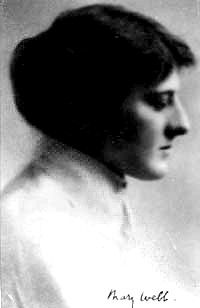
Mary_webb“Through a gradual awakening to natural beauty, she reached a perception of beauty peculiar to herself. She began to perceive analogies. Nature became for her, not a fortuitous assemblage of pretty things, but a harmony, a poem solemn and austere. It was for her no longer a flat painting on the wall of life. Beauty breathed there, light shone there that was not of the flower or the star. A tremor, mysterious and thrilling, seemed to run with the light through all matter, through a single open blossom of the wild gean tree and through the whispering forest.”*

In an earlier post – https://contemplativeinquiry.wordpress.com/2015/7/6/ – I introduced Nature Mystics: the Literary Gateway to Modern Paganism as a new and refreshing departure in Moon Books’ Pagan Portals series. This book, which I highly recommended, looks at literature seen to have nourished the culture and sensibility of modern Paganism. Rebecca Beattie, the author, has dedicated it “to all those Nature Mystics who have come before and continue to inspire us to a spiritual path with their words”.

This post is about a single book that I have read since reviewing Nature Mystics and would probably not have read otherwise. This is The House in Dormer Forest by Mary Webb. Unlike the better known Precious Bane and Gone to Earth, it is set at about the time of publication (1920) or perhaps a little earlier. I don’t think of it as a brilliant novel, but it does testify to a form of nature mysticism, one that brings together external nature, human consciousness, and the divine.

Running through the book is an assumption of the interdependence of humans with each other and with the rest of the natural world. Yet there is also a balancing emphasis on the personal, inner journey of individuation. The author makes this comment on two somewhat negatively portrayed matriarchal characters: “these two had been meant for individualists. This not being allowed, they became egoists, which always happens on the principle that if you deny a child sugar it will steal from the sugar-basin. The human mind, unless it is to remain nescient, must have itself, must develop and explore itself. The more vital, the more awake it is, the more it must turn inwards. For within, deep in the tenebrous recesses of sub-consciousness, man hopes to find God. Not in churches, not in his fellows, not in nature will he find God until he has found all these things mirrored in that opaque and fathomless pool, lying within his own being of which, as yet, we know nothing.”

If the inner journey has been made possible, the experience of creation is transformed. Human relationship can flourish and the human role of witness to external nature can become a mutual gift. I was brought up with an educated aversion to ‘purple passages’ and their perceived sentimentality. Yet now, I am happy to offer this one. “So it was with Michael and Amber. Arms were stretched forth in welcome. Flute notes fell from thickets. The eyes of bird and insect, the dewy gaze of a few late flowers, peered on them with new meanings. Along by the streams the willows, clad in silver-dusted feathers, meditated like stately birds. Willows are of all trees the most mysterious. It is said that they were the first of trees that before a bird sang or a bee quested for honey the world was full of willow forests. There the wind went in spring, a visible golden wave, deeply laden with yellow pollen. There, in the glistening air, with none but their own silver tongues to break the silence, the willows waited. They waited for the insects to come to their yellow aments; for the birds to flash in and out, making low music in the dusk. But they awaited also the perception which would complete their creation. The flowers that bloom unknown for a thousand years only exist when at last one flower blossoms under a perceptive eye. For that flower the pollen was launched spring after spring, the nectar gathered, the seed rounded. So the understanding of beauty is a priesthood. Amber and Michael gave to the forest almost as much as they gathered from it as they wandered in the warm and mellow harvest weather.”

*Mary Webb The House in Dormer Forest The Echo Library: Fairford, Gloucestershire, England, 2012

CONTEMPLATIVE DRUIDRY: MEME OR MOVEMENT?

On 3 October Contemplative Druid Events (CDE) – see http://contemplativedruidevents.tumblr.com – will hold its last planned event for 2015. This will be a Contemplative Day, in Stroud, Gloucestershire, England. The facilitators will be James Nichol, Elaine Knight and Nimue Brown. Our programme is designed for a group of up to 15 people, and 12 are already committed. With just over a month to go we have a comfortable size of group, with room for a few more.

CDE offerings are built around insights from the book Contemplative Druidry: People Practice and Potential about the kinds of contemplative work that most seemed to resonate for the present generation of Druids. We offer sitting meditations of based both on a bare attention and on active imagination. We have outdoor walking meditations and opportunities simply to be, with awareness, in natural settings. We use methods that draw on creative arts. We have developed ‘Awen space’ as a group opening to, in and as Spirit. We build our repertoire as we gain in experience.

Is CDE spearheading Contemplative Druidry as a movement? I don’t see it that way. CDE was created as a minimal level of organisation for a single purpose. This is to offer a particular kind of event to small groups of Druids and fellow-travellers willing to join us. In doing this, we also promote the contemplative Druid meme, which now seems to be well recognised in modern Druid culture. But the CDE brand does not exhaust the possibilities of contemplative Druidry and we wouldn’t want it to. Modern Druidry, which is in some senses a postmodern Druidry, has a strong commitment to free exploration and diversity. The contemplative meme will find its place within that wider cultural framework. For better or for worse, we will never, as a collective, be organised around a Druid ‘four noble truths’. Contemplative Druidry will mean different things, and inspire different journeys, for different Druids.

POPPY

red poppy MIA_400x296“We call the poppy ‘vanity’ and we write it down as a weed. It is humiliating to think that, when we are taking ourselves seriously, we are considering our own self-preservation, or the greater scheme for the preservation of mankind. What is it that really matters? For the poppy, that the poppy disclose its red … Seed and fruit and produce, these are only a minor aim: children and good works are a minor aim. Work, in its ordinary meaning, and all effort for the public good, these are the labour of self-preservation, they are only means to an end. The final aim is the flower, the fluttering, singing nucleus which is a bird in spring, the magical spurt of being which is a hare all explosive with fullness of self, in the moonlight; the real passage of a man down the road, no sham, no shadow, no counterfeit, whose eyes shine blue with his own reality, as he moves amongst things free as they are, a being; the flitting under the lamp of a woman incontrovertible, distinct from everything and everybody, as one who is herself, of whom Christ said, ‘to them that have shall be given’.

“The final aim of every living thing, creature, or being is the full achievement of itself. This accomplished, it will produce what it will produce, it will bear the fruit of its nature. Not the fruit however, but the flower is the culmination and climax, the degree to be striven for. Not the work I shall produce, but the real Me I shall achieve, that is the consideration; of the complete Me will come the fruit of me, the work, the children.

“And I know that the common wild poppy has achieved so far its complete poppy-self, unquestionable. It has uncovered its red. Its light, its self, has risen and shone out, has run on the winds for a moment. It is splendid. The world is a world because of the poppy’s red. Otherwise it would be a lump of clay.”

D. H. Lawrence A Study of Thomas Hardy in D. H. Lawrence Complete Works Delphi Classics on Kindle

When reviewing Nature Mystics – https://contemplativeinquiry.wordpress.com/2015/7/6/  – I mentioned D.H. Lawrence and Thomas Hardy as two of the named writers who had become part of my life during my teens. I also wondered how far such free spirited people can be enrolled as ‘properly’ proto-Pagan as suggested by the author. This passage is certainly very Laurentian. In modern terms, it seems to connect with the current conversation about ‘wildness’ rather than religious Paganism or nature mysticism, though of course these are all interconnected. I have certainly enjoyed revisiting Lawrence’s words after a long absence.  They were written early in 1915, with the red poppy simply representing abundant life, and so before its memorialising significance became marked. Lawrence was just under 30 at the time of writing, with  just 15 years left to him.

BOOK REVIEW: NATURE MYSTICS

jhp54f743a60d1fbHighly recommended. Nature Mystics: the Literary Gateway to Modern Paganism is a new and refreshing departure in Moon Books’ Pagan Portals series. It introduces readers to some of the literature that many modern Pagans perceive to have influenced the culture of their spiritual family. It will be published at the end of this month (31 July 2015) and author Rebecca Beattie dedicates it “to all those Nature Mystics who have come before and continue to inspire us to a spiritual path with their words”.

Selection has clearly been an issue and the author has both used her own judgement and consulted with associates in a ‘Nature Mystic’ blog. Her centre of gravity is England in the closing decades of the nineteenth century and, more particularly, the opening decades of the twentieth. She has chosen five women and five men to represent a place, a time, and a suggested sensibility. There are outliers – John Keats from an earlier time and W. B. Yeats from Ireland – but Beattie shows in her introduction how they fit within the selection. The full list is: John Keats, Mary Webb, Thomas Hardy, Sylvia Townsend Warner, D. H. Lawrence, Elizabeth von Arnim, W. B. Yeats, Mary Butts, J. R. R. Tolkien and E. Nesbit. Each author has a dedicated chapter describing their life, work and cultural setting; exploring specific works in some depth; and discussing both their declared or implied spirituality and ways in which it may inspire modern Pagans. Each is given a remarkably thorough treatment for an introductory book that addresses a larger theme.

I grew up with some of these writers and went on to study English literature for my first degree in the final years of the 1960s. It’s been interesting for me to check back on the writers I knew and those I didn’t, at that time, as a way of checking out how the world has moved on. Four of the men – Keats, Hardy, Lawrence and Yeats – were an important part of my life; Tolkien not so much, though I had read both The Hobbit and Lord of the Rings. E. Nesbit I knew as author of The Railway Children and connected with the Fabian Society, the intellectual voice of respectable British Socialism at the time. Thanks to Nature Mystics, I’ve enjoyed being introduced to her The Accidental Magic: or Don’t Tell All You know and The Story of the Amulet, works for children penned by the Nesbit who was involved, as I knew that Yeats was, with the Hermetic Order of the Golden Dawn. I discovered Mary Webb later, when I went to live in Shropshire where she was remembered. By then I was able to read Precious Bane and Gone to Earth in Virago editions and I later found Sylvia Townsend Warner and Lolly Willows in the same way. I still see these powerful and highly relevant books through a sort of feminist ally lens, as primarily about free-spirited women in outsider positions navigating gender and sexuality in a largely hostile and uncomprehending world, and looking for oases of safety and possible flourishing. Beattie’s book adds to the picture by spelling out Pagan tinged nature mysticism as a spirituality that is congruent with this quest, and also informed by it. I have still not read anything by Elizabeth von Arnim or Mary Butts, and before getting my review copy of this book, knew of them only through their links with other people. Now I’m encouraged to look at their work.

I’ve been delighted to read a work that offers new information and a new lens. The writers concerned are a diverse and free-spirited group. I’m not entirely convinced that they either could or should be enrolled in a league of “properly proto-Pagan” Nature Mystics. It is my belief that most of them would resist the identification. Beattie herself says that Tolkien was dismayed by some of the responses to his work in his own life-time. At the same time I do see a common tendency, in this group, to find the numinous in natural settings and the spirit of place, “that sense of bliss and divine communion that is gained from time spent absorbed in the natural world” as Beattie puts it. I’m sure, too, that there will be a ready assent among many readers to the suggestion that “where Woolf said every woman needed a room of her own, von Arnim would have said every woman needed a garden”.

I will leave the last word to Thomas Hardy, in a brief passage from Tess of the D’Urbervilles, quoted in Nature Mystics. It is about Tess herself, and evokes a moment when a sensitive human consciousness is more fully awakened by a moment in the cycle of the day: “She knew how to hit to a hair’s breadth that moment of evening when the light and darkness are so evenly balanced that the constraint of day and the suspense of night neutralise each other, leaving absolute mental liberty”.

BOOK REVIEW: THE NEW MONASTICISM

New_MonasticismHighly recommended. I knew I would be in business with this book as soon as I got wind of it, and it will take further contemplation and inward digestion before I fully understand my relationship with it. I believe that this is the kind of effect that what The New Monasticism: an Interspiritual Manifesto for Contemplative Living intends to create.

‘Monasticism’ is refreshingly used here “simply to denote a level of commitment to a spiritual life”. It is not about specific beliefs or a specific lifestyle. It asks us to free ourselves from our cultural conditioning and an unquestioning and un-questing life. Avoiding identification with material success, living in the midst of a contemporary society that does not support such a calling, we may enter a space of “radical profundity and divine transformative energy”. We seek simplicity not through renunciation but through ‘integration’.  We do need retreat space, so some people will indeed be called as specialists to hold the “containers of silence”. But most will pursue vocation in the world, in a life made up of contemplative practice, heartfelt conversation and sacred activism.

Authors Rory McEntee and Adam Bucko are situated within the Roman Catholic tradition, in an emancipatory strand which is reaching out to others and hoping to transcend itself. The term ‘interspirituality’ was coined by Brother Wayne Teasdale, an ordained Christian Sannyasin who  presided over an ashram in India. The authors see interspirituality as “humbly placing itself in partnership and collaborative discernment with our time-honoured religious traditions”.  In the last decade we have also seen the linking of Father Thomas Keating (who developed ‘centering prayer’ as a Christian answer to Buddhist-style meditation) with Ken Wilber’s Integral Life project, which is itself increasingly seeking alliance with like-minded Christian communities. Indeed a lot of the philosophy, psychology and social science in this book comes straight from Ken Wilber and the stance of the Integral movement. The authors come from a collectively confident and mature spiritual base, and there are advantages in that. The book is rich with specific suggestions about life and practice in the new monasticism, drawing for its core inspiration on an ‘Interspiritual Manifesto for Contemplative Life in the 21st. Century’ following a week long dialogue with Father Thomas Keating at his monastery in Colorado in 2012.

McEntee and Bucko are both “under 40” and feel a connection with the younger generation now coming into adulthood. Bucko works with young homeless men in New York City. They see a potentially emergent spiritual culture that is: “spiritual not religious”; this worldly and concerned with nature and the fate of the earth; has (post) modern commitments to personal ‘authenticity’; and finds the sacred in the secular. They believe that these values can be championed within a further development of their own tradition, transforming the tradition itself. For them the path is as much about the life and health of the earth as it is with an individual communion with the Divine: indeed, it is false to separate the two. Realisation is less a “gnostic quest for truths beyond the world” than “a reflection on certain processes taking place within the world”. Interspirituality wants to be the midwife of this, and in doing so become attractive to people, especially young people, who would not be drawn to more traditional approaches.

The New Monasticism is a valuable contribution to the re-visioning of spirituality and concomitant life practices. Given its provenance, it is not surprising that the reaching out to other traditions is quite selective. Beyond Christianity, the traditions being engaged with are neo-Vedanta, Tibetan Buddhism and to a lesser extent Zen, modern Sufism and to some degree the Hasidic movement in Judaism and Martin Buber. ‘Indigenous religions’ are mentioned in two inclusivity lists, without definition or description. Shamanism is mentioned as a particular model of spiritual service. There is nothing specific from the Western Way outside Christianity.  Within Christianity, much is drawn from the contemplative strand in Orthodoxy, including an understanding of theosis (or divinisation) and the role of Sophia as guide. This is accompanied by an intent to “claim the wisdom dimension of all traditions and let the wisdom guide you” – a view which they attribute to Matthew Fox. Ethics is seen as “the call to active co-operation with the sophianic transfiguration of the world”. Quaker processes also get a mention because of their democratic and dialogical way of bringing people into Presence with each other. Since I am personally positioned in modern Druidry, Paganism and Earth Spirituality I have to express some disappointment here. However I don’t feel deliberately excluded. It’s just that these authors have their attention focused elsewhere.

I do have a worry, all the same, an area where I think that Earth and Goddess traditions could do with being heard. This is when McEntee and Bucko talk about ‘axial ages’, a view of spiritual/religious history once again taken from Ken Wilber. It depends on an evolutionary view of human culture as an aspect of a Divine awakening. In this view, the first axial age, from 800 BCE – 200 CE was a time of radical transformation marked by the appearance of great teachers who catalysed major literatures: Lao-Tzu, Confucius, Buddha, Mahavir (of the Jains), Zoroaster, the Jewish prophets and Greek philosophy, as well as Jesus and the gospels. These people could stand apart from the tribe, question the worldview they had been given, and think for themselves. They could also wake up from the trance of complete immersion in nature and objectify it – seen here as a positive step, albeit one with a shadow side. They represented the coming of reflexive subjectivity and the technology (writing) that made it sustainable. Admittedly, the narrative goes, this tended to take world denying, sex denying, misogynist and more generally oppressive forms. But overall it is read as a cultural gain. Now we are seen to be in a second axial age where the perceived challenge is to transcend the limitations of the first whilst preserving the gains, and thus renew our overall movement onward. “We need both our individuality … and an understanding of our intrinsic belonging within a vast Kosmos”. I’ve been aware of Wilber’s position on this since he wrote Up from Eden in the mid 1980’s. It has always read to me as a one-eyed narrative, the mirror image of the primitive matriarchy still espoused by many Pagans.  One of its effects has been to offer a language of canny and limited concession by hitherto dominant traditions as they respond to an unstoppable shift in culture. Here is where the Earth traditions could have a role in the dialogue, to support a view of individuality and inter-connectedness, indeed, but which is less masculinist in language (I’m thinking about how the book suggests “dialogical sophiology” as the way of meeting with the divine feminine), more open, and more widely informed than this.

I am glad to be living in a time of spiritual ferment. It breathes life and hope in an otherwise darkening time. I acknowledge and celebrate the achievement of The New Monasticism and am already involved in exploring contemplative life in Druidry. I notice that I, and others who I have been linked with, have in some ways come to similar conclusions about life and practice, if not entirely of view. This book, although from a very different background, has stimulated and encouraged me. I hope it has this role for many other readers.

BOOK REVIEW: THE EARTH, THE GODS AND THE SOUL

jhp51efa580a1aafThe Earth, the Gods and the Soul: a History of Pagan Philosophy, from the Iron Age to the 21st Century by Brendan Myers fully justifies the ambition of its title. I see it as a must-read for anyone with an interest in pagan ideas and culture – past and present. Part of the author’s  mission is to demonstrate that “a pagan culture can be artistically vibrant, environmentally conscious, intellectually stimulating, and socially just”.

Myers provides useful working definitions of both ‘pagan’ and ‘philosophy’, whilst also showing the complexities involved in each term. He limits ‘pagan’ to people in the nations of the west and their predecessor societies in Europe and the Mediterranean, whose religion is non-Abrahamic (not Judaism, Christianity and Islam). This may now be complicated by patterns of migration and the Western impact of dharmic religions, but it works well enough if you are looking for a specific pagan tradition and its origins. Modern paganism, according to Myers, is informed by three families of ideas – pantheism, neo-Platonism, and humanism: these address the “immensities”, respectively, of Earth, Gods and Soul.

‘Philosophy’, for Myers, is an intellectual discipline that seeks answers to the ultimate questions about ‘life, the universe and everything’ using reason rather than the authority of dogma or an intuited divine source. He usefully lists 7 branches of this discipline: logic, ethics, epistemology, metaphysics, phenomenology, aesthetics and the history of ideas. Western philosophy’s origins are in Greece, and linked to the ‘know yourself’ injunction outside the temple of the Delphic Oracle. Myers sees this as a basic ethical demand for an honestly examined life, especially when wishing to enter the presence of a god. It leads to a wider view that self-knowledge heals, enlightens and empowers, though it may also at times judge and condemn.

The book is arranged as if musically, in an overture and six movements. The people chosen for inclusion are in many cases neither philosophers not pagans, and in many others only one of the two. But they have helped to define modern pagan ideas, culture and sensibility. Each movement covers a different historical period:

  1. A look at the old northern (‘barbarian’) world includes the Anglo-Saxon poem The Wanderer, Iceland’s Elder Edda, early writings about Druids, Irish wisdom texts and the Pelagian heresy (an early Christian heresy popular in the Celtic lands). There is no direct voice from a pagan culture in north west Europe, so Christians with half a foot in the old pagan world, or (in the case of the Druids) Greek and Roman authors are cited.
  2. A substantial collection of pagan Greek or Greek influenced philosophers from the early pre-Socratic period to the pagan martyr Hypatia of Alexandria. Also included are the Irish Christian neo-Platonist John Scotus Eriugena, and a section on the much later Italian renaissance. The people in this section, up to and including Hypatia, are both pagans (as we use that word today)and philosophers (in the ancient Greek understanding of that term).
  3. This movement is called ‘Pantheism in the Age of Reason’ and includes 18th century figures like John Toland, Edward Williams (aka Iolo Morganwg) and the Platonist and translator Thomas Taylor – as well as the more famous Jean-Jacques Rousseau. For the nineteenth century, we have Emerson, Thoreau, Whitman, Schopenhauer and Nietzsche.
  4. A movement on pagan ‘resurgence, reinvention and rebirth’ begins with Helena Blavatsky and the launch of 19th century Theosophy, going on to include J.G. Fraser of The Golden Bough, Robert Graves of The White Goddess, George William (A.E.) Russell of A Vision and Aleister Crowley. It goes on to look at the background to Gerard Gardner’s work and the Book of Shadows, then at the appearance of American Feminist Witchcraft and also at the separate stream of Eco-Spirituality and Deep Ecology.
  5. The fifth movement comprises ‘living voices’, so Stewart Farrar and Isaac Bonewits are placed at the end of the fourth, whereas Janet Farrar and Gavin Bone appear here. So too do Starhawk, Emma Restall-Orr, John Michael Greer, Vivianne Crowley, Michael York and Gus diZerega. There is also a section on ‘the critique of monotheism’. Myers praises Emma Restall-Orr for her work on ethics, its spirit of critical inquiry and her formal use of philosophical sources.
  6. Here we find Brendan Myers’ personal commentary. He talks about a hoped-for development of a critical tradition on paganism, and the value of ‘institutions’ in maintaining such a tradition. (He acknowledges that this may go somewhat against the grain of paganism as a dissident culture). He talks about modern to paganism’s history of ‘faulty ideas’, and promotes the development of better ideas for the future.  He also celebrates the health of a ‘will to live in an enchanted world’. Myers has ‘no special teachings’ of his own. A declared pagan philosopher, he builds his personal inquiry around four questions: how shall I dwell upon the earth? How shall I converse with all people? How shall I emerge from my loneliness? How shall I face my mortality? He then goes on to discuss what these questions bring up for him.

Myers ends his book by saying: “the best music is made with humanity, integrity and wonder – everyone has instruments to hand … When I hear music I share it … when I make music I share it too … I hope that my people will celebrate with me and play along … when I make dissonant or offending sounds, I trust my people will warm me, so I can make amends … nothing more, perhaps, could be asked of anyone. And, perhaps, nothing less”.

The Earth, the Gods and the Soul is a well-informed and simply written history of pagan ideas, which tells modern pagans a lot about the shoulders we sit on. It is a great reference book. But what it did mostly for me was to get me thinking about my own relationship to philosophy and its working methods. I call my own journey a contemplative inquiry. How could I use tools from philosophy’s  toolkit to improve my own inquiry in service of a pagan critical tradition? That’s where there’s an inspiration for me – because I sense an invitation there, from a professional philosopher, to make use of this toolkit. Myers’ forward includes a reference to Clear and Present Thinking, written by him with support from a number of University colleagues for a general audience, and freely downloadable. It’s another good job, and very useful to have.

CONTEMPLATIVE INQUIRY, THE ORAN MOR, AND FARE-WELLING DEITY

I want to say three in things in this post. The first is to clarify what I mean by contemplative inquiry, the name of this blog, and outline the implications of calling it contemplative inquiry rather than contemplative Druidry. The second is to describe my recent contemplations on the Oran Mor, or Great Song, the metaphor which has become central in how I experience my world. The third is to explain my decisive shift to a non-theistic spirituality.

Contemplative inquiry, for me, is a living process and the heart of my spiritual identity. My Druidry itself is subject to the inquiry, and in consequence my contemplative life doesn’t work through marinating me in a received tradition and leading me into experiences that are declared to be the appropriate fruits of the practice. That’s why I’m glad to be in a young tradition, where the jelly still hasn’t set. I work with feelings, thoughts, insights and intuitions arising from my practice and reflection. I’ve abandoned the high language of ‘gnosis’ because it suggests pre-mapped attainments, privileged cosmic knowledge already somehow present and waiting to be discovered in the experience of the practitioner. That’s not what happens for me: everything is tentative and provisional and the aim, if it is an aim, is to sit within an expanded story of being, one that has integrity and can frame abundant life.

How does this apply to the Oran Mor, an auditory metaphor which takes in all my senses and synaesthetically extends them? I can enjoy the sound of a sunrise, the felt resonance of trees, and the lingering note of a caress.  All are encompassed in the Oran Mor. My experience of the Oran Mor confirms for me the felt sense of not being separate or alone. Behind the Oran Mor, and interweaving it, is a silence – not a cold silence, but a warm silence of fecund latency. The Oran Mor points beyond itself as a sensory experience to that underlying substrate of energy, that pulse and vibration of the cosmos, whose fruits include the privilege of our time-bound 3D being. I am the Oran Mor, currently a distinct though passing note within the greater pattern of the Song. So are you. Many forms of communion are available within the Oran Mor.

The invitation to us is to sing our own note within the Song. For all that we are interconnected and interdependent, the way in which we sing the note involves something distinct and individual, a personal existential choice: this at least is the human experience. It works best if we are awake to the rest the Song, as manifested in other notes, in the greater patterns, and the silence. This is why I’ve started to use the word ‘attunement’, despite its hackneyed New Age ring: it’s an accurate description of something I want to do.

As I’ve deepened into this sense of the Oran Mor and how it shapes me, there are certain words that are becoming more pertinent and powerful. In my morning practice I have for some years used the words known either as St. Patrick’s prayer or the cry of the deer:

‘I arise today through the strength of heaven, light of sun, radiance of moon, splendour of fire, speed of lightning, swiftness of wind, depth of sea, stability of earth and firmness of rock.’

I experience this as a summarising the Oran Mor – that which is – in a way that has a contemplative and prayerful aspect, makes good liturgy, and is not a petitionary prayer. I do not pray to the Oran Mor. I do not think of the Oran Mor as our Celtic ancestors did, as a name for God. I do not use it a translation of what is often meant by ‘Spirit’. The ‘I’ who arises is as much included in the Oran Mor as the sun, moon, fire, lightning, wind, sea, earth and rock. In the experience of the Oran Mor, there is no distinction between ‘Spirit’ and ‘Nature’. There’s a sense in which, despite their pragmatic value in everyday use, both terms become redundant.

I’m also continuing to work with the Ceile De fonn A Hu Thi (ah – hoo – hee), using simple breath and silent sounding, first described in an earlier post at https://contemplativeinquiry.wordpress.com/2015/3/6/. For me this continues to describe and enact the eternally-co-creative aspect of the Oran Mor. I find in my world that the A sets up a sense of latency, a subtle pulse and vibration on the brink of becoming. I feel it in the quality of my inbreath, as a kinaesthetic song. Hu the outbreath feels more vigorous and intentional; there’s a real sense of movement, expressed as exhalation – the breath moves out from my body, through my nostrils. Thi breathed in feels like the delighted expression of a new reality, the world born again in every moment.

The last effect of my continuing engagement with the Oran Mor concerns Brighde as Goddess and it is very recent. Essentially, the Goddess dissolves into the Oran Mor and I find myself fare-welling deity in my poetry of practice. The sense of the Goddess (under different names) as both cosmic birther and mentoring intermediary, which I have had throughout the whole period of my association with Druidry and Paganism, has died. This is not a matter of ultimate belief, where I have always had a form of non-dual view, but rather in a sense of a shift in archetypal poetics and psychology, of imaginal perception. It gives me a sense both of mourning and of release, of loss and of spaciousness.

I am aware of talking about language and imagery, about subjective experience. I do not presume to make statements about the cosmos or recommend ‘beliefs’ to others on the strength of my work or its evolution, or to use it either to question or to validate anyone else’s path. I’m in the throes of letting go a profoundly significant image and concept, one that has had a defining role in my spirituality, and I find it a very considerable attachment to let go of. I did not expect this. It will take a bit of getting used to, actually a lot of getting used to. It is a very significant change. Yet it is the fruit of honest inquiry – of meditative and contemplative practice, and reflection thereon. My trackless path, it seems, is wholly non-theistic.

ANIMISTIC HERMETICS

Following my last post I have received requests to describe ‘Animistic Hermetics’.

Animistic Hermetics involves going out into nature and carefully selecting something to work with. This might be something obviously alive, like a leaf or plant. It might be something conventionality regarded as inanimate, like earth or stone.

Once this is done, we go back into a group setting where the facilitator takes us through a 7 step process:

  1. An attunement to energetic self-awareness
  2. if granted permission, attunement to the chosen form (e.g. leaf, stone) in all senses
  3. a full meeting, approaching, merging, identification with the chosen form
  4. a withdrawal from the identification, and a parting with thanks
  5.  re-connection with energetic self-awareness
  6. writing/drawing
  7. sharing if appropriate

Elaine Knight, who has developed this practice in the form presented, adds:

“The steps 1 to 5 involve an energetic level of activation, attunement and sensing, meeting and communion, separation and return. Be respectful, ask permission and give thanks. Be receptive and open to what arises. Ground yourself well on your return. I recommend that the practice be guided by someone experienced and that plenty of time is allowed for each stage.

“I would like to thank Julie Bond for sharing her Lectio Divina reading from the book of nature as it inspired me to use my own energy work and hermetic practice in a completely different way.

“The attunement I use involves activating the light body and becoming aware of one’s core star. My hermetic journeying practice was originally concerned with the inner world  This practice however involves an open encounter and communion with a object co-existing in the apparent world.  An “I – Thou” experience rather than an “I – it” experience to quote Graham Harvey.  To date the experiences reported by those participating have been overwhelmingly animistic and often bardic and poetic. Animism and Hermetics I believe sit well together and I look forward to further encounters and explorations using the practice of Animistic Hermetics.”

GROUP WORK IN CONTEMPLATIVE DRUIDRY

In a recent blog post on https://contemplativeinquiry.wordpress.com/2015/4/26/ I discussed the first weekend retreat offered by Contemplative Druid Events. I talked three about “developing a tradition” but I didn’t say much about the kind of work we did. Here I look at group practice in Contemplative Druidry and where I see my own place and contribution.

For me the retreat confirmed an existing sense of what a Contemplative Druid group looks like, certainly as developed through Contemplative Druid Events so far.

  • We are offering something different from a collective extension of solo practice. My solo practice is fairly typical of contemplative work in any tradition: a specific ritual and liturgical framework holds long periods of sitting meditation, with shorter periods of walking meditation, exercise and energy work. The group practice we’ve developed includes these, whilst being more outward-looking and interactive – more relational.
  • Our approach is especially suited to small groups – about 8-12 people – allowing time for people to build community and to share and process experience. We also place value on formal sharing, getting to know each other through introductory and check-in processes, reconnecting each morning through a process called ‘overnight phenomena’ and engaging in specific exercises where we have the opportunity to reveal a bit more about ourselves (or not) with supportive attention.
  • We practice ‘lean ritual’, minimalist and powerful, thoroughly grounded in Druid and Pagan tradition, which holds us in a dedicated Contemplative Druid circle and marks transitions in our group process within that circle. We build periods of silent attunement, 5-10 minutes long, into our ritual and transitioning spaces.
  • As a defining group practice, we have ‘Awen space’ and we chant the Awen for a period when entering and exiting that space. We open ourselves, becoming more receptive and sensitive, more present to what is in us, between us and in the space. Whatever follows will be whatever it is. Some of the time we remain silently aware of group and space; some of the time we chant, talk or sing, surrounded by silent attention which continues into the after echo of the sound. On this retreat we had a 45 minute Awen space following directly on from a 15 minute meditation
  • We are in some sense an experimental group. We’ve looked at various ways of incorporating sound, music and movement. We have used both ‘Lectio Divina from the Book of Nature’ and ‘Animist Hermetics’ – similar activities with different pedigrees and different philosophical assumptions, and looked at the different results that they produce. We have included long silent walking meditations outdoors and are looking to add a long narratised walking meditation outdoors later this year. What difference will that make? We have had one led session of ‘belly-breathing’ meditation (actually belly-heart-head with belly first and foremost) that seems highly congruent with Earth spiritualities and Druidry in particular. It isn’t the cauldron of Poesy (being more naturalistic), but it has a certain cousinship to it: another valuable exploration.
  • We have started to build a cadre of facilitators who, amongst our many roles in life and Druidry, are able to co-lead groups under the banner of Contemplative Druid Events.

It is likely – and desirable – that we will see other people picking up the ‘contemplative’ meme in Druidry and Paganism more widely.  There will be many approaches. But I’m clear that my personal focus and fealty are to the stream of work I’ve been involved in since the first Contemplative Druid day in July 2012. The work described above has followed on from that and it is still very much a work in progress.

For information on Contemplative Druid Events, or the books Contemplative Druidry and Druidry and Meditation, please see http://contemplativedruidevents.tumblr.com/.

Earth Eclectic

music that celebrates Earth and speaks to the heart

Sarah Fuhro Star-Flower Alchemy

Follow the Moon's Cycle

Muddy Feet

Meeting nature on nature's terms

Rosher.Net

A little bit of Mark Rosher in South Gloucestershire, England

Becoming Part of the Land

A monastic polytheist's and animist’s journal

selkiewife

Selkie Writing…

Charlotte Rodgers

Images and words set against a backdrop of outsider art.

Prof Jem Bendell

living with metacrisis and collapse

Towint

The pagan path. The Old Ways In New Times

The Druids Garden

Spiritual journeys in tending the living earth, permaculture, and nature-inspired arts

The Blog of Baphomet

a magickal dialogue between nature and culture

This Simple Life

The gentle art of living with less

Musings of a Scottish Hearth Druid and Heathen

Thoughts about living, loving and worshiping as an autistic Hearth Druid and Heathen. One woman's journey.

Wheel of the Year Blog

An place to read and share stories about the celtic seasonal festivals

Walking the Druid Path

Just another WordPress.com site

anima monday

Exploring our connection to the wider world

Grounded Space Focusing

Become more grounded and spacious with yourself and others, through your own body’s wisdom

The Earthbound Report

Good lives on our one planet

Hopeless Vendetta

News for the residents of Hopeless, Maine