POEM: ASTONISHED BY THE ORDINARY

A discarded flowerhead, wet mud and grass.
I am drawn down into seeing,
And,
Astonished by the ordinary,
I am opened up to awe.

A discarded flowerhead, wet mud and grass.
I am drawn down into seeing,
And,
Astonished by the ordinary,
I am opened up to awe.

Bendigeidfran, Bran the Blessed, is a legendary King of the Britons. He is best known to us through the medieval Welsh text The Second Branch of the Mabinogi (1). The primary theme is hope betrayed, most chillingly by Efnysien, Bran’s “brother on his mother’s side”. A marriage feast ends in a series of disasters. But this is not the whole story.
The marriage is between Bran’s sister Branwen and Matholwch the King of Ireland, intended to bring the two kingdoms together in peace and amity. But Efnysien mutilates the Irish party’s horses at the celebration hosted by Bran. It is among the worst things he could do.
In one savage, impulsive act, Efnysien opens the space for an outpouring of resentment, suspicion and hostility – eventually, from both the Irish and the British people. Bran’s efforts to resolve the situation through explanation, consultation and negotiation end in failure. The level of compensation and apology he offers is too much for the British and too little for the Irish. The time comes when Branwen is seriously abused in Ireland. The absolute breakdown of trust between the two countries leads to a bitter, brutal war.
After the war, Bran returns from Ireland with seven surviving companions, his only victory being that he has got them home. Ireland is completely devastated. Bran has been wounded in the foot by a poisoned spear, probably a mortal wound. Bran makes a radical decision, leading to a period of healing and renewal for his companions and a new protective role for his country. “Bendigeidfran ordered his head to be cut off. ‘And take my head’, he said, ‘and carry it to the Gwynfryn in London (the White Mount, now the Tower of London) and bury it with its face towards France. And it will take you a long time; you will feast in Harlech for seven years, with the birds of Rhiannon singing to you. And you will find the head to be as good company as it ever was when it was on me. And you will stay for eighty years in Gwales in Penfro. And so long as you do not open the door to Aber Henfelin, facing Cornwall, you can remain there, and the head will not decay. But as soon as you open that door you can stay no longer. Make for London and bury the head. And now set off across the sea”.
Bran has never been an average human. Too big “to fit inside any house”, he wades across the sea to Ireland “carrying all the stringed instruments on his back”. Later, he bridges the River Liffey by lying down across the river: “hurdles were placed on him, and his men walked on top of him to the other side”. Bran is more than a physical giant. There is something numinous and otherworldly about him, built into his name Bendigeidfran, Bran the Blessed.
The term ‘blessed’ points to something other than it would in the life of a Celtic saint. Caitlin & John Matthews call Bran the Blessed a “titanic god of the Celts … a god of earth and mountain” (2). R. J. Stewart and Robin Williamson describe him as a “primal guardian deity” (3) enacting a role of sacred king traditionally concerned with music, poetry and bridging. In the narrative world of the The Second Branch, such roles are alluded to rather than fully described, but the world is full of magic and spiritually ambiguous, with formal religion little mentioned.
The decapitation of Bran is a magical act. It has two successive effects, both of them benign. The first is when the presence of the head enables an extended period of protected respite for Bran’s companions: the seven years when they feast and hear the birds of Rhiannon (4), and then eighty years as “the Assembly of the Noble Head”. During this time, they forget “all the sorrow they had themselves seen and suffered, [and] … any grief in the world”. Life is pleasurable and delightful and no one seems to age.
It has to end, for the story to continue. The western door is opened, by Heilyn son of Gwyn, driven by curiosity. Grief, loss and ageing return to the companions’ world. They hasten to London to complete their destined task. As long as the head remains buried, no enemy can conquer the kingdom. This is where The Second Branch story ends. Bran, through the agency of his buried head, is confirmed as enduring protector of the land.
There is a coda. It is said that King Arthur dug the head up in later days in the belief that no one but he should protect the country, and that subsequently the head was lost. In later days, the power of the head was transferred to the presence of resident ravens. Bran’s name means raven (also crow), which allows the ravens to take on his power. He is them. They are him. Ravens are kept in the Tower of London to this day, a practice insisted on by Charles II, concerned for the preservation of his country as a kingdom. During World War II the ravens fled after a bombing raid, and every effort was made to ensure that they were swiftly replaced. Seven ravens, the responsibility of Ravenmaster Chris Skaife, live in the Tower now. (5).
(1) The Mabinogion Oxford: the University Press, 2007. (Translated with an introduction by Sioned Davies)
(2) Caitlin & John Matthews The Western Way: A Practical Guide to the Western Mystery Tradition London: Arkana, 1985 (Foreword by Gareth Knight)
(3) R. J. Stewart & Robin Williamson Celtic Bards, Celtic Druids London: Blandford/Cassell plc, 1996 (Colour illustrations by Chris Down)
(4) https://contemplativeinquiry.blog/2017/8/4/a-bird-of-rhiannon
(5) https://www.hrp.org.uk/tower-of-london/whats-on/the-ravens

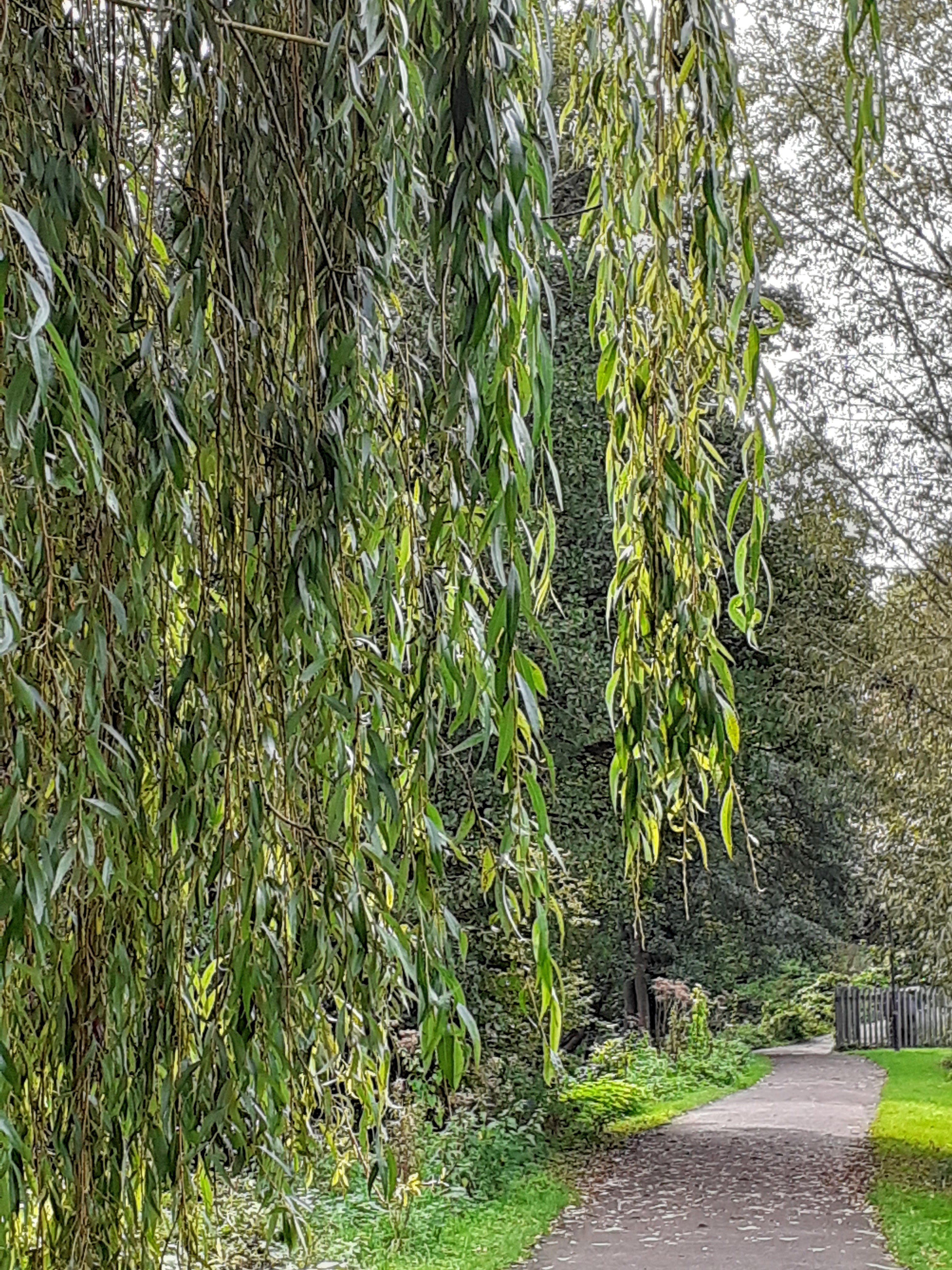
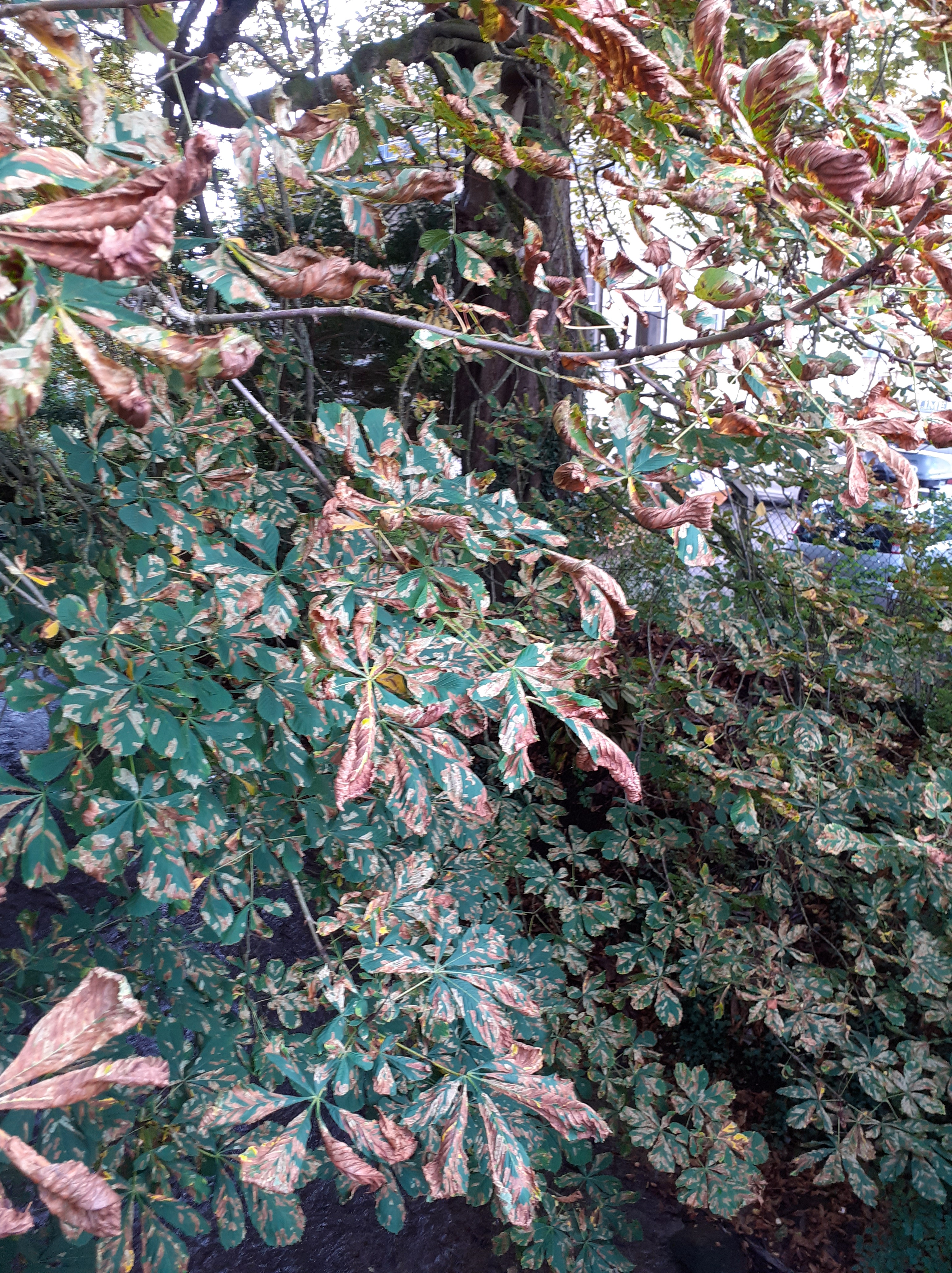
After the equinox comes a deepening of autumn. Light, colour, texture – my sense of the world is different. Images of this moment in the year shape my sense of time as well as of place. I savour the turning of the wheel. All time is transitional, yet every time has its own uniqueness.
Contemplating images like this is for me a way of sustaining what modern Druids sometimes call a re-enchantment with and of the world. Simple attention to the living world is a renewing experience, and protects the heart from what can seem like the half-life of a Wasteland culture. Opening to a living cosmos, I plead guilty, with pride, to the charge of Romanticism.
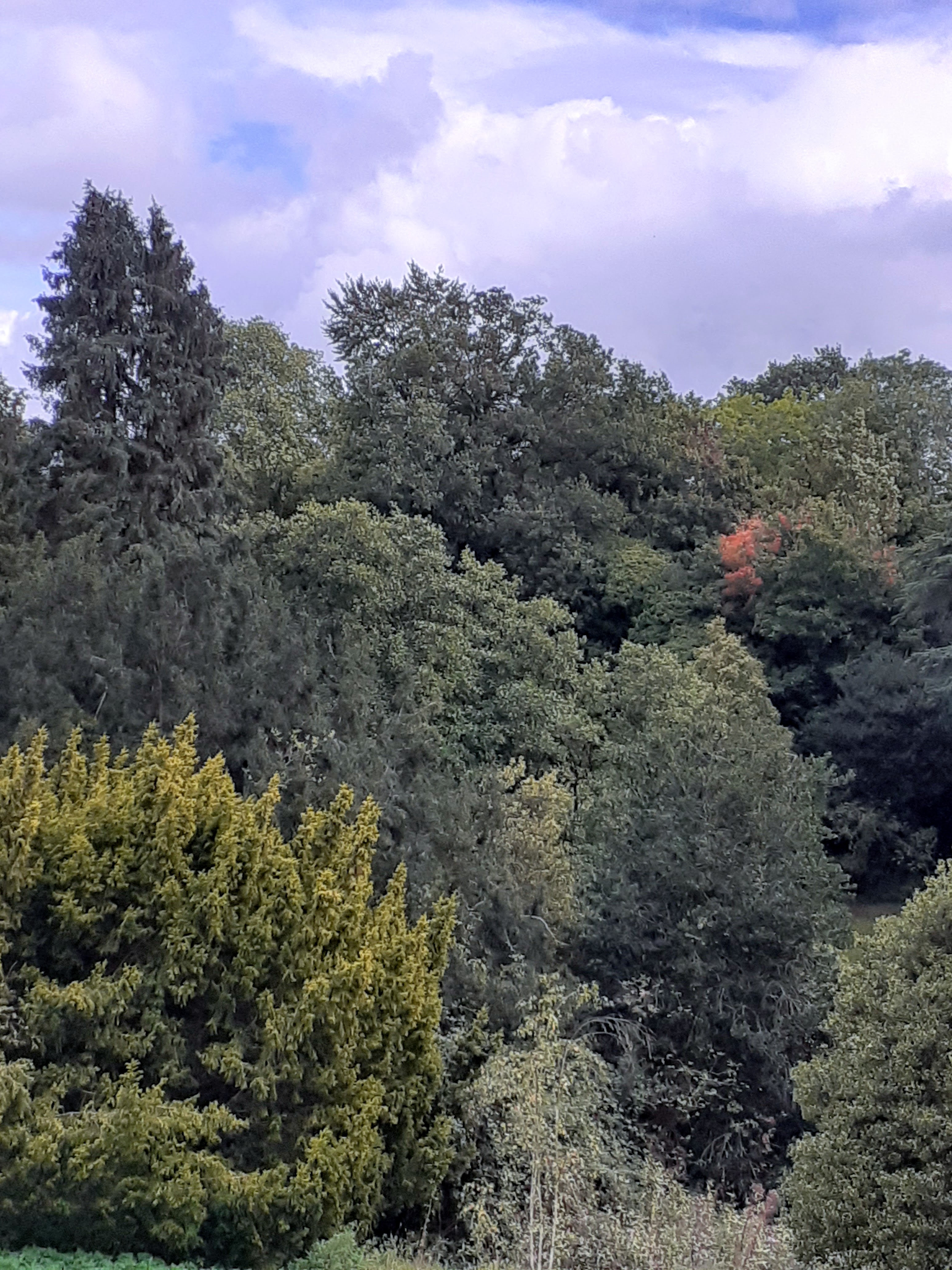
It is after 9 a.m. on Sunday 26 September, Locally I enjoy orange as a colour of ripening, rich and shiny with life, as the season of bearing fruit moves on.

There are trees whose leaves have already turned, but will stay on their branches for awhile, giving these woods a more mixed, autumnal appearance.

But there is still a preponderance of green, some of it surprisingly fresh. Here it provides a canopy of green light and shade.
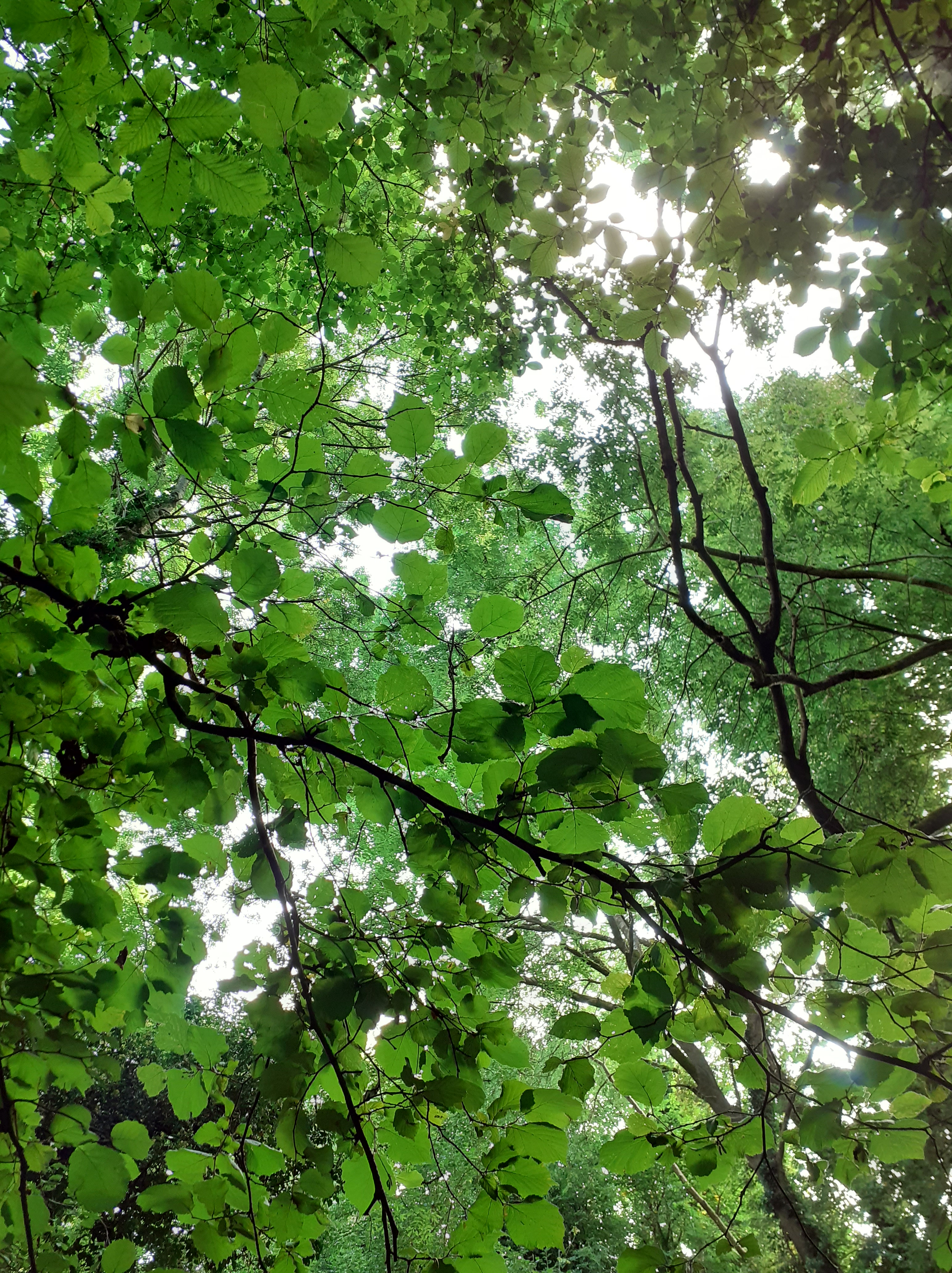
The season is also asserting a downward pull, towards the earth and dissolution – a process, however, still in its early stages. The broken fence seems almost to be sharing this, beginning a return to the land.

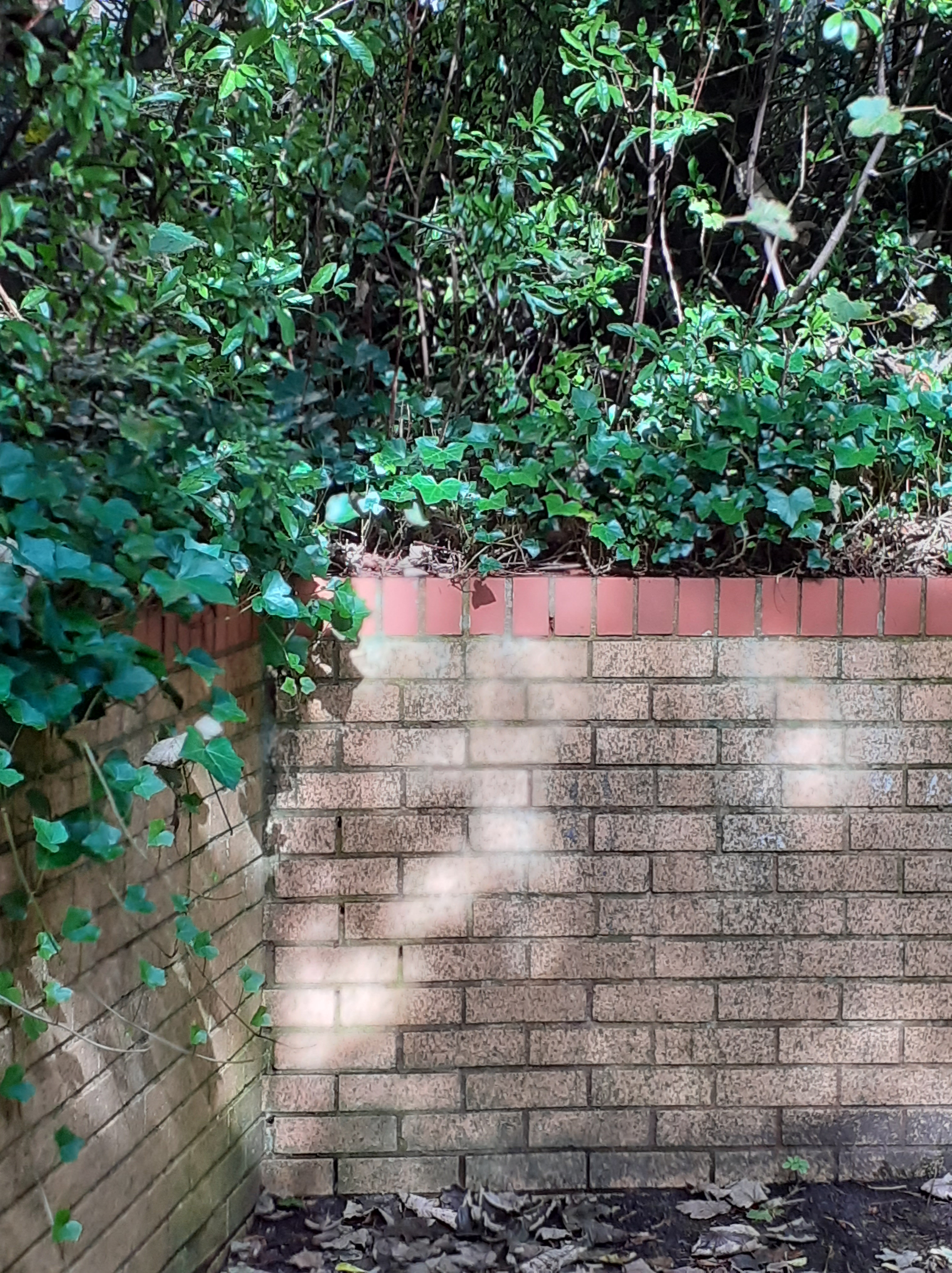
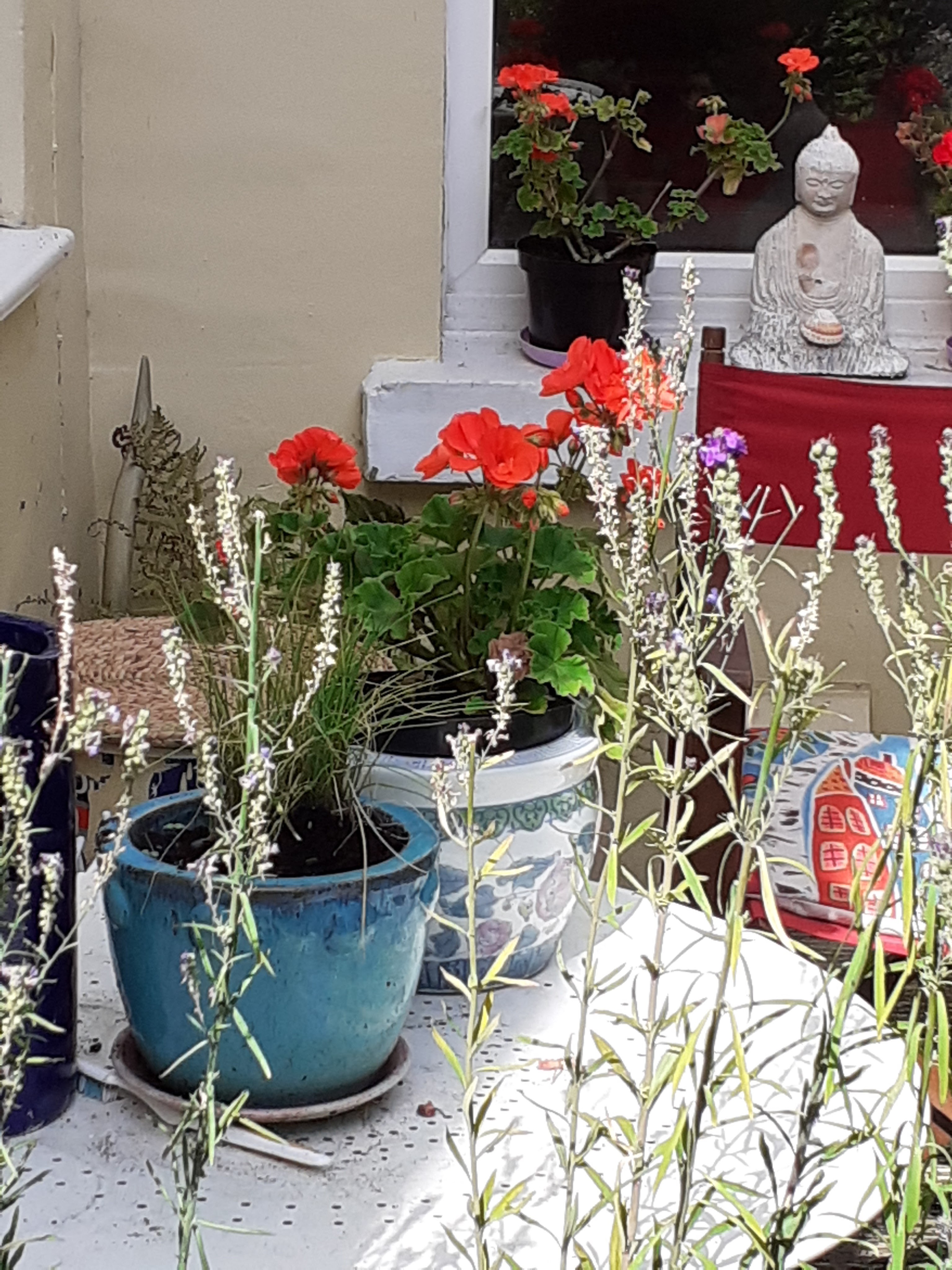
Then there is the undergrowth, with its mix of living and dead wood, living and dead leaves, and the soil that holds them. The evergreen leaves are defiantly vivid. Taking pictures, I celebrate the time of year.


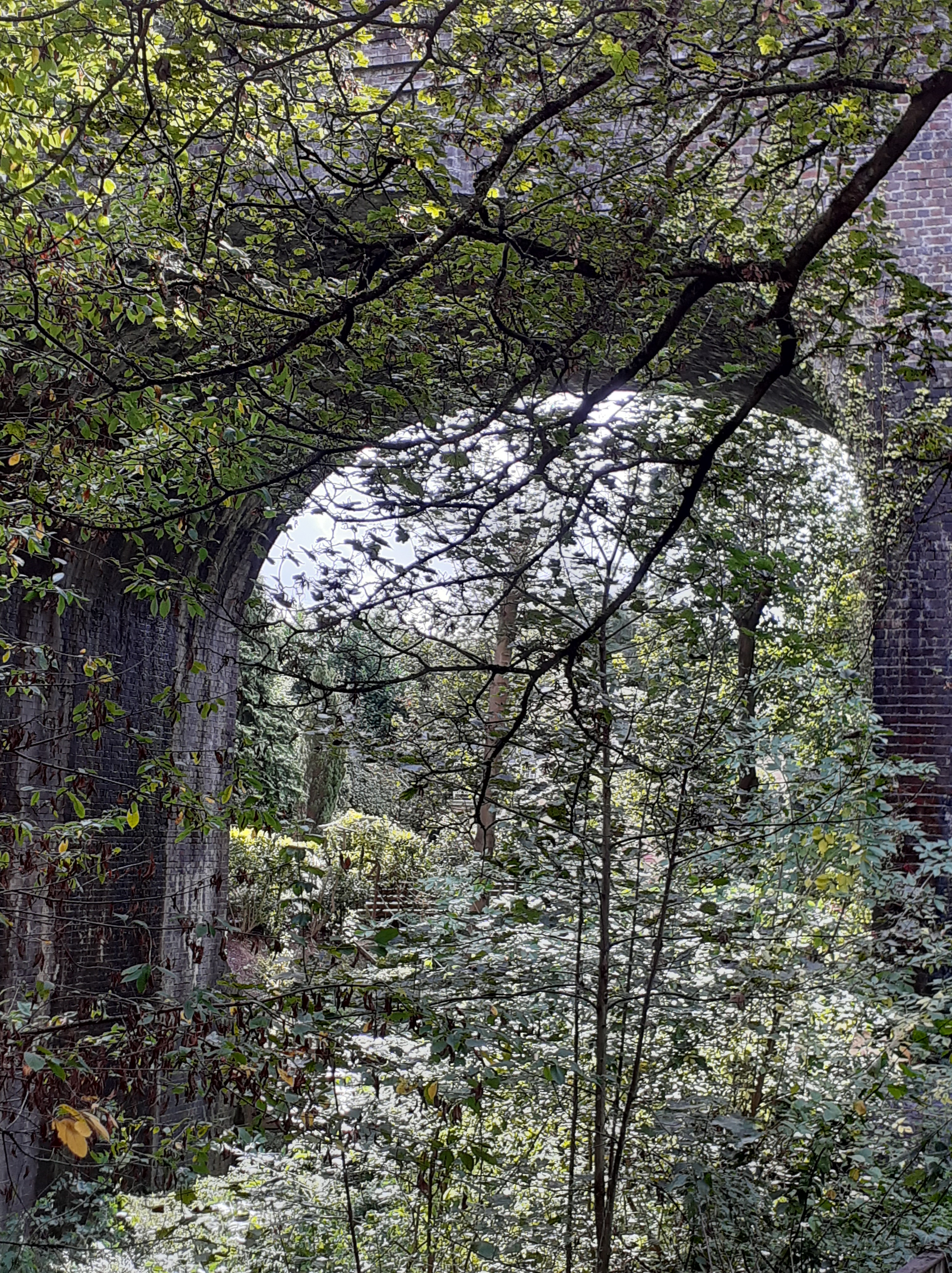
Above, inside looking out. Below, outside looking in – with added reflections.

Below again, from a little further back, the full richness of a sunlit moment, in a particular time and place. For me, it becomes the image and feeling-tone of its day, and, later on, a soft thought in memory.

Walking in the woods yesterday I saw the coming of autumn, in the sky and in the trees. I felt it too, and not just in my physical sensation of coolness. I experienced a mood of loss and ending, not limited to the summer of 2021.
The natural wheel of the year, where I live, has classically been one of soft transitions. Our seasons have merged gently into each other, with September as a modified extension of summer. Leaves gently turn, but there is not much of a fall. For much of my life I enjoyed the sense of a predictable pattern in the the turning of the wheel. That sense has eroded in recent years and has now reached vanishing point. Hence the feeling of loss.
Summer 2021 seemed to die in August, after a short and faltering life. It may be succeeded by a once unseasonable hot spell, or it may not. Considering the effects of the climate crisis in other parts of the world, this is hardly dramatic. But this weird summer season, including a background awareness of developments elsewhere, has ended my already weakened feeling of security. The phrase ‘winds of change’ comes to mind. I think, what next? And when?
I feel challenged to be open to whatever happens, without obsolete expectations to confuse me. In the state of openness, I find that an inner peace and clarity are present. They act as my guides through a shifting, changing, world.

Becoming the single eye, the eye of contemplation, I am a stressless, frameless window. Unboundaried and immersed, beyond the sense of window, joyful experiencing is vivid and intimate. I am a broken branch, stuck in mud. I am a sticky ooze. I am the shadowy reflection of a tree. I am ripples on water.

Walking, I am a body in movement. Then I become a space for memories. I recall the words: “a green thought in a green shade”. Relishing these words, I become a green thought in a green shade. Then I fall into the role of self-conscious observer, morphing from my original state into another one – lacking the immediacy of the first, yet still worthy of welcome.
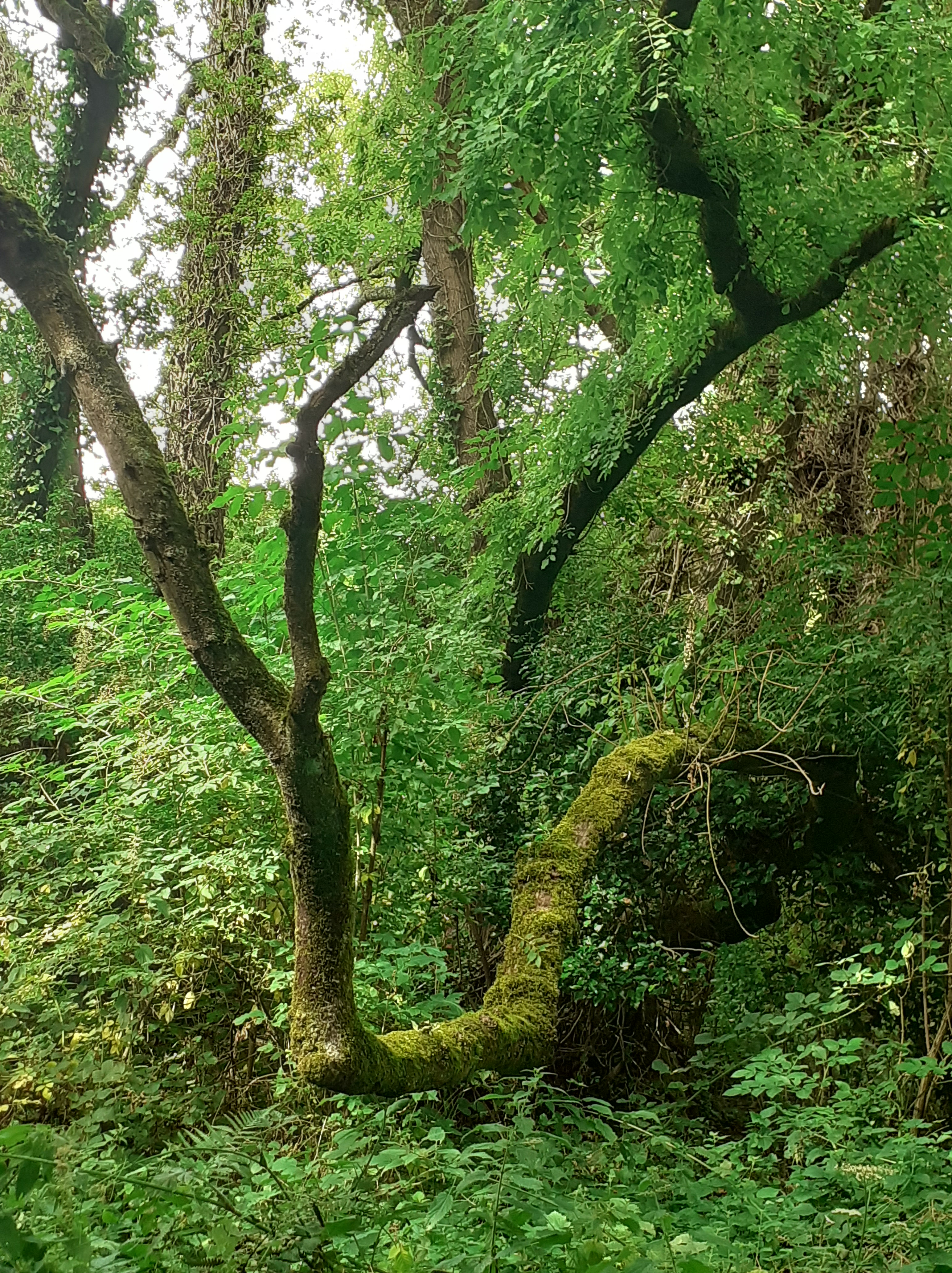
The woods reach out to me. They and I are distinct now, though we are still held together in the dynamism of a living world. The whole of life is in these woods as summer starts to wane.
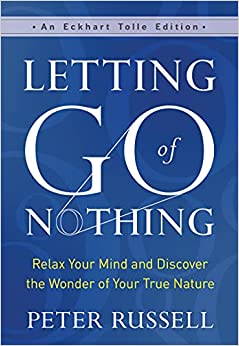
A compassionate and discerning book, drawing on a wealth of experience and understanding. Highly recommended. Peter Russell sets the note of Letting Go of Nothing (1) with the sentence: “The call to let go lies at the heart of the world’s spiritual traditions”. He adds, “Not being attached to outcomes, surrendering desires, accepting the present, opening to a higher power, relinquishing the ego, practising forgiveness – all entail letting go”.
The book is arranged as a series of brief, accessible sections exploring different aspects of the theme. Letting go takes many forms, depending on context. Here, Russell is not primarily concerned with letting go of things, like books, houses, jobs or the grid. His focus is on letting go of fixed beliefs and being right; immutable perspectives on the past or inflexible expectations of the future; the mental/emotional weight of judgements and grievances; disabling attachment to toxic or lost relationships. “We are not letting go of things themselves as much as the way we see them. Hence the title of this book: Letting Go of Nothing. Or, as I sometimes like to put it, ‘Letting Go of No-Thing’.”
Some of the 41 sections that follow are autobiographical. A Change of Mind recalls how a change in perception made space for a change of heart in a close personal relationship. Some are more about method – Letting In and Letting Be deconstruct the widespread notion that letting go of something necessarily means getting rid of it. If we are holding on to a grievance, for example, we are advised to let the experience in and become more aware of its discomforts. Pain, including emotional pain, evolved to let us know that something is wrong. It needs our attention. There are times for ignoring it, but this is not sustainable as our only response.
What we can do is learn to distinguish pain from suffering. Much suffering stems from aversion to pain (physical, mental, emotional), creating a surplus layer of discomfort. To a greater or lesser extent, we can disperse this added level of stress and tension. The work is subtle. It includes a level of not resisting resistance itself, and always finding spaces and possibilities for a degree of inner peace and freedom. Peter Russell is not in the business of sudden transformational release, although this too is possible. His way has more to do with skilful, compassionate engagement with the stream of experience as it happens. It is the work of a lifetime. Sections on Letting Go of Feelings, Letting Go of Story, The Root of Suffering and Fall from Grace explore his core philosophy in more depth.
Some of the sections set out liberating values – Forgiveness, Kindness, Wisdom. Others describe spiritual principles and practices – Sat-Chit-Ananda, Reframing Enlightenment, The Path of No Path. Russell is committed to an understanding of the world that summons us to ‘the deep peace of our true nature’. Matthew Fox (2), in a review, sees a social-ecological dimension in this work. For him, Letting Go of Nothing is an affirmation that our species can “wake up to down-to-earth spiritual wisdom that all our religions, when healthy, call us to – keeping it simple, understandable, and effective so that we and the sacred planet we share might become sustainable once more”. This simple book offers guidance at many levels.
(1) Peter Russell Letting Go of Nothing: Relax and Discover the Wonder of Your True Nature Novato, CA: New World Library, 2021 (Foreword by Eckhart Tolle)
(2) Matthew Fox is the author of Creation Spirituality and Original Blessing. His championship of an earth inclusive spirituality and his denial of original sin led to his excommunication from the Roman Catholic Church and move into the Episcopalian communion. His most recent book is Julian of Norwich: Wisdom in a Time of Pandemic – and Beyond.
See also: https://contemplativeinquiry.blog/2021/08/19/the-support-of-nature/

This image, the 3 of Wands from The Druidcraft Tarot (1), is one of purposeful effort beginning to be rewarded. The process is gradual but the promise is there. A young man looks with confidence at the world in front of his eyes. He seems at ease with himself, a young man resting in peace.
He has never really died in me, despite the ups and downs of life. Indeed I am better connected with him now than when I was actually young. I sometimes bubble up with an energetic optimism unlinked to any particular context. Delusional? I don’t think so. It is more the sense of a true nature, ageless and timeless, sustaining me in every time and season.
The image on the card suggests a wider resiliency of nature and organic growth. The purpose and intention of the fire element is in alliance with the regenerative powers of the earth. The sun is seen indirectly in the health of the plant kingdom, and indeed of the young man himself.
I consider my own purpose at this time of my life. I think of some old Druid liturgy that I have re-written for my own practice, without much changing the original meaning: “Deep within my innermost being I find peace. Silently, within the stillness of this space, I cultivate peace. Heartfully, within the wider web of life, may I radiate peace”. I understand ‘peace’ to be an active agent in human affairs and not a passive or negative absence of conflict. It is a value, and stance, to understand and act on more deeply over time.
At the level of personality, I do not consider myself a natural for this form of witnessing and action. I am a work in progress, to say the least. Hence the importance of formal spiritual points of reference and a formal practice. I need these kinds of support. Writing this blog helps too. I see it as contributing to a peer community conversation. This community is not closely defined and is subject to change. It does not, in itself, provide any identity or role other than the reading and writing of posts. But it is good to have a purpose working within it. I aim, overall, heartfully to radiate peace, at least at the level of discourse and values.
(1) Philip and Stephanie Carr-Gomm The DruidCraft Tarot: Use the Magic of Wicca and Druidry to Guide Your Life London: Connections, 2004. Illustrated by Will Worthington.
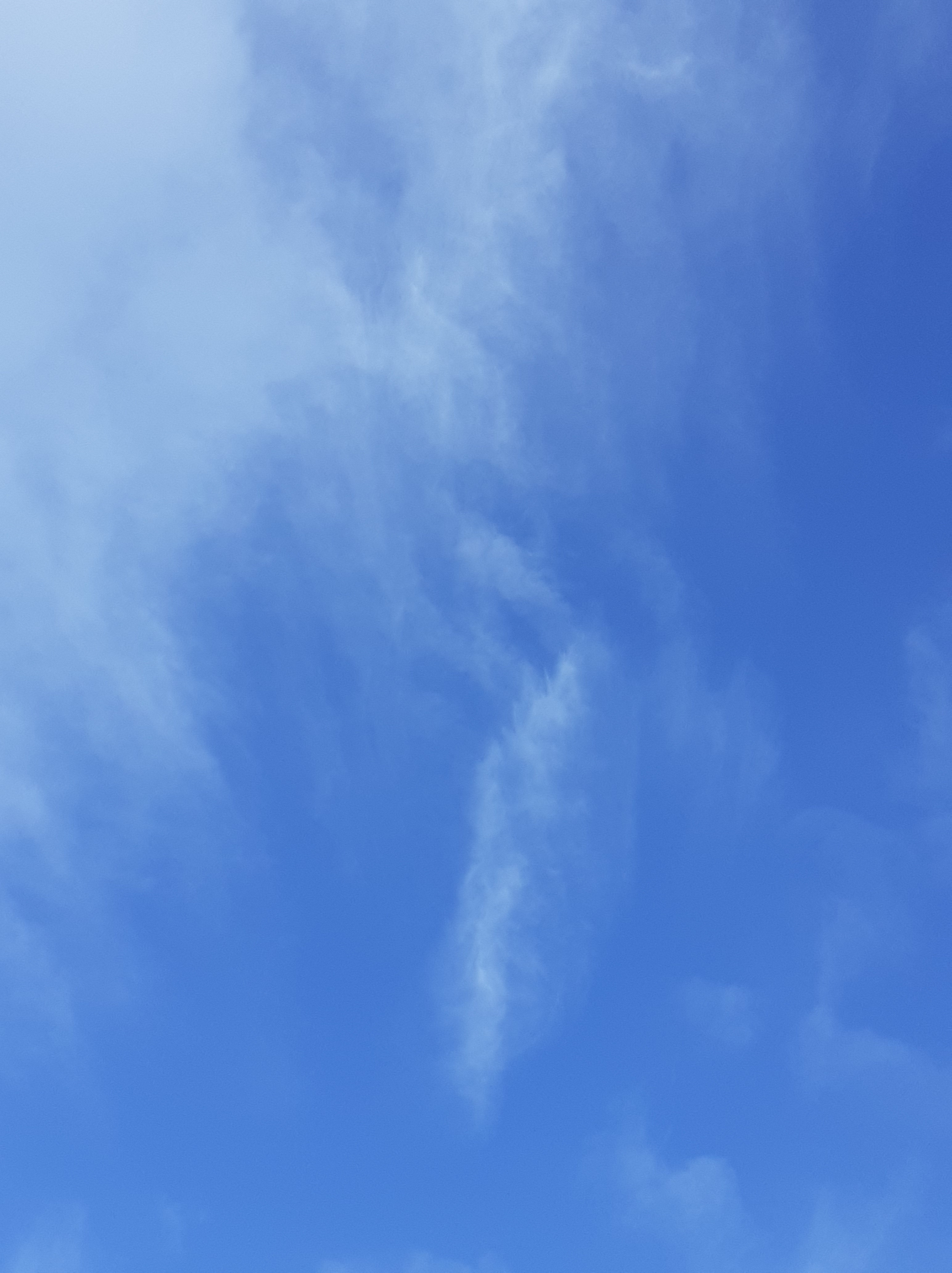
I love the sky in most weathers. I especially love it when it is azure blue and feels like a high domed roof, well able to contain the movement of wispy, shapeshifting clouds. The sky is part of nature, just like the earth. It is not a detached, alienated realm, beyond the influence of what some traditions might call our little life.
Sometimes I wish it was beyond our influence, as the news about the climate crisis goes on getting worse. The moment of joy is infused with a heartache that has every right to be there. It reminds me of our interconnectedness, and the Druid prayer for knowledge and love of justice, and, through that, the love of all existences (1).
I will stay open to my simple joy at inhabiting a living world of beauty and abundance, even if sadness keeps it company. The healing pleasure of sky-gazing is a part a long, common inheritance, not to be repressed, numbed or lost. I will continue to invite it in and let it nourish me.
(1) One modest practical way to enact the love of justice and of all existences, beyond lifestyle adjustments, is to support https://www.stopecocide.earth/ – now gaining momentum.
music that celebrates Earth and speaks to the heart
Follow the Moon's Cycle
Meeting nature on nature's terms
A little bit of Mark Rosher in South Gloucestershire, England
A monastic polytheist's and animist’s journal
Selkie Writing…
Images and words set against a backdrop of outsider art.
living purposefully during metacrisis and collapse
The pagan path. The Old Ways In New Times
Spiritual journeys in tending the living earth, permaculture, and nature-inspired arts
a magickal dialogue between nature and culture
The gentle art of living with less
Thoughts about living, loving and worshiping as an autistic Hearth Druid and Heathen. One woman's journey.
An place to read and share stories about the celtic seasonal festivals
Just another WordPress.com site
Exploring our connection to the wider world
Become more grounded and spacious with yourself and others, through your own body’s wisdom
Good lives on our one planet
News for the residents of Hopeless, Maine