USEFULNESS AND EMPTINESS
A re-blogged post about valuing stillness and emptiness within the balance of our lives.
“Through a gradual awakening to natural beauty, she reached a perception of beauty peculiar to herself. She began to perceive analogies. Nature became for her, not a fortuitous assemblage of pretty things, but a harmony, a poem solemn and austere. It was for her no longer a flat painting on the wall of life. Beauty breathed there, light shone there that was not of the flower or the star. A tremor, mysterious and thrilling, seemed to run with the light through all matter, through a single open blossom of the wild gean tree and through the whispering forest.”*
In an earlier post – https://contemplativeinquiry.wordpress.com/2015/7/6/ – I introduced Nature Mystics: the Literary Gateway to Modern Paganism as a new and refreshing departure in Moon Books’ Pagan Portals series. This book, which I highly recommended, looks at literature seen to have nourished the culture and sensibility of modern Paganism. Rebecca Beattie, the author, has dedicated it “to all those Nature Mystics who have come before and continue to inspire us to a spiritual path with their words”.
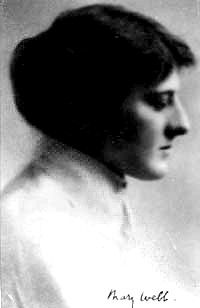
This post is about a single book that I have read since reviewing Nature Mystics and would probably not have read otherwise. This is The House in Dormer Forest by Mary Webb. Unlike the better known Precious Bane and Gone to Earth, it is set at about the time of publication (1920) or perhaps a little earlier. I don’t think of it as a brilliant novel, but it does testify to a form of nature mysticism, one that brings together external nature, human consciousness, and the divine.
Running through the book is an assumption of the interdependence of humans with each other and with the rest of the natural world. Yet there is also a balancing emphasis on the personal, inner journey of individuation. The author makes this comment on two somewhat negatively portrayed matriarchal characters: “these two had been meant for individualists. This not being allowed, they became egoists, which always happens on the principle that if you deny a child sugar it will steal from the sugar-basin. The human mind, unless it is to remain nescient, must have itself, must develop and explore itself. The more vital, the more awake it is, the more it must turn inwards. For within, deep in the tenebrous recesses of sub-consciousness, man hopes to find God. Not in churches, not in his fellows, not in nature will he find God until he has found all these things mirrored in that opaque and fathomless pool, lying within his own being of which, as yet, we know nothing.”
If the inner journey has been made possible, the experience of creation is transformed. Human relationship can flourish and the human role of witness to external nature can become a mutual gift. I was brought up with an educated aversion to ‘purple passages’ and their perceived sentimentality. Yet now, I am happy to offer this one. “So it was with Michael and Amber. Arms were stretched forth in welcome. Flute notes fell from thickets. The eyes of bird and insect, the dewy gaze of a few late flowers, peered on them with new meanings. Along by the streams the willows, clad in silver-dusted feathers, meditated like stately birds. Willows are of all trees the most mysterious. It is said that they were the first of trees that before a bird sang or a bee quested for honey the world was full of willow forests. There the wind went in spring, a visible golden wave, deeply laden with yellow pollen. There, in the glistening air, with none but their own silver tongues to break the silence, the willows waited. They waited for the insects to come to their yellow aments; for the birds to flash in and out, making low music in the dusk. But they awaited also the perception which would complete their creation. The flowers that bloom unknown for a thousand years only exist when at last one flower blossoms under a perceptive eye. For that flower the pollen was launched spring after spring, the nectar gathered, the seed rounded. So the understanding of beauty is a priesthood. Amber and Michael gave to the forest almost as much as they gathered from it as they wandered in the warm and mellow harvest weather.”
*Mary Webb The House in Dormer Forest The Echo Library: Fairford, Gloucestershire, England, 2012
On 3 October Contemplative Druid Events (CDE) – see http://contemplativedruidevents.tumblr.com – will hold its last planned event for 2015. This will be a Contemplative Day, in Stroud, Gloucestershire, England. The facilitators will be James Nichol, Elaine Knight and Nimue Brown. Our programme is designed for a group of up to 15 people, and 12 are already committed. With just over a month to go we have a comfortable size of group, with room for a few more.
CDE offerings are built around insights from the book Contemplative Druidry: People Practice and Potential about the kinds of contemplative work that most seemed to resonate for the present generation of Druids. We offer sitting meditations of based both on a bare attention and on active imagination. We have outdoor walking meditations and opportunities simply to be, with awareness, in natural settings. We use methods that draw on creative arts. We have developed ‘Awen space’ as a group opening to, in and as Spirit. We build our repertoire as we gain in experience.
Is CDE spearheading Contemplative Druidry as a movement? I don’t see it that way. CDE was created as a minimal level of organisation for a single purpose. This is to offer a particular kind of event to small groups of Druids and fellow-travellers willing to join us. In doing this, we also promote the contemplative Druid meme, which now seems to be well recognised in modern Druid culture. But the CDE brand does not exhaust the possibilities of contemplative Druidry and we wouldn’t want it to. Modern Druidry, which is in some senses a postmodern Druidry, has a strong commitment to free exploration and diversity. The contemplative meme will find its place within that wider cultural framework. For better or for worse, we will never, as a collective, be organised around a Druid ‘four noble truths’. Contemplative Druidry will mean different things, and inspire different journeys, for different Druids.
“He went into the chapel and looked at the pictures she had studied, and saw them through her eyes. He looked at the picture of the blind man and Sophia, her gesture so tender, his so responsive, and saw again how she had made it her own. She had lost herself in this old work, her personality dissolving into it, so that she had been set free. The immortality of the soul lies in its dissolution.”*
This post is stimulated by a novel, but too personal to be a book review. It is energised by my belief that the best poetry and fiction are more supportive of spiritual inquiry than most texts designed specifically for spiritual teaching. The same can be said of visual arts and music. For me, spiritual understanding is not a body of information available for download from the cosmos. It does not arise from surrender to a persistent monologue. A certain kind of peace and safety might come from this, but the full fruits of the meeting between wisdom, love and creativity are missed.
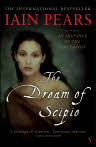
Iain Pears’ novel The Dream of Scipio has inspired my spiritual direction whilst not directly defining it. I like novels as a medium for their ability to shift between different points of view and see people developing in a context of living relationships and events. They can look at the cultural and political impact of belief systems over time, as well as personal experience in the moment. The main protagonist in this novel is a philosopher and teacher from late antiquity. Actually named Sophia, she is in the tradition of Hypatia of Alexandria, now celebrated as both a Pagan and an Atheist martyr.
Pears’ story has three timelines, with two main point of view characters from each. We are presented with thoughtful people doing what they see as their best in specific contexts of time, place and culture. In each case the setting is the south of France, east of the Rhone. The first and in many ways defining period spans 475-486 and the ending of Roman rule. The second is 1342-8, mostly set in Avignon during its period of Papal residence. It includes the devastating outbreak of bubonic plague known as the Black Death. The third is 1940-1943, covering the defeat of France, the Vichy regime and then full German occupation as resistance strengthens and the tide of war begins to turn. In each case the plot turns on experiences of a Sophian figure and a man in some form of relationship with her. On the political level the focus is on crisis, choices, and consequences – especially for the Jewish community of the region.
In 475 Sophia runs a modest philosophy school in Marseille, inherited from her father Anaxius. They are insecure migrants from Alexandria. Anaxius had been a pupil of Hypatia and can’t live there anymore. Marseille is relatively small, provincial and in decline. But it is a Greek city in origin and part of the Mediterranean world. Southern France is a land of highly Romanised Celts, with significant Greek and Jewish communities in the larger towns. Both as an independent woman and a philosopher in the Greek tradition, Sophia is an anomaly in a society of increasing religious conformism and narrowing cultural horizons. She presents herself as a guide, not a teacher, available to help without being an instructor. She asks people to speak freely and not to believe anything she says. She wants to emphasise the distinction between understanding and believing. Her theology is a rather austere neo-Platonism. “Let us take the premise” she says, “that the individual soul likens himself to God through the refinement of contemplation, and that virtue is a reflection of this understanding”.
Sophia’s main pupil is Manlius, a Gallo-Roman aristocrat who provides protection for Sophia as the school dwindles away and life gets more difficult. This supports his self-image of upholding the best of an old culture in bad times through an act of discerning patronage. They are attracted to each other, but the relationship is not consummated. They are holding to an ideal that “pure love is a reflection of the beautiful and a striving to return to it. Only through its accomplishment is the soul freed”. They both agree that Manlius should take a role in public life by making a formal conversion to Christianity and accepting the offer of a Bishopric. With the collapse in Roman military capacity the Romanised upper class is dependent on what we now call ‘soft power’. The church is its vehicle, and wants Manlius for his wealth, his family name and his administrative capacity. Manlius goes on to use his new office to negotiate a Burgundian occupation of his region as a means of maintaining order and keeping out the harsher Goths. This is presented as realistic in its own terms, though it involves the betrayal and killing of old friends who still want a Roman solution. However, even with the political settlement achieved, Bishop Manlius still needs to enhance his Christian credentials with the local population. They are not quite sure of his faith. So, taking advantage of a disturbance involving a Jewish criminal, he gives the entire local Jewish population three choices: conversion, exile or death. Most choose one of the first two options, but some are killed. From this time on Manlius is treated as a saint. He has solved the issue of the Christ killers on his patch.
Sophia is appalled. The point of public office lies in the opportunity to exercise virtue. Manlius was meant to take it to avoid it going to someone worse – someone bigoted or cynical. His behaviour is a betrayal of everything her teaching stood for. Manlius thinks of it as effective statecraft through the willingness to take hard decisions. Sophia still has to rely on Manlius’ protection – at one point to obtain her release from prison – and she moves to a small hermitage on his land. She and her role are no longer possible in the city. However, this doesn’t stop her from confronting him, expressing shame at being his teacher and breaking off the friendship. Manlius writes A Dream of Scipio (where she is his guide in the dream) as a kind of apology and tribute to her teaching, and to express his private opinions. Sophia refuses to read it.
Sophia survives Manlius. She lives on at the hermitage, protected by the good will of a Burgundian war lord who inherits the estate. He feels an odd respect for her though he can’t make her out and is easier to deal with than Manlius had become. Over time local people, especially women, have begun to treat her as a holy woman and seek her advice on personal and family problems. After her own death, she is woven into legend as St. Sophia – the most faithful of a group of women gathered around Mary Magdalene when forced to leave the Holy Land. On arrival in the south of France, Sophia becomes a teacher and healer second only to Mary herself. A favourite story is the curing blind of Manlius, for example, who went on to become the holy Bishop of Vaison after regaining his sight and who rewarded her with the hermitage. The chapel built on the site becomes a centre of pilgrimage.
In the medieval part of the story, a young Italian painter experimenting with a more humanistic and representational art paints scenes from St. Sophia’s life on the chapel walls. They include the saint curing the blind Manlius. Real people, younger and naiver than their originals, are used as the models. The Sophia figure is Rebecca, an orphan from the officially extinct Cathar community, working as the servant of a Jewish rabbi. Manlius is Olivier (and actually Rebecca’s lover), the young secretary of a Cardinal and also a poet in a new and evolving style. He finds an old manuscript of The Dream of Scipio. Its language is haunting and challenging. Some of the things Rebecca says, when she lets him know who she is, remind him of this manuscript and this is woven into the attraction. The chief political event is a knife-edge Papal decision to prevent a massacre of Jews rather than promote one as strongly advised. (The plague is widely blamed on the Jews.) The connection between Olivier and Rebecca makes a difference to this outcome, though at the eventual cost of Olivier’s life.
In the World War II part of the story, Julien is an academic and Julia a painter. They’ve known each other, on and off, for some years. Julia comes from a Jewish family but doesn’t think of herself as Jewish until forced to. After the occupation Julia manages to get exit papers from France but her ship is diverted to Cuba where U.S. authorities deny her permission to enter the United States, thus getting round a promise that no Jewish refugee will be turned back from a U.S. port. No other country will take her and she is forced back to France. Julien has a job as a Vichy censor based in Avignon (accepting it to prevent someone perceived as worse from having it). He is able to help Julia hide out discreetly, and she enters a highly productive phase as an artist. An important source of inspiration is the old Chapel of St. Sophia, its legends, and the medieval paintings that, somewhat the worse for wear, are still there. She makes use of the themes – especially the healing of blind Manlius by Sophia. However, she also becomes more visible – used by the Resistance to forge money and documents, and also because a Resistance co-ordinator flown back to France from Britain creates a cover role as an art dealer and sells some of her pictures. Julia is supposed to be put on a flight and taken out of harm’s way, but she is just too skilled and useful and her extraction keeps being delayed. When arrested she affirms her Jewish identity to half-hearted French police who are hoping that she will deny it (the arresting officers don’t know about her connection to the resistance, which one of them will shortly join). She is last known of on a train taking Jews to the camps. Julien, remorseful about failing to save her, dies whilst trying to save another resistance member from arrest.
There is a good deal about this book that is grim, and a good deal that is inspirational. If Sophia represents a spiritual wisdom, love and creativity, then the book has something to celebrate about these wonderful qualities as true human resources. Yet they are fragile. The book also speaks of dark times and the choices people make. The culture of the three periods is presented as accurately as possible and the major events all happened. Many possible lessons are suggested, and none are imposed. I found it very rich, and it’s one of the few novels I reread from time to time.
*Pears, Iain The Dream of Scipio London: Vintage, 2003
I have begun a series of Sophian contemplations. They are built around brief passages from texts that I treat as being in her tradition, passages that have drawn and excited me and continue to resonate beyond their initial impact. This is the first.
I am the light within the light.
I am the remembrance of Forethought.*
I sit, eyes closed. I say: I am the light within the light. I get the image of someone holding up a lantern. It’s like the Hermit’s lantern from Tarot, except that Sophia is holding it. Then there’s the image of the candle inside the lantern, and I briefly become the flame. I am surrounded by protective walls of glass, safe and steady. I know that the glass will enhance my radiance.
Back outside, I as observer notice that the lantern offers a pool of light in a deep twilight setting. This light is not aggressive or overwhelming. It hardly disturbs the magic of the gloaming, which is also somewhat lit by moon and stars. The contribution of the lantern is that it helps to illuminate a path. Sophia is holding up the lantern so that people can walk somewhere a bit more easily.
Sophia holds the light and points the way. Sophia does not ask for prayers. She does not ask to be loved, though love is in the air. She does not even ask to be followed, or for a path to be followed. Rather she says to me, in my observer position, “now you do it”. To become a lantern bearer, a lantern, and the flame within, is her worship. It begins with the flame within, or there is no light. At a level, it also ends with the flame. From the perspective of the lantern there is no path; just illumination. From the external perspective, there is a path, and a role of lantern bearing guide. Yet there is only one experience, which can be seen in different ways.
I continue to sit, eyes now half open, soft focus, panoramic vision. I say: I am the remembrance of Forethought. I notice that I feel very comforted by the word ‘remembrance’. I’ve always had a sense of memory beyond memory, predating me and beyond personal. I am not thinking in terms of past lives or other forms of existence. But I do think that if those had a meaning and I could access them, this ‘remembrance’ would be there too. It’s not a memory of any identity or event – it’s just ‘remembrance’. It’s a very deep intuitive sense, and I believe that I share it with others, though the specific experience and ways of attempting to language it will vary. It has the feeling-tone of home. The old Gnostics used the term Pistis Sophia (faith-wisdom), which is the wisdom of deciding to have faith in the value of experiences like this, rather than dismissing them. There’s a decision to build life and meaning around them and to stand by the images, words, metaphors and practices that emerge – though not without examination and inquiry. ‘Forethought’ also has its own special resonance. In this context it’s anything so concrete of definite as ‘forward planning’. Rather, it derives its meaning as a contrast to ‘the Word’. It suggests a prior latency before the beginning that was the Word – a bit like the ain soph of the Kabbalah. As such, I can appreciate that language is being stretched beyond its reasonable reach and is dissolving into Mystery. Yet somehow, all the same, it stands for something I can recognise and assent to. Sophia’s invitation to me is to take ownership of these lines, and taste their reality as fully as I can.
I am the light within the light.
I am the remembrance of Forethought.*
*These lines come from a Gnostic text called The Secret Book of John. The book is a Nag Hammadi text and now available in a number of English translations. This one is taken from The Secret Teachings of Jesus: Four Gnostic Gospels translated with an introduction and notes by Marvin W. Meyer, New York: Vintage Books, 1986.
I’ve had a request for the full text of W. B. Yeats’ poem Sailing to Byzantium and so this post is devoted to it.
1
That is no country for old men. The young
In one another’s arms, birds in the trees
-Those dying generations – at their song,
The salmon falls, the mackerel crowded seas,
Fish, flesh or fowl, commend all summer long
Whatever is begotten, born, and dies.
Caught in that sensual music all neglect
Monuments of unageing intellect.
II
An aged man is but a paltry thing,
A tattered coat upon a stick, unless
Soul clap its hands and sing, and louder sing
For every tatter in its mortal dress,
Nor is there any singing school but studying
Monuments of its own magnificence;
And therefore I have sailed the seas and come
To the holy city of Byzantium.
III
O sages standing in God’s holy fire
As in the gold mosaic of a wall,
Come from the holy fire, perne in a gyre*,
And be the singing masters of my soul.
Consume my heart away; sick with desire
And fastened to a dying animal
It knows not what it is; and gather me
Into the artifice of eternity.
IV
Once out of nature I shall never take
My bodily form from any natural thing,
But such a form as Grecian goldsmiths make
Of hammered gold and gold enamelling
To keep a drowsy Emperor awake;
Or set upon a golden bough to sing
To lords and ladies of Byzantium
Of what is past, or passing, or to come.
Yeats, W. B. Poems of W. B. Yeats London: MacMillan & Co, 1964 (Selected with an introduction and notes by A. Norman Jeffares)
When I wrote Contemplative Druidry I said that “in many ways this is a story of neo-Pagan sensibility and its growth since World War Two”. In addition to their Druidry, many of the book’s contributors reported involvement in Witchcraft and/or the indigenous Shamanism of other lands.
I also said in many cases this sensibility was modified by other influences, “most notably Buddhist philosophy and meditation, Christian mysticism and other Western Way paths with Gnostic and Hermetic traditions specifically mentioned”. I made the point that such influences are significant for contemplative practice, because to an extent they provide models. In the book I mostly focused on Buddhist influences, because they were the most common. I also paid attention to the Christian ones, notably the Ceile De, Anglican mysticism in the tradition of Evelyn Underhill, and the partly Franciscan inspiration behind the (Druid and Pagan) Order of the Sacred Nemeton. I didn’t say much about other Western Way traditions, though I mentioned R. J. Stewart as a personal influence on me and also my training at the London Transpersonal Centre. This was essentially Jungian and thus based on a modern Gnostic psychology.
The key images from my last post, Sailing to Byzantium, were images of Sophia and the Holy Fool from The Byzantine Tarot. They made an intense and (in common sense terms) disproportionate impact on me. For they reminded me of my own Gnosticism, a current that qualifies and modifies my Druidry. I am talking about modern Gnosticism, “based in an affirmation of nature and the world and a positive relationship to embodiment, not the classical Gnosticism of world-denial or pure transcendentalism. It is a gnosis based on bringing the world fully to life, while also enjoying the state of embodiment and sensual pleasure, without excess or obsessive appetite”*. Thus far, I could be talking about modern Druidry without any need to look elsewhere.
But, to follow Irwin further, Gnosticism also talks of “visionary awakening” through the power of archetypal imagery. From such a perspective, affirmation of the world also requires an affirmation of the World-Soul as “the primary ground of a living and animate nature”. This can inspire “states of unity and participation in the creative founding of human experience”. The key is the “animating vitality” of images, which can arouse “a cascade of energy and potential surpassing the image and leading into a more luminous condition of being and seeing”.
According to Irwin, the traditional fields for study and practice in Western Gnosticism are neo-Platonism, hermetics, alchemy, kabbalah, mystical theology, comparative theology and meditative disciplines: quite a curriculum. But the essence is quite simple. We are invited to work with Being as embodied (through exercise, body awareness and energy work), imaginal (connected to the mundus imaginalis, open to its power) and illuminated (through contemplative practice and insight). Much of this is offered within Druidry – for example, to anyone who takes full advantage of the OBOD distance learning course. Yet for me, here and now, once again, it is the image and name of Sophia that gives me my orientation and guides me on my path. I’ll explain that resonance and consequences more fully in later posts. In practical terms, for now, I’ve made two small adjustments in my morning practice. One is to cast my circle specifically in the sacred grove of Sophia. The other is to begin sitting meditation, or contemplative communion, by saying “I open my heart to the Light of Sophia”. It doesn’t seem much, but it shifts my centre of gravity to a place where a feel more empowered and more at home.
music that celebrates Earth and speaks to the heart
Follow the Moon's Cycle
Meeting nature on nature's terms
A little bit of Mark Rosher in South Gloucestershire, England
A monastic polytheist's and animist’s journal
Selkie Writing…
Images and words set against a backdrop of outsider art.
living purposefully during metacrisis and collapse
The pagan path. The Old Ways In New Times
Spiritual journeys in tending the living earth, permaculture, and nature-inspired arts
a magickal dialogue between nature and culture
Thoughts about living, loving and worshiping as an autistic Hearth Druid and Heathen. One woman's journey.
An place to read and share stories about the celtic seasonal festivals
Just another WordPress.com site
Exploring our connection to the wider world
Become more grounded and spacious with yourself and others, through your own body’s wisdom
Good lives on our one planet
News for the residents of Hopeless, Maine
All content on this site is now located at www.jonberrywriter.co.uk