Contemplative Inquiry

This blog is about contemplative inquiry

Tag: Contemplative Druidry

NOVEMBER REFLECTIONS

In recent years, I have experienced November as a special month. Moving on from Samhain, it begins winter, and where I live it sees most of the fall. It is a reorientation towards darkness and inwardness. I began my contemplative inquiry, at first limited to OBOD, then to Druidry more widely, finally becoming universal, in November 2011 following a Samhain ritual.

I find November calmer than December, where I tend to feel jangled by the agitated dominance of capitalist consumerism and its appropriation of a Christian festival, itself the appropriation of a Pagan one. The old festivals had an offer for everyone, at least in principle. Now you have to have money to participate, and increasing numbers of people don’t. So I find December an awkward, uneasy time, a ‘festive season’ that, collectively, doesn’t quite ring true.

This sense of a problematic December has made the whole month of November special to me, and powerful for my inquiry. This year I have rejigged my daily practice and replaced a long morning session with shorter sessions in the morning and evening. In the morning I wake up and greet the day with a slightly ritualised (thanks to Druidry) set of exercises. Before going to bed I do a yoga nidra meditation, listening to an audio download. Both practices are grounded in what I would now call a sacrament of presence, and awareness that every experience points towards a source of being from which I am not separate. In this intersection of time and eternity I find my home. I don’t need special ‘spiritual’ experiences. This spirituality doesn’t require them: the work is to enhance my capacity to welcome any experience, including my resistance to negative ones, and find ways to respond. Hence I look to simple, regular practices that provide pragmatic benefits and also remind me of this core insight.

I find that the inquiry aspect of my contemplative inquiry is shifting its focus to personal life, relationships, culture and nature. What’s going on? How am I placed? How am I responding? What difference does my Sophian Way – with contemplative inquiry as its main expression – actually make? These are my November reflections for 2019.

SACRED SOUNDSCAPES

“Concepts of animism can take many forms. … The idea of the land being capable of speaking to humans was probably widespread in ancient sensibility. Sacred soundscapes were simply a natural corollary.

“The basic notion of the land having speech, or being read like a text, was lodged deeply in some schools of Japanese Buddhism – in early medieval Shingon Esoteric Buddhism, founded by Kukei, for instance. He likened the natural landscape around the Chuzenji temple and the lake at the foot of Mount Nantai, near Nikko, to descriptions in the Buddhist scriptures of the Pure Land, the habitation of the buddhas. Kukei considered that the landscape not only symbolised but was of the same essence as the mind of the Buddha. Like the Buddha mind, the landscape spoke in a natural language, offering supernatural discourse: ‘Thus, waves, pebble, winds, and birds were the elementary and unconscious performers of the cosmic speech of buddhas and bodhisattvas,’ explains Allan Grapard (1994).

” …. ….

“Throat singers in Tuvan, an autonomous republic within the Russian Federation, developed their vocal art originally as a means of communicating with their natural environment, not for entertainment. Throat singing involves the production of resonant sounds, overtones and whistles within the throat, nasal cavities, mouth and lips, and was used to provoke echoes or imitate natural sounds like waterfalls or wind. The master throat singers can select precise locations inside caves where the resonances are exactly right to maximise the reverberations of their songs. They even wait until atmospheric conditions are perfect for the greatest effect. It is in essence a technology of echoes. At one locale, where a singer called Kaigal-ool performed in front of a cliff face, ethnomusicologist Theodore Levin reported that ‘the cliff and surrounding features sing back to the musician in what Kaigal-ool calls a kind of meditation, a conversation I have with nature‘ (Levin & Suzukei, 2006).

“It is only in our modern culture that we have stopped listening to the land within a spiritual context. If we could fashion a modern, suitably culturally-ingrained animistic model, we would treat the environment with much more respect.”

Paul Devereux, in his Foreword to Greening the Paranormal: Exploring the Ecology of Extraordinary Experience August Night Press, 2019. Edited by Jack Hunter. See: http://www.augustnightpress.com

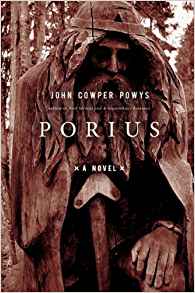
BOOK REVIEW: Y DAROGAN ANNWN

The image above is the cover for Lorna Smithers’ new collection of poems, Y Darogan Annwn, and it illustrates the themes of the collection. Lorna Smithers explains: “Daronwy, the Brythonic World Tree, is falling. Beneath its boughs appears Y Darogan Annwn, a child-prophet, who prophecies the end of the Age of Man. She must find the source of the poison, outwit the scientists of Gwydion, and release the destructive fury of the spirits of Annwn. Her ultimate decision will be whether to become one with her prophecy.”

Prophecy, like poetry, is a gift of awen, the inspirational energy of Brythonic culture. To be awenydd, open and dedicated to this gift, is to accept its demands. Y Darogan is a child of the gods and a daughter of dragons. She is a shape-shifter who can move through multiple identities, the most poignant of which is that of a little girl. She will never grow up. Her individual life will last for less than a year.

The collection contains 50 poems in all. Two are introductory and the others are arranged in seven sections providing a narrative structure: Lock and Key; The Forest of Daronwy; The Fisher King; The Golden Ring; Doomsday; The End of Days; and The Hereafter. Together they present a wasteland story for our times, drawing on British Celtic and Arthurian themes whilst subverting the patriarchal assumptions of the old texts. The individual poems are each relatively short, and likely to have most impact on people who have some familiarity with the Mabinogion and the Brythonic mythos in which it is embedded. However the wasteland confronted is that of our own times: its military industrial complexes based on a perverted science, and the current slide into climate catastrophe.

For her self-introduction in the first verse, the infant Y Darogan uses pithy lines of power, reminiscent of The Book of Taliesin*, though with updated cultural references.

I have been a fallen star

and a tear in a river of tears

flowing through Annwn.

I have been hydrogen,

oxygen, carbon, nitrogen,

helium burning in the sun.

****

I have been dark matter

I have not been found by

the scientists of Gwydion.

By contrast, Doronwy, the Brythonic World Tree, is introduced in a prose poem, one of the longer individual pieces in the book. Together, these introductory pieces provide a point of departure for the story that builds over the seven main sections. Y Darogan’s mission of cleansing is itself a path of destruction, and “no Champion’s Light stands out on her forehead, just the darkness of the black hole”. Only at the very end is there a regenerative (rather than ‘redemptive’) note. The material demands verbal resilience in the face of multiple and unavoidable stresses, and even at its bleakest, there is power and magic in Lorna Smithers’ writing.

Oh Breath of the Wind

don’t leave me leave me please!”

She does not know how long

she has been wandering Pennant Gofid,

the Valley of Grief through ghosts and mist,

only that she found the treasure, became

the answer, and it’s harder to bear

than the weight of the crow.

The howling of wolves loudens.

The sky blackens with ghost-wings.”

Overall, I believe that Y Dorogan Annwn is a significant contribution to the re-visioning of the world’s great stories as we confront unprecedented challenges on our collective journey. I am grateful for the opportunity to read and review it.

Lorna Smithers’ blogs at https://lornasmithers.wordpress.com/ using the title At Peneverdant. Her About section describes her calling as an awenydd and devotee of Gwyn ap Nudd, God of the Brythonic underworld Annwn, of the dead, and of the Wild Hunt. The Y Darogan Annwn collection is now for sale as a PDF, see link:

https://lornasmithers.wordpress.com/2019/10/12/y-darogan-annwn/

  • The Book of Taliesin in The Four Ancient Books of Wales Forgotten Books, 2007 (Originally published in 1868, when the original material was translated and edited by William F. Skene)

FEELINGS AND CONTEMPLATION

“In meditation, when a wave of feeling comes to visit – a grief, a fear, an unexpected anger or melancholy – can you stay present with that wave, breathe into it, let go of trying to ‘let go’ of it, and simply let it be, let it live, let it express itself right now within you? Can you notice the impulse in you to resist it, to refuse it, distract yourself from it and move away from your experience? Don’t judge or shame yourself for that impulse either, for wanting to have a different experience that you’re having – it’s an old habit, this urge to disconnect, this impulse to flee, this addiction to ‘elsewhere’.

” But see, today, if you can stay very close to ‘what is’, see if you can actually connect with the visiting feeling, gently lean in to your experience as it happens. Instead of shutting down, moving away, denying the energy in the body, can you gently open up to it? Can you flush it with curious attention? Let it move in you? Stay present throughout its life cycle, as it is born, expresses what it has to express, and falls back into Presence, its oceanic home?” (1)

The extract above is from a piece by Jeff Foster called When We Push Feelings Away. I support his approach, though I don’t now make firm distinctions between an activity called ‘meditation’ and the spontaneous flow of attention. I can stay present with the wave of feeling, and breathe into it, whether I’m ‘in meditation’ as a defined practice or not.  Meditation, once exotic and formal, has become naturalised. My contemplative life is pared down and minimalist, holding a strong sense of the sacred in daily life, including the work of self-healing. Jeff Foster continues:

“… One day, deep in meditation, perhaps, we remember, all feelings are sacred and have a right to exist in us, even the messiest and most inconvenient and painful ones. And we remember to turn towards our feelings instead of turning away. To soften into them. To make room for them instead of numbing them or ignoring them. …. So much creativity is released, so much relief is felt, when we break this age-old pattern of self-abandonment and repression, go beyond our careful conditioning, and try something totally new: staying close to feelings, as they emerge in the freshness of the living moment, waving to us, calling to us, seeking their true home in our heart of hearts.”

Jeff Foster calls this piece Pushing Feelings Away. I like his concern with holding and acceptance within what he calls Presence. I call my overall path a Sophian Way, and not The Sophian Way, because it is a solitary path that morphs and shifts.  Jeff Foster works with personal feelings from a transpersonal, non-dual  perspective that I find very Sophian, characterised  by wisdom, contemplation and compassion. My own path brings together this approach with the Eco-spirituality – or ‘Nature Mysticism’ – catalysed by my experience of modern Druidry.

(1) Jeff Foster The Joy of True Meditation: words of encouragement for tired minds and wild hearts Salisbury: New Sarum Press, 2019

CONTINUITY AND CHANGE

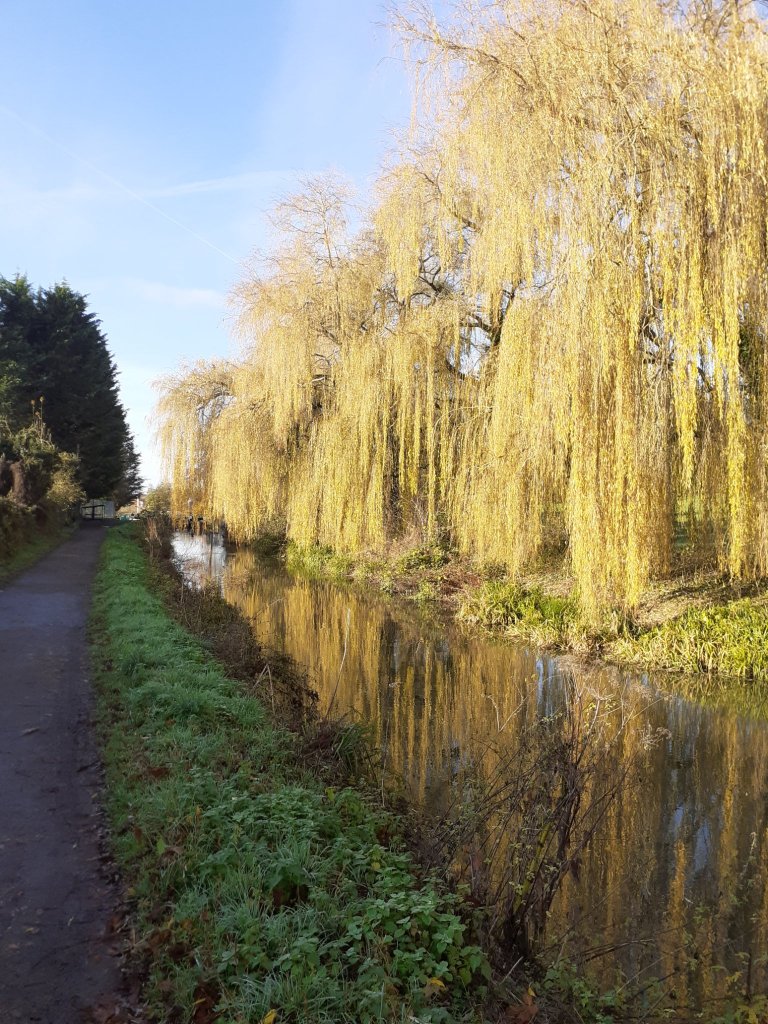
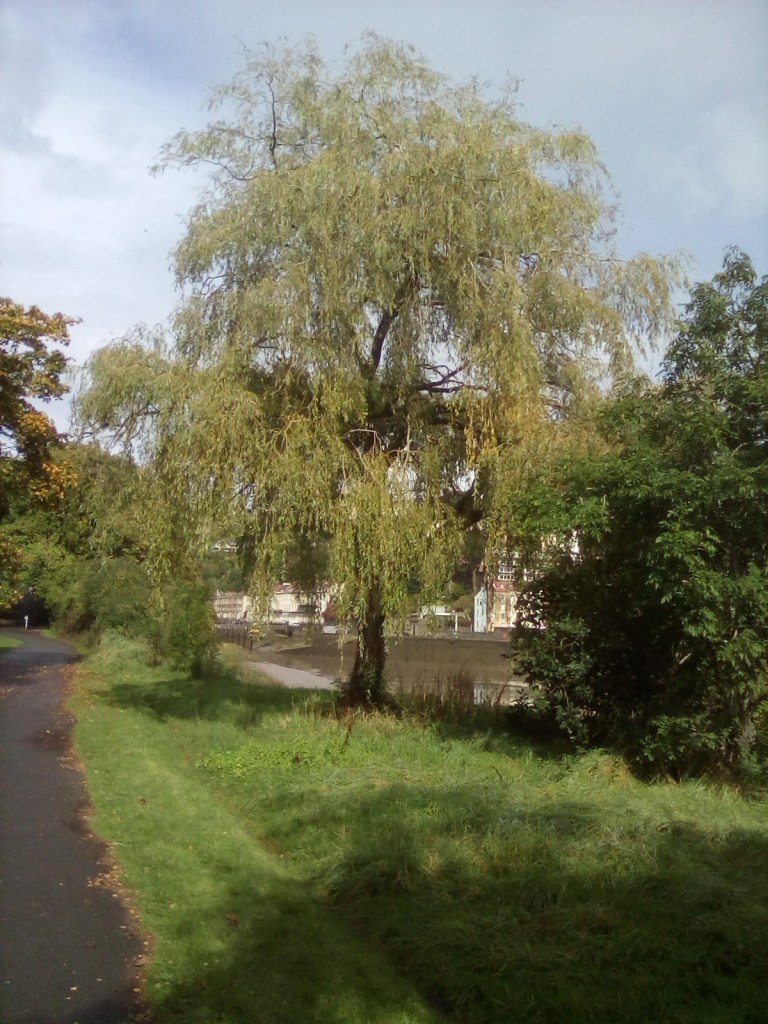
IMG_20191001_124254

I took this picture on 1 October this year. The subject is a willow tree I befriended many years ago as part of my Druid training. It lives in Bristol beside the Avon as the river begins to leave the city, passing through the Clifton gorge and under the suspension bridge. The path, here at the edge of a park, is also a cycle track and continues towards the Severn estuary beside the river. Although I no longer live in Bristol, I continue to visit the willow from time to time and renew the contact.

My strongest link with the tree was in early spring. where I got the most powerful sense of its pulse and vibration, felt especially whilst touching the trunk with the palms of my hands. But I was careful to follow it through a year of regular communion during which it lost a substantial branch to a violent storm. I learned to associate this tree with regeneration, resilience and  generativity. The tree re-established its balance. The dead branch rotted gently in the ground, and contributed to other forms. Nothing was lost.

I’m about to go on a rare visit to my home town, partly to contemplate the continuities and discontinuities of my life and consider future directions. The image of the willow is with me.


CONTEMPLATION AND ENGAGEMENT


According to my dictionary, one of the meanings of ‘signature’ is, “a distinctive pattern, product, or characteristic by which someone or something can be identified: the chef produced the pate as his signature dish”.

I want to adjust the signature of this blog. I want now to explore the relationship between contemplation and engagement more explicitly. A blog is itself a form of engagement, and this one has so far combined a strong curatorial thread with personal sharing. Now, for me as for many others, a deepening social and ecological crisis asks for a work of preserving existing life-affirming aspects of our culture and developing new ones. I see this work as enhanced by outward-looking forms of contemplation. I want this blog to contribute.

I started this blog as a Druid. My personal path, which I have described more recently as a Sophian Way, has become more Universalist. I have described it as a path of healing, peace and illumination, which encourages a spirit of openness, an ethic of interdependence and a life of abundant simplicity. Its ‘sacrament of the present moment’ involves resting in a place of underlying stillness, freedom and love within any experience – good experiences, wonderfully, but also bad ones that need active resisting on the ground. For some, this suggests an experience of divine support, or the activation of the divine within us or of the divinity that we truly are. For others it seems to come from a deep wellspring within the psyche that needs no further point of reference. This sacrament is my core practice, to be dropped into at any time. It doesn’t always take a pure form, but it usually makes a difference. In the myth of my own life, it is Sophia’s principal teaching.

At the level of the wider word, I continue to feel a strong sense of alignment with Pagan, Animist, and Earth spiritualities like Druidry – more than to the Buddhist or Gnostic families or to movements like the Headless Way, even though they have given me a lot. Philip Pullman in his The Secret Commonwealth* has a character who says that where we stand revolves around one key question – ‘is the world dead or alive?’ I say ‘alive’ without worrying about scientific definitions or the metaphysics of reality. Something in me just has to say ‘alive’ – alive and interconnected as a web of life. This re-affirmation is important to me, and as a ‘light bulb moment’ on a level with the more seemingly individual aspects of my Sophian Way. I don’t expect to change the blog that much, but there’s enough adjustment of signature here to demand explicit affirmation.

*Philip Pullman The Secret Commonwealth Oxford, David Fickling Books & London, Penguin, 2019 (Vol. 2 of The Book of Dust)


BOOK REVIEW: SEEK TEACHINGS EVERYWHERE

This post is about Philip Carr-Gomm’s Seek Teachings Everywhere: Combining Druid Spirituality with Other Traditions. I highly recommend this book to anyone interested in the specific topic and/or the development of modern spiritual movements more generally.

Elegantly and accessibly presented, the book testifies both to a personal journey and a key role in developing modern British Druidry. Both the journey and the role are an interweaving of Pagan and Universalist threads. PCG’s approach has been to adopt Druidry as a ‘meta-path’, one able “to transcend religious distinctions”, and allowing of involvement in other paths as well. The Jain path, shared with his Druid mentor Ross Nichols, is the one given the greatest individual attention in the book, in a long section on Druidry and Dharmic traditions. This section touches also on other Indian derived movements and practices (Buddhism, Yoga Nidra) and speculates on ancient cultural and linguistic resonances between early Indian traditions and early European Druidry. PCG dedicates other sections of the book to Christianity and Wicca, with suggestions about how they too can harmonise with Druidry.

This overall approach is reflected in the lived culture of the Order of Bards, Ovates and Druids (OBOD), which PGC has led for thirty years. He is now in a process of stepping down from the role, and so the book is a timely account of both vision and legacy. He says: “each spiritual way has gifts to offer, and some people find in Druidry all the spiritual nourishment they need. Others combine their Druidry with other approaches, such as Wicca, Taoism, Christianity, Buddhism, Hinduism or Jainism”. OBOD’s ancestry as a movement derives from Celtic and Western Way currents within early twentieth century theosophy. The Order remains true to that heritage – as evidenced by a website that actively describes synergies with other paths and provides links to them – see www.druidry.org/ .

My personal takeaway from the book concerns PCG’s substantial presentation of Jain ethics, grounded in three key principles: ahimsa, aparigraha and anekant, here described as the Triple A. PCG explains: “Ahimsa is the doctrine of harmlessness or non-violence, made famous by Gandhi, and espoused by the other Dharmic traditions of Buddhism and Hinduism”. Aparigraha, the doctrine of non-attachment, non-possessiveness or non-acquisition, likewise appears in these other schools. Anekant, a doctrine of many-sidedness, multiple viewpoints, non-absolutism or non-one-sidedness, is unique to The Jains. The three principles can be seen as completing each other – with many-sidedness an aspect of non-violence and non-attachment, and so on.

PCG recommends these principles for our time. They inform his own vision of Druidry. “We know that the world suffers from too much conflict, too much fundamentalism, and too much consumption. This suffering can be alleviated by applying the Triple A doctrines: seeking non-violent solutions, respecting and learning from others’ opinions and beliefs, and reducing consumption to sustainable levels”. In the Jain tradition, such an approach to life is supported by practices of ritual and meditation that work towards the release of negative attachments. PCG recommends versions of these as well.

Part of the beauty of this book is that different readers will find different reasons to take note and learn from it. I have found it valuable both as an authoritative record of a current in modern Druidry, and as a personal inspiration.

Philip Carr-Gomm Seek Teachings Everywhere: Combining Druid Spirituality with Other Traditions Lewes, UK: Oak Tree Press, 2019 (Foreword by Peter Owen Jones)

OPENING TO SUBTLE CHANGES

A good reflection on giving attention from Mark Green’s in Atheopaganism blog.

SOPHIAN REMINISCENCE

For me, sacred images are sometimes filled with life and potency and sometimes not. The important ones  explode as gifts from the hinterlands of the psyche. They are intensely moving, perhaps shocking, certainly state altering. They may be nurturing and easy to welcome. They may be surprising and demand unlooked-for adjustments. Over time they may continue to be influential, changing and developing with me. They may become formal and emblematic – no longer living yet still anchoring insight. Eventually they may fade. Such images are not possessions. Attempts to grasp or hoard them do not work.

I call my path a Sophian Way. I have an icon of Sophia on my desk and I check in with her from time to time. It still feels authentic and makes sense to me. At the same time, I am aware of how much has changed since Sophia erupted into my life twelve years ago.

In the summer of 2007, I was immersed in my OBOD Druid studies. It was one of the few times in my life when I have cleared whole days for ritual work, and whole days for recovering afterwards. I found the work generating its own momentum, in some ways fulfilling the agenda of my course and in some ways pointing in a different-seeming direction. Images and dreams of dove feathers, either falling or lying on the ground – and then their actuality – became very prominent. Key images and ankh images were present as well.

The powerful dove imagery evoked Goddess associations from the Pagan tradition and Holy Spirit from the Judaeo-Christian one. To honour both, I found a reference in a modern Gnostic group ( www.thepearl.org/ ) that seemed to fit:

“Mortals have been created to dwell in the Garden of delights. … In the Garden stands the holy Tree of Life. High in its branches sings a bird. Listen to the voice of the bird, for when you are properly aligned with heaven and earth, she will tell you all things. … This bird or dove is also called Sophia”.

This felt like an authentic, and unifying, message for me because of its attitude towards the Garden. I as a human belong there. My belonging is not in question. There is one tree, the tree of life. The ‘knowledge’ aspect, such a disaster in mainstream Christianity, is very different here. There’s no apple to pick from the bough, but a bird who will sing to me. But something is expected of me, all the same, if I want to enhance my life and understanding. I am asked to align myself with heaven and earth. If I do this, I am assured that “she will tell you all things”. I don’t understand this as a discourse on metaphysics. I understand it as me listening in another key, listening to bird song in this metaphor, and so refining my sensitivity. For me, the imagery of the tree and the singing bird high in its branches is as resonant of a Shamanic or Pagan world view as it is of a Gnostic or Christian one. I do not have to choose.

The Pearl website turns to Joseph Campbell, a modern spokesman for the meaning of myth, on this point. He says: “people say that what we’re all seeking is the meaning of life. I don’t think that’s what we’re really seeking. I think that what we are seeking is an experience of being alive, so that our life experiences on the purely physical plane will have resonances within out innermost being and reality … as we get to know our innermost being we receive the keys that open up a life that is truly Life, for it is everlasting”.

My own sense of the ‘Life everlasting’ doesn’t pre-suppose an afterlife, re-incarnation, or any other world. Eternity, if anywhere, is present in the now. The song of the bird represents a neurosomatic wisdom, not a cognitive one, of living connectedness within one stream of life.

What I like about this reminiscence is that I have been given a chance to renew my sense of Sophia by returning to source. The original work is well-documented, so I haven’t had to rely on memory. I had completely forgotten about the ‘Pearl’ group. I’m also glad that I’ve seen more than first time round in terms of the tree and birdsong. At the time, I just recorded the images and threw down the references. It has renewed my relationship to the Sophia image in the now.

For information about OBOD see

OBOD | Order of Bards, Ovates & Druids | Druidry

POEM: RAPT FORM

FIRE upon Night the way flashing

Cove within Earth the seed receiving

South into North of us –

Eagle upon mountain and the light ascending

The Bowl of the daily dark descending

Stars beyond the shore of us

The Centre stays and the pattern fixes

The Centre moves and the diagram mixes

For many and more of us.

The Eye shines as the cast is shining

The Bowl gathers darkness as the shade is spreading

The Pentagram weaves its tent overheading

The stars and the Polestar turning and twining

Until the rotating of day.

O day and night O night of time

[the weft upon the warp of rhyme}

I backward step to the abyss

Where Form ends and Nothing is –

Where Nothing ends and All-Thing is.

Ross Nichols Prophet Priest and King: The Poetry of Ross Nichols Lewes: The Oak Tree Press, 2001 (Edited and introduced by Jay Ramsay)

“Ross Nichols, who was a contemporary of Eliot, and rated highly by many including Edwin Muir, was Chief of the Order of Bards, Ovates and Druids (OBOD) until his sudden and unexpected death in 1975. An accomplished prose writer, essayist, editor and water colourist who exhibited at the Royal Academy, we can now see him as one of the ‘Apocalypse poets’ of the 1940’s As Chief of the Order from 1964, his contribution was substantial, re-introducing into modern Druid practice the Winter Solstice Festival and the four Celtic Fire Festivals, which he led at London and in Glastonbury.”(Book blurb)

For information about OBOD see http://www.druidry.org/

Earth Eclectic

music that celebrates Earth and speaks to the heart

Sarah Fuhro Star-Flower Alchemy

Follow the Moon's Cycle

Muddy Feet

Meeting nature on nature's terms

Rosher.Net

A little bit of Mark Rosher in South Gloucestershire, England

Becoming Part of the Land

A monastic polytheist's and animist’s journal

selkiewife

Selkie Writing…

Charlotte Rodgers

Images and words set against a backdrop of outsider art.

Prof Jem Bendell

living with metacrisis and collapse

Towint

The pagan path. The Old Ways In New Times

The Druids Garden

Spiritual journeys in tending the living earth, permaculture, and nature-inspired arts

The Blog of Baphomet

a magickal dialogue between nature and culture

Musings of a Scottish Hearth Druid and Heathen

Thoughts about living, loving and worshiping as an autistic Hearth Druid and Heathen. One woman's journey.

Wheel of the Year Blog

An place to read and share stories about the celtic seasonal festivals

Walking the Druid Path

Just another WordPress.com site

anima monday

Exploring our connection to the wider world

Grounded Space Focusing

Become more grounded and spacious with yourself and others, through your own body’s wisdom

The Earthbound Report

Good lives on our one planet

Hopeless Vendetta

News for the residents of Hopeless, Maine

barbed and wired

All content on this site is now located at www.jonberrywriter.co.uk