
Contemplative Inquiry

This blog is about contemplative inquiry

Tag: contemplative arts

BOOK REVIEW: IN THE FOOTSTEPS OF DU FU

Highly recommended to anyone interested in Chinese traditional poetry and culture, and the way it is received in China today. I looked at an aspect of Michael Wood’s In the Footsteps of Du Fu: China’s Greatest Poet (1) in my last post (2). This is a full book review. The back cover provides an accurate basic summary of its contents: “For a thousand years Du Fu (712-70 CE) has been China’s most loved poet. Born into the golden age of the Tang Dynasty, he saw his world collapse in famine, war and chaos. The poet and his family became impoverished refugees, but his profound vision and his empathy for the sufferings of humanity endured, and have endeared him to readers ever since. … Broadcaster and historian Michael Wood follows in Du Fu’s footsteps on a pilgrimage through the physical and emotional landscapes of his life and work”.

The book, lavishly illustrated, is divided into 24 chapters. Many of these are headed by place names. Michael Wood visited most of them on his own journey, talking with scholars and enthusiasts and also taking time to observe the very different China of today. The narrative is somewhat tilted towards the last 15 years of Du Fu’s life, when the War of An Lushan (3) displaced Du Fu and turned him into an internal refugee, constantly on the move, for the rest of his life. It is also seen as the period of his best poetry.

The first chapters of the book emphasise the easy optimism of Du Fu’s early years. A new Emperor, himself a painter, musician and poet, launched a cultural rebirth. He was a patron of libraries and scholars. He ruled a prosperous and peaceful country. Du Fu writes nostalgically of childhood years in which “rice was succulent … the granaries were full, and there was not a robber on the road in all the 9 provinces of China”. Growing up in the city of Gong-yi on the Yellow River, the son of an Imperial official, Du Fu looked forward to a successful life as both official and poet. “I’d read everything and I thought I was superb”. He went to Chang’an and took his exams for the Imperial service.

He failed them. “In the blue sky my wings failed me”. For some years he went on a series of family supported wanderings, honed his poetic skills and became interested in the Chinese version of Mahayana Buddhism. Returning to Chang’an he failed the exams again, but managed to get a lowly official job, married, and began to raise a family. He settled them in Fengxian near the capital, a place that featured hot springs. Although he had to be available at Chang’an, he visited often. At this point his poetry began to show a concern for ordinary people.

Here at the hot spring the emperor entertains his court

And music echoes around the hills.

Only the rich and powerful bathe here.

But the silk they wear was woven by people,

women whose husbands are beaten for their taxes.

In 755, even before war broke out, China was devasted by floods and a resultant famine. Du Fu lost an infant son to starvation and wrote that he was ashamed to be a father. Famine threatened again, on the road, after the rebel victory:

My little girl bit me in her hunger

And fearful that wolves or tigers would hear her cries

I hugged her to my chest, muffling her mouth,

But she struggled free and just cried more.

Michael Wood provides a map of the family’s subsequent movements, generally in the rugged, often spectacular and less populated west of China. They could never settle for very long, as political and military conditions remained volatile and unsafe. I describe Du Fu’s sojourn in Chengdu in my pervious post (2). Towards the end of his life, conditions seemed to be easing and the family began moving back east via the Yangtze river, in gradual steps. This gives Michael Wood the opportunity to describe his own experience of the hyper-modern city of Chongqing, though Kuizhou and the spectacular Three Gorges area are more important to Du Fu and his work. Wood says that, “in the Gorges, though it had been at great cost to himself, Du Fu’s gift was creative and imaginative freedom”. His output was prolific, and drew on a meditatively close encounter with nature.

Crescent moon stilled in the clear night

Half-abandoned to sleep, lamp wicks blossom

In echoing mountains unsettled deer stir

Falling leaves startle locusts.

By this time Du Fu was worn down by asthma, diabetes and years of hardship. Though he got a little further down river, he never made it to his original home. Nonetheless he was able to be defiantly celebratory:

Old and tired, my hair white, I dance and sing out:

Goosefoot cane, no sleep, catch me if you can!

Du Fu died at the age of 58 in Changsha in Hunan Province. Michael Wood went there simply to complete the journey, but was rewarded with a new lens on Du Fu’s work and the creative tradition he came from. He met Professor Yang Wu at the University there. One of her interests is “the living oral tradition of poetry and the possibility of reconstructing the ancient music that might have accompanied it”. Research on ancient poetry and music is an expanding subject in today’s China. Du Fu’s poetry has been preserved in Hunan oral tradition as well as in manuscripts. A local tradition of poetry clubs has survived the early Communist period. Now it is reviving and being encouraged. Professor Wu and her students have been busy with making replica’s of Tang dynasty instruments – for example the qin, a seven-stringed instrument with strings of twisted silk. They are finding manuscript records of early musical settings, and sound-recording local people’s singing. For me this adds another dimension to Du Fu’s work – where he can be understood , in part, as the lyricist for music that was performed in group and public settings.

In the Footsteps of Du Fu is highly informed and engagingly written. For me is also a beautiful artefact, though eminently portable, not at all a coffee table book. I rarely buy printed books now because the print is too small for me. But I was fine with this one and the illustrations are a joy. Another reason for my strong recommendation.

(1) Michael Wood In The Footsteps of Du Fu: China’s Greatest Poet London: Simon and Schuster, 2023

(2) https://contemplativeinquiry.blog/2024/03/06/poem-welcome-rain-spring-night/

(3) In December 755 An Lushan, a Turkic general in the Imperial service, marched on China’s then capital city, Chang’an, from North China with a quarter of a million men. They inflicted a series of defeats on the Imperial army and occupied Chang’an in July 756. An Lushan was assassinated by his own son in 757 but the war continued for 7 years. Tang dynasty China, whilst nominally lasting for decades longer, was never the same again.

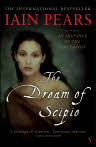
Personal note: Michael Wood’s introduction begins: “if you love literature of any kind, you will have had one of those moments when you encounter a book that opens a window onto a world you never dreamed existed. Mine was at school when I first encountered Du Fu in A. C. Graham’s wonderful Poems of the Late T’ang.” I had my own version of the same experience, and still have my battered old copy. Du Fu is transliterated in that and some other translations as Tu Fu. The price, in the top left corner of the cover (see picture) is 4/- (four shillings, or 20 pence in post-1970 UK money). I have never been a formal student or scholar in this domain, but modern English translations of classical Chinese poetry have left a deep impression on me. Another poem from this collection can be found in this blog at: https://contemplativeinquiry.blog/2016/02/04/poem-a-withered-tree/
WILD WRITING

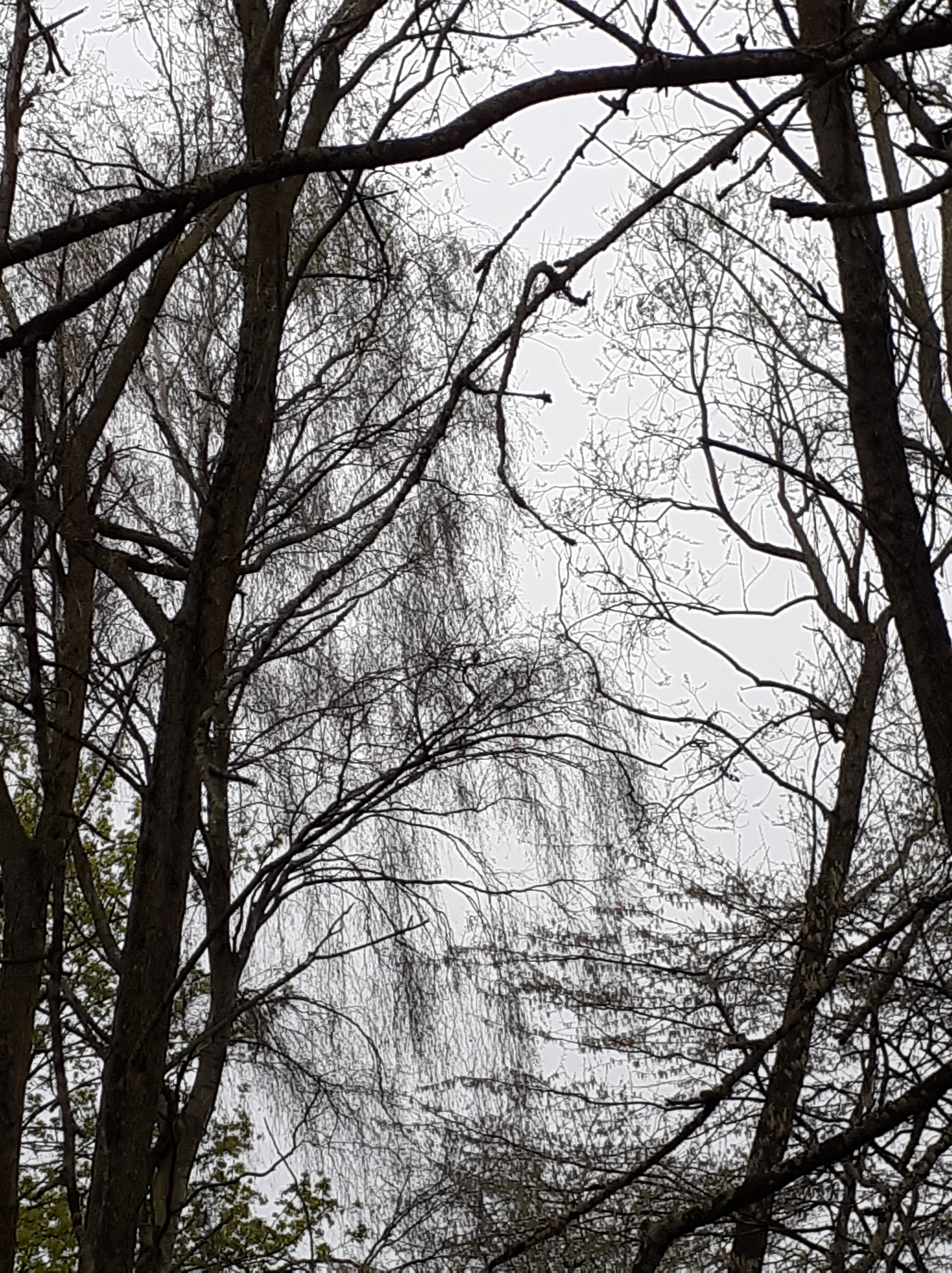
I look at the picture with fresh eyes. It is already a record of the past, and it is much too still. Yet I feel drawn towards this image. I enjoy the tree shapes in their starkness. I sense resilience in the plant life pictured here. I am writing now with sunlight intermittently on my shoulder, and the sounds of wind and rain beyond my strong glass doors.

I am also reflecting on writing as a practice. Natalie Goldberg (1,2) writes books about this and her description of ‘writing practice’ seems to me to have two entirely compatible meanings. The first is that it trains people for the writing of poems, stories and novels. The second points to a form of life practice flowing from the view that “writing is the crack through which you can crawl into a bigger world, into your wild mind” (1).

In Wild Mind: Living the Writer’s Life Natalie Goldberg compares writing practice with journaling. “Journal writing has a fascination with the self, with emotion and situation. It stops there. Writing practice lets everything else run through us; in writing practice, we don’t attach to any of it. We are aware that the underbelly of writing is non-writing. Journal writing seems to be about thought, about rumination and self-analysis. … We want to get below discursive thought to the place where mind – not your mind or my mind but mind itself – is original, fresh. It’s not you thinking. Thoughts just arise impersonally from the bottom of our minds. That is the nature of mind – it creates thoughts. It creates them without controlling them or thinking them … Writing practice knows this, knows how we are not our thoughts, but lets the thoughts, visions, emotions run through us and puts them on the page.” (1)

In her earlier book, Writing Down the Bones: Freeing the Writer Within, Natalie Goldberg quotes Jack Kerouac as saying that a writer should be ‘submissive to everything, open, listening’. She also recommends that “we stay in the trenches with attention to detail”, avoiding escape into abstraction. She points to poetry in particular, “because it brings us back to where we are. It asks us to settle inside ourselves and be awake”. She reproduces the famous William Carlos Williams poem:

“So much depends

upon

a red wheel

barrow

glazed with rain

water

beside the white

chickens.”

I remember this poem from my childhood. I liked it a lot, but couldn’t find anything to say about it in the class room when it was expected that I would. I was embarrassed then. I wouldn’t be now.

Natalie Goldberg also practices Zen Buddhism, with Katagiri Roshi until his death and more recently as an ordained member of the Order of Interbeing founded by Thich Nhat Hanh. She acknowledges the role of Zen in developing her insights into the creative process. I find her approach, including her practical exercises, very helpful.

(1) Natalie Goldberg Wild Mind: Living the Writer’s Life New York, NY: Open Road Integrated Media, 2011 (first published 1990)

(2) Natalie Goldberg Writing Down the Bones: Freeing the Writer Within Boulder, CO: Shambhala, 2016 (30th anniversary edition)

SMALL MAGIC


Feeling refreshed and inspired after a contemplative day retreat yesterday. The day included a session on contemplative drawing led by artist and illustrator Tom Brown*.

The session mostly involved playing with charcoal under Tom’s twinkly enabling eye. This freed me up in a number of ways and towards the end of the session I changed medium and wrote this poem.

Treescape after rain

Blue

behind

these pinpricks of light

In a pattern of Michaelmas leaves

Still lush and green

for now.


Heartache

In a good way.

Nothing lost, exactly, or forgotten,

But a poignant, fragile sense.

Such vulnerability.

*To get a flavour of Tom’s work, see http://gothicmangaka.tumblr.com.


POEM: THE BOATMAN’S FLUTE

Today there is no wind on the Yangtze;

the water is calm and green

with no waves or ripples.

All around the boat

light floats in the air

over a thousand acres of smooth, lustrous jade.

One of the boatmen wants to break the silence.

High on wine, he picks up his flute

and plays into the mist.

The clear music rises to the sky –

an ape in the mountains

screaming at the moon;

a creek rushing through a gully.

Someone accompanies on the sheepskin drum,

his head held steady as a peak,

his fingers beating like rain drops.

A fish breaks the crystal surface of the water

And leaps ten feet into the air.

From Yang Wan-li Heaven my Blanket: Earth my Pillow: Poems from Sung Dynasty China New York & Tokyo: Weatherhill, 1975 (Translated and introduced by Jonathan Chaves)

Yang Wan-li (1127-1206) was a scholar-bureaucrat and poet of Sung Dynasty China, a period of history during which some of the most treasured masterpieces of Chinese art and literature were created. Yet this culture was vulnerable. Northern China was occupied by Jurchen nomads, and the Southern Sung’s base in Hangchow is described in Chaves’ introduction as “a refuge of elegant solitude  from which they gazed longingly toward the north … in this quiet setting they were able to enjoy the beauties of bird, rock and stream”. The Boatman’s Flute chooses a natural setting, a scene on a great river, to capture a musical moment.

Yang Wan-li’s work is also presented at: https://contemplativeinquiry.wordpress.com/2015/05/14/reflection-on-chinese-poetry/


THE DREAM OF SCIPIO

Dream of Scipio“He went into the chapel and looked at the pictures she had studied, and saw them through her eyes. He looked at the picture of the blind man and Sophia, her gesture so tender, his so responsive, and saw again how she had made it her own. She had lost herself in this old work, her personality dissolving into it, so that she had been set free. The immortality of the soul lies in its dissolution.”*

This post is stimulated by a novel, but too personal to be a book review. It is energised by my belief that the best poetry and fiction are more supportive of spiritual inquiry than most texts designed specifically for spiritual teaching. The same can be said of visual arts and music. For me, spiritual understanding is not a body of information available for download from the cosmos. It does not arise from surrender to a persistent monologue. A certain kind of peace and safety might come from this, but the full fruits of the meeting between wisdom, love and creativity are missed.

Iain Pears’ novel The Dream of Scipio has inspired my spiritual direction whilst not directly defining it. I like novels as a medium for their ability to shift between different points of view and see people developing in a context of living relationships and events. They can look at the cultural and political impact of belief systems over time, as well as personal experience in the moment. The main protagonist in this novel is a philosopher and teacher from late antiquity. Actually named Sophia, she is in the tradition of Hypatia of Alexandria, now celebrated as both a Pagan and an Atheist martyr.

Pears’ story has three timelines, with two main point of view characters from each. We are presented with thoughtful people doing what they see as their best in specific contexts of time, place and culture. In each case the setting is the south of France, east of the Rhone. The first and in many ways defining period spans 475-486 and the ending of Roman rule. The second is 1342-8, mostly set in Avignon during its period of Papal residence. It includes the devastating outbreak of bubonic plague known as the Black Death. The third is 1940-1943, covering the defeat of France, the Vichy regime and then full German occupation as resistance strengthens and the tide of war begins to turn. In each case the plot turns on experiences of a Sophian figure and a man in some form of relationship with her. On the political level the focus is on crisis, choices, and consequences – especially for the Jewish community of the region.

In 475 Sophia runs a modest philosophy school in Marseille, inherited from her father Anaxius. They are insecure migrants from Alexandria.  Anaxius had been a pupil of Hypatia and can’t live there anymore.  Marseille is relatively small, provincial and in decline. But it is a Greek city in origin and part of the Mediterranean world. Southern France is a land of highly Romanised Celts, with significant Greek and Jewish communities in the larger towns.  Both as an independent woman and a philosopher in the Greek tradition, Sophia is an anomaly in a society of increasing religious conformism and narrowing cultural horizons. She presents herself as a guide, not a teacher, available to help without being an instructor. She asks people to speak freely and not to believe anything she says. She wants to emphasise the distinction between understanding and believing. Her theology is a rather austere neo-Platonism. “Let us take the premise” she says, “that the individual soul likens himself to God through the refinement of contemplation, and that virtue is a reflection of this understanding”.

Sophia’s main pupil is Manlius, a Gallo-Roman aristocrat who provides protection for Sophia as the school dwindles away and life gets more difficult. This supports his self-image of upholding the best of an old culture in bad times through an act of discerning patronage. They are attracted to each other, but the relationship is not consummated. They are holding to an ideal that “pure love is a reflection of the beautiful and a striving to return to it. Only through its accomplishment is the soul freed”. They both agree that Manlius should take a role in public life by making a formal conversion to Christianity and accepting the offer of a Bishopric. With the collapse in Roman military capacity the Romanised upper class is dependent on what we now call ‘soft power’. The church is its vehicle, and wants Manlius for his wealth, his family name and his administrative capacity. Manlius goes on to use his new office to negotiate a Burgundian occupation of his region as a means of maintaining order and keeping out the harsher Goths. This is presented as realistic in its own terms, though it involves the betrayal and killing of old friends who still want a Roman solution. However, even with the political settlement achieved, Bishop Manlius still needs to enhance his Christian credentials with the local population. They are not quite sure of his faith. So, taking advantage of a disturbance involving a Jewish criminal, he gives the entire local Jewish population three choices: conversion, exile or death. Most choose one of the first two options, but some are killed. From this time on Manlius is treated as a saint. He has solved the issue of the Christ killers on his patch.

Sophia is appalled. The point of public office lies in the opportunity to exercise virtue. Manlius was meant to take it to avoid it going to someone worse – someone bigoted or cynical. His behaviour is a betrayal of everything her teaching stood for. Manlius thinks of it as effective statecraft through the willingness to take hard decisions. Sophia still has to rely on Manlius’ protection – at one point to obtain her release from prison – and she moves to a small hermitage on his land. She and her role are no longer possible in the city. However, this doesn’t stop her from confronting him, expressing shame at being his teacher and breaking off the friendship. Manlius writes A Dream of Scipio (where she is his guide in the dream) as a kind of apology and tribute to her teaching, and to express his private opinions. Sophia refuses to read it.

Sophia survives Manlius. She lives on at the hermitage, protected by the good will of a Burgundian war lord who inherits the estate. He feels an odd respect for her though he can’t make her out and is easier to deal with than Manlius had become. Over time local people, especially women, have begun to treat her as a holy woman and seek her advice on personal and family problems.  After her own death, she is woven into legend as St. Sophia – the most faithful of a group of women gathered around Mary Magdalene when forced to leave the Holy Land. On arrival in the south of France, Sophia becomes a teacher and healer second only to Mary herself. A favourite story is the curing blind of Manlius, for example, who went on to become the holy Bishop of Vaison after regaining his sight and who rewarded her with the hermitage. The chapel built on the site becomes a centre of pilgrimage.

In the medieval part of the story, a young Italian painter experimenting with a more humanistic and representational art paints scenes from St. Sophia’s life on the chapel walls. They include the saint curing the blind Manlius.  Real people, younger and naiver than their originals, are used as the models. The Sophia figure is Rebecca, an orphan from the officially extinct Cathar community, working as the servant of a Jewish rabbi. Manlius is Olivier (and actually Rebecca’s lover), the young secretary of a Cardinal and also a poet in a new and evolving style. He finds an old manuscript of The Dream of Scipio. Its language is haunting and challenging. Some of the things Rebecca says, when she lets him know who she is, remind him of this manuscript and this is woven into the attraction. The chief political event is a knife-edge Papal decision to prevent a massacre of Jews rather than promote one as strongly advised. (The plague is widely blamed on the Jews.) The connection between Olivier and Rebecca makes a difference to this outcome, though at the eventual cost of Olivier’s life.

In the World War II part of the story, Julien is an academic and Julia a painter. They’ve known each other, on and off, for some years. Julia comes from a Jewish family but doesn’t think of herself as Jewish until forced to. After the occupation Julia manages to get exit papers from France but her ship is diverted to Cuba where U.S. authorities deny her permission to enter the United States, thus getting round a promise that no Jewish refugee will be turned back from a U.S. port. No other country will take her and she is forced back to France. Julien has a job as a Vichy censor based in Avignon (accepting it to prevent someone perceived as worse from having it). He is able to help Julia hide out discreetly, and she enters a highly productive phase as an artist. An important source of inspiration is the old Chapel of St. Sophia, its legends, and the medieval paintings that, somewhat the worse for wear, are still there. She makes use of the themes – especially the healing of blind Manlius by Sophia. However, she also becomes more visible – used by the Resistance to forge money and documents, and also because a Resistance co-ordinator flown back to France from Britain creates a cover role as an art dealer and sells some of her pictures. Julia is supposed to be put on a flight and taken out of harm’s way, but she is just too skilled and useful and her extraction keeps being delayed. When arrested she affirms her Jewish identity to half-hearted French police who are hoping that she will deny it (the arresting officers don’t know about her connection to the resistance, which one of them will shortly join). She is last known of on a train taking Jews to the camps. Julien, remorseful about failing to save her, dies whilst trying to save another resistance member from arrest.

There is a good deal about this book that is grim, and a good deal that is inspirational. If Sophia represents a spiritual wisdom, love and creativity, then the book has something to celebrate about these wonderful qualities as true human resources. Yet they are fragile. The book also speaks of dark times and the choices people make. The culture of the three periods is presented as accurately as possible and the major events all happened. Many possible lessons are suggested, and none are imposed. I found it very rich, and it’s one of the few novels I reread from time to time.

*Pears, Iain The Dream of Scipio London: Vintage, 2003

HAIKU BY BUSON

A Summer Haiku by the 18th century Japanese poet Buson from the collection Zen Haiku, selected and translated by Jonathan Clements. London: Frances Lincoln, 2000

Across the summer stream

With such joy

My sandals in my hand

REFLECTION ON CHINESE POETRY

In his poem Written on a Cold Evening Yang Wan-li* writes:

The poet must work with brush and paper,

but this is not what makes the poem.

A man doesn’t go in search of a poem –

The poem comes in search of him.

I realise, that when I read or present classical Chinese poems, I am not just working with translations from another language, but with translations from a completely different approach to the art of writing itself. So here I’ve added a piece about Chinese calligraphy, taken from an article by Dawn Delbanco, Department of Art History and Archaeology, Columbia University which is available on: http://www.metmuseum.org/toah/hd/chcl/hd_chcl.htm

Calligraphy, or the art of writing, was the visual art form prized above all others in traditional China, revered as a fine art long before painting. What makes the written language distinctive is its visual form. Unlike written words formed from alphabets, Chinese characters convey more than phonetic sound or semantic meaning. Written words play multiple roles: not only does a character denote specific meanings, but its very form manifests the energy of the human body and the vitality of nature itself. Writings on calligraphy use nature metaphors to describe the sense of wonder, the elemental power, conveyed by written words:

“[When viewing calligraphy,] I have seen the wonder of a drop of dew glistening from a dangling needle, a shower of rock hailing down in a raging thunder, a flock of geese gliding [in the sky], frantic beasts stampeding in terror, a phoenix dancing, a startled snake slithering away in fright.” (Sun Guoting, 7th century)

How can a simple character convey all this? The seeming simplicity of the tools is belied by the complexity of effects. A multiplicity of effect is produced in part by varying the consistency and amount of ink carried by the brush. Black ink is formed into solid sticks or cakes that are ground in water on a stone surface to produce a liquid. Calligraphers can control the thickness of the ink by varying both the amount of water and the solid ink that is ground. Once they start writing, by loading the brush sometimes with more ink, sometimes with less, by allowing the ink to almost run out before dipping the brush in the ink again, they create characters that resemble a shower of rock here, the wonder of a drop of dew there.

Unlike a rigid instrument such as a stylus or a ballpoint pen, a flexible hair brush allows not only for variations in the width of strokes, but, depending on whether one uses the tip or side of the brush, one can create either two-dimensional or three-dimensional effects. Depending on the speed with which one wields the brush and the amount of pressure exerted on the writing surface, one can create a great variety of effects. The brush becomes an extension of the writer’s arm, indeed, their entire body. The physical gestures produced by the wielding of the brush reveal much more than physical motion; they reveal much of the writers themselves – their impulsiveness, restraint, elegance, rebelliousness.

I would add that this kind of writing enacts the dance between ‘emptiness and form’ referred to in the Buddhist Heart Sutra (a favourite text in China) and the earlier references to that same dance in the Tao Te Ching, where it says, less abstractly:

Thirty spokes meet in the hub

Where the wheel isn’t, is where it’s useful.

Hollowed out, clay makes a pot

Where the pot’s not is where it’s useful.

Cut doors and windows to make a room.

Where the room isn’t, there’s room for you.

So the profit in what is, is in the use of what isn’t. **

In Chinese calligraphy and painting the empty spaces can be as significant as the filled ones. The two cannot be separated and this is an enduring lesson both of Chinese arts and spirituality (in their Taoist and Buddhist influenced versions). For me it’s a key lesson of the contemplative journey in any culture.

*From Yang Wan-li Heaven my Blanket: Earth my Pillow: Poems from Sung Dynasty China New York & Tokyo: Weatherhill, 1975 (Translated and introduced by Jonathan Chaves)

** From Lao Tzu Tao Te Ching: a Book about the Way and the Power of the Way Shambhala: Boston & London, 1998 (new English version by Ursula K. Le Guin)


POEM: THE OLD PEONY STALK

Seeming old dry stick

and yet …

a whole ecology

of

moist earth

tiny insects

a little live stem

whiskers and bones

whiskers and bones

dying back to the earth

without fuss

and not too fast

enough life left to feel/hear its

resonance

… a  subtle one.

Stillness allowing movement

permitting earth, moisture, fragmentation

in slow process

easy not to notice

yet, in softened, mutated from –

Part of the Song.

One of the cultural values of the Druid path is that those of us who are not dedicated, specialised poets and artists are encouraged to write poetry and to practise in the arts. I wrote this yesterday after participating in a ‘Lectio Divina from the Book of Nature’ practice with my partner Elaine. This practice was first introduced to us by our colleague Julie Bond and Elaine has adapted it. She will be offering it at our Contemplative Druid Retreat this weekend (17-19 April). I enjoyed rehearsing the practice with her very much, and am glad to have this record of its fruits.

AT TATE LIVERPOOL

I spent time at the Tate Liverpool yesterday. Currently there is an exhibition of work by Leonora Carrington the mystical surrealist and feminist. It was almost too much to take in. For me the work, among other things, aptly illustrated one of her own comments.

“One cannot understand reality. Paradigms are a transitory convention for man. It is to our advantage to believe that we know, but it is obvious that absolute truths that were accepted in the times of Newton and Euclid do not exist.

“Sorcerers and alchemists know about animal, vegetable and mineral bodies. To hack away the crust of what we have forgotten and rediscover things we knew before we were born.

“There are things that are not sayable. That’s why we have art.”

BOOKMARK

The other day I glanced at a bookmark I was using. It drew me in and I really took notice of it. I realised that this was an old bookmark, as bookmarks go, and that I’d been holding on to it and intermittently using it since about the dawn of the millennium. I know that because it advertises Banyen Books & Sound, 2671 West Broadway, Vancouver. I’ve only been to Vancouver once, for a conference in August 2001. I remember liking the city and the summer atmosphere. Retrospectively it feels like the last breath of the 1990’s, such a short time before 9/11 and all that has happened since.

One side gives the information about the store – I’ve no idea whether it’s even there now, books and music being sold so differently now. The other has a traditional Chinese picture – mountain, river, mist, all somehow spaciously portrayed within a restricted area of card – together with this quote from Joseph Campbell.

“To have a sacred place is an absolute necessity for anybody today. You must have a room, or a certain hour or so a day, where you don’t know what was in the newspapers that morning, you don’t know who your friends are, you don’t know what you owe anybody, you don’t know what anybody owes to you. This is a place where you can simply experience and bring forth what you are and might be. This is the place of creative incubation. At first you may find that nothing happens there. But if you have a sacred place and use it, something eventually will happen.”

It’s true, and a great thing to bring forward from that time.

Earth Eclectic

music that celebrates Earth and speaks to the heart

Sarah Fuhro Star-Flower Alchemy

Follow the Moon's Cycle

Muddy Feet

Meeting nature on nature's terms

Rosher.Net

A little bit of Mark Rosher in South Gloucestershire, England

Becoming Part of the Land

A monastic polytheist's and animist’s journal

selkiewife

Selkie Writing…

Charlotte Rodgers

Images and words set against a backdrop of outsider art.

Prof Jem Bendell

living with metacrisis and collapse

Towint

The pagan path. The Old Ways In New Times

The Druids Garden

Spiritual journeys in tending the living earth, permaculture, and nature-inspired arts

The Blog of Baphomet

a magickal dialogue between nature and culture

This Simple Life

The gentle art of living with less

Musings of a Scottish Hearth Druid and Heathen

Thoughts about living, loving and worshiping as an autistic Hearth Druid and Heathen. One woman's journey.

Wheel of the Year Blog

An place to read and share stories about the celtic seasonal festivals

Walking the Druid Path

Just another WordPress.com site

anima monday

Exploring our connection to the wider world

Grounded Space Focusing

Become more grounded and spacious with yourself and others, through your own body’s wisdom

The Earthbound Report

Good lives on our one planet

Hopeless Vendetta

News for the residents of Hopeless, Maine