Contemplative Inquiry

This blog is about contemplative inquiry

Tag: Animism

EYE OF SPIRIT

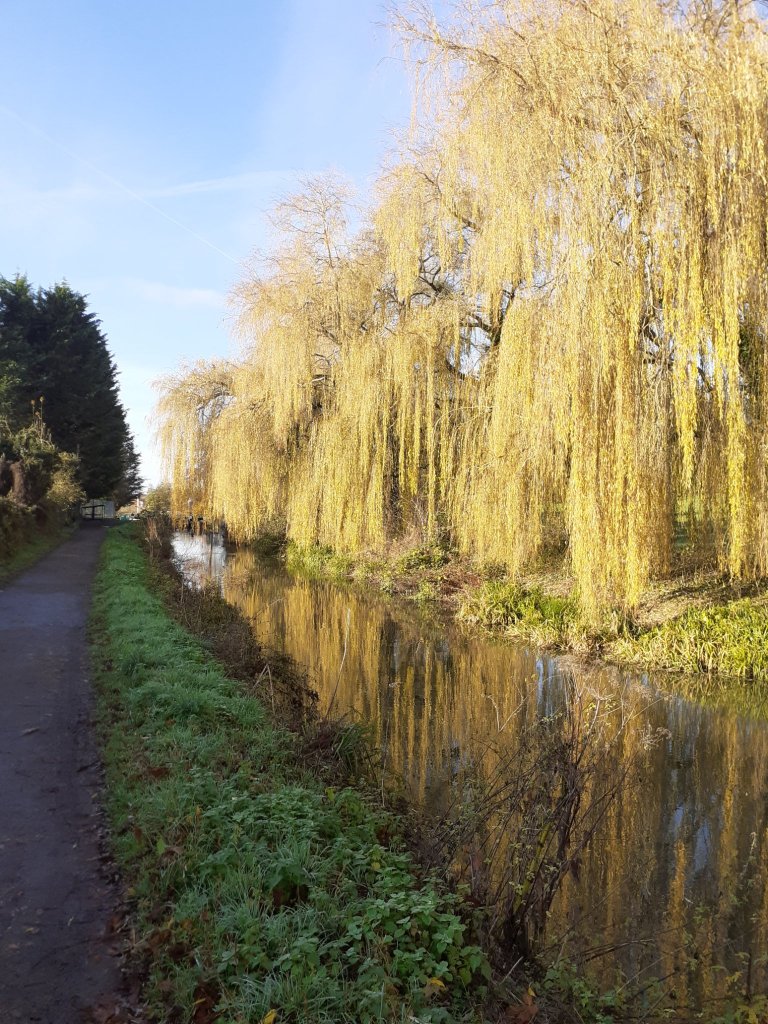
I walk my Sophian Way, seeking imagery for the end of November. The willows provide it. I see a dying back of the year, where the withdrawn and conserved life has a beauty of its own.

Stilling into presence, and holding the trees in loving attention, I act as the eye of spirit. I am aware equally of the uniqueness and otherness of the trees, and of my inter-being with them. I feel love, gratitude and wonder. I also feel a poignancy, and a sense of vulnerability – for them, and me, and everyone else.

I am glad to be taking pictures again after a gap of many years. There are dangers of displacing my attention into the process of photography, or of contracting into a collector’s obsession with ‘capturing’ images. My solution is to be artless and spontaneous in pressing the button – and to leave my phone in my pocket for most of the time. Once at home, I do find myself delighting in the record.

BOOK REVIEW: GREENING THE PARANORMAL

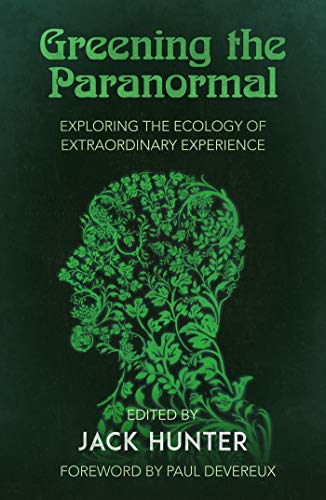
I recommend this book to anyone concerned with deep ecology, animism, or the kinds of phenomena we describe as ‘paranormal’. It opens with two substantial framing pieces, a foreword by Paul Devereux and an introductory chapter by editor Jack Hunter. These are followed by 16 chapters from a diverse range of contributors, mostly seeking to combine direct witness with a workable form of academic analysis. To an extent this book is a story of how to face this difficult challenge. Very early, in his foreword, Paul Devereux shows how the challenge can come from the ‘phenomena’ themselves.

“We were trying to geographically map generations of old accounts of fairy paths we had uncovered in the verbatim records of University College Dublin. Suddenly, standing in the grass, there was a figure, between two and three feet tall. It was anthropomorphic and fully three dimensional (as we could clearly determine while we were drifting slowly past. It had sprung its appearance out of nowhere, and it caught my wife’s and my own transfixed attentions simultaneously.

The figure was comprised of a jumble of very dark green tones, as if composed of a tight dense tangle of foliage rather like the stand of woodland a hundred yards or so beyond the sward of grass. It didn’t seem to quite have a face, just a head with deep set eyes appearing out of the green tangle. It presented a distinctly forbidding appearance. As we crawled past in our car, the figure started to turn its head in our direction, but then vanish.

“Charla called out, ‘Oh, shit!’ We looked at each other, both of us wide-eyed and thoroughly disconcerted. ‘You saw that!’ I asked rhetorically. The whole episode had lasted for only about half a minute or so, but it was unequivocally an actual. if transient, objective observation.”

The running inquiry question throughout the book is, what do we make of experiences like this, if we are determined to honour rather than dismiss them? Devereux senses four major themes in the suggested ‘greening of the paranormal’ in our time. The first is animism, the ‘Big Step for our culture to take’: the sense that the elements of the non-human world are animate in some way – rocks, rivers, soil, as well as plants and living organisms. This involves a deep relationship with the land beyond utility and subsistence. The second theme is the vision quest, a wilderness journey which is more about paying attention and being open to what unfolds, rather than posing questions. The third concerns the ‘liminal’ places that seem to support our breaking through into other-world realms or altered mind states. The fourth is inter-species communion with the animal and plant kingdoms. In the language used by Jack Hunter, we find ourselves dealing with a “profoundly mindful, sentient and agentic world” and the potential re-opening of lost forms of communication and connection.

Many of the contributors believe that we are unlikely to get through the climate crisis if we continue to ignore dimensions of experience from which our cultural filters have exiled us. Some of them live or work in countries that have been colonised by Europeans, but where pockets of traditional indigenous wisdom remain. They recognise that in some cases there are invitations to share in this. There are also concerns about appropriation and the dynamics of the researcher/subject relationship. There is a questioning of the word ‘shamanism’ as currently used – and arguably over-extended and suspect.

This book does not read like a novel. Although I have read it all, there were two or three chapters which didn’t speak to me. Others were riveting. I see it as an excellent book to own and keep for reference. The foreword and first chapter each stand alone and I recommend reading both of them. The other chapters can be cherry picked according to taste or need. Overall there’s a strong invitation to wake up to the aspects of world, life and experience that are being pointed to. The book suggests that they are needed for our personal, social and global healing.


SACRED SOUNDSCAPES

“Concepts of animism can take many forms. … The idea of the land being capable of speaking to humans was probably widespread in ancient sensibility. Sacred soundscapes were simply a natural corollary.

“The basic notion of the land having speech, or being read like a text, was lodged deeply in some schools of Japanese Buddhism – in early medieval Shingon Esoteric Buddhism, founded by Kukei, for instance. He likened the natural landscape around the Chuzenji temple and the lake at the foot of Mount Nantai, near Nikko, to descriptions in the Buddhist scriptures of the Pure Land, the habitation of the buddhas. Kukei considered that the landscape not only symbolised but was of the same essence as the mind of the Buddha. Like the Buddha mind, the landscape spoke in a natural language, offering supernatural discourse: ‘Thus, waves, pebble, winds, and birds were the elementary and unconscious performers of the cosmic speech of buddhas and bodhisattvas,’ explains Allan Grapard (1994).

” …. ….

“Throat singers in Tuvan, an autonomous republic within the Russian Federation, developed their vocal art originally as a means of communicating with their natural environment, not for entertainment. Throat singing involves the production of resonant sounds, overtones and whistles within the throat, nasal cavities, mouth and lips, and was used to provoke echoes or imitate natural sounds like waterfalls or wind. The master throat singers can select precise locations inside caves where the resonances are exactly right to maximise the reverberations of their songs. They even wait until atmospheric conditions are perfect for the greatest effect. It is in essence a technology of echoes. At one locale, where a singer called Kaigal-ool performed in front of a cliff face, ethnomusicologist Theodore Levin reported that ‘the cliff and surrounding features sing back to the musician in what Kaigal-ool calls a kind of meditation, a conversation I have with nature‘ (Levin & Suzukei, 2006).

“It is only in our modern culture that we have stopped listening to the land within a spiritual context. If we could fashion a modern, suitably culturally-ingrained animistic model, we would treat the environment with much more respect.”

Paul Devereux, in his Foreword to Greening the Paranormal: Exploring the Ecology of Extraordinary Experience August Night Press, 2019. Edited by Jack Hunter. See: http://www.augustnightpress.com

CONTEMPLATION AND ENGAGEMENT


According to my dictionary, one of the meanings of ‘signature’ is, “a distinctive pattern, product, or characteristic by which someone or something can be identified: the chef produced the pate as his signature dish”.

I want to adjust the signature of this blog. I want now to explore the relationship between contemplation and engagement more explicitly. A blog is itself a form of engagement, and this one has so far combined a strong curatorial thread with personal sharing. Now, for me as for many others, a deepening social and ecological crisis asks for a work of preserving existing life-affirming aspects of our culture and developing new ones. I see this work as enhanced by outward-looking forms of contemplation. I want this blog to contribute.

I started this blog as a Druid. My personal path, which I have described more recently as a Sophian Way, has become more Universalist. I have described it as a path of healing, peace and illumination, which encourages a spirit of openness, an ethic of interdependence and a life of abundant simplicity. Its ‘sacrament of the present moment’ involves resting in a place of underlying stillness, freedom and love within any experience – good experiences, wonderfully, but also bad ones that need active resisting on the ground. For some, this suggests an experience of divine support, or the activation of the divine within us or of the divinity that we truly are. For others it seems to come from a deep wellspring within the psyche that needs no further point of reference. This sacrament is my core practice, to be dropped into at any time. It doesn’t always take a pure form, but it usually makes a difference. In the myth of my own life, it is Sophia’s principal teaching.

At the level of the wider word, I continue to feel a strong sense of alignment with Pagan, Animist, and Earth spiritualities like Druidry – more than to the Buddhist or Gnostic families or to movements like the Headless Way, even though they have given me a lot. Philip Pullman in his The Secret Commonwealth* has a character who says that where we stand revolves around one key question – ‘is the world dead or alive?’ I say ‘alive’ without worrying about scientific definitions or the metaphysics of reality. Something in me just has to say ‘alive’ – alive and interconnected as a web of life. This re-affirmation is important to me, and as a ‘light bulb moment’ on a level with the more seemingly individual aspects of my Sophian Way. I don’t expect to change the blog that much, but there’s enough adjustment of signature here to demand explicit affirmation.

*Philip Pullman The Secret Commonwealth Oxford, David Fickling Books & London, Penguin, 2019 (Vol. 2 of The Book of Dust)


SEEING: CONTEMPLATIVE DRUIDRY

There is a dance between experience and meaning. Experience informs meaning, yet the meaning given to significant experiences can change over time, in the light of later experiences. Looking back at my introduction to Contemplative Druidry (1), I now sense that my contemplative journey was triggered by a kind of Wild Seeing, long before I encountered the work of Douglas Harding (www.headless.org/ ). Here is what I wrote.

“On 22 June 2007 my centre of gravity shifted. It was late morning. I was just outside the Scottish Border town of Melrose, drawn in three possible directions. One was up the hills at the back of the town – the Eildon Hills, the hollow hills where the Queen of Efland took Thomas the Rhymer; True Thomas as he became. The second was the fine, if half-ruined, Abbey and its grounds; a place of Green Man carvings, fruit trees, and the heart of Robert the Bruce. The third was the banks of the Tweed.

“I took the third option and walked into a wholly unexpected and not at all dramatic epiphany. It was triggered simply by noticing and contemplating a wild rose, growing on the banks of the river. It lasted a few moments, just long enough for me to register it, and to experience a subtle shift of awareness in consequence. For some weeks I woke up every day with a sense of joy and connection. Months later, I wrote the verse that expressed it:

I am Rose. I am wild Rose.

I am Rose at Midsummer.

The river flows by me.

Fragile, I shiver in the wind.

And I am the heart’s core, mover of mountains.”

I was aware at the time that I was contrasting three choices in a fairy tale kind of way. The first was the path of magic (the Queen of Elfland). The second was the path of contemplative religion (Melrose Abbey). The third was the path of direct experience (wild rose on the riverbank). I chose the third. The poem best shows the import of this deceptively simple experience, especially in the last line. ‘I am the heart’s core; mover of mountains’ is more than a nature mysticism. I speak not only as the rose, but as the heart’s core, mover of mountains. I speak from the source.

During its collective life, contemplative Druidry did take its stand in direct experience. It was also very open – we talked of being of like intent rather than like mind; there was no consensus cosmology or belief. On the whole we were naturalistic, but not quite in the humanist or materialist sense. The use of terms like ‘Earth spirituality. ‘nature mysticism’. pantheism’ and ‘animism’ pointed to something more expansive. Now my experiences of  Seeing, support the view advocated by Douglas Harding and described as nondualist and panentheist. In everyday terms we can say that we have two identities, one as humans and the other as the ground of being. Ultimately, there is no separation and so only one true identity. Seeing is offered as a skilful means of learning to recognise this identity, and then to live from it.

My Sophian Way is now firmly in this territory. My challenge is to cleave to the experiential practice and its fruits whilst staying open about metaphysical claims. The intelligence of the heart is nourished by this view and is attracted by the reassurance of a clear and simple narrative. The mind wants to stay agnostic and provisional. When mobilised, it can ferret out weaknesses in the view. The Sophian Way is a way of wisdom, as well as a salute to the cosmic mother and healer in the heart. Wisdom invites me to trust the process – maintaining just enough scepticism to avoid attachment to views.

(1) James Nichol , Contemplative Druidry: People, Practice and Potential, Amazon/Kindle, 2014.  https://www.amazon.co.uk/contemplative-druidry-people-practice-potential/dp/1500807206/

WHEN I WAS A CREEK

When I was

a tree,

I sang and danced

with the wind

and offered

food and refuge

to all who came.

When I was

a cloud,

I floated freely,

bringing

shade and rain

wherever they

were needed.

When I was

a creek,

I flowed effortlessly

around stones

and nourished life

everywhere

I went.

When I was

a seed,

I held

the story

of what

I would become

inside me

until the sun

and rain

let me know

it was time

to share it.

When I was

a flower,

I opened up

to reveal

my beauty

and invited the bees

to share

the sweetness.

Now I am

human

and can do so many things,

yet I am

full of questions

about who I am

and why I’m here.

Kai Siedenburg Poems of Earth and Spirit: 70 Poems and 40 Practices to Deepen your Connection with Nature Our Nature Connection, 2017

CONTEMPLATION

I like this poem for its economy and simplicity, and for its gentle, shape-shifting animism – for the ease with which it moves between identities in nature. For me, there is power and beauty in this, all the better for a relative lack of ornament.

As a human, I do feel a bit set up. Whereas the rest of nature is awarded an innocence and generosity not always evident in the apparent world, we humans are implicitly stigmatised for our questions, and thereby separated from the rest of nature. In our mainstream culture (both religious and secular) we place ourselves above the rest of nature, so the polar opposite perspective does have a corrective value. But it leaves me unsatisfied.

My sense is that the writer is placing herself alongside me, the reader, and the other humans. She is not awarding herself a free pass on the grounds of her vividly present and enacted imaginative empathy. So I would say to her what I say to myself. As I read it, there’s a strong invitation to self-compassion in the last verse.

Our finite minds are as natural as anything on earth.. Our questions about who we are, why we’re here and what to do are part of us. For me, the only way through them is become more skilled in the process of inquiry and to learn to live by its fruits. I value this poem partly through what it evokes directly, and partly because it stimulates useful inquiry.


REVISED ‘ABOUT’ APRIL 2019

Over the lifetime of this blog I have made frequent revisions of its ‘About’ statement. Most are small. Occasionally, I make a major revision which I also publish as a post. Below is my revised and edited ‘About’ of 19 April 2019.

I am James Nichol and I live in Stroud, Gloucestershire, England. The Contemplative Inquiry blog started in August 2012, and includes personal sharing, discursive writing, poetry and book reviews. It explores contemplative themes and their role in human flourishing within the web of life.

In my own journey, I have found an At-Homeness in a flowing now, not linked to any specific doctrine. For me, this experience and stance enable greater presence, healing and peace. They also support imaginative openness and an ethic of aware interdependence.

I began this work within British Druidry. I continue to follow an earth-centred and embodied spiritual path, ‘secular’ rather than ‘religious’. I draw on diverse traditions, especially resonating with naturalist, eco-existentialist, pantheist and animist currents within and beyond modern Paganism.

I am wary of metaphysical truth claims, including materialist ones, with an ultimate stance of openness and unknowing. At the time of this revision, I am exploring a tradition initiated by the Greek Pagan philosopher Pyrrho of Elis, who developed his own school of contemplative scepticism after a visit to India.

My book, Contemplative Druidry: People, Practice and Potential, was published in 2014.  https://www.amazon.co.uk/contemplative-druidry-people-practice-potential/dp/1500807206/

PANPSYCHISM: A NOTE

Non-dualist author Peter Russell is happy to use the Western terms ‘panpsychism’ and ‘panexperientialism’ when discussing what he calls the “mystery of consciousness”. These terms are both modifications of ‘pantheism’ and the ideas have a kinship with those of modern animism. From a Druid perspective, I find it valuable to see this kind of connection being made with the non-dualist systems of Indian origin – whether Tantric, Vedantic, Buddhist or Jain. Challenging our modern mainstream culture’s assumptions about consciousness, Russell says:

“The underlying assumption of the current meta-paradigm is that matter is insentient. The alternative is that the faculty of consciousness is a fundamental quality of nature. Consciousness does not arise because of some particular arrangement of nerve cells or processes going on between them, or from any other physical features. It is always present.

“If the faculty of consciousness is always present, then the relationship between consciousness and nervous systems needs to be rethought. Rather than creating consciousness, nervous systems may be amplifiers of consciousness, increasing the richness and quality of experience. In the analogy of a film projector, a nervous system is like having a lens in the projector. Without the lens there is still a light on the screen, but the image is much less sharp.

“In philosophical circles the idea that consciousness is in everything is called panpsychism, from the Greek pan, meaning all, and psyche, meaning soul or mind. Unfortunately, the words soul and mind suggest that simple life forms may possess qualities of consciousness found in human beings. To avoid this misunderstanding, some contemporary philosophers use the term panexperientialism – everything has experience.

“Whatever name this position is given, its basic tenet is that the capacity for inner experience could not evolve or emerge out of entirely insentient, non-experiencing matter. Experience can only come from that which already has experience. Therefore, the faculty of consciousness must be present all the way down the evolutionary tree.

“We know that plants are sensitive to many aspects of their environment – length of daylight, temperature, humidity, atmospheric chemistry. Even some single-celled organisms are sensitive to physical vibration, light and heat. Who is to say that the do not have a corresponding glimmer of awareness?

“According to this view, there is nowhere we can draw a line between conscious and nonconscious entities; there is a trace of experience, however slight, in viruses, molecules, atoms and even elementary particles.”

Peter Russell From Science to God: a Physicist’s Journey into the Mystery of Consciousness Novato, CA: New World Library, 2002

GARY SNYDER: ‘WILD’

“The word wild is like a grey fox trotting off through the forest, ducking behind bushes, going in and out of site. Up close, first glance, it is ‘wild’ – then further into the woods next glance it’s ‘wyld’ and it recedes and it recedes via Old Norse villr and Old Tuetonic wilthijaz into a faint pre-Tuetonic ghweltijos which means, still, wild and maybe wooded (wald) and lurks back there with possible connections to will, to Latin silva (forest, sauvage) and to the Indo-European root ghwer, base of Latin ferus (feral, fierce), which swings us around to Thoreau’s ‘awful ferity’ shared by virtuous people and lovers. The Oxford English Dictionary has it this way:

Of animals – not tame, undomesticated, unruly

Of plants – not cultivated

Of land – uninhabited, uncultivated

Of foodcrops – produced or yielded without cultivation

Of societies – uncivilized, rude, resisting constituted government

Of individuals – unrestrained, insubordinate, licentious, dissolute, loose. “Wild and wanton widowes”, 1614

Of behavior – violent, destructive, cruel, unruly

Of behavior – artless, free, spontaneous. “Warble his native wood-notes wild” – John Milton

Wild is largely defined in our dictionaries by what – from a human standpoint – it is not. It cannot be seen by this approach for what is is. Turn it the other way:

Of animals – free agents, each with its own endowments, living in natural systems

Of plants – self-propagating, self-maintaining, flourishing in accord with innate qualities

Of land – a place where the original and potential vegetation and fauna are intact and in full interaction and the landforms are entirely the result of non-human forces. Pristine.

Of foodcrops – food supplies made available and sustainable by the natural excess and exuberance of wild plants in their growth and in the production of quantities of fruit and seeds

Of societies – societies whose order has grown from within and is maintained by the force of consensus and custom rather than explicit legislation. Primary cultures, which consider themselves the original and eternal inhabitants of their territory. Societies which resist political and economic domination by civilization. Societies whose economic system is in a close and sustainable relation to the local ecosystem

Of individuals – following local custom, style and etiquette without concern for the standards of the metropolis or nearest trading post. Unintimidated, self-reliant, independent

Of behavior – freely resisting any oppression, confinement or exploitation. Far-out, outrageous, ‘bad’, admirable.

Of behavior – artless, free, spontaneous, unconditioned. Expressive, physical, openly sexual, ecstatic

Most of the senses in this second set of definitions come close to being how the Chinese define the term Dao, the way of Great Nature: eluding analysis, beyond categories, self-organizing, self-informing, playful, surprising, impermanent, insubstantial, independent, complete, orderly, unmediated, freely manifesting, self-authenticating, self-willed, complex, quite simple. Both empty and real at the same time. In some cases, we might call it sacred. It is not far from the Buddhist term Dharma with its original senses of forming and firming.”

Gary Snyder The Practice of the Wild Berkeley, CA: Counterpoint, 1990

In a preface to the 2010 edition, Gary Snyder describes his path as “a kind of old time Buddhism which remains connected to animist and shamanist roots. Respect for all living beings is a basic part of that tradition. I have tried to teach others to meditate and enter into the wild areas of the mind. … Even language can be seen as a wild system”.

WHAT’S IN A NAME?

I’ve been questing a name for my stance in the world. At this point in my journey, I can’t think of myself either as either a Druid or a Buddhist, despite the importance of these movements in my life. But to keep saying this is enervating and dis-empowering. I want a name, a positive name. I want it to affirm my current values with the creative focus of a new identification. I have ended with Existentialism – with the proviso that I need to customize my own 21st century version. Here’s how I reached this point.

First, I turned from the realms of spirituality and religion and looked to philosophy – specifically the Western tradition bearing that name, which means ‘love of wisdom’ (philo – sophia). This emerged over two and a half millennia ago in ancient Greece, where “philosophy was not, initially anyway, something to be studied in isolation by a group of specialists, but rather the expression of a way of life” (1). As such, it covered areas we still call by Greek names: therapeutics, ethics, aesthetics, politics. It asked basic questions that we face in our lives. It suggested physical and spiritual exercises and dietary regimes aimed at the good life. It included ‘natural philosophy’, the basis of our science. Over time, rival schools of philosophy sprang up – Platonist, Aristotelian, Stoic, Epicurean, Cynic, Sceptic.

According to one of its champions, Existentialism is “arguably the only contemporary form of philosophy that remains true to the conception of philosophy first articulated” in ancient Greece (1). As a movement, Existentialism lasted for only a brief period in the mid twentieth century. Jean-Paul Sartre provided the name and was the only person who habitually used it of himself. Other people associated with the group were Maurice Merleau-Ponty, Albert Camus and Simone de Beauvoir. Only Merleau-Ponty was a full-time academic. The other Existentialists were better known for their involvement in politics and literature – fiction, drama, and journalism. Albert Camus said,” if you want to be a philosopher, write novels”.

The Existentialists were a diverse group with certain themes in common: living without God; freedom; others and otherness; anxiety; finitude; the absurd; authenticity; oppression. They struck a chord in an age of totalitarianism, world war, holocaust, nuclear warfare (actual and threatened) and anti-racist and anti-colonial struggles. Buddhism’s dukkha becomes Existentialism’s angst, here worn almost like a badge of honour, a price of the human condition. This condition is one of self-conscious awareness, simultaneously free and compelled to make choices without divine sanction, in the absence of any cosmic template or plan. Existence precedes essence: we must make ourselves.

Existentialism both looks back from this historical moment and points forward from it. The looking back is to the nineteenth century. Friedrich Nietzsche proclaimed the death of God, while Soren Kierkegaard came down in favour of religion out of loyalty to a ‘subjective truth’ of his own existence. For him, to ‘exist’ is to face the uncertainties of the world and commit oneself passionately to a way of life. Fyodor Dostoevsky is sometimes classed as another religious Existentialist in the way that he chose Russian Orthodoxy over Nihilism.

Moving into the 20th century, we find the development of ‘phenomenology’ as a scholarly attempt to learn from within the ‘life-world’, the subjective and inter-subjective realm, the insider’s view of existence, at a time when most academic endeavours adopted an objective, scientific, observer stance. Martin Heidegger, its best-known practitioner, is considered an Existentialist. The later French Existentialists drew inspiration from these earlier sources, but this didn’t involve taking on specific religious or political beliefs. They stood in a French republican tradition that was atheist and of the left.

Looking forward, Existentialism contributed to later Feminist and post-colonial perspectives. De Beauvoir’s The Second Sex was ground breaking in the 1950’s, whilst needing to be moved on from in subsequent decades. Existentialism has informed the politics of identity, though in itself also thought of as superseded by poststructuralist, postmodernist and other more recent currents. It appears to have done its job. But I’m not so sure. I was born during the heyday of French Existentialism. I am drawn to the term and I feel like taking this tradition and updating it for myself.

I thought of using the qualifier eco-existentialism, but the term is already used in eco-psychology and I have also spotted it in a business context, concerned with individual choice in creating sustainable households. I think I will stick with the single word Existentialist. It’s long enough. I want it to  incorporate practices of mindfulness and compassion and to be Earth centred. The Spell of the Sensuous (2) draws on Merleau-Ponty’s later work to demonstrate how an animist mindset makes sense: it is necessary to human perception even when apparently repressed and denied. Animist Existentialism? I believe that it is quite possible for me to live and affirm an Existentialism adjusted to 21st. century conditions and understandings. Names do matter to me, when I can mobilize around them. This one somehow makes me feel lighter and more resourceful. The magic of naming!

(1) Thomas E. Wartenburg Existentialism: A Beginner’s Guide Oxford: Oneworld, 2008

(2) David Abram The Spell of the Sensuous: Perception and Language in a More-Than-Human World New York: Vintage Books, 1997 & 2017

Earth Eclectic

music that celebrates Earth and speaks to the heart

Sarah Fuhro Star-Flower Alchemy

Follow the Moon's Cycle

Muddy Feet

Meeting nature on nature's terms

Rosher.Net

A little bit of Mark Rosher in South Gloucestershire, England

Becoming Part of the Land

A monastic polytheist's and animist’s journal

selkiewife

Selkie Writing…

Charlotte Rodgers

Images and words set against a backdrop of outsider art.

Prof Jem Bendell

living with metacrisis and collapse

Towint

The pagan path. The Old Ways In New Times

The Druids Garden

Spiritual journeys in tending the living earth, permaculture, and nature-inspired arts

The Blog of Baphomet

a magickal dialogue between nature and culture

This Simple Life

The gentle art of living with less

Musings of a Scottish Hearth Druid and Heathen

Thoughts about living, loving and worshiping as an autistic Hearth Druid and Heathen. One woman's journey.

Wheel of the Year Blog

An place to read and share stories about the celtic seasonal festivals

Walking the Druid Path

Just another WordPress.com site

anima monday

Exploring our connection to the wider world

Grounded Space Focusing

Become more grounded and spacious with yourself and others, through your own body’s wisdom

The Earthbound Report

Good lives on our one planet

Hopeless Vendetta

News for the residents of Hopeless, Maine