Contemplative Inquiry

This blog is about contemplative inquiry

Tag: Zen Buddhism

IN A NUTSHELL

I value clarity and simplicity, especially in spirituality. Yet the subject often gives rise to mystifying ideas and language. From now on I want to avoid these, when genuinely avoidable, in my inquiry.

In 2014, not long before he became ill, Thich Nhat Hanh retranslated the Prajnaparamita Heart Sutra, foundational to Mahayana Buddhism, and revised his commentary. Although brief, the sutra develops Buddhist emptiness teachings and therefore the Buddhist view of non-duality. After more than sixty years of monastic study and practice, Thich Nhat Hanh tells us that a flower is made only of non-flower elements, so we can say that the flower is empty of separate self-existence. But that doesn’t mean that the flower is not there. “When you perceive reality in this way, you will not discriminate against the garbage in favour of the rose”.

Thich Nhat Hanh worked at making Buddhism accessible to a modern Western audience, because the teachings of Buddhism are not one, but many. When Buddhism enters a new country, that country always acquires a new form of Buddhism. As part of his own teaching, he invented the term ‘interbeing’. Yet he is also true to tradition. In thirteenth century Japan, Zen Master Eihei Dogen taught that “enlightenment is just intimacy with all things”. Such intimacy nourishes the seed of compassion. Thich Nhat Hanh offers essentially the same understanding to other peoples in another time.

CRAVING THROUGH BUDDHIST EYES

“We are learning to unbind the mind from the grip of craving”, according to the teachers of my course on the Buddhist Four Noble Truths (1). The problem about unbinding the mind, they acknowledge, is that we usually can’t do it as a simple act of will. Going that way, we can end up at war with ourselves.

The purpose of practices like meditation, in this context, is to create a mental landscape that favours awareness and understanding. The craving impulse is likely tied to an underlying discontent – something wrong, or lacking, or missing. Through practice, we learn to create moments of pause in which we’re “sensitized to the impulse” of moving towards or away from bundles of feelings, thoughts, images and desires. As part of this increased awareness, we may learn to tolerate discontent, rather than automatically attempting to solve it. During such discontent, a question in the Zen tradition asks: ‘what in this moment is truly lacking?’. We may find ourselves discovering a sensitivity, kindness or capacity for gladness that begins to address our sense of lack and to calm the craving.

Going a little deeper, we can look at mythologies in our lives that tell us, ‘if only I had X, I would be happy’. This includes material objects and conditions, but also expectations of other people, in which we make them responsible for our happiness. We learn to identify our own habitual patterns built on assumptions of this kind We also learn to hold the tension of unfulfilled craving – whether because we don’t get what we want, or because we do get we want and remain unsatisfied. This in turn allows us better to understand the pay-offs, or lack thereof, of satisfying cravings. A different kind of strategy is to “acknowledge how much good stuff we have experienced and how much pleasure we have experienced”.

I notice that this discussion is highly psychologized and reflects the marriage of modern psychology and modern Buddhism with ‘mindfulness’ as their offspring. In a sense, we are witnessing a new kind of Buddhism. I have now read translations of some early Indian texts. Although the teachers of my Four Noble Truths course are versed in these texts and loyal to them, the cultural feeling tone – to me – seems vastly different. I would read from them that the real cause of suffering is being born at all. This is again different from the marriage of Taoism and Buddhism in China, birthing Chan (and subsequently Zen in Japan). Here the focus is on breaking out of a prison – of conventional language, thinking and identity –  for the encounter with ‘original face’.

So, behind the immediate concern with the Four Noble Truths (or ennobling tasks) there is another inquiry, concerned with what Buddhism (or post Buddhist Dharma) will look like as it becomes indigenized in the West, especially North America as the centre of gravity for these developments. When a new culture adopts an exotic religion, it will inevitably change it. This is happening now in the case of Western Buddhism. The Four Noble Truths course sheds valuable light on the evolution spiritual cultures as well as on how to deal (my own words) with a bitter sweet poignancy at the heart of life.

(1) This course is concerned with Buddhism’s Four Noble Truths, re-framed as four ennobling tasks. It is provided by Bodhi College – https://bodhi-college.org/  –  for the Tricycle online teaching programme – https://learn.tricycle.org/ . The teachers are Akincano Weber, Christina Feldman, Stephen Batchelor and John Peacock, all very experienced in this field.


AIMLESSNESS

We often talk about our ‘path’ or ‘journey’, and this can have a value. Yet at heart spirituality is about being somewhere rather than getting somewhere – recognising the home we have never left.

“The concentration on Aimlessness means arriving in the present moment to discover that the present moment is the only moment in which you can find everything you’ve been looking for, and that you already are everything you want to become.

“Aimlessness does not mean doing nothing. It means not putting something in front of you to chase after. When we remove the objects of our craving and desires, we discover that happiness and freedom are available to us right here in the present moment.

“We have a habit of running after things, and this habit has been transmitted to us by our parents and ancestors. We don’t feel fulfilled in the here and now, and so we run after all kinds of things we think will make us happier. We sacrifice our life chasing after objects of craving or striving for success in our work or studies. We chase after our life’s dream and yet lose ourselves along the way. We may even lose our freedom and happiness in our efforts to be mindful, to be healthy, to relieve suffering in the world, or to get enlightened. We disregard the wonders of the present moment, thinking that heaven and the ultimate are for later, not for now.

“To practice meditation means to have the time to look deeply and see these things. If you feel restless in the here and now, or if you feel ill at ease, you need to ask yourself: ‘what am I longing for?   What am I searching for? … What am I waiting for?”

Thich Nhat Hanh The art of living London: Rider, 2017

EMBRACING INTERBEING

“If you are a poet, you will see clearly that there is a cloud floating in this sheet of paper. Without a cloud, there will be no rain; without rain, the trees cannot grow; and without trees, we cannot make paper. The cloud is essential for the trees to exist. If the cloud is not here, the sheet of paper cannot be here either. So we can see that the cloud and the paper inter-are. ‘Interbeing’ is a word that is not in the dictionary yet, but if we combine the prefix ‘inter‘ with the verb ‘to be’, we have a new verb ‘inter-be’” (1).

Thich Nath Hanh extends his proposition to include sunshine, the logger, the saw mill, the bread sustaining the logger (thus also wheat) and the logger’s parents. We are there too, because the paper is part of our perception. In fact, “you cannot point out one thing that is not here – time, space, the earth, the rain, the minerals in the soil, the sunshine, the cloud, the river, the heat. Everything co-exists with this sheet of paper. … You cannot just be by yourself alone. You have to inter-be with every other thing. This sheet of paper is, because everything else is. … As thin as this sheet of paper is, it contains everything in the universe in it.”

I have embraced ‘interbeing’. It is the most accessible and elegant way I know of talking about non-duality: clear, workable and sensitized to an ethics of empathy. It leans into the affirmation of embodiment, of loving relationship with the Earth, and a willingness to be socially engaged. I prefer this account to ones that tend in the direction of ‘I am the One’ or union with the Divine. We each seek the language with the most resonance and integrity for ourselves, whilst also knowing that any language is a finger pointing at the moon and not the moon itself.

For some time, I have been working towards a view like interbeing through my personal contemplative inquiry. My chapter in the compilation Pagan Planet is called Living presence in a field of living presence: practising contemplative Druidry (2). There I raise questions about paths that lack a felt sense of embodiment, inter-connectedness and inter-dependence even when they do valuably encourage agency, personal responsibility, self-cultivation and independence of mind.  I specifically note two apparently contrasting effects of meditation, beyond its being a “green anti-depressant”. The first is that it “makes me very aware of my fragility … and complete embeddedness in a web of interdependence, and the narrow limits of my usual consciousness and perception”. The second is to find myself almost melting “with love and gratitude for the miracle of being alive at all”, moved too “by the world’s seeming ability to be irrationally generous as well as unfairly hurtful (3)”.

I now have an outer court membership of Thich Nhat Hanh’s Community of Interbeing and have recently begun attending a weekly meditation session with the local sangha. It seems like a good place to be. It continues, in a new setting, an aspect of what I have already been doing in my contemplative inquiry.

(1) Thich Nhat Hanh The heart of understanding: commentaries on the Prajnaparamita Heart Sutra Berkeley, CA: Parallax Press, 2009 (20th anniversary ed. Editor Peter Levitt)

(2) James Nichol Living presence in a field of living presence: practicing contemplative Druidry in Nimue Brown (ed.) Pagan Planet: Being, believing and belonging in the 21st century Winchester, UK & Washington. USA: Moon Books, 2016

(3) http://www.newstatesman.com/culture/2014/12/rowan-williams-why-we-need-fairy-tales-now-more-ever

HEADLESS ZEN?

“Let go of emptiness and come back to the brambly forest. Riding backwards on the ox, drunken and singing, who could dislike the misty rain pattering on your bamboo raincoat and hat.” Chan Master Hongzhi.

Recently I came across Susan Blackmore’s Zen and the Art of Consciousness (1). Blackmore, though not a Buddhist, works experientially within the Chan tradition (Chan being a Taoist influenced form of Chinese Buddhism, and the precursor of Japanese Zen). It’s how she does her first-person, subjective lifeworld inquiry into consciousness, which she also studies as a cognitive scientist. The book shows her working through ten questions, starting with: ‘Am I conscious now’?

Question 3 is ‘Who is asking the question? Here she brings in Douglas Harding of the Headless Way* and uses some of his experiments. I worked with these last year. I didn’t maintain an ongoing connection with the Headless family for long, mostly because of Harding’s tilt towards self-identification with/as the One cosmic consciousness, as the means dis-identification from ‘self’ at the human level. I’ve discovered that I can’t align myself with it. I don’t want to be God. Yet the ‘headless’ experience and its value have stayed with me. After completing my first Headless Way* pointing experiment, I reported: “pointing out – ‘curtains, folds, blueness, a crack showing light. Right arm. Flesh, tattoos, patterning. Pointing in: nothing: a relief, really, and a joy.” As that work continued, the joy only grew when the exterior view rushed in to fill the space. I say ‘view’ rather than ‘world’ because the world I perceive is a co-creation of the (presumed) outside world and my own (presumed) senses. A bat would have a completely different experience. Still, there was a sense of ‘everything’ filling my nothing at the centre.

Blackmore’s version is this. She describes meditating and looking towards a flower bed. “I paid open attention to everything I could see and hear, and in the space at the top of my shoulders I found no head, only forget-me-nots. I looked for the self who was looking at the forget-me-nots, and simply became them. It was very simple; very obvious”. Blackmore’s subsequent understanding – “what I see is what I am’ – does not as I read it make ‘I am God’ cosmic consciousness claims. Indeed, she is influenced by the philosopher Dan Dennett, who thinks of ‘consciousness’ itself as not just a reification (turning a process into a substance) but an altogether redundant idea. He’s the opposite kind of monist to Douglas Harding.

Some people like to have a line to follow. I like openness, and the possibility of multiple perspectives. I like the gleeful return to the commonsense world indicated by the 12th century Master Hongzhi above. It’s in Blackmore’s book, as part of feedback from her own Chan teacher at a time when she was in relentless pursuit of the problem of consciousness, and may have needed some rebalancing and lightening up in her role as sentient being. I also like the Interbeing approach mapped out in Thich Nhat Hanh’s commentary on the Heart Sutra (2) and more recent works such as his Love Letter to the Earth (3), with ‘We are the Earth’ as its first section and ‘Healing Steps’ as the second.

I will give the last word to a member of the Headless Way community. This is in the form of a poem by Colin Oliver called the Oneness of Things (4), which for me captures the ‘headless’ experience seamlessly, and – as only poets can – finds room for all of the above:

The sun low over the beach:

shining wires of dune grass,

stones and the shadows of stones.

On the shoreline, the rush of foam

mirrored in the wet sand.

In the oneness of things

I am nowhere in sight.


* www.headless.org/

(1) Susan Blackmore Zen and the Art of Consciousness, Oneworld Publications, 2014 (ebook edition)

(2) Thich Nhat Hanh The Heart of Understanding: Commentaries on the Prajnaparamita Heart Sutra Berkeley, CA: Parallax Press, 1988

(3) Thich Nhat Hanh Love Letter to the Earth, Berkeley, CA: Parallex Press, 2013

(4) Colin Oliver Nothing but this Moment: selected poems London: Shollond Trust, 2013

BOOK REVIEW: ZEN FOR DRUIDS

jhp574843867221aIn this user-friendly book, Joanna van der Hoeven further develops ideas already present in her earlier ones, especially Zen Druidry. On my reading, this book will work best for Druids committed to a modern eco-spirituality. I imagine readers already re-enchanted by their experience of the natural world, who want a harmonious relationship with that world, and to honour, protect and preserve it. Zen for Druids confirms this stance and adds something else: the interwoven ethical and attentional training of the Buddhist tradition.

The author draws specifically on Thich Nhat Hanh, the Vietnamese Zen Master who founded the Community of Interbeing and is a leading model and exponent of ‘engaged Buddhism’. This cultivates personal, social and ecological levels of awareness. It recognizes the radical interdependence of all beings and a need to make ethical/political choices in line with this interdependence. Such Buddhism is not in any way world denying, in the way that Buddhist tradition has at times been in the past. I see Thich Nhat Hanh as a perfect source of influence for this book, and several of his own works are cited in the bibliography.

Zen for Druids is divided into five parts. The first is a clear exposition of Buddhist basics, helped by that tradition’s own style of clear exposition and list making. It includes chapters on the three treasures, the four noble truths, the five basic precepts for lay Buddhists, the eightfold path and the sixteen Bodhisattva precepts. By age-old Buddhist design, there is a certain amount of repetition in these lists, with the same issues coming up again in slightly different contexts. Each individual chapter ends with a set of questions designed to engage the reader in their own reflections.

The second part moves through the eightfold wheel of the year, frequently found as a festival year in Druid and Pagan communities. Each festival is given its own chapter, and each chapter combines traditional Druid and Pagan themes with a principle from the Buddhist eightfold path. The author starts at Samhain (right effort), moves on to the Winter Solstice (right mindfulness), Imbolc (right concentration), Spring Equinox (right intention), Beltane (right view), Summer Solstice (right action), Lughnasadh (right speech) and the Autumn Equinox (right livelihood). Each section is followed by a list of suggestions for practice.

The book’s remaining three parts are shorter. They concern, respectively, meditation, mindfulness and integration. In two chapters on meditation, the first explores ‘mind traps’ – “those little prisons of our own making. We are constantly hijacked by our thoughts and feelings, attachments to them and our egos, such that we spin endlessly in circles until we fall down”. The second shows us to how do a brief meditation session in the Zen manner. The following section, concerning mindfulness in the world, suggests a practice of ‘mindful Mondays’ and explores the relationship between present time awareness and an animist world view. The final section, on integration, focuses on our integration with nature, looking at the issue of ‘ego, self and identity’ before reflecting on ‘awen and relationship’. For Joanna van der Hoeven, indeed, “awen is relationship and integration, the connecting threads that bind us soul to soul”.

In Zen for Druids, one Druid shows how she has taken an iteration of Zen Buddhism into her life and practice, combining them into one path. She sets out her stall very clearly and offers the reader specific opportunities and resources for practice and reflection. This book does a valuable job well.

Joanna van der Hoeven Zen for Druids: a further guide to integration, compassion and harmony with nature Winchester & Washington: Moon Books, 2016

THE GOLDEN FLOWER


“Naturalness is called the Way. The Way has no name or form; it is just the essence, just the primal spirit.” (1)

The Secret of the Golden Flower is a lay manual of Buddhist and Taoist methods for clarifying the mind. It was first published in China towards the end of the eighteenth century. It is the product of the ‘Complete Reality’ School of Taoism (2), which synthesized the internal alchemical arts of longevity, the meditation techniques of Chan (Zen) Buddhism and Confucian ethics. Its key texts included the Tao Te Ching (3) the Prajnaparamita Heart Sutra (4) and a later Taoist work which translates as Cultivating Stillness (5).

The golden flower itself symbolizes the quintessence of the paths of Buddhism and Taoism, as understood by this school. Gold stands for light, the light of the mind itself; the flower represents the blossoming, or opening up, of the light of the mind. Thus the image evokes the awakening of the real self and its hidden potential. Primal spirit is a mode of awareness subtler and more direct than thought or imagination, and it is central to this blossoming. The Secret of the Golden Flower is devoted to the recovery and refinement of primal spirit in the practitioner.

“The beauties of the highest heavens and the marvels of the sublimest realms are all within the heart: this is where the perfectly open and aware spirit concentrates. Confucians call it the open centre, Buddhists call it the pedestal of awareness, Taoists call it the ancestral earth, the yellow court, the mysterious pass, the primal opening.”

In 1920 a thousand copies were reprinted due to a demand by an “esoteric circle” in Beijing according to Richard Wilhelm, who brought it to Europe in a German edition a few years later with a foreword and commentary by C. G. Jung (6). An English edition translated from the German by Cary F. Baynes appeared in 1929. These editions included fragments from a second work, also from the Complete Reality School, called Hui-Ming Ching (7). This adopted the Chan idea that there is no separation between original nature or wisdom-mind (hui = Sanskrit prajna) and stillness (= Sanskrit Samadhi). At the same time hui-ming means uniting wisdom-mind with the energy of life (ming). Contemplative stillness is to be complemented by a system of energetic movement, drawn from Chinese energy arts (chi gung) – an approach consistent with the Taoist understanding of the Tao as simultaneously the underlying permanent reality and the changing flux of things in transformation.

Modern translators recognize the importance of the pioneering Wilhelm/Jung  work, whilst expressing dismay at its level of inaccuracy and misrepresentation. In relation to the Hui-Ming Ching Eva Wong, who was able to translate a complete copy with illustrations, says: “Baynes’ translation is severely biased by Jungian psychology and does not present the work from a Taoist spiritual perspective … the historical and philosophical connections with its major influences … [are] … ignored … we cannot appreciate the spiritual value of a text if we impose a particular perspective, especially one that comes from a different culture … we need to yield to the text and let it speak on its own terms”. Thomas Cleary is equally unhappy on behalf of The Secret of the Golden Flower, using his own notes on the text to compare the older version unfavourably with his own and asserting that “Wilhelm was not familiar with even the most rudimentary lore of Chan Buddhism”.

In a way, Wilhelm and Jung suffer from the downside of being pioneers. Their successors are bound to know the territory better, partly thanks to them. But they were also men of their time in other ways, in their view of the mystic orient. Jung’s introduction began with a section on Difficulties encountered by a European in trying to understand the East. He expressed admiration for Chinese recognition of the “paradoxes and polarity inherent in what is alive. The opposites always balanced each other – a sign of high culture. One-sidedness, though it lends momentum, is a mark of barbarism”. He also used the opportunity to express pleasure that the West was now learning to value feeling and intuition and thereby widen Western consciousness and culture beyond a narrow “tyranny” of intellect. But he also made (to us) embarrassing statements like “measured by it [Western intellect], Eastern intellect can be described as childish … it is sad indeed when the European departs from his own nature and imitates or ‘affects’ it in any way”.

We are now in a globalizing 21st. century where large numbers of Westerners are working with Buddhist meditation and Chinese energy arts and finding them entirely accessible and transforming. China and its place in the world are also very different. We can let go of any residual notion that East is East and West is West and never the twain shall meet. I’ve had a personal involvement with Buddhist meditation and Tantric traditions that have incorporated chi gung exercises.  I do not find them alien. My Western Way is a result both of a personal choice, and perhaps of a personal call. It could easily have been different.

I can learn directly from the East and I find that Taoism has a particular attraction – both that of the early classics and of the much later Complete Reality School: its attempts at inclusivity, its dialogue with Chan, its cultivation of the energy of life, and a Taoist/Chan sensibility in poetry and painting all speak to me. I am aware of a cultural note that is different to mine, yet I can incorporate key lessons directly into my practice. When working with breath, I have become increasingly conscious of a simultaneous movement of the breath and a stillness in the breath. For me this is both an experience and a metaphor. In my terms it feels very Sophian, and I believe I owe the insight to my acquaintance – however superficial – with Taoist tradition.


  1. The Secret of the Golden Flower: the Classic Chinese Book of Life (1991) Translated by Thomas Cleary, with introduction, notes and commentary New York: HarperCollins
  2. Eva Wong (1997) The Shambhala Guide to Taoism Boston & London: Shambhala
  3. Lao Tzu (1998) Tao Te Ching: a Book about the Way and the Power of the Way New version by Ursula K. Le Guin, with the collaboration of J. P. Seaton Boston & London: Shambhala
  4. The Heart Sutra: the Womb of the Buddhas (2004) Translation and commentary by Red Pine Berkeley, CA: Counterpoint
  5. Cultivating Stillness: a Taoist Manual for Transforming Body and Mind (1992) Translated with an introduction by Eva Wong Boston & London: Shambhala
  6. The Secret of the Golden Flower: A Chinese Book of Life (1962) Translated and explained by Richard Wilhelm with a Foreword and Commentary by C. G. Jung, and part of a Chinese meditation text The Book of Consciousness and Life with a foreword by Salome Wilhelm. London & Henley: Routledge & Kegan Paul (revised edition)
  7. Liu Hua-Yang Cultivating the Energy of Life (1998) A translation of the Hui-Ming Ching and its commentaries by Eva Wong Boston & London: Shambhala

POEM: THE MOON IN DEWDROPS

Simplicity and complexity, elegance and wisdom combined in the poetry of Japanese Zen. I notice that I respond more strongly to such poetry than I do to didactic texts about meditation and philosophy.


To what shall

I liken the world?

Moonlight, reflected

In dewdrops,

Shaken from a crane’s bill.


I particularly love this poem. The apparent naturalism of the imagery makes it powerful and accessible to anyone. Yet for me, this poem also brings up wider issues about reading and interpretation. The poet’s location in place, time and culture do make a difference. Ehei Dogen (1200-1253) was one of the first to transmit Zen Buddhism from China to Japan and was founder of the Soto School. His poem is a waka – a 31 syllable form predating the invention of haiku. Dogen is a key figure in both Japanese Buddhism and Japanese literature.

In Mahayana Buddhism, the Buddhism of all Japanese schools including Zen, the moon stands for Buddha-nature. So the poem teaches a familiar Mahayana truth that the moon (Buddha-nature) is completely reflected in every one of the countless dew drops (all things) without discrimination, namely one in all, all in one. This understanding is accompanied by a sense of fragility and impermanence within nature – strongly present in Japanese culture independently of Buddhism and reinforced by Buddhist teaching. Dogen gives us elegance and complexity in a 31 syllable form.

Hee-Jin Kim*, a modern Zen scholar, takes this further, bringing out Dogen’s sensitivity to history as well as to nature. He draws attention to the word ‘shaken’: each dew drop holds a full yet shaken reflection of the moon. Dogen lived in what was seen as a dark and ill-starred time in Japanese history. Many Buddhists thought that even their path was compromised and talked of degenerate dharma (mappo). Kim understands Dogen as resisting this ideology of despair whilst fully aware of the collective turmoil. On this reading, the poem asserts that timelessness is experienced within, and only within, momentariness, even when the times are stressed.


To what shall

I liken the world?

Moonlight, reflected

In dewdrops,

Shaken from a crane’s bill.


* Hee-Jin Kim Dogen on meditation and thinking: a reflection on his view of Zen Albany, New York: State University, 2007 (At the time of publication Hee-Jin Kim was Professor Emeritus of Religious Studies at the University of Oregon. He is also the author of Dogen-Kigen: Mystical Realist).

HAIKU BY BUSON

A Summer Haiku by the 18th century Japanese poet Buson from the collection Zen Haiku, selected and translated by Jonathan Clements. London: Frances Lincoln, 2000

Across the summer stream

With such joy

My sandals in my hand

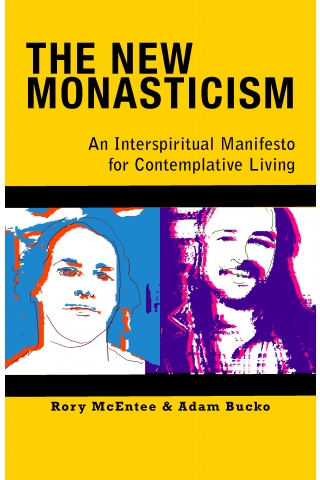
BOOK REVIEW: THE NEW MONASTICISM

New_MonasticismHighly recommended. I knew I would be in business with this book as soon as I got wind of it, and it will take further contemplation and inward digestion before I fully understand my relationship with it. I believe that this is the kind of effect that what The New Monasticism: an Interspiritual Manifesto for Contemplative Living intends to create.

‘Monasticism’ is refreshingly used here “simply to denote a level of commitment to a spiritual life”. It is not about specific beliefs or a specific lifestyle. It asks us to free ourselves from our cultural conditioning and an unquestioning and un-questing life. Avoiding identification with material success, living in the midst of a contemporary society that does not support such a calling, we may enter a space of “radical profundity and divine transformative energy”. We seek simplicity not through renunciation but through ‘integration’.  We do need retreat space, so some people will indeed be called as specialists to hold the “containers of silence”. But most will pursue vocation in the world, in a life made up of contemplative practice, heartfelt conversation and sacred activism.

Authors Rory McEntee and Adam Bucko are situated within the Roman Catholic tradition, in an emancipatory strand which is reaching out to others and hoping to transcend itself. The term ‘interspirituality’ was coined by Brother Wayne Teasdale, an ordained Christian Sannyasin who  presided over an ashram in India. The authors see interspirituality as “humbly placing itself in partnership and collaborative discernment with our time-honoured religious traditions”.  In the last decade we have also seen the linking of Father Thomas Keating (who developed ‘centering prayer’ as a Christian answer to Buddhist-style meditation) with Ken Wilber’s Integral Life project, which is itself increasingly seeking alliance with like-minded Christian communities. Indeed a lot of the philosophy, psychology and social science in this book comes straight from Ken Wilber and the stance of the Integral movement. The authors come from a collectively confident and mature spiritual base, and there are advantages in that. The book is rich with specific suggestions about life and practice in the new monasticism, drawing for its core inspiration on an ‘Interspiritual Manifesto for Contemplative Life in the 21st. Century’ following a week long dialogue with Father Thomas Keating at his monastery in Colorado in 2012.

McEntee and Bucko are both “under 40” and feel a connection with the younger generation now coming into adulthood. Bucko works with young homeless men in New York City. They see a potentially emergent spiritual culture that is: “spiritual not religious”; this worldly and concerned with nature and the fate of the earth; has (post) modern commitments to personal ‘authenticity’; and finds the sacred in the secular. They believe that these values can be championed within a further development of their own tradition, transforming the tradition itself. For them the path is as much about the life and health of the earth as it is with an individual communion with the Divine: indeed, it is false to separate the two. Realisation is less a “gnostic quest for truths beyond the world” than “a reflection on certain processes taking place within the world”. Interspirituality wants to be the midwife of this, and in doing so become attractive to people, especially young people, who would not be drawn to more traditional approaches.

The New Monasticism is a valuable contribution to the re-visioning of spirituality and concomitant life practices. Given its provenance, it is not surprising that the reaching out to other traditions is quite selective. Beyond Christianity, the traditions being engaged with are neo-Vedanta, Tibetan Buddhism and to a lesser extent Zen, modern Sufism and to some degree the Hasidic movement in Judaism and Martin Buber. ‘Indigenous religions’ are mentioned in two inclusivity lists, without definition or description. Shamanism is mentioned as a particular model of spiritual service. There is nothing specific from the Western Way outside Christianity.  Within Christianity, much is drawn from the contemplative strand in Orthodoxy, including an understanding of theosis (or divinisation) and the role of Sophia as guide. This is accompanied by an intent to “claim the wisdom dimension of all traditions and let the wisdom guide you” – a view which they attribute to Matthew Fox. Ethics is seen as “the call to active co-operation with the sophianic transfiguration of the world”. Quaker processes also get a mention because of their democratic and dialogical way of bringing people into Presence with each other. Since I am personally positioned in modern Druidry, Paganism and Earth Spirituality I have to express some disappointment here. However I don’t feel deliberately excluded. It’s just that these authors have their attention focused elsewhere.

I do have a worry, all the same, an area where I think that Earth and Goddess traditions could do with being heard. This is when McEntee and Bucko talk about ‘axial ages’, a view of spiritual/religious history once again taken from Ken Wilber. It depends on an evolutionary view of human culture as an aspect of a Divine awakening. In this view, the first axial age, from 800 BCE – 200 CE was a time of radical transformation marked by the appearance of great teachers who catalysed major literatures: Lao-Tzu, Confucius, Buddha, Mahavir (of the Jains), Zoroaster, the Jewish prophets and Greek philosophy, as well as Jesus and the gospels. These people could stand apart from the tribe, question the worldview they had been given, and think for themselves. They could also wake up from the trance of complete immersion in nature and objectify it – seen here as a positive step, albeit one with a shadow side. They represented the coming of reflexive subjectivity and the technology (writing) that made it sustainable. Admittedly, the narrative goes, this tended to take world denying, sex denying, misogynist and more generally oppressive forms. But overall it is read as a cultural gain. Now we are seen to be in a second axial age where the perceived challenge is to transcend the limitations of the first whilst preserving the gains, and thus renew our overall movement onward. “We need both our individuality … and an understanding of our intrinsic belonging within a vast Kosmos”. I’ve been aware of Wilber’s position on this since he wrote Up from Eden in the mid 1980’s. It has always read to me as a one-eyed narrative, the mirror image of the primitive matriarchy still espoused by many Pagans.  One of its effects has been to offer a language of canny and limited concession by hitherto dominant traditions as they respond to an unstoppable shift in culture. Here is where the Earth traditions could have a role in the dialogue, to support a view of individuality and inter-connectedness, indeed, but which is less masculinist in language (I’m thinking about how the book suggests “dialogical sophiology” as the way of meeting with the divine feminine), more open, and more widely informed than this.

I am glad to be living in a time of spiritual ferment. It breathes life and hope in an otherwise darkening time. I acknowledge and celebrate the achievement of The New Monasticism and am already involved in exploring contemplative life in Druidry. I notice that I, and others who I have been linked with, have in some ways come to similar conclusions about life and practice, if not entirely of view. This book, although from a very different background, has stimulated and encouraged me. I hope it has this role for many other readers.

Earth Eclectic

music that celebrates Earth and speaks to the heart

Sarah Fuhro Star-Flower Alchemy

Follow the Moon's Cycle

Muddy Feet

Meeting nature on nature's terms

Rosher.Net

A little bit of Mark Rosher in South Gloucestershire, England

Becoming Part of the Land

A monastic polytheist's and animist’s journal

selkiewife

Selkie Writing…

Charlotte Rodgers

Images and words set against a backdrop of outsider art.

Prof Jem Bendell

living with metacrisis and collapse

Towint

The pagan path. The Old Ways In New Times

The Druids Garden

Spiritual journeys in tending the living earth, permaculture, and nature-inspired arts

The Blog of Baphomet

a magickal dialogue between nature and culture

This Simple Life

The gentle art of living with less

Musings of a Scottish Hearth Druid and Heathen

Thoughts about living, loving and worshiping as an autistic Hearth Druid and Heathen. One woman's journey.

Wheel of the Year Blog

An place to read and share stories about the celtic seasonal festivals

Walking the Druid Path

Just another WordPress.com site

anima monday

Exploring our connection to the wider world

Grounded Space Focusing

Become more grounded and spacious with yourself and others, through your own body’s wisdom

The Earthbound Report

Good lives on our one planet

Hopeless Vendetta

News for the residents of Hopeless, Maine