Contemplative Inquiry

This blog is about contemplative inquiry

Tag: Wheel of the Year

NOVEMBER REFLECTIONS
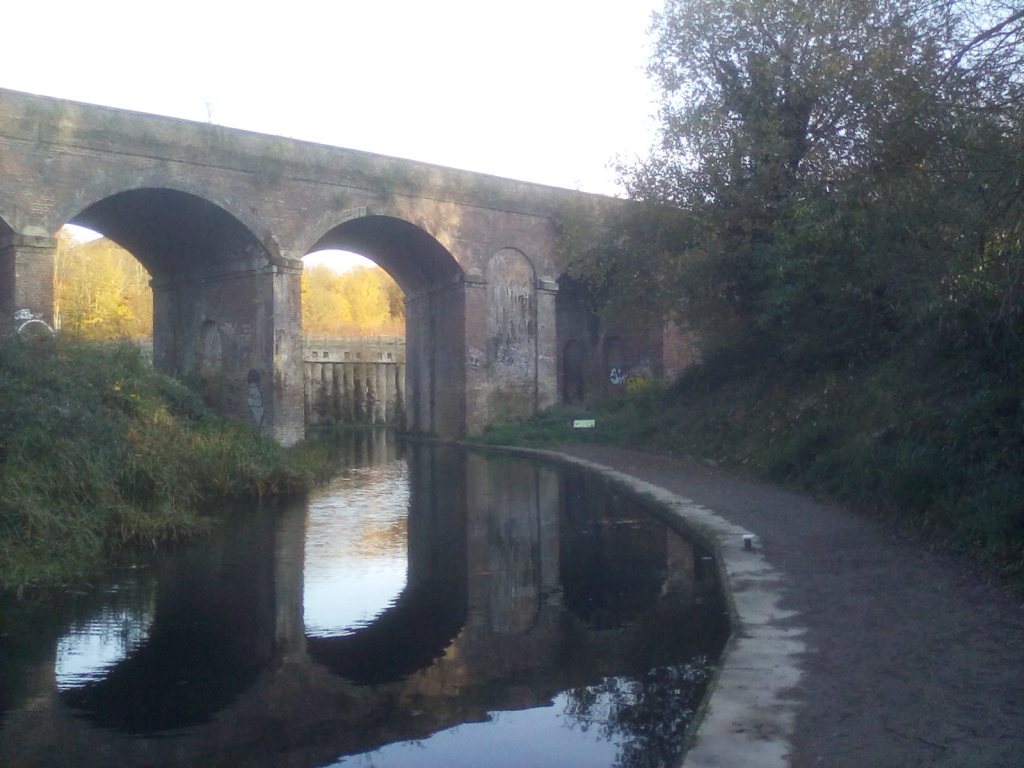
In recent years, I have experienced November as a special month. Moving on from Samhain, it begins winter, and where I live it sees most of the fall. It is a reorientation towards darkness and inwardness. I began my contemplative inquiry, at first limited to OBOD, then to Druidry more widely, finally becoming universal, in November 2011 following a Samhain ritual.

I find November calmer than December, where I tend to feel jangled by the agitated dominance of capitalist consumerism and its appropriation of a Christian festival, itself the appropriation of a Pagan one. The old festivals had an offer for everyone, at least in principle. Now you have to have money to participate, and increasing numbers of people don’t. So I find December an awkward, uneasy time, a ‘festive season’ that, collectively, doesn’t quite ring true.

This sense of a problematic December has made the whole month of November special to me, and powerful for my inquiry. This year I have rejigged my daily practice and replaced a long morning session with shorter sessions in the morning and evening. In the morning I wake up and greet the day with a slightly ritualised (thanks to Druidry) set of exercises. Before going to bed I do a yoga nidra meditation, listening to an audio download. Both practices are grounded in what I would now call a sacrament of presence, and awareness that every experience points towards a source of being from which I am not separate. In this intersection of time and eternity I find my home. I don’t need special ‘spiritual’ experiences. This spirituality doesn’t require them: the work is to enhance my capacity to welcome any experience, including my resistance to negative ones, and find ways to respond. Hence I look to simple, regular practices that provide pragmatic benefits and also remind me of this core insight.

I find that the inquiry aspect of my contemplative inquiry is shifting its focus to personal life, relationships, culture and nature. What’s going on? How am I placed? How am I responding? What difference does my Sophian Way – with contemplative inquiry as its main expression – actually make? These are my November reflections for 2019.
POETRY FOR THE MERRY MONTH

Below are two versions of late fourteenth century verse, written by an anonymous English author, probably from North Staffordshire or Cheshire. It depicts the turning of the wheel of the year as it moves through spring into summer.

The first version is a mid-twentieth century translation by J.R.R. Tolkien. The second is the original. The poem is embedded in the text of Sir Gawain and the Green Knight, which arguably shows an immature warrior class (King Arthur’s knights) being taken down a peg by the primal forces of nature.

The extract here stands outside the main narrative, which occurs during the Christmas festivities of one year and the Hallowe’en to Christmas period of the next.

“But then the weather in the world makes war on the winter,

Cold creeps into the earth, clouds are uplifted,

Shining rain is shed in showers that all warm

Fall on the fair turf, flowers there open,

Of grounds and of groves green is the raiment,

Birds as busy a-building and gravely are singing

For sweetness of the soft summer that will soon be

On the way.

And blossoms burgeon and blow

In hedgerows bright and gay;

Then glorious musics go

Through the woods in proud array.

After the season of summer with its soft breezes,

When Zephyr goes sighing through seeds and herbs,

Right glad is the grass that grows in the open,

When the damp leaves

To greet a gay glance of the glistening sun”. (1)

“Bot thenne the weder of the worlde with winter hit threpes,

Colde clenges adoun, cloudes uplyften,

Shyre schedes the rayn in schowres ful warme,

Falles upon fayre flat, flowres there schewen.

Bothe groundes and the greves grene are her wedes,

Bryddes busken to bylde, and bremlych syngen

For solace of the softe somer that sues thereafter

Bi bonk;

And blossoumes bolne to blowe

Bi rawes rych and ronk,

Then notes noble innoghe

Are herde in wod so wlonk.

After, the sesoun of somer with the soft wyndes,

Quen Zeferus syfles himself on sedes and erbes;

Wela wynne is the wort that waxes theroute,

When the donkande dewed dropes of the leves,

To bide a blysful blusch of the bright sunne.”

(1) Sir Gawain and the Green Knight, Pearl and Sir Orfeo translated by J. R. R. Tolkien New York, NY: Ballantine Books, 1975

(2) C. Cawley (ed.) Pearl and Sir Gawain and the Green Knight London: Dent & New York: Dutton: Everyman’s Library, 1962

BOOK REVIEW: AUSTRALIAN DRUIDRY

Highly recommended. Australian Druidry is a great introduction to modern Druidry in Australia. It describes the author’s journey to develop a Druidry for her needs. It shows all of us how to deepen into the wheel of the year, looking for cues in natural shifts rather than our calendars. As part of Moon Books’ Pagan Portals series, it is clearly and succinctly written.

For author Julie Brett, “modern Druidry is a path of nature-based spirituality being walked by many people over the world today. It centres on an understanding that is the ‘wisdom of the trees’ as the messengers of the natural world that can help us find guidance in our lives for peace, learning and personal development”. These principles can be taken to every part of the world, including the huge diversity of Australia itself, and customised to work any specific landscape.

Druidry is also a spirituality of recognition of our ancestors. Describing the people of Australia as “diverse as the landscape”, she defines the ancestors as “all the people who have come before us whether in our family or the lines of teachings we have received in our lives, or those who came before us in the land we live on”. This being the case, Australian Druidry is a not only a path “applicable to the Australian landscape and its inhabitants” but also an “invitation to explore and create”.

The author’s story shows a deep personal commitment to this path. This included ten month’s living in the UK, and particularly Glastonbury, England, where she tuned into the traditional landscape of Druidry, and apprenticed herself to local practitioners, before going on to develop her own distinctive practice in Australia. Returning home, she immersed herself in her own landscape, eventually creating a ‘coastal Sydney wheel of the year’. It is based around eight festivals, but with a distinctive resonance, not just up-ending the North European ones: Fire Festival, Storm Festival, Peace Festival, Moon Festival, Hardening Festival, Flower Festival, Wind Change Festival, Barkfall Festival.

The book includes sections on keeping a nature diary, animal symbolism, tree and plant symbolism, and forms of ritual practice. The emphasis is on offering possibilities rather than laying down a new template for people in the coastal Sydney area, or anywhere else. Having unleashed her own creativity, Julie Brett wants readers to unleash their own. At the end of the book, she invites us into the Druids Down Under Facebook group in the belief that sharing experiences inspires us. Australian Druidry is an inspired and inspiring book.

Julie Brett Australian Druidry: Connecting with the Sacred Landscape Winchester, UK & Washington, USA: Moon Books, 2017 (Pagan Portals)

AUTHENTICITY IN MODERN DRUIDRY

“Contemporary Druidry is a flourishing creative spirituality that is inspiring people the world over. Is it a closed system that was only open to new inputs several thousand years ago? Or is it an open system that allows for development and evolution?” Philip Carr-Gomm, Chosen Chief of OBOD (1) explores these questions in his foreword to ‘Contemplative Druidry’ (2) adding, “Scratch the surface of any religion and you find that it is made up of a number of influences and elements. Examine a ritual text or liturgy and you can see the bricolage at work.” Moving deeper into the world of Celtic spirituality, he goes on to say:

“Mgr. Mael, the founder of the Celtic Orthodox Church in Brittany … received a series of meditative physical exercises in a vision and taught these as a system of ‘Celtic Yoga’. Are such attempts valid? … And are they not ‘fake’, having been so recently invented, while the Eastern systems are clearly genuine having been around for centuries? As regards validity, a method that is valid is one that works, however young or old it is. As regards inauthenticity, if a method is pretending to be one thing, while in reality being another, then that is indeed inauthentic. If Mgr. Mael had pretended his system of Celtic Yoga was practiced by the ancient Druids, this would have been inauthentic. But since he clearly stated he had received the exercises in a series of dreams, his system is what he authentically stated it to be: a method received in an altered state of consciousness. A false claim to an ancient lineage made for a system that has only been recently created renders it inauthentic, but if no such claim is made, can we use the term Druid to describe it?

“… Modern Druidry has been growing and evolving for the last three hundred years and if we were to throw out any additions to its body of teachings and ritual practice made during this time, we would be left with a small and unworkable set of conjectures. If we didn’t allow ourselves to call something Druidic that has only recently been created, we would have no Druidry to practice. But this shouldn’t mean that we can simply call anything Druidic. Druidry has specific features which help to define what it has become and how it is evolving. … Druidry has developed into a spiritual and philosophical approach that embraces embodiment and does not deny the gifts of the physical world and the body. In addition, it cultivates both inwardness and outwardness – an appreciation of the inner and outer worlds that fosters an engagement with the Earth and with community as much as it encourages an exploration of the depths of the soul and merging with the Divine. The evidence of the centrality of this approach can be found in Druidry’s love of Nature, its reverence for the Earth, and its cornerstone ritual observance: the Eightfold Wheel of the Year. These characteristics define Druidry and they also tell us what it is not.”

Specifically on contemplative Druidry he suggests:

“When it comes to the subject of this book, contemplation and meditation within Druidry, it seems perfectly reasonable to me to talk in terms of ‘Druid meditation’ or to describe techniques and approaches as Druidic, if they fall within the ethos of Druidry, because that ethos is specific: it does not try to subjugate, transcend or deny they body. There is no emphasis on the illusory nature of the physical world. The goal in Druidry, and hence in meditation for Druids, is to enhance our engagement with our embodies life, not to distance or separate ourselves from it.”

  • Order of Bards Ovates and Druids druidry.org/
  • James Nichol Contemplative Druidry: People, Practice and Potential Amazon/CreateSpace, 2014 (Foreword Deep Peace of the Quiet Earth: The Nature Mysticism of Druidry by Philip Carr-Gomm)

TIMES AND SEASONS

Winter began for me yesterday, in a soft and gentle evening. Over a period of about an hour I watched the light drain from the sky on the final day of British Summer Time (BST). It didn’t feel much like winter, except through my feelings of farewell to the light. The experience was shot through with anticipation and letting go.

Next week’s Saturday will be different. Then, on the night of a full moon, sunset will happen just a little before 4.30 p.m. It may be a fine day, warm even. There will be leaves on trees, as the slow English fall continues. The morning will get lighter, sooner, than yesterday’s. But, for me, the early sunset makes it winter. It comes with the withdrawal of evening light.

Thanks largely to my time in Druidry, I have become sensitized to the ebb and flow of seasons, and eight, more-or-less evenly spaced, festivals that mark the wheel of the year. But I am also guided by clock time. I got my first wrist watch as an eighth birthday present, a time when I had already attended a very clock oriented school for some years. It wasn’t yet the era of the mobile phone, but clock consciousness was well-anchored then, as it is now. It is still with me. Likewise, light and darkness are very potent indicators, whatever else is going on. So even though it is beautiful and autumnal outside as I write at the new midday, winter has arrived.

I don’t have a neat, reciprocal experience at the opposite time of the year. Sunset is restored to about 5.30 p.m. before the end of February. I enjoy the returning light, but I don’t think about summer. It is generally cold by local standards, still liable to be frosty. BST is re-introduced at the end of March, just after the spring equinox. But my personal sense of spring starts at the equinox itself. It is a short season and ends with April. I find it a precious, poignant moment in the year.

My summer runs from the beginning of May, Beltane, right up to the autumn equinox. Autumn is another short (also precious, also poignant) season that ends for me with BST, close to Samhain. In my world, this current transition is the one with the greatest impact.

Throughout the year, one day leads to the next with small changes in the balance of light and dark, and small, incremental shifts for the land and its life. This remains true even as weather patterns get palpably more volatile and unpredictable – with bigger changes to come. Yet the naming of four seasons enriches my experience. The eight-fold wheel of the year and the clock time of modern culture combine to shape my year.

POEM: GREEN MAN

William Anderson’s classic Green Man poem has thirteen verses of four lines each, and follows the wheel of the year from the Winter Solstice. As I write we have just reached the sixth verse, which has an off with my head theme. The honey of love is over and speaking through the oak is yet to come.

Like antlers, like veins in the brain, the birches

Mark patterns of mind on the red winter sky;

‘I am thought of all plants’, says the Green Man,

‘I am thought of all plants’, says he.

The hungry birds harry the last berries of rowan

But white is her bark in the darkness of rain;

‘I rise with the sap’, says the Green Man,

‘I rise with the sap’, says he.

The ashes are clashing their boughs like sword-dancers

Their black buds are tracing wild faces in the clouds;

‘I come with the wind’, says the Green Man.

‘I come with the wind’, says he.

The alders are rattling as though ready for battle

Guarding the grove where she waits for her lover;

‘I burn with desire’, says the Green Man,

‘I burn with desire’, says he.

In and out of the yellowing wands of the willow

The pollen-bright bees are plundering the catkins;

‘I am honey of love’, says the Green Man,

‘I am honey of love’, says he.

The hedges of quick are thick with may-blossom

As the dancers advance on their leaf-covered king;

‘It’s off with my head’, says the Green Man,

‘It’s off with my head’, says he.

Green Man becomes grown man in flames of the oak

As its crown forms his mask and its leafage his features;

‘I speak through the oak’, says the Green Man,

‘I speak through the oak’, says he.

The holly is flowering as hay fields are rolling

Their gleaming long grasses like waves of the sea;

‘I shine with the sun’, says the Green Man,

‘I shine with the sun’, says he.

The hazels are rocking the cups with their nuts

As the harvesters shout when the last leaf is cut;

‘I swim with the salmon’, says the Green Man,

‘I swim with the salmon’, says he.

The globes of the grapes are robing with bloom

Like the hazes of autumn, like the Milky Way’s stardust;

‘I am crushed for your drink’, says the Green Man,

‘I am crushed for your drink’, says he.

The aspen drops silver on leaves of earth’s salver

And the poplars shed gold on the young ivy flower heads;

‘I have paid for your pleasure’, says the Green Man,

‘I have paid for your pleasure’, says he.

The reed beds are flanking in silence the islands

Where meditates Wisdom as she waits and waits;

‘I have kept her secret’, says the Green Man,

‘I have kept her secret’, says he.

The bark of the elder makes whistles for children

To call to the deer as they rove over the snow;

‘I am born in the dark’, says the Green Man,

‘I am born in the dark’, says he.

From:  William Anderson Green Man: archetype of our oneness with the Earth Harper Collins: London & San Francisco, 1990

IMBOLC LIGHTS

I’m reflecting on the difference between ‘Light’ and ‘lights’.  Yesterday evening my partner Elaine and I had an Imbolc ritual. We’ve decided to move through the seasonal festivals in this way, customising a joint practice as we go.

I reflect now on our time in the festive circle as in part a feast of lights. Not ‘Light’, but lights. We can have Light at the throw of a switch, one easy taken-for-granted ‘Let there be Light’ gesture. It’s very powerful and very useful – and effortlessly normal in our culture, at least for the time being.

But it isn’t a feast of lights. A feast of lights requires multiple, small sources. It requires the co-presence of darkness and shadow. It requires variation, degrees of light and darkness. It requires change and play.

We had two basic light sources, during the ritual. The one that attracted my attention most was an array of night lights positioned around the room in various ways. We had nine on the altar (one at the centre, eight at the circumference – with one at each station of the eightfold wheel of the year). And there were others around the room, grouped in threes. Very simple. Very traditional. Very minimal. Very meaningful. Very beautiful. These lights tended to be bright and a high yellow, glinting in some moments, softer and more diffuse at others. Each had its own aura. All tended to flicker in even the smallest current of air. And each had its sphere of influence, fading porously into the surrounding dusk, with no clearly defined or specific boundary – the transitions being so gradual, so gentle. Thus light and darkness were differentiated without being polarised and they cheerfully shared their debatable lands. The play of ambiguity was part of the feast.

The second source was the fire, a wood burner, well-established by the time we began the ritual and happily placed in a north-easterly hearth. Also very traditional. Very simple. Very minimal. Very meaningful. Very beautiful. And for the most part, in this mature phase, a deep red, in a way a dull red, though the word isn’t right. A potent light, a subliminal light, almost a kinaesthetic light. Not a very light sort of light at all. Its presence radiated through the room, bringing our centre of gravity, even in terms of luminosity, closer to the earth.

And that is a feast of lights. It was almost a shock, in the tidying up aftermath of the ritual, to return to the Light.

Earth Eclectic

music that celebrates Earth and speaks to the heart

Sarah Fuhro Star-Flower Alchemy

Follow the Moon's Cycle

Muddy Feet

Meeting nature on nature's terms

Rosher.Net

A little bit of Mark Rosher in South Gloucestershire, England

Becoming Part of the Land

A monastic polytheist's and animist’s journal

selkiewife

Selkie Writing…

Charlotte Rodgers

Images and words set against a backdrop of outsider art.

Prof Jem Bendell

living with metacrisis and collapse

Towint

The pagan path. The Old Ways In New Times

The Druids Garden

Spiritual journeys in tending the living earth, permaculture, and nature-inspired arts

The Blog of Baphomet

a magickal dialogue between nature and culture

This Simple Life

The gentle art of living with less

Musings of a Scottish Hearth Druid and Heathen

Thoughts about living, loving and worshiping as an autistic Hearth Druid and Heathen. One woman's journey.

Wheel of the Year Blog

An place to read and share stories about the celtic seasonal festivals

Walking the Druid Path

Just another WordPress.com site

anima monday

Exploring our connection to the wider world

Grounded Space Focusing

Become more grounded and spacious with yourself and others, through your own body’s wisdom

The Earthbound Report

Good lives on our one planet

Hopeless Vendetta

News for the residents of Hopeless, Maine