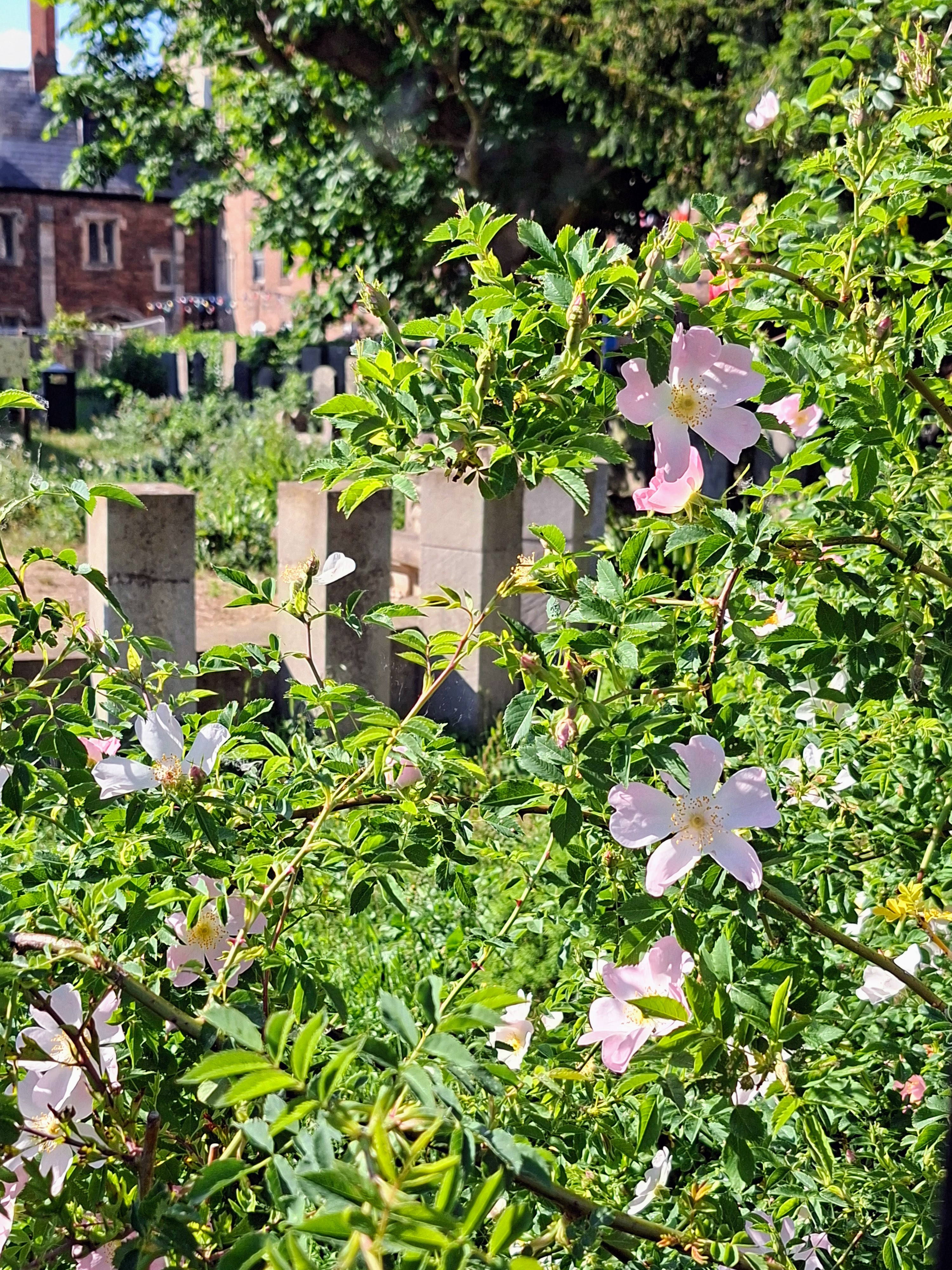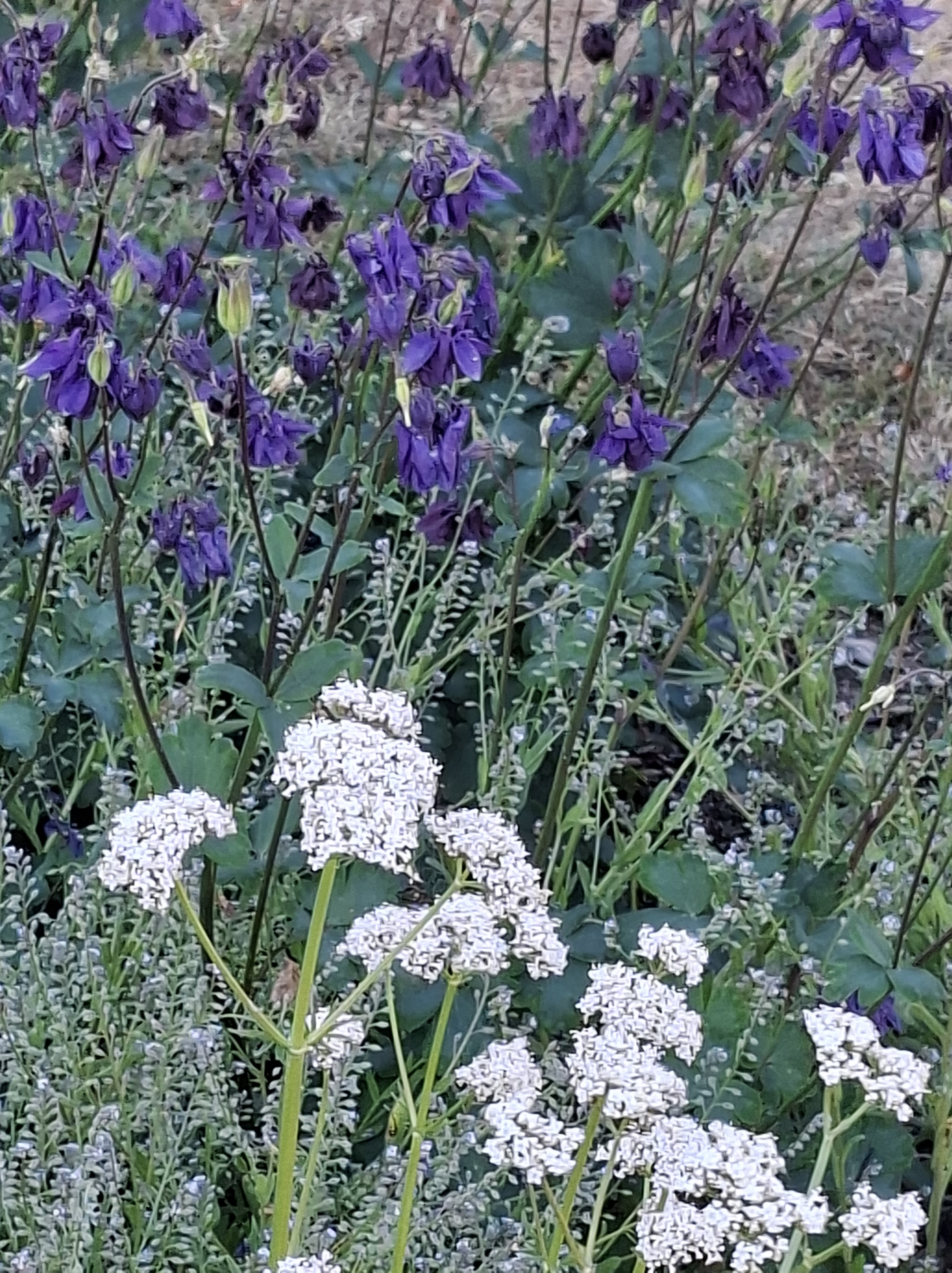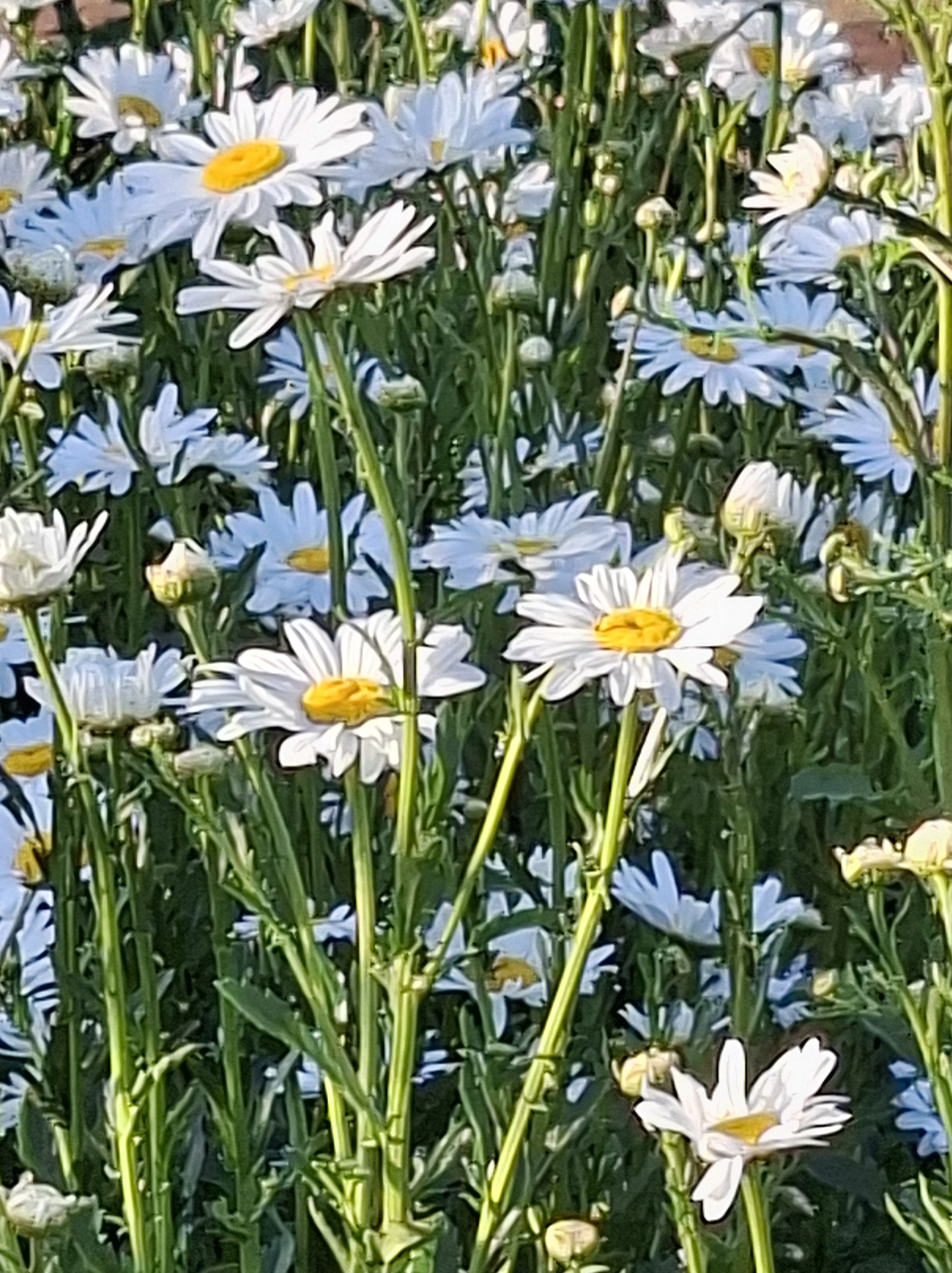
Contemplative Inquiry

This blog is about contemplative inquiry

Tag: Summer

PARK TREES IN A DRY SEASON

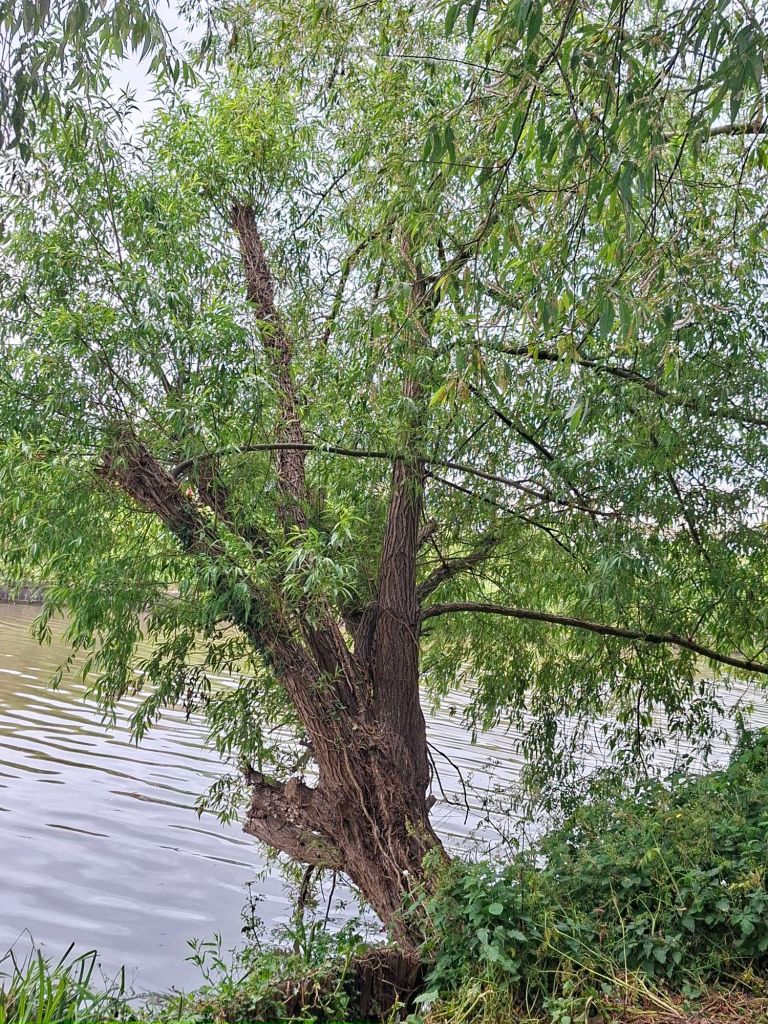
Yesterday evening I went to my local park and was struck by changes in the trees. I seemed to have walked into a premature autumn. Trees were shedding leaves. To me, the trees in the picture above appeared distressed.  Looking at them again now, I wonder about disease as well as simple unseasonal shedding.

In the park, I found beauty too, with new colours becoming manifest. In my part of the world, the latter part of August has always included intimations of Autumn. But 2025 feels unusually dramatic and unusually early. Some trees, like the horse chestnut below,  seem to be shedding their leaves particularly fast.

Other trees seemed to be weathering this period more easily, like these medlars now  bearing their fruit –  bringing autumn into August in an apparently unstressed way.

Standing back, I could see new patterns in the no longer quite so green Greenwood. They illustrate new conditions and are, for better or worse, harbingers of a new time. There will be more changes. I hope that the trees will continue to adapt and stay in place for many years to come. But nothing is certain, in this time of climate crisis and the rise of willed ignorance about its severity.

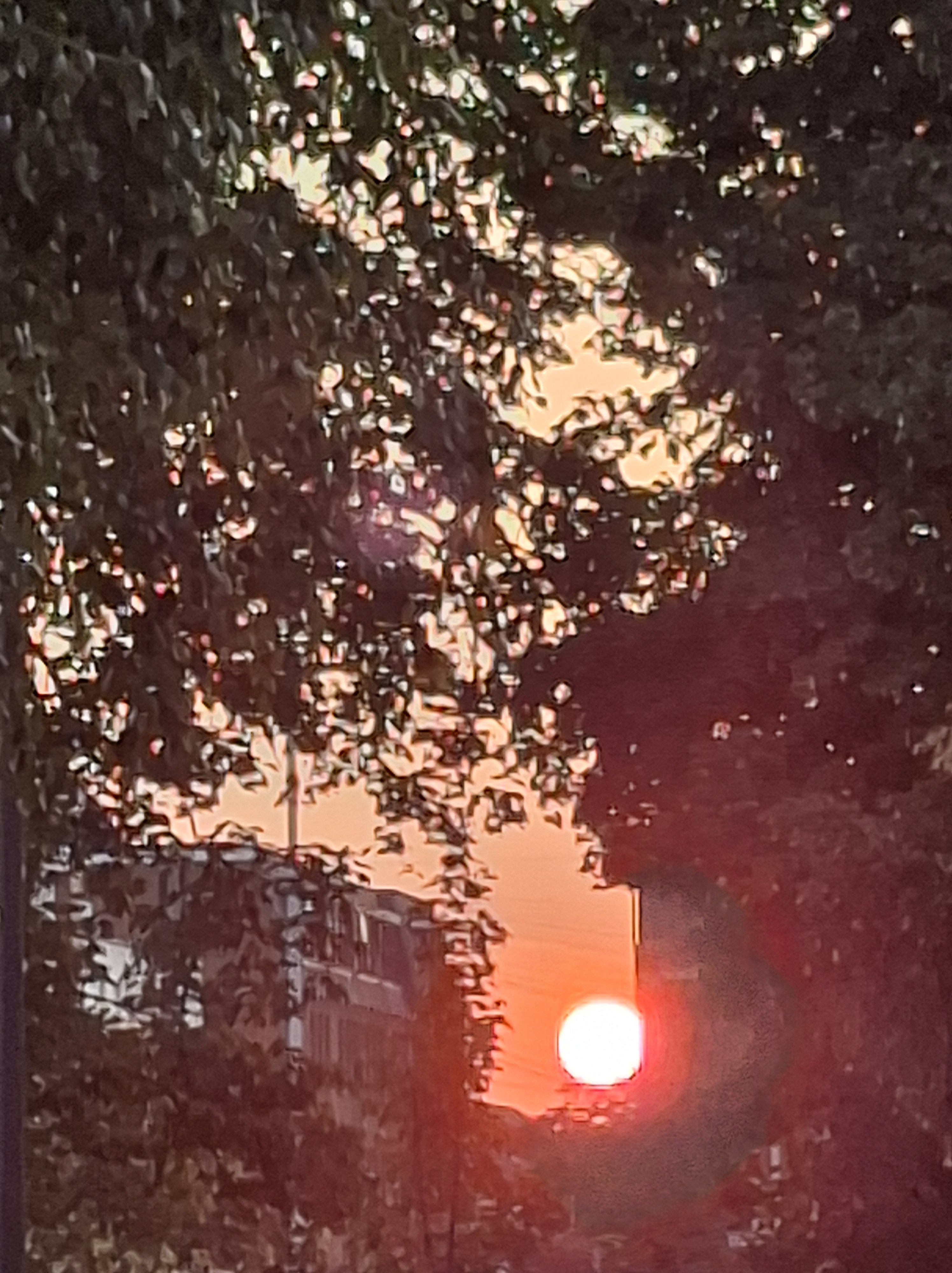
The sunsets continue to get earlier. I walked into one as I left the park. The sun asserted it’s power in a late stage of its descent. It’s been a hot summer as well as a dry one. I took this  powerful, almost too powerful, late summer solar image with me as I walked back to my home.
ROWAN’S LATE SUMMER SIGN

Where I live, late summer is often the warmest time of year, and the driest. This is likely to be the case in 2025, already a warm dry year. But in the sun’s apparent annual journey, it is also a time of waning. Sunrise is an hour later than at the solstice, and sunset is forty-five minutes earlier. This change will accelerate from now on.

I do not see waning as negative. There is power and beauty in this ‘waning’. In the rowan (aka mountain ash) picture above, the berries are moving from tentative orange to bright scarlet, an effect of the seasonal changes in the light. Rowan is an ogham tree, linking a group of indigenous Irish and British trees to an ancient Irish alphabet. Its Gaelic name luis means bright or flame.

Looking at the year as a whole, some of the berries will still be holding on beyond midwinter, by which time the tree, which can live for up to 200 years, will be making its annual comeback. At that time, as described in William Anderson’s justly venerated in Green Man poem (1):

The hungry birds harry the last berries of rowan

But white is her bark in the darkness of rain

‘I rise with the sap’, says the Green Man

‘I rise with the sap’ says he. (1)

The resilience of the tree runs throughout its year and lifetime. In  late summer specifially, this resilience is manifested in berries at their brightest, against the backdrop of a still blue evening sky.

Traditionally Rowan has strong associations with protection, spiritual  protection not least. According to The Green Man Tree Oracle (2), ‘it can also offer insight into danger through the invocation of higher wisdom’. Ancient Druid shamans were said to breathe in the smoke from rowan fires to initiate a trance state that allowed them to predict coming danger.

The Druids also planted rowan, as well as oak and ash, in their sacred groves. But Celtic Druids were not the only people to place a high value on the rowan tree. Our modern word rowan is probably descended from the Norse runas – narrowly translated as ‘charm’ but in fact bringing the wider runic and Norse traditions with it.

When I encountered the rowan I was strongly moved by it. It stood out from everything else.   I had previously decided not to take pictures on my walk, but felt compelled to change my mind. I didn’t need ancient lore to feel more alert and heartened. It’s just that the framing it provides added cultural depth.  The encounter with rowan put a spring in my step and was a highlight of my evening.

(1) William Anderson Green Man: archetype of our oneness with the Earth Harper Collins: London & San Francisco, 1990

(2) John Matthews & Will Worthington The Green Man Tree Oracle: ancient wisdom from the greenwood  London: Connections, 2003

NOTICING TWILIGHT

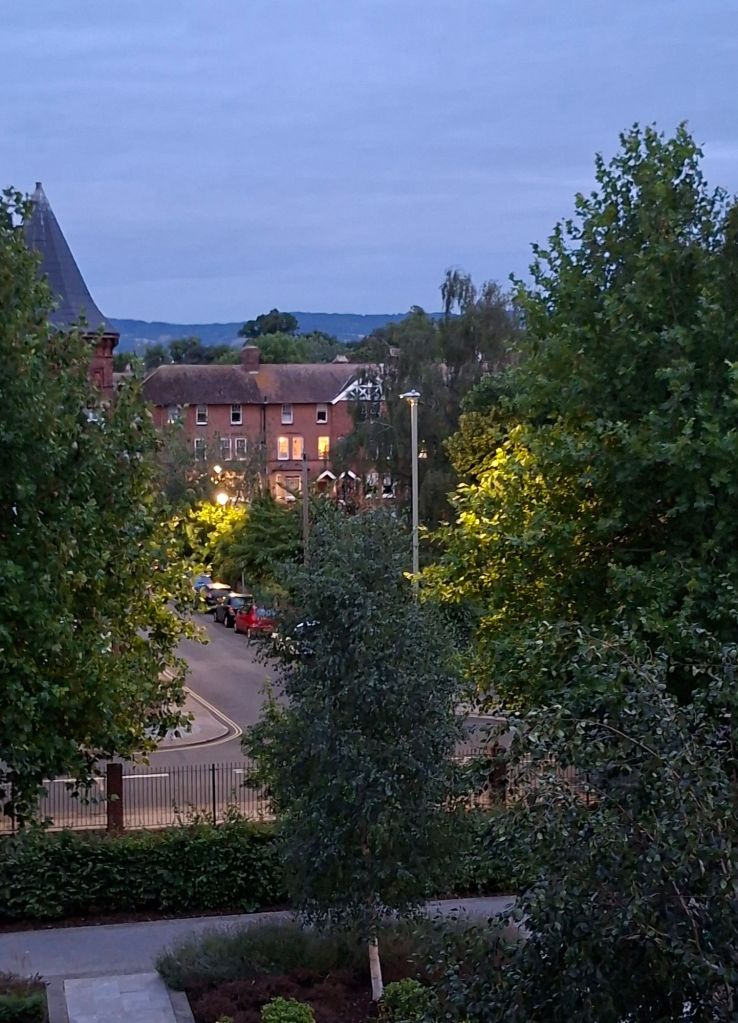
I see change in a familiar scene. Looking out from our apartment I contemplate a gentle twilight. It is modified by artificial light. During the recent heatwave I somehow had little consciousness of this moment in the day. But now, with lower temperatures and rain, my world is a tiny bit different. I discover myself in a twilit scene, and a twilight frame of mind, a little after sunset.

Although this sunset is only ten minutes earlier than the sunsets of the Solstice period, I feel, deep within me, the turning of the Wheel. It’s as if I am leaning in to the spirit of late summer, and the first of the harvest festivals that define the waning year. We are not there yet, though Lammas is but a fortnight away. I am simply becoming aware of a coming seasonal shift.

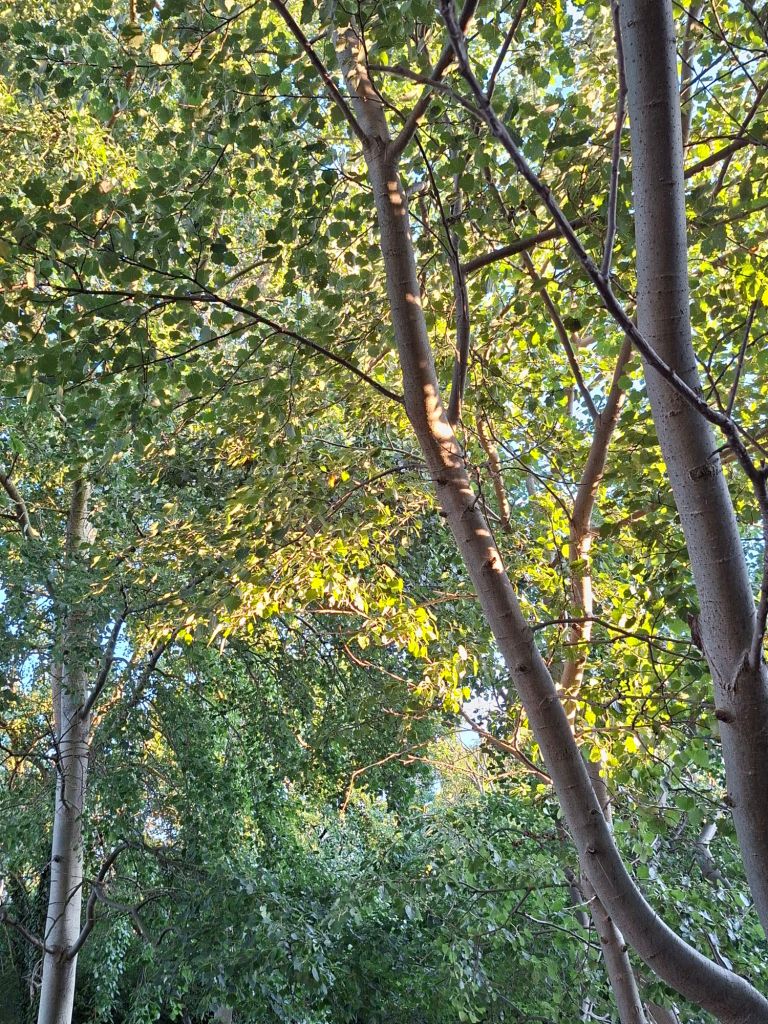
I am also aware of wanting to savour the sense of a change without wanting to hurry it on. Above, an image of trees, houses, hills and sky anchors me into a specific place and time. It’s a ‘now’ experience rather than an anticipation. Below, an image of birch leaves back-lit by electric light holds me in an appreciation of the pattern they make. I am held by the power of a simple pleasure.

THE PLEASURE OF A SUMMER EVENING WALK

It is a little after 7 pm, and the mellowing evening of a hot day. The sky is clear. On 12 July, there are still nearly two and a half hours before sunset. It is about 31C/87.8F with a light breeze. Elaine and I feel comfortable enough to go for a walk in town.

We start quietly in our own neighbourhood. We are, we think, towards the end of a hot period that peaked at 35C/95F. This counts as serious heat in England. For several days, we have been staying indoors for much of the day. There have been quick forays in the mornings, mostly to an air conditioned shopping centre nearby.

We needed to get out at the first opportunity. We are rewarded, in this evening, by a freshness grown unfamiliar, and by powerful contrasts of light and shade as seen in the priory ruins below.

To leave our Greyfriars estate, we walk down a narrow lane that separates a pub from a church. We enter Southgate Street in the old town through an archway. Entering the street, we are conscious again of vivid  blue sky, and the mix of sunlight and shadow. The street is hardly crowded, but it is certainly peopled on this warm summer evening.

At this stage we are not sure of our destination. We just want to be free and mobile and outdoors. We decide to turn right. Soon we will be reaching the cross roads at the centre of the old town. If we turn left, we will  find ourselves in Westgate Street*, with the Cathedral Close (College Green) as our likely destination.

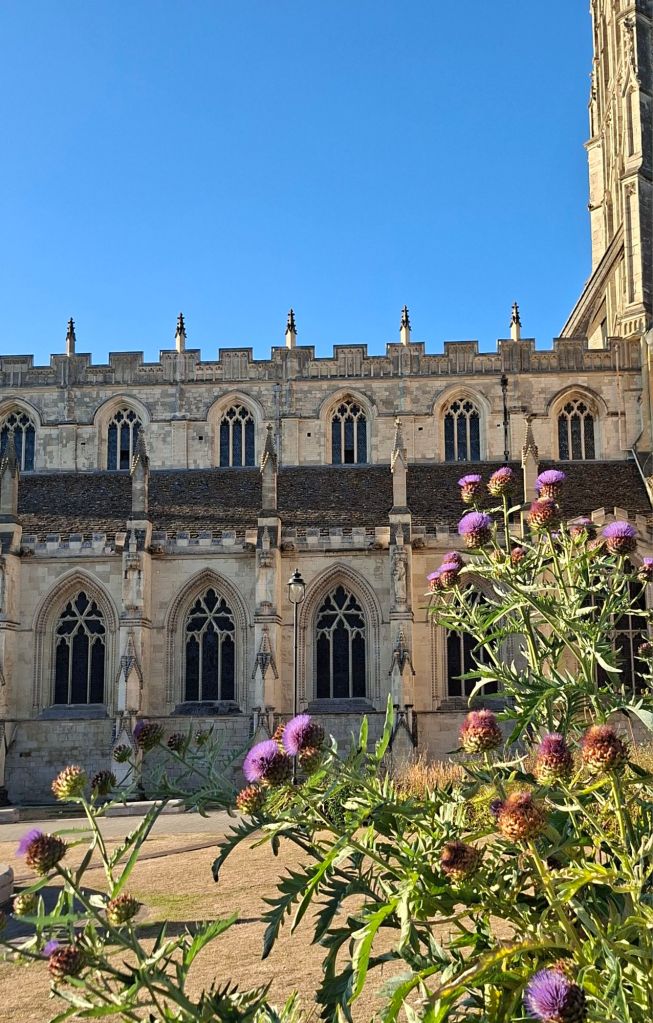
Gloucester Cathedral, and in particular College Green, are a friendly space for us. It is still the dominant set of buildings in the town centre, just a little set apart from the shopping streets. Often a busy place, it is also a contemplative one. As we sit there enjoying the opportunity to be out, we notice that the temperature is cooling as we move towards 8 pm.

Eventually we decide to return home, leaving College Green through another alley, this one a location for shops and restaurants. It’s been a nurturing time in the high summer city.

  • When Gloucester was first established by the Romans in 97 AD as Colonia Glevum, it was built as a walled city with gates in each of the four cardinal directions. Hence the streets Eastgate, Southgate, Westgate and Northgate. I believe that Aethelflaed, Lady of Mercia, brought the street  names back into use in their English form whilst based in Gloucester round about 900 AD.

SUMMER SUN AND MOON

I took the picture above at 8.35 pm on 2 July, a little less than an hour before sunset. The dial still hasn’t moved much since the Solstice. The days are still long and warm. The sky this evening is blue and clear. Sunlight plays in the trees. It is good to be here, now, and alive to this moment.

The moon, below, has reached its first quarter. The Anglo-Saxons called the July moon the Hay Moon. Celts called it, variously, the Claiming Moon, Mead Moon or Herb Moon. North American traditions speak of the Buck Moon and the Thunder Moon.

For me, contemplating this moon at its first quarter, it seems like empty potential and not ready for a name. There’s a sense of mystery here. I stand with that mystery as my world moves towards a high summer sunset.

A WILLOW OFFERS SHADE

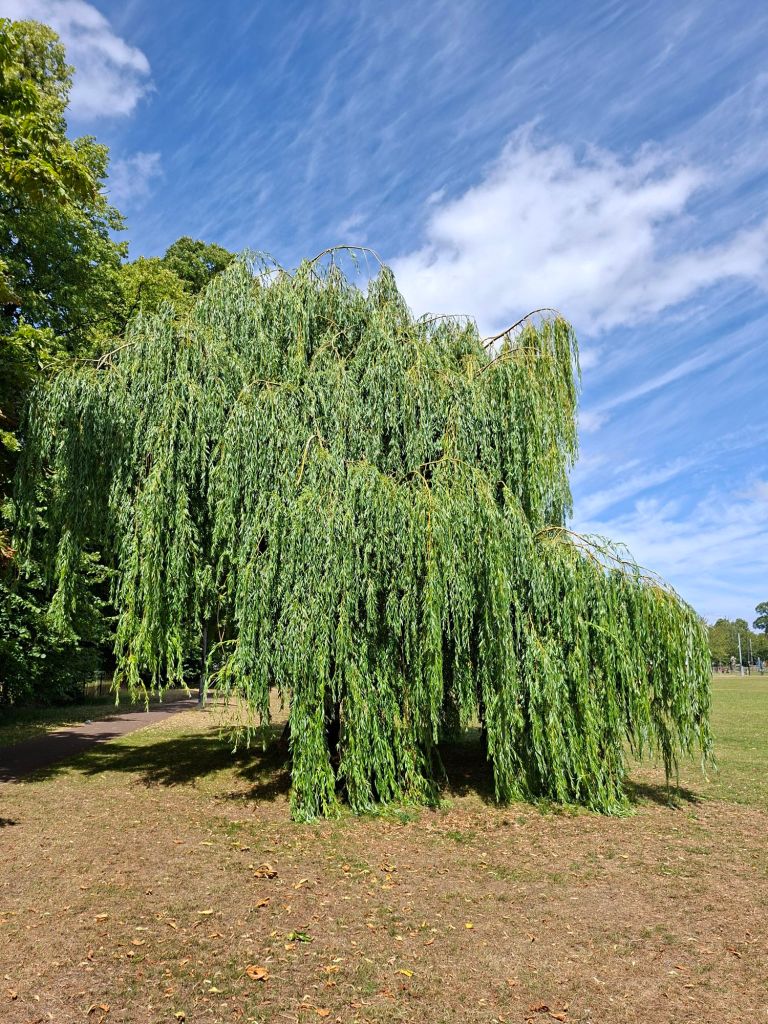
It’s a warm afternoon. The sun is strong. The park is parched. I could do with some moments of shelter. I walk towards a welcome willow tree.

I feel different under the tree’s lush canopy, as if in a benignly altered world. Its sturdy trunk upholds this precious space, embracing both light and shade. Although this space is small, I experience, here, more variety than in the expanse  of park immediately surrounding it.

For awhile I cling to the cool softness of this world within the tree, feeling as well as seeing what the branches and leaves of a weeping willow can do. A taste of Nature’s magic. Then I return to the world of the park.

BRIGHT MORNING

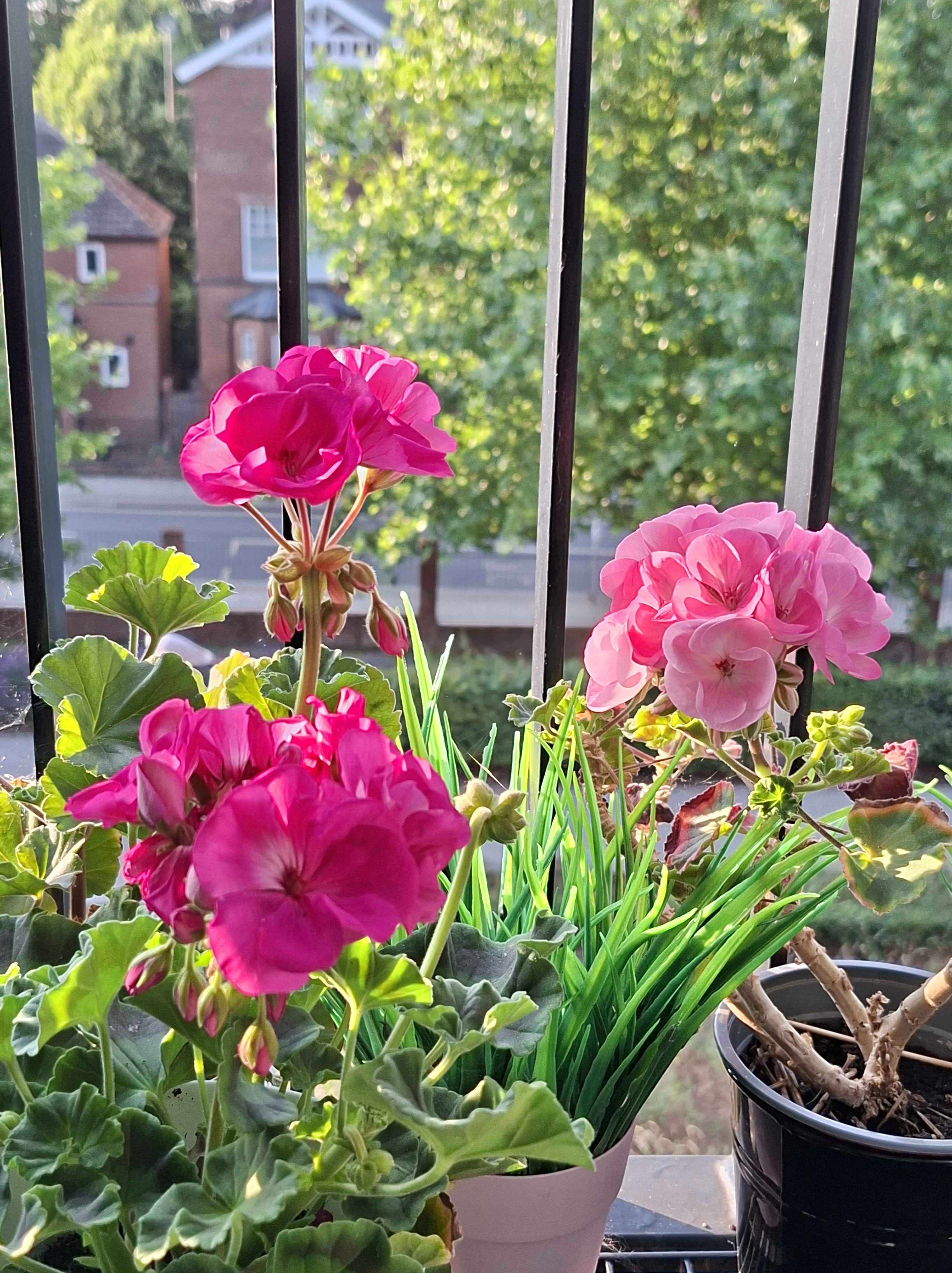
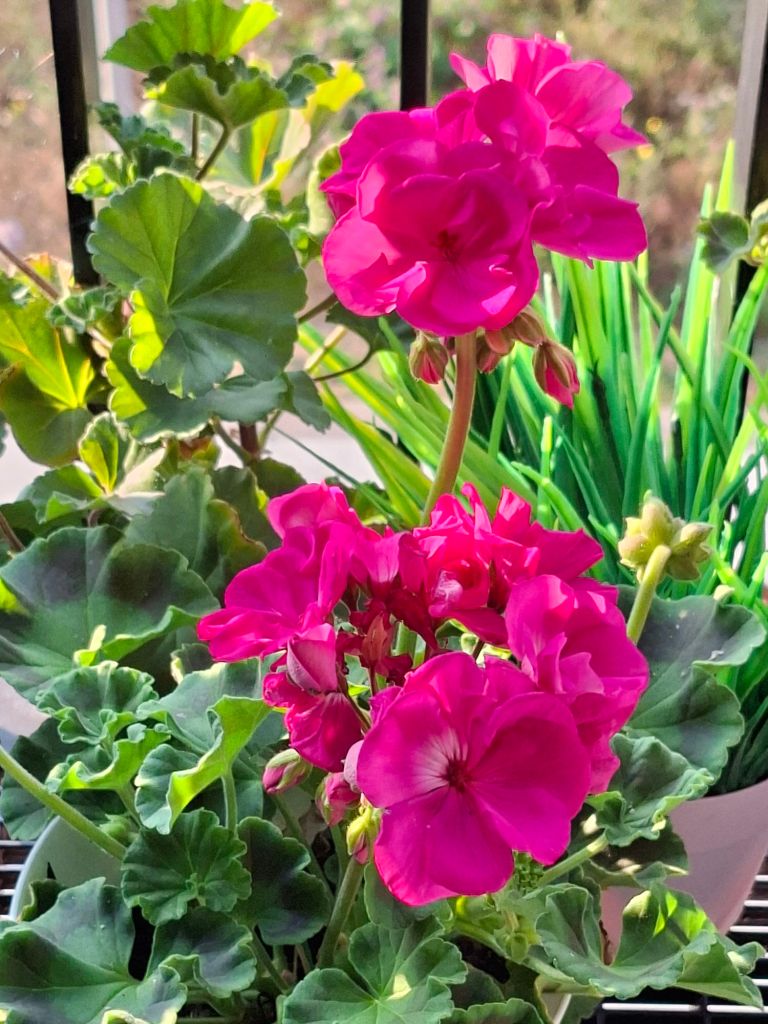
Early this morning I sat in contemplation of some geraniums in pots, for me a good Druid focus of attention. Purchased and tended by my wife Elaine, who is now mobile and active once more, they shone in the early morning light. This was about 6.45 am, some two hours after dawn, on 19 June. It is two days before the Solstice. Where did the time go?

I notice how my eye is drawn to plants and light effects. I find them nourishing and enabling. This has been a theme in my life for awhile. It is though sunlight and the plant world offer hope and reassurance in a bleak, shocking and disorienting historical moment. Life insists on flourishing. I can insist on flourishing too. I am not distracted from the wider world but resourced to engage with it.

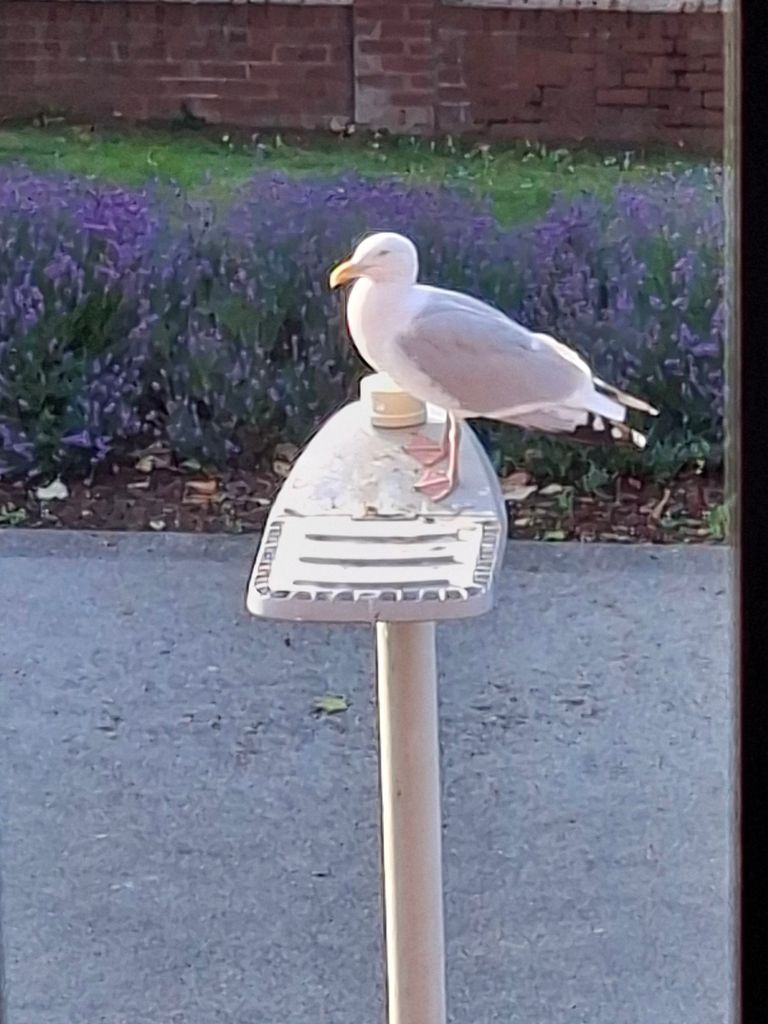
On a convenient lamp post, the seagull seeks an opportunity. This midsummer world is alive.

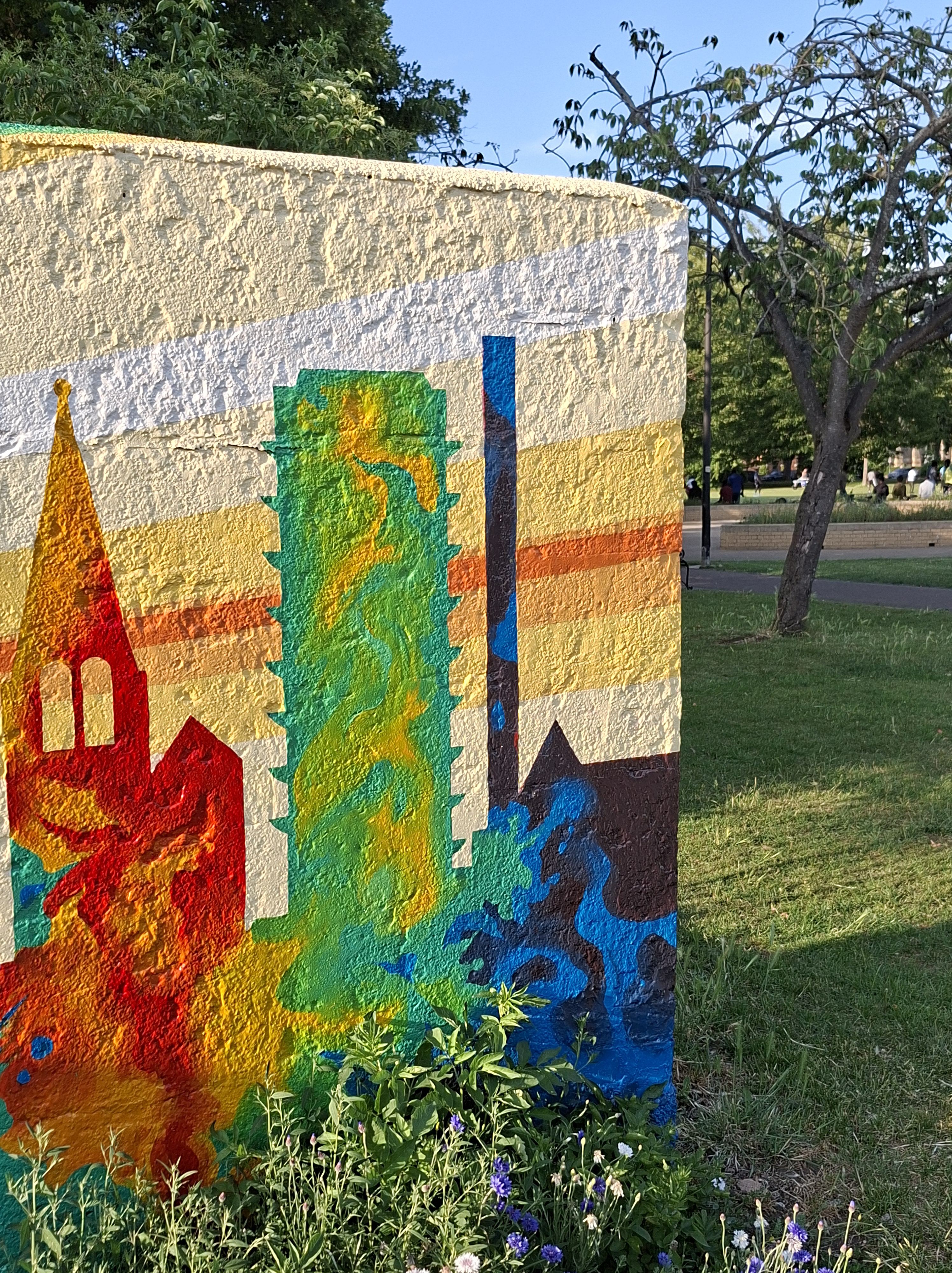
EVENING IMAGES 14 JUNE

Flowers and a painted wall

Direct us to the park:

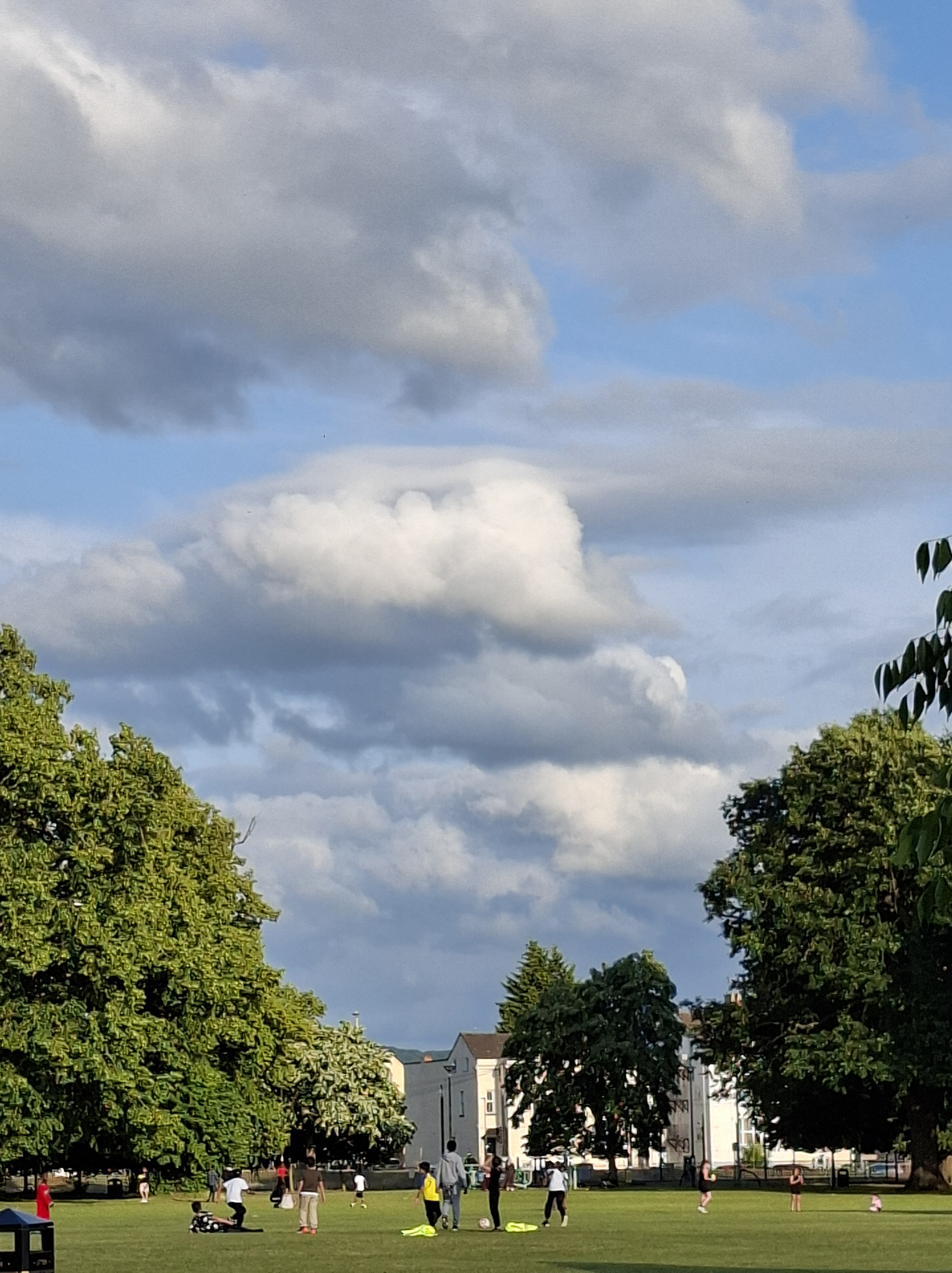
People, space, and clouds.

PLANT POWER IN A CATHEDRAL CLOSE

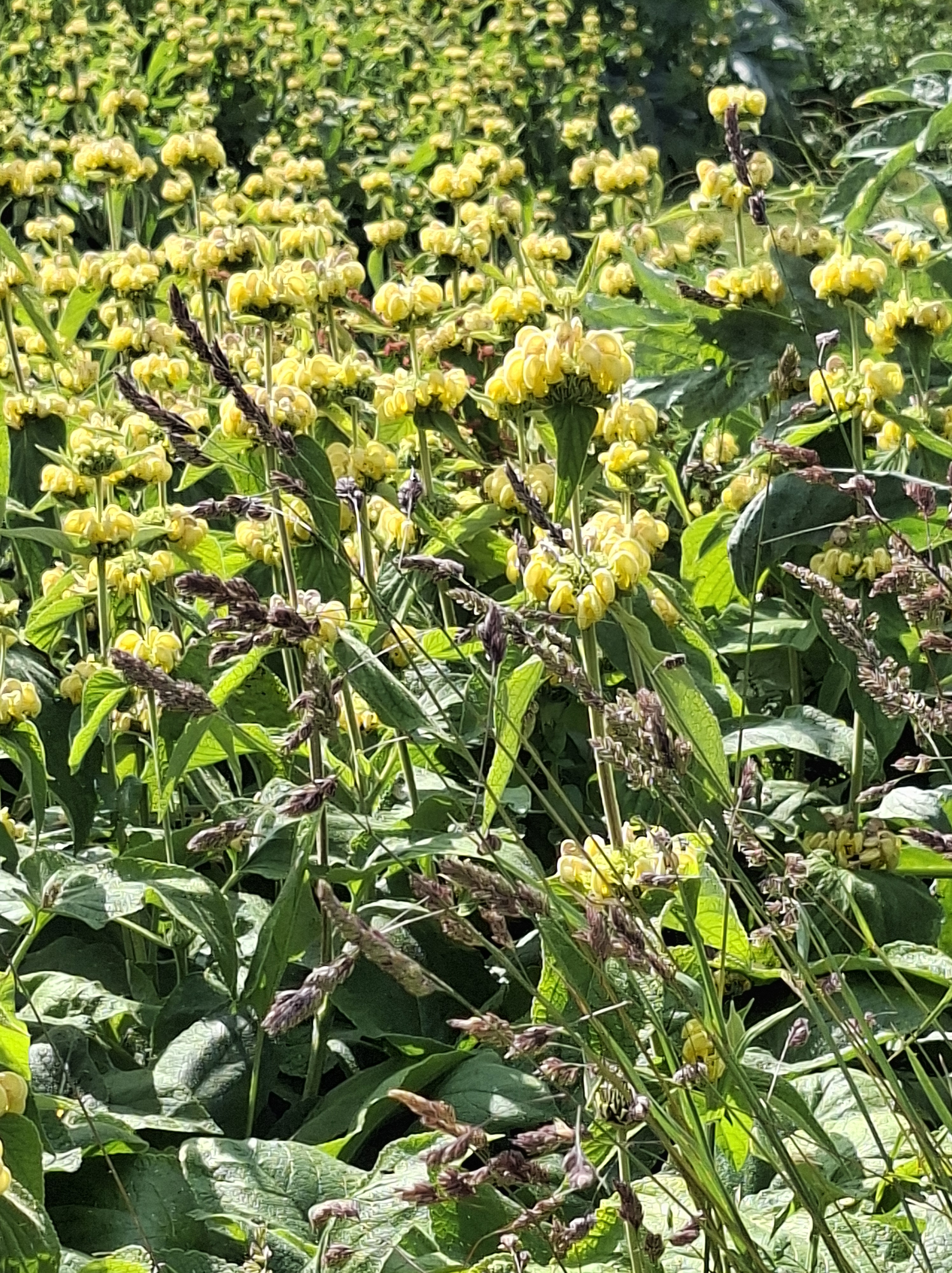
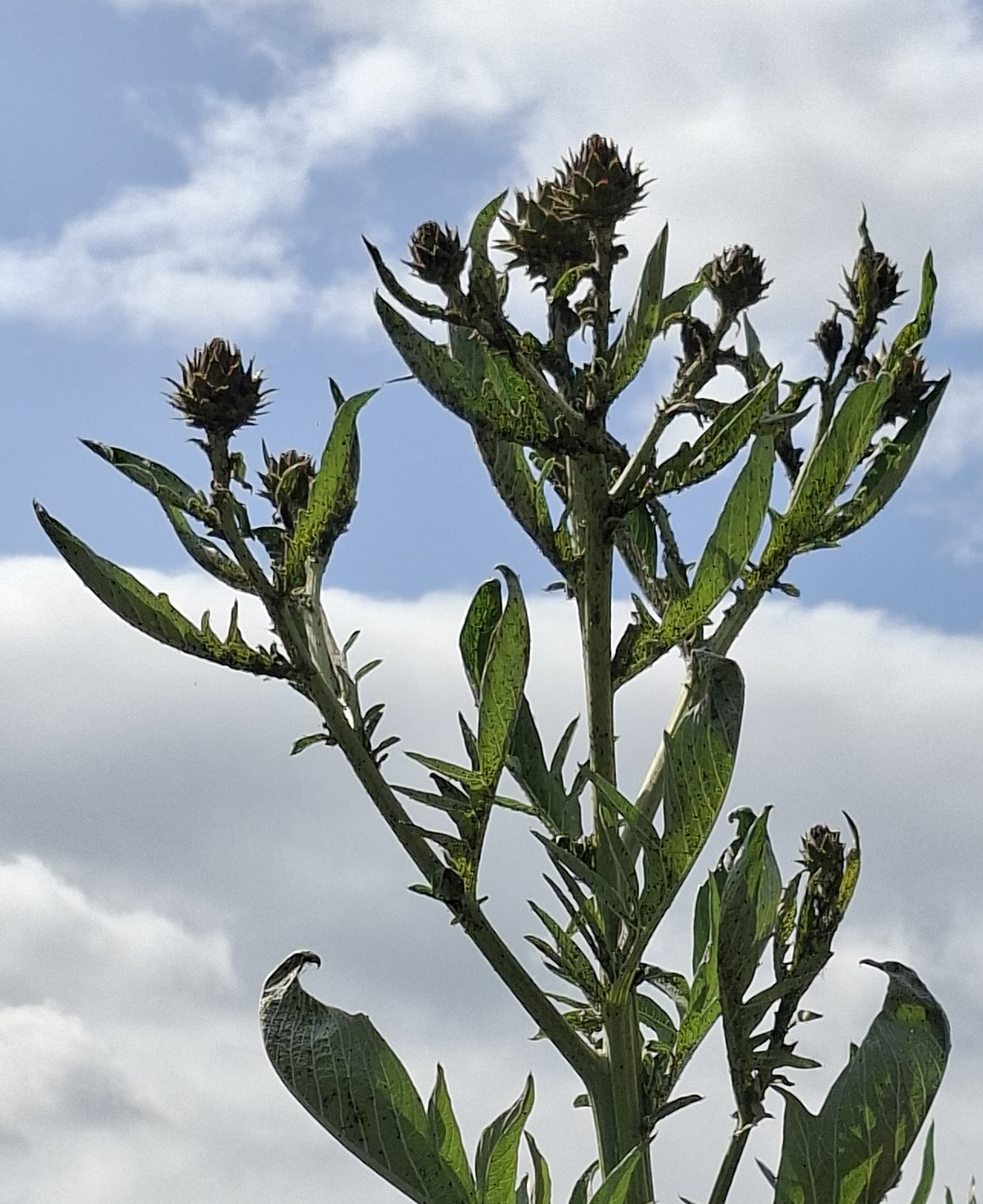
The garden in Gloucester Cathedral’s close is currently a magnificent riot. I was on a walk there with Elaine and we particularly noticed two powerful seeming plants that we couldn’t identify.  We simply sat with them, unnamed, and bathed in their energy. It was a glorious 1 June, the first day of our official meteorological summer, and one to savour and enjoy.  Only later did we do any research.

We are fairly sure that the plant above is yellow archangel and the plant below, looking like a giant thistle, is cardoon (canara cardunculus) aka prickly artichoke. Friendly feedback from readers on these identifications is welcome. If we are right both plants have long been recognised as sources of power and healing.
In our older traditions, yellow archangel was a symbol of harmony between flora and fauna. A custodian of wildlife, it fostered a bond that transcends mere survival. Herbalists still use this plant to relieve gout, sciatica and other pains of the joints and sinews. It has also been used to draw out splinters and thorns, clean and heal persistent sores, and to dissolve tumours. Yellow archangel can be used as food, in salads, soups and teas. In the wheel of our year, yellow archangel flowers  fully after the bluebells die away.

Cardoon is also a plant of power. Traditionally associated with Mars, it has the virtues of strength, protection and abundance. It is has been credited with the power to ward off evil spirits. It is also connected to ideas of nourishment, the riches of nature and, latterly, sustainable gardening. The plant can grow to 2.5 metres in height. Its thick stalks are used as a vegetable. Its full flowering is in late summer and autumn, with thistle-like purple flowers.

These plants, in this garden, are a celebration of values as well as of nature and healing. I see our world through the lens of Modern Druidry and Paganism. The custodians of this space will have a Christian lens. I am happy to note that in this context they seem to be much the same. When in this space, I feel that I am in a beautiful and energising oasis in the city.

ENTERING SUMMER 2025

For me, mid May is the beginning of summer. All of the pictures in this post were taken between 16 and 24 May. It was a warm and sunny time that has now morphed into something else – cooler, wetter and windier.

It was a time of brightness and growth. The plant kingdom showed a tremendous will to live and flourish: above, on the canal path as it skirted adjacent apartment buildings; below, close to the Greyfriars ruins, looking out towards the old town.

The following three pictures are all from Llanthony Priory, in what was once once the ‘physic garden’ of the monks. What moves me about all of them is the vitality, variety and colour they display. Such an affirmation of abundance.

The same benign and dynamic period saw a big step forward in my wife Elaine’s mobility. She can now leave and return to our flat, sit in pleasant public spaces, walk around town, attend local events and shop on her own. This is new and different for both of us, emancipatory yet still slightly unfamiliar. A new way of life is emerging for both of us.

On 25 May, about the time the weather broke, I celebrated my 76th birthday and entered my 77th year. As I wrote to one of my grandsons, ‘sounds terrible, feels OK’. In truth, it feels more than OK. I feel good.

It was also the anniversary of Elaine’s homecoming after her hip fracture in Gran Canaria, her hospitalisation for a month there, her repatriation and another 12 days in the Gloucester Royal Hospital. The year has been a tough one, especially after the strain on Elaine’s already vulnerable heart became fully manifest. But Elaine herself has been an inspiration with her own will to live and thrive. This feels like a good moment in my life and our lives together. Much gratitude for that.

Earth Eclectic

music that celebrates Earth and speaks to the heart

Sarah Fuhro Star-Flower Alchemy

Follow the Moon's Cycle

Muddy Feet

Meeting nature on nature's terms

Rosher.Net

A little bit of Mark Rosher in South Gloucestershire, England

Becoming Part of the Land

A monastic polytheist's and animist’s journal

selkiewife

Selkie Writing…

Charlotte Rodgers

Images and words set against a backdrop of outsider art.

Prof Jem Bendell

living with metacrisis and collapse

Towint

The pagan path. The Old Ways In New Times

The Druids Garden

Spiritual journeys in tending the living earth, permaculture, and nature-inspired arts

The Blog of Baphomet

a magickal dialogue between nature and culture

This Simple Life

The gentle art of living with less

Musings of a Scottish Hearth Druid and Heathen

Thoughts about living, loving and worshiping as an autistic Hearth Druid and Heathen. One woman's journey.

Wheel of the Year Blog

An place to read and share stories about the celtic seasonal festivals

Walking the Druid Path

Just another WordPress.com site

anima monday

Exploring our connection to the wider world

Grounded Space Focusing

Become more grounded and spacious with yourself and others, through your own body’s wisdom

The Earthbound Report

Good lives on our one planet

Hopeless Vendetta

News for the residents of Hopeless, Maine