Contemplative Inquiry

This blog is about contemplative inquiry

Tag: Spirituality

DIRTY LOVE

Jeff Foster on ‘dirty love’ and the place of rawness in lives that we package as ‘spiritual’ – a word that sometimes goes with a certain kind of polish.

“Love is … a living, breathing, real-time reality. The poets and sages were right. …This love, this deep and ever present silence that you are, is so vast it swallows everything. It pays no heed to images of how it should be. It does not try to impress, it is not looking for rewards, acceptance or validation. It is not pretending to be transcendent, or fearless, or beyond pain, it has no use for the word ‘spiritual’ or ‘enlightened’, it does not act as if it’s above everything. It knows no bypassing, no clever tricks, no way to numb itself to itself. It gets its hands dirty.

“Yes, this is a dirty love. The unloved and unwanted and unmet get stuck under its fingernails. It wants all of its children, not just the pretty ones. It is the mother, the father, the lover, the guru we have always longed for. It loves because that’s all it knows. It would work its knuckles to the bones just to be here.

“We pretend to be fearless and beyond human concerns only because we are afraid. We act at being peaceful and undisturbed only because there is a storm inside. We strain to show others how far beyond anger we have gone, only because anger still rages within us, longing to be met. We show off our perfect spiritual know-ledge in public to mask our perfect private doubt. It’s a perfect balance.

“Who will stop pretending? Who will meet the ‘shadow’, the misunderstood ‘dark side’ of life, those waves of ourselves that are not inherently negative or sinful or dark, just neglected and abandoned and longing for home? Who will meet life’s orphaned children? Who will sacrifice the image for the delight of not knowing?

….

“Even the unwanted are wanted here in the vastness that we are. There is plenty of space. Beyond awakening, there is this grace, this inexplicable and heart-breaking timeless welcoming of everything as it arises. By dirtying itself until it cannot dirty itself any more, love purifies itself.”


Jeff Foster Falling in love with where you are: a year of prose and poetry on radically opening up to the pain and joy of life Salisbury: Non-Duality Press, 2013

BOOK REVIEW: RAGNAROK

The book is A. S. Byatt’s Ragnarok: the end of the gods (1) and I highly recommend it. A labour of love, this piece is part review, part celebration, and part reflection.

Ragnarok is sparely and powerfully written. Above all, it shows a people held in the trance of their own dominant myth. Prediction is predestination. What must be, must be.

“This, they thought, was how it would be when the Fimbulwinter came. The fat sun was dull red, sullen, like embers. She gave little light, and what there was was ruddy or bloody. They longed in their bones and their brains for clear light, for a warm wind, for buds, for green leaves. The winter stretched into another year, and another. The seas froze: icebergs clashed by the coasts, and floated into the bays. This was, they began to understand, not a likeness of the Fimbulwinter, but the thing itself. Wind time, Wolf time, before the world breaks up.”

For the gods, it is a little different. They are better situated, and have some apparent agency. Odin can gather information and consider options. But Asgard is weakening; the health of the world tree is compromised; there is paralysis and decay.

“In Asgard the sheen on the gold was dulled, but the magic boar could still be eaten at night and reborn for the next feast. Yggdrasil was shaking all over, leaves were falling, branches were wilting, but the tree still stood. Odin went down to the well at its roots and spoke to Mimir’s head under the black ruffled water. No one ever knew what he learned, but he came back set and cold. They waited. They did not act, they did not think, perhaps could not think. Idun lay, curled in her wolfskin. The apples of youth were withered and puckered.”

In the end, all they can do is to continue what they have been doing all along, which is to follow the course that confirms their fate, in the guise of an attempt to resist it. They ride out for their last battle, already compromised and doomed.

“The gods went over the bridge, Bifröst, the rainbow bridge that linked Asgard and Midgard. They were damaged already, when they set out. Tyr had lost his arm to the wolf, Odin his eye to Mimir, Freyer had given away his magic sword, Thor’s wife, Sif, had seen all her magical hair fall away from her bald head. Thor himself, according to some poets, had lost the hammer he had thrown after the Midgard-serpent. Baldur had lost his life. There are two ways, in stories, of winning battles – to be supremely strong, or to be a gallant forlorn hope. The Ases were neither. They were brave and tarnished. Yggdrasil drooped. Its leaves hung and flapped. Its roots were shrinking.  … Black birds spun away from the branches into a red sky.” The outcome is the expected one, as everyone had known it would be.

Myths are different from fairy tales, and both are different from stories about real people or ‘imaginary real people’, according to the author. “The thin child, reading and re-reading the tales, neither loved nor hated the people in them – they were not ‘characters’ into whose doings she could insert her imagination. As a reader, she was a solemn, occasionally troubled, occasionally gleeful onlooker. But she almost made an exception of Loki. Alone among all these beings he had humour and wit. His changeable shapes were attractive. His cleverness had charm. He made her uneasy, but she had feelings about him, whereas the others, Odin, Thor, Baldur the beautiful were as they were, their shapes set. Wise, strong, lovely.”

In Byatt’s rendition, there are no new heaven and earth to follow the destruction. This is because she first encountered the story in a version that dropped this as a late Christian interpolation, imposing redemption where it did not belong. Yet it was her childhood favourite, and Byatt brings her childhood self into the book as “the thin child”. It is war time, in Yorkshire. She knows that the story is a Viking one, and that Yorkshire was once a Viking place. So, “these are her stories”. Her book is a translation from a German one, so it talks about the old Germanic world with its secrets and wonders. She asks herself, “who were these old Germans, as opposed to the ones overhead, now dealing death out of the night sky?” She thinks of the latter as Odin’s wild riders. She lives in fear that her own father, another flier, will never come home. Indeed, she is certain of it – though he does eventually, “his red-gold hair shining, gold wings on his tunic, his arms out to hold her as she leaped at him”. The old Ragnarok story, perhaps because of its pessimism, has helped her through World War II.

Ragnarok: the end of the gods was published in 2011, when the historical context had changed again. Byatt’s adult fascination with Loki is if anything greater than before. She says:

“There are no altars to Loki, no standing stones, he had no cult. In myths he was a third of the trio Odin, Hodur, Loki. In myths, the most important comes first of three. But in fairy tales and folklore, where these gods also play their parts, the rule of three is different; the important player is the third, the youngest son, Loki.”

“When I came to write this tale I realised that Loki was interested in Chaos – his stories contain flames and waterfalls, the formless things inside which chaos theorists perceive order inside disorder. He is interested in the order in destruction and the destruction in order. If I were writing an allegory he would be the detached scientific intelligence which could either save the earth or contribute to its rapid disintegration.”

In a section of Thoughts on myths at the end of her book, Byatt says: “If you write a version of Ragnarok in the 21st century, it is haunted by the imagining of a different end of things. We are a species of animal which is bringing about the end of the world we were born into. Not out of evil or malice, or not mainly, but because of a lopsided mixture of extraordinary cleverness, extraordinary greed, extraordinary proliferation of our own kind, and a biologically built-in short-sightedness.” She muses about the humanness of the Norse gods. “They know Ragnarok is coming but are incapable of imagining any way to fend it off, or change the story. They know how to die gallantly but not how to make a better world … Loki is the only one who is clever and Loki is wayward and irresponsible and mocking.”

The great Norse myth offers no salvation, and nor does A.S. Byatt. She ends with the sentence: “As it is the world ends because neither the all too human gods, with their armies and quarrels, nor the fiery thinker know how to save it.” And yet … she does show how we can see beyond our myths. The imagination is bigger than any of them. It is creative and flexible. It is subtle, shifting, multi-perspectival and articulate. For me, an unstated hope lies in the work itself.

(1) Byatt, A. S. Ragnarok: the end of the gods Edinburgh: Canongate Books, 2011


POEM: LULLABY


River stationed.

the damselfly

has stilled its wings,


blue lace folded

on a hunter’s slenderness.


Perch, slanted from their mouths,

speak to the surface an occasional O.


Lily pads are sunk and curled

by the river’s rub,


Papooses

nodding in the waterlight.


From Colin Oliver High River Sudbury, Suffolk: Downstream Press, 2006


PRAJNAPARAMITA & POEM

Prajnaparamita_Java_Side_DetailPRAJNAPARAMITA AND POEM

Prajnaparamita is the Sophia of the East, her name meaning ‘perfection of wisdom’. My image* is a 13th century stone statue from Singhasari, East Java. The lotus at the right of the image holds a book of sutras. Prajnaparamita’s hands are held in the gesture of ‘wheel-turning’, from a Buddhist perspective the turning wheel of the Dharma, representing the Buddha’s teachings.

The Prajnaparamita Heart Sutra, the best known work associated with her, is a foundational document of Mahayana Buddhism. It suggests that ideas of ‘personal’ enlightenment make no sense, either conceptually or ethically. The emphasis, rather, is on compassion and work towards the awakening of all beings. Vietnamese Zen Buddhist teacher Thich Nhat Hanh (1) offers a translation and interpretation geared to modern westerners, presenting a view of radical interdependence that he calls ‘interbeing’. He has also written a poem about it that movingly illustrates this view. (A friend sent me this poem from a Buddhist magazine many years ago. The specific political references are from the 1980’s, but they apply at least as much today.)


PLEASE CALL ME BY MY TRUE NAMES

Do not say that I’ll depart tomorrow

Because even today I still arrive.


Look deeply: I arrive in every second

To be a bud on a spring branch,

To be a tiny bird, with wings still fragile,

Learning to sing in my new nest,

To be a caterpillar in the heart of a flower,

To be a jewel hiding itself in a stone.


I still arrive, in order to laugh and cry,

In order to fear and to hope,

The rhythm of my heart is the birth and

Death of all that are alive.


I am the mayfly metamorphosing on the

surface of the river,

And I am the bird which, when spring comes,

Arrives in time to eat the mayfly.

I am the frog swimming happily in the

Clear water of a pond,

And I am also the grass-snake who,

Approaching in silence

Feeds itself on the frog.


I am the child in Uganda, all skin and bones,

My legs as thin as bamboo sticks,

And I am the arms merchant, selling

Deadly weapons to Uganda.


I am the 12-year-old girl, refugee

On a small boat,

Who throws herself into the ocean after

being raped by a sea pirate,

and I am the pirate, my heart not yet capable

Of seeing and loving.


I am a member of the politburo, with

Plenty of power in my hands,

And I am the man who has to pay his

‘debt of blood’ to my people,

Dying slowly in a forced labour camp.


My joy is like spring, so warm it makes

Flowers bloom in all walks of life.

My pain is like a river of tears, so full it

fills up the four oceans.


Please call me by my true names,

So I can hear all my cries and my laughs at once,

So I can see that my joy and pain are one.


Please call me by my true names,

So I can wake up,

And so the door of my heart can be left open,

The door of compassion.


*Photographed by Gunawan Kartapranata and reproduced under a Creative Commons licence.


  • Thich Nhat Hanh (1988) The heart of understanding: commentaries on the Prajnaparamita Heart Sutra Berkeley, CA, USA: Parallax Press


NATURALLY INQUIRING

Recently I reviewed Godless Pagans: Voices of Non-Theistic Pagans (1) which I enjoyed very much. There’s a growing community of Pagans clearly identified as ‘humanistic’ and/or ‘naturalistic’ – see https://humanisticpaganism.com – and I am wondering about how I sit with this approach.

I am dedicated to contemplative inquiry. I see it as naturalistic. But I am also aware of the way in which terms like ‘empiricism’, ‘science’ and even ‘humanism’ can be mobilized for a certain type of fighting talk. This says that valid knowledge can be based only on third-person, objectifying inquiry conducted on a hypothesis-experiment-results model. I am engaged in a first person inquiry, which also extends to community and culture, as in my Contemplative Druidry book (2), so for me this is a potential problem.

In response I pick up a book off my shelves, and dust it off. The title says Qualitative Research in Counselling and Therapy (3). A half-remembered store of magic words is laid out before me in the accessible form of chapter headings: qualitative inquiry, hermeneutics, phenomenology, ethnographic approaches, grounded theory, conversation, narrative and discourse analysis, bricolage. I used to work in the field of public health and health research, with sexual health, mental health and ageing as my main focus at different times: all areas where lived experience and issues of culture, meaning and value are of great importance.  So I’ve long had a concern with an extended epistemology, which takes these areas into account.

There have been many attempts to bring different pathways to knowledge together and identify what the togetherness might look like. One of the most recent is Ken Wilber’s Quadrants model (4), which sits as the Q in a larger system called AQAL. The quadrants look like this:


INTERIOR/INDIVIDUAL: ‘I SPACE’


The subjective life world – thoughts, feelings, meanings, meditative states

Explored in the domains of literature, arts, therapy and spirituality


An exemplary text would be: In Search of Lost Time, Marcel Proust


EXTERIOR/INDIVIDUAL: ‘IT SPACE’


Atoms, brains, bodies, behaviours, organism

Explored in natural science, scientific medicine, philosophy of science


An exemplary text would be: Consciousness Explained, Daniel C. Dennett


INTERIOR/COLLECTIVE; ‘WE SPACE’


Shared meanings, relationships, mutual understanding, the influence of culture, media, community

Explored in the domains of literature, arts, therapy and spirituality; also philosophy and ‘qualitative’ social science


An exemplary text would be: The History of Sexuality, Michel Foucault

EXTERIOR/COLLECTIVE; ‘ITS’ SPACE


Systems, environments, technology, cosmology

Explored in the domains of natural science, philosophy of science and ‘quantitative’ social science


An exemplary text would be: A Universe from Nothing, Lawrence M. Krauss


The basic outline above is Wilber’s. I have added the bits that suggest subject domains and key texts which I know well enough to put in the boxes – in both of the multi-volume works on the left, the first volume makes to point on its own. I value all the quadrants, whilst having a clear bias towards the left hand. My contemplative inquiry is in the upper left quadrant, though my beliefs in no separate self and interdependence push me out, especially towards the lower left hand but to an extent over to the right as well. In this perilous Anthropocene era, how could they not?

Contemplative inquiry in the narrower sense is about consciousness and conscious being. Here I follow James Hillman in suggesting “suggesting a poetic basis of mind and a psychology that starts neither in the physiology of the brain, the structure of language, the organization of society, nor the analysis of behaviour, but in the processes of imagination” (5). Hillman places himself in a western lineage going back from Jung, “through Freud, Dilthey, Coleridge, Schelling, Vico, Ficino, Plotinus and Plato to Heraclitus”. All I can say is that from a subjective lifeworld perspective this makes complete sense to me, though in my reading I’d emphasize the term ‘starts from’ – the third person perspective also matters and all the other factors mentioned clearly have their role.

In taking this stand I have recently gained comfort from an unexpected source, the neuroscientist and consciousness researcher Sam Harris. A friend and associate of the philosopher Daniel Dennett, Harris is not persuaded that Dennett’s Consciousness Explained (6) albeit a brilliant and fascinating book, has fully lived up to its title, or could be expected to. Harris says (7):

“We know of course that human minds are the product of human brains. There is simply no question that your ability to decode and understand this sentence depends on neurophysiological events taking place inside your head at this moment. But most of this mental work occurs entirely in the dark, and it is a mystery why part of this process should be attended by consciousness. Nothing about a brain, when surveyed as a physical system, suggests that it is a locus of experience. Were we not already brimming with consciousness ourselves, we would find no evidence for it in the universe – nor would we have any notion of the many physical states it gives rise to. The only proof that it is like something to be you at this moment is the fact (obvious only to you) that it is like something to be you.”

Harris is well versed in both contemplative practice and scientific investigation, and so is at ease both with the exterior and interior approaches to consciousness. He has experience of the self-less state and is also clear about describing selflessness as “not a ‘deep’ feature of consciousness, but right on the surface. And yet people can meditate for years without recognizing it”: no need to invoke divinity-as-subject or traditionally mystical views of ‘enlightenment’ as heroic attainment. I for my part experience Headlessness, very available in the Douglas Harding method -see website at headless.org  – as perfectly containing the poetry of mind. It’s ‘only’ natural. How miraculous nature is!

(1) Halstead, J. (ed.) (2016) Godless Paganism: voices of non-theistic Pagans com (Foreword by Mark Green)

(2) Nichol, J. (2014) Contemplative Druidry: people, practice and potential Amazon/KDP (Foreword by Philip Carr-Gomm)

(3) McLeod, J. (2001) Qualitative research in counselling and psychotherapy London: Sage

(4) Wilber, K. (et al) (2008) Integral Life Practice: a 21st century blueprint for physical health, emotional balance, mental clarity, and spiritual awakening Boston & London: Integral Books

(5) Hillman, J. (1990) The essential James Hillman: A blue fire London: Routledge. (Introduced and edited by Thomas Moore)

(6) Dennett, D. (1990) Consciousness explained London: Penguin

(7) Harris, S. (2014) Waking up: searching for spirituality without religion London: Transworld Publishers


RE-DEDICATION

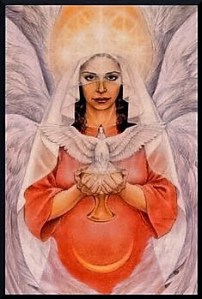
bcf2c26ec7720ed734fccc2b13534310Early this morning, I re-dedicated my contemplative inquiry. Yesterday was my 67th birthday. It seems like a good moment for re-visioning and renewal.  I recently received my Sophia icon from Hrana Janto* and finally understood that my contemplative inquiry is itself my Way of Sophia. I don’t see this as a project – more as an ongoing life practice. My contemplative Druid work and exploration of the Headless Way are aspects of inquiry, and this re-dedication is an integrating move.

The original dedication was at Samhain 2011. It assumed a Druid and specifically OBOD context, and I did see it as a project. I didn’t give it a timescale, but later I thought in terms of 5 years. The re-dedication comes a few months short of that, at a time when – amidst many continuities – there has been a clear shift in focus.

Today I made use of the icon, entered into a reflective space, before deepening into an Innerworld journey. Working with imagery puts me in a realm of what James Hillman (1) understands by ‘soul’ work. For him, soul (or psyche, or anima) is “a perspective, rather than a substance, a view point towards things rather than a thing in itself … by soul, I mean the imaginative possibility in our natures, the experiencing through reflective speculation, dream, image and fantasy – that mode which recognizes all meanings as primarily symbolic or metaphorical”. For Hillman, soul makes meaning possible and turns events into experiences. It is communicated in love, and characteristically has a religious concern.

In my morning ritual, I open my heart to the wisdom of Sophia and gaze at my icon.  I remember and appreciate the initial inquiry – writing articles for OBOD’s member journal Touchstone; gradually bringing people together, holding the first events, launching the Contemplative Druidry Facebook Group, connecting with people in other Druid bodies (The Druid Network and Order of the Sacred Nemeton in particular); developing a monthly meeting cycle for the home group; writing the Contemplative Druidry book, offering contemplative Druid events to the wider Druid and fellow-travelling public, including both day retreats and a residential. This feels good to recall, because sometimes I think that the project hasn’t spread very far or been widely understood, mostly through my own limitations and relative reclusiveness. Here I can focus on what has been achieved, and allow myself to recognize that there is something to appreciate.

Completing this period of reflection, I close my eyes and slip into Sophia’s Innerworld nemeton, which takes the form of a walled garden. At the centre is a fountain surrounded by four rose beds separated by run-offs. Two of the beds hold white roses, and two hold red. There are seats around the fountain, big enough for two people, on all four sides. The rest of the garden is more of an orchard with many kinds of fruit tree, including some trained up the garden walls. These walls are brick, and have an eighteenth century feel.  The orchard isn’t over-manicured. It might indeed be described as slightly unkempt, though not with any sense of neglect. When I visit this garden, the Sophia of the icon may sit opposite or beside me. But she may also take different forms – a dove, a rose, a tree, the fountain itself. She may be another bird or creature that turns up in the space. She may be sunlight in a drop of water. I may also experience her as all of it, so that goddess and nemeton are one. She is always a friend and guide.

This time she is in her icon form, though the dove is in a tree and the chalice by her side as she sits opposite me, in the late May dawn, east facing west. I go into my headless state and know that the same is true of her. But the context (the Innerworld, in this garden, with Sophia) changes the state, making it more intimate, relational and local. I like it. In my heart, I have more care about the particularities, indeed vagaries, of the writing than the pristine emptiness of the paper that holds them, though both perspectives matter and they do belong together. If form is nothing but emptiness, and emptiness nothing but form, then what we always have is paper being written on, and it is the story writing itself that mostly draws a storying monkey like me.

As this thought, within my living dream of the garden, passes through, Sophia comes to sit beside me. We are simply companionable, watching the fountain, as the clear fresh water bubbles up. It is from an inexhaustible spring. In this archetypal garden setting, Sophia renews an eternal pledge – that wisdom’s commitment is to extend and transmute knowledge, and not to repress it. And in this moment the garden, the fountain and Sophia begin to fade …

I came away from my ritual of re-dedication feeling encouraged and refreshed, and a new cycle begins from here.


*http://Hrana.Janto.com

(1) Hillman, James The essential James Hillman: A blue fire London: Routledge, 1990. (Introduced and edited by Thomas Moore)


BOOK REVIEW: GODLESS PAGANISM

Highly recommended. Godless Paganism: voices of Non-Theistic Pagans is the fruit of a substantial pioneering project. The book has 75 chapters, with only a small number of contributors writing more than one. The chapters are arranged in 10 themed sections, with a substantial introduction that surveys the territory as a whole. I think that anyone with an interest in modern Paganism could gain something from this book.

The book exists thanks to the efforts of John Halstead and colleagues at HumanisticPaganism.com. (I notice that, in the text, ‘Naturalistic Paganism’ seems to be the more favoured term). Money was raised by supporters and the book is published by Lulu.com.

Godless Paganism is fresh and alive, and introduces many voices – the voices people who are moving and changing, engaged in experiential exploration, open to new ways of sense-making. Culturally, it has as U.S. centre of gravity, though contributors from other parts of the world are included.

Some contributors report being challenged by fundamentalist Pagans over their right to call themselves Pagan, and this is presented as a problem emerging in the 21st. century rather than an inheritance from the 20th. This may help to explain why Godless Paganism has, for me, a remarkably deity-focused feel. Brendan Myers writes a chapter called The worship of the Gods in not what matters but the book has no overall sense of saying, ‘let’s base our spirituality on a different focus – our response to nature, perhaps, or to suffering’. Approaches like this are represented in the book, but it is more usual for contributors either to present reframed understandings of ‘deity’ and ‘belief’, or to celebrate the play of deity yoga without belief. All fine by me – yet this does suggest a concern with responding to perceived fundamentalist challenges rather than an actual departure from theistic language and theistic frames of reference.

Having said that, I strongly welcome Godless Paganism and what it represents. I hope that it strengthens the confidence and community standing of those who identify as ‘naturalistic Pagans’. I salute the people who have made this happen, and I look forward to future collections on this topic.


John Halstead (editor) Godless Paganism: voices of non-theistic Pagans Lulu.com 2016 (Foreword by Mark Green)

SOPHIA AND THE ORAN MOR

Who is Sophia for me, here and now? To do the question full justice, I want to back up and look again at her presence in Eurasian culture.

In the old cosmologies, she is ‘Wisdom’ in three spiritually influential languages – Sophia (Greek), Hokhmah (Hebrew) and Prajna (Sanskrit). She has attracted titles like Goddess, Mother of Angels, Saint, and Mother of Buddhas. In the Mahayana Buddhist world, she is related to bodhisattvas such as Tara and Kuan Yin. She has resonances with the Shakti power of Kashmiri Shaivism and with ‘spirit of the valley’ and water imagery in the Tao Te Ching.

In the Hellenistic culture of the Roman orient, especially Alexandria with its large Greek and Jewish communities, she has clear resemblances to Isis (already somewhat remodelled by the Greeks from an indigenous original) and to Asherah, the lost goddess of Israel, and her continuing half-recognition as Shekinah. Sophia is also a key figure in certain iterations of Christian Gnosticism, in some of which Mary of Magdala has been understood as her human incarnation. She is sometimes a cosmic mother, but never exclusively an earth mother, though that aspect can be included. Her main role  is to complete our spiritual knowledge and understanding by imbuing us with compassion. The result is wisdom.

I am inspired by these ancient traditions. But I am not directly guided by them. I look more to my own experiences and sense-making, together with input from contemporary teachers. As I write, I sense Sophia as a body-feelings-mind wisdom, a systemic presence greater than my linguistic/narrative identity. It is as if she nudges me from all sorts directions. I might call some of these intuition; others, synchronicity.  Embarking on a Way of Sophia was part of a plan. Discovering the Headless Way, and finding that its methods worked, was not. It came at me in a very odd, sideways manner, that I had not thought of at all, and I just went for it.

In the past I have sometimes thought of Sophia as a cosmic mother, representing the whole world of form. I no longer have this sense. For me she operates at a more personal and human level. To name the world of form, and its relationship to empty awareness, I would rather work with the old Gaelic term Oran Mor (Great Song). Here – adopting auditory language – I am personally an ephemeral note, perhaps a brief tune, in the Great Song. Yet ultimately I, like you, am the timeless aware silence that contains the whole song, and which the song so beautifully fills.

And what is the The Way of Sophia? It is learning to live from the eternal silent centre, and lovingly offering my unique if passing note to the Oran Mor.

SOPHIA’S OPEN SECRET

There is a locked vault containing everything you’ve ever longed for – all the riches of the universe.

You spend your life trying to open the vault – through struggling, striving, meditating, transcending, guru-worshipping, believing, rejecting, accepting, praying, self-enquiring, yoga-ing, and so on and so forth.

Finally, exhausted, you give up trying to open the vault … and that’s when the vault opens by itself. It was never locked in the first place.

What’s inside the vault? This moment, exactly as it is.

You always knew. The Beloved calls us home in any way she can, and this ‘ordinary’ life is her ingenious invitation.

And the raindrops whisper that the enlightenment we seek is this unspeakable intimacy with the appearance of form, with this ever-changing watercolour scenery of life, its colours forever running into the gutters of emptiness. “Love us”, the raindrops whisper. “That’s all”. And still the raindrops keep falling and I walk on, embraced by a love with no name.

Jeff Foster Falling in love with where you are: a year of prose and poetry on radically opening up to the pain and joy of life Salisbury: Non-Duality Press, 2013

NB: I have messed around a bit with Jeff Foster’s work, eliding sections from two separate entries and giving the result another title. All the words are his.

HUMAN

Some people, having vaguely heard of non-dual traditions, get a notion that they turn us away from our messy human lives. Nothing could be further from the truth. Here are two brief passages by (respectively) a mid-twentieth century and a current non-dual teacher.

BEING AND BECOMING

“To be, to exist with a name and form is painful, yet I love it …. It is the instinct of exploration, the love of the unknown, that brings me into existence. It is in the nature of being to seek adventure in becoming, as it is in the very nature of becoming to seek peace in being.” Nisargadatta Maharaj.


SACRED WORK

Cherish your doubts. They are the seeds of Mystery.

Embrace your sadness. Great joy lies within.

Turn to face your fears. At their core lies peace beyond words.

Celebrate your boredom. It is radically alive.

Hold your grief. Let it break your heart wide open.

Befriend your anger. Know it intimately as the life power that burns suns.

Acknowledge your pain. It is the body’s plea for attention.

All feelings are deeply intelligent. Get out of their way.

Let them do their sacred, universal work.”

Jeff Foster Falling in love with where you are: a year of prose and poetry on radically opening up to the pain and joy of life Salisbury: Non-Duality Press, 2013

Earth Eclectic

music that celebrates Earth and speaks to the heart

Sarah Fuhro Star-Flower Alchemy

Follow the Moon's Cycle

Muddy Feet

Meeting nature on nature's terms

Rosher.Net

A little bit of Mark Rosher in South Gloucestershire, England

Becoming Part of the Land

A monastic polytheist's and animist’s journal

selkiewife

Selkie Writing…

Charlotte Rodgers

Images and words set against a backdrop of outsider art.

Prof Jem Bendell

living with metacrisis and collapse

Towint

The pagan path. The Old Ways In New Times

The Druids Garden

Spiritual journeys in tending the living earth, permaculture, and nature-inspired arts

The Blog of Baphomet

a magickal dialogue between nature and culture

This Simple Life

The gentle art of living with less

Musings of a Scottish Hearth Druid and Heathen

Thoughts about living, loving and worshiping as an autistic Hearth Druid and Heathen. One woman's journey.

Wheel of the Year Blog

An place to read and share stories about the celtic seasonal festivals

Walking the Druid Path

Just another WordPress.com site

anima monday

Exploring our connection to the wider world

Grounded Space Focusing

Become more grounded and spacious with yourself and others, through your own body’s wisdom

The Earthbound Report

Good lives on our one planet

Hopeless Vendetta

News for the residents of Hopeless, Maine