Contemplative Inquiry

This blog is about contemplative inquiry

Tag: Spirituality

HOLLY (TINNE) THE TURN
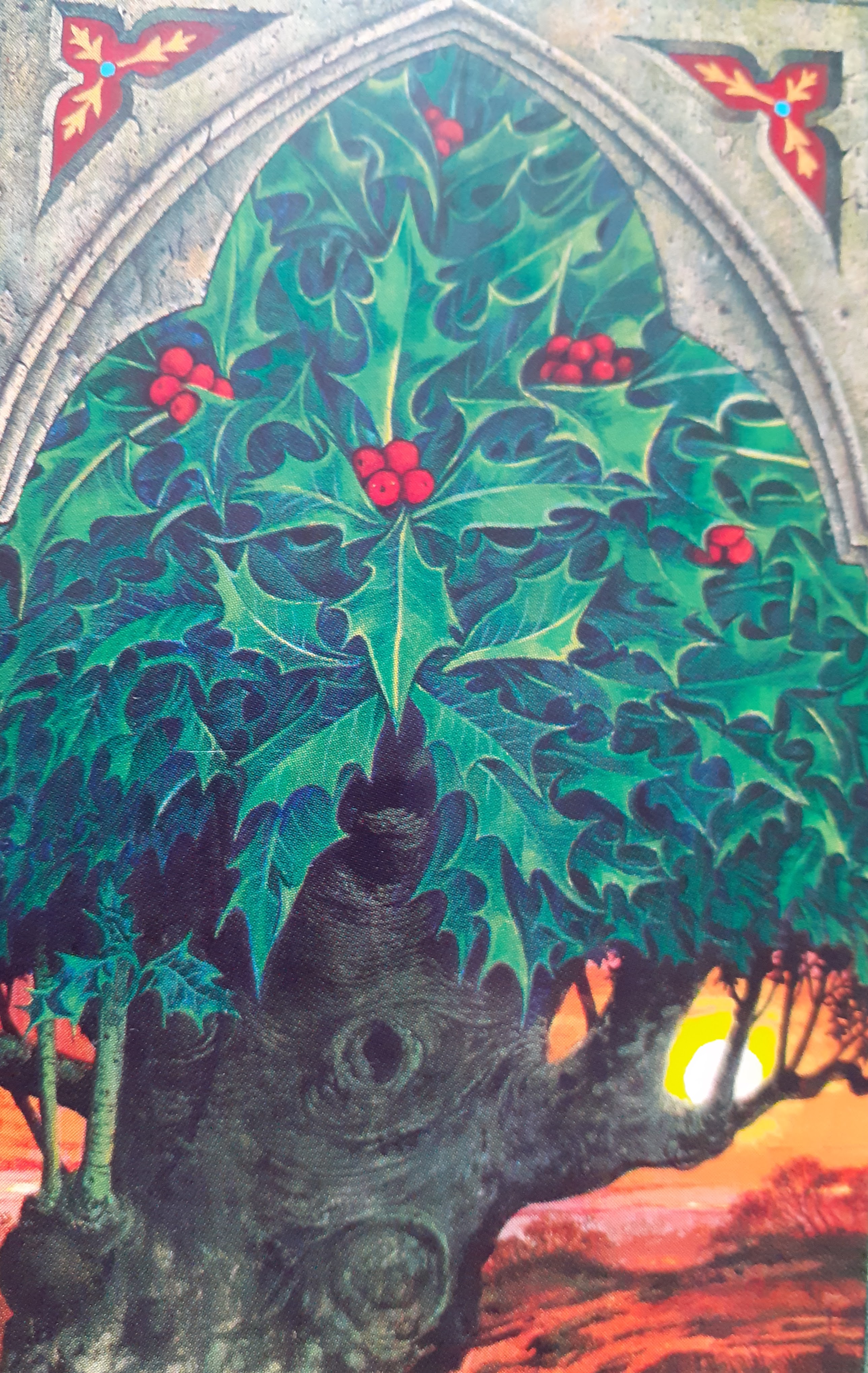
Holly (1) is a vivid, vital plant, and especially so at midwinter with its rich spiky evergreen leaves and its blood red berries. It is not afraid to take a strand in the world. Tradition names it as fiery in nature and it is described as ‘best in the fight’. In Celtic times the wood of the holly was used to fashion spear shafts. Amergin, the warrior bard and shaman who invaded Ireland, links himself to holly when declaring that ‘I am a battle waging spear’ among his many identifications.

Within my mandala of the year (2) holly initiates a major change of energy and direction. The winter quarter beginning on 1 November is a time of dying and regeneration, in the life of the land that I live in and in some sense in me. Elder has completed the work of descent into a form of death already signalled by the yew. Now, from 17 December to 7 January, it is for the holly energy to ignite my regenerative potentials and aid my birth into the life of another year.

Holly helps me with its vitality, strength, clarity of direction and balance. My worry this year has been about my own capacity to step up. But now, on 22 December, I feel the first stirrings of renewal. Under the aegis of holly I am in protected space and time. I can draw strength from the holly and regenerate in safety, during an extended holiday sheltered from the world. A blessing, indeed.

(1) The image is from: John Matthews & Will Worthington The Green Man Oracle London: Connections, 2003.

(2) This mandala is based on my personal experience of trees in the neighbourhood as well as traditional lore. Moving around the wheel of the year from 1 November, the positions and dates of the trees are:

Yew, north-west, 1-23 November

Elder, north-north-west, 24 November – 16 December

Holly, north, 17 December – 7 January

Alder, north-north-east, 8 – 31 January

Birch, north-east, 1 – 22 February

Ash & Ivy, east-north-east, 23 Feb. – 16 March

Willow, east, 17 March – 7 April

Blackthorn, east-south-east, 8 – 30 April

Hawthorn, south-east, 1 – 23 May

Beech & Bluebell, south-south-east, 24 May – 15 June

Oak, south, 16 June – 8 July

Gorse, south-south-west, 9 – 31 July

Apple, south-west, 1 -23 August

Blackberry & Vine, west-south-west, 24 August – 15 September

Hazel, west, 19 September – 8 October

Rowan, west-north-west, 9 – 31 October.

See also https://contemplativeinquiry.blog/2020/autumn-equinox-2020-hazel-salmon-awen/
CONTEMPLATING FAMILY PHOTOGRAPHS

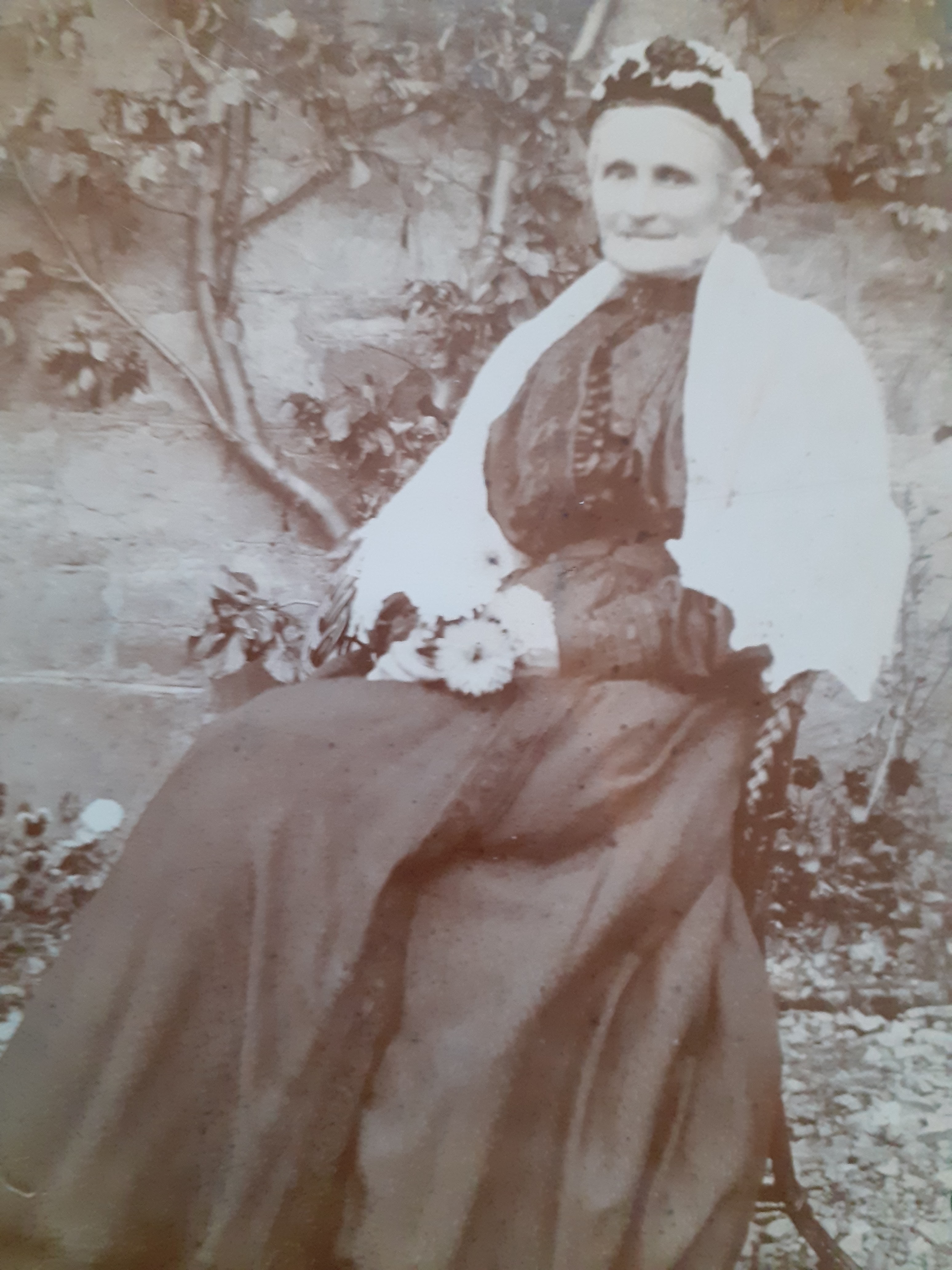
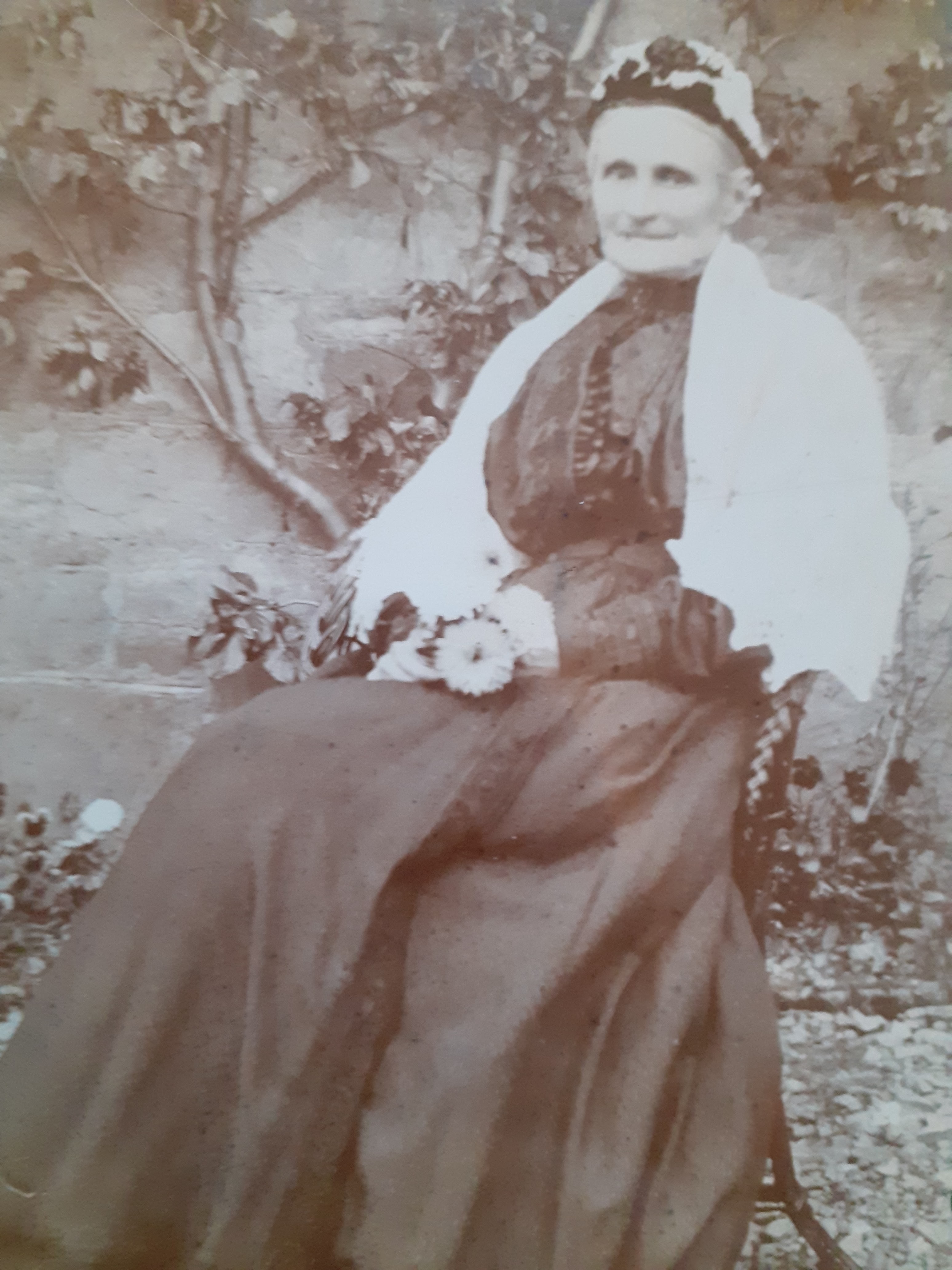
As we approach the turn of the year, I am thinking of recent ancestors and the visual records they have left. This photograph is of my paternal great grandmother was taken by a professional photographer in the first decade of the twentieth century. You can see that it has been carefully posed. This is before the era of family snaps, let alone selfies. Being photographed is an occasion.

At that time the family were tenant farmers in East Lothian, Scotland, and the photographer was based in Haddington, the county town. I am sad to say that I know very little about my great grandmother as an individual, of who she really was. In her picture I read both dignity and diffidence. A certain natural stillness, perhaps, and inner strength. In a sense she was the matriarch of an family group in which the tenancy was largely worked by two sons, one of whom had a family of his own, though I am not sure of how far she filled that role.

I feel frustrated by my lack of knowledge and understanding even as I write, and I’m trying not to default into writing about my great grand father instead. I do know a bit about him – strong traditional Presbyterian, Elder of the Kirk, political Unionist whose Unionism extended to the whole of Britain and Ireland. I do imagine my great grandmother as being in the slip stream of all this. She didn’t live long enough to be a voter; I don’t even know how she felt about this. She did live long enough to know my father and his sister as children and there is an indirect link through them, though they didn’t actually say much about her to me. The picture below is from 1909, with the two children looking dressed up and solemn.

I do not have to go far back in family history to find myself in an unfamiliar cultural landscape, and to appreciate that I am an outsider to my own family members. I was given little family information about these days when growing up, and the very aspects of pre-1914 history and culture that I have studied or engaged with were ones that didn’t enrol my great grandparents. They were the older generation, defined by both their immediate culture and the reign of Queen Victoria, only recently ended.

The world of these photographs was not to last. When my great grandfather, predeceased by my great grandmother, died in 1916, the tenancy ended and neither of his sons negotiated a new one. My grandfather, grandmother, father and aunt moved to Musselburgh, near Edinburgh, and became a corn merchant. His brother emigrated to Australia. The heavy duty politics and religion were ameliorated. A way of life had gone. My father, born in 1907, moved to England in 1929 and I was born in Somerset in 1949, much closer to my mother’s family who came from Exeter in Devon. The years have continued to roll on. 1949 was only forty years on from the picture of the two children. There have been seventy one years since, which is food for thought in itself. Looking at her portrait, I understand that whilst I do not know, and will never know, my great grandmother, I can appreciate her through the image that’s presented, without narrative information, and also without mythology or romance.

ELDER AGAIN

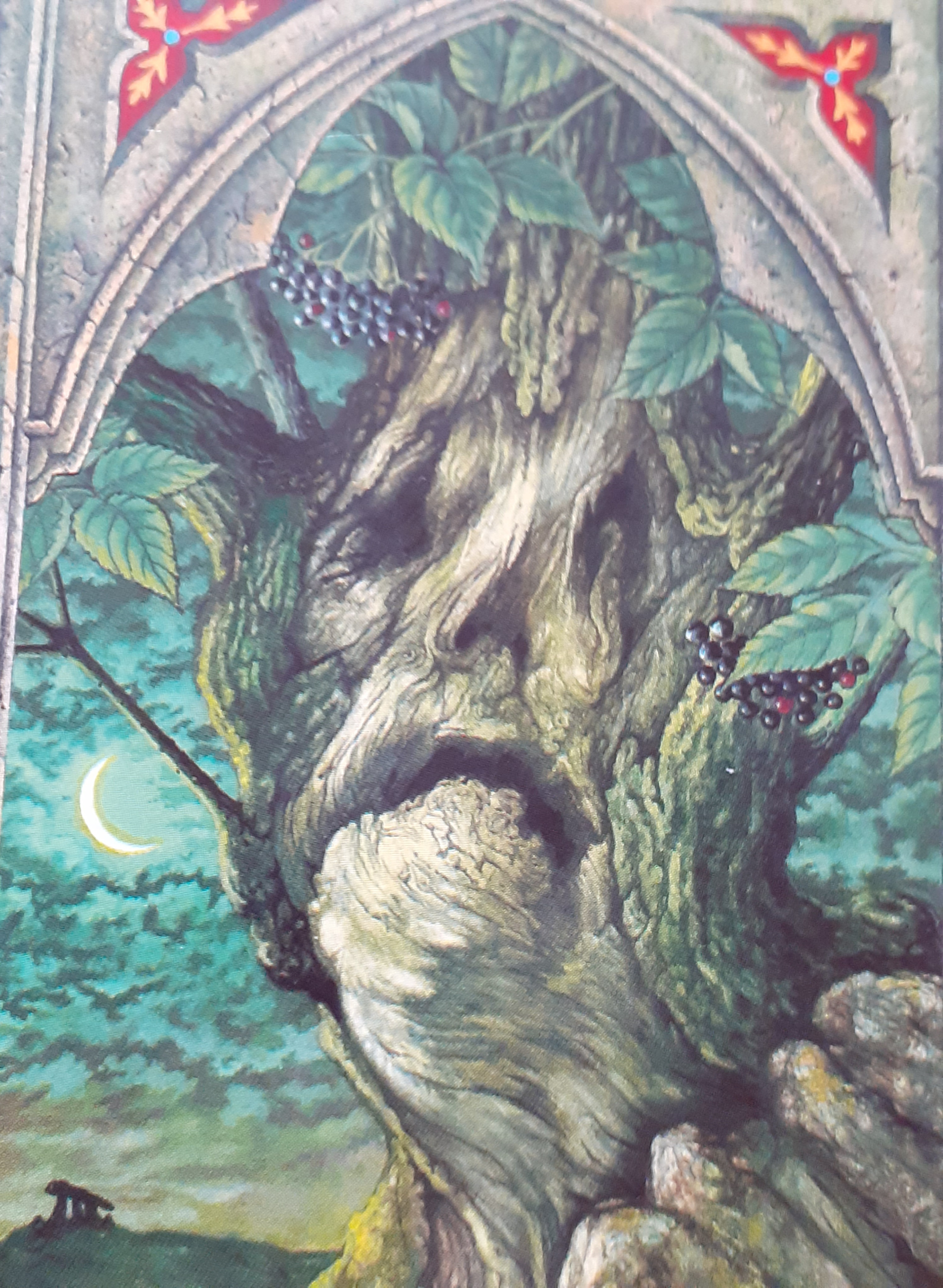
I am drawn to write again about the elder, the tree of the caileach, or crone (1). In my sixteen tree mandala of the year, it covers the period from 24 November to 16 December. I am writing on the last day, tuning into the image more deeply, open to an intuitive personal response.

I see grief, loss and limitation there, in a face both haunted and haunting. Survival at a price. It is what it is. I see neither the pretence of a good time, nor the shadow of self pity. The tree is alive and bearing fruit – alchemical fruit which is poisonous raw and safe after cooking. Perhaps it is the fruit of severity. In the face of a sacred tree, I see a face of the Goddess – an ageing, winter face, yet one that is strong and indomitable. I see this mirrored outside, and also within. Something in me is like this too.

From about the beginning of November, I have been dealing with a succession of minor health problems, not dangerous, but draining in their cumulative effects. I have had frequent experiences of lethargy and a kind of fog in the brain. I move between fundamental acceptance of the experience I am given, and a pragmatic need to push back. I am working at reduced capacity, I have some frustrations about this, and I am finding a new balance. I am glad to have made the core of my life and practice simple and easy to maintain. For me, simplicity allows focus on what really matters. Focusing on what really matters is what I need to do.

(1) The image is from: John Matthews & Will Worthington The Green Man Oracle London: Connections, 2003.

(2) This mandala is based on my personal experience of trees in the neighbourhood as well as traditional lore. Moving around the wheel of the year from 1 November, the positions and dates of the trees are:

Yew, north-west, 1-23 November

Elder, north-north-west, 24 November – 16 December

Holly, north, 17 December – 7 January

Alder, north-north-east, 8 – 31 January

Birch, north-east, 1 – 22 February

Ash & Ivy, east-north-east, 23 Feb. – 16 March

Willow, east, 17 March – 7 April

Blackthorn, east-south-east, 8 – 30 April

Hawthorn, south-east, 1 – 23 May

Beech & Bluebell, south-south-east, 24 May – 15 June

Oak, south, 16 June – 8 July

Gorse, south-south-west, 9 – 31 July

Apple, south-west, 1 -23 August

Blackberry & Vine, west-south-west, 24 August – 15 September

Hazel, west, 19 September – 8 October

Rowan, west-north-west, 9 – 31 October.

See also https://contemplativeinquiry.blog/2020/autumn-equinox-2020-hazel-salmon-awen/

AFFIRMATION: THOUGHTS OF A MODERN TAOIST

“Stand at the precipice

That existential darkness,

And call into the void.

It will surely answer.”

“The precipice represents our dilemma as human beings, the sense that this existence is all too random, all too absurd. Is there order? Is there a force directing things? These are the important issues, so important that we cannot rely on scripture, but must instead explore on our own.

“The followers of the Tao compare the void to a valley. A valley is void, yet it is productive and positive. The emptiness of the valley permits water to accumulate for plants. It allows life-giving sunlight to flood its surface. Its openness gives comfort to people and animals alike. The void should not be frightening. Rather, it contains all possibilities. Peer into it, call out, not just with your voice but with your whole being. If your cry is deep and sincere, an echo is sure to return. This is the affirmation of our existence, the affirmation that we are on the right path. With that encouragement, we can continue our lives and explorations. Then the void is not frightening, but a constant companion.”

Deng Ming-Dao 365 Tao: Daily Meditations New York, NY: HarperOne, 1992

RUMI: IN PRAISE OF MATURE COMPANIONSHIP

I say, Bring the simple wine that makes me loose and free!

You say, There’s a hurricane coming.

And I say, Let’s have some wine then,

and sit here like old statues and watch.

From the collection Unseen Rain: Quatrains of Rumi translated by John Moyne and Coleman Barks Putney, VT: Threshold Books, 1986

DRUID ALCHEMY

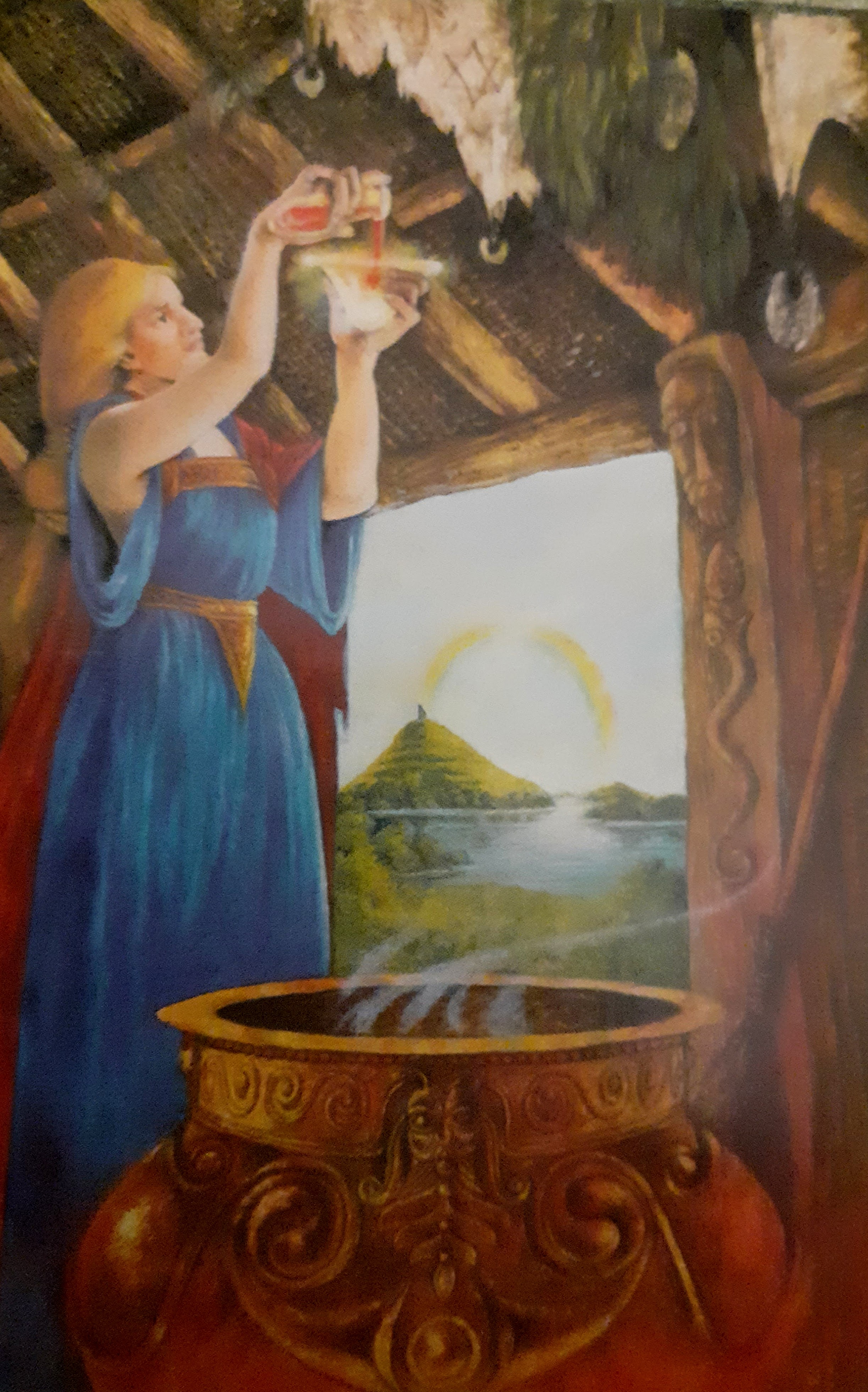
“In the foreground we see Brighid. She is both Brighid Goddess of the Holy Flame and Holy Well, and a woman in her service, a Fferyllt, or Druid Alchemist, who combines the powers of fire and water to create harmony, balance and transformation.

“In the traditions of the nineteenth and twentieth century Druid revival, the Fferyllt were Druid alchemists who were said to live in the magical city of Dinas Affaraon, in the mountains of Snowdonia. Much of the work of DruidCraft can be seen as an alchemical process of uniting and combining different elements of the self to achieve wholeness, illumination and a release of our creative potential.” (1)

The words and illustration above are from The Druidcraft Tarot, where the writers are Philip and Stephanie Carr-Gomm and the illustrator Will Worthington. The card in question is the trump numbered fourteen, conventionally named Temperance. Here, after the manner of C. G. Jung, it points to the work of psycho-spiritual development. Affirming the fundamental unity of spirit and matter, it encourages us to extend the bandwidth of our experience beyond that provided by our early conditioning in modern mainstream culture. This work is placed in the context of modern Druidry and modern Druid training – specifically that offered by OBOD (see http://www.druidry.org/}.

Philip Carr-Gomm discusses this further elsewhere: “Alchemical Magic involves working on yourself. It is called alchemical because in alchemy the idea is to change ‘base metal’ into gold, the ordinary into the extraordinary. Our goal is to do this with our own lives, our own selves.  That is much of the purpose of following a path such as Druidcraft. … The idea in alchemy is that you start with the ‘base metal’ that is equivalent to all the raw material that you possess as a personality and a soul. Then, by following a spiritual path, you gradually transform this into a quality of being which literally radiates. That is why people who are on this path often have a quality of youthfulness and life which is almost tangible.” (2)

To this day, I have a section in my regular practice liturgy in which I say: “a blessing on my life; a blessing on the work; a blessing on the land”. My use of ‘work’ is an alchemical reference, invoking the classical alchemical opus as a transformative metaphor. I experience this as among other things a healing work, in a healing container, though it might not always feel that way. We can take the legacy of painful, problematic and confusing experiences and find the hidden gold within them.

There can be another discovery too. Jungian-influenced therapist Matt Licata writes: “through this exploration, we come to discover that although suffering feels and is personal, it is also archetypal and, as the Buddha noted, universal in human experience. The invitation is to allow our broken hearts, confused minds and vulnerable emotional bodies to serve as a bridge to a place where we make embodied, loving contact with the ‘others’ in our lives – not only the external others but the inner others who have become lost along the way.”

(1) Philip and Stephanie Carr-Gomm The DruidCraft Tarot: Use the Magic of Wicca and Druidry to Guide Your Life London: Connections, 2004. Illustrated by Will Worthington.

(2) Philip Carr-Gomm The Magic of Wicca and Druidry Lewes, UK: Oak Tree Press, 2013

(3) Matt Licata A Healing Space: Befriending Ourselves in Difficult Times Boulder, CO: Sounds True, 2020

SIMPLE BLESSINGS

The entry into December is not all about dying and withdrawal. Nature is more nuanced than that. For me, the scene above is full of an early winter vitality. It is just after 8 am on 1 December, and the temperature three degrees (37.4 F) – cool and bracing. The stream is in rippling movement, full of vitality. The plant realm may be in a relatively austere phase, but there is green in the picture too. This is my first extended walk for some weeks and I find it an instant mood changer. I can immerse myself gladly in the spirit of this place at this time.

When I reach the canal path, I notice the difference in the water. It is slower and quieter, a place of slightly opaque reflections and relative stillness. I like seeing it in the context of a larger picture, that includes buildings, tree tops and sky. There are people too, though not many. In this picture a lone jogger is moving away from me and will soon be out of my sight. I continue to celebrate the day.

Skeletal trees seem like sculptures, artfully presenting themselves against a background of blue sky. “See the web of life in us”, they seem to say.

Meanwhile a willow, at other times the epitome of elegance, allows itself to relax in the off season. Even now, it has not entirely lost its green.

Further up the canal I see a family of swans. There are five in all, four of them visible above. They are moving swiftly and I feel blessed to get an image. The cygnets are more or less grown up, with their turn to a white adult plumage almost complete. I am pleased to see them doing so well and surprised that the family is still together. I imagine that will change soon enough.

I enjoy the way that leafless trees are only partially screening the houses, allowing both trees and houses to be in the picture. The houses are there, part of the current canal ecology. I don’t need them to be hidden. I continue to enjoy the nature/culture balance of this neighbourhood, and I am glad to be out in it. Some aspects of life can seem hard, but others are easy. Today is easy, a day for easy delight.


DREAMING THE MAGICAL CHILD

I often experience winter as a time of powerful dreams, and I had one yesterday night. It moved through three phases, ending with the image of a magical child as guide.

First phase: I am in a crowded place in a sizeable town. I am apparently in charge of two or three young children – close relatives, by the feel of it, though I am not clear on the specific relationships. I do know that I am of the grandparental generation. Suddenly, I notice them running off towards a stretch of park and woodland. I need to catch up and keep them safe.

Second phase: As I mobilise and follow, I am not catching up as rapidly as I had hoped. I notice that the terrain is wetter and rougher than fits with the initial image. The location feels quite different. I may have to cross water and am I not dressed for it for this eventuality. I assume that the children find this easier than I do, and I have confidence that they are OK. I am less sure about myself. This pursuit is a bit of a stretch.

Third phase: I halt at a riverbank. The boy – only one child, the others somehow no longer present or relevant to this dream – has stripped to the waist and taken like a fish to the water, swimming strongly against the current. He seems to be older than when I last looked. I have a moment of panic and dismay before leaping in after him. Fortunately for me, a sort of backpack I have been wearing turns into a comically inflatable throne. There is no doubt now that the boy knows what he is doing and is purposefully leading me upstream towards the source of the river. Paddling with my hands and arms, my task now is to follow as best I can. As I start following in earnest, I wake up.

The ‘I’ of the first phase is apparently in charge, yet vague and inattentive. Only action by the children gets me to notice and pay attention, though I continue to sport an air of responsible authority, with the felt need to keep the children safe. In the second phase ‘I’ am different, becoming aware of a more rugged environment and feeling challenged by it. I am more positive about the children’s capacity, and less so about my own. The third phase is different again. Halting at a riverbank, I recognise the boy as a version of the archetypical magical child, who naturally finds the sacred in all things, connecting us to a larger life. He is numinously present in this phase of the dream. He is the leader. I am the follower. My means of locomotion is clumsy and absurd. But at least I have one, and I do follow. The constructed ego has a significant part to play, it seems, on this journey, but not the leading role it has imagined for itself. Once I start ‘following in earnest’, I am free to wake up.

At the outer world level, culturally, perhaps the wisdom of age includes recognising and making space for the wisdom of youth. In Irish myth, the elderly poet, shaman and sage Finnegas spent seven years trying to catch the salmon of knowledge. When he finally caught the salmon, he asked his apprentice Demne to cook it. As he worked, the boy burned his thumb and instinctively sucked it – and so it was he, not his teacher, who became imbued with the salmon’s wisdom. Finnegas graciously gave Demne the whole salmon to eat, renaming him Fionn. Fionn went on to become the legendary hero Fionn mac Cumhaill (Finn McCool).

A HIDDEN SUN

The sun is there, of course. There could be no picture without it. But this is a moment in my world where the sun is hidden, slow to advance and light up the day. As I continue looking through the window, the mist seems thicker, more dominant than the picture records. I am glad to be warm and in the house. I am glad not to be going out to work. I am glad not to be going out to walk, content with the view through a widow. It looks cold out there. Today, I am willing to let the Mystery be.

But the Mystery takes different forms and I find myself peering into a different unknown. There is another hidden sun, within. Thanks to this interior sun I glimpse a direction for my inquiry after the end of this cycle, as we move beyond midwinter into a new calendar year. First, I see the inquiry continuing, supported by curiosity, wisdom and compassion – three qualities for me to cultivate. Second, I am aware of an emerging question about ‘healing’, and what it means for me at this time in my life and the world’s. I am especially drawn to ways in which healing and contemplation matter to each other, and to senses of healing that are not over-preoccupied with ‘fixing’. Third, I realise that I have already begun gathering resources that can support me in this venture. In a somewhat dreary time, I have just enough light to find my way.

ELDER (RUIS) ENDING A CYCLE

Elder is the tree of the caileach, the crone, the wise older woman. The image above comes from the Green Man Tree Oracle (1), but for me an earlier work, Liz and Colin Murray’s The Celtic Tree Oracle: A System of Divination (2), offers a more illuminating narrative:

“This Ogham card is linked to the eternal turnings of life and death, birth and rebirth. It represents the end in the beginning and the beginning in the end; life in death and death in life; the casting out of the devils of the old year and the renewal of creativity of the new; the timelessness of the cycle by which the fading of old age is always balanced by the new start of birth.

“The card has no reversed position. The circle will always turn afresh, change and creativity arising out of the old and bringing about the new. All is continuously linked as phases of life and experience repeat themselves in subtly different forms, leading always to renewal”.

In my sixteen tree mandala of the year (3) elder covers the period from 24 November to 16 December, following Yew and preceding Holly. If the winter quarter beginning on 1 November is a time of dying and regeneration, then elder deepens the descent into death signalled by the yew, whereas holly brings in the note of regeneration and makes the transition into rebirth. So it is not surprising to me that in Christian folklore elder provided the wood both for the cross of Christ and the self-hanging of Judas Iscariot. There was also a belief that people living in houses built in the shadow of the elder were likely to die young. Indigenous folklore, more benignly, said that to sleep beneath an elder tree is to wake in the Otherworld. If you stood under an elder tree on Midsummer’s Eve you would see the faery troop go by. Casting away fear, and whatever the weather, we may find magic in this tree.

(1) John Matthews & Will Worthington The Green Man Oracle London: Connections, 2003.

(2) Liz & Colin Murray The Celtic Tree Oracle: A System of Divination London: Eddison/Sadd Edition, 1988. (Illustrated by Vanessa Card).

(3) NOTE: This mandala is based on my personal experience of trees in the neighbourhood as well as traditional lore. Moving around the wheel of the year from 1 November, the positions and dates of the trees are:

Yew, north-west, 1-23 November

Elder, north-north-west, 24 November – 16 December

Holly, north, 17 December – 7 January

Alder, north-north-east, 8 – 31 January

Birch, north-east, 1 – 22 February

Ash & Ivy, east-north-east, 23 Feb. – 16 March

Willow, east, 17 March – 7 April

Blackthorn, east-south-east, 8 – 30 April

Hawthorn, south-east, 1 – 23 May

Beech & Bluebell, south-south-east, 24 May – 15 June

Oak, south, 16 June – 8 July

Gorse, south-south-west, 9 – 31 July

Apple, south-west, 1 -23 August

Blackberry & Vine, west-south-west, 24 August – 15 September

Hazel, west, 19 September – 8 October

Rowan, west-north-west, 9 – 31 October.

See also https://contemplativeinquiry.blog/2020/autumn-equinox-2020-hazel-salmon-awen/
Earth Eclectic

music that celebrates Earth and speaks to the heart

Sarah Fuhro Star-Flower Alchemy

Follow the Moon's Cycle

Muddy Feet

Meeting nature on nature's terms

Rosher.Net

A little bit of Mark Rosher in South Gloucestershire, England

Becoming Part of the Land

A monastic polytheist's and animist’s journal

selkiewife

Selkie Writing…

Charlotte Rodgers

Images and words set against a backdrop of outsider art.

Prof Jem Bendell

living with metacrisis and collapse

Towint

The pagan path. The Old Ways In New Times

The Druids Garden

Spiritual journeys in tending the living earth, permaculture, and nature-inspired arts

The Blog of Baphomet

a magickal dialogue between nature and culture

This Simple Life

The gentle art of living with less

Musings of a Scottish Hearth Druid and Heathen

Thoughts about living, loving and worshiping as an autistic Hearth Druid and Heathen. One woman's journey.

Wheel of the Year Blog

An place to read and share stories about the celtic seasonal festivals

Walking the Druid Path

Just another WordPress.com site

anima monday

Exploring our connection to the wider world

Grounded Space Focusing

Become more grounded and spacious with yourself and others, through your own body’s wisdom

The Earthbound Report

Good lives on our one planet

Hopeless Vendetta

News for the residents of Hopeless, Maine