Contemplative Inquiry

This blog is about contemplative inquiry

Tag: shamanism

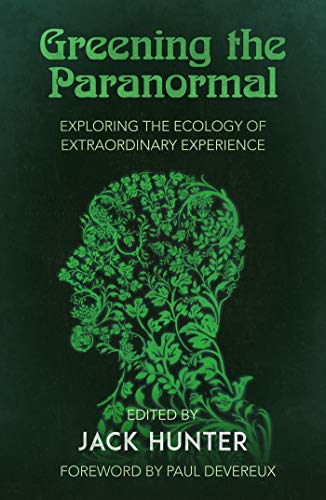
BOOK REVIEW: GREENING THE PARANORMAL

I recommend this book to anyone concerned with deep ecology, animism, or the kinds of phenomena we describe as ‘paranormal’. It opens with two substantial framing pieces, a foreword by Paul Devereux and an introductory chapter by editor Jack Hunter. These are followed by 16 chapters from a diverse range of contributors, mostly seeking to combine direct witness with a workable form of academic analysis. To an extent this book is a story of how to face this difficult challenge. Very early, in his foreword, Paul Devereux shows how the challenge can come from the ‘phenomena’ themselves.

“We were trying to geographically map generations of old accounts of fairy paths we had uncovered in the verbatim records of University College Dublin. Suddenly, standing in the grass, there was a figure, between two and three feet tall. It was anthropomorphic and fully three dimensional (as we could clearly determine while we were drifting slowly past. It had sprung its appearance out of nowhere, and it caught my wife’s and my own transfixed attentions simultaneously.

The figure was comprised of a jumble of very dark green tones, as if composed of a tight dense tangle of foliage rather like the stand of woodland a hundred yards or so beyond the sward of grass. It didn’t seem to quite have a face, just a head with deep set eyes appearing out of the green tangle. It presented a distinctly forbidding appearance. As we crawled past in our car, the figure started to turn its head in our direction, but then vanish.

“Charla called out, ‘Oh, shit!’ We looked at each other, both of us wide-eyed and thoroughly disconcerted. ‘You saw that!’ I asked rhetorically. The whole episode had lasted for only about half a minute or so, but it was unequivocally an actual. if transient, objective observation.”

The running inquiry question throughout the book is, what do we make of experiences like this, if we are determined to honour rather than dismiss them? Devereux senses four major themes in the suggested ‘greening of the paranormal’ in our time. The first is animism, the ‘Big Step for our culture to take’: the sense that the elements of the non-human world are animate in some way – rocks, rivers, soil, as well as plants and living organisms. This involves a deep relationship with the land beyond utility and subsistence. The second theme is the vision quest, a wilderness journey which is more about paying attention and being open to what unfolds, rather than posing questions. The third concerns the ‘liminal’ places that seem to support our breaking through into other-world realms or altered mind states. The fourth is inter-species communion with the animal and plant kingdoms. In the language used by Jack Hunter, we find ourselves dealing with a “profoundly mindful, sentient and agentic world” and the potential re-opening of lost forms of communication and connection.

Many of the contributors believe that we are unlikely to get through the climate crisis if we continue to ignore dimensions of experience from which our cultural filters have exiled us. Some of them live or work in countries that have been colonised by Europeans, but where pockets of traditional indigenous wisdom remain. They recognise that in some cases there are invitations to share in this. There are also concerns about appropriation and the dynamics of the researcher/subject relationship. There is a questioning of the word ‘shamanism’ as currently used – and arguably over-extended and suspect.

This book does not read like a novel. Although I have read it all, there were two or three chapters which didn’t speak to me. Others were riveting. I see it as an excellent book to own and keep for reference. The foreword and first chapter each stand alone and I recommend reading both of them. The other chapters can be cherry picked according to taste or need. Overall there’s a strong invitation to wake up to the aspects of world, life and experience that are being pointed to. The book suggests that they are needed for our personal, social and global healing.


A SMALL GOD OF THE EARTH ATTAINS BUDDHAHOOD

IMG_20191011_101101_kindlephoto-8745263

I have had this statue for awhile, and intend to pay it more attention. He might be a small god. or he might be a human priest or shaman, acting as guardian of a sacred place. I imagine it as including a waterfall and springs, with  rocks and earth and trees. Either way he would be eligible to become, or realise that he latently is, a Buddha or Taoist Immortal, to use another framework from his culture of origin.

There are even rumours of his being Maitreya, the next world saviour, on account of his laughing, ecstatic demeanour. For me, this works best in a model where we could all be prompted into saving the world together. I’m not sure how best to name and describe him – what words to use, or references to make. So I took this picture instead.

SOPHIAN REMINISCENCE

For me, sacred images are sometimes filled with life and potency and sometimes not. The important ones  explode as gifts from the hinterlands of the psyche. They are intensely moving, perhaps shocking, certainly state altering. They may be nurturing and easy to welcome. They may be surprising and demand unlooked-for adjustments. Over time they may continue to be influential, changing and developing with me. They may become formal and emblematic – no longer living yet still anchoring insight. Eventually they may fade. Such images are not possessions. Attempts to grasp or hoard them do not work.

I call my path a Sophian Way. I have an icon of Sophia on my desk and I check in with her from time to time. It still feels authentic and makes sense to me. At the same time, I am aware of how much has changed since Sophia erupted into my life twelve years ago.

In the summer of 2007, I was immersed in my OBOD Druid studies. It was one of the few times in my life when I have cleared whole days for ritual work, and whole days for recovering afterwards. I found the work generating its own momentum, in some ways fulfilling the agenda of my course and in some ways pointing in a different-seeming direction. Images and dreams of dove feathers, either falling or lying on the ground – and then their actuality – became very prominent. Key images and ankh images were present as well.

The powerful dove imagery evoked Goddess associations from the Pagan tradition and Holy Spirit from the Judaeo-Christian one. To honour both, I found a reference in a modern Gnostic group ( www.thepearl.org/ ) that seemed to fit:

“Mortals have been created to dwell in the Garden of delights. … In the Garden stands the holy Tree of Life. High in its branches sings a bird. Listen to the voice of the bird, for when you are properly aligned with heaven and earth, she will tell you all things. … This bird or dove is also called Sophia”.

This felt like an authentic, and unifying, message for me because of its attitude towards the Garden. I as a human belong there. My belonging is not in question. There is one tree, the tree of life. The ‘knowledge’ aspect, such a disaster in mainstream Christianity, is very different here. There’s no apple to pick from the bough, but a bird who will sing to me. But something is expected of me, all the same, if I want to enhance my life and understanding. I am asked to align myself with heaven and earth. If I do this, I am assured that “she will tell you all things”. I don’t understand this as a discourse on metaphysics. I understand it as me listening in another key, listening to bird song in this metaphor, and so refining my sensitivity. For me, the imagery of the tree and the singing bird high in its branches is as resonant of a Shamanic or Pagan world view as it is of a Gnostic or Christian one. I do not have to choose.

The Pearl website turns to Joseph Campbell, a modern spokesman for the meaning of myth, on this point. He says: “people say that what we’re all seeking is the meaning of life. I don’t think that’s what we’re really seeking. I think that what we are seeking is an experience of being alive, so that our life experiences on the purely physical plane will have resonances within out innermost being and reality … as we get to know our innermost being we receive the keys that open up a life that is truly Life, for it is everlasting”.

My own sense of the ‘Life everlasting’ doesn’t pre-suppose an afterlife, re-incarnation, or any other world. Eternity, if anywhere, is present in the now. The song of the bird represents a neurosomatic wisdom, not a cognitive one, of living connectedness within one stream of life.

What I like about this reminiscence is that I have been given a chance to renew my sense of Sophia by returning to source. The original work is well-documented, so I haven’t had to rely on memory. I had completely forgotten about the ‘Pearl’ group. I’m also glad that I’ve seen more than first time round in terms of the tree and birdsong. At the time, I just recorded the images and threw down the references. It has renewed my relationship to the Sophia image in the now.

For information about OBOD see

OBOD | Order of Bards, Ovates & Druids | Druidry

BEING IN TRANSIT

If I ask myself, ‘where is my spiritual centre?’ I do not find an answer within any named tribe. Spiritual friendships, communities of practice and generic webs of connection can all help, and I hope that I give something back. But my path is fundamentally solitary. Perhaps even the notion of having a centre is limiting.

I’ve learned a lot from Druidry. Partly thanks to Druid practice, I experience myself as more fully alive on a living Earth. I honour the wheel of the year as it turns in my locality. In Druidry, I’ve been enabled to explore a contemplative dimension within Earth spirituality. I have also connected with ancestral threads I might otherwise have neglected. But I’m not a polytheist Pagan and I have never felt attracted to Shamanism. I’ve learned from Buddhist tradition too. I’m a meditator. I have a deepened sense of interconnectedness and the call to kindness that goes with it. But I have not adopted the four noble truths as the basis of my path, and I do not seek refuge in Buddha, Dharma and Sangha. I am grateful for my connections to Druidry and Buddhism and will continue to take an interest in their literature. I also sense that, with certain understandings and practices now ingrained, their active roles in my life are over.

My creative edge has for some time been elsewhere. I have been working with the insight that perceptions, apparently of the world, do not establish the existence of a world, but only of perceiving (or awareness, or being). Sensations, apparently of a body, do not establish the existence of embodiment, but only of sensing (or awareness, or being). Thoughts, apparently of a mind, do not establish the existence of a mind, but only of thinking (or awareness, or being). This can seem destructively sceptical, even solipsistic. Yet for many people it signals the possibility of a ‘more than’ (or awareness, or being), rather than a dissociated ‘less than’. Mind, body and world can return enhanced rather than diminished by this kind of exercise, with a sense of a ‘not I not other than I’ connection with primordial awareness or being.

This is the basic stance of nondualist traditions, ancient and modern. In Indian culture, the stripping down and reduction to nothingness is sometimes identified as Vedantic, and the subsequent return and flowering in everything as Tantric. In the Gospel of St. Thomas, a Christian Gnostic text, Yeshua (Jesus) says: “I come from the One who is Openness” and the aspiration of disciples is to make themselves “the abode of Openness, a house that welcomes the breeze, a body that has become transparent, like a crystal flooded with light”. Here, a metaphor concerned with transparency emphasizes power and energy rather than vulnerability and exposure.

I am not a member of a nondualist group, or a Christian Gnostic. But I am moved by these spiritual currents. I am in dialogue with them. I think that ‘being in dialogue’ is a good place to be. For me, certainly now, it has more integrity than formal membership or adherence to a system.

(1) Jean-Yves Leloup The Gospel of Thomas: The Gnostic Wisdom of Jesus Rochester, VA: Inner Traditions, 2005 (English translation and notes by Joseph Rowe. Foreword by Jacob Needleman)

SWEENEY’S SHAPESHIFT

Two extracts from Sweeney Astray, Seamus Heaney’s version of the medieval Irish work Buile Suibhne. Reflecting a time of religious change in Ireland, the first beautifully describes a shapeshifting transformation whilst making it the result of a curse. In the second, there is at least a suggestion that it might, rather, have been another route to holiness. Meanwhile Christian priests have taken on Druid powers and roles, – non-canonical forms of cursing and binding, the support of animal allies and directing peace negotiations.

“There was a certain Ronan Finn in Ireland, a holy and distinguished cleric. He was ascetic and pious, an active missionary, a real Christian soldier. He was a real servant of God, one who punished his body for the good of his soul, a shield against vice and the devil’s attacks, a gentle, genial, busy man.

“One time when Sweeney was king of Dal-Arie, Ronan was there marking out a church called Killaney. Sweeney was in a place where he heard the clink of Ronan’s bell as he was marking out the site, so he asked his people what the sound was.

“It is Ronan Finn, the son of Bearach, they said. He is marking out a church in your territory and what you hear is the ringing of his bell.

“Sweeney was suddenly angered and rushed away to hunt the cleric from his church. Eorann, his wife, a daughter of Conn of Ciannacht, tried to hold him back and snatched at the fringe of his crimson cloak, but the sliver cloak-fastener broke at the shoulder and sprang across the room. She got the cloak alright, but Sweeney had bolted, stark naked, and soon landed with Ronan.

“He found the cleric glorifying the King of heaven and earth, in full voice in front of his psalter, a beautiful illuminated book. Sweeney grabbed the book and flung it into the cold depths of a lake nearby, where it sank without trace. Then he took hold of Ronan and was dragging him out through the church when he heard a cry of alarm. The call came from a servant of Congal Claon’s who had come with orders from Congal to summon Sweeney to battle at Moira. He gave a full report of the business and Sweeney went off directly with the servant, leaving the cleric distressed at the loss of his psalter and smarting from such contempt and abuse.

“A day and a night passed and then an otter rose out of the lake with the psalter and brought it to Ronan, completely unharmed. Ronan gave thanks to God for that miracle, and cursed Sweeney.

….

“After that, Ronan came to Moira to make peace between Donal, so of Aodh, and Congal Claon, son of Scannlan, but he did not succeed. Nevertheless, the cleric’s presence was taken as a seal and guarantee of the rules of battle; they made agreements that no killing would be allowed except between those hours they had set for beginning and ending the fight each day. Sweeney, however, would continually violate every peace and truce which the cleric had ratified, slaying a man each day before the sides were engaged and slaying another each evening when the combat was finished. Then, on the day fixed for the great battle, Sweeney was in the field before everyone else.

“He was dressed like this:

next his white skin, the shimmer of silk;

and his satin girdle around him;

and his tunic, that reward of service

and gift of fealty from Congal,

was like this –

crimson, close-woven,

bordered in gemstones and gold,

a rustle of sashes and loops,

the studded silver gleaming,

the slashed hem embroidered in points.

He had an iron-shod spear in his hand,

a shield of mottled horn on his back,

a gold-hilted sword at his side.

“He marched out like that until he encountered Ronan with eight psalmists from his community. They were blessing the armies, sprinkling them with holy water, and they sprinkled Sweeney with the rest. Sweeney thought they had done it just to mock him, so he lifted one of his spears, hurled it, and killed one of Ronan’s psalmists in a single cast. He made another throw with the second spear at the cleric himself, so that it pierced the bell that hung from his neck, and the shaft sprang off into the air. Ronan burst out:

“My curse fall on Sweeney

for his great offence.

His smooth spear profaned

my bell’s holiness,

cracked bell hoarding grace

since the first saint rang it –

it will curse you to the trees,

bird-brain among branches.

Just as the spear shaft broke

and sprang into the air

may the mad spasms strike

you, Sweeney, forever.

….

“There were great shouts as the herded armies clashed and roared out their war cries like stags. When Sweeney heard these howls and echoes assumed into the travelling clouds and amplified through the vaults of space, he looked up and he was possessed by a dark rending energy.

“His brain convulsed,

his mind split open.

Vertigo, hysteria, lurchings

and launchings came over him,

he staggered and flapped desperately,

he was revolted by the thought of known places

and dreamed strange migrations.

His fingers stiffened,

his feet scuffled and flurried,

his heart was startled,

his senses were mesmerized,

his sight was bent,

the weapons fell from his hands

and he levitated in a frantic cumbersome motion

like a bird of the air.

And Ronan’s curse was fulfilled.

“His feet skimmed over the grasses so lightly he never unsettled a dewdrop and all that day he was a hurtling visitant of plain and field, bare mountain and bog, thicket and marshland, and there was no hill and hollow, no plantation or forest in Ireland that he did not appear in that day; until he reached Ros Bearaigh in Glen Arkin, where he hid in a yew tree in the glen.”


The second extract, where the Church is represented by the friendlier Moling, describes the end of Sweeney’s life – still as a wandering bird.


“At last Sweeney arrived where Moling lived, the place that is known as St. Mullin’s. Just then Moling was addressing himself to Kevin’s psalter and reading from it to his students. Sweeney presented himself at the brink of the well and began to eat watercress.

“‘Aren’t you the early bird?’ said the cleric, and continued, with Sweeney answering, afterwards.

Moling: So, you would steal a march on us, up and breakfasting so early!

Sweeney: Not so very early, priest. Terce has come in Rome already.

Moling: And what knowledge has a fool about the hour of terce in Rome?

Sweeney: The Lord makes me His oracle, from sunrise till sun’s going down.

Moling: Then speak to us of hidden things. Give us tidings of the Lord.

Sweeney: Not I. But if you are Moling, you are gifted with the Word.

Moling: Mad as you are, you are sharp-witted. How do you know my face and name?

Sweeney: In my days astray, I ested in this enclosure many a time

…..

Moling: Look at this leaf of Kevin’s book, the coilings on this psalter’s page.

Sweeney: The yew leaf coils round my nook in Glen Bolcain’s foliage.

Moling: This churchyard, this colour, is there no pleasure here for you?

Sweeney: My pleasure is great and other: the hosting that day at Moira.

Moling: I will sing Mass, make a hush of high celebration.

Sweeney: Leaping an ivy bush is a higher calling even.

Moling: My ministry is only toil, the weak and the strong both exhaust me.

Sweeney: I toil to a bed on the chill steeps of Benevenagh

Moling: When your death comes, will it be death by water, in holy ground?

Sweeney: It will be early when I die. One of your herds will make the wound.

“You are more than welcome here, Sweeney, said Moling, for you are fated to live and die here. You shall leave the history of your adventures with us and receive a Christian burial in a churchyard. Therefore, said Moling, no matter how far you range over Ireland, day by day, I bind you to return to me every evening so that I may record your story.”


When Sweeney is indeed mortally wounded by one of the communities’ herdsmen, the rest of the community feel anger and grief.


“Enna McBracken was ringing the bell for prime at the door of the churchyard and saw what had happened. He spoke this poem:

“This is sad, herd, this was deliberate,

Outrageous, sickening and sinful.

Whoever struck here will live to regret

Killing the king, the saint, the holy fool.

…..

My heart is breaking with pity for him.

He was a man of fame and high birth.

He was a king, he was a madman.

His grave will be a hallowing of earth.”


Sweeney lives long enough to confess and take the sacrament. “He received Christ’s body and thanked God for having received it and after that was anointed by the clerics”. Moling who “with holy viaticum” has “limed him for the Holy Ghost”, also expresses affection for Sweeney and reveals that he, too, has learned something.


“The man who is buried here was cherished indeed, said Moling. How happy we were when we walked and talked along his path. And how I loved to watch him yonder at the well. It is called the Madman’s Well because he would often eat its watercress and drink its water, and so it is named after him. And every other place he used to haunt will be cherished too.

“Because Sweeney loved Glen Bolcain

I learned to love it, too. He’ll miss

The fresh streams tumbling down,

The green beds of watercress.

He would drink his sup of water from

The well yonder we have called

The Madman’s Well; now his name

Keeps brimming in its sandy cold”.


Seamus Heaney Sweeney Astray London: Faber & Faber, 1983

BOOK REVIEW: THE WAY OF THE LOVER

Highly recommended. The full title is: The Way of the Lover: Sufism, Shamanism and the Spiritual Art of Love. For me, the strength of this book is its successful synthesis of apparently diverse influences. As a road map for the spiritual journey throughout the life course, it has coherence, power and integrity.

Sufism is the ground. We are introduced to a cosmos saturated in divinity both in origin and manifestation. As Syed Hamraz Ahsan says in his introduction, “Sufis are divine lovers … the path begins at the heart and ends at the heart”. Yet “the pathway to love and the divine may not always be simple or clear”. Since everyone and everything embodies divinity, any relationship is a relationship with the divine.

Ross Heaven uses a medicine wheel structure for the human journey of life and love. Beginning at (or before) birth (East) it moves through youth (South) and mid-life (West) to age (North). Each stage has challenges. Fear can become a distorting part of the picture very early. As we grow up, we are challenged to discover our authentic power and its skillful use. Throughout our adult lives we are under pressure to navigate with clarity and vision through the stress and confusion that go with loving and being loved, and to evolve through loving service. At the Centre is the “true soul, the wise Elder and the newborn”. Within this structure he offers teaching stories; insights from humanistic, developmental and transpersonal psychology; personal anecdotes; and awareness exercises.

The stages of the journey, and several psychological models, are clearly spelled out. They are saved from over-prescription through the use of stories and their rich ambiguity, and by the over-arching presentation of an exploratory, free-spirited and non-controlling spirituality. The Way of the Lover offers something to readers with specific issues of concern and those with a more open and generalized interest in the journey. Ross Heaven distils considerable wisdom and experience within this book, not least when he ends by reminding us to move on and rely on our own experience.

Ross Heaven The Way of the Lover: Sufism, Shamanism and the Spiritual Art of Love Winchester UK & Washington USA: Moon Books, 2017 (Moon Books Classic)


GARY SNYDER: ‘WILD’

“The word wild is like a grey fox trotting off through the forest, ducking behind bushes, going in and out of site. Up close, first glance, it is ‘wild’ – then further into the woods next glance it’s ‘wyld’ and it recedes and it recedes via Old Norse villr and Old Tuetonic wilthijaz into a faint pre-Tuetonic ghweltijos which means, still, wild and maybe wooded (wald) and lurks back there with possible connections to will, to Latin silva (forest, sauvage) and to the Indo-European root ghwer, base of Latin ferus (feral, fierce), which swings us around to Thoreau’s ‘awful ferity’ shared by virtuous people and lovers. The Oxford English Dictionary has it this way:

Of animals – not tame, undomesticated, unruly

Of plants – not cultivated

Of land – uninhabited, uncultivated

Of foodcrops – produced or yielded without cultivation

Of societies – uncivilized, rude, resisting constituted government

Of individuals – unrestrained, insubordinate, licentious, dissolute, loose. “Wild and wanton widowes”, 1614

Of behavior – violent, destructive, cruel, unruly

Of behavior – artless, free, spontaneous. “Warble his native wood-notes wild” – John Milton

Wild is largely defined in our dictionaries by what – from a human standpoint – it is not. It cannot be seen by this approach for what is is. Turn it the other way:

Of animals – free agents, each with its own endowments, living in natural systems

Of plants – self-propagating, self-maintaining, flourishing in accord with innate qualities

Of land – a place where the original and potential vegetation and fauna are intact and in full interaction and the landforms are entirely the result of non-human forces. Pristine.

Of foodcrops – food supplies made available and sustainable by the natural excess and exuberance of wild plants in their growth and in the production of quantities of fruit and seeds

Of societies – societies whose order has grown from within and is maintained by the force of consensus and custom rather than explicit legislation. Primary cultures, which consider themselves the original and eternal inhabitants of their territory. Societies which resist political and economic domination by civilization. Societies whose economic system is in a close and sustainable relation to the local ecosystem

Of individuals – following local custom, style and etiquette without concern for the standards of the metropolis or nearest trading post. Unintimidated, self-reliant, independent

Of behavior – freely resisting any oppression, confinement or exploitation. Far-out, outrageous, ‘bad’, admirable.

Of behavior – artless, free, spontaneous, unconditioned. Expressive, physical, openly sexual, ecstatic

Most of the senses in this second set of definitions come close to being how the Chinese define the term Dao, the way of Great Nature: eluding analysis, beyond categories, self-organizing, self-informing, playful, surprising, impermanent, insubstantial, independent, complete, orderly, unmediated, freely manifesting, self-authenticating, self-willed, complex, quite simple. Both empty and real at the same time. In some cases, we might call it sacred. It is not far from the Buddhist term Dharma with its original senses of forming and firming.”

Gary Snyder The Practice of the Wild Berkeley, CA: Counterpoint, 1990

In a preface to the 2010 edition, Gary Snyder describes his path as “a kind of old time Buddhism which remains connected to animist and shamanist roots. Respect for all living beings is a basic part of that tradition. I have tried to teach others to meditate and enter into the wild areas of the mind. … Even language can be seen as a wild system”.

THE VERY EARLIEST TIME

The words of Nalungiaq, an Inuit woman interviewed by the ethnologist Knud Rasmussen early in the twentieth century.

In the very earliest time

when both people and animals lived on earth,

a person could become an animal if he wanted to

and an animal could become a human being.

Sometimes they were people

and sometimes animals

and there was no difference.

All spoke the same language.

That was the time when words were like magic.

The human mind had mysterious powers.

A word spoken by chance

might have strange consequences.

It would suddenly come alive

and what people wanted to happen could happen –

all you had to do was say it.

Nobody could explain this:

That’s the way it was.

Quoted in: David Abram The Spell of the Sensuous: Perception and Language in a More-Than-Human World New York: Vintage Books, 1997 & 2017


BOOK REVIEW: MERLIN

Elen Sentier’s Merlin Once & Future Wizard is a marvel, highly recommended. The author effortlessly charms us into a fresh and extended understanding of Merlin, introducing us to a “huge, ancient, wise and powerful” being –  teacher, trickster and friend. For me, her introductory Who Is Merlin? chapter offers the best description of the essential Merlin I have ever read.

“Merlin is a liminal being. Liminal means a threshold, a place between past and future, between here and there, between one world and another … and he is always standing at that threshold. He is that place. And that ever-changing constant threshold is now, the here-and-now, and it’s constantly in motion like the sea”. Merlin teaches us, if we are willing, to “be continuously and consciously aware that you stand in the middle of change all the time, whatever is going on”. This is a lifelong learning. It cannot be hurried, and it cannot be branded or packaged.

Happily, however, it can be pointed towards, “if you can find someone who knows Merlin intimately and is willing to walk beside you on your journey to know him – and there are quite a few of us about if you look … You don’t feel alone, and they help you stop that nasty subliminal feeling that you really are nuts.”

Elen Sentier walks beside us to great effect. She has known Merlin since early childhood, when she joined the company of walkers-between-the-worlds, which means having a foot in the everyday world at the same time as having the other foot in the otherworld. She describes herself both as “an ordinary elderly woman” and an “awenydd”, or spirit-keeper in the old Brythonic tongue.

For readers who are new to Merlin, the book takes care to cover Merlin in history, stories and poetry – and even adds (for me at least) new material from the Welsh Marches in the chapter Pig Moor: Dyfrig, Ergyng and Mynydd Myrddin. But the greatest strength of Merlin Once & Future Wizard is the personal sharing interwoven with this traditional lore, showing how the author’s own relationship with Merlin has unfolded. At heart this book is a personal testament to a life lived under Merlin’s influence and inspiration. The effect is to give it added weight and authenticity, supported rather than undermined by an informal and chatty style.

Elen Sentier Merlin once & future wizard: Winchester UK & Washington USA: Moon Books, 2016 (Pagan Portals series)

SOPHIA, GNOSTICISM AND CONTEMPLATION

When I wrote Contemplative Druidry I said that “in many ways this is a story of neo-Pagan sensibility and its growth since World War Two”. In addition to their Druidry, many of the book’s contributors reported involvement in Witchcraft and/or the indigenous Shamanism of other lands.

I also said in many cases this sensibility was modified by other influences, “most notably Buddhist philosophy and meditation, Christian mysticism and other Western Way paths with Gnostic and Hermetic traditions specifically mentioned”. I made the point that such influences are significant for contemplative practice, because to an extent they provide models. In the book I mostly focused on Buddhist influences, because they were the most common. I also paid  attention to the Christian ones, notably the Ceile De, Anglican mysticism in the tradition of Evelyn Underhill, and the partly Franciscan inspiration behind the (Druid and Pagan) Order of the Sacred Nemeton. I didn’t say much about other Western Way traditions, though I mentioned R. J. Stewart as a personal influence on me and also my training at the London Transpersonal Centre. This was essentially Jungian and thus based on a modern Gnostic psychology.

The key images from my last post, Sailing to Byzantium, were images of Sophia and the Holy Fool from The Byzantine Tarot. They made an intense and (in common sense terms) disproportionate impact on me. For they reminded me of my own Gnosticism, a current that qualifies and modifies my Druidry. I am talking about modern Gnosticism, “based in an affirmation of nature and the world and a positive relationship to embodiment, not the classical Gnosticism of world-denial or pure transcendentalism.  It is a gnosis based on bringing the world fully to life, while also enjoying the state of embodiment and sensual pleasure, without excess or obsessive appetite”*.  Thus far, I could be talking about modern Druidry without any need to look elsewhere.

But, to follow Irwin further, Gnosticism also talks of “visionary awakening” through the power of archetypal imagery. From such a perspective, affirmation of the world also requires an affirmation of the World-Soul as “the primary ground of a living and animate nature”. This can inspire “states of unity and participation in the creative founding of human experience”. The key is the “animating vitality” of images, which can arouse “a cascade of energy and potential surpassing the image and leading into a more luminous condition of being and seeing”.

According to Irwin, the traditional fields for study and practice in Western Gnosticism are neo-Platonism, hermetics, alchemy, kabbalah, mystical theology, comparative theology and meditative disciplines: quite a curriculum. But the essence is quite simple. We are invited to work with Being as embodied (through exercise, body awareness and energy work), imaginal (connected to the mundus imaginalis, open to its power) and illuminated (through contemplative practice and insight).  Much of this is offered within Druidry – for example, to anyone who takes full advantage of the OBOD distance learning course. Yet for me, here and now, once again, it is the image and name of Sophia that gives me my orientation and guides me on my path. I’ll explain that resonance and consequences more fully in later posts. In practical terms, for now, I’ve made two small adjustments in my morning practice. One is to cast my circle specifically in the sacred grove of Sophia. The other is to begin sitting meditation, or contemplative communion, by saying “I open my heart to the Light of Sophia”. It doesn’t seem much, but it shifts my centre of gravity to a place where a feel more empowered and more at home.

  • Irwin, Lee Gnostic Tarot: Mandalas for Spiritual Transformation York Beach, ME, USA, 1998 (There is no pack of cards with this book. It’s a set of interpretations emphasising “spiritual transformation and illumined states of awareness”. The Universal Waite Deck and the Ravenswood Tarot Deck have been used as points of reference.)
Earth Eclectic

music that celebrates Earth and speaks to the heart

Sarah Fuhro Star-Flower Alchemy

Follow the Moon's Cycle

Muddy Feet

Meeting nature on nature's terms

Rosher.Net

A little bit of Mark Rosher in South Gloucestershire, England

Becoming Part of the Land

A monastic polytheist's and animist’s journal

selkiewife

Selkie Writing…

Charlotte Rodgers

Images and words set against a backdrop of outsider art.

Prof Jem Bendell

living with metacrisis and collapse

Towint

The pagan path. The Old Ways In New Times

The Druids Garden

Spiritual journeys in tending the living earth, permaculture, and nature-inspired arts

The Blog of Baphomet

a magickal dialogue between nature and culture

This Simple Life

The gentle art of living with less

Musings of a Scottish Hearth Druid and Heathen

Thoughts about living, loving and worshiping as an autistic Hearth Druid and Heathen. One woman's journey.

Wheel of the Year Blog

An place to read and share stories about the celtic seasonal festivals

Walking the Druid Path

Just another WordPress.com site

anima monday

Exploring our connection to the wider world

Grounded Space Focusing

Become more grounded and spacious with yourself and others, through your own body’s wisdom

The Earthbound Report

Good lives on our one planet

Hopeless Vendetta

News for the residents of Hopeless, Maine