Contemplative Inquiry

This blog is about contemplative inquiry

Tag: Self-inquiry

BOOK REVIEW: FORGIVING HUMANITY

Forgiving Humanity (1) is an extended essay rather than a book. I found it easy to read and hard to work with. Author Peter Russell is highly skilled at distilling data and making his case. His conclusion is that the near term extinction of the human species is inevitable, and not unnatural or to be faulted. “We are coming to the end of our species’ journey, spinning faster and faster into the center of an evolutionary spiral.”

Russell points to what he sees as our our natural-born drive for exponential growth and development. A dance of genetic and behavioural change led us to an enhanced brain, bi-pedal walking, manual dexterity, and a shift in the position of the larynx to enable complex speech. Cultural evolution then led to organised hunting with the throwing spear and, later, the bow. Later still, at an increasing rate of change, came agriculture, metallurgy, the industrial revolution (from steam to atomic power in not much more than a century) and, most recently, the accelerating information revolution now leading to the rise of AI. Quantum computing is on the horizon.

The problem according to Russell is that exponential growth is inherently predestined to run out of control. This is “the curse of exponential change.” Exponential growth is not like the linear growth that we can more comfortably imagine. In the domain of economics, for example, 3% annual growth rate in the world’s GDP, compounded over 100 years, would lead to a consumption of energy and resources at 20 times today’s rate. Russell started thinking about this problem as a young and gifted mathematician at the end of the 1960s. On his analysis, we would be fatally fouling our own nest even without the specific problem of the climate crisis. Climate change simply exacerbates and dramatises our predicament, hastening the process of breakdown.

Russell is aware of systemic injustices in our socio-economic system, but this book does not explore political mitigations. He expects major breakdown in this century. A remnant population in reduced circumstances will carry on for a while longer. But this human triggered extinction event, which has already claimed many other species, will still be rapid in planetary terms. In the immediate future, Russell sees a likelihood of continuing technological breakthroughs for some decades, in the midst of extensive cultural breakdown and a diminishing global population. I am not certain that he is right, but I fear that he may be. And I find him hard to read, trying to imagine what it would be like for different people in different places, and stepping into their boots down here in the trenches where embodied human life is lived until it’s gone.

Whilst the earlier sections of Forgiving Humanity are presented as if from the perspective of a distant cosmic scientist, there is a later turn to human experience and how to live in the new conditions. Peter Russell becomes one of us and shares his long-held view of consciousness and its possibilities, especially the affirmation that: “beneath our day-to-day experience lies a deeper sense of being, unperturbed by the goings on in the world, and our hopes and fears about them … meditative and self-enquiry processes … lead to greater calm and self-awareness, and … the more in touch we are with our inner being, the more considerate, compassionate, and caring we become – qualities that could prove invaluable in meeting the challenges ahead.” I also like his idea of remaining in service to the earth whenever we can, continuing to do our best for it even when knowing that our species is waning and likely to wink out. The notion of persevering with restorative efforts allows for limited local successes, seems like a healing process in itself and preserves a sense of positive agency in hard times. I am sure that people will continue to work in these ways whenever given half a chance.

For Russell, psycho-spiritual practices and communities are a key resiliency factor for navigating through heart-breaking conditions. We need to “find the acceptance that allows us to move into the unknown with courage and an open heart”. Russell says that facing our collective extinction is like facing our personal deaths, only more so because we are looking at the end of our kind. He borrows from a well-known map of how to work through five stages of grief – denial, anger, bargaining and depression – to a final acceptance. I have to note some reservations about schemes based on normative ideas about how we work through distress. People are very different – though many, it is true, are reassured by maps of this kind. I would also not want these suggestions to be misunderstood as an injunction to put on a mask of serenity when something else is going on in our body/mind. For me, the deeper acceptance is to recognise and accept our confusion and turbulence, if confusion and turbulence are what is happening. The spaciousness of deep acceptance then keeps company with them, avoiding both the false mask of serenity on the one hand, and immersed identification with our distress on the other. Nothing is denied.

I am not sure about the suggestion of ‘forgiving humanity’. If I take ‘humanity’ as simply the name of a species, I don’t feel that it’s my place either to forgive or withhold forgiveness from a species of which I am a member. If I take ‘Humanity’ as an idealised abstraction, or construct, then there’s no-one there to forgive outside my own imagination. For me, working as best as I can at deep acceptance and loving kindness, accepting with self-compassion that I will likely be wayward and inconsistent in my endeavours, is the better way to go. It keeps me in the world of lived interactions with other sentient beings and feels like a more engaged and grounded aspiration.

Despite some reservations, I value this work highly and recommend it to anyone concerned with the issues raised in it. We need voices like this, who move beyond deep adaptation to face into the possibility of no adaptation. Forgiving Humanity offers a distinctive lens on the crisis we are in, and it does so in a concise, readable and sadly persuasive way.

(1) Peter Russell Forgiving Humanity: How the Most Innovative Became the Most Dangerous Las Vegas, NV: Elf Rock Productions, 2023

NB Peter Russell studied mathematics and theoretical physics at the University of Cambridge but later changed to experimental psychology. After learning transcendental meditation (TM) with Maharishi Mahesh Yogi in India, he took up the first academic post ever offered in Britain on the psychology of meditation. He also has a postgraduate degree in computer science. In the 1970s he pioneered senior corporate management courses on meditation, creativity, stress management and sustainable development. Later he coined the term ‘global brain’ with the 1980’s best seller of that name in which he predicted the Internet and the impact it would have on humanity. I have reviewed a more recent book Letting Go of Nothing at:

SILENT SITTING MEDITATION

There is the moment, and there is the flow. The photograph holds the moment and the image at first seems still. Looking more closely, we can infer the turbulence that accompanies flow. All those ripples, and wavelets and swirls. They testify to the life of the stream in time.

I have taken up silent sitting meditation after a long break, making a commitment to myself of at least thirty minutes a day. I have incorporated silent sitting meditation into both my morning and evening practices, so the individual sessions need not be long. I am not made for long meditations. but I do now find that an element of silent sitting meditation enriches my contemplative life and inquiry.

I like the term ‘silent sitting meditation’ for its plainness and descriptive accuracy. I am distinguishing this meditation from the ones that I learned through Druidry, which, even when not guided, depend on visualisation and narrative. At the same time I am avoiding close identification with the ‘mindfulness’ brand. It feels like a prescriptive pre-shaping of my lived experience as a meditator. A strong intuition, gift perhaps of the Goddess in her Wisdom, wants the meditative life to be free of such labels.

So I sit. With two sessions a day, I find that my natural length of session is from 20-35 minutes and so with two sessions I am overshooting my commitment. That’s a good indication that I am not straining myself. I don’t want my meditation to be goal-oriented. Rather, I open myself to the energy of living experience, and let it lead me.

I do begin, conventionally, with a breath focus, following the sensations and the gaps after in-breath and out-breath, with loving attention. I also open myself to other sensations, which (with my eyes closed) will mostly be internal body sensations or external sounds. I think that the love in loving attention matters. There are people within the mindfulness movement who think it might better have been called heartfulness. This introduces a sense of compassion for everything that arises. Within the experience, I can feel whole, at home in the Heart of Being which holds up and informs my human life. When I am consciously present, it is a place of peace, joy and inspiration.

In the course of a session, I will taste this state from time to time. At other times I find myself engaged with images (some seeming otherworldly), or narrative streams, that I also value. These experiences seem to have an authentic energy that I cannot simply dismiss as distractions. I want to allow them in and engage with them. Indeed, even where the passing content of experience seems entirely mundane or even distressed, I will welcome it and keep it company. I will hold it in love. Outside the meditation, it may provide a cue for some more dedicated healing or inquiry process.

It may be for this reason that I do not characteristically find distress distorted thoughts and feelings hijacking or sabotaging the meditative flow. They know my willingness to meet them. This means that the other experience, the wellspring of my life, is rarely far away and never forgotten. It doesn’t even require formal meditation. For me, silent sitting meditation supports a fuller life, lived from the Heart of Being. But it is not, by any means, a requirement for it.

LIVING WITH EASE

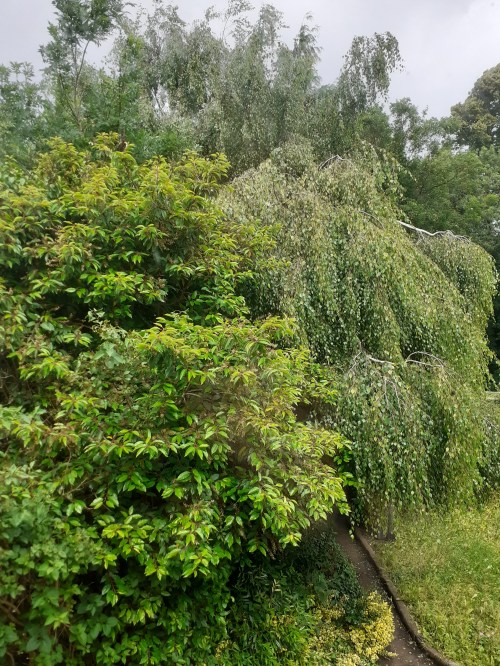
By simply looking out from my bedroom window, I can enjoy the abundance of high summer, as the year moves on from the solstice. The lush foliage speaks of ease and fulfilment. ‘Summertime and the living is easy’, says the old song. In a customised version of the Buddhist lovingkindness meditation, I say: ‘A blessing on my life. May I be free from harm; may I be healthy; may I be happy; may I live with ease’ … gradually extending the circle of care through my loved ones through wider circles of acquaintance, eventually including all beings throughout the cosmos. But what does living with ease add to freedom from harm, or to health and happiness?

In my experience, this comes from my experience of ‘at-homeness in the flowing moment’. I treat the flowing moment as a quality of experience rather than a unit of time. Otherwise I might be tempted to measure the right length of a moment’ to be ‘present’ or ‘flow’ in. It would have to be brief, but long enough to register experientially. Even so, I would probably find myself lying in wait for such a moment in the hope of catching one before it went. This would not be a skilful means of living with ease.

Instead, I enter the flowing moment, intentionally, by slowing down and taking notice. Eyes open, I take in the world visually, in all its riches, and check out my sensations, feelings, thoughts and any internal imagery that might override the physical view. I am not identified with any of these experiences. They are not me. I am empty and at home in the flow of sensation and perception. In this state, I ideally avoid stories like ‘there are trees on the other side of this window’. If I enter such a story, that is just another passing experience, a bubble in the flowing moment. It is in my empty core that the flowing moment becomes my home. In a sense, it is the emptiness itself that is the home. But it feels most like home when a world of sensation and perception appears to fill the space. Emptiness and form are interdependent. They need each other to flourish.

The flowing moment is not my default setting in daily life. Other states of attention come to the fore. The flowing moment, which I can enter and leave at any time, is available as a home to go to when I want or need it: hence my phrase ‘at-homeness in the flowing moment’. Entering and leaving is a conscious, careful decision, though it does not require retreat conditions or labelling as a formal spiritual practice.

‘At-homeness in the flowing moment’ can work in bad times as well as good. For the emptiness at my core can also be full and loving. It does not judge distressed and negative reactions. It does not try to smooth over feelings of dismay about the wider world. It holds them in peace and lovingkindness. In my morning circle, I ask for peace in the four directions, in the below, the above and throughout the world. But the centre is different. I stand in the peace of the centre, at the heart of living presence. This is the source of my ease, the nurturing emptiness that stands behind my at-homeness in the flowing moment .

BEYOND MINDFULNESS

Once you recognize the bright sun of awakened awareness, practising mindfulness can seem like shining a flashlight at midday in the hopes that it will make things brighter.” (1)

This post is about modern non-dual traditions and what I have learned from them in recent years. They have inspired me to practice a Druidry that recognises a ‘beyond mindfulness’ dimension of experience, in Western Mysteries tradition sometimes referred to as ‘causal’.

Stephan Bodian is a former Zen monk who went on to become a psychotherapist, mindfulness teacher, and a teacher in the Direct Path tradition founded by Shri Atmananda Krishna Menon. He says: “the act of being mindful is a portal to a deeper, enduring awareness that can’t be manufactured or practised. This deeper awareness is already functioning, whether we know it or not. Indeed, it is our natural state of spontaneous presence, without which there would be no experience at all. Instead of cultivating it like a talent or strengthening it like a muscle, we just need to recognize it and return to it”.

In my own inquiry, my ‘at-homeness in the flowing moment’ came out working with resources developed by Direct Path teachers. I am now integrating this realisation into my Druid practice, supported by the modern tradition’s naming of a causal dimension in experience, akin to “our natural state of spontaneous presence”. It underlies both the physical and psychic levels. It is our original nature. It does not obscure or invalidate the stress and turbulence we find in the physical and psychic realms. It is not even a domain of peace, happiness, and love when understood as desired personal states. But it can act as an internal place of safety in difficult times.

In my awen work I am looking at pathways between the three dimensions, and what can be brought from the causal and psychic dimensions into the physical for both personal and collective wellbeing. For much of my contemplative inquiry I have looked at the link between the causal and physical dimensions of experience (the latter including world, body, feelings, thoughts and everyday self-sense) whilst relatively neglecting the psychic realm. I am changing and re-balancing this now, so as better to walk between these worlds.

(1) Stephan Bodian Beyond Mindfulness: The Direct Approach to Peace, Happiness, and Love Oakland, CA: New Harbinger, 2017

SCIENCE AND SPIRITUAL PRACTICE

As part of my contemplative inquiry, I have been looking at recent work by Rupert Sheldrake (1, 2). He identifies himself as “not a guru but an explorer”. I like that notion of ‘explorer’, with its sense that there is always space for new learning and development.

Sheldrake’s affirms that spiritual practice and research are “entirely consistent with the scientific method, which involves the formation of hypotheses – guesses about the way the world works – and then testing them experimentally. The ultimate arbiter is experience, not theory. In French, the word experience means both ‘experience’ and ‘experiment’. The Greek word for experience is empeiria, the root of our English word ‘empirical’. The exploration of consciousness through consciousness itself is literally empirical, based on experience. Spiritual practices provide ways in which consciousness can be explored empirically.”

In recent years, Sheldrake (1,2) has written two books based on this approach. Each discusses seven different practices that have been investigated empirically, both by the practitioners themselves and by scientists studying the effects of those practices. Every practice gets a chapter. The first book, Science and Spiritual Practices, offers:

  1. Meditation and the Nature of Minds
  2. The Flow of Gratitude
  3. Reconnecting with the More-Than-Human World
  4. Relating to Plants
  5. Rituals and the Presence of the Past
  6. Singing, Chanting and the Power of Music
  7. Pilgrimages and Holy Places

The second Book, Ways To Go Beyond, covers:

  1. The Spiritual Side of Sports
  2. Learning from Animals
  3. Fasting
  4. Cannabis, Psychedelics and Spiritual Openings
  5. Powers of Prayer
  6. Holy Days and Festivals
  7. Cultivating Good Habits, Avoiding Bad Habits, and Being Kind

Sheldrake’s choices are all practices he has taken part in, which have also been studied scientifically. He looks at both the ‘subjective’ experience and the ‘objective’ evidence and discusses the ways in which the practices seem to work. He also offers guidance to readers about engaging with the practices. He is very clear that the two books “do not constitute a comprehensive survey of all spiritual practices, emphasising his point by listing others that have been left out: “yoga, service to others, tai chi, chi gong, devotional worship or bhakti, tantric sex, caring for dying people, dream yoga, and the practices of the arts”. He makes it clear that “some practices are better at some times of life than others, and all religious traditions  have their own combinations”. I have already discussed Sheldrake’s work on gratitude at www.contemplativeinquiry.blog/2020/03/14/ and will discuss others in future posts.

Sheldrake’s overall purpose is “to show that there is a wide variety of ways to connect to greater conscious realities, however we conceive of them, and that the effects of these practices can be investigated empirically”. Sheldrake is an optimist about the possibilities of science and spirituality working together in the service of human flourishing. “We are on the threshold of a new era of the exploration of consciousness, both through a revival of spiritual practices and also through the scientific study of them. After several generations in which science and spirituality seemed to be in opposition, they are becoming complementary. Together they are contributing to an unprecedented phase of spiritual evolution, beginning now.”

(1) Rupert Sheldrake Science and Spiritual Practice: Reconnecting Through Direct Experience Coronet, 2017

(2) Rupert Sheldrake Ways to Go Beyond, and Why They Work Coronet, 2019

NOTE: Rupert Sheldrake is a biologist and author of more than eighty technical papers and ten books, including A New Science of Life. He was a Fellow of Clare College, Cambridge, where he was Director of Studies in cell biology, and was also a Research Fellow of the Royal Society.

Sheldrake resigned his position at Clare and went to work on the physiology of tropical crops in Hyderabad, India, as principal plant physiologist at the International Crops Research Institute for the Semi-Arid Tropics (ICRISAT) from 1974 to 1978. There he published on crop physiology] and co-authored a book on the anatomy of the pigeonpea. Sheldrake left ICRISAT to focus on writing A New Science of Life, during which time he spent a year and a half in the Saccidananda Ashram of Bede Griffiths, a Benedictine monk.

From 2005-2010 he was the Director of the Perrott-Warwick Project for research on unexplained human abilities, funded from Trinity College, Cambridge. He is currently a Fellow of the Institute of Noetic Sciences in California, and a Visiting Professor at the Graduate Institute in Connecticut.

His website is www.sheldrake.org/

WORD AND WAY

Sometimes I struggle with language. This struggle is part of my practice upon the Sophian Way. At times I think of it as a distraction, and perhaps a sign of incompetence. I become discouraged. How do I talk about something that can appear to be beyond a tantalising and distant horizon, while also being nothing other than the ground I walk on and the feet that do the walking? How could I ever find a language?

This is the edge of contemplative inquiry. This is the point where contemplation is asked to hold confusion and frustration. I am tempted to write them off as forms of failure or distraction, yet the stand at the heart of the practice. Writing now, I am not reporting on a practice. I am doing it. Sophia is not bought off by a spirituality of easy answers and sweet experiences. She is also not bought off by the line that ‘this is all beyond more words and thinking’, when spoken as a dismissal. That line is true, but it doesn’t let me off the effort of doing what I can to express what I experience. One of my experiences is this very struggle with words.

I once had a self-image that, in the evening of my days, I would be somehow beyond all this. At times I feel I am. In August 2018 I wrote: “Within my Sophian Way, I have found healing and grounding in a flowing now, the site of an unexpected At-Homeness. Everything else grows out of that – personal well-being, right relationship, life and expression in the world. It is the fountain that nourishes them all. All it needs is my attention”. At that time I believed that this blog had run its course. I looked forward to a period of “fruitful silence”, and I went on to have one. Essentially I stand by what I said then, about At-Homeness, and healing and grounding in a flowing now. It is an important practical take-away from my inquiry. But no formula stands eternal, or does everything. By April of this year I was writing again.

As I continue my inquiry, I will be asking myself more about the ways in which sensations, feelings, images, intuitions, thoughts, beliefs and self-image, shape my contemplative experience. I think this particularity matters. I, James, am in a different place from Douglas Harding, when he says: “Without God, Douglas would not exist but without Douglas God would have no awareness of Himself. It’s like light and darkness. You don’t have one without the other. But the Ultimate truth is that there is only God “. If I could only fall into line with this language, I would never have to think again. But I wilt in conditions of mono-cultural monologue. For me, it offers meaning at the price of love, energy and wonder, and the price is far too high.

In his own life, Douglas Harding was by no means short of love, energy or wonder, and he used a language that was entirely congruent with his truth. But I am different. I have a different view and I trust my feelings in this. I experience my personhood a valid in its own right, even though largely constructed and deeply enmeshed in wider systems. The cosmos I know expresses itself to me through its generativity and multiplicity. My own experience of the Headless Way experiments has been about losing the sense of a boundaried and separate self in an immersion, and a deep connection …. which I associate with notions of ‘inter-being’, and web of life … and I know that my language isn’t as clear and definite as Harding’s … and that I have different experiences at different times … and change my mind … and continue to struggle with words. I’m also discovering that I’m at peace with this. My inelegant inquiry is held within the flowing now, and forms part of my At-Homeness.

INQUIRY AND HEART

Recently I have noticed a change in my notion of inquiry. I experience, at the same time, both a greater precision and a softening in my understanding of ‘inquiry’. Rupert Spira (1) makes a helpful point.

“This path is sometimes referred to as self-inquiry or self-investigation. However, these terms – translations of the Sanskrit term atma vichara – are potentially misleading. They imply an activity of the mind rather than, as Ramana Maharshi described it, a sinking or relaxing of the mind into ‘the heart’, that is, into its source of pure Awareness and Consciousness. The term may, therefore, be more accurately be described as ‘self-abiding’ or ‘self-resting’, and is the essence of what is known in various spiritual and religious traditions as prayer, mediation, self-remembering, Hesychasm in the Greek Orthodox Church, or the practice of the presence of God in the mystical Christian tradition.”

At the time of writing, I have three means of heart inquiry by this definition. The first is quintessentially Sophian – a repetition, synchronised with the breath, of the name Ama-Aima (pronounced ahh-mah-ahee-mah). In its tradition of origin (2). this Aramaic name for the Divine Mother brings together Her transcendental and immanent aspects, and the repetition of the name invokes Her light energy and presence, which is the light energy and presence of the cosmos. As I breathe the name, entering into its pulse and vibration, I begin to find that this presence-energy is breathing me, until the distinctions themselves disappear. I treat this work formally, as a sacrament or mystery, and part of a daily practice.

The second is Seeing, and the practices of the Headless Way, described as ‘experiments’ in that family. – see www.headless.org/. I use a variety of these practices depending on the circumstances. The advantage of Seeing is that I can drop into it at any time during the day.

The third is the rawer approach laid out by Jeff Foster (https://lifewithoutacentre.com/ ), which turns the ‘Light of Oneness’, back onto the experience of the struggling human. It flows from his own journey of “venturing into the darkness of myself” (3), before “breaking through the veil of dualistic mind to a   Light that had been there all along”. Here, we enter into a loving encounter with whatever experience is happening and finding a way to accept  – not the content of the experience itself, which may be horrible and need resisting – but the reality that this is the experience that is happening, the one demanding attention. Loving attention to our struggles may not stop suffering but can make them more workable. As with Seeing, I can drop into this meditation at any time – by slowing down, breathing and just being there, with loving curiosity and attention. It works with mixed and good experiences too.

I find that a combination of these practices serves me well. Reading, writing and digital media of relevance to the practices support my sense od direction and my understanding.

(1) Rupert Spira Transparent Body, Luminous World: The Tantric Yoga of Sensation and Perception Oxford: Sahaja Publications, 2016

(2) Tau Malachi Gnosis of the Cosmic Christ: a Gnostic Christian Kabbalah Saint Paul, MN: Llewellyn Publications, 2005

(3) Jeff Foster The Joy of True Meditation: Words of Encouragement for Tired Minds and Wild Hearts Salisbury, UK: New Sarum Press, 2019

Earth Eclectic

music that celebrates Earth and speaks to the heart

Sarah Fuhro Star-Flower Alchemy

Follow the Moon's Cycle

Muddy Feet

Meeting nature on nature's terms

Rosher.Net

A little bit of Mark Rosher in South Gloucestershire, England

Becoming Part of the Land

A monastic polytheist's and animist’s journal

selkiewife

Selkie Writing…

Charlotte Rodgers

Images and words set against a backdrop of outsider art.

Prof Jem Bendell

living with metacrisis and collapse

Towint

The pagan path. The Old Ways In New Times

The Druids Garden

Spiritual journeys in tending the living earth, permaculture, and nature-inspired arts

The Blog of Baphomet

a magickal dialogue between nature and culture

This Simple Life

The gentle art of living with less

Musings of a Scottish Hearth Druid and Heathen

Thoughts about living, loving and worshiping as an autistic Hearth Druid and Heathen. One woman's journey.

Wheel of the Year Blog

An place to read and share stories about the celtic seasonal festivals

Walking the Druid Path

Just another WordPress.com site

anima monday

Exploring our connection to the wider world

Grounded Space Focusing

Become more grounded and spacious with yourself and others, through your own body’s wisdom

The Earthbound Report

Good lives on our one planet

Hopeless Vendetta

News for the residents of Hopeless, Maine