Contemplative Inquiry

This blog is about contemplative inquiry

Tag: Paganism

CONTEMPLATING SOUL

What do we mean by soul? Why does it matter? For me, soul is a bandwidth of experience rather than a detachable entity. James Hillman described it as “a world of imagination, passion, fantasy, reflection, that is neither physical nor material on the one hand, nor spiritual and abstract on the other, yet bound to them both. By having its own realm psyche has its own logic, psychology – which is neither a science of physical things nor a metaphysics of spiritual things”. As Jung’s successor, he believed that “psychological pathologies also belong to this realm. Approaching them from either side, in terms of medical sickness or religion’s suffering, sin and salvation, misses the target of soul”.

As a champion of soul, Hillman is contrastingly a bit grumpy about spirit, another bandwidth of experience, which according to him “always posits itself as superior, operates particularly well in a fantasy of transcendence among ultimates and absolutes … strait is the gate and only first or last things will do … if people choose to go that way, I wish they would go far away to Mt. Athos or Tibet, where they don’t have to be involved in the daily soup … I think that spiritual disciplines are part of the disaster of the world … I think it’s an absolute horror that someone could be so filled with what the Greeks called superbia to think that his personal, little, tiny self-transcendence is more important than the world and the beauty of the world: the trees, the animals, the people, the buildings, the culture”.

Hillman’s sense of soul is deeply intertwined with “a style of consciousness – and this style should not even be called polytheistic, for, strictly, historically, when polytheism reigns there is no such word. When the daimones are alive, polytheism, pantheism, animism and even religion do not appear. The Greeks had daimones but not these terms, so we ought to hold from monotheistic rhetoric when entering that imaginative field and style we have been forced to call polytheistic”. Then, he says, soul can show its patterns through imagery, myth, poetry, storytelling and the comedy and agony of drama – releasing “intuitive insight” from the play of “sensate, particular events”.

A universe of soul is a pluralistic universe, a world of Eaches rather than the One or the All. For Hillman oneness can only appear as the unity of each thing, being as it is, with a name and a face – ensouled by and within its very uniqueness. He quotes William James as saying: “reality may exist in distributive form, in the shape of not of an all but of a set of eaches, just as it seems to be … there is this in favour of eaches, that they are at any rate real enough to have made themselves at least appear to everyone, whereas the absolute (wholeness, unity, the one) has as yet appeared immediately only to a few mystics, and indeed to them very ambiguously”.

For me this is where the terms Oran Mor (Great Song) and Web of Wyrd – from the Celtic and Northern traditions respectively – come into their own. The diversity and uniqueness of every note in the song, of each position within the web, are fully honoured and acknowledged. But these metaphors do also speak of a song and a web. Their unity is a unity of interconnectedness and relationship. Our current scientific metaphor of the Big Bang is a bit similar, in giving us a vast universe (or multiverse) bursting from a point at which time and space themselves originate. This image will doubtless change and may come to be seen as a ‘local’ presence/event (?) within a yet ‘larger’ system (?) ‘beyond’ our knowledge. But it offers a sense of being of the same stuff, and having a common source which in time bound 3D terms we come from and in eternal terms we simply are. Some non-dualists make much of this second aspect and frame it as an affirmation of divinity. But I see such an ultimate unity-at-source as a weak aspect of any identity I can usefully lay claim to and I’m agnostic veering sceptical about any evolutionary teleology or ‘as-if’ intentional drive. The gift  – a gift, certainly, evoking deep gratitude even in the absence of a discernible giver – is my precious, vulnerable, fleeting human life, time and space bound though it is. That’s why I value Hillman’s lens of ‘soul’, whilst also choosing to incorporate ‘spiritual’ disciplines into my own life.

  1. Hillman, James The Essential James Hillman: A Blue Fire London: Routledge, 1990 (Introduced and edited by Thomas Moore)

ANCESTORS

I watched the BBC series The Celts: Blood, Iron and Sacrifice recently and felt depressed – addicted as well, but depressed. My problem? I didn’t feel connected to anybody in the story. I couldn’t fully empathise. I acknowledge descent from people like them – probably in a humbler station of life than those who got the attention. I could offer gratitude and respect for their fecundity/virility, for their resilience, for doing the best they could with the life on offer. I felt uneasy at the display of their mortal remains on TV. But connection? Not really.

So where would I look for living ancestry? If we take the Eurasia of the time as a whole we find, as part of the cultural mix, an acute consciousness of something painful and awry in the military-aristocratic cultures of the day, perhaps in the very cosmos itself. We can follow this as a persistent theme in powerful emergent literatures. Such indeed was the revulsion that some teachers and writers became world and life denying. But that’s not true of everyone. The words below, attributed to the early Chinese Taoist Lao Tzu, seem grounded enough:

Brim-fill the bowl,

It’ll spill over.

Keep sharpening the blade,

You’ll soon blunt it.

Nobody can protect a house full of gold and jade.

Wealth, status, pride

Are their own ruin.

To do good, work well, and lie low

Is the way of the blessing. (1)

In Athens, a little closer to home, Socrates suggested that our highest good lies in our moral centre and best self, and that all external goods, such as bodily pleasure, health and social reputation are correspondingly of subordinate value. Essential good was to be sought within rather than in externals. Socrates himself was famous for the simplicity of his way of life. His ascetic follower Diogenes, a kind of crazy wisdom master described by Plato as “Socrates gone mad”, is said to have had a late life encounter with the young Alexander of Macedon, soon to become ‘the Great’. Alexander asked Diogenes if there was anything he could do for him, reckoning that if Diogenes came up with something it would establish a relationship of patronage and dependency. Diogenes was sitting against a wall and had been enjoying the sunshine until Alexander came along and loomed over him. So he requested the King to stand away from his sun. Alexander went on to fight his way through the Persian Empire all the way to India. There he cornered a group of gymnosophists (= naked sages, either Jain or Yogi) and happily repeated his pattern of asking clever questions and receiving sagely answers.

I am not a follower of Lao Tzu, Socrates or Diogenes, but I do feel connected to them. I have involved them in my contemplative inquiry. In this sense they are my ancestors. Edited and mythologised though they may be, they speak to me over the centuries. I realize that literary wisdom comes out of older, oral traditions. Humans are capable of wisdom and it doesn’t depend on writing. The Tao Te Ching is an anthology of verses passed from teachers to pupils who were expected to memorise them. I understand that their initial recording and publication were controversial in their day. Socrates and Diogenes didn’t care much for writing: they left that to others. I do not doubt that there were paths and people of wisdom in the Celtic-speaking lands – people who stuck by the way of personal relationship and oral transmission in their teaching: this is, after all, the rumoured way of the Druids. I just doubt that we would find them amongst the princes, warriors and court Druids presented in The Celts: Blood, Iron and Sacrifice.

So my Samhain thoughts this year turn to exemplars, teachers and sharers of wisdom – firstly and obviously those who are publicly known and remembered; secondly and perhaps more importantly with those who remain unknown but whose invisible influence has leavened the life of the world.

  1. Lao Tzu: Tao Te Ching: a book about the Way and the Power of the Way (New English version by Ursula K. Le Guin, with the collaboration of J. P. Seaton, Professor of Chinese, University of North Carolina, Chapel Hill) Shambhala: Boston & London, 1998.

CONTEMPLATIVE DRUIDRY IN PAGAN DAWN

PD197-500x500Gratitude and celebrations! The new edition of Pagan Dawn has given me the opportunity to describe contemplative Druid practice, as we have been developing it in recent years, to a wider Pagan and like-minded public.

In the meantime Contemplative Druid Events has arranged three open events for 2016:

7 February Dark of the Moon workshop in central London in Treadwell’s workshop space at 33 Store Street, London, WC1E 7BS. Facilitated by James Nichol and Elaine Knight. We will greet the dark of the moon using contemplative and visionary methods drawn from the evolving tradition of modern contemplative Druidry. Our programme will include contemplative exercises, subtle energy work, animist communion, silent sitting and Awen space group meditation.  Anyone with an interest is welcome to come.

15-17 April Our annual Birchwood Retreat at Anybody’s Barn, Birchwood Hall, Storridge, Nr. Malvern, Worcestershire WR13 5EZ. Facilitated by James Nichol, Karen Webb, Elaine Knight and J.J.Howell. Arrivals from 4.30 p.m. for 6.30 p.m. supper on Friday; departures by 4.30 p.m. on Sunday. Accommodation and full board included. Anyone with an interest is welcome to come.

1 October Contemplative Day in Stroud, from 10.30 a.m. – 4.30 p.m. at the St. Luke’s Medical Centre, 53 Cainscross Road, Stroud GL5 4EX.  Facilitation by James Nichol, Elaine Knight, Nimue Brown and Tom Brown. Anyone with an interest is welcome to come.      At the time of writing there are places on all of these events, though the London one is now filling up. For information on costs please see: http://contemplativedruidevents.tumblr.com or write to grovelight@hotmail.co.uk

For Pagan Dawn, if you’re in the UK, check this link:

https://paganfed.org/shop/pagan-dawn?product_id=96

BOOK REVIEW: THIS ANCIENT HEART

A good book review of This Ancient Heart, copied from A Bad Witches Blog – http://www.badwitch.co.uk

 This Ancient Heart: Landscape, Ancestor, Self is a new compilation of essays on subjects at the core of many pagans’ spiritual beliefs – the relationship between the landscape, our ancestors and ourselves.

“Edited by Caitlín Matthews, author of dozens of books including Singing the Soul Back Home and Celtic Visions, with druid and activist Paul Davies, This Ancient Heart offers ten different perspectives on how our place of birth, the country we live in, those who have lived before us and those we share the land with now, can inspire and affect our spirituality.

“It starts with beautiful and inspiring writing from Emma Restall Orr and Philip Shallcrass (Bobcat and Greywolf) and ends with an afterword by celebrated historian Professor Ronald Hutton, author of Pagan Britain. The words of other luminaries grace the pages in between.

“Emma offers an impassioned call to respect the bones of those who have died – for them to remain buried rather than be dug up by archaeologists and put in museums. She has long campaigned for this as a founder of Honouring the Ancient Dead, and in her essay here she explains her thoughts and feelings on this subject. I know her writing is powerful because it made me question how I had thought about this in the past.

“Questioning is good. This is, overall, a book that makes you question preconceived ideas, not a book that reaffirms comfortable complacency. Professor Ronald Hutton, at the end of the book, states that some may feel aggrieved over this, ‘but they should not, if they really intend this book to have some effect on readers.’

“The essays are extremely wide-ranging in their subjects and styles. Greywolf talks about his connection with a tribe of wolf spirits – how that came about where it led him, including his own questioning of whether to eat a venison feast offered to him despite previously having been vegetarian.

“Jenny Blain looks at how the ‘spiritual ways of ‘seidr’ might give some insight to an understanding of the interaction of place and human-person, and how in turn relationships with wights [land spirits] and ancestors form part of how seidr is worked’.

“Robert J Wallis offers an evocative description of falconry on a cold winter morning and how it fits into the world-view of a heathen archaeologist.

“Caitlin Matthews, as well as co-editing the book, has written a chapter called Healing the Ancestral Communion: Pilgrimage Beyond Time and Space. This offers a practical guide to spiritually connecting with the land in which one lives and also the land of one’s birth. As Caitlin points out, these can be very different. She provided meditative and sensory exercises to heal the rift of disconnection.

“Camelia Elias offers a eulogy for a modern ancestor of tradition, Colin Murray. Throughout the 1970s and 80s Murray was responsible for the revival of all things Celtic in a way that was quite unprecedented”

“Pagans are not the only ones who find meditating on nature can be a spiritual practice. Quaker Sarah Hollingham offers examples and practical exercises in Tuning into the Landscape, that people of all spiritual paths and none could learn from.

“Science is addressed in How Genetics Unravels the Role of the Landscape in the Relationship Between Ancestors and Present by Luzie U Wingen.

“David Loxley looks at linguistics and how the way we frame sentences affects our view of the past, present and future.

“In The Heart of the Land: The Druidic Connection, Penny Billington looks at the importance of keeping balance – symmetry – between literal reality and spiritual yearning. She asks the reader to ‘imagine yourself for a moment on a hill at sunset, with the quiet buzzing of the insects invisible in the soft light.’ She continues: ‘From your vantage point you look over the dark lake to the west, where the molten streaks of light reflect in a shimmering water-path leading to you, and with the quiet stars appearing in the deep blue overhead. This momentary turning of our attention to the world of nature, even in the imaginal realm, can prompt a surprising sense of relaxation that slows our breathing and our over-busy brains’. She points out: ‘Science backs up these instincts’.

“Perhaps that is the overall message of the book; that it is good for us to feel a connection with the landscape and with those who have gone before us. Whether we follow a religion or spiritual path, or whether we are atheists, it is good to know where we are and where we come from, and spending time in the natural world can be healing.

This Ancient Heart: Landscape, Ancestor, Self is published by Moon Books

ANAM CARA

This post is about the anam cara, or spiritual friend in Gaelic tradition, and about the use of language. Recently I wrote about allowing more space and using fewer words. This wasn’t a renunciate view of language, which I value highly. My hope was that “more space” would allow “something new to emerge”, and that my words, though fewer, would be better chosen.

I am starting to see some fruits from this strategy. I’ve also recently said that I experienced Sophia “as a psychopomp or inner guru”. Now I would say, “anam cara”. This term is known from the early days of Christian monasticism in Ireland and is in current use within the Scottish-based Celie De – see http://www.ceilede.co.uk/

It is a mentoring relationship, not a peer one, but it includes the sense of a real personal connection, not just a role. People speculate about whether it is an inheritance from indigenous Druidry. Subjectively, my relation with Sophia feels like this: much more than psychopomp or inner guru. In my understanding ‘anam cara’ is gentler, subtler and less formal.

The Sophia I experience is not a rhetorical device (personification) or a glove puppet arbitrarily selected by me. She is also not – in my sense of things – a mind independent celestial being. Rather she is the felt presence, the voice, and at times the image of a deeper nature – and my inner link with the Oran Mor (the song of what is). From a personality perspective, this deeper nature is ‘not me’ and not owned and controlled by ‘me’, so I have to work at relationship.

From the perspective of deeper nature, the separation doesn’t exist. At times Sophia can point beyond herself and then I may enter the subjectivity of deeper nature and experience the world differently. The little ‘I’ and the anam cara are as one, beyond separation and immersed in the song. But most of the time that’s not how it is in my subjective life world, and a link to that fuller reality is provided by Sophia and her nudgings and promptings.

I don’t make any fundamental distinction between nature and spirit. All, for me, is contained in the word nature (or terms like the Oran Mor).  Nothing is lost. Cosmos, relationship and practice remain the same. But the use of a nature language is truer to my experience.

TOWARDS A CONTEMPLATIVE NOTE: REFLECTIONS ON 3 OCTOBER

I sense that we are finding a contemplative note in Druidry. To an extent we have had it for a while, but it’s becoming more assured. Last Saturday we had an open contemplative day in Stroud for Druids and fellow travellers willing to join us. I worked with Elaine Knight and Nimue Brown as co-facilitators. Some of the participants travelled a considerable distance for the event. Many of those present were new to each other. Some were new to this kind of event.

Yet the day felt very cohesive. For me, the group note resonated strongly though also softly. The vibration was a subtle one, interwoven with silence and stillness, whilst also clear and distinct. Building community together, and working together, we were more than the sum of our parts. We created a group identity, and sounded our note. I understand this as our small contribution and offering to the Oran Mor, the great song of what is.

I’ve been reflecting on how this happened, and on lessons to take forward. The main single factor has to be that everyone in the group understood the offer, was open to the experience, and wanted it to work. This is such an obvious aspect of a success that it can go unrecognised, like the so-called ‘placebo’ effect in healing: people engage their good will, almost unconsciously, and it has a strong positive effect.

On the facilitator side, there are several things we got right and that I want to remember. Having a record will help that.

We made a good choice of venue for the occasion, and this was supplemented by the blessing of a golden autumn day. The programme relied on activities, which someone at another of our events named as “simple but profound”. This choice is definitely part of our note. The building of our ritual container, whist still ‘lean’, was just a little bit more elaborate than in our local group. It clearly marked our sacred space and our expectations about how we would work in it.

I also found myself casting our circle in ‘the contemplative grove of druids’. This time I was careful to avoid the term ‘grove of contemplative druids’.  I have found naming ‘contemplative druidry’ to be a useful way of classifying a sub-set of interests within druidry. But I now believe that to think of people themselves as ‘contemplative druids’, a separate species within larger druid genus, is potentially divisive and doesn’t allow individuals to have inconveniently multiple interests. At the same time, when we join together in a contemplative event, we are indeed being intentional about contemplative practice. I have come to think of Contemplative Druid Events as a vehicle for a latent grove, a grove which constellates during our events and therefore deserves to be named. This grove provides space for our emerging note.

The note was considerably enriched when Nimue led a session that involved us in finding simple personal sounds and vocalising them over an extended period of time. After a while we could sense those diverse and discordant seeming sounds (our individual notes) come together as a collective sound where people spontaneously worked together. So the group note was worked for, discovered and explored in an absolutely literal way – and one which changed the atmosphere of the room. Later in the day, Elaine took the group through a version of an energy body exercise that went on to identify and reinforce the energetic connections between people, linking us as a group at subtle levels before moving into an animistic exercise. In my experience as a participant, these sections of the day were simple, profound and powerful too.

We made sure that we varied the pace of the day. Some of the work was relatively intense, but we had more leisurely and relaxed spaces as well, enjoyed time outside and made sure of an abundant supply of refreshments. For me, 3 October 2015 was a step forward in the evolution of our work. My heartfelt thanks to everyone involved.

THE PEACE OF SOPHIA

This post is about contemplation and peace – peace as lived experience, rather than as hope or idea. I am discovering the peace of Sophia.

In my practice I experience Sophia as a psychopomp or inner guru. Conventionally she is a guide of light. Actually she is a guide of dark as well. Either way she points beyond herself. Generally using a method of subtle prompts and suggestions, she opens my way to a deeper nature.

Just recently she has been showing me a way to peace as an inner space, like a well-spring at the core of being. This is not a new idea, nor yet a new experience. But there’s more clarity around it, more definition – also, in a felt sense, more weight.

It began with an intense vision of braided threads – black, white and red, the traditional goddess colours. I felt nudged to identify the colours with peace, joy and love. Peace had some primacy. Although this is a triadic image, I began to see it as a four: black, white, red and black. Here the peace of the Goddess is defining. It is linked both to origin and return, and to spaces within and between other forms of experience. It may seem like simple negation. But it is an active force, like the ‘emptiness’ in some Asian traditions.

The good news is that ‘peace’ does not depend on external conditions. It can be accessed and developed within, both individually and collectively. This is why, to a certain extent, practices like meditation can be a protective or resiliency factor in relation to bad outside conditions. The trick here is to avoid a descent into the wrong kind of magical thinking and expect too much. Challenges still have to be dealt with at their own level: it’s just that having a baseline of inner peace tends to make practitioners more resourceful in dealing with the busy apparent world.

Cultivating the peace of the Sophia is currently centre stage in my solo work. In his foreword to Contemplative Druidry Philip Carr-Gomm quoted the well-known line “Deep peace of the quiet Earth”. My extension of that thought, based my current experience, is to say ‘as without, so within’. I believe this double recognition is necessary. To the extent that I am a nature mystic, the aspect of nature with which I am most concerned is me, in particular a deeper nature behind the surface personality.  Only by attending to both this nature within and nature around and beyond me can I refine the relationship between them and so identify any gift I might have for the world.

MORE SPACE, FEWER WORDS

Just recently I’ve noticed a reluctance to write very much. I feel curious about this shift in my attention, and intuitively positive. My contemplative inquiry continues and my aims are the same. Yet the level of reading and writing that has shaped recent years no longer makes sense. It’s as though a phase has ended and a certain kind of job completed as far as it needs to be. I’m happy with what I’ve done, and I’m ready for a change in focus and expression. More space, fewer words: a reduction in apparent productivity, and an opportunity for something new to emerge if I’m willing to allow it.

In the meantime, I continue my contemplative practice in Druidry both solo and within my local group. I feel refreshed and sustained by these – so nothing’s changed there. More widely, Contemplative Druid Events is offering a contemplative day in Stroud on 3 October, a Dark on the Moon workshop in London on 7 February, and a weekend retreat near Malvern from 15-17 April. I’m enjoying this cautious expansion of outreach. Anyone interested in this work can follow its progress on:

http://contemplativedruidevents.tumblr.com


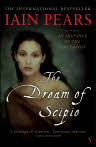
THE DREAM OF SCIPIO

Dream of Scipio“He went into the chapel and looked at the pictures she had studied, and saw them through her eyes. He looked at the picture of the blind man and Sophia, her gesture so tender, his so responsive, and saw again how she had made it her own. She had lost herself in this old work, her personality dissolving into it, so that she had been set free. The immortality of the soul lies in its dissolution.”*

This post is stimulated by a novel, but too personal to be a book review. It is energised by my belief that the best poetry and fiction are more supportive of spiritual inquiry than most texts designed specifically for spiritual teaching. The same can be said of visual arts and music. For me, spiritual understanding is not a body of information available for download from the cosmos. It does not arise from surrender to a persistent monologue. A certain kind of peace and safety might come from this, but the full fruits of the meeting between wisdom, love and creativity are missed.

Iain Pears’ novel The Dream of Scipio has inspired my spiritual direction whilst not directly defining it. I like novels as a medium for their ability to shift between different points of view and see people developing in a context of living relationships and events. They can look at the cultural and political impact of belief systems over time, as well as personal experience in the moment. The main protagonist in this novel is a philosopher and teacher from late antiquity. Actually named Sophia, she is in the tradition of Hypatia of Alexandria, now celebrated as both a Pagan and an Atheist martyr.

Pears’ story has three timelines, with two main point of view characters from each. We are presented with thoughtful people doing what they see as their best in specific contexts of time, place and culture. In each case the setting is the south of France, east of the Rhone. The first and in many ways defining period spans 475-486 and the ending of Roman rule. The second is 1342-8, mostly set in Avignon during its period of Papal residence. It includes the devastating outbreak of bubonic plague known as the Black Death. The third is 1940-1943, covering the defeat of France, the Vichy regime and then full German occupation as resistance strengthens and the tide of war begins to turn. In each case the plot turns on experiences of a Sophian figure and a man in some form of relationship with her. On the political level the focus is on crisis, choices, and consequences – especially for the Jewish community of the region.

In 475 Sophia runs a modest philosophy school in Marseille, inherited from her father Anaxius. They are insecure migrants from Alexandria.  Anaxius had been a pupil of Hypatia and can’t live there anymore.  Marseille is relatively small, provincial and in decline. But it is a Greek city in origin and part of the Mediterranean world. Southern France is a land of highly Romanised Celts, with significant Greek and Jewish communities in the larger towns.  Both as an independent woman and a philosopher in the Greek tradition, Sophia is an anomaly in a society of increasing religious conformism and narrowing cultural horizons. She presents herself as a guide, not a teacher, available to help without being an instructor. She asks people to speak freely and not to believe anything she says. She wants to emphasise the distinction between understanding and believing. Her theology is a rather austere neo-Platonism. “Let us take the premise” she says, “that the individual soul likens himself to God through the refinement of contemplation, and that virtue is a reflection of this understanding”.

Sophia’s main pupil is Manlius, a Gallo-Roman aristocrat who provides protection for Sophia as the school dwindles away and life gets more difficult. This supports his self-image of upholding the best of an old culture in bad times through an act of discerning patronage. They are attracted to each other, but the relationship is not consummated. They are holding to an ideal that “pure love is a reflection of the beautiful and a striving to return to it. Only through its accomplishment is the soul freed”. They both agree that Manlius should take a role in public life by making a formal conversion to Christianity and accepting the offer of a Bishopric. With the collapse in Roman military capacity the Romanised upper class is dependent on what we now call ‘soft power’. The church is its vehicle, and wants Manlius for his wealth, his family name and his administrative capacity. Manlius goes on to use his new office to negotiate a Burgundian occupation of his region as a means of maintaining order and keeping out the harsher Goths. This is presented as realistic in its own terms, though it involves the betrayal and killing of old friends who still want a Roman solution. However, even with the political settlement achieved, Bishop Manlius still needs to enhance his Christian credentials with the local population. They are not quite sure of his faith. So, taking advantage of a disturbance involving a Jewish criminal, he gives the entire local Jewish population three choices: conversion, exile or death. Most choose one of the first two options, but some are killed. From this time on Manlius is treated as a saint. He has solved the issue of the Christ killers on his patch.

Sophia is appalled. The point of public office lies in the opportunity to exercise virtue. Manlius was meant to take it to avoid it going to someone worse – someone bigoted or cynical. His behaviour is a betrayal of everything her teaching stood for. Manlius thinks of it as effective statecraft through the willingness to take hard decisions. Sophia still has to rely on Manlius’ protection – at one point to obtain her release from prison – and she moves to a small hermitage on his land. She and her role are no longer possible in the city. However, this doesn’t stop her from confronting him, expressing shame at being his teacher and breaking off the friendship. Manlius writes A Dream of Scipio (where she is his guide in the dream) as a kind of apology and tribute to her teaching, and to express his private opinions. Sophia refuses to read it.

Sophia survives Manlius. She lives on at the hermitage, protected by the good will of a Burgundian war lord who inherits the estate. He feels an odd respect for her though he can’t make her out and is easier to deal with than Manlius had become. Over time local people, especially women, have begun to treat her as a holy woman and seek her advice on personal and family problems.  After her own death, she is woven into legend as St. Sophia – the most faithful of a group of women gathered around Mary Magdalene when forced to leave the Holy Land. On arrival in the south of France, Sophia becomes a teacher and healer second only to Mary herself. A favourite story is the curing blind of Manlius, for example, who went on to become the holy Bishop of Vaison after regaining his sight and who rewarded her with the hermitage. The chapel built on the site becomes a centre of pilgrimage.

In the medieval part of the story, a young Italian painter experimenting with a more humanistic and representational art paints scenes from St. Sophia’s life on the chapel walls. They include the saint curing the blind Manlius.  Real people, younger and naiver than their originals, are used as the models. The Sophia figure is Rebecca, an orphan from the officially extinct Cathar community, working as the servant of a Jewish rabbi. Manlius is Olivier (and actually Rebecca’s lover), the young secretary of a Cardinal and also a poet in a new and evolving style. He finds an old manuscript of The Dream of Scipio. Its language is haunting and challenging. Some of the things Rebecca says, when she lets him know who she is, remind him of this manuscript and this is woven into the attraction. The chief political event is a knife-edge Papal decision to prevent a massacre of Jews rather than promote one as strongly advised. (The plague is widely blamed on the Jews.) The connection between Olivier and Rebecca makes a difference to this outcome, though at the eventual cost of Olivier’s life.

In the World War II part of the story, Julien is an academic and Julia a painter. They’ve known each other, on and off, for some years. Julia comes from a Jewish family but doesn’t think of herself as Jewish until forced to. After the occupation Julia manages to get exit papers from France but her ship is diverted to Cuba where U.S. authorities deny her permission to enter the United States, thus getting round a promise that no Jewish refugee will be turned back from a U.S. port. No other country will take her and she is forced back to France. Julien has a job as a Vichy censor based in Avignon (accepting it to prevent someone perceived as worse from having it). He is able to help Julia hide out discreetly, and she enters a highly productive phase as an artist. An important source of inspiration is the old Chapel of St. Sophia, its legends, and the medieval paintings that, somewhat the worse for wear, are still there. She makes use of the themes – especially the healing of blind Manlius by Sophia. However, she also becomes more visible – used by the Resistance to forge money and documents, and also because a Resistance co-ordinator flown back to France from Britain creates a cover role as an art dealer and sells some of her pictures. Julia is supposed to be put on a flight and taken out of harm’s way, but she is just too skilled and useful and her extraction keeps being delayed. When arrested she affirms her Jewish identity to half-hearted French police who are hoping that she will deny it (the arresting officers don’t know about her connection to the resistance, which one of them will shortly join). She is last known of on a train taking Jews to the camps. Julien, remorseful about failing to save her, dies whilst trying to save another resistance member from arrest.

There is a good deal about this book that is grim, and a good deal that is inspirational. If Sophia represents a spiritual wisdom, love and creativity, then the book has something to celebrate about these wonderful qualities as true human resources. Yet they are fragile. The book also speaks of dark times and the choices people make. The culture of the three periods is presented as accurately as possible and the major events all happened. Many possible lessons are suggested, and none are imposed. I found it very rich, and it’s one of the few novels I reread from time to time.

*Pears, Iain The Dream of Scipio London: Vintage, 2003

SOPHIA, GNOSTICISM AND CONTEMPLATION

When I wrote Contemplative Druidry I said that “in many ways this is a story of neo-Pagan sensibility and its growth since World War Two”. In addition to their Druidry, many of the book’s contributors reported involvement in Witchcraft and/or the indigenous Shamanism of other lands.

I also said in many cases this sensibility was modified by other influences, “most notably Buddhist philosophy and meditation, Christian mysticism and other Western Way paths with Gnostic and Hermetic traditions specifically mentioned”. I made the point that such influences are significant for contemplative practice, because to an extent they provide models. In the book I mostly focused on Buddhist influences, because they were the most common. I also paid  attention to the Christian ones, notably the Ceile De, Anglican mysticism in the tradition of Evelyn Underhill, and the partly Franciscan inspiration behind the (Druid and Pagan) Order of the Sacred Nemeton. I didn’t say much about other Western Way traditions, though I mentioned R. J. Stewart as a personal influence on me and also my training at the London Transpersonal Centre. This was essentially Jungian and thus based on a modern Gnostic psychology.

The key images from my last post, Sailing to Byzantium, were images of Sophia and the Holy Fool from The Byzantine Tarot. They made an intense and (in common sense terms) disproportionate impact on me. For they reminded me of my own Gnosticism, a current that qualifies and modifies my Druidry. I am talking about modern Gnosticism, “based in an affirmation of nature and the world and a positive relationship to embodiment, not the classical Gnosticism of world-denial or pure transcendentalism.  It is a gnosis based on bringing the world fully to life, while also enjoying the state of embodiment and sensual pleasure, without excess or obsessive appetite”*.  Thus far, I could be talking about modern Druidry without any need to look elsewhere.

But, to follow Irwin further, Gnosticism also talks of “visionary awakening” through the power of archetypal imagery. From such a perspective, affirmation of the world also requires an affirmation of the World-Soul as “the primary ground of a living and animate nature”. This can inspire “states of unity and participation in the creative founding of human experience”. The key is the “animating vitality” of images, which can arouse “a cascade of energy and potential surpassing the image and leading into a more luminous condition of being and seeing”.

According to Irwin, the traditional fields for study and practice in Western Gnosticism are neo-Platonism, hermetics, alchemy, kabbalah, mystical theology, comparative theology and meditative disciplines: quite a curriculum. But the essence is quite simple. We are invited to work with Being as embodied (through exercise, body awareness and energy work), imaginal (connected to the mundus imaginalis, open to its power) and illuminated (through contemplative practice and insight).  Much of this is offered within Druidry – for example, to anyone who takes full advantage of the OBOD distance learning course. Yet for me, here and now, once again, it is the image and name of Sophia that gives me my orientation and guides me on my path. I’ll explain that resonance and consequences more fully in later posts. In practical terms, for now, I’ve made two small adjustments in my morning practice. One is to cast my circle specifically in the sacred grove of Sophia. The other is to begin sitting meditation, or contemplative communion, by saying “I open my heart to the Light of Sophia”. It doesn’t seem much, but it shifts my centre of gravity to a place where a feel more empowered and more at home.

  • Irwin, Lee Gnostic Tarot: Mandalas for Spiritual Transformation York Beach, ME, USA, 1998 (There is no pack of cards with this book. It’s a set of interpretations emphasising “spiritual transformation and illumined states of awareness”. The Universal Waite Deck and the Ravenswood Tarot Deck have been used as points of reference.)
Earth Eclectic

music that celebrates Earth and speaks to the heart

Sarah Fuhro Star-Flower Alchemy

Follow the Moon's Cycle

Muddy Feet

Meeting nature on nature's terms

Rosher.Net

A little bit of Mark Rosher in South Gloucestershire, England

Becoming Part of the Land

A monastic polytheist's and animist’s journal

selkiewife

Selkie Writing…

Charlotte Rodgers

Images and words set against a backdrop of outsider art.

Prof Jem Bendell

living with metacrisis and collapse

Towint

The pagan path. The Old Ways In New Times

The Druids Garden

Spiritual journeys in tending the living earth, permaculture, and nature-inspired arts

The Blog of Baphomet

a magickal dialogue between nature and culture

This Simple Life

The gentle art of living with less

Musings of a Scottish Hearth Druid and Heathen

Thoughts about living, loving and worshiping as an autistic Hearth Druid and Heathen. One woman's journey.

Wheel of the Year Blog

An place to read and share stories about the celtic seasonal festivals

Walking the Druid Path

Just another WordPress.com site

anima monday

Exploring our connection to the wider world

Grounded Space Focusing

Become more grounded and spacious with yourself and others, through your own body’s wisdom

The Earthbound Report

Good lives on our one planet

Hopeless Vendetta

News for the residents of Hopeless, Maine