Contemplative Inquiry

This blog is about contemplative inquiry

Tag: OBOD

GLASTONBURY REMEMBERED

I am five or six years old, the year 1954/1955. I live in Yeovil, Somerset. My mother wants me to have proper shoes. When my feet are measured up in the local Clark’s shop, we find that I need a broad fitting (E) and they don’t have quite the right shoe for me in stock. After talking to the manager, who makes a phone call, my mother decides we are going to the factory shop in Street.

A day or two later, we walk to the Yeovil Town railway station and board a train for Glastonbury & Street. We are going to make a half day of it. So leaving the train  we first take a short bus ride from the station to Street and get the shoes. Then we take a longer bus ride to Glastonbury and I get my first glimpses of the Tor and Abbey. Somewhere in town, we stop for tea and cake, possibly ice cream. Then a brief bus ride back to the station and the journey home. I remember liking the visit. It was a bit special, but I don’t remember it being particularly magical or numinous.

Two years ago I gave a talk in the Glastonbury Assembly Rooms to the OBOD Winter Gathering about contemplative Druidry and my book of that name. Later in that day I found myself in the car park in town. I remembered childhood visits to the town and, looking up, I saw the railway station roof. And I thought, ‘how did that get here?’ (I have since discovered that it was moved there as a means of conservation).  I  felt a pang of loss for industrial age Glastonbury, with its good railway connections and neighbouring Street with its solid manufacturing base. (Yeovil Town was closed in 1962. Glastonbury & Street went in 1966.) Clarks shoes were a highly respected local employer, with a national and indeed international name. They are still around, still respected, but no longer a local (or national) manufacturer.

It’s happened before of course. For many centuries, the Abbey, as landowner and pilgrim destination, was the economic centre of the town as well as the spiritual one. Henry VIII’s re-arrangement of his own and the nation’s life ended that at a stroke. But the Abbey will always be remembered. Glastonbury is a pilgrim’s town again, though after another fashion. I just wonder if the culture of my childhood, of easy local train rides and proud local shoe making, will be remembered in quite the same way. At least the station roof is something.

GROUNDED

Where do I stand with contemplative Druidry, this Lammas-tide?

My recent Headless Way (1) experience has had the force of a conversion, and I have to re-draw my internal maps.  Interestingly, I now find myself grounded with tendonitis in my left heel. I probably haven’t experienced an actual rupture, and so I am likely to be grounded for “weeks rather than months”. Still, ample space for managing transformation.

One of the things I am doing is to look back at key steps on the way. For instance, in my introduction to Contemplative Druidry (2), I talked of “practices that support a fuller presence within the stream of passing experience … contemplation in its fullest sense enables a transfigured here-and-now, and the dissolving of subject/object distinctions within it”. I mentioned how the contemplation of a wild rose on the banks of the Tweed had triggered such a dissolving, and how this had morphed into a blissful peak experience lasting for some weeks. But I was also clear that such an experience should be framed as an occasional grace, pointing beyond self as commonly understood, and not accessible at will.

This perfectly illustrates why Douglas Harding’s style of Headless Seeing has been a game changer for me. The core experience is readily accessible – i can recognise my true nature, the greater I, at will, through simple Seeing. I am no longer a seeker. In a form of brief contemplative practice,  I see clear awake space and capacity for the world. Since there is no doubt or issue about what I see, the open questions concern capacity for the world. In my human life, in place and time, what capacity do I manifest? Where do I put my energy?

Here I stand, spiritually committed to a contemporary iteration of the Sophia perennis known as the Headless Way.  In terms of ancient wisdom, I’ve understood that there are two continuing lines of tradition that relevantly sustain me. Their pull is largely intuitive and emotional rather than via actual doctrines. One is Christian Gnosticism, theist and often dualist though it may be. The other is the interweaving of Taoist and Chan Buddhist culture in China. There are people and writings in other traditions that I also value, but those are ones I look at with most care.

I do not, now, expect to be in business with any kind of Shamanism, or to have a practitioner relationship with the British/Irish ‘indigenous’ spirituality of any ethnic group or from any pre-Christian period. Of course I continue to be blessed by a level of knowledge and appreciation; they are part of me, in that sense. But that’s as far as it goes. I have let go of my role as a mentor on the OBOD distance learning course (3). I could continue to understand and support people, very congruently, but for me the difference between their practitioner lives and mine has grown too great over the last six months or so. I couldn’t carry on. It didn’t seem right.

On the other hand, what we do in contemplative Druidry is different. Following our learning from Contemplative Druidry our practices support a modern (romantic? post-modern?) ‘nature mysticism’ revolving around forms of lean ritual, group meditation, being/walking in nature and creative arts. I’m entirely up for this, whether it continues under the name of Druidry or not. This is something to work through with my companions in that arena.

The time to leave an activity is when I am no longer learning or contributing. But I want to be accurate in my assessments, and to avoid errors stemming from the force of change, especially letting go of things that I would do better to keep and re-integrate into a new whole.  A time of joy and breakthrough, needing careful navigation.

(1)  Headless Way http://www.headless.org

(2) James Nichol (2014) Contemplative Druidry: people, practice and potential Amazon/KDP (Foreword by Philip Carr-Gomm Deep peace of the quiet Earth: the nature mysticism of Druidry)

(3) Order of Bards, Ovates and Druids (OBOD) http://www.druidry.org/


METHODS IN CONTEMPLATIVE INQUIRY: PART 1

This post is about methods in contemplative inquiry. It is the second in a series looking at what forms of inquiry best serve our times. The first (1) concerned values. This is the first of three addressing methods. A final post will be about issues of interpretation. My focus below is on the ritual container for my early morning Temple of Sophia practice, and how it enacts the values discussed on 16 June.

I inaugurated the Temple on 22 March of this year, and described it at the time (2) as a “magical space”. As my inquiry has developed, I have tended to let go of words like ‘magic’, ‘mysticism’, ‘gnosis’ and ‘enlightenment’ as too imprecise and in a way too theatrical for my current purpose. Yet I stand by what I said at the time. In particular, I continue to understand myself as using “a set of methods for arranging awareness according to patterns”, the definition of magic I used in March. I use all five of the specific methods I listed: concentration, meditation, visualization, ritual patterning and mediation. I particularly want to re-emphasize a key point about replacing a deliberate, effortful style of concentration with one based on interest and excitement like the concentration of children at play. (If it doesn’t work, do something else). But the last of the five methods above is now reframed. Instead of ‘mediation’ I would talk about the state of empty awareness and its influence. In the Headless Way (3) the phrase “clear awake space, and capacity for the world” is often used to describe the state as both experience and resource.

On arrival in my Temple space, I stand in what will be the centre of my circle, facing East where the image of Sophia gazes back at me. I begin with words inherited from my Druid practice, because I strive for continuity and integration wherever possible. The words are from Irish and Scottish Gaelic tradition, alternatively known at St. Patrick’s Prayer and the Cry of the Deer. They are a means of bringing in and expressing the humility and reverence I discussed as values in my last post, and are best declaimed slowly and spaciously.

I arise today through the strength of heaven, light of sun, radiance of moon, splendour of fire, speed of lightning, swiftness of wind, depth of sea, stability of earth and firmness of rock.

I continue – again following modern Druid tradition – by calling for peace in the directions, and aligning myself to them:  May there be peace in the 7 directions – East, West, North, South, Below, Above, Within. May I be present in this space.

Then I circle sunwise, spinning slowly at the centre of the circle, extending my left arm at chest level, index finger pointing down and saying: I cast this circle in the Temple of Sophia. I continue to move sunwise round the circle, speaking as I reach the appropriate cardinal points:  I thank the Source for Land (North), Life (East), Light (South), and Love (West). May they continue to nourish me. My I continue to honour them. May the harmony of this circle and of my life be complete. When facing East again, I say: I open my heart to the Wisdom of Sophia. I do not use ‘Source’ and ‘Sophia’ as theological terms. They are a way of expressing gratitude and connection. The way we are made, the very social way in which our capacity for language has developed, create a yearning for I-Thou rather than I-It forms of relationship with the Cosmos and whatever we met here, without or within. It seems to me to be a first person need, and I notice that it doesn’t seem to require literal reciprocation.

This opens my Temple, and a mirroring reverse process closes it at the end. For me these processes are an important ritual patterning in themselves, setting the note of my day overall, and not just markers for the Temple space. Before I begin to close the circle and exit the Temple space, I perform a ‘blessings’ practice, which has some resemblance to Buddhist loving-kindness practice whilst not being the same. Here I extend my circle of care from the centre outwards, until it becomes universal. Again I have to say that OBOD Druidry has a culture of commitment to blessings and the energy of blessing, and I continue to hold to that culture. Elaine, named below, is my wife.

I say: A blessing on my life.  May I be free from harm; may I be healthy; may I be happy; may I live with ease – repeating the sequence for Elaine’s life, the lives of our kin, the lives of our companions, all lives I touch and am touched by and all beings throughout the Cosmos.  A blessing on our lives (arms raised); a blessing on the work (hands over heart); a blessing on the land (touching the ground).

I am not, after some hesitation on the matter, working within a set of formalized ethics. Rather, the culture of practice seeks to generate a patterning of awareness that supports choice-making based on a view of love and wisdom. Methods enact values, which are then taken out of the Temple precincts and into the wider world.

I will talk about my physical/energetic and contemplative work within the circle in a dedicated post. This will include a look at why I do the entire practice standing or moving, and also why and how stresses and pathologies are given their space and voice.

(1) https://contemplativeinquiry.wordpress.com/2016/06/16/values-in-contemplative-inquiry

(2) https://contemplativeinquiry.wordpress.com/2016/03/27/sophian-magic-101

(3) http://www.headless.org


RE-DEDICATION

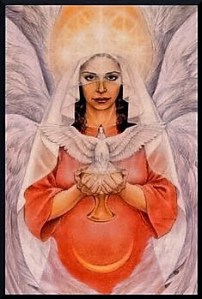
bcf2c26ec7720ed734fccc2b13534310Early this morning, I re-dedicated my contemplative inquiry. Yesterday was my 67th birthday. It seems like a good moment for re-visioning and renewal.  I recently received my Sophia icon from Hrana Janto* and finally understood that my contemplative inquiry is itself my Way of Sophia. I don’t see this as a project – more as an ongoing life practice. My contemplative Druid work and exploration of the Headless Way are aspects of inquiry, and this re-dedication is an integrating move.

The original dedication was at Samhain 2011. It assumed a Druid and specifically OBOD context, and I did see it as a project. I didn’t give it a timescale, but later I thought in terms of 5 years. The re-dedication comes a few months short of that, at a time when – amidst many continuities – there has been a clear shift in focus.

Today I made use of the icon, entered into a reflective space, before deepening into an Innerworld journey. Working with imagery puts me in a realm of what James Hillman (1) understands by ‘soul’ work. For him, soul (or psyche, or anima) is “a perspective, rather than a substance, a view point towards things rather than a thing in itself … by soul, I mean the imaginative possibility in our natures, the experiencing through reflective speculation, dream, image and fantasy – that mode which recognizes all meanings as primarily symbolic or metaphorical”. For Hillman, soul makes meaning possible and turns events into experiences. It is communicated in love, and characteristically has a religious concern.

In my morning ritual, I open my heart to the wisdom of Sophia and gaze at my icon.  I remember and appreciate the initial inquiry – writing articles for OBOD’s member journal Touchstone; gradually bringing people together, holding the first events, launching the Contemplative Druidry Facebook Group, connecting with people in other Druid bodies (The Druid Network and Order of the Sacred Nemeton in particular); developing a monthly meeting cycle for the home group; writing the Contemplative Druidry book, offering contemplative Druid events to the wider Druid and fellow-travelling public, including both day retreats and a residential. This feels good to recall, because sometimes I think that the project hasn’t spread very far or been widely understood, mostly through my own limitations and relative reclusiveness. Here I can focus on what has been achieved, and allow myself to recognize that there is something to appreciate.

Completing this period of reflection, I close my eyes and slip into Sophia’s Innerworld nemeton, which takes the form of a walled garden. At the centre is a fountain surrounded by four rose beds separated by run-offs. Two of the beds hold white roses, and two hold red. There are seats around the fountain, big enough for two people, on all four sides. The rest of the garden is more of an orchard with many kinds of fruit tree, including some trained up the garden walls. These walls are brick, and have an eighteenth century feel.  The orchard isn’t over-manicured. It might indeed be described as slightly unkempt, though not with any sense of neglect. When I visit this garden, the Sophia of the icon may sit opposite or beside me. But she may also take different forms – a dove, a rose, a tree, the fountain itself. She may be another bird or creature that turns up in the space. She may be sunlight in a drop of water. I may also experience her as all of it, so that goddess and nemeton are one. She is always a friend and guide.

This time she is in her icon form, though the dove is in a tree and the chalice by her side as she sits opposite me, in the late May dawn, east facing west. I go into my headless state and know that the same is true of her. But the context (the Innerworld, in this garden, with Sophia) changes the state, making it more intimate, relational and local. I like it. In my heart, I have more care about the particularities, indeed vagaries, of the writing than the pristine emptiness of the paper that holds them, though both perspectives matter and they do belong together. If form is nothing but emptiness, and emptiness nothing but form, then what we always have is paper being written on, and it is the story writing itself that mostly draws a storying monkey like me.

As this thought, within my living dream of the garden, passes through, Sophia comes to sit beside me. We are simply companionable, watching the fountain, as the clear fresh water bubbles up. It is from an inexhaustible spring. In this archetypal garden setting, Sophia renews an eternal pledge – that wisdom’s commitment is to extend and transmute knowledge, and not to repress it. And in this moment the garden, the fountain and Sophia begin to fade …

I came away from my ritual of re-dedication feeling encouraged and refreshed, and a new cycle begins from here.


*http://Hrana.Janto.com

(1) Hillman, James The essential James Hillman: A blue fire London: Routledge, 1990. (Introduced and edited by Thomas Moore)


TWO RINGS

Last Wednesday, 17 February 2016, I married Elaine Knight. We’ve known each other for something like 25 years. We’ve been partners for nearly 11 years, living together for over 7 of them. Elaine is still Elaine Knight – she’s not changing her name. We will continue to have large spheres of autonomy  as well as togetherness. Yet we agree that our simple ceremony and the exchange of rings has made a significant difference. Just looking at mine, or touching it, inspires feelings of peace, joy, love and gratitude – towards Elaine, and in the wider what-is.

Jpeg

Jpeg

There’s a possibly related process running in my formal spirituality, which for around a decade has been predominantly though not exclusively under the aegis of OBOD Druidry. In recent months I’ve sensed a reduction in intensity. The flavour now seems to be one of consolidating and easing into a new normal, a spirituality, alive as an ever-present background influence and less compelling as a foreground pre-occupation. I intend to continue my service roles – OBOD mentoring, and the offer of contemplative spaces with Elaine and other companions – whilst finding that I feel more relaxed about them. That’s probably good for my performance of the roles.

In the meantime Elaine and I will be spending time together and with close relatives in York and Edinburgh over the next 10 days and I won’t be writing another blog post until my return.


STOCKTAKING

Golden SeedIn 2014 The Order of Bards Ovates and Druids (OBOD) celebrated its 50th anniversary. It’s now just over 22 years since I first joined. Where am I now?

I remember being reassured by the way in which OBOD was able to hold a point of tension between two seemingly competing narratives. The first was the sense of living relationship with the land and the inheritance of ancestral stories. The second was an open and generous universalism. Without the first, the second could be vague and vapid. Without the second, the first could become culturally inward-turning and defensive. I’ve always been grateful for this balance.

As part of the 50th anniversary year, Sharon Zak and Maria Ede-Weaving put together The Golden Seed: Celebrating 50 Years of OBOD as “an anthology of prose, poetry, images and crafts” (including a DVD) created by OBOD members and friends. It is still referenced at http://www.druidry.org though currently unavailable. In my own entry I said I was more comfortable with a language of “practising OBOD Druidry” than “being an OBOD Druid”. That’s how I still see it and I would now want to add that this practice itself sits within a (for me) larger framework that I would name as the Way of Sophia. This has been true for quite a while, and I will write about it more in the future. Here I just want to say where my Druidry continues to fit.

There are two huge lessons that I draw from Druidry. The first is about how to do solo practice. I can’t now imagine a core solo practice that doesn’t take place in a sacred circle, woven of ritual and liturgy. Allowing a slow evolution of movement and liturgy, I gain insight into my purpose and intent in a way that offers both clarity and embodiment. Within that circle, I include body and energy work and also some form of sitting meditation: the precise forms vary. There’s also an aspect of healing and blessing. Thanks to the OBOD distance learning course, this approach to practice has become second nature. Someone could have given me a list of instructions to this effect on the back of an envelope and I might have had a go with different aspects from time to time before coming across something else on the back of another envelope. But I had the chance to build an evolving practice over an extended period, in a way that was both self-directing (I have an allergy to gurus) and within a tradition that made support and guidance available (I also don’t operate brilliantly if unwitnessed and alone). This combination is quite rare in spiritual education, and it’s a great privilege to have a continuing relationship with this work on the mentoring side. The course covers a lot of other ground as well. But this was the piece that was transformational for me.

The second lesson concerns two intertwining challenges. Both are connected to the contemplative inquiry I’ve been involved in for just over four years. One is the challenge of responding to the Order’s invitation to members to take initiatives and offer varying forms of leadership, whilst still (if we so choose) being held within the collective and feeling part of it. The other is the contemplative journey itself. This has involved the further evolution of solo practice, but more importantly to the co-creation of an innovative house-style in group work and in particular of Day Retreats for small groups. I and my colleagues seem to have a good handle on this now, both within our own local group and in the wider community of Druids and fellow travellers.

These lessons are my guide as to where to put my energy within Druidry, offering contexts of connection, service and nourishment.


POEM: TALIESIN

Poem by Ross Nichols, who founded OBOD in 1964.  I like his seamless interweaving of naturalistic, mythic and theosophical themes – because for him they are one integrated experience. For me the poem reads like the work of someone who needed to live it in order to write it.

Here the Fish enters

The world of dark water

Pre-birth waters

Waterworld Elysium

Lake Tegid and the magic weir.

Much does he grow,

Many his transformations.

Warm are the waters,

The dark waters of Tegid,

And they swiftly flow

Downwards as he grows.

Talisin is found in the weir:

Elphin finds him

In a bag of leather

Where the waterworld dams,

Where the womb-waters

Are falling terribly

At the weir of birth.

The entering fish

Was the spirit of Taliesin:

His transformations

Were the many souls and bodies of Taliesin:

Leading him gently, drifting him slowly

Into the bodily definition of Taliesin,

His bag of leather,

His separated skin.

And Taliesin, after his separated life,

His songs and his wonders. His challenges and his fame,

Shall enter again as a Fish,

Shall know again sufferings and transfigurations

And the waters of Tegid.

For Taliesin was ever upon earth,

Knew all things, suffered all things.

And Taliesin shall be

In many wonderful shapes,

A grain of wheat and a hare

Sown and running

While there are fields, and the spirit of men,

Leaping alive at a harvest,

Or silver in the waters of time.

This poem can be found in the collection Prophet Priest and King: the Poetry of Ross Nichols edited and introduced by Jay Ramsay Lewes: Oak Tree Press, 2001.

SOPHIA, GNOSTICISM AND CONTEMPLATION

When I wrote Contemplative Druidry I said that “in many ways this is a story of neo-Pagan sensibility and its growth since World War Two”. In addition to their Druidry, many of the book’s contributors reported involvement in Witchcraft and/or the indigenous Shamanism of other lands.

I also said in many cases this sensibility was modified by other influences, “most notably Buddhist philosophy and meditation, Christian mysticism and other Western Way paths with Gnostic and Hermetic traditions specifically mentioned”. I made the point that such influences are significant for contemplative practice, because to an extent they provide models. In the book I mostly focused on Buddhist influences, because they were the most common. I also paid  attention to the Christian ones, notably the Ceile De, Anglican mysticism in the tradition of Evelyn Underhill, and the partly Franciscan inspiration behind the (Druid and Pagan) Order of the Sacred Nemeton. I didn’t say much about other Western Way traditions, though I mentioned R. J. Stewart as a personal influence on me and also my training at the London Transpersonal Centre. This was essentially Jungian and thus based on a modern Gnostic psychology.

The key images from my last post, Sailing to Byzantium, were images of Sophia and the Holy Fool from The Byzantine Tarot. They made an intense and (in common sense terms) disproportionate impact on me. For they reminded me of my own Gnosticism, a current that qualifies and modifies my Druidry. I am talking about modern Gnosticism, “based in an affirmation of nature and the world and a positive relationship to embodiment, not the classical Gnosticism of world-denial or pure transcendentalism.  It is a gnosis based on bringing the world fully to life, while also enjoying the state of embodiment and sensual pleasure, without excess or obsessive appetite”*.  Thus far, I could be talking about modern Druidry without any need to look elsewhere.

But, to follow Irwin further, Gnosticism also talks of “visionary awakening” through the power of archetypal imagery. From such a perspective, affirmation of the world also requires an affirmation of the World-Soul as “the primary ground of a living and animate nature”. This can inspire “states of unity and participation in the creative founding of human experience”. The key is the “animating vitality” of images, which can arouse “a cascade of energy and potential surpassing the image and leading into a more luminous condition of being and seeing”.

According to Irwin, the traditional fields for study and practice in Western Gnosticism are neo-Platonism, hermetics, alchemy, kabbalah, mystical theology, comparative theology and meditative disciplines: quite a curriculum. But the essence is quite simple. We are invited to work with Being as embodied (through exercise, body awareness and energy work), imaginal (connected to the mundus imaginalis, open to its power) and illuminated (through contemplative practice and insight).  Much of this is offered within Druidry – for example, to anyone who takes full advantage of the OBOD distance learning course. Yet for me, here and now, once again, it is the image and name of Sophia that gives me my orientation and guides me on my path. I’ll explain that resonance and consequences more fully in later posts. In practical terms, for now, I’ve made two small adjustments in my morning practice. One is to cast my circle specifically in the sacred grove of Sophia. The other is to begin sitting meditation, or contemplative communion, by saying “I open my heart to the Light of Sophia”. It doesn’t seem much, but it shifts my centre of gravity to a place where a feel more empowered and more at home.

  • Irwin, Lee Gnostic Tarot: Mandalas for Spiritual Transformation York Beach, ME, USA, 1998 (There is no pack of cards with this book. It’s a set of interpretations emphasising “spiritual transformation and illumined states of awareness”. The Universal Waite Deck and the Ravenswood Tarot Deck have been used as points of reference.)

THE GARDEN AND THE GODDESS

I was sitting in meditation this morning, a simple attention-to-the-breath practice. I found myself flooded with a specific stream of imagery, and recognised three options. The first was to pull my attention back to the breath and keep it there. The second was to surf it awarely, with my attention focused on holding an observer position. The third was to surrender to it, also awarely – and to follow the images, the spontaneous stream of consciousness, and enter into them.

In the context I found the first choice a bit blinkered and almost aggressive and the second not quite satisfying. The third was the way to go. So I found myself in a garden, a walled garden, with the Song of the World, audible, expressing itself as the song of the sea not very far away. I recognised the place I was in. The garden was connected to a ruined temple, or chapel. I couldn’t determine what kind of people had built it, or worshipped there. It didn’t matter. The garden itself was the nemeton: tended not manicured, balancing cultivation and wildness.

At the centre of the garden was a fountain, surrounded by beds of roses, white and red. The rest of the garden was dedicated to fruit trees – apple, pear, peach, and also cherry – going so far indeed as to include fig and pomegranate and vines trained up the walls. There, too, was a white dove, moving between the trees. A magical place.

I knew this garden. It had changed somewhat, but I knew it. It was connected with the final version of the visualisation based meditations I used to do, in fact a modified version of the Sacred Grove meditation we do in OBOD. It’s my sacred space in the heart, an imaginal space in a realm of greater depth and interiority than the energetic heart centre, an Innerworld gateway to an intimated Otherworld.

When left to itself and not being edited by me for the purposes of Druidry, the feeling-tone is culturally at least as much Hellenistic and Levantine as indigenous and Celtic, and there are suggestions of places further away. At heart I am spiritually syncretistic and eclectic. When I first opted for Druidry as a community I chose OBOD because it provides a home for Druids of this ilk.

The garden has also, traditionally, been a place of the Goddess, a place for meeting and communion with Her.  When I used to do this practice, and named her, I called her Sophia – the Lady Wisdom.  But she has many names and took many forms. She was the fountain, the roses and the trees. She was garden itself, and the neighbouring sea. She was the dove. She could also be a serpent or an owl, especially at night in moonlight. But usually the garden was a day space, a solar space. I could feel her, more personally, as an invisible presence in the atmosphere of place. Very occasionally she appeared as a human woman – sometimes in the garden and focused on it, not engaging directly with me; more rarely still holding extended eye contact (‘soul-gazing’); once or twice standing behind me, Her hands on my shoulders. Today, in the vision of the garden, She returned to me, as deep recollection and as living presence.

Yet only a short time ago I wrote:

“The sense of the Goddess (under different names) as both cosmic birther and mentoring intermediary, which I have had throughout the whole period of my association with Druidry and Paganism, has died. This is not a matter of ultimate belief, where I have always had a form of non-dual view, but rather in a sense of a shift in archetypal poetics and psychology, of imaginal perception. It gives me a sense both of mourning and of release, of loss and of spaciousness”.

What do I make of this now? The dissolution of Goddess into Oran Mor (and of Oran Mor into latency, or Void, at some ultimate level) is a real experience.  The Goddess in the Garden is also a real experience – the experience of a numinous and compelling image. As I look at my previous words, ‘cosmic birther and mentoring intermediary’, I find them a little formulaic, a bit concrete and literal, and therefore a kind of subtle idolatry, by which I mean an unconscious manipulation of numinous imagery: re-making the Goddess in my image, rather than simply accepting the gift. It suggests an instrumental kind of relationship, with me covertly in charge whatever level of reverence or devotion I might proclaim: not quite authentic and not quite healthy. No wonder the Goddess dissolved. She had to, for a while.

The return feels different, because I’m allowing an image, giving space to it. An image is an image. The Goddess image has tremendous power, for me. It doesn’t ask for explanation or belief. It is just there, offering itself for connection. In the meditation of the garden, I let the image be. I don’t have a script. I don’t run a narrative. Of course the pattern of imagery builds an Innerworld presence of some consistency, as well as changing over time. Essentially, though, I let it be. I don’t go to the garden asking questions, asking for help, or entering into bargains, discussions and exchanges. They aren’t the point. The point is connection and deep communion. I used to think that breath meditation was passive and Innerworld work active. Now I think of it as almost the other way round.

ABOUT THE ORAN MOR (GREAT SONG)

In my last post, I presented my Amazon review of Jason Kirkey’s The Salmon in the Spring prefaced by his view of the Oran Mor (Great Song), itself somewhat indebted to earlier work by Frank MacKeown.  This followed on from my recent reading of a post involving the Oran Mor by Alison Leigh Lily at Q&A: What is the Song of the World, which I picked up through a reblog on Joanna van der Hoeven’s Down the Forest Path, and reblogged myself on https://contemplativeinquiry.wordpress.com/2015/4/2/ . Kirkey essentially sees the Oran Mor as something like the Divine Ground, or the Tao of Chinese mystical philosophy, something that includes all beings whether they be mountains, salmon, humans, midges, wolfhounds, gods or sidhe.

Soon after I read the book I discussed my take on the Oran Mor in a local radio interview, which can now  be found in the OBOD website on http://www.druidry.org/druid-way/other-paths/druidry-dharma/. Those interested can scroll down to AUDIO Druidry & Buddhism Stroud FM 141210.mp3.  At that time I was more involved in Buddhism than I am now, but generally I still stand by the things I said.

Concerning the Oran Mor, I focused on implications for the personal spiritual path rather than wider issues of cosmology. I suggested that we are invited to do three things:

  1. Learn to hear the Song. This is another way of talking about re-enchantment, the beginning of the conscious journey in paths like Druidry.
  2. Find our unique note, or sound, and sing it. Whilst each note is meaningless, indeed impossible, without the Song, the Song is itself dependent on our individual contributions.
  3. Learn to hear the silence behind and within the Song. For without that the Song, in our perception can become just a noise, even if a beautiful one. To awakening to a full awareness and appreciation of the Song, we need the dimension of silence and stillness as well as sound.

I have noticed one strange thing. When interviewed for Stroud FM (and about half-way through the piece), I confidently attributed these last sentiments to Jason Kirkey. But I’ve looked through the book again and I can’t find them there. So it seems to have been my way of inwardly digesting his book and in a sense the emergence of my own note in relation to the Oran Mor itself as concept, image and inspiration. Still, a mystery, and quite startling when I listened to the interview and then went through the text again. My self-image is one of being careful with attributions and acknowledgements. Perhaps that’s why I felt such a strong energetic pull when the Oran Mor was brought to my attention again.

Earth Eclectic

music that celebrates Earth and speaks to the heart

Sarah Fuhro Star-Flower Alchemy

Follow the Moon's Cycle

Muddy Feet

Meeting nature on nature's terms

Rosher.Net

A little bit of Mark Rosher in South Gloucestershire, England

Becoming Part of the Land

A monastic polytheist's and animist’s journal

selkiewife

Selkie Writing…

Charlotte Rodgers

Images and words set against a backdrop of outsider art.

Prof Jem Bendell

living with metacrisis and collapse

Towint

The pagan path. The Old Ways In New Times

The Druids Garden

Spiritual journeys in tending the living earth, permaculture, and nature-inspired arts

The Blog of Baphomet

a magickal dialogue between nature and culture

This Simple Life

The gentle art of living with less

Musings of a Scottish Hearth Druid and Heathen

Thoughts about living, loving and worshiping as an autistic Hearth Druid and Heathen. One woman's journey.

Wheel of the Year Blog

An place to read and share stories about the celtic seasonal festivals

Walking the Druid Path

Just another WordPress.com site

anima monday

Exploring our connection to the wider world

Grounded Space Focusing

Become more grounded and spacious with yourself and others, through your own body’s wisdom

The Earthbound Report

Good lives on our one planet

Hopeless Vendetta

News for the residents of Hopeless, Maine