Contemplative Inquiry

This blog is about contemplative inquiry

Tag: non-duality

THE SUPPORT OF NATURE

“Carl Jung coined the word synchronicity to refer to the remarkable coincidences most of us experience from time to time. They are remarkable in that they usually involve two or more unconnected events coming together in an unlikely way. These events seem to be more than coincidences, more than pure chance. They often seem like miracles, bringing us just what we need at just the right time, opening up new opportunities in our lives or supporting us in some other way.

” … The Maharishi, with whom I had the good fortune to study in India, explained this as ‘the support of nature’. When he wanted to assess how we were progressing in our practice, he was not interested in our experiences in meditation itself … he was more interested in whether we had noticed what he called ‘increased support of nature’. By this he meant, did we notice the world supporting our needs and intentions? That is to say, did we notice more synchronicity in our lives?

” … It might sound like magical thinking, but I’ve noticed that the degree of synchronicity in my life often reflects my state of conscious. When I meditate regularly, especially when I have been on a meditation retreat, life seems to work out well, with many little coincidences leading me to just what I need at the right time. It’s as if the Universe has my best interests at heart and arranges for their fulfilment in ways I could never have dreamed of.

“Conversely, when I’m stressed, not in touch with myself but caught up in worry or in some other way off-centre, synchronicities don’t flow so abundantly.

“Furthermore, synchronicities seem to happen more often when I’m engaged with the world. I can sit alone in a cottage in the middle of a forest, at peace and in touch with myself, yet few synchronicities occur. Significant ones nearly always involve other people in some way. It is as if my interplay with others gives cosmic choreography greater opportunities to reach me.

“Although we cannot make synchronicities happen – it’s in their nature to occur ‘by coincidence’ – we can encourage their occurrence. We can support nature by taking time to step back from our egoic thinking and reconnect with our essential being. Then, grounded in our true nature, we can go out and engage fully in the world. We can go out and play – play whatever game or role best fits our intentions and best serves our awakening, and that of others.

“And then enjoy, and perhaps marvel at, the way nature responds by supporting us.”

Peter Russell Letting Go of Nothing: Relax Your Mind and Discover the Wonder of Your True Nature 2021 http://www.newworldlibrary.com – (Foreword by Eckhart Tolle)
A PERFECTLY DIVINE MESS

“Bow to your awkwardness. Kneel at the altar of your failures. Smile at your clumsiness. Befriend your incompetence. Laugh when you stumble and fall. These are all perfectly precious waves in the oceanic vastness of you.

“Perfection is unavailable in time, but found only in presence; the presence of imperfection makes you real, and relatable, and that’s perfect. You’ll be consistent when you’re dead. Until then, celebrate your silly old self, your marvelous inability to conform, or to live up to any image at all.

“Don’t bore yourself into a spiritual coma. Say the wrong thing, just for once. There is such freedom in allowing yourself to screw up, to be kind to your mistakes, to kiss the ground as you rise again, to adore the falling too.

“Don’t let your spirituality numb your humanity, your humility, and most important, your sense of humor.”

Jeff Foster The Way of Rest: Finding the Courage to Hold Everything in Love Boulder, CO: Sounds True, 2016

LEARNING FROM OTHER TRADITIONS: KASHMIR SHAIVISM

My Druidry is an earth pathway and a nature mysticism – and it is more than that. It is concerned with recognising, and living from, a divine identity in a divine world. I practice a panentheist, non-dual, Druidry. But few of the mystical traditions known to history have fully held the two aspects together as one. Kashmir Shaivism, a form of traditional Indian Tantra, is an exception. Sally Kempton (1) explains.

“Rejecting the Vedantic view that the material world is illusory, an empty dream, the sages of Kashmir Shaivism saw all forms of the universe as manifestations of divine creative energy, of Shakti, the dynamic female principle. They worshipped Shakti in themselves, in the earth, and in every substantial and insubstantial thing, and they looked for the pulsing heart of divine bliss within all domains of experience. Astute seekers of the tradition knew innumerable pathways for uncovering the experience of the divine. They knew how to extract it from states like terror or pleasure or in the high point of a sneeze; the knew how to find the pulsation of ecstasy in empty space, in fixed attention, and in the sensations that come from swaying or twirling, or enjoying music or the taste of food.

“But the crucial insight of Shaivism is the recognition that when human consciousness lets go of its identification with the body and reflects back on itself, it is revealed as a perfect, if limited, form of the supreme ‘I’, which is God. By expanding their own I-consciousness beyond its limits, past its tendency to cling to narrow definitions of itself, yogis of the Shaivite path experienced God as themselves.

“Because they saw the world as divine, the Shaivite yogis of Kashmir had no difficulty enjoying life in all its different flavors. In this they differed from their Vedantic cousins and from the Madhyamika Buddhists who inhabited the same region of India. Shaivism was not a traditional renunciate’s path. Abhinavagupta (975-1025 CE), the preeminent genius of the tradition, was not only a philosopher and a widely revered guru but also an aesthetician, and artist and musician, and the center of a circle where sensory experience – including art, music and drama – was constantly being transmuted into yoga.

“It is this insight – that a serious practitioner of yoga does not reject their world, but instead transforms daily experience through their practice – that sets Kashmir Shaivism apart from many Indian yogic traditions, and has made this system particularly resonant for our time.”

(1) Sally Kempton Meditation for the Love of It: Enjoying Your Own Deepest Experience Boulder, CO: Sounds True, 2011

BEING AND PERSPECTIVE

“To have a perspective, a sense of Being has to be there first.

Is there any perspective if there is no sense of Beingness or sense of aliveness?

That same aliveness underlies every perspective.

The Questions – Does it help? Is it of value? –

are questions which people will have their own perspective on.

So, a wordless experience of being that is available to turn to 24/7,

not dependant on a particular feeling, thought or perspective,

All of which come and go.

Not being an attainment

it is not dependent on effort

but when consciously noticed

it is constant and obvious.”

These words from Steve Palmer of the Headless Way summarise my learning from that family when crafting a contemplative Druidry through my inquiry process. The noticing he talks about towards the end is at the centre. Everything else radiates out, re-visioned by the noticing.

http://www.headless.org/

DANCING SEAHORSES II

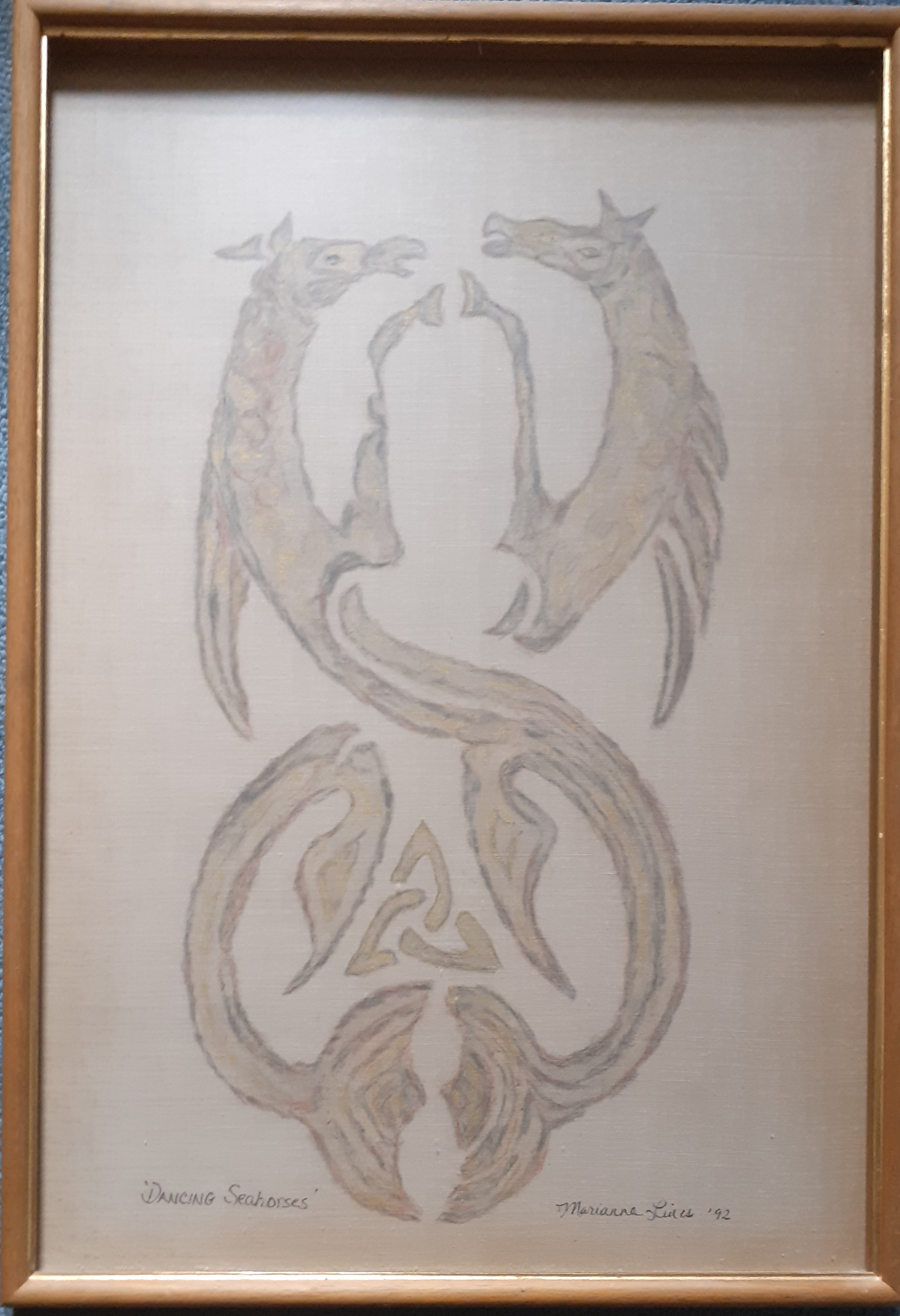
I have already written about the Dancing Seahorses image (1) found on a Pictish stone from Aberlemno in the Scottish county of Angus. After seeing the stone on a visit there, in 1992, I bought Marianne Lines’ painting. I have felt strongly involved with this image ever since. I think of it as a friend and guide. In a sense, this post is about the modern use of archaic images by people, like Druids, who are drawn to them.

I do not know the intentions of the original carver. beyond celebrating beings who are half of this world, half of the otherworld, and who embody powerful water energies for Celtic peoples on the Atlantic coasts of Britain, Ireland and Brittany in ancient times. They are remembered in folklore to this day. I do know that the carving made a strong impression on me, when I first saw it on the stone itself. It stayed in my imagination, and over time has deepened and grown new meanings.

Four years after acquiring the painting, I had the image tattooed on each arm. By that time I knew of the way in which it had influenced the cover design for R. J. Stewart’s The Prophetic Vision of Merlin (2). This variant form was used to refer to the story of the young Merlin at Vortigern’s subsidence prone tower in Snowdonia, prophesying his way out of becoming a human sacrifice, and identifying two contending dragons under the foundations. In the book illustration, there is a yin-yang reference, with a suggestions of interdependent primal forces, each of which already contains the seed of the other, seeking balance and alignment. In the Western Mysteries quest for healing and transfiguration, the energy bodies of the land and of humans are deeply interwoven.

There is another, more recent level of understanding, that I derive from the painting and tattoos, but not evident in The Prophetic Vision of Merlin. I see both the dancing seahorses and a second image, behind and containing the immediately apparent one. As I wrote before, “the space where the horses legs are raised defines a shape, suggesting a head. The very emptiness there is a paradoxical mark of presence. To me it became the head of a goddess, with the seahorses then becoming her body. Still clearly appearing as a water being, her arms – if they are arms – are raised in blessing”. I would now add that in this way, she demonstrates the dance of emptiness and form. They are balanced. Neither is privileged over the other. The Celtic knot points both to interconnection and infinity.

I identified the Goddess whilst gazing directly at the original Dancing Seahorses picture, which hangs of a wall directly above my altar. However I believe I received a subconscious nudge from the High Priestess card in The Druidcraft Tarot (3). She wears the image herself. Her hands are raised. She stands as the Goddess. In the Druidcraft narrative, she “represents the magical power of stillness and depth”. For me, the Goddess in Dancing Seahorses represents the ultimate union of emptiness and form, and the rebirth of the cosmos in each moment. Her representation combines the aware potential of the void and a primal aquatic generativity that can inhabit other elements. The Druidcraft priestess is human, but one who wears an image that bespeaks the divine to me, and her role asks for “stillness and depth”.

In my work, the entry into stillness and depth is, firstly, to enter into I-Thou communion with the primal Goddess (Modron) and then to recognise my own true nature, as (mythically) her divine child (Mabon) – sensitive and busted open to the world. This recognition becomes a prayer of gratitude and a surrender of my passing private concerns to Who I really am.

Words and pictures are not enough, but, cherished and contemplated lovingly over time, together they can point the way..

(1) https://contemplativeinquiry.blog/2020/06/25/dancing-seahorses/

(2) R. J. Stewart The Prophetic Vision of Merlin London & New York: Arkana, 1986

(3) Philip & Stephanie Carr-Gomm The Druidcraft Tarot: Use the Magic of Wicca and Druidry to Guide Your Life London: Connections, 2004 (Illustrated by Will Worthington)

MORE AT HOME: APRIL 2021

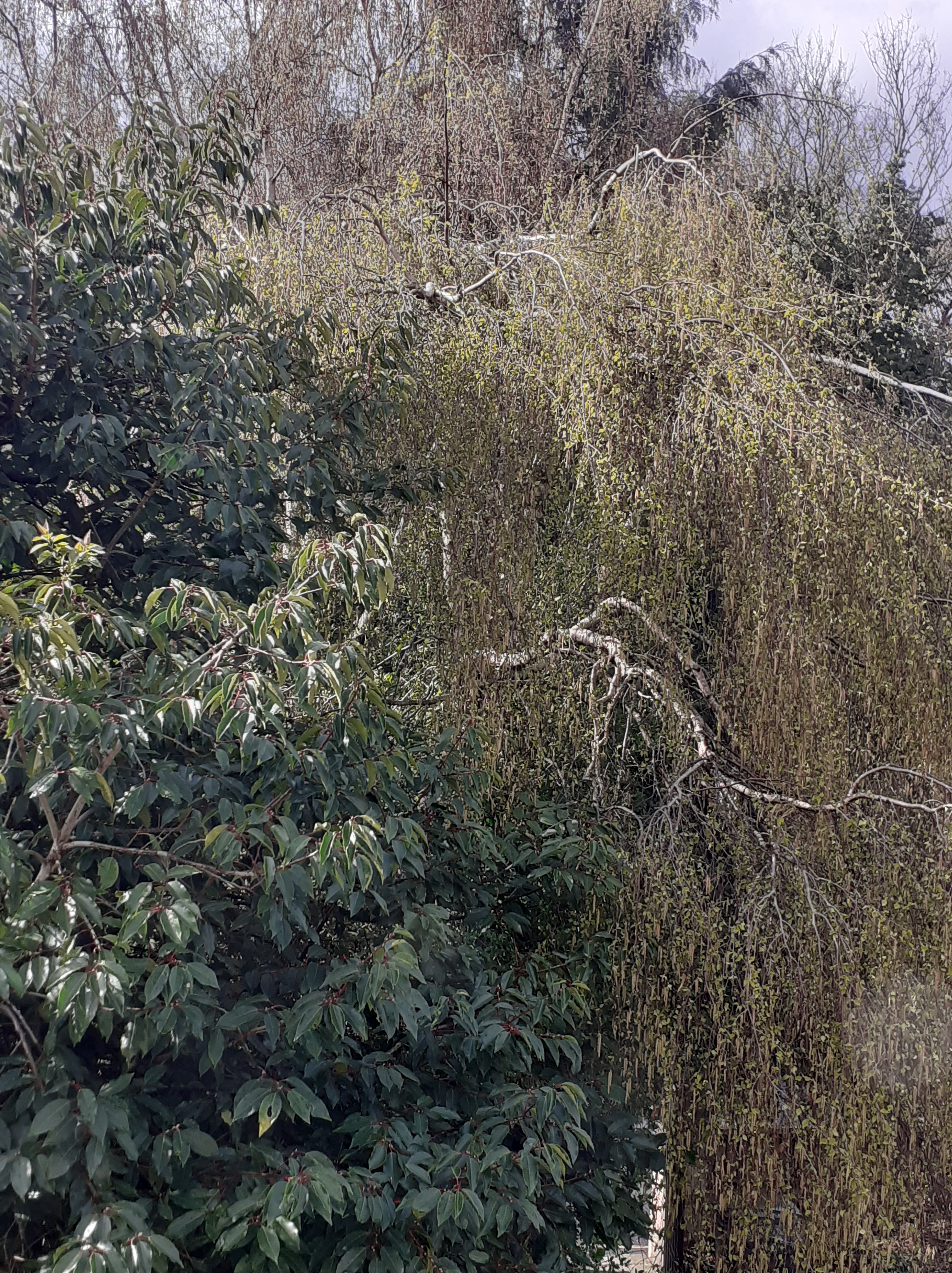
I am feeling more at home in a number of ways. A much loved view through a bedroom window is enough. I can look out and lose myself, holding an image both of continuity and change as the seasons move. One way in which I experience the year is in two halves. Beltane initiates the summer half of a two season year, with Samhain beginning winter.

I often find the extended six months ‘winter’ to be productive for my contemplative inquiry. In the six months now about to end, I have completed an important shift, a shift that reframes an inquiry insight dating from 2018. At that time I said: “I discovered an ‘at-homeness’ in the flowing moment, which nourishes and illuminates my life. Such at-homeness is not dependent on belief or circumstance, but on the ultimate acceptance that this is what is given.”

My view then was that it is best to steer away from metaphysical commitments, as the Buddha is said to have done. “At-homeness in the flowing moment” could work as a dignified existential choice for a humanist, an agnostic or a person with a stance of ‘sustainable nihilism’ (1). It could also work for people firmly based in contemplative versions of monotheist and polytheist spiritual traditions. Indeed it could work for anyone and would be blissfully light on doctrine and opportunities for argument and dissension.

That said, whist still fully embracing the original insight, I now find it incomplete. I have for some time been filled with the sense of a living cosmos, in a way that cuts across the grain of the culture I come from, with its parsimonious definition of ‘life’. I am animist in sharing Thich Nhat Hanh’s understanding of ‘Interbeing’, where everything is interconnected and nothing is really born, lives or dies in a state of separate selfhood (2). Life just changes. Now I have taken to heart the sense that the life which changes has a Source, or ground of Being, in which the whole web of life is embedded.

Hence I am human and I am also that ground of Being. Being cannot be found as an object, but I can apprehend Being in two ways. One is by looking in and finding my primordial and true nature in and as Being. The second is by looking out and finding Being everywhere and in everything. In each case, the inside/outside distinction finally dissolves. Humanly, I am distinct but not separate from Being, temporarily individuated in the world of space and time, as is everything else in this world. At the deepest level, as Being, I am no thing and yet present in and as everything.

I have reached a commitment to this view partly as a result of contemplative inquiry and partly as an act of faith, trusting my deepest understanding. In the wider world, this understanding is called ‘non-dual’ or ‘panentheist’. It is neither demonstrable nor falsifiable as a proposition, and I continue to appreciate that the map is not the territory. All words feel somehow wrong, just as the Tao Te Ching warns when it begins with “the name you can say isn’t the real name” (3). Yet Lao Tzu persisted with his writing, and gave the world one of its most loved scriptures. From time to time, the effort with language has to be made.

Modern movements (4,5) have made the experiential recognition of our true nature, or ultimate divinity, available to ordinary people through skilful means developed for our time. I have made connections with such movements, but I still anchor myself in Druidry. Humanly, a conscious I-I relationship with Source, or dwelling in and as Source, is not everything to me. I am drawn, too, to I-Thou relationship, honouring a devotional need that wants to be expressed. The Indian sages who first developed non-duality as a spiritual philosophy did not challenge or abandon the flourishing polytheism of their culture. They continued the practice of deity yoga. It serves the dance of being and becoming in this world. This, I believe, is the role of the Goddess in my life (6). I have much still to learn here. Meanwhile my at-homeness grows stronger.

(1) http://jonnyfluffypunk.co.uk/

(2) Thich Nhat Hanh The Other Shore: a New Translation of the Heart Sutra with Commentaries Berkeley, CA: Parallax Press, 2017

(3) Lao Tzu Tao Te Ching: A Book About the Way and the Power of the Way Boston & London: Shambhala, 1998 (New English version by Ursula K. Le Guin with the collaboration of J. P. Seaton)

(4) http://www.headless.org/

(5) https://eckharttolle.com/

(6) https://contemplativeinquiry.blog/2021/02/24/who-is-the-goddess-I-pray-to/

THE PEACE OF THE GODDESS

This post follows on from my recent post on Patterns and Peace (1). There, I discussed the role of ritual patterning in a sunrise practice. Here, I discuss the role of meditation in a sunset one. In both cases I experience peace as an active energy – empowering, nourishing, and close to the Source.

In the evening I do not cast a circle. I simply sit down facing my altar and say: May there be peace in the seven directions. May I be present in this space. I say the Druids’ prayer, affirming the commitments to a love of justice and the love of all existences. I see them as the necessary context for the manifestation of true peace in the world.

I talk myself in to the meditation itself with other words customised from Druid tradition: Deep in my innermost Being, I find peace. Silently, in the stillness of this space, I cultivate peace. Abundantly, within the wider web of Being, may I radiate peace.

Starting with a focus on my heels, extended to include my feet as a whole, I tune in to my felt sense of body and life energy. Moving gradually up my body, I pay close attention to my emerging experience of a physical and energetic field, which I find to be light and spacious. I also notice the breath. Surrendering to this universe of internal experience, I can enter an awareness of deep peace, joy, and wonder at the miracle of experiencing. This is beyond ‘At-Homeness in the flowing moment’. I call it the Peace of the Goddess.

Coming out of meditation, I say I give thanks for this meditation. May it nourish and illuminate my life. May there be peace in the seven directions. May I be capacity for the world.

I do not meditate for long periods. This whole practice, including liturgy and meditation, takes about half an hour. The phrase ‘capacity for the world’ uses the language of the Headless Way (2) and indicates that if we enter into our true nature as clear awake space, we become, in our everyday lives, ‘capacity for the world’. The meditation is both the experience that it is, and a resource for life and contribution to the world.

I have done meditations of this kind for many years. Recently, this meditation has become richer and more focused. I believe this to be partly due to practice and partly to the season – I find both equinoxes enabling for meditation. But there is also the benefit of increased understanding. I am grateful to Eckhart Tolle, whose work I have begun to engage with, when he says: “What I call the ‘inner body’ isn’t really the body any more but life energy, the bridge between form and formlessness … When you are in touch with the inner body, you are not identified with your body any more, nor are you identified with your mind. … You are moving away from identification to formlessness, which we may also call Being. It is your essence identity”.

(1) https://contemplativeinquiry.blog/2021/03/12/patterns-and-peace/

(2) http://www.headless.org

(3) Eckhart Tolle A New Earth: Create a Better Life Penguin Random House UK, 2016 (First edition 2005)

Re Druids’ prayer see: https://contemplativeinquiry.blog/2021/02/22/ripple-effects-where-prayer-can-be-valid/

BOOK REVIEW: THE GREATEST ACHIEVEMENT IN LIFE

The Greatest Achievement in Life is a free e-book available from http://www.suprarational.org/ as a printable pdf, published in 2012. Author R. D. Krumpos looks at five traditions of mysticism, in which mysticism is understood as a direct intuition or experience of God, or of an ultimate Reality not conceived as God. Mystics are described as people whose religion and life are grounded “not merely on an accepted belief and practice, but on what they regard as first-hand knowledge”. Krumpos himself speaks of finding that “preeminent Reality is the holy One in All and All in the wholly One”.

The five mystical traditions examined are those embedded within Hinduism (e.g. Vedanta, Tantra), Buddhism (Zen, Vajrayana), Judaism (e.g. Hasidism, Kabbalah), Christianity (e.g. Gnostic and Contemplative currents) and Islam (e.g. Sufism). I imagine that many people reading this blog will be working outside these traditions. But I recommend the book to anyone with a serious interest in mysticism, however you define it, given that the influence of these traditions is pervasive to the point where it can be virtually unconscious. As a person on a modern Druid path committed to inquiry and with a leaning towards mysticism, I have found Krumpos’ work very helpful in reminding myself of what the ‘five traditions’ are pointing to.

The book is brief and divided into two main sections: Five Traditions of Mysticism and Mystical Approached to Life. Within these sections there is a further division into short chapters, which can be read either in sequence or independently of the whole. Krumpos draws heavily on the words of well-known mystics themselves, as well as offering his own commentary and reflections. The book can either be seen as a source and reference book, or as a practitioner aide. It includes sentences and paragraphs that can themselves be used as a basis for formal contemplation. It is not just an ‘about’ book, though it serves that purpose well.

The traditions presented are seen as having much in common at the core, and The Great Achievement bears witness to that commonality. Yet there is enough interior diversity to make it clear that mystics in these traditions are not all the same, or saying the same thing, in the way that is sometimes lazily claimed. Overall Ron Krumpos’ sense of ‘direct experience’ and his definition of gnosis describe a gold standard for what ‘the greatest achievement’ is, based on the accounts of the mystics cited and discussed. In the second half of this book, the focus valuably shifts from the nature of mystical experience itself, to a consideration of its implications for how to live and serve.

For me, the cultural moment in which The Great Achievement has been offered is significant one. Perennialism’s ideas have been popularised and repackaged over the period since World War II at an ever increasing rate. There is now an extraordinary global spiritual hunger at least partly influenced by the spiritual paths that it includes – some, indeed, speak of a ‘spiritual market place’. This is a promising development, yet one with its downside. Krumpos’ work reminds us what these older traditions are and where they stand. For readers in new (or new-old) spiritual traditions with a different approach, the book offers opportunities for comparing and contrasting the fruits of the five traditions with those of their their own chosen paths. Krumpos does acknowledge the value of shamanic and indigenous traditions, and practitioners within these traditions, reading this book, might be inspired to develop this conversation further.

WHO IS THE GODDESS I PRAY TO?

The Goddess I pray to has neither name nor form. Concerning Her, I have a felt sense of primal cosmic motherhood. I avoid imagery, whilst assuming that She could take any form in the apparent world and does in fact take every form.

She does not have to be female, in the world’s understanding – though for me ‘She’, ‘Goddess’ and ‘Cosmic Mother’ are the best terms for affirming a connection. Praying to Her spontaneously, I, James, fragile and mortal human, find an I-Thou connection to the living heart of being. In the formal setting of the Druid prayer, where I may be feeling naturally integrated, asking the Goddess for protection increases my sense of sacred openness and enlivens me energetically. Sometimes, I feel the grace of an ageless power at my back as I say the prayer.

I think of a Greek wisdom tradition, evolving over time from a veneration of the Moon (1,2), in which She is Zoe, the life beyond time, and I, as one of her children, am Bios, the life which is born, dies and is born again. Ultimately, I find is no separation between us. Indeed, the smallest blade of grass is imbued with the power and presence of the Goddess, the source of all. But there are times when I strongly and appropriately sense my individual littleness. Then especially I look for an I-Thou relationship with a perceived higher power. In this relationship, prayer is valid.

Bringing prayer into my practice moves my inquiry forward in two ways. The first works by integrating Sophian themes from earlier inquiry into my practice of Druidry (3,4). The second is a tilt towards a faith position of sorts, which I have stood back from hitherto. Greg Goode may be right to say that (5) “everything is paradoxical. We can’t even say that it’s consciousness or that anything exists”. But I have pitched my tent, all the same: I am working in the faith that the term ‘consciousness’, like ‘living heart of being’ or ‘source of all’, points to a cosmic foundation from which I, as human, am not separate.

I have arrived at a form of panentheism, a Oneness that allows for a zone of distinction between the human and the divine. This view provides a clearer context for my At-Homeness in the flowing moment, the experience where I lean most into union. At other times, praying to the Goddess may help to soften me up. In the softened state, I more readily re-connect with source and all. I am enabled to be a more effective agent, and capacity for the world. All of these experiences and understandings are now included in my Druid view and practice.

(1) Anne Baring Anne and Jules Cashford The Myth of the Goddess: Evolution of an Image London: Penguin, Arkana Books, 1993

(2) https://contemplativeinquiry.blog/2020/04/16/lunar-wisdom/

(3)https://contemplativeinquiry.blog/2019/11/05/sophian-way/

(4) https://contemplativeinquiry.blog/2019/12/30/world-tree-and-sophia/

(5) https://contemplativeinquiry.blog/2020/01/19/scepticism-openness-and-flow/

TIME, SEASON AND TIMELESSNESS

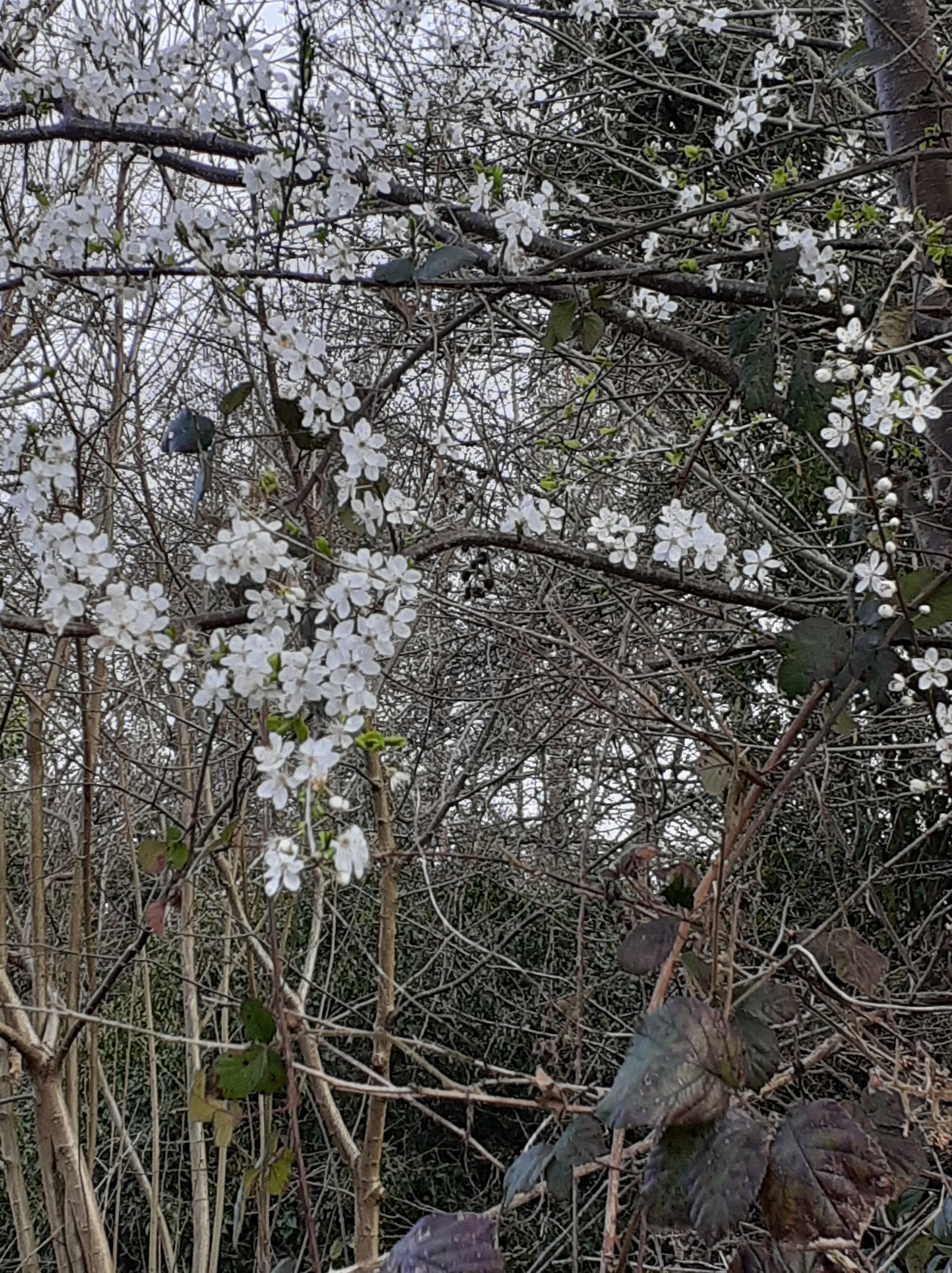
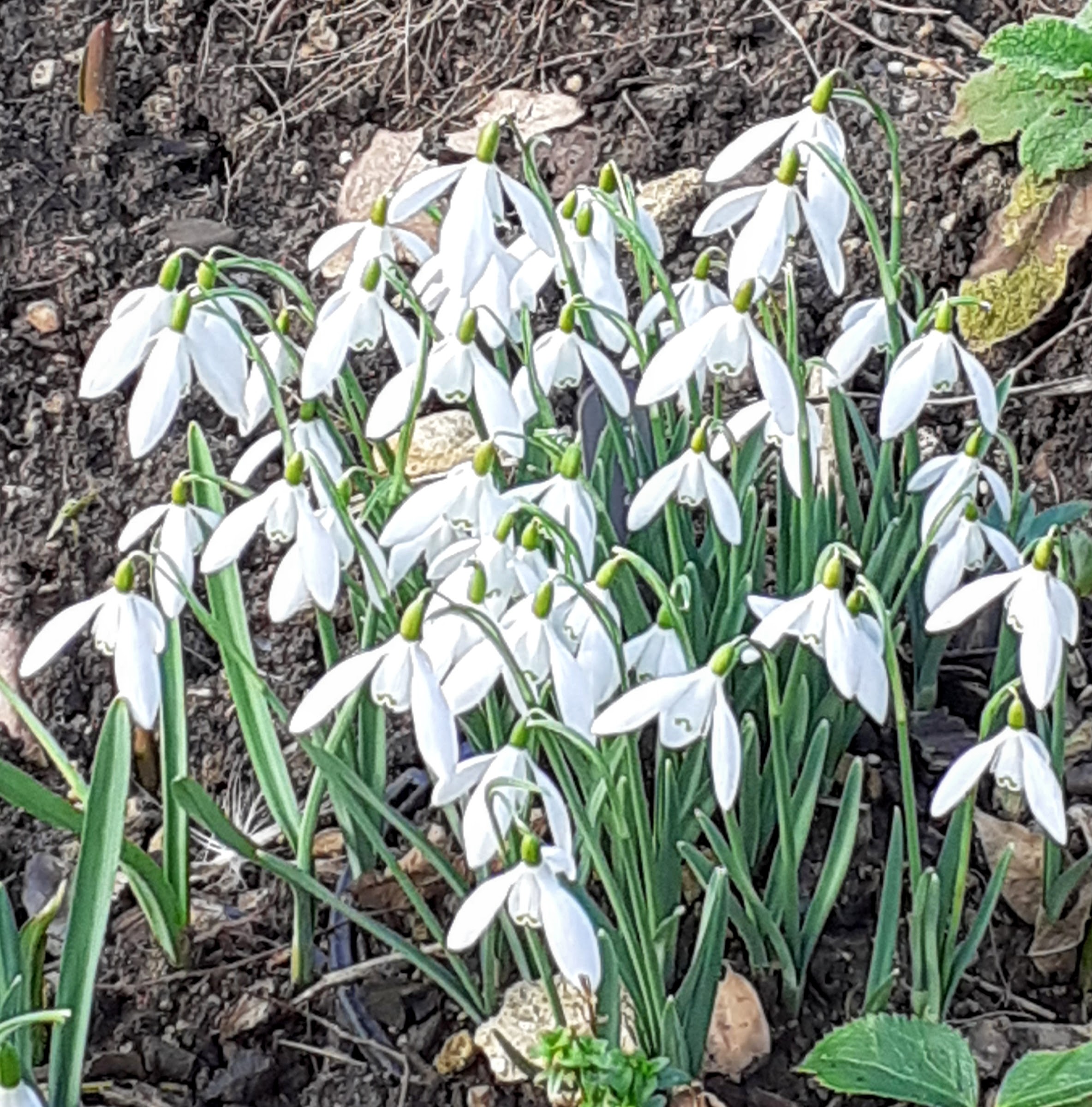
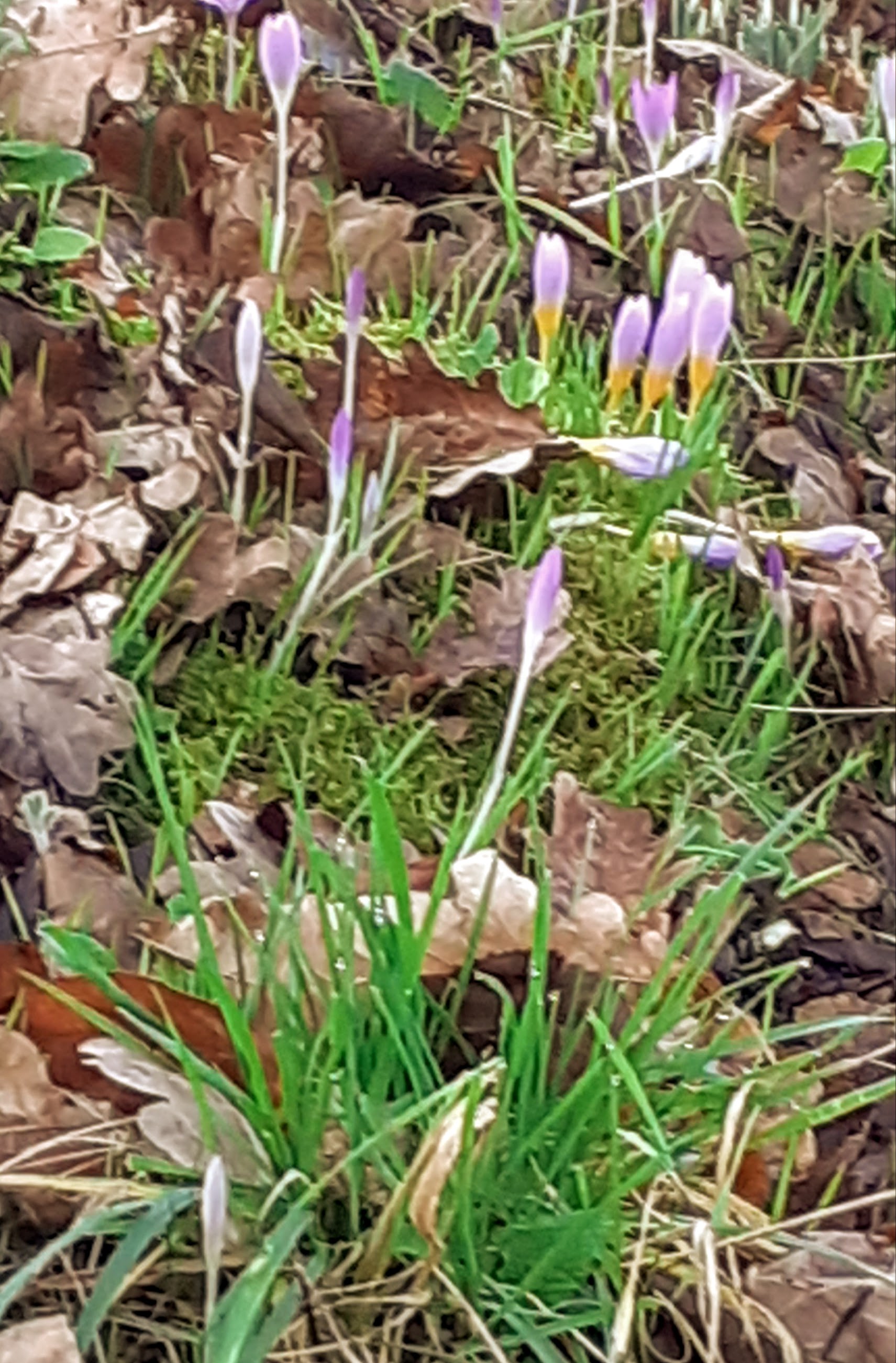
Every process in nature has its season, and its interdependence with other processes and events occurring at the same time. Part of our climate crisis involves the breakdown of long-standing relationships of interdependence. Where I live, the year at least seems, mostly, to move in its time-honoured way, though with an increase in storms and flooding. The flowers of early spring are comforting both in their presence and promise. Yet there are nagging questions about what disruptions the future holds for us, and how soon. This is before I open my awareness to include what other people in other places are already having to deal with.

Such instability impacts my contemplative life. I cannot rely on an externalised ‘nature’ for re-assurance about a world and life that will endure for me, or for beings like me living lives I can recognise. Conceptually, I have always known this, at least since I read H. G. Wells’ The Time Machine when I was eleven years old. It opened me up to the full implications of evolution by natural selection, a memorable moment in my education. I can remember sitting in early summer grass absorbing the insight. Now, both context and understanding are different. I am a lot older, in a time where premonitions of decline and fall can be placed in a near rather than remote future.

Yet the wheel of the year continues to move beautifully around the circumference of my circle. The centre is a different space entirely. I name it, in the About section of this blog, as “an at-homeness in the flowing moment”. This phrase comes out of my own experience rather than from the language of the traditions, and it “is not dependent on belief or circumstances, but on the ultimate acceptance that this is what is given”. I link this with peace and non-separation from source, a groundless ground though the latter might be.

Over the last year I have been influenced Robert Lanza and Bob Berman’s work on Biocentrism (1,2) discussed at https://contemplativeinquiry.blog/2020/02/03/biocentrism/ – I find myself leaning into their view of a cosmos where space and time are removed as “actual entities rather than subjective, relative and observer-created phenomena” thereby pulling the rug “from the notion that an external world exists within its own independent skeleton”. Such cosmology, not yet on the horizon for the Wells of 1895, makes reality more provisional and more ultimately unknowable than the reality of common sense. But for me, common sense reality is not lessened by being relativised, and I remain very busy with space and time. Rather, it becomes richer and more vivid, and more imbued with possibilities and potentials than my blinkered understanding can readily grasp. My contemplative ‘centre’ (ultimately unboundaried) is paradoxically a setting of peace and happiness – and also one of creativity and hope.

(1) Robert Lanza, MD, with Bob Berman Biocentrism: How Life and Consciousness are the Keys to Understanding the True Nature of the Universe Dallas, TX: Benbella Books, 2009

(2) Robert Lanza, MD, with Bob Berman Beyond Biocentrism: Rethinking Time, Space, Consciousness, and the Illusion of Death Dallas, TX: Benbella Books, 2016

Earth Eclectic

music that celebrates Earth and speaks to the heart

Sarah Fuhro Star-Flower Alchemy

Follow the Moon's Cycle

Muddy Feet

Meeting nature on nature's terms

Rosher.Net

A little bit of Mark Rosher in South Gloucestershire, England

Becoming Part of the Land

A monastic polytheist's and animist’s journal

selkiewife

Selkie Writing…

Charlotte Rodgers

Images and words set against a backdrop of outsider art.

Prof Jem Bendell

living with metacrisis and collapse

Towint

The pagan path. The Old Ways In New Times

The Druids Garden

Spiritual journeys in tending the living earth, permaculture, and nature-inspired arts

The Blog of Baphomet

a magickal dialogue between nature and culture

This Simple Life

The gentle art of living with less

Musings of a Scottish Hearth Druid and Heathen

Thoughts about living, loving and worshiping as an autistic Hearth Druid and Heathen. One woman's journey.

Wheel of the Year Blog

An place to read and share stories about the celtic seasonal festivals

Walking the Druid Path

Just another WordPress.com site

anima monday

Exploring our connection to the wider world

Grounded Space Focusing

Become more grounded and spacious with yourself and others, through your own body’s wisdom

The Earthbound Report

Good lives on our one planet

Hopeless Vendetta

News for the residents of Hopeless, Maine