I have lived in Gloucester since January 2022. Specific locations in the city affect me in different ways.
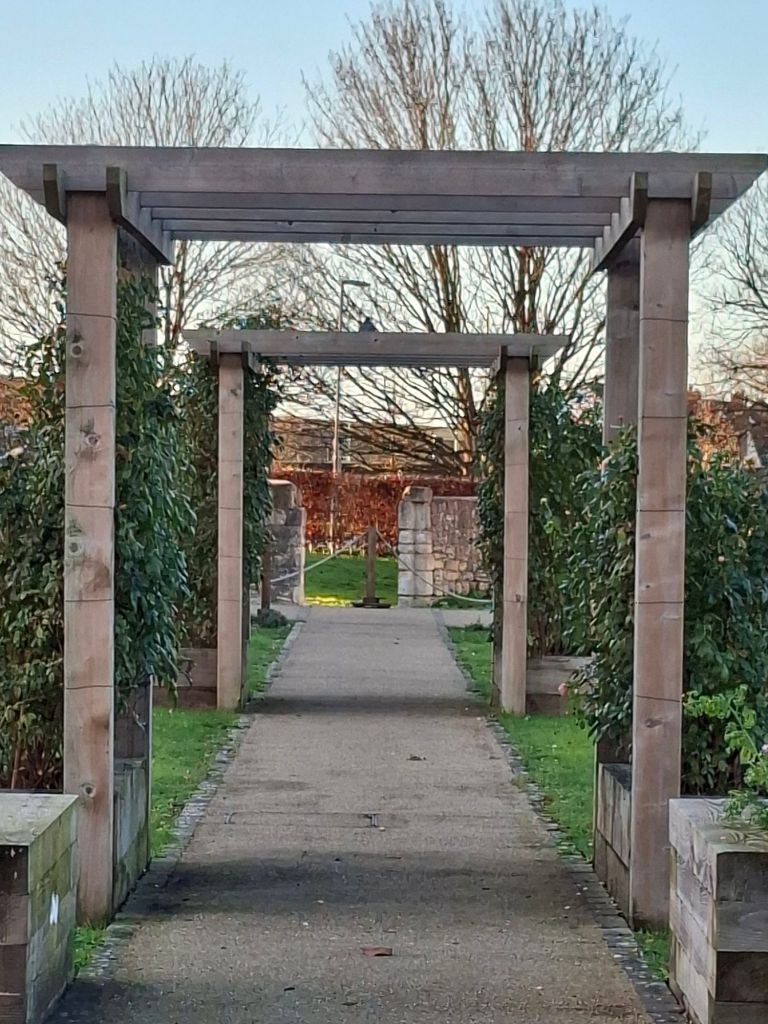
The physic garden at Llanthony Secunda Priory is one of them. It feels both open and tranquil. Earth and sky are strongly present and jointly nurturing. It is a good space for unpressured reflection.
I was in the garden yesterday afternoon, feeling my way into 2026. It was a bright moment in the day, about an hour before the still early sunset. It was cold but not freezing. I was feeling good in myself. I wondered how my life with Elaine will unfold now that we are both a little more mobile. I reflected on the dance of loving and being loved.
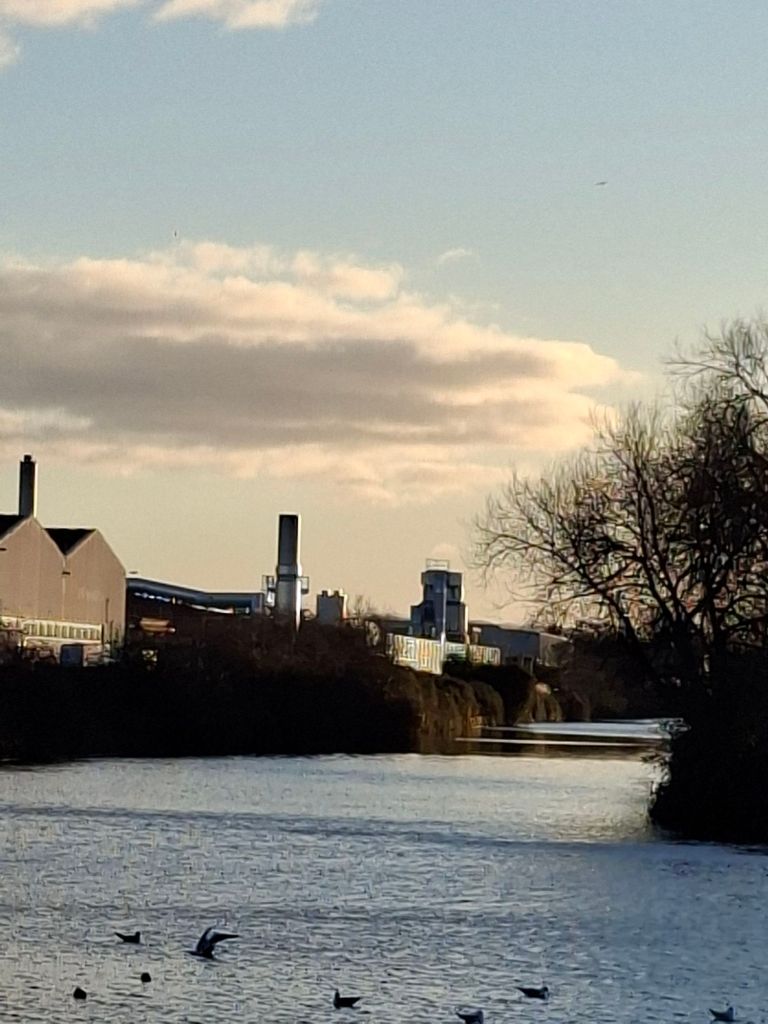
As I left the garden, I acknowledged my fears about the wider world. I walked to another favourite place, very close to Llanthony, where the Gloucester canal begins its journey out of the city. There is irrepressible bird life in the foreground and a (to me) liberating expanse of water beyond. My picture doesn’t tell me what’s around the corner and I am reminded to live with unknowing. I didn’t walk any further out on this occasion.
Returning home, I learned the news from Venezuela – in particular the kidnapping, as I would name it, of the President. I fear this may become yet another running sore in the life of the world. Modern Druidry, my spiritual anchor, has a strong commitment to justice and peace, where each is understood as compromised by the absence of the other.
Druidry isn’t an ‘above the battle’ path. Whilst not mandating any specific partisanship, this path does assert political values and points to a willingness to engage. So, in 2026, I’m asking myself more specifically where to put my now somewhat limited energies, and how justice and peace work meshes with my contemplative inquiry. Indeed, this is where my inquiry has now arrived.
Highly recommended, especially for readers interested in local initiatives to address the climate crisis. Bournebridge over Troubled Waters (1) is a sequel to Tony Emerson’s Unlikely Alliances, which I reviewed in October 2022 – (https://contemplativeinquiry.blog/2022/10/27/book-review-unlikely-alliances/). Although the new book stands on its own, I think it works best after reading Unlikely Alliances, now republished as Creating Hope in the Valley of the Bourne. The setting continues to be a fictional community on England’s south coast.
In the new book, we have reached the year 2030. The publisher’s blurb describes it as ‘a story of love and friendship’ as well as commitment to climate action. On my reading, the ways in which people do ‘love and friendship’ are integral to the action itself.
This is shown in a group of leading characters who gradually assemble together in an old rectory building. This is less by design than the need for decent housing and a belief that larger dwellings should be fully occupied. But the rectory evolves into a strong base for its residents’ flourishing.
In many ways they are a diverse group. But they all, sometimes with a little tlc, reveal themselves as naturally affectionate and ethically grounded. The culture of the house nurtures these co-operative qualities. It is a creative and supportive place to live. As part of the life of the house, the residents develop a system of peer mentoring for their work in the wider world. There’s also a concern, for some of them, about a progressive Christianity that honours the world and the flesh and is ecologically aware. I am reminded of Matthew Fox’s use of the term ‘original blessing’.
As was the case in Unlikely Alliances, the government is committed to climate action. The earlier book describes their Climate Action Plan, which has put serious wealth taxes in place, rationed fuel and food (especially meat), placed restrictions on air travel, created a Civilian Community Service Corps to provide training and jobs for the unemployed and 2 years national service for school and college leavers. Housing policy is not all about new build, but also addresses better use of existing resources.
The fields covered by our band of rectory activists and their colleagues include agriculture, hospitality, renewable energy, relevant university research, transport, housing, trades union development, clothing (new and renewed), second hand shops, and renovation, repair and maintenance services of various kinds. These are practical needs and also model a cultural shift away from throwaway consumerism. All of this work is depicted as dynamic and gaining momentum.
Temperatures are continuing to rise, and there is an unprecedented level of flooding to contend with. At the same time, vested interests and violent climate deniers, branded as ‘True Britannia’, continue to undermine the Climate Action Plan. Life goes on. Lovers get together. Children are born. Older people die and are lovingly remembered. Music is made. Rugby is played. Hospitality is exchanged. Events are organised and enjoyed. People maintain contact with family members further away, travelling throughout Britain and Ireland, though rarely further than that. It is not clear what the future will hold, but there are some grounds for optimism.
When I finished reading Bournebridge over Troubled Waters I felt as if pitched back into my own timeline. It’s as though my 2025 couldn’t be the one that led to their 2029-2034. I didn’t feel that way even when I read Unlikely Alliances in 2022. My reading of books like this seems to depend not only on who I am but when I am. If I become timeless, I can respond to these books as parables reminding us that we have the power to be better than we are. We just don’t use it enough. That’s a call to respond to whatever the outward circumstances or likely outcomes.
(1) Tony Emerson Bournebridge over Troubled Waters UK: The Conrad Press, 2O24 (www.the conradpress com)
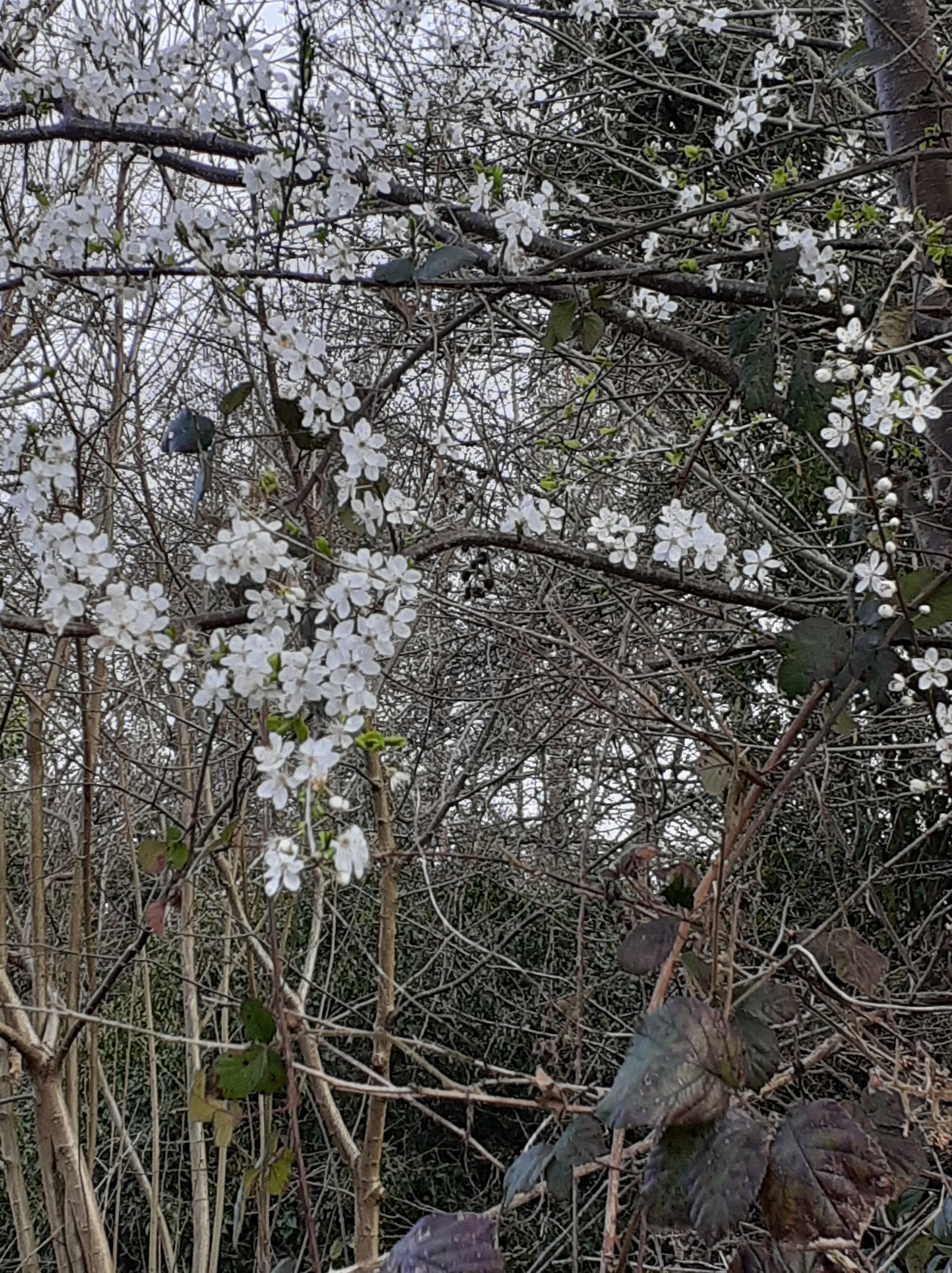
I am connecting with spring and its urgent affirmation of life – its green shine and fecundity. It is the sunrise season, the season of early growth. For me, where I live, the immediate pre-equinox period often generates a strong feeling of dynamism and emergent potential. I am in sync with the awakening earth.
Elaine’s return from hospital and the enhanced clinical support she is receiving are helping me to live this season more fully. In our joint lives we are both feeling more agency in shaping a new phase in our life together.
In this moment I feel refreshed and optimistic within my Druid contemplative path. I have adjusted my formal practice so that I have two practice sessions in the day, both of them roughly twenty minutes long. The first, at the beginning of the day and standing, is affirmative and dynamic. It includes body and energy work and a theme of healing and rejuvenation. The second, at the end of the day and sitting, is contemplative. It includes breathwork, a mantra meditation using beads, and prayer. In the modern Druid manner it includes a commitment to the collectively imperilled qualities of love, peace and justice. This shift is having a renewing and reinvigorating effect on me, as befits the season: another way of gratefully affirming the gift of a human life.
According to Andrew Harvey (1), the translator of this brief poem by Kabir, “Kabir is far more than a poet; he is a universal initiatory field, as expansive as Rumi and as embodied, radical and ferocious as Jesus”. I certainly experience a creative shock in Kabir’s celebration of being ‘nobody’ in a world where being ‘somebody’ is such a highly valued social accomplishment. But what if the accomplishment distracts from something else, something of greater value? Kabir invites us to share the ‘ecstasy’ of being nobody. In another of his verses, which were performed as songs, Kabir links this ecstasy with love:
“You can’t grow love in gardens
Or sell it in markets.
Whether you’re a king or peasant
If you want it
Give your head and take it”.
In my experience, Kabir’s work opens a door to forms of contemplation and creativity in which my personality and personal biography are not the primary focus. Especially in darkening times, bearing witness to the way of the heart, and drawing strength from it, is a form of sacred activism. The liturgy of modern Druidry speaks of a love of justice and a love of all existences, embedded in a living relationship with Spirit. This for me is a commitment to live from.
(1) Kabir Turn Me To Gold: 108 Poems of Kabir Unity Village, MO: Unity Books, 2018 Translations by Andrew Harvey. Photographs by Brett Hurd.
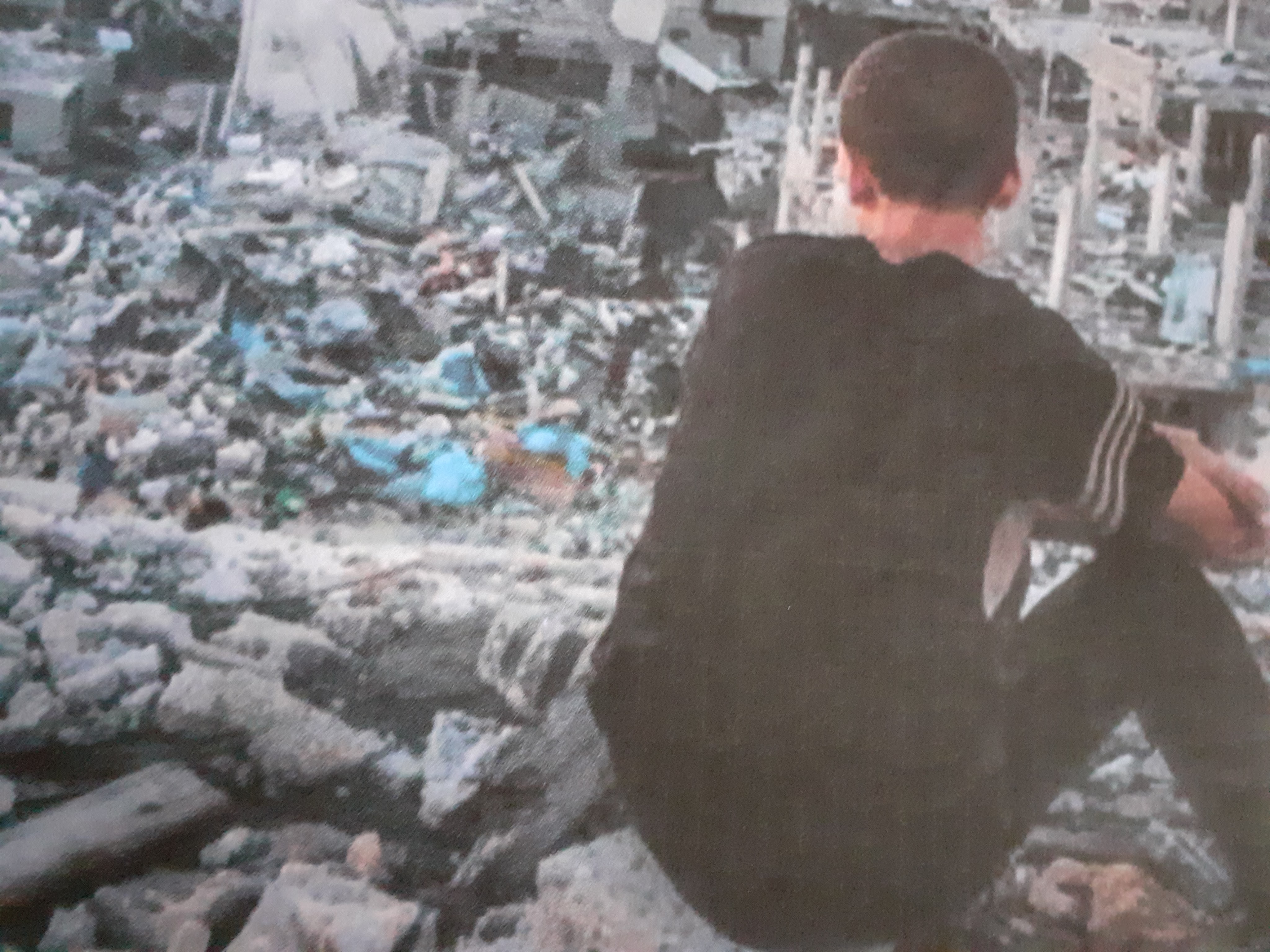
“In Gaza, there is no ‘post’ [traumatic] because the trauma is repetitive and ongoing and continuous.” Dr. Samah Habr is Head of Mental Health Unit, Palestine Ministry of Health. She wrote these words in 2021, after the 11 day Israeli day air assault carried out in May of that year. It was the fourth war since the beginning of the blockade of Gaza in 2007. Recently I attended a Zoom event, predominantly for Amnesty International volunteers (1). Dr. Habr gave a presentation about mental health in the Palestinian territories occupied by Israel since 1967, with a focus on Gaza from 2007-2021, where there is good enough data to process scientifically. Clearly the situation is much worse today.
The blockade itself created deep poverty, an ongoing water crisis and a severe curtailment of opportunities. A mental health study of children at that time showed that 80% of Gaza’s children had experienced personal trauma and 54% met the official diagnostic criteria for PTSD. Dr. Sabr describes this prevalence of psychological trauma as ‘the disaster of helplessness’ and identifies three forms of it at play:
chronic trauma prolonged. pervasive distressing events such as poverty and institutionalized discrimination
inter-generational trauma psychological trauma experienced by the descendents of a person who has survived a traumatic event
acute trauma an extremely distressing individual event
She goes on to use the word ‘humiliation’ to describe “the pervasive and fundamental experience of the Palestinian people as a whole, under occupation, underlying the varied military, social, economic, and human rights violations that have been imposed over generations”.
One of Dr. Sabah’s principles is that “we cannot treat what we do not acknowledge”. A psychiatrist herself, she says that the Western-based medical model of mental health, codified in the DSM series, is over-individualised. Palestine has few resources for mental health provision, and few mental health practitioners. (There have been some, even in Gaza – 12 of the 67 children killed in the 2021 action were participating in a trauma recovery program.)
Dr. Sabah introduces the concept of Sumud and defines it as a combination of of endurance and steadfastness, both individual and collective. A mental state as well as action oriented, it:
is prosocial and community oriented
fosters endurance and steadfastness
enables defiance against oppression
promotes solidarity
is committed to keep loving despite injustice
Dr. Habr suggests that historical/collective trauma needs to be reprocessed collectively. “It can be alleviated through cohesive and collective efforts such as recognition, remembrance, solidarity, creativity, community psychology and mass cooperation. In youth work particularly (the Palestinians are predominantly a young population), a suggested model is that trauma informed-teachers, medical staff and parents offer community-based interventions in safe spaces – open studios, symbolic expression, theatre of the oppressed).
Dr. Sabr concludes that positive mental health cannot be achieved without justice. “Human rights are the cornerstone upon which mental health flourishes. Without dignity, without freedom, without justice, our emotional well-being is torn apart, leaving us adrift in a sea of suffering.”
All of the crimes in Israel/Gaza from 7 October 2023 have haunted me. This is my second second post about ongoing destruction of Gaza and the deadly consequences for its people (2). Do such posts have an appropriate place in my contemplative inquiry? Yes. If I am held within interbeing (3), I cannot separate myself from these events. If they enter my head, heart and dreams, they are present anyway. I am asked to be conscious and mindful or I will be prey to disabling distress and unskilful ideation. In an outer ripple kind of way, they become an issue for my own mental and emotional wellbeing.
There’s not much I can do other than be conscious and bear witness. But that, at least, is something. On behalf of her people Dr. Habr has asked the people of the West not to abandon them. So today I am moved to write about an aspect of Palestinian experience even in ‘normal’ times.
I believe that Dr. Habr has also given a gift to us. Reading her account of Sumud, it seems to me that its population based take on mental health is portable. I am confident that it can be applied with appropriate cultural modifications in other settings with potentially emancipatory results.
(1) Amnesty International, as anon-partisan human rights organisation, does not take a position on what an eventual settlement in Israel/Palestine should look like. But it does advocate an immediate cease-fire, an embargo on military sales, and a dismantling of the apartheid system operating in the whole territory both for Arab Israelis and Palestinians living under occupation. The event I attended included presentations on possible pathways to peace and Jewish opposition to the current war. For general information about Amnesty in the UK, see https://amnesty.org.uk/
I was moved and inspired by Philip Carr-Gomm’s recent Peacemaking podcast on his Tea with a Druid. In the first five minutes he checks in with his live viewers, as is his custom, and finds a theme of anxiety and distress about world events. He speaks of the need for ‘islands of sanity’ – enclosures of calm and peace. He introduces the hope that the people gathered together by the podcast itself can become one. A guided meditation later in the podcast does the job. The gathering becomes an enclosure of calm and peace in real time. It still worked for me well after the event. Such is the magic of Druidry.
Before the meditation, Philip explains the role of Druids, ancient and modern, as peacemakers. The ancient Druids were exempted from military service and had a pan-Celtic authority. A Roman author depicts Druids as walking between warring tribes, urging calm and asking the fighters to put down their weapons: they were “shaming Mars before the Muses”. The God of war and destruction had to bow down before the Goddesses of creativity and inspiration. The Druids of that time were also lawmakers and judges. In Ireland, St. Patrick valued their Brehon Laws so highly that they were written down and continued in force. Peacemaking, peacekeeping and jurisprudence worked together.
In modern Druidry, Philip emphasises the attention given to peace in ritual, where the intention is to begin and end in peace both inward and outward. Our Druid prayer asks for justice, because where there is justice in the world there is also peace. Justice isn’t about killing. It’s about peace: right action, right speech, right thought, right behaviour. We trust the power of prayer and of consciousness directed by love. Sitting in meditation or prayer influences the people involved, and creates a field of consciousness and energy which acts as a patch of calm and peace in bad psychic weather.
I recommend readers to watch the video and, if you are willing, enter into its meditative space. I also include The Modron Prayer (Modron being the Ancient Mother) in this post, as a way of ending it:
“Deep within the still centre of our being,
May we find peace.
Silently, within the quiet of the Grove,
May we share peace.
Powerfully, within the greater circle of humankind,
Highly recommended. Unlikely Alliances (1) is set in the years 2029-2033, in a fictional town on England’s south coast. It offers a degree of hope about the climate crisis, presenting a positive response to its challenges at the global, national and, especially, local levels. Towards the close of the book, one of the characters reflects on a benign economic austerity that includes social justice: “limited food in the shops, clothes and shoes having to last many years, trips abroad requiring special license … but look around us, are we really worse off?” The answer is a qualified no, on the grounds that everyday life has become less constrained and less stressful, thanks to the choices that have been made.
Unlikely Alliances offers a gentle, compassionate and good-humoured lens on a subject that can seem grim and edgy. The title refers to the changing political, professional and above all personal relationships of people working on adaptation goals in their Bourne Valley community. They are from a wide variety of backgrounds, including local government, academia, trade unions, churches, the voluntary sector, management consultancy, the hospitality industry, sports organisations and farming. Unexpected synergies are generated. The novel shows how its band of protagonists find themselves, each other and a new sense of purpose in this work. As fiction, the book has the space to be about lives as well as issues. New culture, adapted to new times, is created in the lived experience of friendship, romance and community building.
The Climate Action Plan of a progressive coalition government provides a political framework, drawing on ideas from the US 1930’s New Deal and the UK reconstruction post World War 2. It is in power because of a wake-up call resulting from a huge inundation in the Netherlands and the presence of a large number of Dutch refugees in Britain – a disaster too close to ignore. For the first time since the mid twentieth century, serious wealth taxes are in place. Food and fuel are rationed: everyone gets at least something at an affordable price. There are new approaches to housing. A Civilian Community Service Corps provides training and jobs for the unemployed and a two-years national community service for school and college leavers.
In crisis conditions, this government is broadly popular. Even so, it is vulnerable to defections within its own Parliamentary ranks, the vigorous opposition of vested interests and those who speak for them, and the violence of militant climate denialists on the street. These struggles are not minimised, and they are vividly portrayed in the book. But most of the focus is on resource and resiliency building at the local and regional levels, and on the changes in the lives of the main characters, as they open up to each other’s influence and affection. It is their efforts that prevail, since they come to make practical sense to more and more people.
A brief review cannot do full justice to a book that deals with a civilisation at the edge, presented from a stance of generosity and warm commitment to human flourishing. Tony Emerson has long experience of working with environmental issues and is also an accomplished storyteller. I found Unlikely Alliances heartening and enjoyable to read, and a well-informed glimpse into a possible near future.
I love the sky in most weathers. I especially love it when it is azure blue and feels like a high domed roof, well able to contain the movement of wispy, shapeshifting clouds. The sky is part of nature, just like the earth. It is not a detached, alienated realm, beyond the influence of what some traditions might call our little life.
Sometimes I wish it was beyond our influence, as the news about the climate crisis goes on getting worse. The moment of joy is infused with a heartache that has every right to be there. It reminds me of our interconnectedness, and the Druid prayer for knowledge and love of justice, and, through that, the love of all existences (1).
I will stay open to my simple joy at inhabiting a living world of beauty and abundance, even if sadness keeps it company. The healing pleasure of sky-gazing is a part a long, common inheritance, not to be repressed, numbed or lost. I will continue to invite it in and let it nourish me.
(1) One modest practical way to enact the love of justice and of all existences, beyond lifestyle adjustments, is to support https://www.stopecocide.earth/ – now gaining momentum.
This post follows on from my recent post on Patterns and Peace (1). There, I discussed the role of ritual patterning in a sunrise practice. Here, I discuss the role of meditation in a sunset one. In both cases I experience peace as an active energy – empowering, nourishing, and close to the Source.
In the evening I do not cast a circle. I simply sit down facing my altar and say: May there be peace in the seven directions. May I be present in this space. I say the Druids’ prayer, affirming the commitments to a love of justice and the love of all existences. I see them as the necessary context for the manifestation of true peace in the world.
I talk myself in to the meditation itself with other words customised from Druid tradition: Deep in my innermost Being, I find peace. Silently, in the stillness of this space, I cultivate peace. Abundantly, within the wider web of Being, may I radiate peace.
Starting with a focus on my heels, extended to include my feet as a whole, I tune in to my felt sense of body and life energy. Moving gradually up my body, I pay close attention to my emerging experience of a physical and energetic field, which I find to be light and spacious. I also notice the breath. Surrendering to this universe of internal experience, I can enter an awareness of deep peace, joy, and wonder at the miracle of experiencing. This is beyond ‘At-Homeness in the flowing moment’. I call it the Peace of the Goddess.
Coming out of meditation, I say I give thanks for this meditation. May it nourish and illuminate my life. May there be peace in the seven directions. May I be capacity for the world.
I do not meditate for long periods. This whole practice, including liturgy and meditation, takes about half an hour. The phrase ‘capacity for the world’ uses the language of the Headless Way (2) and indicates that if we enter into our true nature as clear awake space, we become, in our everyday lives, ‘capacity for the world’. The meditation is both the experience that it is, and a resource for life and contribution to the world.
I have done meditations of this kind for many years. Recently, this meditation has become richer and more focused. I believe this to be partly due to practice and partly to the season – I find both equinoxes enabling for meditation. But there is also the benefit of increased understanding. I am grateful to Eckhart Tolle, whose work I have begun to engage with, when he says: “What I call the ‘inner body’ isn’t really the body any more but life energy, the bridge between form and formlessness … When you are in touch with the inner body, you are not identified with your body any more, nor are you identified with your mind. … You are moving away from identification to formlessness, which we may also call Being. It is your essence identity”.
For me, the skilful patterning of experience provides a gateway to re-enchantment. It reminds me that there are multiple ways of seeing the world, some obvious and others more occluded. The early morning can be a time of affirmation through ritual patterning that makes a mark on the day.
Mine begins with a morning circle which emphasises peace. Peace, here, is an active energy, not a passive absence of overt conflict, or a blind eye to dysfunction and injustice. Peace has to struggle, in this world, through skilful means that do not compromise its essence. Ritual can be one. I describe my morning circle below.
I go into my practice space, stand in the east facing west, ring my Tibetan hand bells and say the St. Patrick’s prayer (aka Cry of the Deer).
I arise today through the strength of heaven, light of sun, radiance of moon, splendour of fire, speed of lightning, swiftness of wind, depth of sea, stability of earth and firmness of rock.
Then I cast a Druid circle, calling on the four directions, each associated with a cosmic power, an element, a power animal, a quality, a time and a season.
East: May there be peace in the east, power of life, element of air, domain of the hawk, quality of vision, time of sunrise, season of spring and early growth.
South: May there be peace in the south, power of light, element of fire, domain of the dragon, quality of purpose, time of midday, season of summer and of ripening.
West:, May there be peace in the west, power of love, element of water, domain of the salmon, quality of wisdom, time of sunset, season of autumn and bearing fruit.
North: May there be peace in the north, power of liberation, element of earth, domain of the bear, quality of faith, time of midnight, season of winter, of dying and regeneration.
I also call the Below, the Above and the Centre, to make seven directions in all. Moving to the vertical dimension indicates a deepening, enacted by my spinning in place before bringing it in, and by the use of mythic names for the Below and Above.
Below: May there be peace below, in Annwn , realm of the the deep earth and underworld.
Above: May there be peace above, in Gwynvid, realm of the starry heavens.
This is followed by a further deepening into the centre, enacted through another spinning in place. Here, I am no longer calling for peace, but standing in its source.
I stand in the peace of the centre, the bubbling source from which I spring, and heart of living presence. Awen (chanted as aah-ooo-wen)
After a pause, I walk the circle, sunwise, east to east, and say I cast this circle in the sacred grove of Druids. May there be peace throughout the world. At this point I have established my sacred grove, my nemeton. All that follows is within this dedicated space until I uncast the circle on completion of my practice.
This ritual patterning, made substantial both physically and verbally, includes a celebration of sacred nature, provides a structure and a set of meanings to hold and guide me, and emphasises the commitment to peace.. Although I have personally customised this framework, most of it – anything to do with personality and external world – anchors me in modern Druid culture.
The centre is different. The centre is universal. It is the point where Oneness is recognised. “The bubbling source from which I spring” has a naturalistic feel whilst also referencing Jean-Yves Leloup’s translation of the Thomas Gospel, logion 13, where Yeshua says to Thomas: “I am no longer your master, because you have drunk , and become drunken, from the same bubbling source from which I spring” (1). ‘Heart’, as used here, is neither the physical heart nor the heart chakra, but “the Great Heart that contains All-that-is … the consciousness that underlies all forms” (2). ‘Living presence’ too points to the state of underlying conscious awareness that is here being recognised (3,4). For ritual language that honours that recognition, I draw on the mystical inheritance of the world and place myself in a wider circle of care.
At one time I tended to experience casting circles as a preliminary to practice, whilst also ‘knowing’ in a roof-brain kind of way that this was a mistake. Now I find it a powerful means of bringing me into the new day. Above all, it affirms my core understanding of world and life with every sunrise.
(1) The Gospel of Thomas: the Gnostic Wisdom of Jesus (Translation from the Coptic, introduction and commentary by Jean-Yves LeLoup. English translation by Joseph Rowe. Foreword by Jacob Needleman) Rochester, VT: Inner Traditions, 2005
(2) Sally Kempton Meditation for the Love of It: Enjoying Your Own Deepest Experience Boulder, CO: Sounds True, 2011
(3) Kabir Edmund Kabinski Living Presence: A Sufi Way to Mindfulness & the Essential Self New York, NY: Penguin Putnam, 1992
(4) Eckhart Tolle Oneness with All Life: Awaken to a Life of Purpose and Presence Penguin Random House UK, 2018 (First ed. published 2008)








 Contemplative Inquiry