Contemplative Inquiry

This blog is about contemplative inquiry

Tag: Joy

SIMPLE PLEASURE IN AUTUMN LEAVES

Recently, Elaine and I walked to our local park after a  considerable absence. We were both adequately bold and mobile at the same time. We found a park very different, at least visually, to the sad, dried-up space of late  August and its premature turn.

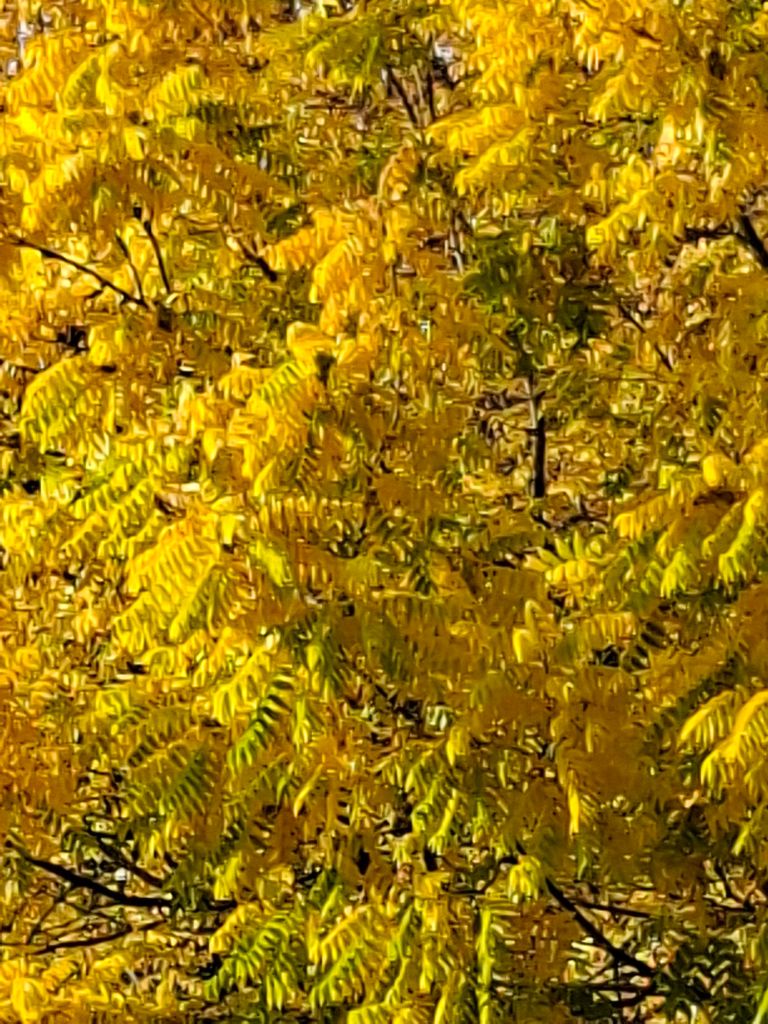
Here, above, is lush life against a background suggestive of mist. Close up, we enjoy the patterns and colours of the leaves. They seem fresh, radiant and alive.

Below, the distinctive yellow of the tree of heaven, and its fern-like leaves, provide a powerful contrast that adds to our enjoyment.
Looking from a somewhat greater distance, below, I experience a sense of majesty in seeing the whole tree (right) leaning into blue sky. Its slightly closer neighbour (left) provides a subtle colour contrast with a deep green intermingled with brown leaves ready to fall.

Below, I have stepped back further from the trees. My picture is of a clump of trees in the park. They are largish trees. The person walking past them is dwarfed. But I’m still enjoying leaves. I like the reddish brown emerging from residual green. I see Nature at work in a way that is both understated and beautiful. I know also that it can be a sheltering space within a generally flat and open park.

I still have a particular affection for willow, going back 20 years when I was studying Druidry. I was in Bristol and befriended a willow on the banks of the Bristol Avon, where it moves out from the old city towards the Clifton suspension bridge and the gorge. I became a literal tree hugger. It was part of a process that indeed changed my life. Hence my affection for willow. I am glad that there are willows in the Gloucester  City park.

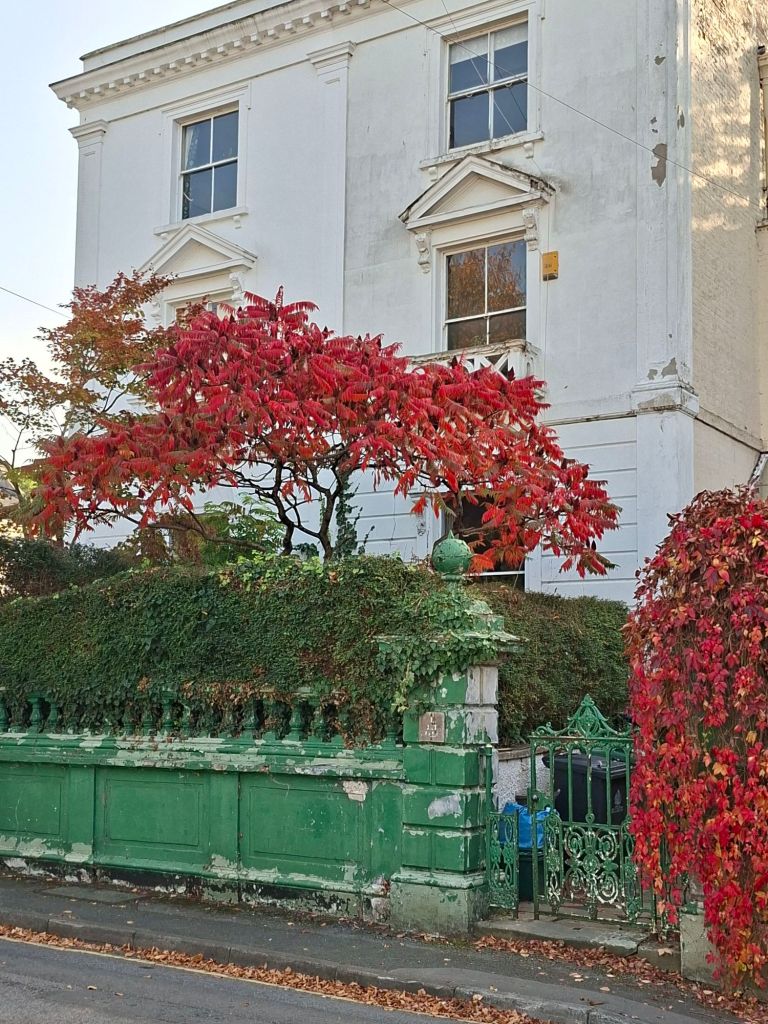
The road we took to and from the park offered leaves of autumnal red. I  believe that the tree in the front garden is a stagshorn sumac. When I walk past the tree I get a little distracted by the property’s obvious  need for a little tlc. Elaine however celebrates the opportunity taken by the Virginia creeper, as seen particularly in the second of the pictures below. It is great to see such abundance in this unpromising space.
For me, the great virtue of simple pleasures is their simplicity itself. Paying attention to the everyday  Nature around us can be deeply nurturing and involves little risk. Yet for some, it can be a portal to re-enchantment in a largely disenchanted world.
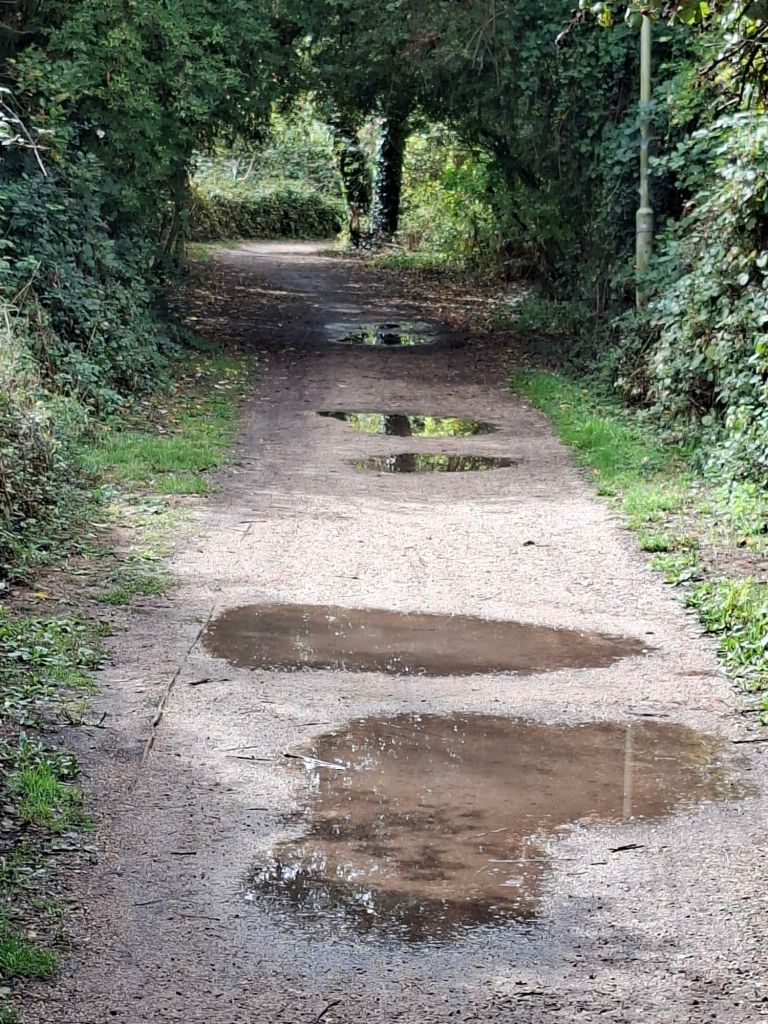
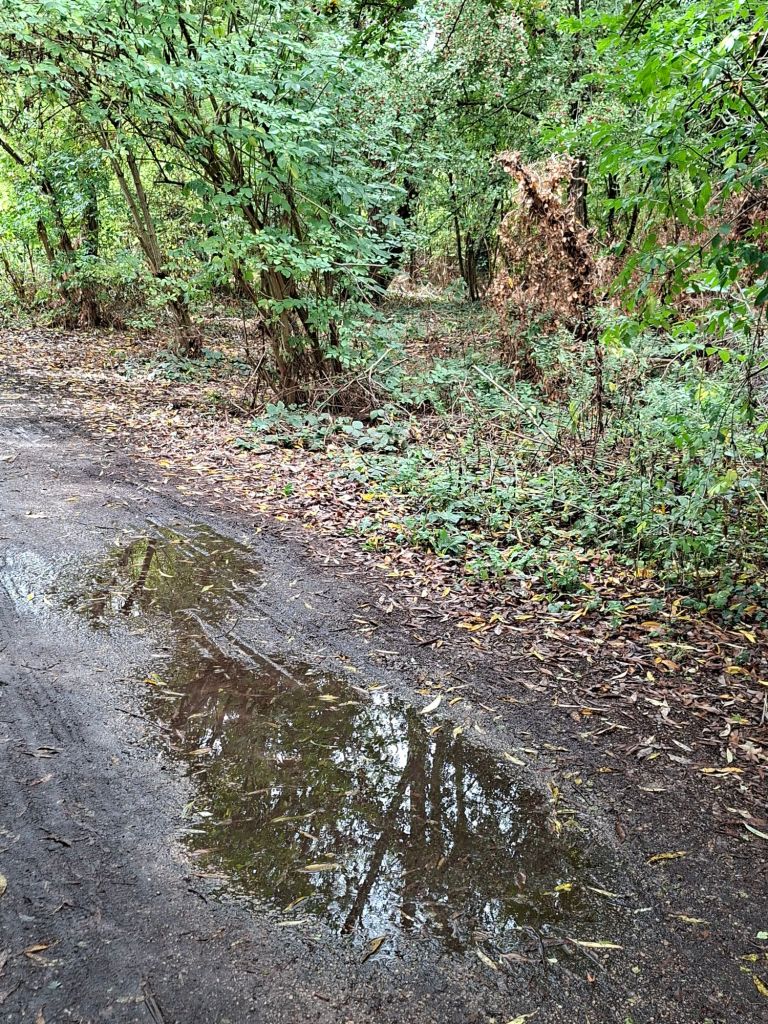
WATER ON THE PATH

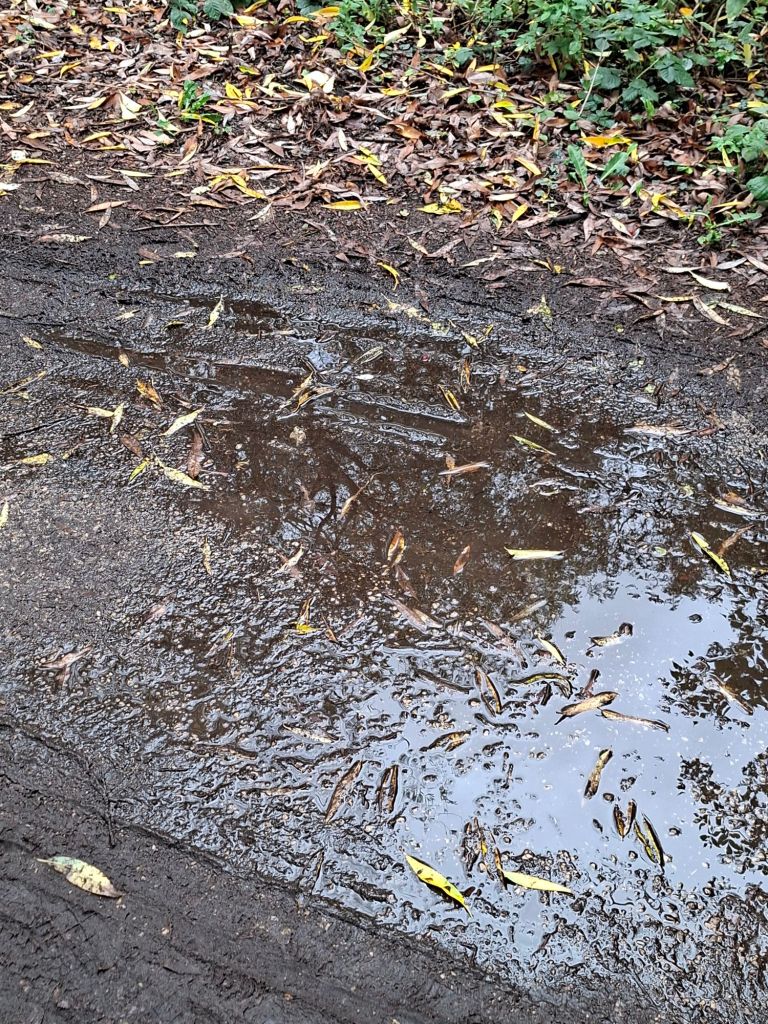
Walking on a familiar path, I found a trail of puddles in front of me. It felt exotic and refreshing. For this had been a parched and dry place for a many months. I dimly recall a past life of finding puddles a minor nuisance – almost an obstacle. Not today. They brought joy and fascination.

I found myself contemplating these small accumulations of fallen rain: noticing their shapes and patterns, seeing how the water creates mud so easily from dried soil, watching the slight movement fallen leaves in these tiny ponds. The circumstance of the long dry period and its ending made rainwater and its effects interesting and worthy of attention in ways that seemed new and almost strange. I opened myself up and became present to them, before moving on.

On my way home I was caught by a brief deluge. I made a brief video of rain on a puddle. I got wet too, yet it somehow completed my walk.

THE MYSTICISM OF SUFI MUSIC

“Music, the word we use in our everyday language, is nothing less than the picture of the Beloved. It is because music is the picture of the Beloved that we love music. But the question is: What is our Beloved, or where is our Beloved? The Beloved is that which is our source and goal. What we see of our Beloved before our physical eyes is the beauty of that which is before us. That part of our Beloved that is not before our physical eyes is that inner form of Beauty of which our Beloved speaks to us.” (1,2)

In these words, Hazrat Inayat Khan, musician, philosopher and Sufi teacher, explains the role of music in Sufi culture. Sufis seek a personal relationship, or union, with the Divine, which throughout their history has lead to conflicts with religious formalists within Islam. And whereas many of us who seek that connection, or union, find it in stillness and silence, Sufis often  seek and find it in music and movement – in states of expressive joy rather than quiet equanimity. Hazrat Inayat Khan continues:

“What makes … the musician sing beautiful songs? It is the inspiration that beauty gives. The Sufi has called this beauty Saqi, the divine Giver, who gives the wine of life to all. What is the wine of the Sufi? All beauty: in form, line and colour, in imagination, in sentiment, in manners – in all this he sees the one beauty. All these different forms are part of this Spirit of beauty, which is the life behind, always blessing … But among all the different arts, the art of music has been especially considered divine, because it is the exact miniature of the law working through the whole universe.

“Music inspires not only the soul of the great musician, but every infant, the instant it comes into the world, begins to move its little arms and legs with the rhythm of music. Therefore, it is no exaggeration to say that music is the language of beauty, the language of the One whom every living soul has loved. And we can understand that, if we realise the perfection of all this beauty as God, our Beloved, then it is natural that music, which we see in art and in the whole universe, should be called the Divine Art.”

The musical form above is called Qawwali. It arose in Hindustan, as a fusion of Persian, Arabic, Turkish and Indian traditions, for performance at Sufi shrines or dargahs. It is famous throughout Pakistan, India and Bangladesh. However the group featured above are from Birmingham, England. They have added to the fusion of Qawwali by introducing Western orchestral instruments and call their work ‘Orchestral Qawwali’. Man Kunto Maula is a well-known song in the modern Qawwali repertoire. The singer here is Abi Sampa and the production is by Rushil. This music does not directly reflect my personal practice, yet I feel moved and inspired by it when I listen.

(1) Hazrat Inayat Khan The Mysticism of Sound and Music: the Sufi Teaching of Hazrat Inayat Khan Delhi/Mumbai: Grapevine India, 2024 (Shambhala Dragon Editions)

(2) See also: https://contemplativeinquiry.blog/2025/01/21/the-way-of the heart/

SOLAR GAIN

This morning, 2 February, sunlight streamed into our flat. Soon we realised that warmth was coming in along with the light. There was no need for artifical heating.

This may not yet be spring, by most people’s reckoning. But the day has had a spring- like quality. Elaine and I both felt lifted. For me, it was as if a weight had come off my shoulders: a weight to which I had become acclimatised. I had stopped even noticing it until it was so gloriously removed.

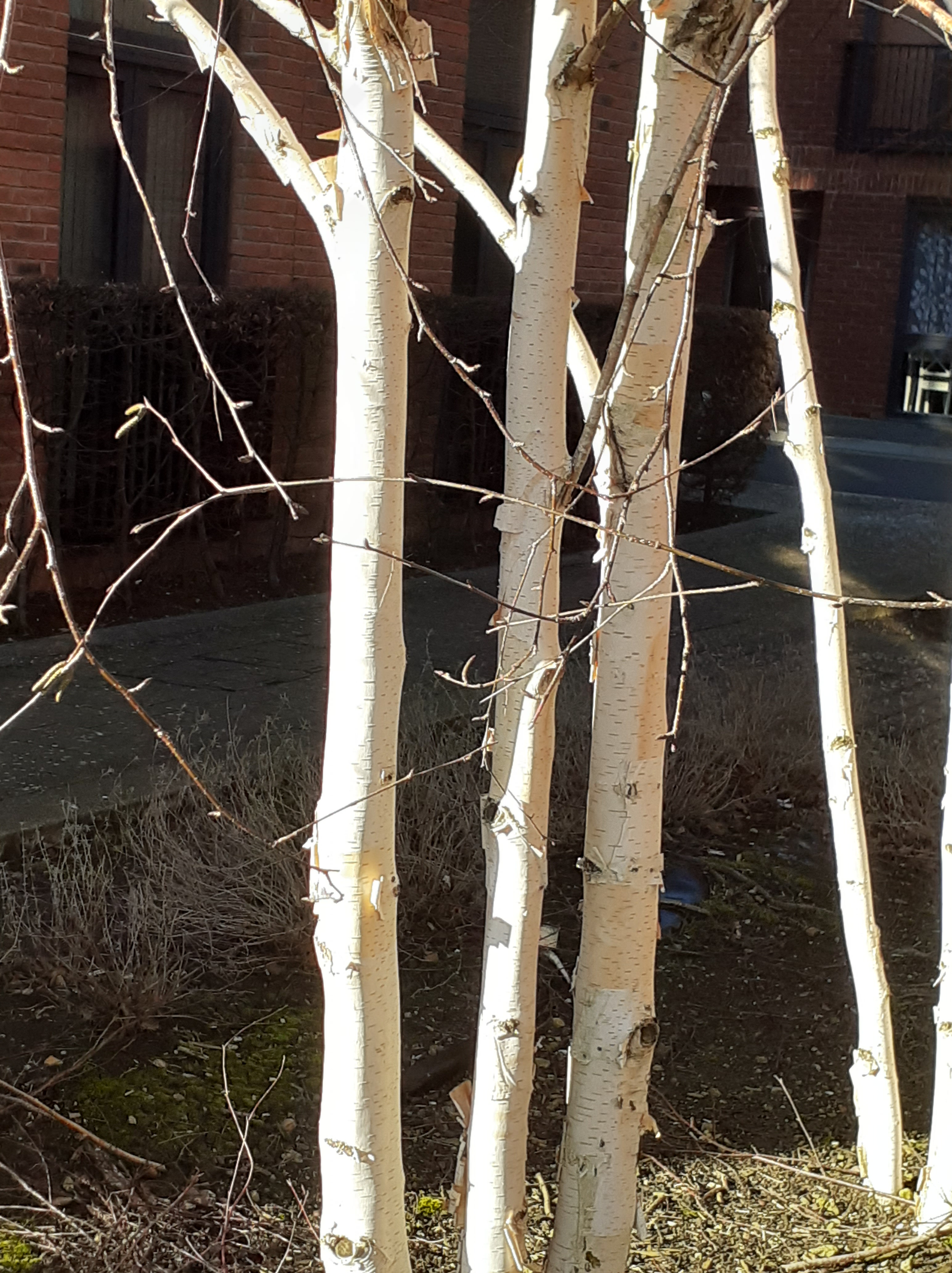
We made two trips out during the day. In the later morning we stayed near home. Elaine walked using her rollater and  spent welcome time sitting in the sun. The same sun also shone on our adopted birches. Though it’s not shown in the picture below, the catkins are greener now.

In the afternoon, using the wheelchair, we visited Gloucester docks and sat there until not long before 4 pm. The heat was beginning to drain away by the time we left, and shadows were lengthening. Yet the two pictures below show, respectively, the dazzle of sunlight on water, and a canal barge lifting its solar panels to the sun.

A great day for a festival of lights, and a welcome opportunity for exuberance.

LIVING LIGHT

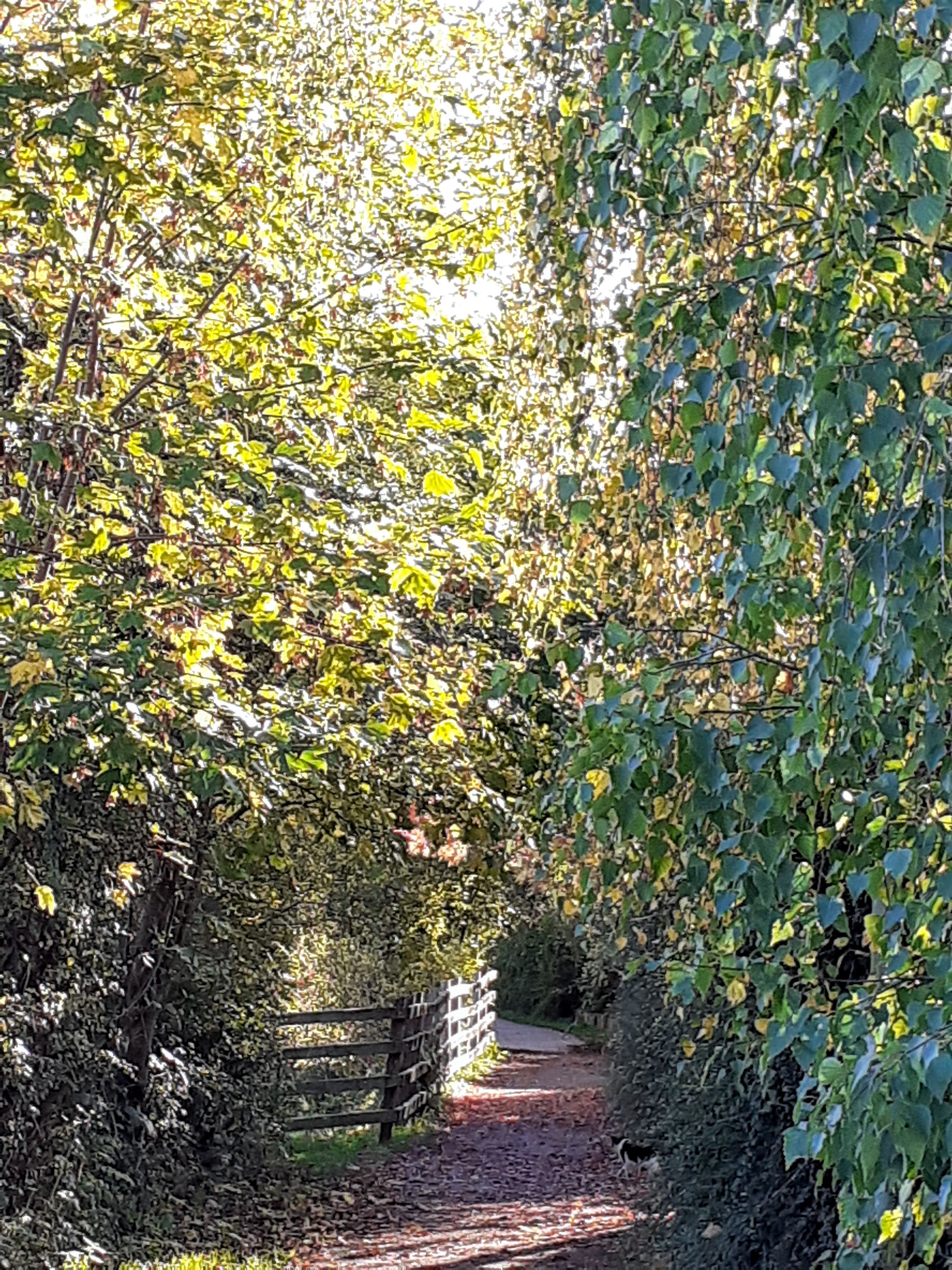
I am walking in woodland beside my local canal. These walks are infrequent now and all the more treasured. I notice how strong mid-afternoon light can be when the sky is clear, even on 22 October. Stepping energetically into its presence, I enter into a kind of communion. The light feels alive and I feel differently alive too – lifted, and touching into joy.

In the picture above, I feel as well as see the effects of the light on trees and water. In the picture below, I both feel and see the living light on leaves which themselves seem to greet me from their horizontal branch. I feel energised by this connection.

Looking up I see blue sky. I do not see the sun, but I can see its effects on the upper branches of trees. both subtle and magical. Looking down, I see a dance of light and shade, with the light present on a fence and on a pathway. A sense of the sacred pervades everything, and I feel blessed.

‘MAGIC/DELIGHT’

“When we see a magic trick – or anything else that catches us off guard in a magical way – in the moment of surprise our mind stops, and there is a flash of delight. We are in a state of mute wonder.

“The same bliss of wonder, delight, and amazement is the focus of this meditation. We use our response to propel ourselves into a state beyond the mind, a state where we see the magical nature of life.

Our delight in what we are seeing, coupled with an amazed mind, become a doorway into an intuitive flash in which we remember that life itself is like a magic show, a dream – and not at all what our worries little self was thinking it to be!

“This meditation encourages us to attend to all the moments of surprise and delight that occur throughout our day.

“The following contemplation can help prepare us to take full advantage of these moments.

Practice thinking of delight

“Bring to mind a memory of a time when you experienced surprise and delight;

“Focus on your reaction – feel fully your surprise and the wonderful sensation of your delight;

“In this thought-free moment, let the great bliss remind you of the true nature of reality;

“Remain alert for these moments as they occur throughout the day.” (1)

(1) Meditation 43 from: Lee Lyon The 112 Meditations from the Book of Divine Wisdom: the Meditations from the Vijnana Bhairava Tantra with Commentary and Practice Santa Fe, NM: Foundation for Integrative Meditation, 2019. See http://www.integrativemeditation.org

Lee Lyon’s introduction describes the Vijnana Bhairava Tantra as “a compendium of meditations from the 8th century Shaivite tradition in Kashmir. Acknowledged as one of the supreme jewels of the Tantric tradition of northern India, this much loved text had remained largely obscure until its rediscovery last century. … One of the great hallmarks of this tradition is its … enthusiastic engagement with all aspects of our life experience, even the ‘unspiritual’, as wonderful, natural gateways into our true nature”.

The basic teaching is to move through the surface appearance of our lives into “the pure energy behind form”. It is through engaging “the deeper energy in any experience, pleasurable or difficult, ecstatic or terrifying, that we move through the appearance of separation into the ever present Oneness.”

WOODLAND CONTEMPLATION

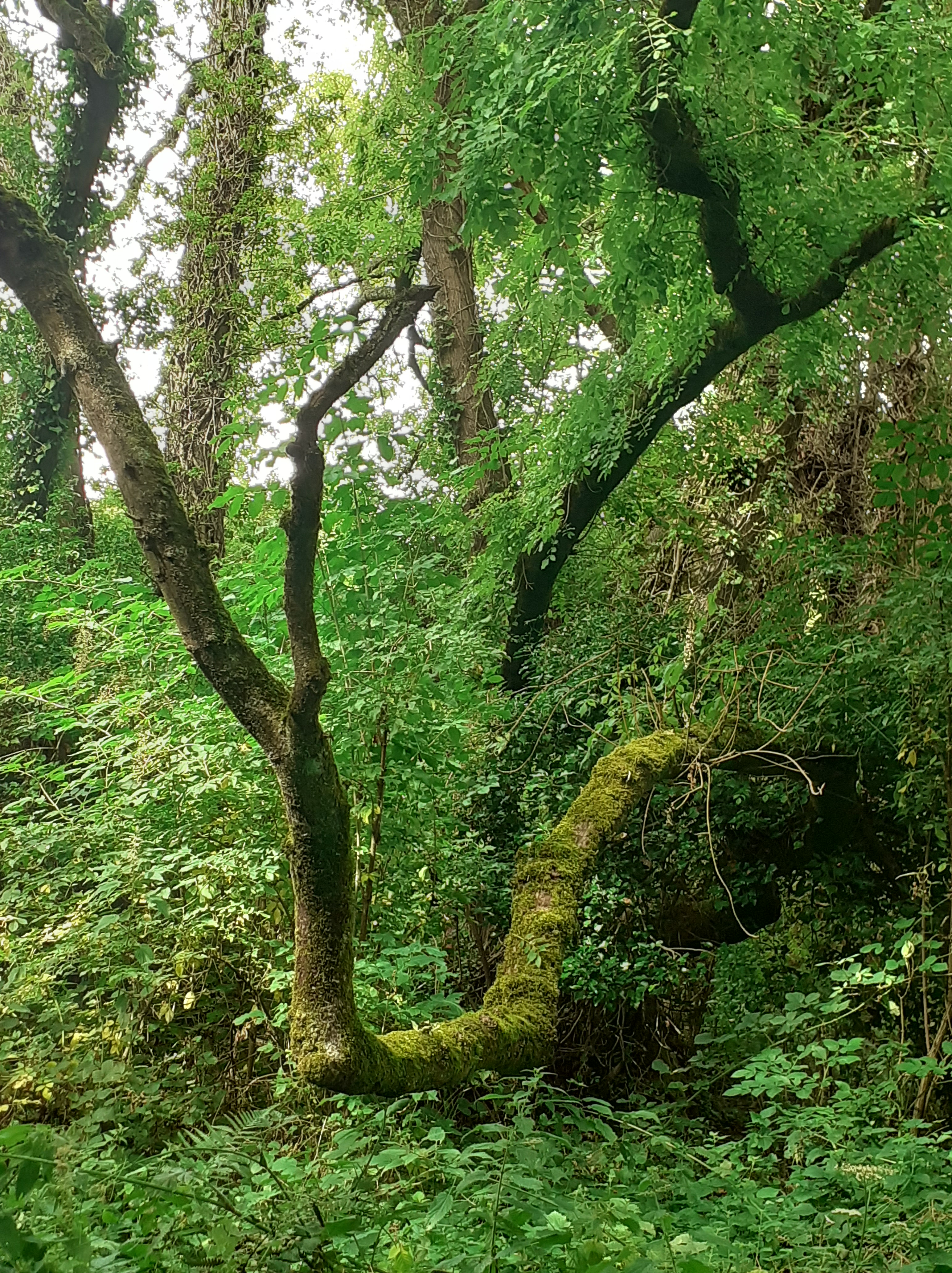
Becoming the single eye, the eye of contemplation, I am a stressless, frameless window. Unboundaried and immersed, beyond the sense of window, joyful experiencing is vivid and intimate. I am a broken branch, stuck in mud. I am a sticky ooze. I am the shadowy reflection of a tree. I am ripples on water.

Walking, I am a body in movement. Then I become a space for memories. I recall the words: “a green thought in a green shade”. Relishing these words, I become a green thought in a green shade. Then I fall into the role of self-conscious observer, morphing from my original state into another one – lacking the immediacy of the first, yet still worthy of welcome.

The woods reach out to me. They and I are distinct now, though we are still held together in the dynamism of a living world. The whole of life is in these woods as summer starts to wane.

BLUE SKY, CLIMATE CRISIS AND DRUID PRAYER

I love the sky in most weathers. I especially love it when it is azure blue and feels like a high domed roof, well able to contain the movement of wispy, shapeshifting clouds. The sky is part of nature, just like the earth. It is not a detached, alienated realm, beyond the influence of what some traditions might call our little life.

Sometimes I wish it was beyond our influence, as the news about the climate crisis goes on getting worse. The moment of joy is infused with a heartache that has every right to be there. It reminds me of our interconnectedness, and the Druid prayer for knowledge and love of justice, and, through that, the love of all existences (1).

I will stay open to my simple joy at inhabiting a living world of beauty and abundance, even if sadness keeps it company. The healing pleasure of sky-gazing is a part a long, common inheritance, not to be repressed, numbed or lost. I will continue to invite it in and let it nourish me.

(1) One modest practical way to enact the love of justice and of all existences, beyond lifestyle adjustments, is to support https://www.stopecocide.earth/ – now gaining momentum.

SILENT SITTING MEDITATION

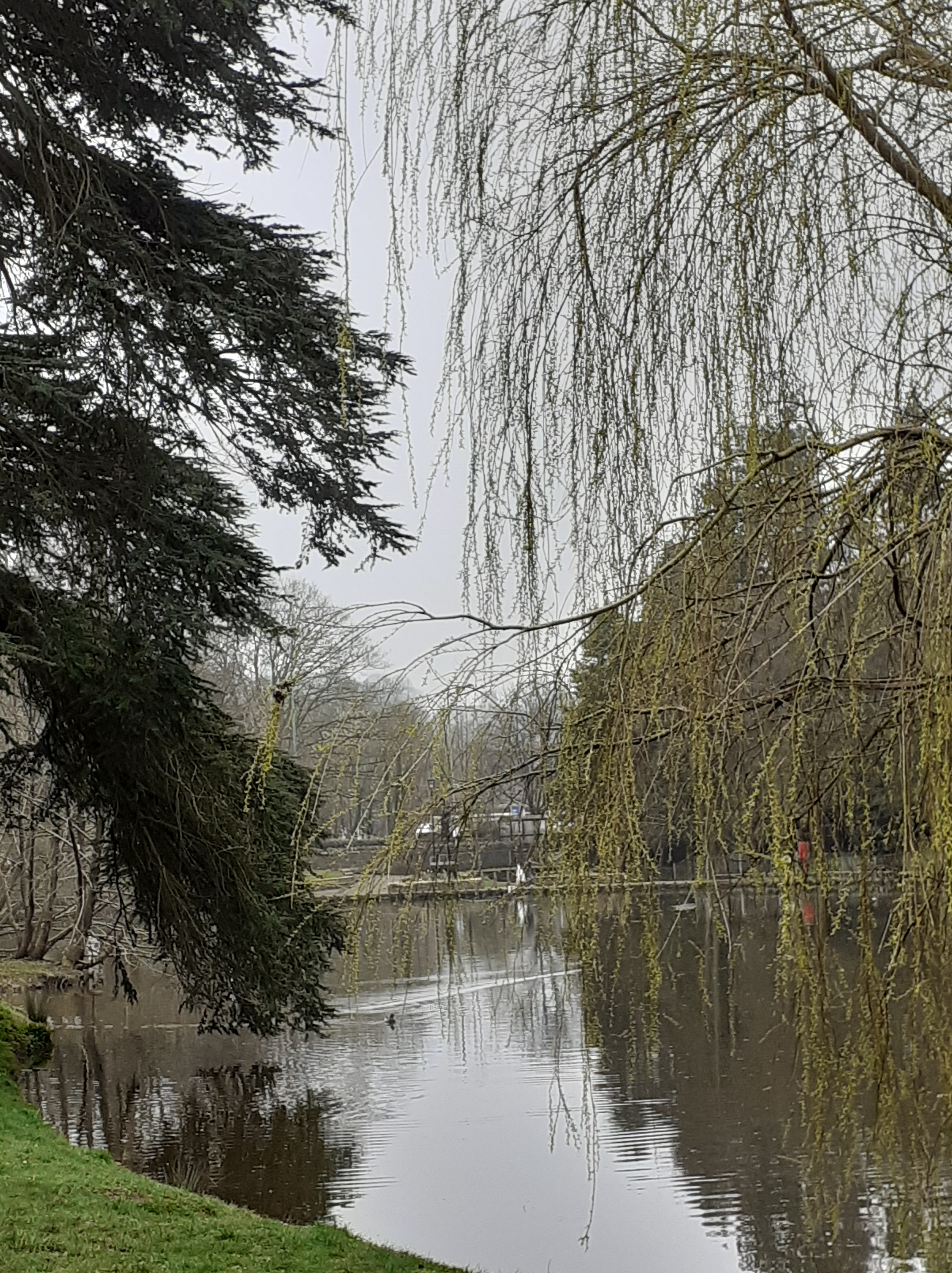
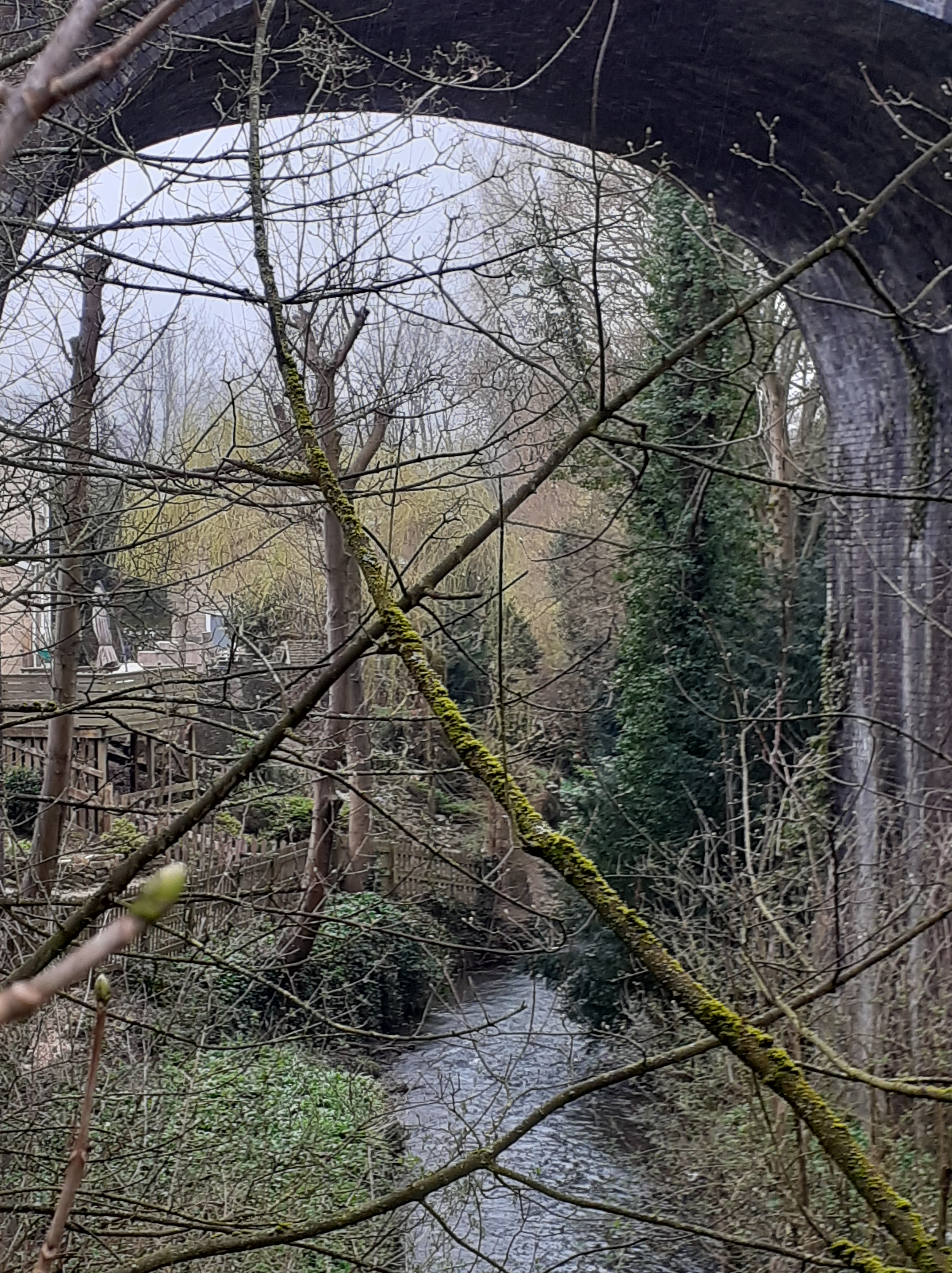
There is the moment, and there is the flow. The photograph holds the moment and the image at first seems still. Looking more closely, we can infer the turbulence that accompanies flow. All those ripples, and wavelets and swirls. They testify to the life of the stream in time.

I have taken up silent sitting meditation after a long break, making a commitment to myself of at least thirty minutes a day. I have incorporated silent sitting meditation into both my morning and evening practices, so the individual sessions need not be long. I am not made for long meditations. but I do now find that an element of silent sitting meditation enriches my contemplative life and inquiry.

I like the term ‘silent sitting meditation’ for its plainness and descriptive accuracy. I am distinguishing this meditation from the ones that I learned through Druidry, which, even when not guided, depend on visualisation and narrative. At the same time I am avoiding close identification with the ‘mindfulness’ brand. It feels like a prescriptive pre-shaping of my lived experience as a meditator. A strong intuition, gift perhaps of the Goddess in her Wisdom, wants the meditative life to be free of such labels.

So I sit. With two sessions a day, I find that my natural length of session is from 20-35 minutes and so with two sessions I am overshooting my commitment. That’s a good indication that I am not straining myself. I don’t want my meditation to be goal-oriented. Rather, I open myself to the energy of living experience, and let it lead me.

I do begin, conventionally, with a breath focus, following the sensations and the gaps after in-breath and out-breath, with loving attention. I also open myself to other sensations, which (with my eyes closed) will mostly be internal body sensations or external sounds. I think that the love in loving attention matters. There are people within the mindfulness movement who think it might better have been called heartfulness. This introduces a sense of compassion for everything that arises. Within the experience, I can feel whole, at home in the Heart of Being which holds up and informs my human life. When I am consciously present, it is a place of peace, joy and inspiration.

In the course of a session, I will taste this state from time to time. At other times I find myself engaged with images (some seeming otherworldly), or narrative streams, that I also value. These experiences seem to have an authentic energy that I cannot simply dismiss as distractions. I want to allow them in and engage with them. Indeed, even where the passing content of experience seems entirely mundane or even distressed, I will welcome it and keep it company. I will hold it in love. Outside the meditation, it may provide a cue for some more dedicated healing or inquiry process.

It may be for this reason that I do not characteristically find distress distorted thoughts and feelings hijacking or sabotaging the meditative flow. They know my willingness to meet them. This means that the other experience, the wellspring of my life, is rarely far away and never forgotten. It doesn’t even require formal meditation. For me, silent sitting meditation supports a fuller life, lived from the Heart of Being. But it is not, by any means, a requirement for it.

SIMPLY SEEING

Something happens when I simply see the world in front of me. Simply seeing involves the whole of my attention, with a de-cluttering of thoughts and other distractions. There is no tension in this spacious clarity.

But it doesn’t have to last long. Simply seeing is at heart a timeless act of recognition. There is no need to hold on to any particular state. I find it wiser to let the flow of experience move on.

If I am present to my immediate experience, it works as well for a photograph as it does in the original setting. Simply seeing the picture is not a recollection of my earlier walk. It is a unique moment of experience, and a joy in itself.

Earth Eclectic

music that celebrates Earth and speaks to the heart

Sarah Fuhro Star-Flower Alchemy

Follow the Moon's Cycle

Muddy Feet

Meeting nature on nature's terms

Rosher.Net

A little bit of Mark Rosher in South Gloucestershire, England

Becoming Part of the Land

A monastic polytheist's and animist’s journal

selkiewife

Selkie Writing…

Charlotte Rodgers

Images and words set against a backdrop of outsider art.

Prof Jem Bendell

living with metacrisis and collapse

Towint

The pagan path. The Old Ways In New Times

The Druids Garden

Spiritual journeys in tending the living earth, permaculture, and nature-inspired arts

The Blog of Baphomet

a magickal dialogue between nature and culture

This Simple Life

The gentle art of living with less

Musings of a Scottish Hearth Druid and Heathen

Thoughts about living, loving and worshiping as an autistic Hearth Druid and Heathen. One woman's journey.

Wheel of the Year Blog

An place to read and share stories about the celtic seasonal festivals

Walking the Druid Path

Just another WordPress.com site

anima monday

Exploring our connection to the wider world

Grounded Space Focusing

Become more grounded and spacious with yourself and others, through your own body’s wisdom

The Earthbound Report

Good lives on our one planet

Hopeless Vendetta

News for the residents of Hopeless, Maine