8pm, 25 July. Alchemy on the canal. The evening sun, low and potent in the sky, strikes the flowing water. At points the union of the two creates a molten liquid light, clearly defined in the still image above.
By contrast, the short video below reveals light and water together in movement. Flow, and patterns in the flow, draw my attention. They show me an energised harmony, becoming more than the sum of their parts.
I notice also that when I play the video without sound, I find it contemplative and reflective. When I play it with sound, the birds immerse me in living nature. I value both experiences.
I usually feel a transition into late summer about now, a little before Lammas/Lughnasadh. The days here are still long, though now clearly not as long as they have been. It’s a warm time, often the warmest of the year. Blackberries have appeared on their bushes, a foretaste of autumnal fruit bearing.
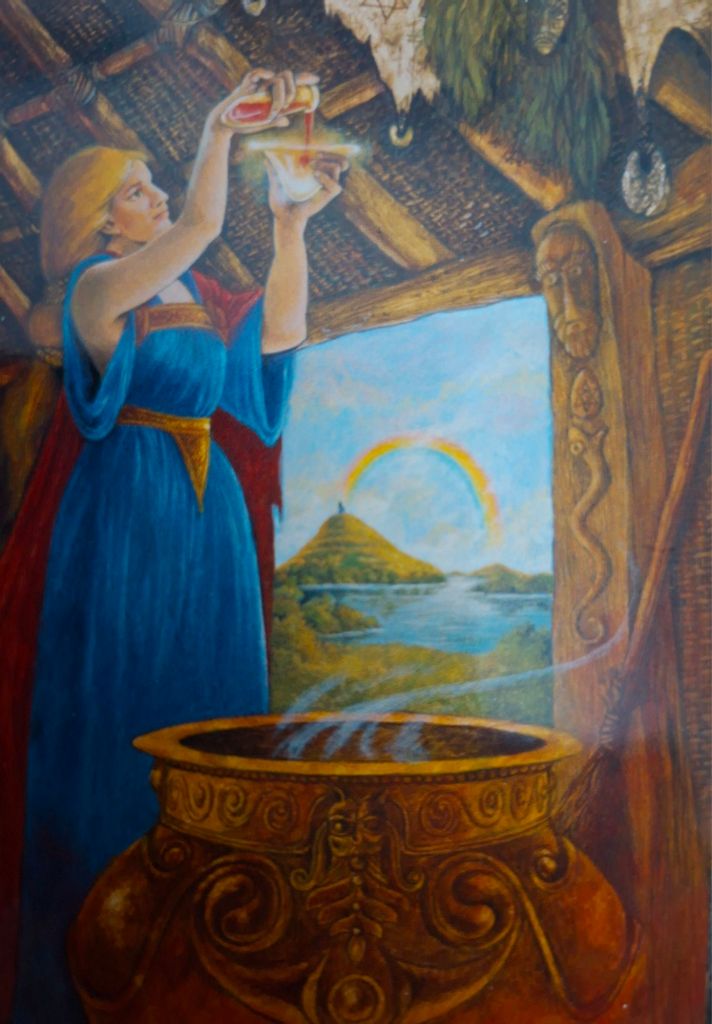
I am reminded, too, of the Fferyllt, the Druid alchemist in OBOD tradition. She is a woman of power and a devotee of Brigid. In the Druidcraft Tarot (1) she is represented by Trump XIV, standing for fluency between worlds, creativity, harmony, peace, alchemy and magic. My canal side encounter with fire on water nudged my imagination towards this figure, who somehow completed it.
(1) Philip and Stephanie Carr-Gomm The DruidCraft Tarot: Use the Magic of Wicca and Druidry to Guide Your Life London: Connections, 2004. Illustrated by Will Worthington.
My walking time is still restricted. Perhaps because of this, familiar outdoor spaces have become exotic and magical to my eyes. My limiting circumstances are paradoxically making me more focused and attentive, enhancing my felt quality of life. I am readier to find joy in simple, passing experiences.
On my contemplative walks, the shapes and colours of trees move me deeply. Grasses and sky have a similar impact. I am very aware of these July days. I am very aware of summer. I am very aware of my place in the world as the year turns in my immediate neighbourhood.
A little further away, I stand on a canal bridge (below) and look back towards the city, which seems distant and small. Water and sky give me space and perspective. I let the elements of water and air nourish me at a time when I am largely grounded.
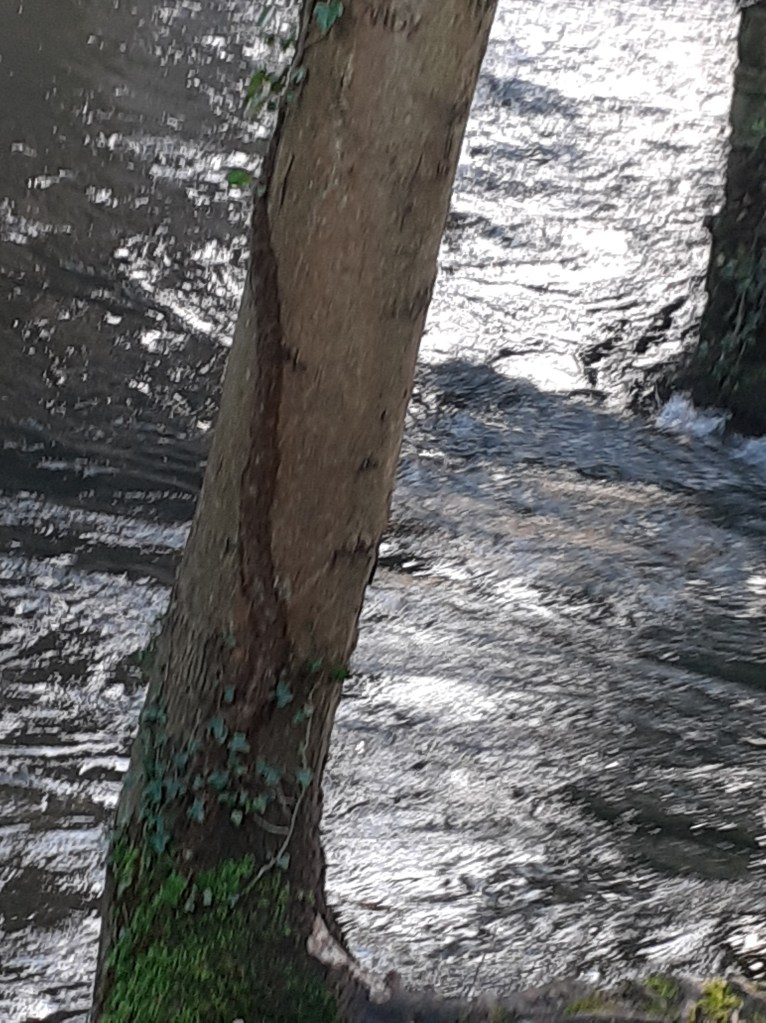
Close up at the water margin, I find light shining on the water. There is energy and movement here. The power of the sun is present in both a shifting luminosity on the water and the flowering resilience on the bank.
I shift into a meditation on the four classical elements – earth, water, air and fire – and how they work together to make the fifth (life, spirit) possible. Consciously engaged with the four, I can stand as the fifth, resourcing my individual life within a world of impermanence and interbeing.
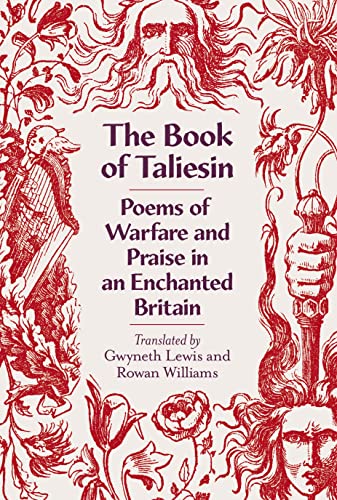
The Book of Taliesin: Poems of Warfare and Praise in an Enchanted Britain (1) is a modern English translation, first published in 2019, of the medieval Welsh collection brought together under the name The Book of Taliesin. It is translated and introduced by Gwyneth Lewis, National Poet of Wales 2005-6, who teaches at Middlebury College in Vermont, and Rowan Williams, formerly Archbishop of Canterbury and later Master of Magdalene College, Cambridge. Both are native Welsh speakers. I highly recommend this version to anyone who wants a translation tailored to a 21st century readership, and to improve their knowledge of the history and culture from which these poems spring.
The Song of the Wind, from which I present extracts, is an example of the Dyfalu (guessing) mode: the poet creates a sequence of riddles, metaphors and fanciful tropes in order to describe an object. When – as here – the answer is given by the title, the result is a performance of inventive paraphrase, designed to display the poet’s virtuosity. The evocation of the wind is connected to the part of Taliesin’s story in which Elffin, his patron, is imprisoned by Maelgwn Gwynedd in Deganwy Castle. Taleisin’s poetry conjures up a gale that demolishes the castle and frees Elffin. Evidently a capable bard could do that, back in the day.
“Guess who it is:
Made before the Flood,
A mighty creature,
No flesh, no bone,
No veins, no blood,
No head and no feet.
No older, no younger
Than he was before.
He’s not turned aside
By fear, nor by death.
He doesn’t experience
The needs of creatures.
…..
“He’s in fields, in woods,
With no hand, no foot;
Feels no age, isn’t struck
By pain or bad luck.
…
“And he wasn’t born,
So he can’t be seen.
He’s at sea and on land;
He’s unseeing and unseen.
…
“He’s brave, he’s bold
As he crosses the land.
He’s mute, he’s loud.
He’s full of sorrow,
He’s the noisiest one
On the face of the earth.
…
“He’s evil, he’s good,
He’s here, he’s there,
Creates a mess,
Makes no redress.
He makes no amends,
Because he’s blameless.
He’s wet, he’s dry;
He often comes by.”
(1) Gwyneth Lewis and Rowan Williams The Book of Taliesin: Poems of Warfare and Praise in an Enchanted Britain Penguin Random House UK, 2020 (First published in hardback Penguin Classics in 2019)
The five images in this blog record a dedicated solstice walk, an evening walk beginning 8 pm on 20 June. For me, the solstice period lasts around a week ending on 25 June. I like to acknowledge the stasis (standstill) element. My festival practice is not about a moment in time so much as honouring an extended pause before the wheel turns, at first slowly, towards the dark.
I sought immersion in the unique and sacred flavour of this day at this time in this place. I do not believe my images ‘capture’ that flavour – now gone with the moment it belonged to. But the pictures do provide a suggestive record of that time. They help my memory. They remind me especially that my experience of this practice in 2023 differs from that of 2022, when I first undertook it as a solo, contemplative form of midsummer celebration. (See: https://contemplativeinquiry.blog/2022/06/24/.)
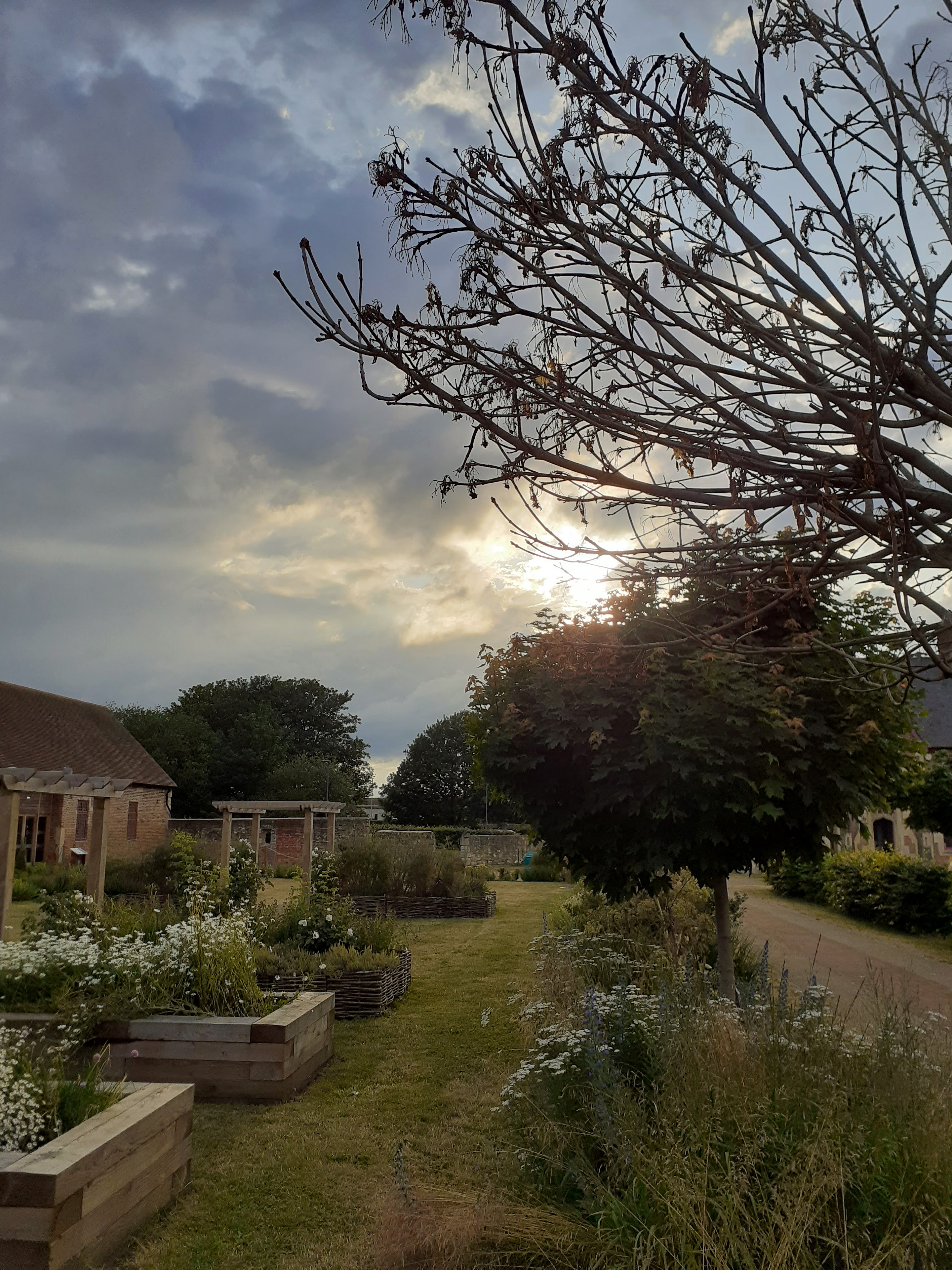
The first image (above) is of Llanthony Priory gardens, dominated this evening by a dramatic sky. Sunlight shines through heavy clouds, dark and suggestive of a storm that we had largely missed in Gloucester. Three canalside images (below) also display the energy of clouds with the sun backlighting them. I find both beauty and power here, indeed a strong sense of powers greater than mine, and indeed of ours collectively. This year, my seasonal immersion has an edge. A modern Druid, I celebrate the seasons and reverence the elements. But I certainly don’t own them, or decide how they are meant to be.
During my walk I spent a lot of time with my eyes turned upwards and skywards, with hints of both awe and foreboding. I understand how sky god spiritualites work. But I also looked across and down and found new life. A pair of swans and their cygnets were finding space on the water on a busy small marina. It is now surrounded by housing on three sides, yet they seemed flourishing and confident. Storm clouds of many kinds threaten. Life goes defiantly on.
Two people hold each other in mutual gaze. Both their mutuality and their individuality are very clear. The space between them defines a chalice, or grail. In stillness they are present to each other, within a dynamic field of I-Thou relationship. The gestalt is one of communion. Their world has come alive.
Eckhart Tolle speaks of a wisdom that is not the product of thought, and which comes with the ability to be still. “Just look and listen. No more is needed. Being still, looking and listening activates the non-conceptual intelligence within you. Let stillness direct your words and actions” (1).
He goes on: “wisdom is not the product of thought. The deep knowing that is wisdom arises through the simple act of giving someone or something your full attention. Attention is primordial intelligence, consciousness itself. It dissolves the barriers created by conceptual thought, and with it comes the recognition that nothing exists in and by itself. It joins the perceiver and the perceived in a unifying field of awareness. It is the healer of separation”.
I think of wisdom, in this sense, as the healer in the heart. Not the organ that continues to pump at a not-too-elevated rate when my blood oxygen declines, and therefore a resiliency factor for my physical health. It is, rather, the heart of awareness – personified again as it has been before by a Goddess of Wisdom. She came to me, at night, at a wakeful time when my breathing was particularly laboured and I felt like a freshly landed fish. She acted as a discreetly background presence, pointing me to the vision of a radiant grail, palpably emanating the energy and resources of all four elementary powers.
Pragmatically I felt empowered to weather a challenging experience. Beyond that, the Goddess invites me to let go of identification with the mind-made ‘little me’ as a limited and confining construct. The reward is an expansion into love, joy, creativity and inner peace. I have bounced back from my COPD flare-up in the last few days and will do what I can to rebuild my physical capacity. But the lesson, that healing is not the same as being physically fixed, and asks for a different kind of commitment, applies both in bad times and good.
(1) Eckhart Tolle Stillness Speaks Novato, CA, USA: New World Library & Vancouver, BC, Canada: Namaste Publishing, 2003
I contemplate an image is from R. J. Stewart’s The Merlin Tarot (1). It is the Ace of Beasts, the Earth suit. I sense it guiding me to a new phase of my inquiry, I hope a phase of integration. The stag has reached the point of stillness. There is nowhere to run, and no longer any need for running. Between his antlers sits a black mirror, showing the four powers of Life, Light, Love and Law unified by a central fifth. Here, it is the magical implement of the Earth element, an alternative to the shield or pentacle.
Stewart says of this image: “its deep power is that of Law and Wisdom, the Mystery of Night and Winter. Thus it can indicate a force or restriction that leads to liberation …. the Wisdom of endings that bring beginnings”. For the next phase of my formal inquiry practice, I will work through the programme of R. J. Stewart’s The Miracle Tree (2). I am already familiar with it, but I can drop into a beginner’s mind readily enough. The novelty is in being focused and systematic, as I was over the years of my training in OBOD (3), but here with a more closely defined and demarcated programme.
Why this? And why now? The Miracle Tree is based on the Western Way Qabalah, and its version of the Qabalistic crossing practice runs: “In the Name of the Star Father (righthand over forehead) Deep Mother (genitals) True Taker (right shoulder) Great Giver (left shoulder) We are One Being of Light (circle right and downwards from top of forehead to genitals, completing left and upwards to back of forehead)”. I like its integrative quality, and its way of presenting a non-dualist perspective – especially the use of ‘We’ in a statement affirming ‘One Being of Light’. It does not use the Absolute to crush the human and natural. It acknowledges the diversity held in ultimate unity, and embraces multiple forms and dimensions of Being. The Cosmic Tree shelters all, whilst not being separate from any.
Stewart says of this system: “the idea of relationship holds good for all world views and models. It is not so much a matter of their accuracy, for their accuracy is relative and ephemeral, but of their value to us as models of relationship to, and participation within, the greater world of which our human world is a small part”. The way to test the value of the model is experiential, and this is what I will do. For me, contemplative inquiry involves a surrender to, and immersion in, the work, whilst retaining a capacity to track and appreciate its effects. I do not expect this cycle to negate what has gone before but, rather, to complete it. Where appropriate, I will discuss this in the blog from time to time.
(1) R. J. Stewart The Complete Merlin Tarot: Images, Insight and Wisdom from the Age of Merlin: London: The Aquarian Press, 1992 (Illustrated by Miranda Gray)
(2) R. J. Stewart The Miracle Tree: Demystifying the Qabalah Franklin Lakes, NJ: New Page Books,2003
For R. J. Stewart (1), the deepest vision and reality of the Underworld is “that the stars are within the Earth, within ourselves, not distant and remote”. He explains a vision in which our habitual awareness, personal and collective, “is on the surface of existence” and that “the primal reality is in the depths, not only of ourselves, but of the land and planet, which are of the universal Being. So we do not reach out and away from ourselves, but plunge into the otherworld that is the source of our own and, more important, is the source of the stars themselves. In the Whirlpool realm, we find the deepest intimations of our inherent universal Being. It leads us to the sacredness of the planet, of the body, for deep within is all that is, the source of the four Powers emerging from the Void”*.
The Dreampower Tarot, which Stewart devised together with artist Stuart Littlejohn, is structured around a descent from the surface through three realms: stone, pearl and whirlpool. To a large extent these correspond to the traditional western distinctions of body, soul and spirit, though emphasising a journey of descent rather than ascent. The Whirlpool realm, and the individual Whirlpool card, involve a quest “for truth and reality that reaches within towards the source of Being. In this sense it also shows wonder and awe, the Mystery within that turns all existence, setting the worlds in motion through the cycle of the Powers and Elements.” Hence the Whirlpool can be called an archetypal image – putting a star field in the foundational depths of consciousness. The use of the term ‘whirlpool’ for a “spiralling nebula of stars” skilfully introduces water references into the picture, offering further disruptions of common sense for the imagination to make use of.
In an earlier work (2), Stewart places a star field at the centre of a creation myth, one that begins with darkness and void until light begins to appear, and “the light that spreads through the darkness is starlight, and we find that we are in the centre of a vast wheel of stars, rising and falling all around us”. Here he introduces the Goddess Ariadne, “Weaver of Being and Unbeing”, creator of form. Her description is too specific and too anthropomorphic for me. But there is something in the process which unfolds that resonates: “Out of the silence a sound emerges … It is the sound of breath. We become aware of a breathing in and out, and realize that this breathing is our breath and yet the breath of all Being. We breathe, Being breathes. Slowly we feel form assemble from the breathing, and realize that we have a body which is the body of all Being. The stars are within us, we are formed of the Weaving.”
I have a powerful sense of the motherhood of the cosmos, and of being companioned, though not instructed, in learning to breathe. I have intrauterine and early post natal experiences – not readily accessible, but held within me – to influence my shaping of experience. I have adult experiences of rebirthing and holotropic breathing that have enabled me to reprise the original process and helped me distinguish personal from transpersonal and universal elements. Today I can add the sense of a universe born with every breath, here and now. Somewhere here I do indeed find the Goddess, as I also find her in everything around me.
(1) R. J. Stewart The Dreampower Tarot: The Three Realms of Transformation in the Underworld London: The Aquarian Press, 1993 Illustrated by Stewart Littlejohn
(2) R. J. Stewart The Way of Merlin: the Prophet, the Goddess and the Land London: The Aquarian Press, 1991
*In this vision the Void is the source of all being, and the four powers are life, light, love and law – with the last being alternately understood as liberation. These powers are associated with the four elements, respectively air, fire, water and earth.
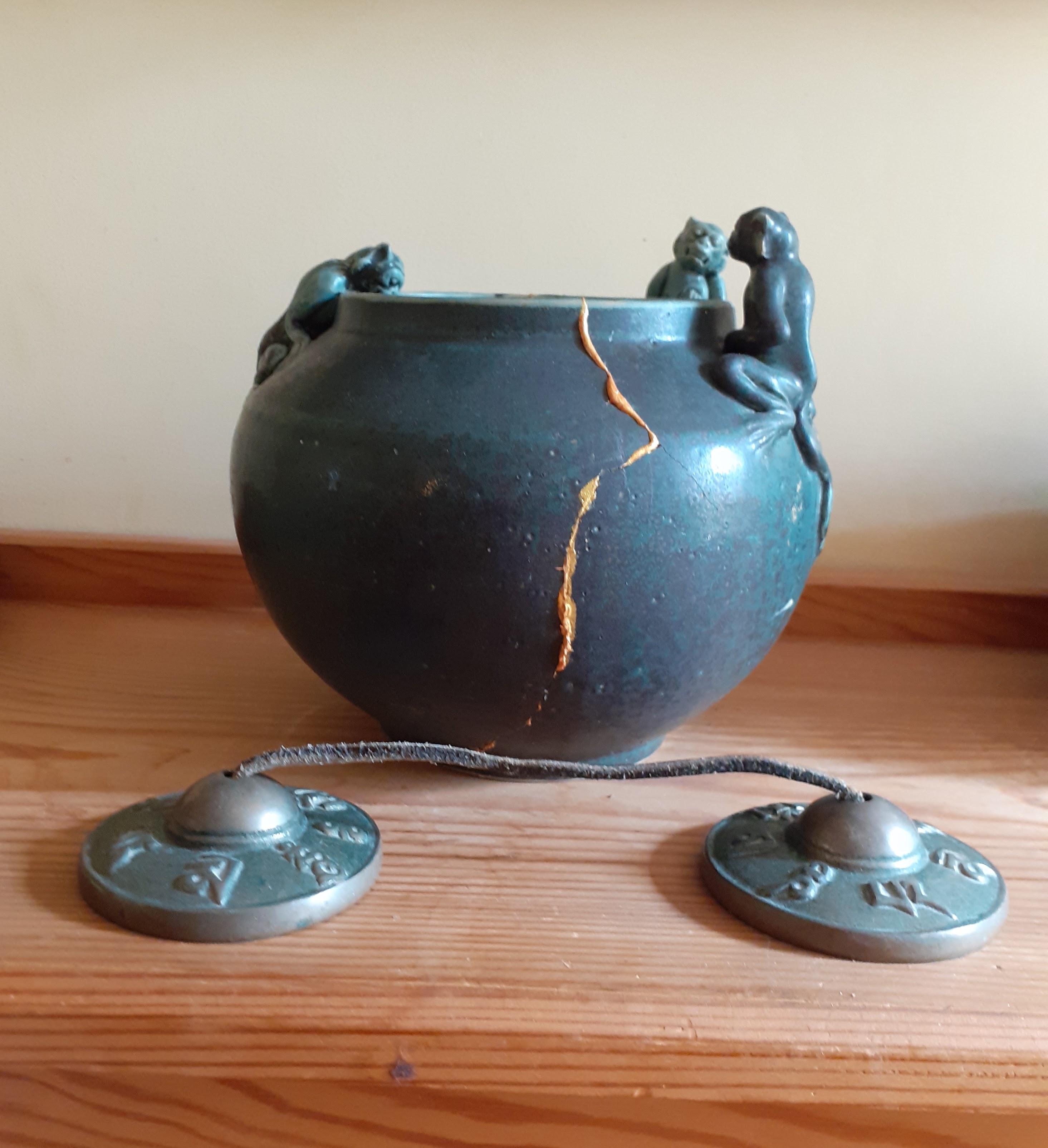
The pot belongs to my wife Elaine*, and used to live outdoors. Late in the winter it filled with rain. Then there were days of frost and the water turned into ice. The ice needed more room, and pushed against the sides of the pot. When the ice melted the pot fell apart in two neat halves. Nature in action, over time.
As part of her work, Elaine knows something about kintsugi, which literally means “golden joinery”. This treats breakage and repair as part of the history of an object, rather than something to disguise. Culturally, the approach is an aspect of wabi-sabi, the acceptance of transience and imperfection. Elaine’s repair, applying kintsugi, is literally illuminated.
The result reminds me of the refrain in Leonard Cohen’s Anthem.
“Ring the bells that still can ring.
“Forget your perfect offering.
“There is a crack in everything.
“That’s where the light gets in.”
After some hesitation, I added my Tibetan bells to the picture above. The cord attaching the two bells is about half its original length due to wear and tear. But the bells still ring. My ownership of them, here and now, is almost certainly the result of Tibet’s collective disaster and the resultant Tibetan diaspora. In the world of biological life and time, disaster and repair are a common theme. If the crack is where the light gets in, the work of repair is sacred.
“There are seven primary materials of the world: the Blue Bard of the Chair has said it.
“The first, earth, from which are every corporeity and hardness, and every firm foundation;
“The second, water, from which are every humour and freshness;
“The third, air, from which are all respiration and motion;
“The fourth, sun, from which are all heat and light;
“The fifth, nwyfre, from which are all feeling, affection, and wantonness;
“The sixth, the Holy Ghost, from Whom are all understanding, reason, awen, and sciences;
“The seventh, God, from Whom are all life, strength, and support, for ever and ever.
“And from these seven primary materials are every existence and animation; and may the whole be under God’s regulation. Amen.” (1)
The Barddas of Iolo Morganwg, by J. Williams Ab Ithel, was published in 1862. It was presented as the lore of traditional Welsh Bardistry going back to Druid times, based on the earlier work of Iolo Morganwg (Edward Williams – 1747-1826). Iolo had organised the first Gorsedd of Bards for several hundred years at Primrose Hill, London, on 21 June 1792, thereby initiating the modern Welsh Eisteddfod movement. He was a personal friend of Tom Paine and George Washington subscribed to his first volume of poetry. He is said to have influenced William Blake’s poetry and Robert Graves’ The White Goddess.
Iolo described himself as a Unitarian Quaker in religion, and a revolutionary Welsh nationalist in politics. In the later 1790’s the Glamorgan magistrates sent the yeomanry (a volunteer cavalry force drawn from the property-owning classes) to break up an open-air Gorsedd led by Iolo in that county. The reason given was that it was being conducted in the Welsh language and allegedly included a toast for Napoleon – then admired by radicals as defender of the French revolution. This is also a time of revolt in Ireland and the birth of Irish republicanism.
Culturally, Iolo was, as well as a poet in his own right, “a first-rate forger of literary Welsh; some have commented that his forgeries were as good or better than the real thing. Furthermore, he wrote much of the Barddas under the influence of laudanum (an opium-based medicine which he took for asthma)” (1). In consequence he has been widely dismissed as an embarrassing fraud. My response is more complicated. There is something poignant for me about ‘forgeries’ that are “as good or better than the real thing”. On the forgery question, I am sad that Iolo could not openly be a catalyst for the creation of new culture inspired by an old one, rather than having to pretend, even to himself, that he was recovering an old one as it had been (in his own mind perhaps through psychic means). As for medicinal laudanum, I wonder why this should be stigmatised in Iolo whilst accepted in his contemporary S. T. Coleridge. It may be is because Coleridge’s work was unambiguously original, and therefore seen differently. The issue of new culture creation in Druidry is a significant one to this day and is well discussed in Philip Carr-Gomm’s preface to Contemplative Druidry (2) where the voices of a number of open culture creators are included.
Going back to The Seven Primary Materials of the World, I feel friendly to this text despite its patriarchal language and its statement of a world view significantly different from my own. In my reading, it suggests a seven-step ladder from matter to the divine, with four material elements that point also to non-material qualities, where the the fourth and highest is not on the Earth. Then there are two subtle elements (though the first finds room for ‘wantonness’) and an ultimate ascent to the divine. It is the kind of evolutionary spiritual scheme that many transcendentalists down the ages have related to. Written at the turn of the eighteenth and nineteenth centuries, and edited in mid Victorian times, it seems to me congruent with the outlook of medieval Welsh Bardistry as expressed in The Book of Taliesin (3), and the theology of the ninth century Irish scholar and contemplative mystic John Scotus Eriugena (4). It is a Christian referenced path that is not sin and fear based, and I am sure that many people involved in Druidry and Celtic Spirituality today would be in essential sympathy with it. Made up by Iolo or not, it reads as a clear and simple expression of a universalist and transcendentalist stance within a specific cultural setting. I find nothing fraudulent about it. It is what I would expect from place, time and person.
Indeed, key concepts remain relevant to my own Druid practice. I work with the wheel of the year and with the four classical elements, including fire. I am concerned with the Earth’s relationship to sun and moon. I work with my body and my sense of energy and think of nwyfre as synonymous with prana or chi, now well-known thanks to the popularity of yoga and Chinese energy arts.
At this stage in my personal journey, I am in renewed inquiry with awen. For the Barddas, it is a distinct higher mental faculty, close to the divine source like Coleridge’s primary imagination. In my own work I get a sense of energised and articulated insight. I do not think of awen as a substance in itself, but rather a quality of how we express ourselves when at our most enlivened and ‘on song’. But this inquiry is far from concluded.
Where the Barddas speaks of God, I speak of nature. I think of the web of life, and of our interbeing within it. I also think of the mysteries of quantum events, dimensions that we cannot perceive directly, galaxies flying apart and the possibility of multiple universes. But to me nature’s most extraordinary phenomenon is the gift of aware experiencing, with all the joy and suffering it brings, in the apparent here and now. To this I add the capacity to bear witness to this miracle through words, non-verbal media, silence, celebration and action. Here, I find myself still using most of the key terms from The Seven Primary Materials of the World. In this sense, I am happy to have The Barddas of Iolo Morganwg as part of my spiritual ancestry.
J. Williams Ab Ithel The Barddas of Ilo Morganwyg, Vol I & II: A Collection of Original Documents, Illustrative of Theology, Wisdom, and Usages of the Bardo-Druidic System of the Isle of Britain Forgotten Books, 2007 www.forgottenbooks.org (First published 1862)
James Nichol Contemplative Druidry: People, Practice and Potential Amazon/Create Space, 2014 (Foreword by Philip Carr-Gomm)
William F. Skene The Four Ancient Books of Wales Forgotten Books, 2007 www.forgottenbooks.org (First published 1868)
At the winter solstice, I began a year of enhanced attention to the wheel of the year. I have re-introduced the circle as container for my morning practice. The directions and elements are conventional for my location and tradition. The references are all naturalistic – with ‘heaven’ as the dome of the sky.
The journey around my circle begins and ends at the midwinter moment, in the north, domain of the powers of earth. The patterning is minimalist, though it still took awhile to get a language that feels just right. Now it grows in power and resonance with familiarity and repetition. For me, ritual patterning scarcely competes with complexity and flow of natural patterning, as I look at the pictures above and below. Compared with these, it is something of an abstraction. Yet I value it all the same. This simple patterning embodies my commitment. It will walk with me through the year.
I stand, north, facing south, ring my bells and say: I arise today through the strength of heaven, light of sun, radiance of moon, splendour of fire, speed of lightning, swiftness of wind, depth of sea, stability of earth and firmness of rock.
North, facing outwards: I greet the powers of the north, element of earth, season of winter, time of dying and regeneration. Hail and welcome!
East, facing outwards: I greet the powers of the east, element of air, season of spring, time of early growth. Hail and welcome!
South, facing outwards: I greet the powers of the south, element of fire, season of summer, time of ripening. Hail and welcome!
West, facing outwards: I greet the powers of the west, element of water, season of autumn, time of bearing fruit. Hail and welcome!
Spiralling in to centre: I greet the power at the centre, the one world tree, giver of life and teacher of wisdom. Hail and welcome! Back north, I begin a full round of the circle, sunwise, and say I cast this circle in the sacred grove of Wisdom. May there be peace throughout the world!
My closing is a reversal of the opening, with an uncasting of the circle, a repetition of the opening words and a final ringing of the bells. In the address to the directions, the words ‘thank and ‘farewell’ replace ‘greet’ and ‘welcome’. I have noticed that the other parts of my morning practice are subtly enriched by this new container.







 Contemplative Inquiry