Contemplative Inquiry

This blog is about contemplative inquiry

Tag: Druidry

CONFERENCE: THE HEART OF SILENCE

OBOD member Siobhan McGee has just alerted me to The Heart of Silence conference on 16-19 April 2016 at Regent’s University London – see www.theheartofsilence.co.uk

The full title is Exploring the Place of Silence in Psychotherapy, Society and our World and the conference is dedicated to the proposition that:

Through Silence we are able to deeply listen to ourselves, one another and our Planet, and from this place we can act.  

 The organizers are the Association of Core Process Psychotherapists, and the event is open to anyone wanting to explore and experience the value of silence. The organizers say:

In Silence we can connect with the heart and during this Conference there will be the opportunity to experience and embody Silence together.   

The speakers and plenaries will focus attention on two central questions: 

What is the nature and role of Silence in relationship?
How can Silence unify us, in the midst of life today?

The keynote speaker is Brian Keenan, who, more than most, has had to confront the reality of enforced silence during his four and a half year incarceration as a hostage in Beirut.

The other speakers are:

Maura Sills, Founder of the Karuna Institute and one of the original mindfulness based psychotherapies, has been teaching mindfulness and silence practices to psychotherapists for more than 30 years.

Rebecca Crane is Director of the Centre for Mindfulness Research and Practice at Bangor University.

Matthew Adams and David Harley are researchers of silence at the University of Brighton.

Catherine McGee is an International Meditation teacher who brings an interest in the silent heart.

Mac Macartney, an author and founder of Embercombe, asks if, through silence, we can remember our humanity.

The workshop leaders are Amaranatho, an ex-Buddhist Monk and Alastair McNeilage, a Core Process Psychotherapist and writer.

The two day conference is fully catered.

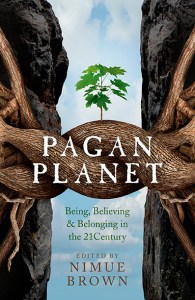
BOOK REVIEW: PAGAN PLANET

jhp55ddc04c930d1“For this reason I am doing what I do, working towards …. the more beautiful world our hearts know is possible”. Simon Wakefield is a biologist, Druid and contributor to Pagan Planet: Being, Believing and Belonging in the 21st Century. He talks about the “most profound experience of my life” when observing a nesting sea turtle on a starlit Greek beach. “Putting aside all the requirements to measure and monitor I decided just to be present, and I opened up to an experience of deep time and an ancient longing by another creature simply to be, to express its uniqueness, which has never left me”.

For me, Simon has expressed a point of unity in this diverse collection of essays edited by Nimue Brown and published by Moon Books. The authors come from a variety of Pagan traditions, though with a tilt towards Druidry. Many stand witness to a growing movement of Pagan activism, where people find themselves involved in the demanding, draining and potentially perilous work of resistance, protection and defence. The value of Simon’s words (which he attributes originally to Charles Eisenstein) is to keep an eye on the prize: “the more beautiful world our hearts know is possible”. Beauty, of course, depends on our ability to perceive, name and cherish it. Reading the essays in Pagan Planet, I come away with a sense of this as a unifying Pagan commitment.

What moves me most, I think, is an overall sense of resilience and optimism – not so much an optimism of calculation as an optimism of the heart. In his piece about the foundation of PaganAid, Ian Chandler says: “I have heard people’s stories that make me cry, I have seen destruction that has brought me to my knees with despair. But I have also met people whose dedication against all odds fills me with awe. I have seen achievements that make me want to sing and dance in the street. Now is not the time for us to give up on the future – it is time for us to decide what we want and to make that future happen”. Edwina Hodkinson talks about the frontline herbalism of the Wild Sistas in anti-fracking protection camps. “We dispensed tinctures, teas, creams, cough syrups, health advice, general nurturing and lots of first aid. Protectors who had been injured from interaction with the police wanted treatment for badly bruised ribs and groins, sprained wrists, and grazes … people had great faith in what we did, compliance was good and the results of the herbs spectacular … I’ve come to believe that when we go out of our comfort zones and are prepared to make some kind of sacrifice for ourselves and the earth, the earth responds and works with us”. One of their successes was the ‘warrior drops’ created to deal with trauma, stress and anger on the front line. “Protectors said that these really made a difference in calming them down” and one said “it grounded him and reminded him why he was doing the protest”.

A number of the essays stand witness to the creative energy of Pagan vision and life practice at this moment in history. These include Lorna Smithers’ visionary evocation of Castle Hill, Penwortham, described as “a magical place, in spite of the damage”, whose “alternative story” has been passed on “by its spirits, by decree of the fay king”. Hearth Moon Rising says that “my vision for some time has been to ground modern witchcraft more completely and more concretely in the natural world, to create a deeper understanding of what it means to have an animistic practice”.  Other people are exploring roads less travelled, like Laura Perry in Walking the Modern Minoan Path or Calantirniel in Working with Tolkien, where part of the purpose is to integrate the “Christ energy” into a Pagan path. Irisanya from the Reclaiming tradition offers a piece on Lifestyle/Work/Relationships which is centred on overlapping considerations of gender and peer communication and the magic of knowing how to track the energy in a conversation, when to listen, when to speak up and how to be supportive of voices that are not being heard. There are a number of pieces about the family context, including supporting dependent elders and raising children. In The Teachings of Children, Romany Rivers reports that people ask her whether her spirituality affects her parenting; her view is that it’s the other way round – her parenting affects her spirituality. “I realised how one small person’s emotional state can impact an entire environment. I have learned more about Reiki from working with my children during times of pain and stress, peace and snuggles. I have discovered new reasons to meditate. I have reconnected with the power of imagination. I have found new creative expressions”. She concludes, “I believe that is my children who are Pagan, and it is they who raise me.”

There is much more. I’ve got a piece called Living Presence in a Field of Living Presence: Practicing Contemplative Druidry. I would certainly have thought of it as supporting “the more beautiful world that our hearts know is possible” at the levels of perception, recognition and cherishing. But I didn’t think of it, and have only done so now as a result of reading the rest of this book: the value of community! Because of my involvement, I’m not going to review the book outside this blog or award points. I hope instead that I’ve been able to demonstrate something of its energy, diversity and commitment – and that the Modern Pagan movement from which it comes.


Nimue Brown (ed.) Pagan Planet: Being, Believing & Belonging in the 21st Century Moon Books, 2016

WESTERN WAYS: DRUIDRY AND SOPHIA

In my world, Druidry and the Way of Sophia are linked, though not the same. In The Western Way (1,2) authors Caitlin and John Matthews made a distinction between a ‘Native’ Tradition and a ‘Hermetic’ one, which act as “complementary opposites”. The Native Tradition is “the inward spiral of a maze which leads into the heart of ancestral earth-wisdom”. The Hermetic Tradition is the outward spiral of the same maze: a path of evolving consciousness which is informed by the inner resources of our ancestral roots, “augmented in a macrocosmic way” (2).

My original interest in a ‘Celtic’ spiritual thread, developing from the 1980s, wasn’t specifically Druid or Pagan. It came mostly through Celtic and Celtic influenced literature. Although a long tradition in its own right, it post-dates the demise of institutional Druidry and Paganism in Celtic speaking regions. Most of it has been written with at least an element of Christian reference and influence. So we get verses like this from the medieval Welsh Book of Taliesin:

I was at the cross

With Mary Magdalene.

I received the Awen

From Ceridwen’s cauldron. (3)


What I intuitively liked about this was the sense of a culture working to integrate diverse influences rather than attempting to be ‘pure’. Pure culture (or the attempt at it) narrows horizons and banishes possible resources, becoming limited and inflexible in my view. Sophia is both an image of the divine and expresses a blending of Jewish and Greek wisdom traditions. She came to prominence in Alexandria, the largest city of Roman Egypt. She is cosmopolitan. In the verse above Mary Magdalene (an incarnation of Sophia in some gnostic traditions) and Ceridwen (not a traditional Celtic goddess from Pagan times) both have Sophian roles in relation to male figures seen in different ways as light bringers.

Some of the Celtic-derived stories from the medieval period are clearly breaking new cultural ground whilst using resources from the Celtic past. They belong to a realm of creative mythology, as Joseph Campbell called it, whose purpose is “the opening … of one’s own truth and depth to the depth and truth of another in such a way as to establish an authentic community of existence” (4). Twelfth century Western Europe sought to renew itself by drawing on its classical heritage (native in Italy) and Geoffrey of Monmouth drew on it in his Mystic Life of Merlin (5), for example by dedicating a contemplative ‘Observatory’ to the owl deity Minerva, Roman Goddess of Wisdom. It also drew on Celto-Germanic heritage, with the Arthurian mythos – the matter of Britain – taking a prominent place. This mythos does not name Sophia. But it does have the image of the grail and the story of the grail quest. For me the grail represents the presence and energy of Sophia, and Caitlin Matthews has described it as “a prime symbol of Sophia” (6).  Perceval, the grail winner, has to encounter the divine in a new way for himself. At one level his role is to honour and heal the land, renewing its tantric energy. But the Grail Goddess, whilst enabling that traditional collective healing, adds a new and more individuated depth of wisdom and compassion. So although I have always been moved by the scenes and images of the more archaically oriented Peredur (7), I have found a more compelling narrative in Parzival (8). It is the innovative aspect of the story that engages me and the grail image that nourishes me.

In the Gnostic Gospel of Thomas, (9) Jesus of Nazareth asks three leading followers to say what they think he is like. Peter, traditionally Jewish, says “you are like a just messenger” (or righteous angel in other translations). Matthew, familiar with Graeco-Roman ways, says “you are like a wise philosopher”. Thomas says, “my mouth is utterly unable to say what you are like”. The teacher responds, ‘I am not your TeacherBecause you have drunk, you have been intoxicated from the bubbling spring that I have tended’.  As I read this text, it is a confirmation that a lived spirituality is beyond packaging.

In this sense, terms like Druidry, Way of Sophia or Western Way have only a limited use. Joseph Campbell said “the best things cannot be told; the second best are misunderstood; after that comes civilised conversation”. The problem is real yet I believe he overstates his case. I think it is worth the effort of finding words, making distinctions and enabling affiliations in full awareness of the difficulties. Civilised conversation with moments of … something more … feels like an honourable pursuit.

  1. Caitlin & John Matthews (1985) The Western Way: A Practical Guide to the Western Mystery Tradition: Volume 1 – the Native Tradition London: Arkana
  2. Caitlin & John Matthews (1986) The Western Way: A Practical Guide to the Western Mystery Tradition: Volume 2 – the Hermetic Tradition London: Arkana
  3. John Matthews (1991) Taliesin: Shamanism and the Bardic Mysteries in Britain and Ireland London: The Aquarian Press (with additional material by Caitlin Matthews)
  4. Joseph Campbell (1976) The Masks of God: Creative Mythology Harmondsworth: Penguin
  5. R. J. Stewart (1986) The Mystic life of Merlin London: Arkana 
  6. Caitlin Matthews (1986) Sophia Goddess of Wisdom, Bride of God Wheaton, IL: Quest Books
  7. The Mabinogion (1976) Harmondsworth: Penguin (translated with an introduction by Geoffrey Gantz)
  8. Wolfram von Eschenbach, W. (1980) Parzival Harmondsworth: Penguin (translated by A. T. Hatto)
  9. The Gospel of Thomas: the Hidden Sayings of Jesus (1992) San Francisco, CA, USA: Harper San Francisco (translation with introduction, critical edition of the Coptic text and notes by Marvin Meyer; with an interpretation by Harold Bloom)

CONTEMPLATIVE DRUIDRY 2016

The next month is a busy one for contemplative Druidry. Our group in Stroud has its first meeting next Tuesday. Towards the end of January Elaine and I will be working with another local group that meets to explore sacred traditions. Then on 7 February we are running  a Dark of the Moon Workshop day retreat in London, at Treadwell’s Bookshop’s workshop space, 33 Store Street, London WC1 E7BS. Our specific intent is to  greet the dark of the moon at the time of Imbolc and the first stirrings of the Earth. The programme will include contemplative exercises, subtle energy work, silent sitting and Awen space group meditation. As with all of our public events, anyone willing to work within a Druid framework for the day is welcome.

The end of January also sees the publication of a new Moon Books anthology Pagan Planet: Being Believing and Belonging in the 21st. Century – see http://www.moon-books.net  and Nimue Brown’s presentation of the book. I have a piece in it on practising contemplative Druidry. Since I wrote it I have become even more convinced that contemplative Druidry is not a distinct form of Druidry, but rather a flavour, or way of working within it. We can create specific environments and practice frameworks that enable contemplative practice, and understand them as an option within a range of options.

More broadly, I think that the contemplative meme is now well recognised. My 2014 book Contemplative Druidry: People Practice and Potential is still finding new audiences. The Contemplative Druidry Facebook group, which I stopped administering in 2013, continues to thrive, now with a membership of over 1100. Elaine’s blog at http://contemplativedruidevents.tumblr.com/ and the Contemplative Druid Events Facebook page have received increasing increasing attention in the last couple of months, perhaps in part due to the Contemplative Druidry article in the Samhain 2015 edition of Pagan Dawn. Other events are planned for later in the year.

I’ll continue writing about these and other developments in this blog.

STOCKTAKING

Golden SeedIn 2014 The Order of Bards Ovates and Druids (OBOD) celebrated its 50th anniversary. It’s now just over 22 years since I first joined. Where am I now?

I remember being reassured by the way in which OBOD was able to hold a point of tension between two seemingly competing narratives. The first was the sense of living relationship with the land and the inheritance of ancestral stories. The second was an open and generous universalism. Without the first, the second could be vague and vapid. Without the second, the first could become culturally inward-turning and defensive. I’ve always been grateful for this balance.

As part of the 50th anniversary year, Sharon Zak and Maria Ede-Weaving put together The Golden Seed: Celebrating 50 Years of OBOD as “an anthology of prose, poetry, images and crafts” (including a DVD) created by OBOD members and friends. It is still referenced at http://www.druidry.org though currently unavailable. In my own entry I said I was more comfortable with a language of “practising OBOD Druidry” than “being an OBOD Druid”. That’s how I still see it and I would now want to add that this practice itself sits within a (for me) larger framework that I would name as the Way of Sophia. This has been true for quite a while, and I will write about it more in the future. Here I just want to say where my Druidry continues to fit.

There are two huge lessons that I draw from Druidry. The first is about how to do solo practice. I can’t now imagine a core solo practice that doesn’t take place in a sacred circle, woven of ritual and liturgy. Allowing a slow evolution of movement and liturgy, I gain insight into my purpose and intent in a way that offers both clarity and embodiment. Within that circle, I include body and energy work and also some form of sitting meditation: the precise forms vary. There’s also an aspect of healing and blessing. Thanks to the OBOD distance learning course, this approach to practice has become second nature. Someone could have given me a list of instructions to this effect on the back of an envelope and I might have had a go with different aspects from time to time before coming across something else on the back of another envelope. But I had the chance to build an evolving practice over an extended period, in a way that was both self-directing (I have an allergy to gurus) and within a tradition that made support and guidance available (I also don’t operate brilliantly if unwitnessed and alone). This combination is quite rare in spiritual education, and it’s a great privilege to have a continuing relationship with this work on the mentoring side. The course covers a lot of other ground as well. But this was the piece that was transformational for me.

The second lesson concerns two intertwining challenges. Both are connected to the contemplative inquiry I’ve been involved in for just over four years. One is the challenge of responding to the Order’s invitation to members to take initiatives and offer varying forms of leadership, whilst still (if we so choose) being held within the collective and feeling part of it. The other is the contemplative journey itself. This has involved the further evolution of solo practice, but more importantly to the co-creation of an innovative house-style in group work and in particular of Day Retreats for small groups. I and my colleagues seem to have a good handle on this now, both within our own local group and in the wider community of Druids and fellow travellers.

These lessons are my guide as to where to put my energy within Druidry, offering contexts of connection, service and nourishment.


CONTEMPLATIVE CHANGE

Tides in a life. A sea-change. My contemplative inquiry is gentling, in its fifth and final year. I began with charged and focused intent. Willing a change in self and world, I surrendered to a vision. I accepted the risk of becoming driven, of being one-eyed and obsessional to the point of self-caricature. Mr. Contemplative.

I don’t believe it’s ever been quite that bad. Loving and accepting love matter more to me than seeing through the eye of the divine, to the extent indeed that the two are even different. Contemplative traditions and their practices, even when adequately customised, internalised and working effectively, have never been my absolute priority. Nonetheless the intent to live from a deeper dimension, fed by an inner spring of stillness and spaciousness, has been a key life direction during this period.

I can sense a difference now, a relaxation. For me there’s a point at which enhanced study and practice in any field encounters a law of diminishing returns. I’ve got what I’m going to get out of the exercise. The field itself may be one of infinite possibilities – yet I reach a point of needing to begin a process of detachment where I recognise the fruits of my inquiry and ease in to a new normal.

The new normal incorporates what I need, or can take in, from the inquiry process. I’ve had this experience twice before, in relatively recent years. The first was a doctoral project about a developmental approach to ageing: the idea that later life offered specific potentials for growth and creativity not generally recognised in mainstream culture. As a project, this was summed up in the thesis itself, and I moved on. But the core idea continues to guide me. The second was the current version of the OBOD distance learning course, which also had a specific summation – and also continues to inspire me. I’m not sure whether to document my contemplative inquiry in this kind of way – my book Contemplative Druidry was something different, a collaborative piece which opened up the topic in a Druid context. A more personal piece is something to ponder over the next year.

In terms of fruit, there are a few things that I can say now. The first is that I’ve got a contemplative practice that I’m at ease with. I notice that I’m spending less time on it than at the height of the inquiry period. This feels like a natural adjustment. More importantly, I celebrate finding spiritual companions, with whom I have been able to develop group practices that are both contemplative and relational. For example, we’ve got a tried and tested model for how a local group can work, a model for day retreats, and a model for weekend retreats. These are developments that I expect to take forward. Our local group has a day retreat this Saturday (21 November), and my partner Elaine and I are offering a Dark of the Moon day retreat in London on 7 February 2106 – see http://contemplativedruidrevents.tumblr.com – so I may have more to say about these in future posts. We plan a residential retreat for next April.

I don’t want to get consumed by organising and facilitating small group events. But I certainly expect them to outlive the inquiry, and to make them part of the new normal as I broaden my overall field of attention once more.


CONTEMPLATING SOUL

What do we mean by soul? Why does it matter? For me, soul is a bandwidth of experience rather than a detachable entity. James Hillman described it as “a world of imagination, passion, fantasy, reflection, that is neither physical nor material on the one hand, nor spiritual and abstract on the other, yet bound to them both. By having its own realm psyche has its own logic, psychology – which is neither a science of physical things nor a metaphysics of spiritual things”. As Jung’s successor, he believed that “psychological pathologies also belong to this realm. Approaching them from either side, in terms of medical sickness or religion’s suffering, sin and salvation, misses the target of soul”.

As a champion of soul, Hillman is contrastingly a bit grumpy about spirit, another bandwidth of experience, which according to him “always posits itself as superior, operates particularly well in a fantasy of transcendence among ultimates and absolutes … strait is the gate and only first or last things will do … if people choose to go that way, I wish they would go far away to Mt. Athos or Tibet, where they don’t have to be involved in the daily soup … I think that spiritual disciplines are part of the disaster of the world … I think it’s an absolute horror that someone could be so filled with what the Greeks called superbia to think that his personal, little, tiny self-transcendence is more important than the world and the beauty of the world: the trees, the animals, the people, the buildings, the culture”.

Hillman’s sense of soul is deeply intertwined with “a style of consciousness – and this style should not even be called polytheistic, for, strictly, historically, when polytheism reigns there is no such word. When the daimones are alive, polytheism, pantheism, animism and even religion do not appear. The Greeks had daimones but not these terms, so we ought to hold from monotheistic rhetoric when entering that imaginative field and style we have been forced to call polytheistic”. Then, he says, soul can show its patterns through imagery, myth, poetry, storytelling and the comedy and agony of drama – releasing “intuitive insight” from the play of “sensate, particular events”.

A universe of soul is a pluralistic universe, a world of Eaches rather than the One or the All. For Hillman oneness can only appear as the unity of each thing, being as it is, with a name and a face – ensouled by and within its very uniqueness. He quotes William James as saying: “reality may exist in distributive form, in the shape of not of an all but of a set of eaches, just as it seems to be … there is this in favour of eaches, that they are at any rate real enough to have made themselves at least appear to everyone, whereas the absolute (wholeness, unity, the one) has as yet appeared immediately only to a few mystics, and indeed to them very ambiguously”.

For me this is where the terms Oran Mor (Great Song) and Web of Wyrd – from the Celtic and Northern traditions respectively – come into their own. The diversity and uniqueness of every note in the song, of each position within the web, are fully honoured and acknowledged. But these metaphors do also speak of a song and a web. Their unity is a unity of interconnectedness and relationship. Our current scientific metaphor of the Big Bang is a bit similar, in giving us a vast universe (or multiverse) bursting from a point at which time and space themselves originate. This image will doubtless change and may come to be seen as a ‘local’ presence/event (?) within a yet ‘larger’ system (?) ‘beyond’ our knowledge. But it offers a sense of being of the same stuff, and having a common source which in time bound 3D terms we come from and in eternal terms we simply are. Some non-dualists make much of this second aspect and frame it as an affirmation of divinity. But I see such an ultimate unity-at-source as a weak aspect of any identity I can usefully lay claim to and I’m agnostic veering sceptical about any evolutionary teleology or ‘as-if’ intentional drive. The gift  – a gift, certainly, evoking deep gratitude even in the absence of a discernible giver – is my precious, vulnerable, fleeting human life, time and space bound though it is. That’s why I value Hillman’s lens of ‘soul’, whilst also choosing to incorporate ‘spiritual’ disciplines into my own life.

  1. Hillman, James The Essential James Hillman: A Blue Fire London: Routledge, 1990 (Introduced and edited by Thomas Moore)

ANCESTORS

I watched the BBC series The Celts: Blood, Iron and Sacrifice recently and felt depressed – addicted as well, but depressed. My problem? I didn’t feel connected to anybody in the story. I couldn’t fully empathise. I acknowledge descent from people like them – probably in a humbler station of life than those who got the attention. I could offer gratitude and respect for their fecundity/virility, for their resilience, for doing the best they could with the life on offer. I felt uneasy at the display of their mortal remains on TV. But connection? Not really.

So where would I look for living ancestry? If we take the Eurasia of the time as a whole we find, as part of the cultural mix, an acute consciousness of something painful and awry in the military-aristocratic cultures of the day, perhaps in the very cosmos itself. We can follow this as a persistent theme in powerful emergent literatures. Such indeed was the revulsion that some teachers and writers became world and life denying. But that’s not true of everyone. The words below, attributed to the early Chinese Taoist Lao Tzu, seem grounded enough:

Brim-fill the bowl,

It’ll spill over.

Keep sharpening the blade,

You’ll soon blunt it.

Nobody can protect a house full of gold and jade.

Wealth, status, pride

Are their own ruin.

To do good, work well, and lie low

Is the way of the blessing. (1)

In Athens, a little closer to home, Socrates suggested that our highest good lies in our moral centre and best self, and that all external goods, such as bodily pleasure, health and social reputation are correspondingly of subordinate value. Essential good was to be sought within rather than in externals. Socrates himself was famous for the simplicity of his way of life. His ascetic follower Diogenes, a kind of crazy wisdom master described by Plato as “Socrates gone mad”, is said to have had a late life encounter with the young Alexander of Macedon, soon to become ‘the Great’. Alexander asked Diogenes if there was anything he could do for him, reckoning that if Diogenes came up with something it would establish a relationship of patronage and dependency. Diogenes was sitting against a wall and had been enjoying the sunshine until Alexander came along and loomed over him. So he requested the King to stand away from his sun. Alexander went on to fight his way through the Persian Empire all the way to India. There he cornered a group of gymnosophists (= naked sages, either Jain or Yogi) and happily repeated his pattern of asking clever questions and receiving sagely answers.

I am not a follower of Lao Tzu, Socrates or Diogenes, but I do feel connected to them. I have involved them in my contemplative inquiry. In this sense they are my ancestors. Edited and mythologised though they may be, they speak to me over the centuries. I realize that literary wisdom comes out of older, oral traditions. Humans are capable of wisdom and it doesn’t depend on writing. The Tao Te Ching is an anthology of verses passed from teachers to pupils who were expected to memorise them. I understand that their initial recording and publication were controversial in their day. Socrates and Diogenes didn’t care much for writing: they left that to others. I do not doubt that there were paths and people of wisdom in the Celtic-speaking lands – people who stuck by the way of personal relationship and oral transmission in their teaching: this is, after all, the rumoured way of the Druids. I just doubt that we would find them amongst the princes, warriors and court Druids presented in The Celts: Blood, Iron and Sacrifice.

So my Samhain thoughts this year turn to exemplars, teachers and sharers of wisdom – firstly and obviously those who are publicly known and remembered; secondly and perhaps more importantly with those who remain unknown but whose invisible influence has leavened the life of the world.

  1. Lao Tzu: Tao Te Ching: a book about the Way and the Power of the Way (New English version by Ursula K. Le Guin, with the collaboration of J. P. Seaton, Professor of Chinese, University of North Carolina, Chapel Hill) Shambhala: Boston & London, 1998.

SAMHAIN GIFT

Pentacle_background_whiteA Samhain gift from Sophia. Here, the pentagram image stands for a cycle of meditations, a pathway to wisdom. We move from peace (bottom left, the earth position) to joy (right hand, the water position) to love (left hand, the air position) to healing (bottom right, the fire position) to wisdom (top, the spirit position) and back to peace again.

It seems that for me inner peace, as well as being a condition of any real peace, is also the beginning of wisdom. Inner peace is a blessing and it is also a skill. We can learn how to access and develop it, though for many of us it doesn’t come easy.

The learning and practice are likely to involve encounters with distraction, agitation and turmoil. I find that there are two ways of addressing this – one is to have ways of diminishing and dispersing them; the other is to find a still point of peace within the distraction, agitation and turmoil themselves. Peace has its place within aroused states as well as calm ones. Essentially, I experience peace as a fundamental at-homeness, an affirmative being and belonging in the world.

Peace is the bedrock. But it isn’t everything. Rather, it opens possibilities. The first is joy, a kind of joy that comes from within peace. This joy may be still. It may be flowing. It may be calm. It may also be ecstatic. Peace and joy together create a very powerful internal state and in my view form the basis for the outward turn to love and aware engagement. This in turn enables the energy of healing – in relation to self, other and world.

The step to wisdom is next, though it assumes a parallel work of knowledge-building and understanding outside the meditative setting.  Wisdom depends on these, yet is qualitatively different. In my experience it’s the qualities nurtured by intentional contemplative practice that make the difference.

In this view I acknowledge the influence of the Mahayana Buddhist idea of prajna, where wisdom is a union of spiritual knowledge (jnana) and compassion. The core text of Mahayana Buddhism is the Prajnaparamita Heart Sutra (1), with prajnaparamita represented as a deep meditative state and also personified as Prajnaparamita mother of the Buddhas, just as further to the west Sophia has been represented as the mother of angels. In the text of the Heart Sutra the Buddha Gautama Siddhartha provides instruction to his disciple Avolokitesvara, who went on to develop a powerful female alter ego as the great Chinese bodhisattva Guan Yin – another Sophian figure.

The Sophian pentagram first came to me as a compelling image; then as a sequence of words. From there I quickly identified specific practices (already individually familiar) to work with the named qualities and states. It feels as if I’ve been given a direction for the next phase of my personal inquiry and practice, and it’s good to have that direction as a Samhain gift from Sophia.

  1. The Heart Sutra: the Womb of the Buddhas Translation and Commentary by Red Pine. Berkeley, CA, USA: Counterpoint, 2004


CONTEMPLATIVE DRUIDRY IN PAGAN DAWN

PD197-500x500Gratitude and celebrations! The new edition of Pagan Dawn has given me the opportunity to describe contemplative Druid practice, as we have been developing it in recent years, to a wider Pagan and like-minded public.

In the meantime Contemplative Druid Events has arranged three open events for 2016:

7 February Dark of the Moon workshop in central London in Treadwell’s workshop space at 33 Store Street, London, WC1E 7BS. Facilitated by James Nichol and Elaine Knight. We will greet the dark of the moon using contemplative and visionary methods drawn from the evolving tradition of modern contemplative Druidry. Our programme will include contemplative exercises, subtle energy work, animist communion, silent sitting and Awen space group meditation.  Anyone with an interest is welcome to come.

15-17 April Our annual Birchwood Retreat at Anybody’s Barn, Birchwood Hall, Storridge, Nr. Malvern, Worcestershire WR13 5EZ. Facilitated by James Nichol, Karen Webb, Elaine Knight and J.J.Howell. Arrivals from 4.30 p.m. for 6.30 p.m. supper on Friday; departures by 4.30 p.m. on Sunday. Accommodation and full board included. Anyone with an interest is welcome to come.

1 October Contemplative Day in Stroud, from 10.30 a.m. – 4.30 p.m. at the St. Luke’s Medical Centre, 53 Cainscross Road, Stroud GL5 4EX.  Facilitation by James Nichol, Elaine Knight, Nimue Brown and Tom Brown. Anyone with an interest is welcome to come.      At the time of writing there are places on all of these events, though the London one is now filling up. For information on costs please see: http://contemplativedruidevents.tumblr.com or write to grovelight@hotmail.co.uk

For Pagan Dawn, if you’re in the UK, check this link:

https://paganfed.org/shop/pagan-dawn?product_id=96

Earth Eclectic

music that celebrates Earth and speaks to the heart

Sarah Fuhro Star-Flower Alchemy

Follow the Moon's Cycle

Muddy Feet

Meeting nature on nature's terms

Rosher.Net

A little bit of Mark Rosher in South Gloucestershire, England

Becoming Part of the Land

A monastic polytheist's and animist’s journal

selkiewife

Selkie Writing…

Charlotte Rodgers

Images and words set against a backdrop of outsider art.

Prof Jem Bendell

living with metacrisis and collapse

Towint

The pagan path. The Old Ways In New Times

The Druids Garden

Spiritual journeys in tending the living earth, permaculture, and nature-inspired arts

The Blog of Baphomet

a magickal dialogue between nature and culture

This Simple Life

The gentle art of living with less

Musings of a Scottish Hearth Druid and Heathen

Thoughts about living, loving and worshiping as an autistic Hearth Druid and Heathen. One woman's journey.

Wheel of the Year Blog

An place to read and share stories about the celtic seasonal festivals

Walking the Druid Path

Just another WordPress.com site

anima monday

Exploring our connection to the wider world

Grounded Space Focusing

Become more grounded and spacious with yourself and others, through your own body’s wisdom

The Earthbound Report

Good lives on our one planet

Hopeless Vendetta

News for the residents of Hopeless, Maine