Contemplative Inquiry

This blog is about contemplative inquiry

Tag: Druidry

BOOK REVIEW: THE TORCH OF BRIGHID

Highly recommended for anyone interested in Brighid, Celtic spirituality and the evolving culture of modern Paganism. In The Torch of Brighid, Erin Aurelia eloquently describes her flame tending path as a devotee of the Goddess Brighid. For her, this is a path of celebration, contemplation, creativity and deep personal change. Her book shares the fruits of a remarkable journey.

The author makes clear that she is not reconstructing a past Pagan practice. No such practice is known. She references a Christian history dating from 480 CE, where nuns maintained a sacred flame at Kildare in Ireland. This was documented as still in place in the later 12th century CE by Gerald of Wales in his History and Topography of Ireland. It was repressed by the English King Henry VIII – who also ruled Ireland – as part of his violent religious revolution of the 1530s and 40s. On 1 February 1993, flame tending was revived both by Catholic Brigantine sisters in Kildare by the neo-Pagan Daughters of the Flame in Vancouver, BC. Both groups were influenced by Gerald of Wales’ description.

Erin Aurelia has been a flame tender for 20 years. She began in the Daughters of the Flame and then founded her own Order, the Nigheanan Brigde Flametending Order, going on to lead it for eight years. The original model involved moving through cycles of twenty days, in which nineteen flame tenders take a day each to tend the flame, leaving the Goddess to take care of the twentieth. Erin found that she wanted an intensified practice and a closer fellowship with other Brighid devotees. During those years, she writes: “Brighid inspired me to develop guided meditations to use during vigils, seasonal feasts, and lunar phases”. Later came “the template for a whole new way to practice flame tending: the way that the flame tending cycle matches with the twenty letters of the traditional Irish tree ogham alphabet, in which each alphabet letter is denoted by a tree and infused with esoteric meaning”. She describes herself as “enthralled and excited” by this discovery, which lead on to daily communing with Brighid and a fuller development of her work.

She found the process transformative, and learned that “growth is not only made through obtaining wisdom, but by implementing it. And Brighid showed me that I can effectively implement it by embodying her own skills as Shaper, Healer, Seer, and Transformer. Through embodying her skills, I became empowered”. In the narrative of her own journey, Erin shows her willingness to innovate, take initiatives, lead when called to do so, and also step back from leadership. Her relationship with ancient culture is to be inspired by it without being bound by it. I see her as modelling the best of modern Pagan practice in these respects.

Erin provides extensive information on her flame tending vigils, and how to set them up. She shares prayers, meditations and path workings. She includes her unique approach to ogham work, and also her own way of working energetically with the traditional ‘three cauldrons’ (of warming, vocation and knowledge). She shares her ways of working through the four Irish fire festivals from Imbolc (1 Feb.) to Bealtaine (1 May} to Lughnasadh (1 Aug.) to Samhain (1 Nov.). She has an Imbolc advent practice centred around the four Sundays prior to Imbolc – because it starts the year in this tradition and is specifically dedicated to Brighid. Her book is a powerful addition to the growing literature about Brighid as a much loved Goddess.

LETTING GO OF MAY 2023

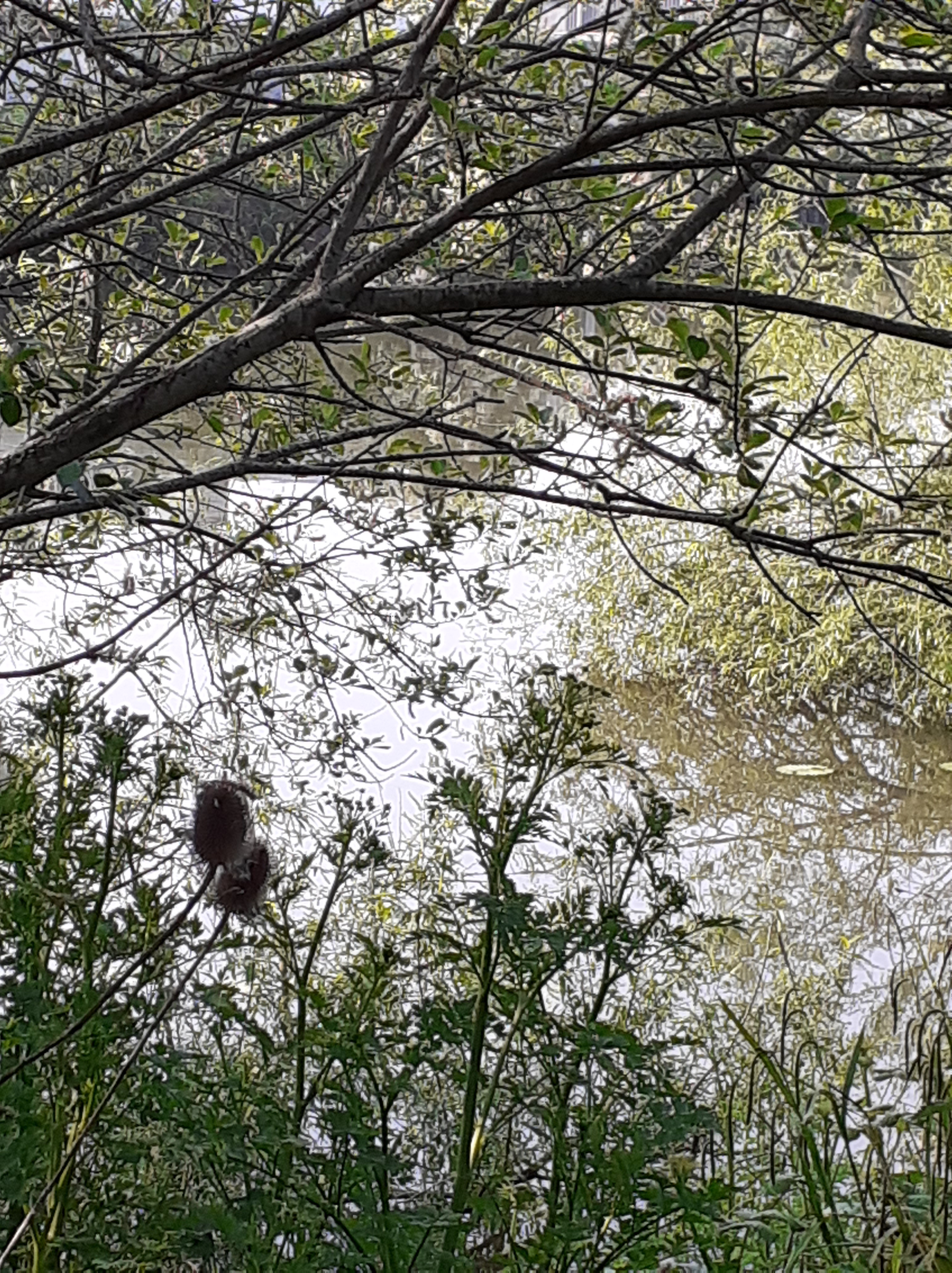
Where I live, the hawthorn is losing its blossom. It looks like a kind of death, but is in fact just another phase in the life cycle of this plant. Its goal is to bear fruit. For many years, as part of my regular Druid practice, I worked with a wheel of the year mandala involving sixteen plants (mostly trees, many of these being ogham trees (1,2). Hawthorn covered the period from 1-23 May. In a previous post I have also looked at the special case of the Glastonbury thorn, with which I felt a strong personal relationship before it was vandalised (3).

In his The Underworld Initiation (4), R. J. Stewart suggests that we see all members of the rose family as sharing the same symbolism – showing in nature a sequence of promise, pain and fulfilment: blossom, thorn and fruit. (For me it seems that the apparent dying back to bear fruit is the ‘pain’, if that’s the right word, rather than the slightly extraneous thorns. Maybe that’s too literal, or maybe I’m identifying too much with the plant as subject).

I notice that my own tree mandala, developing from a kind of dream time, includes three members of the family: blackthorn (8-30 April), hawthorn (1-23 May) and apple (1-23 August). Indeed my original version had the wild rose for midsummer (16 June – 8 July), before I replaced it with the more conventional oak. Yet in my heart’s imagination, the rose is my solarised midsummer and midday plant. More widely, this plant family, both naturally and imaginally, has been vividly important to me over the years.

R. J. Stewart was inspired by Scottish Border ballads, especially Thomas the Rhymer and Tam Lin. I like what he says about working with traditional sources. “One of the most damaging attacks that can be made upon a tradition is to ‘restore’ it, or to ‘prove’ an original model … restoration implies the withdrawal of the vivifying spirit into another world, leaving only a shadow behind … such a restoration can only be made within ourselves, by bringing our imaginations alive with the traditional symbols” and developing them in the way our inspiration prompts. Here and now, I can begin to let go of May 2023, and allow the peak of the light time to come in. The rose family is still there, as companion and teacher.

(1) https://contemplativeinquiry.blog/2020/09/20/autumn-equinox-2020-hazel-salmon-awen/ (A note at the end of the post explains the whole mandala)

(2) https://contemplativeinquiry.blog/2020/08/12/meditation-wisdoms-house (Explains the contemplative context of my tree mandala work)

(3) https://contemplativeinquiry.blog/2021/04/23/remembering-the-glastonbury-thorn/

(4) R. J. Stewart The Underworld Initiation: A Journey Towards Psychic Transformation Wellingborough: The Aquarian Press, 1985

WHEEL OF THE DAY

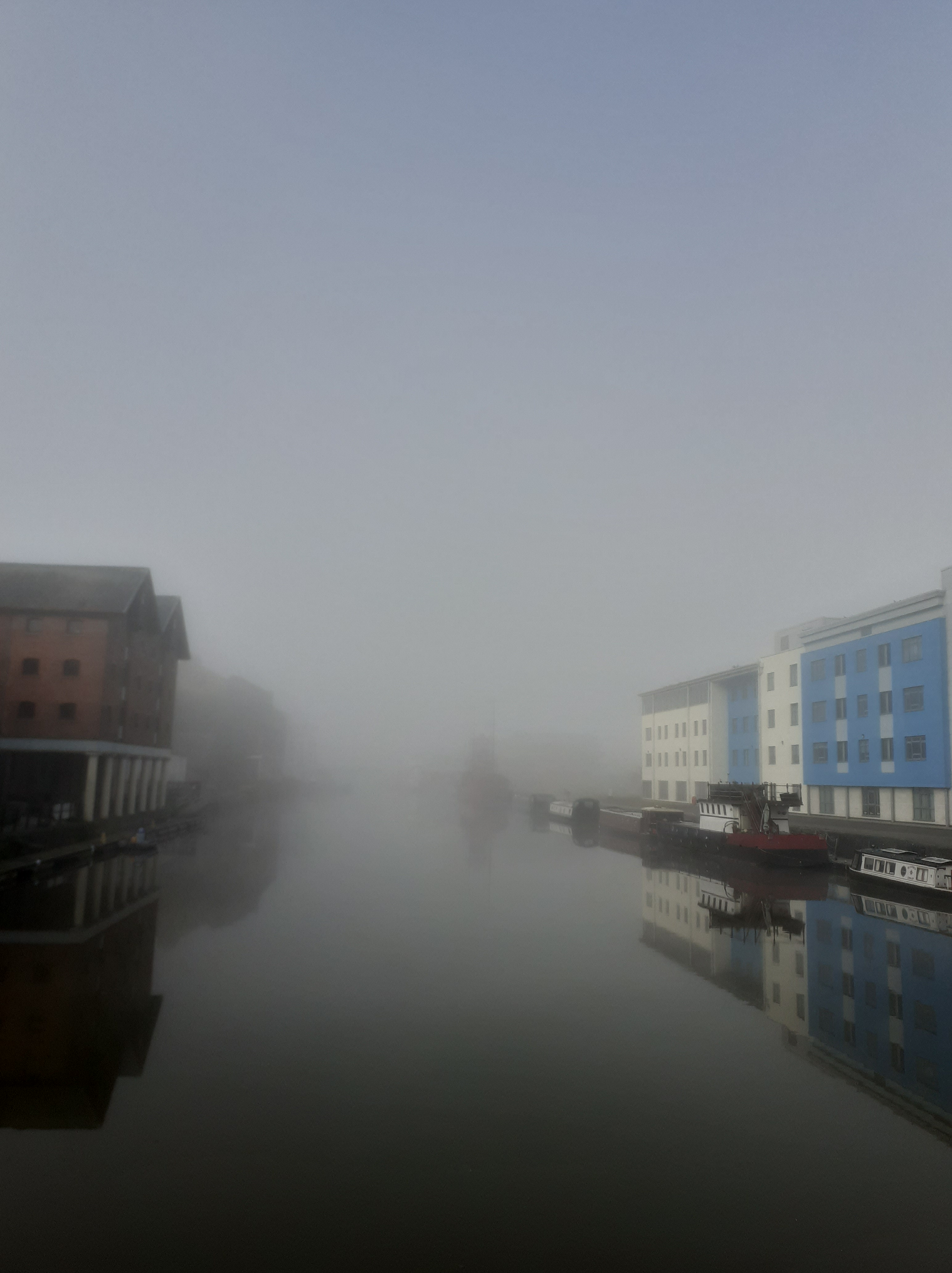
Two pictures taken 12 hours apart in neighbouring locations. 7.30 am above and 7.30 pm below. The wheel of the day following its course in the light time of the year. Dawn is well past regardless of mist, and sunset yet to come even if shadows are lengthening.

Delighting in these experiences. No further narrative.

CELEBRATING THE MONTH OF MAY

The Irish name for May is Bealtaine. Linguistically at least, the May Day festival sets the scene for a calendar month. As I experience the wheel of the year in my own life, this feels right. May, the merry month, has always been special to me. Born towards the end of the month in 1949, I continue to feel newer and fresher in May, with a heightened sense of life. Changes happening around me, in the rest of nature, feed that sense. I’m part of something bigger.

The demarcation of time might be a product of human counting and naming, but it doesn’t feel arbitrary to me. Counting and naming have a powerful magic of their own. On 14 May 2023 I went on a morning walk, reaching a small wooded area at about 7.45 am. It was a time of dispersing mists and strengthening light. A time of warming up. I enjoyed it from the start, but there came a moment when my experience of the walk changed radically.

I see the wood. I stand at its edge. Hawthorn invites me in, decked in the green and white of the May season. I understand this as a moment for slowing down and shifting into a softer, more intuitive connection with the realm I am entering. I am moving into a kind of sacrament – a communion with nature in a unique time and place. I feel a joyful kind of reverence here, free of solemnity and unction. As I continue slowly on the path, sunlight, striking a slender tree trunk, illuminates my way.

Then comes a tanglewood immersion. Variations in wood. Variations in green. Variations in light – especially light. This place could be dark and dank. At times, no doubt, it appropriately is. But it is May now, and wonderfully backlit. There’s a yellowing of green that points to new light and growth rather than their decay. I have a strong sense of participating in a living world. My own vitality is boosted.

I am now drawn towards water. Again, some foliage is shaded. Other foliage is vividly lit up. On the water, the mist is still clearing. It is still fairly early in the day. It is at times like this that I feel most Druidic, very at home and blessed in this quiet connectedness.

A little later, I crouch at the water margin’s edge. Whereas the previous scene had a spacious serenity, this has intimations of activity, a small but crowded world of its own, with thriving plants and and a thriving sub aquatic realm beside them. Even in this small space, life is complex and abundant. The same holds, on a somewhat expanded scale, to this vulnerable scrap of woodland as a whole. I emerge from my sacrament refreshed and renewed, with the imprint of Bealtaine 2023 upon me.

TASTING SOLITUDE

“Three months after becoming a monk, I took off to the Himalayan foothills behind Dharamsala. I was 21 years old. My backpack contained a sleeping bag, groundsheet, towel, kettle, bowl, mug, two books, some apples, dried food and a 5-liter container of water. Monsoon had just ended: the sky was crystalline, the air cleansed, the foliage luxuriant. After 3 or 4 hours, I left the well-trodden footpath and followed animal trails up the steep, sparsely forested slope until I reached the grassy ledge hidden by boulders and sheltered by branches that I had identified earlier on an earlier foray.

“Inspired by stories of Indian and Tibetan hermits, I wanted to know what it would be like to be cut off from all human contact, alone and unprotected. I would stay here as long as my meager supply of food and water permitted. No one knew where I was. If I fell and broke my leg, was bitten by a cobra or mauled by a bear, I was unlikely to be found. High in this aerie, I could still hear the distant horn blasts and grinding gears of buses and trucks below, which I regarded as an affront.

“I would wake with my sleeping bag covered in dew. After peeing and meditating, I would light a fire, boil water, make tea, then mix it with roasted barley flour and milk powder to form a lump of dough. This was breakfast and lunch – following the monastic rule, I did not eat in the evening.

“My meditations included the sadhanas into which I had been initiated, where I visualised myself either as the furious bull-headed, priapic Yamantaka or the naked, menstruating red goddess Vajrayogini. I alternated these tantric practices with an hour of mindfully ‘sweeping’ my body from head to foot, noticing with precision the transient sensations and feelings that suffused it. When not eating or meditating, I intoned a translation of Santideva’s Compendium of Training, an 8th century Sanskrit anthology of Mahyana Buddhist discourses, which I had vowed to recite in its entirety while up there.

……….

“What remains of that solitude now is my memory of the sweeping panorama of the plains of the Punjab, the immense arc of the heavens, and the embrace of the mountains that harbored this fragile dot of self-awareness. Once, a fabulous multi-colored bird that launched itself from the cliff beneath, floated for an instant in the air, then disappeared from view. A herdsman and his goats came close to discovering me one afternoon. I peeked at them through a lattice of leaves as the animals grazed and the wiry, sun-blackened man in a coarse wool tunic lay on a rock.

“Supplies exhausted and text recited, I trekked back to my room in McLeod-ganj below. During my five days on the mountain I had acquired a taste for solitude that has been with me ever since.”

Stephen Batchelor The Art of Solitude: A Meditation on Being Alone with Others in This World New Haven, CT & London, England: Yale University Press, 2020

FINDING LOST GODS IN WALES

Professor Ronald Hutton’s fifth lecture in the Gresham College series on early Pagan history in Britain (1) is called Finding Lost Gods in Wales. Hutton’s main focus is on medieval Welsh literature. The language used is a 5th/6th century CE mutation of the Brythonic speech once used throughout Britain, further developed for literary purposes by court bards in the 6/7th century. Hutton describes it as “made for poetry” because of the concentration of meaning in the words. He gives as an example in a literal English translation:

‘Colour light waves spread boiling billows

‘Flood-tide river mouth on sea where nothing waits.’

He contrasts this with an English translation for English ears, demanding more words whilst sacrificing impact and immediacy.

‘Bright as the light that falls on the waves, where the boiling billows spread

That flashes a moment from the meeting of river flood and sea.’

This language was the public voice of a consciously dispossessed people, creating a new sense of Welsh Celtic nationhood in the 9th and 10th centuries, when the English, Scottish Gaels and Vikings had reduced their territory to less that 10% of Britain. It led to a flowering of Bardic culture throughout the medieval period.

Taliesin was celebrated as Wales’ greatest Bard. There is no certainty that he existed, though poems surviving from the 6th century have been attributed to him. There are no recorded statements of his pre-eminence before the 10th century. Later poets inspired by him continued to write in his name for a further 300 years. His link with Awen as the source of inspiration reveals the mystical roots of the whole Bardic tradition. But for instances or echoes of specifically Pagan motifs we are largely reliant on a small group of texts from the 11th -13th centuries: The Black Book of Carmarthen, The White Book of Rhydderch, the Red Book of Hergest, the Book of Taliesin and the Mabinogion, a collection of prose stories. (The full prose Hanes Taliesin is from a much later date.)

In contrast to Irish medieval literature, we do not find Goddesses, Gods or explicitly Pagan characters in these Welsh texts, even in the four branches of the Mabinogi, though these do seem to be set in Pagan times. Several characters have superhuman abilities, without being presented as Gods. However, we do have Annwn, an otherworldly realm of human-like beings who interact with ordinary humans. We also find shape-shifting abilities – people change into animal forms and back again; humans change their appearance; objects change their form.

There is certainly magic and magical poetry, as in the Preiddeu Annwn (The Lute of the Otherworld). This poem, though hostile to monks and their pretensions to scholarship, is overtly Christian. According to Hutton, poems of this kind delight in being difficult, allusive and packed with metaphor, references and wordplay. No one now can say with any certainty what they were originally intended to mean. But this, suggests Hutton, is a gift and invitation to the poets, story tellers and artists of later generations including our own.

On the specific question of deity, Hutton discusses Rhiannon, Cerridwen, Gwyn ap Nudd, and Arianrhod. None is described in this literature as divine and, according to Hutton, we do not find them in that role in Celtic antiquity.

Rhiannon is superhuman and comes from an enchanted world to find a husband of her own choosing. She stays the course despite horrible experiences. She has been thought of as a horse goddess, but this is not suggested in the Mabinogion and there is no indication of a horse Goddess in the archaeology of Iron Age Britain or in Romano-British inscriptions. She has also been seen as a Goddess of Sovereignty, but she does not confer sovereignty on either of her husbands, and there is no record of any sovereignty Goddess in Europe outside Ireland.

Cerridwen begins as a mother skilled in sorcery trying to empower her son but actually empowering a lowly servant boy instead. By the 13th century she has, through her association with Awen, become the muse of the Bards, giver of power and the laws of poetry. In 1809 the scholar Edward Davies made her the great Goddess of ancient Britain and many people have Iolo seen her in that light ever since.

In 11th and 12th century texts Gwyn ap Nudd was one of King Arthur’s warriors, imbued with a degree of magic power. By the 14th century, poets are making him a mighty power of darkness, enchantment and deception. In the 1880’s the scholar Sir John Rhys made him the Celtic God of the dead and leader of the Wild Hunt. This is largely how he is seen today.

In the fourth branch of the Mabinogi, Arianrhod is a powerful, beautiful and selfish enchantress with the capacity to make unbreakable curses. By the 13th and 14th centuries her magical powers are much increased. She can cast a rainbow about a court, and the Corona Borealis is called the Fortress or Arianrhod. In the 20th century she began to be seen as a Star Goddess.

Professor Hutton’s lecture includes a discussion of the Welsh Bardic revival at the end of the eighteenth century, inspired largely by Iolo Morgannwg, here presented as a mixed blessing given his willingness to forge ‘ancient’ documents to advance his cause. Hutton ends with a section on the legend placing Glastonbury as the site of King Arthur’s final refuge and eventual burial, and also the place in which the Holy Grail was buried. Both of these were concocted by the later medieval monks of Glastonbury Abbey as a potential source of patronage and a pilgrimage income. At the same time, post holes linked to a neolithic structure have recently been found near Chalice Well – which may well be a numinous site of great antiquity. Artefacts have also been recently found in the area, including the Abbey itself, from the early post-Roman period in which Arthur’s career has been set. We weave our stories from a mixture of fact, fiction, speculation and deep intuition. Being conscious of this circumstance may make them all the richer.

(1) https://www.youtube.com/watch?v=NTmIEE91D-k

See also: https://contemplativeinquiry.blog/2021/03/26/ for my review of Cerridwen Celtic Goddess of Inspiration by Kristoffer Hughes as an in-depth account of the Goddess and her evolution. He also discusses the Welsh Bardic tradition and the later work of Iolo Morgannwg

EVENING LIGHT IN APRIL

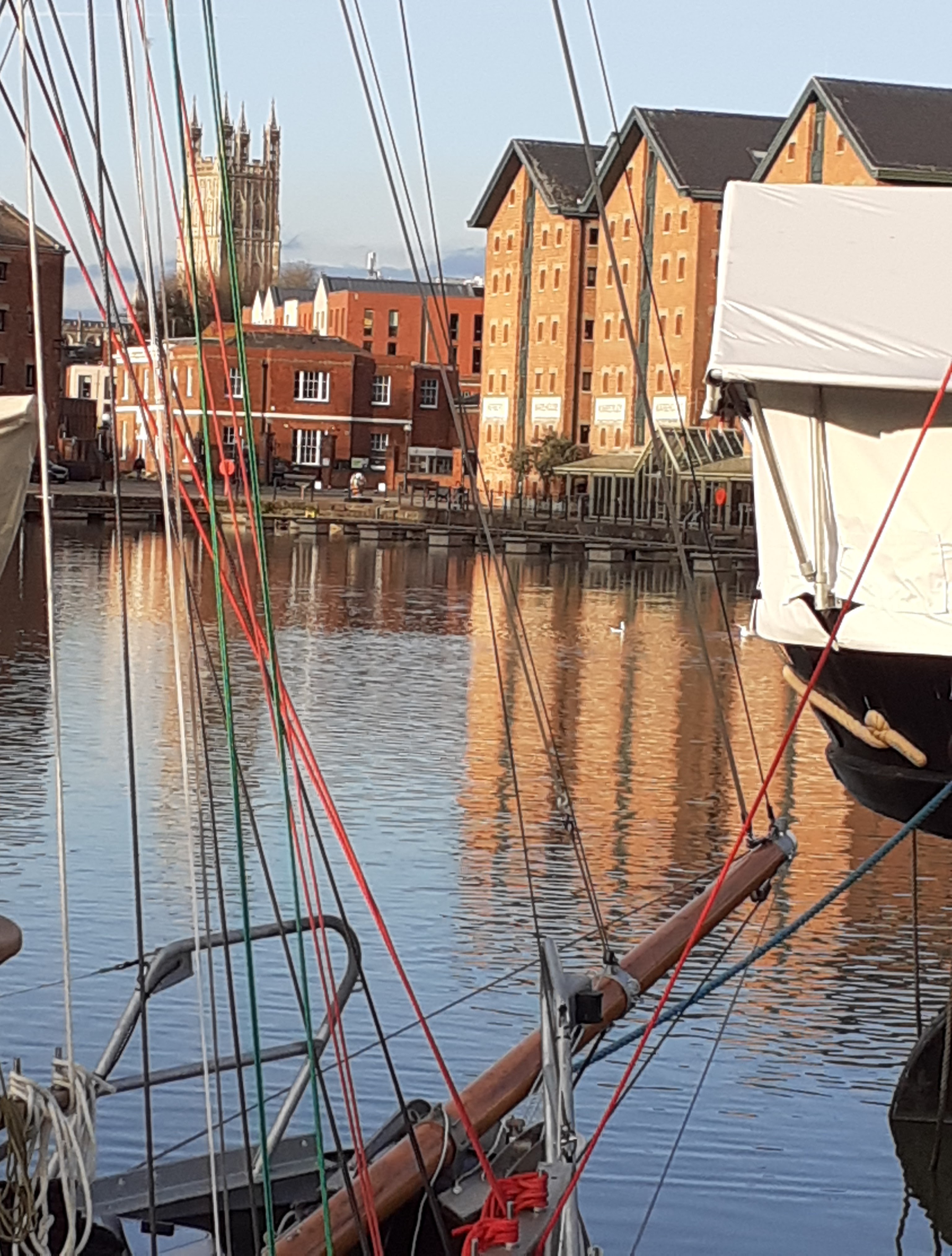
In Gloucester, England, we are entering the four lightest months of the year. The pictures above and below were taken after 7 pm. This lightness, and the long evening twilight that follows, still feel novel. The day-to-day weather here has been volatile, making evening sunshine all the more precious when it comes. I feel naturally enlivened and blessed, somehow shifted into a more immersive experience of the world around me.

I live in a flat where I have good views of the sky, the sun, the moon and their changes from indoors. This has subtly altered my experience of daily life from before dawn until after sunset – following the wheels both of day and year from a slightly elevated level. But there’s something also in experiencing the effects of April evening light at ground level. It’s an urban, curated landscape and I am (mostly) an urban Druid. I am fond of such spaces when they are done well and preserve a human scale.

In the docks I notice rigging on a sailing boat at rest and brick warehouses reflected in tranquil sunlit water. The cathedral tower is in the distance, still the tallest building in sight. On Brunswick Road, I look into the grassy city garden of Brunswick Square, mostly in sunlight, partly in shade. Immediately in front of me there’s a cherry tree in blossom. Across the square, I enjoy an 1820’s terrace. At this moment in the year, I discover both freshness and familiarity. For me, the experience of an evening like this is an ideal way of being and belonging in place.

BLUEBELLS BEFORE BELTANE

Seeing bluebells

In verdant grass.

Will summer really come?

ME AND MY INQUIRY

My inquiry moves slowly. But it doesn’t stand still. So from time to time I update the ABOUT section of my blog. Sometimes I discuss my changes in a post. Occasionally it seems as if the blog has its own life and writes itself through me. I’m not sure that I would claim the word Awen here, but I can end up surprised at what appears.

This time there seems to be a settling, an emphasis on continuity. I recommit to a contemplative inquiry, grounded in modern Druidry and with the inquiry process itself as my core practice. I am now assuming that this will be lifelong. In the past I have tended to believe that the inquiry would eventually lead to a conclusion of some kind, or become redundant for other reasons. Another project would then emerge – or maybe I would retire from projects and put my feet up. That belief has gone, for my inquiry is no longer a ‘project’.

As I was writing this morning, I became conscious of the change. ‘My inquiry’, I wrote ‘has shifted from a focused experiential investigation into a more relaxed, at times meandering process that brings illumination, healing and peace’. I have always had, in the back of my mind, prestigious models of both academic and spiritual inquiry that do not encourage relaxed meandering. In the academic models, results like ‘illumination, healing and peace’ are beside the point. In the spiritual ones, they are mostly reckoned to be very hard-won. But there it is. I am moving into a life-lived-as-inquiry space by softening and reframing my idea of inquiry. I seek support and nourishment rather than new and different ‘results’. Looking at these words now, they seem obvious, not even new – but I’ve only just caught up. It does seem, experientially, as if the blog has become the voice (spirit?) of the inquiry and intervened to educate me. It’s an odd feeling.

Here is the new ABOUT text:

“I am James Nichol and I live in the city of Gloucester, England. My contemplative inquiry began in 2012. It is grounded in modern Druidry, though I have drawn on the enduring wisdom of many times and places. I am also influenced by the current turn towards an eco-spirituality that meets our own historical moment. The inquiry itself is my core practice. I see it as a lifelong journey. In my blog I include personal sharing, discursive writing, photographs, poetry, and book reviews.

“Over the years, my inquiry has shifted from a focused experiential investigation into a more relaxed, at times meandering process that nonetheless brings illumination, healing and peace. In the contemplative moment,  I am living presence in a field of living presence, at home in a living world. This is not dependent on belief or circumstance, but on the recognition of what is given, in joy and sorrow alike. I find that this simple recognition encourages a spirit of openness, the acceptance that nothing stays the same, an ethic of interdependence and a life of abundant simplicity.

“My book, Contemplative Druidry: People, Practice and Potential, was published in 2014. It includes a foreword, Deep Peace of the Quiet Earth, by Philip Carr-Gomm. There are major contributions in the main text from 14 other Druids offering diverse perspectives on the topic: https://www.amazon.co.uk/contemplative-druidry-people-practice-potential/dp/1500807206/

APRIL AND ‘DRUID MINDFULNESS’

Where I live, April 2023 brings qualities and freshness and new growth. My heart meets the moment as I walk in the bracing breeze. Sunny and overcast periods succeed each other. Moving through this enlivening space, I naturally welcome the energy of change it embodies.

But it’s not quite that simple. There’s an underlying turbulence too, which can easily challenge my balance. Slogans like ‘I am the sky. Everything else is weather’ aren’t enough. I, as natural man, have to ground and embody them. They have be be aligned with my felt sense.

I wasn’t sure how to talk about this when I discovered that someone else had done it for me. Philip Carr-Gomm, who until recently led OBOD (Order of Bards, Ovates and Druids), offers a regular podcast: Tea with a Druid. No 249 is about ‘finding calm in chaos’. It is up on YouTube as: https://www.youtube.com/watch?v=Ew4pD3OJen8

Philip suggests that the best way to deal with chaos, turbulence, or the everyday stress of modern life, is to turn to the stillness inside. Then it becomes possible to stay in the moment whilst expecting nothing. It takes work to get there – to identify ways of finding stability and calm even when all around is unstable and unpredictable.

Philip understands modern Druidry as a tradition of ‘mindfulness in natural settings’, whether real or visualised. The stillness found in those settings isn’t a dead stillness but a living one – leaves rustle, waves crash. The refreshment is somewhat different from that of a more abstract meditation where we sit with thoughts and feelings, finding the space beyond. In the podcast, Philip takes us through a meditation of the kind he describes. I thoroughly recommend it to anyone, whether or not involved in Druidry.

Returning to my recent walk, and the record of it, I see branches, buds and sky. I remember the movement in the sky, and a slight quivering of the wood. Records have their limitations. The stillness wasn’t one of complete stasis, as it may appear below. My current response is complicated by the human gift of memory, which is not the original experience. I am also absorbing someone else’s input. I am in a completely different here and now. But I am held within an enlivened tranquility, not at all that of the ‘tranquiliser’, and this is certainly a wonderful resource. Gratitude to the culture that has enabled it.

Earth Eclectic

music that celebrates Earth and speaks to the heart

Sarah Fuhro Star-Flower Alchemy

Follow the Moon's Cycle

Muddy Feet

Meeting nature on nature's terms

Rosher.Net

A little bit of Mark Rosher in South Gloucestershire, England

Becoming Part of the Land

A monastic polytheist's and animist’s journal

selkiewife

Selkie Writing…

Charlotte Rodgers

Images and words set against a backdrop of outsider art.

Prof Jem Bendell

living with metacrisis and collapse

Towint

The pagan path. The Old Ways In New Times

The Druids Garden

Spiritual journeys in tending the living earth, permaculture, and nature-inspired arts

The Blog of Baphomet

a magickal dialogue between nature and culture

This Simple Life

The gentle art of living with less

Musings of a Scottish Hearth Druid and Heathen

Thoughts about living, loving and worshiping as an autistic Hearth Druid and Heathen. One woman's journey.

Wheel of the Year Blog

An place to read and share stories about the celtic seasonal festivals

Walking the Druid Path

Just another WordPress.com site

anima monday

Exploring our connection to the wider world

Grounded Space Focusing

Become more grounded and spacious with yourself and others, through your own body’s wisdom

The Earthbound Report

Good lives on our one planet

Hopeless Vendetta

News for the residents of Hopeless, Maine