Contemplative Inquiry

This blog is about contemplative inquiry

Tag: Contemplative Druidry

THE PEACE OF SOPHIA

This post is about contemplation and peace – peace as lived experience, rather than as hope or idea. I am discovering the peace of Sophia.

In my practice I experience Sophia as a psychopomp or inner guru. Conventionally she is a guide of light. Actually she is a guide of dark as well. Either way she points beyond herself. Generally using a method of subtle prompts and suggestions, she opens my way to a deeper nature.

Just recently she has been showing me a way to peace as an inner space, like a well-spring at the core of being. This is not a new idea, nor yet a new experience. But there’s more clarity around it, more definition – also, in a felt sense, more weight.

It began with an intense vision of braided threads – black, white and red, the traditional goddess colours. I felt nudged to identify the colours with peace, joy and love. Peace had some primacy. Although this is a triadic image, I began to see it as a four: black, white, red and black. Here the peace of the Goddess is defining. It is linked both to origin and return, and to spaces within and between other forms of experience. It may seem like simple negation. But it is an active force, like the ‘emptiness’ in some Asian traditions.

The good news is that ‘peace’ does not depend on external conditions. It can be accessed and developed within, both individually and collectively. This is why, to a certain extent, practices like meditation can be a protective or resiliency factor in relation to bad outside conditions. The trick here is to avoid a descent into the wrong kind of magical thinking and expect too much. Challenges still have to be dealt with at their own level: it’s just that having a baseline of inner peace tends to make practitioners more resourceful in dealing with the busy apparent world.

Cultivating the peace of the Sophia is currently centre stage in my solo work. In his foreword to Contemplative Druidry Philip Carr-Gomm quoted the well-known line “Deep peace of the quiet Earth”. My extension of that thought, based my current experience, is to say ‘as without, so within’. I believe this double recognition is necessary. To the extent that I am a nature mystic, the aspect of nature with which I am most concerned is me, in particular a deeper nature behind the surface personality.  Only by attending to both this nature within and nature around and beyond me can I refine the relationship between them and so identify any gift I might have for the world.
MORE SPACE, FEWER WORDS

Just recently I’ve noticed a reluctance to write very much. I feel curious about this shift in my attention, and intuitively positive. My contemplative inquiry continues and my aims are the same. Yet the level of reading and writing that has shaped recent years no longer makes sense. It’s as though a phase has ended and a certain kind of job completed as far as it needs to be. I’m happy with what I’ve done, and I’m ready for a change in focus and expression. More space, fewer words: a reduction in apparent productivity, and an opportunity for something new to emerge if I’m willing to allow it.

In the meantime, I continue my contemplative practice in Druidry both solo and within my local group. I feel refreshed and sustained by these – so nothing’s changed there. More widely, Contemplative Druid Events is offering a contemplative day in Stroud on 3 October, a Dark on the Moon workshop in London on 7 February, and a weekend retreat near Malvern from 15-17 April. I’m enjoying this cautious expansion of outreach. Anyone interested in this work can follow its progress on:

http://contemplativedruidevents.tumblr.com


USEFULNESS AND EMPTINESS

A re-blogged post about valuing stillness and emptiness within the balance of our lives.

NATURE MYSTICS REVISITED

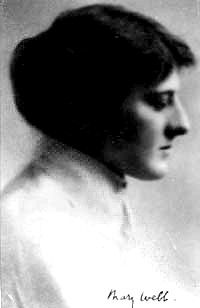
Mary_webb“Through a gradual awakening to natural beauty, she reached a perception of beauty peculiar to herself. She began to perceive analogies. Nature became for her, not a fortuitous assemblage of pretty things, but a harmony, a poem solemn and austere. It was for her no longer a flat painting on the wall of life. Beauty breathed there, light shone there that was not of the flower or the star. A tremor, mysterious and thrilling, seemed to run with the light through all matter, through a single open blossom of the wild gean tree and through the whispering forest.”*

In an earlier post – https://contemplativeinquiry.wordpress.com/2015/7/6/ – I introduced Nature Mystics: the Literary Gateway to Modern Paganism as a new and refreshing departure in Moon Books’ Pagan Portals series. This book, which I highly recommended, looks at literature seen to have nourished the culture and sensibility of modern Paganism. Rebecca Beattie, the author, has dedicated it “to all those Nature Mystics who have come before and continue to inspire us to a spiritual path with their words”.

This post is about a single book that I have read since reviewing Nature Mystics and would probably not have read otherwise. This is The House in Dormer Forest by Mary Webb. Unlike the better known Precious Bane and Gone to Earth, it is set at about the time of publication (1920) or perhaps a little earlier. I don’t think of it as a brilliant novel, but it does testify to a form of nature mysticism, one that brings together external nature, human consciousness, and the divine.

Running through the book is an assumption of the interdependence of humans with each other and with the rest of the natural world. Yet there is also a balancing emphasis on the personal, inner journey of individuation. The author makes this comment on two somewhat negatively portrayed matriarchal characters: “these two had been meant for individualists. This not being allowed, they became egoists, which always happens on the principle that if you deny a child sugar it will steal from the sugar-basin. The human mind, unless it is to remain nescient, must have itself, must develop and explore itself. The more vital, the more awake it is, the more it must turn inwards. For within, deep in the tenebrous recesses of sub-consciousness, man hopes to find God. Not in churches, not in his fellows, not in nature will he find God until he has found all these things mirrored in that opaque and fathomless pool, lying within his own being of which, as yet, we know nothing.”

If the inner journey has been made possible, the experience of creation is transformed. Human relationship can flourish and the human role of witness to external nature can become a mutual gift. I was brought up with an educated aversion to ‘purple passages’ and their perceived sentimentality. Yet now, I am happy to offer this one. “So it was with Michael and Amber. Arms were stretched forth in welcome. Flute notes fell from thickets. The eyes of bird and insect, the dewy gaze of a few late flowers, peered on them with new meanings. Along by the streams the willows, clad in silver-dusted feathers, meditated like stately birds. Willows are of all trees the most mysterious. It is said that they were the first of trees that before a bird sang or a bee quested for honey the world was full of willow forests. There the wind went in spring, a visible golden wave, deeply laden with yellow pollen. There, in the glistening air, with none but their own silver tongues to break the silence, the willows waited. They waited for the insects to come to their yellow aments; for the birds to flash in and out, making low music in the dusk. But they awaited also the perception which would complete their creation. The flowers that bloom unknown for a thousand years only exist when at last one flower blossoms under a perceptive eye. For that flower the pollen was launched spring after spring, the nectar gathered, the seed rounded. So the understanding of beauty is a priesthood. Amber and Michael gave to the forest almost as much as they gathered from it as they wandered in the warm and mellow harvest weather.”

*Mary Webb The House in Dormer Forest The Echo Library: Fairford, Gloucestershire, England, 2012

POEM: TALIESIN

Poem by Ross Nichols, who founded OBOD in 1964.  I like his seamless interweaving of naturalistic, mythic and theosophical themes – because for him they are one integrated experience. For me the poem reads like the work of someone who needed to live it in order to write it.

Here the Fish enters

The world of dark water

Pre-birth waters

Waterworld Elysium

Lake Tegid and the magic weir.

Much does he grow,

Many his transformations.

Warm are the waters,

The dark waters of Tegid,

And they swiftly flow

Downwards as he grows.

Talisin is found in the weir:

Elphin finds him

In a bag of leather

Where the waterworld dams,

Where the womb-waters

Are falling terribly

At the weir of birth.

The entering fish

Was the spirit of Taliesin:

His transformations

Were the many souls and bodies of Taliesin:

Leading him gently, drifting him slowly

Into the bodily definition of Taliesin,

His bag of leather,

His separated skin.

And Taliesin, after his separated life,

His songs and his wonders. His challenges and his fame,

Shall enter again as a Fish,

Shall know again sufferings and transfigurations

And the waters of Tegid.

For Taliesin was ever upon earth,

Knew all things, suffered all things.

And Taliesin shall be

In many wonderful shapes,

A grain of wheat and a hare

Sown and running

While there are fields, and the spirit of men,

Leaping alive at a harvest,

Or silver in the waters of time.

This poem can be found in the collection Prophet Priest and King: the Poetry of Ross Nichols edited and introduced by Jay Ramsay Lewes: Oak Tree Press, 2001.

CONTEMPLATIVE DRUIDRY: MEME OR MOVEMENT?

On 3 October Contemplative Druid Events (CDE) – see http://contemplativedruidevents.tumblr.com – will hold its last planned event for 2015. This will be a Contemplative Day, in Stroud, Gloucestershire, England. The facilitators will be James Nichol, Elaine Knight and Nimue Brown. Our programme is designed for a group of up to 15 people, and 12 are already committed. With just over a month to go we have a comfortable size of group, with room for a few more.

CDE offerings are built around insights from the book Contemplative Druidry: People Practice and Potential about the kinds of contemplative work that most seemed to resonate for the present generation of Druids. We offer sitting meditations of based both on a bare attention and on active imagination. We have outdoor walking meditations and opportunities simply to be, with awareness, in natural settings. We use methods that draw on creative arts. We have developed ‘Awen space’ as a group opening to, in and as Spirit. We build our repertoire as we gain in experience.

Is CDE spearheading Contemplative Druidry as a movement? I don’t see it that way. CDE was created as a minimal level of organisation for a single purpose. This is to offer a particular kind of event to small groups of Druids and fellow-travellers willing to join us. In doing this, we also promote the contemplative Druid meme, which now seems to be well recognised in modern Druid culture. But the CDE brand does not exhaust the possibilities of contemplative Druidry and we wouldn’t want it to. Modern Druidry, which is in some senses a postmodern Druidry, has a strong commitment to free exploration and diversity. The contemplative meme will find its place within that wider cultural framework. For better or for worse, we will never, as a collective, be organised around a Druid ‘four noble truths’. Contemplative Druidry will mean different things, and inspire different journeys, for different Druids.

POEM: PRIMARY CHIEF BARD

Gnostic Bardistry from The Book of Taliesin? These are just five of the verses, selected by me from one poem. What interests me is not so much working out what to us seems like a set of puzzles, but how something new and dialogical is created by interweaving indigenous material and biblical references. I say a few words in italics after each verse.

Primary Chief Bard

Primary Chief Bard

Am I to Elffin

And my native country

Is the region of the summer stars.


The first statement is a statement of identity. It begins with a local (though important) role, and goes on to the cosmic and transcendent. This taps into a sense of belonging somewhere else (whether perceived as a place or state). It makes me think that statements like ‘being here now, in the present’ and ‘my native country is the region of the summer stars’ only seem contradictory: meaning depends so much on context and the work that words are doing. If the two statements are separated and polarised, they diminish into limiting slogans. Taken together, they can lead us to a different quality of experience.

I was full nine months

In the womb of the hag Ceridwen.

Before that I was Gwion

But now I am Taliesin.

Taliesin’s current personal identity is explained in terms of a second birth, in this life, triggered by the actions of Ceridwen. This second birth fits him to be a Bard and take the Bardic name ‘Radiant Brow’, one that bespeaks major shifts in energy and consciousness. It also allows the sense of the summer stars as his ‘native country’ to be real within him. It orients him to his true home.

I was patriarch

To Elijah and Enoch.

I was there at the crucifixion

Of the merciful Mabon.

Elijah and Enoch ascended to heaven without dying. They have deep roles in Jewish mysticism. They are in the tradition of so-called ‘ascended Masters’. If we treat these metaphors (insofar as they are metaphors) as concerned with enlightenment, then – as their ‘Patriarch’ – Taliesin is claiming primacy over them. He is in some sense a Christ figure and so can be present at the crucifixion of another Christ figure, referred to here by the name of the magical child of British tradition ‘the Mabon’.


I was at the cross

With Mary Magdalene.

I received the Awen

From Ceridwen’s cauldron.

The poem presented here is a product of the later Middle Ages, likely as late as the fourteenth century. Traditions giving Mary Magdalene the role of major teacher and possibly spouse of Jesus were deep underground, but everyone in Christendom Knew of her witnessing role at both the crucifixion and the resurrection, and so as privileged in some way. She also shares her name with Mary the mother. The two couplets together bring the idea of Christ’s transformation through death on the cross with Taliesin’s transformation from Ceridwen’s cauldron, and the critical role of a feminine power in each.

I was in the larder

In the land of the Trinity

And no one knows whether my body

Is flesh or fish.

Despite all the above, Taliesin remains an enigma – a shape shifter and trickster. He defies definition and description and won’t fit into any box that attracts unwanted piety. Other readers may understand this verse much better than I do, but I see it as very tough minded and unwilling to let me parcel up this poem and tie it with a neat bow. To the extent that I get a sense of medieval Welsh literature, this seems very characteristic. However, in the most obvious ‘Land of the Trinity’ (Western Christendom) people want to know where everyone stands. The accepted narrative is that we’re with Jesus the avatar of Pisces and through the sign of the fish we know him. And yet the old Celtic world has many trinities and many fish, including the salmon of wisdom. And Taliesin’s body might be flesh after all. So we are thrown back on our resources, with riddling words and ambiguous images to reflect them.


The complete poem can be found in Taliesin: Shamanism and the Bardic Mysteries in Britain and Ireland by John Matthews London: The Aquarian Press, 1991.

SOPHIAN CONTEMPLATION

I have begun a series of Sophian contemplations. They are built around brief passages from texts that I treat as being in her tradition, passages that have drawn and excited me and continue to resonate beyond their initial impact. This is the first.

I am the light within the light.

I am the remembrance of Forethought.*


I sit, eyes closed. I say: I am the light within the light. I get the image of someone holding up a lantern. It’s like the Hermit’s lantern from Tarot, except that Sophia is holding it. Then there’s the image of the candle inside the lantern, and I briefly become the flame. I am surrounded by protective walls of glass, safe and steady. I know that the glass will enhance my radiance.

Back outside, I as observer notice that the lantern offers a pool of light in a deep twilight setting. This light is not aggressive or overwhelming. It hardly disturbs the magic of the gloaming, which is also somewhat lit by moon and stars. The contribution of the lantern is that it helps to illuminate a path. Sophia is holding up the lantern so that people can walk somewhere a bit more easily.

Sophia holds the light and points the way. Sophia does not ask for prayers. She does not ask to be loved, though love is in the air. She does not even ask to be followed, or for a path to be followed. Rather she says to me, in my observer position, “now you do it”. To become a lantern bearer, a lantern, and the flame within, is her worship. It begins with the flame within, or there is no light. At a level, it also ends with the flame. From the perspective of the lantern there is no path; just illumination.  From the external perspective, there is a path, and a role of lantern bearing guide. Yet there is only one experience, which can be seen in different ways.

I continue to sit, eyes now half open, soft focus, panoramic vision. I say: I am the remembrance of Forethought. I notice that I feel very comforted by the word ‘remembrance’. I’ve always had a sense of memory beyond memory, predating me and beyond personal. I am not thinking in terms of past lives or other forms of existence. But I do think that if those had a meaning and I could access them, this ‘remembrance’ would be there too. It’s not a memory of any identity or event – it’s just ‘remembrance’. It’s a very deep intuitive sense, and I believe that I share it with others, though the specific experience and ways of attempting to language it will vary. It has the feeling-tone of home. The old Gnostics used the term Pistis Sophia (faith-wisdom), which is the wisdom of deciding to have faith in the value of experiences like this, rather than dismissing them. There’s a decision to build life and meaning around them and to stand by the images, words, metaphors and practices that emerge – though not without examination and inquiry. ‘Forethought’ also has its own special resonance. In this context it’s anything so concrete of definite as ‘forward planning’. Rather, it derives its meaning as a contrast to ‘the Word’. It suggests a prior latency before the beginning that was the Word – a bit like the ain soph of the Kabbalah. As such, I can appreciate that language is being stretched beyond its reasonable reach and is dissolving into Mystery. Yet somehow, all the same, it stands for something I can recognise and assent to. Sophia’s invitation to me is to take ownership of these lines, and taste their reality as fully as I can.

I am the light within the light.

I am the remembrance of Forethought.*

*These lines come from a Gnostic text called The Secret Book of John. The book is a Nag Hammadi text and now available in a number of English translations. This one is taken from The Secret Teachings of Jesus: Four Gnostic Gospels translated with an introduction and notes by Marvin W. Meyer, New York: Vintage Books, 1986.

SOPHIA (HOKHMAH) AND WHERE SHE CAME FROM

In my understanding, Sophia has walked with us on a long cultural journey. We first discover her paradoxically placed within monotheist and patriarchal Judaism. She is named Hokhmah, which like the Greek Sophia translates into English as Wisdom. Her subsequent journey has often been through difficult and dangerous territory in the apparent world. It always marks a drive to awaken from toxic and delusional ‘realities’ and it has sometimes had a markedly pessimistic tone. This journey continues into our own times, and with it Sophia’s gift for what the old Gnostics called ‘continuous revelation’: “I will again make instruction shine forth like the dawn, and I will make it clear from far away. I will again pour out teaching like prophecy, and leave it to all future generations. Observe that I have not laboured for myself alone, but for all who seek wisdom”. (1)

Anne Baring and Jules Cashford point out (2) that although Wisdom in Jewish sacred literature was technically an abstract and transcendent quality, associated with the divine, it was always referred to as ‘she’, though without any image to support the personification. However the poetry of Hokhmah reveals her emergence from the earlier Great Mother. Wisdom speaks as Inanna and Isis spoke before her, powerfully, authoritatively and sensuously, making abundant use of natural imagery to come into full presence.

I grew tall like a cedar in Lebanon,

And like a cypress on the heights of Hermon.

I grew tall like a palm tree in Engedi.

And like rose bushes in Jericho;

Like a fair olive tree in the field,

And like a plane tree beside water I grew tall.

Like cassia and camel’s thorn I gave forth perfume,

And like choice myrrh I spread my fragrance,

Like galbanum, onycha, and stacte,

And like the odour of incense in the tent.

Like a terebinth I spread out my branches,

And my branches are glorious and graceful.

Like the vine I bud forth delights,

And my blossoms become glorious and abundant fruit.

Come to me, you who desire me

And eat your fill of my fruits.

For the memory of me is sweeter than honey,

And the possession of me sweeter than the honeycomb.

Those who eat of me will hunger for more,

And those who drink of me will thirst for more,

Whoever obeys me will not be put to shame,

And those who work with me will not sin. (1)

Baring and Cashford suggest that the greatest legacy of the goddess culture in the eastern Mediterranean is “the idea that the earthly, visible order of creation participates in the invisible source of being”. This is the foundation of the Wisdom traditions of Mesopotamia and Egypt, some 2,000 years older than Greek or Hebrew civilisation. “In Greece, whose great philosophers visited Egypt, it is the foundation of Plato’s Great Chain of Being. Israel’s own ‘Wisdom Teaching’ is woven with the thread of these older traditions, although the name, person and representation of the goddess could find no place” (2).

I am drawn to Sophia because for me she is fully in and of nature yet not locked in to the role of earth mother. She stands for every part of Plato’s chain: matter, life, mind – soul and spirit too if you want to make further distinctions.  She doesn’t stand for a dream of bliss within the womb, or in an over-managed garden. Reading the old Jewish myths through a Gnostic lens she, under the name of Eve, puts a stop to all that. She will not accept a reign of ignorance and false consciousness. Sophia stands for awareness, which includes a willingness to see the world as clearly as possible and a capacity to hold and manage a measure of self-aware suffering. In my universe Sophia is pneuma, the very breath and spirit of awakened and relational life, and as such she represents the energies of creativity and love as well as of wisdom. For none of these fully blooms without the others.

  1. Ecclesiasticus, or the Wisdom of Jesus Son of Sirach 24, 13-32,The Apocrypha: the Apocryphal/Deuterocanonical Books of the Old Testament, New Revised Standard Version Cambridge, England: The University Press, 1992
  2. Baring Anne and Cashford Jules The Myth of the Goddess: Evolution of an Image London, England: Penguin, Arkana Books, 1993

POEM: SAILING TO BYZANTIUM

I’ve had a request for the full text of W. B. Yeats’ poem Sailing to Byzantium and so this post is devoted to it.

1

That is no country for old men. The young

In one another’s arms, birds in the trees

-Those dying generations – at their song,

The salmon falls, the mackerel crowded seas,

Fish, flesh or fowl, commend all summer long

Whatever is begotten, born, and dies.

Caught in that sensual music all neglect

Monuments of unageing intellect.

II

An aged man is but a paltry thing,

A tattered coat upon a stick, unless

Soul clap its hands and sing, and louder sing

For every tatter in its mortal dress,

Nor is there any singing school but studying

Monuments of its own magnificence;

And therefore I have sailed the seas and come

To the holy city of Byzantium.

III

O sages standing in God’s holy fire

As in the gold mosaic of a wall,

Come from the holy fire, perne in a gyre*,

And be the singing masters of my soul.

Consume my heart away; sick with desire

And fastened to a dying animal

It knows not what it is; and gather me

Into the artifice of eternity.

IV

Once out of nature I shall never take

My bodily form from any natural thing,

But such a form as Grecian goldsmiths make

Of hammered gold and gold enamelling

To keep a drowsy Emperor awake;

Or set upon a golden bough to sing

To lords and ladies of Byzantium

Of what is past, or passing, or to come.

  • “Perne in a gyre” – ‘pern’ is another name for spool, and ‘to pern’ or ‘perne’ is to move with a circular, spinning motion; a gyre is Yeats’ symbol for circular movements in history – In A Vision Yeats said that “each age unwinds the threads another age had wound”.

Yeats, W. B. Poems of W. B. Yeats London: MacMillan & Co, 1964 (Selected with an introduction and notes by A. Norman Jeffares)

Earth Eclectic

music that celebrates Earth and speaks to the heart

Sarah Fuhro Star-Flower Alchemy

Follow the Moon's Cycle

Muddy Feet

Meeting nature on nature's terms

Rosher.Net

A little bit of Mark Rosher in South Gloucestershire, England

Becoming Part of the Land

A monastic polytheist's and animist’s journal

selkiewife

Selkie Writing…

Charlotte Rodgers

Images and words set against a backdrop of outsider art.

Prof Jem Bendell

living with metacrisis and collapse

Towint

The pagan path. The Old Ways In New Times

The Druids Garden

Spiritual journeys in tending the living earth, permaculture, and nature-inspired arts

The Blog of Baphomet

a magickal dialogue between nature and culture

This Simple Life

The gentle art of living with less

Musings of a Scottish Hearth Druid and Heathen

Thoughts about living, loving and worshiping as an autistic Hearth Druid and Heathen. One woman's journey.

Wheel of the Year Blog

An place to read and share stories about the celtic seasonal festivals

Walking the Druid Path

Just another WordPress.com site

anima monday

Exploring our connection to the wider world

Grounded Space Focusing

Become more grounded and spacious with yourself and others, through your own body’s wisdom

The Earthbound Report

Good lives on our one planet

Hopeless Vendetta

News for the residents of Hopeless, Maine