Contemplative Inquiry

This blog is about contemplative inquiry

Tag: Celtic spirituality

REBLOG: Q AND A: WHAT IS THE SONG OF THE WORLD?

This is a reblog of a reblog, with Joanna van der Hoeven’s Down the Forest Path blog as the intermediary. I too find the Oran Mor a very resonant image. Great that’s it’s getting more attention.

Joanna van der Hoeven's avatarDown the Forest Path

A brilliant blog post by Alison Leigh Lily, which has sparked something very special in my path through the forest!

The latest issue of the Alternative Religions Educational Network’s newsletter just came out this past weekend, and I was excited to be included as one of those featured in an interview with the editor, Christopher Blackwell. We chatted about my background being raised in a liberal Catholic tradition flavored by my father’s Irish heritage, and how that shaped my spiritual journey towards Druidry as I live and practice it today. It was great fun! One thing we touched on was the Oran Mór, or the Song of the World. Chris asked me to talk a little bit more about how this cosmological concept is reflected in my Druidry. You can read the excerpt here, or check out the whole interview.

via Q&A: What is the Song of the World?.

View original post

EVENTS UPDATE

The Contemplative Druid residential retreat (17-19 April 2015). at Anybody’s Barn, Birchwood Hall, Storridge, Nr. Malvern, Worcestershire WR13 5EZ. is now fully booked. However anyone interested should still contact us as there is a waiting list and there is the possibility of future residential retreats.

Looking ahead, we will have a presence at Druid Camp (29 July – 2 August 2015) and we will also be  holding an open Contemplative Day in Stroud on 3 October 2015, from 10.30 a.m. – 4.30 p.m. at the St. Luke’s Medical Centre, 53 Caincross Road, Stroud Gloucestershire GL5 4EX. This will be facilitated by James Nichol, Nimue Brown and Elaine Knight. We will work with a maximum of twelve other participants, continue to build on the working methods we have developed in our local group over the last three years..

Contact grovelight@hotmail.co.uk for further information or to make a booking.

See http://contemplativedruidevents.tumblr.com for fuller events information, including the Stroud day on 3 October. For Druid Camp information see www.druidcamp.org.uk and www.facebook.com/groups/druidcamp/

FUINN II: THE POETRY OF PRACTICE

I’m a Pagan Druid, happily placed in a tradition that values poetry and seership over dogma and system building. I experience my practice as a sort of poetry. In this poetry of practice, I am held in a compelling myth of origin, an ever-now origin, and I have found a new way of working with it.

My new collection of Fuinn (Ceile De chants in Scottish Gaelic) includes a very simple one which goes A Hu Thi (ah – hoo – hee) repeated over and over again. The Ceile De interpretation, a Celtic Christian one, is that this chant “represents the three stages of the unfolding of creation … A– the Great Mystery draws in its breath … Hu – that breath is breathed out, and creation is born from out of the Mystery … God becomes matter … Thi – the Divine nature, beingness and intention acts within the field of intention … Some Ceile De would say that this final stage represents Christ Consciousness.”

It’s a bit different for me. I’ve been working with this Fonn daily for a couple of weeks now.  I don’t chant. I use slow deep breathing with a silent awareness of the sounds. I find that for me, the A sets up a sense of latency, a subtle pulse and vibration on the brink of becoming. I feel it in the quality of my inbreath, as a kinaesthetic song. Hu the outbreath feels more vigorous and intentional; there’s a real sense of movement, expressed as exhalation – the breath moves out from my body, through my nostrils. Thi breathed in feels like the delighted expression of a new reality, one that I share in, distinct yet inseparable as a sentient being. This generally brings up feelings exhileration, gratitude and joy. It leads me on to the use of another Fonn as a contemplative and devotional prayer, which I wrote myself using my collection of Fuinn as a model.

A Brighde, A Brighde, solus an domhain; A Brighde, A Brigdhe, Brighde mo chridhe

A Vree-jah, A Vree-jah, solus an dowan; A Vree-jah, A Vree-jah, Bree-jah mo cree

Brighde, Brighde, light of the world; Brighde, Brighde, Brighde my heart

Brighde is the breath, the practice and the Fuinn. When writing my Fonn I wanted to build a felt sense of Brighde as cosmic birther, initiator into being, with a seat in my heart.  Her name evokes power and the prayer invokes relationship – identified as She is with primal generativity and the deep powers of life and land, and also One who inspires skill and accomplishment in those She supports and fosters. Through my experience of relationship and connection, deep levels of feeling and intuition are satisfied, in some way met. I feel empowered, with a sense of having more resources available to me. Why would this be? I don’t really know. What I do know is the value of practice as poetry, and the magic it holds.

The Ceile De can be found on http://www.ceilede.co.uk

LONDON, ANYBODYS BARN, DRUID CAMP

Elaine and I returned from London last week feeling pleased about our half-day introduction to Contemplative Druidry there. We were lucky (and grateful) for the colleagueship of Julie Bond and to be working with a supportive group. As people with different backgrounds and experiences, who generally didn’t know each other well, we worked together in an attentive and accepting atmosphere and were readily able to deepen into stillness. I for one was moved by this alone, as well as feeling confirmed in the belief that contemplative approaches have a role to play in Druidry and Paganism more widely.

Contemplative Druidry as we champion it doesn’t have a set of traditional teachings with which leaders nourish (or poison) their nestlings. We do talk about the book ‘Contemplative Druidry’ and the bones of what we do in our home group in Gloucestershire. But this is just to share the diverse perspectives of people who’ve been developing relevant ideas and practices in recent years. We describe our history and our practices not to impose them, but to seed possibilities, offer frameworks and then co-create new experiences with new people. I think that we managed this, in a promising way, in London.

I’ve recognised (or re-recognised) my personal preference for working in small, defined and intentional groups – however fleeting their life may be. It doesn’t take much to set the note for a small motivated group – culture-setting though the provision of some background, introductory sharing and a little lean ritual to provide definition and a safe container. In this work, I like an alternation between silence and speech. The process of deepening is supported by sharing and reflection. These define the context for our silence and stillness, as we gently move between narrative expression and simple being. Such a movement allows a group to co-create a collective moment in which all individuals can have a stake without surrendering their own existing understandings.  And for this I think that a small group (up to about a dozen or so) is best. Much beyond that, and the event has to be run a bit differently – tilting towards a more managerial approach or risking a relative loss of definition, or both.

We have two further ventures in the fairly near future. The first is our April retreat at Anybody’s Barn near Malvern. We have decided to reduce the numbers of available places both for the reasons above and to make the accommodation more spacious for those who attend. We already have enough bookings to go ahead, and at the time of writing have room for just 3 more people. I look forward to seeing how our way of working develops over a two day and two night period, and also to working with two other companions from our Gloucestershire home group (JJ Middleway and Karen Webb) as well as Elaine.

The second is Druid Camp 2015, which itself has a contemplative theme overall this year, including a dedicated working space co-ordinated by Nimue Brown, another member of the Gloucestershire group and also part of Contemplative Druid Events. Within this larger Druid Camp programme, Druid Contemplative Events will have a two hour session. Offering our session inside a bigger event (probably about 300 people) will be an opportunity to look at where ‘Contemplative Druidry’ may be going in the wider world (now that the meme is out there), and how our own approach fits in. Because the larger community will have already been created, we’ll be able to work with a larger than usual group in our session.

I see the Contemplative Druid Events journey as a continuous inquiry – a cycle of development, action and reflection followed by re-development, action, reflection … and so on, hoping thereby to improve Contemplative Druid Events’ ability to provide introductory sessions, workshops and retreats. These are still early days.

See http://contemplativedruidevents.tumblr.com for retreat information and http://anybodysbarn.co.uk/ for retreat accommodation. For Druid Camp information see www.druidcamp.org.uk and www.facebook.com/groups/druidcamp/

FUINN

Elaine and I returned from London yesterday afternoon, feeling pleased about our London venture. I’ll say more about that in a later post. Suffice it to say here that we found a ready interest in the possibilities of Contemplative Druidry and hope to return to London later in the year.

We discovered that the fourth CD of the Ceile De Fonn series had been delivered through the mail in our absence. Fonn is a Gaelic word that simultaneously means song, state of mind and the Land. The Fuinn (plural) are sacred chants which “work on many different levels, they harmonise the three parts of us that relate to the three meanings of the word itself – the spiritual, the otherworldly and the physical”. Indeed the Ceile De tradition “uses the imagery of three worlds that, when healthy, blend harmoniously: … the soulful, the spiritual and the physical and are represented here by the Sea, the Sky and the Land. When we are at one with the One we see that these three worlds are also One; our perception has changed and we have discovered ‘the Kingdom of Heaven'”.

The fourth CD was recorded earlier this month, around the time of Imbolc, and has a strong Brighid theme. I bought it in response to my own strong sense of a Brighid current in my own life and practice during the same period – one that goes well beyond the simple acknowledgement that Imbolc is widely seen as Her time. My spiritual note isn’t quite that of the Ceile De, which currently stands as a form of Celtic Christianity in which Brighid is honoured beyond the level of her customary sainthood. But many of the Fuinn, or words from them, presented here can fully support my own Pagan path through chanting, mantra meditation and contemplative prayer. I have worked with Fuinn before, and also have a paidirean (pronounced pahj-urinn) – a set of rosewood prayer beads with (in my case) an equal-armed gnostic cross bound by a circle. Now, with these new chants, I am coming back to them.

For me, experientially, Brighid is the Goddess of inner alchemy and ruthless compassion, and not quite the figure evoked by the Ceile De, though I can respond to Her gentler manifestations as well. But I feel a strong attraction to Gaelic, and Scottish Gaelic in particular, as a sacred language. I like chanting and listening to chants. I like being reminded that ‘contemplation’ in my own practice interweaves meditative, devotional and energetic elements. During recent weeks I have felt a closer connection to Brighid and I will opening myself more systematically to this connection in the coming period.

The Ceile De can be found on http://www.ceilede.co.uk

CONTEMPLATIVE DRUIDRY IN LONDON

This afternoon my partner Elaine and I are travelling to London, and tomorrow we will be joined by our colleague Julie Bond at the Bonnington Centre in Vauxhall, the venue for our Introduction to Contemplative Druidry. It’s a landmark occasion for us, because it’s our first outing under the banner of ‘Contemplative Druid Events’. We are fortunate to have a maturing and deepening local group in Gloucestershire. We have given talks before, based around the book ‘Contemplative Druidry’. But this is the first time we have offered other people an opportunity to share our practice as well as our ideas. We are expecting ten participants as well as ourselves, a good number for us!

This is happening just as I’m experiencing significant shifts in my own spirituality, partly as a result of my personal work, and partly as a result of important moments with others in the course of this month, especially in Imbolc related activities.. I’m not yet sure where it’s going, in precise terms, but it feels rich and fecund. I find myself quite open and sensitive at this time, balancing this out with the demands of a presenter and facilitation role. The result is that I’m feeling a kind of nervous yet deep confidence about engaging with new people in this work.

Our next venture out will be our retreat from 17-19 April, described in http://contemplativedruidevents.tumblr.com/ and on the ‘Contemplative Druid Events’ Facebook page. That will be a further step up, and a focus in coming weeks.

Elaine and I are returning from London on Tuesday, so I won’t be posting again before Wednesday next week.


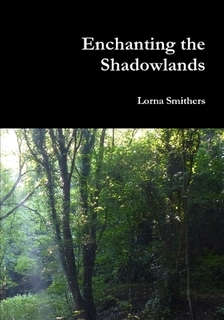
BOOK REVIEW: ENCHANTING THE SHADOWLANDS

product_thumbnailIn formal terms, this is a five star review of Enchanting the Shadowlands, a book of numinous poems and short stories by Lorna Smithers. She describes it as “gathered from my local landscape in response to an imperative from a Brythonic god called Gwyn ap Nudd”. If you have any interest in the lingering subtle resonance of the old Celtic and pre-Celtic world in parts of England like the poet’s native northwest, you will appreciate this volume. If you have any interest in ‘awen’ as an inspirational force or creative current, and what it is to be ‘awenydd’, you will appreciate this volume. If you have any interest in poetry and landscape, or what is now called psycho-geography, you are likely to appreciate this volume. I strongly recommend this book.

More deeply, I am hoping in a small way to share something of the magic of the work as I have experienced it. I find that the best way in is to say that, for me, the resonance of the project, its feeling-tone, can be found in the first two verses of ‘A Journeying Song’, one of the later poems in the collection.

1: Horse and Hound

She will carry me

down invisible horse paths.

He will lead us

to invisible lands.

She will carry me

beyond the stolen skyline.

He will lead us

to where horizons end.

2: The Dreaming Land

The dream is not a dream

it is the life force of the land.

A living memory,

it is the dawn. It is the damned.

The dream is not a sleep.

It is a wakefulness

of past people and their dreams.

It is mistakes and shining laughter.

When I read these lines, I can feel myself riding the mare who will “carry me down invisible horse paths”, led (in my mind’s eye) by a large and shaggy hound. I can easily accept that, surrendering to the instinctive wisdom of these animal powers, I might find myself beyond a “broken skyline” at a place where “horizons end”.  I can settle into the felt apprehension of a Dreaming Land where the dream is not a dream, but “the life force of the land, a living memory” and a “wakefulness of past people and their dreams”. The words are a portal to the living reality of the experience itself. In that sense, these two brief verses stand as a microcosm of the whole book.

Peneverdant/Penwortham, the locality described, is a watery place. Its first human inhabitants are called “The Dwellers in the Water Country”, drawn by the obvious attractions of auroch and deer and also by destiny and “the dream of a bard”.

They came with the splash of oars

and the steady splash of feet

drawn by auroch, deer and destiny,

the dream of a bard

who saw the green hill rising

from a wilderness of carr and marsh.

The awenydd poet’s own seership, her own process of inspired and connected reaching back, is caught in her ‘Prayer for Netholme’.

I write this prayer for the White One

Who loaned to me a mare of mist,

Led me across the marsh of time

And granted me the seer’s gift.

For later periods, the poetry is sometimes dialogical with older texts – such as the Domesday Survey of 1086, or James Flockhart’s ‘De Mowbray:A legend of Penwortham’. The latter is referenced in in ‘St. Mary’s Well, Twilight’ – a poem that also includes finely wrought observation of nature and the meaning it makes for the observer/the observer makes for it.

The setting sun is casting his vast aura

With a majesty I never dreamt him capable of

Enflaming clouds in luminescent orange and red,

Purple like mountains behind the trees.

The birds are singing as if it is their last dusk song.

I enlist bold robin, blackbird and little wren …

As if this is the evening of all evenings

And will be their last so better make it their best.

It is hard to write freshly about sunsets, though I do think this is well-managed even in the first four lines, especially through bringing in a delighted shift in the observer’s perception, and then going on to dare purple poetry. But what makes this section of the poem for me is the succeeding lines, which create a foreground for the majestic sunset background through the activity of the birds and their commitment to Being while it lasts.

Throughout the book we are aware of the interweaving of two worlds. This is done particularly well in the stories, which are every bit as inspired as the poetry. I was especially moved by the last, called ‘The Brown-Eared Hound: Rivington, October 31st. 1917’. It concerns sudden, shocking bereavement and also a direct experience of Gwyn’s wild hunt. I could almost see a novel, or at any rate novella, in this story – bringing together the world of Wilfrid Owen, D.H Lawrence and Virginia Wolf with that of living Brythonic myth. At the same time the piece as written did everything it needed to.

I don’t think it is possible to do this volume justice in a single review. It’s hard, with poetry. So I’m suggesting that readers also have a look at Crychydd’s review in https://barddos.wordpress.com/2015/02/04 and the author’s own discussions about her work and its continuing development at: http://lornasmithers.wordpress.com/

Lorna Smithers Enchanting the Shadowlands Lulu, 2015

IMBOLC LIGHTS

I’m reflecting on the difference between ‘Light’ and ‘lights’.  Yesterday evening my partner Elaine and I had an Imbolc ritual. We’ve decided to move through the seasonal festivals in this way, customising a joint practice as we go.

I reflect now on our time in the festive circle as in part a feast of lights. Not ‘Light’, but lights. We can have Light at the throw of a switch, one easy taken-for-granted ‘Let there be Light’ gesture. It’s very powerful and very useful – and effortlessly normal in our culture, at least for the time being.

But it isn’t a feast of lights. A feast of lights requires multiple, small sources. It requires the co-presence of darkness and shadow. It requires variation, degrees of light and darkness. It requires change and play.

We had two basic light sources, during the ritual. The one that attracted my attention most was an array of night lights positioned around the room in various ways. We had nine on the altar (one at the centre, eight at the circumference – with one at each station of the eightfold wheel of the year). And there were others around the room, grouped in threes. Very simple. Very traditional. Very minimal. Very meaningful. Very beautiful. These lights tended to be bright and a high yellow, glinting in some moments, softer and more diffuse at others. Each had its own aura. All tended to flicker in even the smallest current of air. And each had its sphere of influence, fading porously into the surrounding dusk, with no clearly defined or specific boundary – the transitions being so gradual, so gentle. Thus light and darkness were differentiated without being polarised and they cheerfully shared their debatable lands. The play of ambiguity was part of the feast.

The second source was the fire, a wood burner, well-established by the time we began the ritual and happily placed in a north-easterly hearth. Also very traditional. Very simple. Very minimal. Very meaningful. Very beautiful. And for the most part, in this mature phase, a deep red, in a way a dull red, though the word isn’t right. A potent light, a subliminal light, almost a kinaesthetic light. Not a very light sort of light at all. Its presence radiated through the room, bringing our centre of gravity, even in terms of luminosity, closer to the earth.

And that is a feast of lights. It was almost a shock, in the tidying up aftermath of the ritual, to return to the Light.

BOOK REVIEW: FOLLOWING THE DEER TRODS

jhp5423fc87b679cThe full title of this book is Following the Deer Trods: a practical guide to working with Elen of the Ways. It is written as part of Moon Book’s Shaman Pathways series, and is positioned as a stand-alone introduction to its topic, which includes working methods for the aspiring practitioner. As such this book certainly meets its criteria.

I personally think it works best in tandem with Elen Sentier’s other book on the topic, also a Shaman Pathways book, Elen of the Ways; following the deer trods – the ancient Shamanism of Britain, which I reviewed in July 2014. This earlier book establishes the overall context much better and for me they belong together.

Following the Deer Trods begins with a summary of the ideas offered in Elen of the Ways. This works well, even magically, in the opening pages – but I was saddened by a seeming loss of perspective when we get to the Romans and beyond. The author shows no recognition of Christianity as a diverse, complex and internally contested path, not least in the Celtic lands; or of the effects which holding political power can have on religious traditions, regardless of the actual faith. There’s also no clear flagging of the extent to which the positive, Pagan side of the story is necessarily reliant on intuitive reconstruction, relevant records being sparse and problematic, oral traditions highly mutable over time, and material remains providing only limited insight into hearts and minds. There is so much we don’t know, and will never know, about our ancestors, their traditions and what it was like to be them. When talking about them, we do best to avoid the language of certainty.

For me the book picks up from that point, providing the promised guide to working in a series of well-organised practice chapters. The main areas covered (in my language) are meditation, energy work, service, shamanic journeying, relationships with familiar spirits (power animals), and working with trickster figures. The author also discusses the ‘journey horse’ or method of trance induction – and the relative merits for this purpose of drumming, the sound of waves, rain, or a flowing stream; the steady roaring of wind; the recorded purring of cats. That bit of the discussion is a true gem, reflecting a lot of playful trial and experience.

These chapters also lay out a basic cosmology for the work – a cosmology of three worlds (middle, lower, and upper) on the vertical axis and four elements radiating out from the middle world on the horizontal, with the nigh universal notion of the world tree/tree of life very much in mind. Elen describes the image of the six armed cross as a means of bringing them together. She talks about her understanding of the inner world of the journey as a place of ‘interface’, the portal which she, as awenydd, and the Otherworld co-create as a meeting place between them.

The instructions for practice are highly specific and directive and therefore best-suited to people who are new to this kind of work, who don’t have access to hands-on teaching or established learning communities, and who need nonetheless to be strongly held as they begin their exploration. Other readers will look to the offerings provided as a source of new or variant ideas, or information about a specific way of working.

My heart didn’t sing, when I read this book, as it had when I read its predecessor. But it makes its contribution and, with the one significant reservation about the presentation of history, I’m happy to recommend it.

ETHICS OF EMPATHY: IMMRAM

Ancient Gaelic culture had a tradition of the Imramm – well-described by Caitlin and John Matthews (1). Imramma are “voyage quests, whereby a hero is called to penetrate to the furthest west to find wisdom, healing or paradise. For the Celtic peoples, the lands westward over the Atlantic have ever been the regions of the Blessed Isles, the happy Otherworld from which faery visitants, empowering objects and supra-human wisdom derive. As with the Grail quest, the Imramma are found in both pre- and post-Christian traditions, testifying to their importance, which may have been remnants of a once-coherent ‘book of the dead’ teaching, preparing people for states of existence after death, similar to the Tibetan bardo wisdom”.

I have one which was presented to me as a voyage to discover heaven and hell. I do not know its date or precise origin. The monks – I think they were monks – sailed past many islands in their hard journey into the open sea, their craft small and vulnerable, the conditions variable and sometimes scary. Occasionally they were able to land and refresh themselves – without finding anything much beyond the means of continuing subsistence. Eventually they grew close to a relatively large and inhabited island. They couldn’t see it very well through the mist and rain, but they could hear the cries and shouts of a human-seeming population in distress. Getting closer the voyagers glimpsed large, steaming cauldrons on the shore and the smell coming from these was succulent, not bad at all. Yet angry and emaciated figures were huddled around them – some were snarling, jostling and fighting; others were paralysed with despair and sunken into vacancy and helpless gibbering; yet others were just a little bit more solution focused (as we might now say) and caught up in their own private frustration about how to get food from the cauldrons into their mouths with the very long spoons provided. They were so caught up in this that none of them even noticed the travellers, who found it wisest to back away from this scene before they were discovered in ways that might turn ugly.

The voyage continued … and continued. Eventually, as the story goes, and on a brighter calmer morning, the monks found themselves approaching another island, with an uncanny resemblance to the first. Quite large, with similar human-seeming inhabitants and large, steaming cauldrons on the shore and the same succulent smell. The beings gathered around them even wielded the same awkward, ungainly and very long spoons. The only difference, of course, in the whole scene, is that they were using these spoons to feed each other.

There are three things I particularly like about this story. One is that the ethics of empathy can grow in very pragmatic soil, the soil of enlightened self-interest, the soil of common sense. The turn to co-operation doesn’t have, in itself, to be especially high-minded. So in a way the ethics of empathy, in a fuller sense, can develop out of the experience of simple, practical co-operation. The second is that, although hell is all too easy to get into, it is also quite possible to get out of: no need to abandon hope. The third is that the Otherworld journey takes us straight back into the realm of everyday life and how we do it.

  1. Matthews, Caitlin and John (1994) The encyclopaedia of Celtic wisdom: the Celtic shaman’s sourcebook Shaftsbury, Dorset, UK: Element (also published by Element in Rockport, Massachusetts, USA and Brisbane, Queensland, Australia)
Earth Eclectic

music that celebrates Earth and speaks to the heart

Sarah Fuhro Star-Flower Alchemy

Follow the Moon's Cycle

Muddy Feet

Meeting nature on nature's terms

Rosher.Net

A little bit of Mark Rosher in South Gloucestershire, England

Becoming Part of the Land

A monastic polytheist's and animist’s journal

selkiewife

Selkie Writing…

Charlotte Rodgers

Images and words set against a backdrop of outsider art.

Prof Jem Bendell

living with metacrisis and collapse

Towint

The pagan path. The Old Ways In New Times

The Druids Garden

Spiritual journeys in tending the living earth, permaculture, and nature-inspired arts

The Blog of Baphomet

a magickal dialogue between nature and culture

This Simple Life

The gentle art of living with less

Musings of a Scottish Hearth Druid and Heathen

Thoughts about living, loving and worshiping as an autistic Hearth Druid and Heathen. One woman's journey.

Wheel of the Year Blog

An place to read and share stories about the celtic seasonal festivals

Walking the Druid Path

Just another WordPress.com site

anima monday

Exploring our connection to the wider world

Grounded Space Focusing

Become more grounded and spacious with yourself and others, through your own body’s wisdom

The Earthbound Report

Good lives on our one planet

Hopeless Vendetta

News for the residents of Hopeless, Maine