A MAY’S EVE GIFT

Such casual abundance
In each passing moment:
A May’s Eve gift.
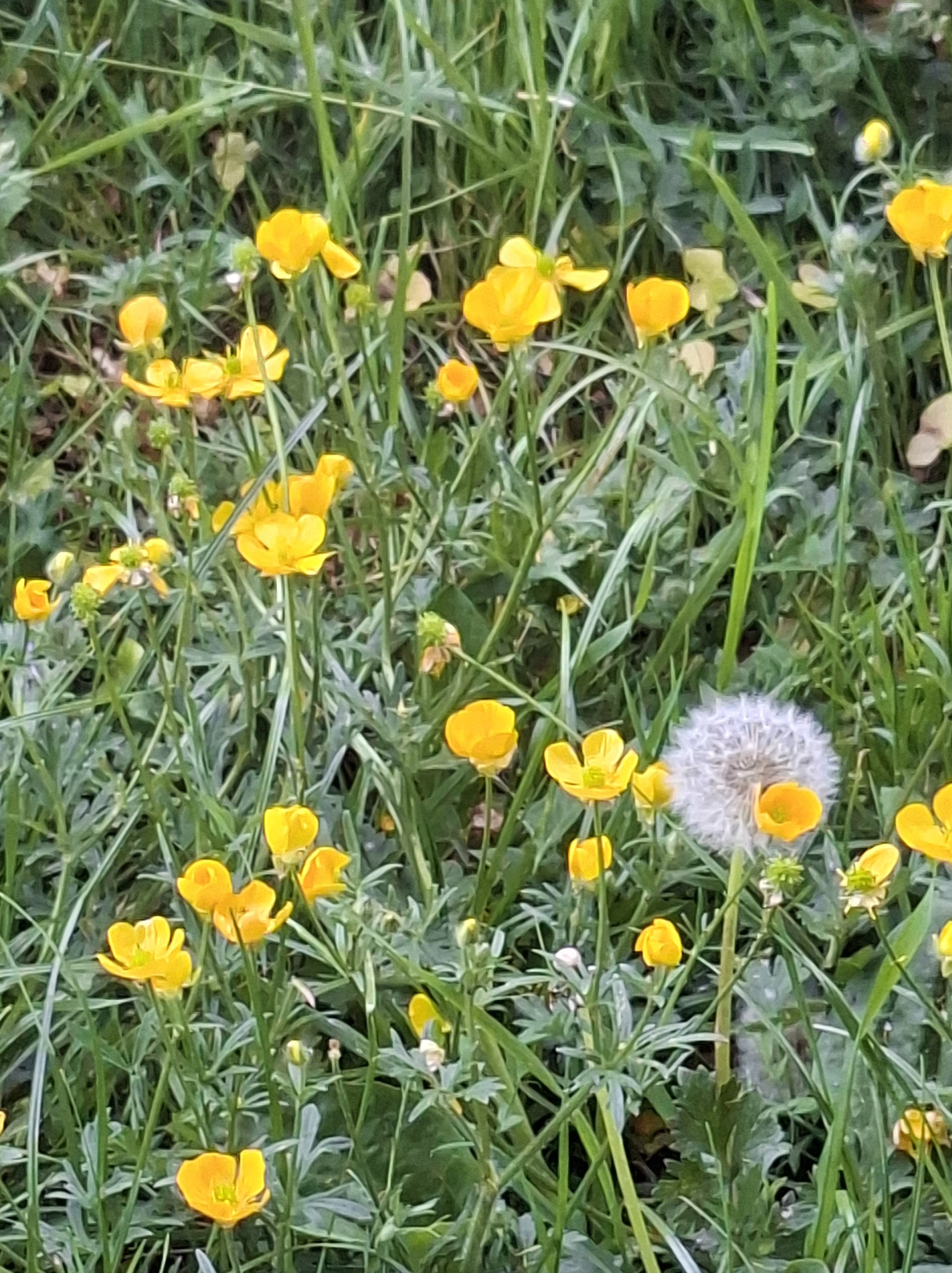

Such casual abundance
In each passing moment:
A May’s Eve gift.
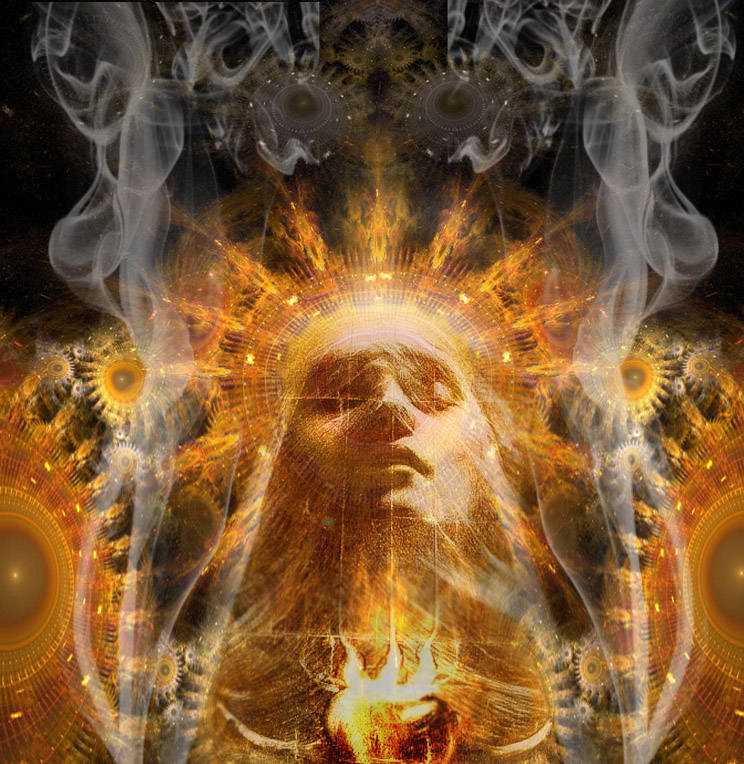
Hertha (Nerthus, Erth) was a Germanic Goddess of the Earth, associated with fertility, domestic animals and nature. She was believed to live in an island grove, whilst also touring the land in a cow drawn chariot to bring peace and joy to those who celebrated her. Our ancient information is derived from the Roman author Tacitus, in his Germania (1). Current accounts also link her to themes of rebirth, kinship, health, longevity and tradition. It is said that she can descend through the smoke of any fire to bring gifts. See: https://journeyingtothegoddess.wordpress.com/2012/12/25/goddess-hertha/
Algernon Charles Swinburne’s Victorian poetry is mentioned in two of Ronald Hutton’s Divinity lectures at Gresham College (2,3). In particular he describes the poem Hertha (3) as an important example of Pagan currents in Victorian British culture. Although widely seen then and (for some people) since as transgressive, Swinburne’s voice is confident and strong – as I hope these extracts show:
“I am that which began:
Out of me the years roll;
Out of me God and man;
I am equal and whole;
God changes, and man, and the form of them bodily;
I am the soul.
“Before ever land was,
Before ever the sea,
Or soft hair of the grass,
Or fair limbs of the tree,
Or the flesh-coloured fruit of my branches, I was, and thy soul was in me.
“First life on my sources
First drifted and swam;
Out of me are the forces
That save it or damn;
Out of me man and woman, and wild beast and bird; before God was, I am.”
As I read these verses, Swinburne’s Hertha is cosmic as well as local, universal as well as tribal. Swinburne clearly values Hertha’s specific name and lineage and he identifies Hertha with the World Tree in some verses. But he does not simply revive the old North European traditions. His Paganism models a new culture for a new time.
Although another 150 years have passed since Swinburne wrote this poem, I find it directly relatable. For me, it contains one of the most powerful affirmations of Panentheist Paganism I have heard: “I am the mouth that is kissed and the breath in the kiss, the search, and the sought, and the seeker, the soul and the body that is”. What better time than Beltane to celebrate Hertha and the 19th century seeding of Modern Paganism.
(1) Tacitus Agricola and Germania London: Penguin, 2009 (rev ed)
(2) The Modern Goddess and Where did Modern Paganism start? https://www.gresham.ac.uk/watch-now/
(3) Algernon Charles Swinburne Complete Poetical Works Delphi Classics, 2013 (Kindle edition)

Thursday 24 April was a landmark afternoon for my wife Elaine and me. We were able to walk, sit and have coffee in Gloucester Docks. Such ordinary and taken for granted pleasures – until April last year, when Elaine broke her hip. Later, as her bones slowly recovered, her underlying heart problems were triggered at the turn of the year, setting back her overall recovery.
We are in a different place now. Elaine’s physical recovery, and her recovery of agency, are creating a new reality. The picture above is generally tranquil, yet includes the energy of a seagull in flight. The sun is getting warmer. We can relax a little, and celebrate, enjoying the promise of a new season, in the run-up to Beltane 2025.
Now, contemplating the image of a still boat against the background of Alney Island in its spring abundance, I feel grateful for the moment and grateful for our lives.


The Irish name for May is Bealtaine. Linguistically at least, the May Day festival sets the scene for a calendar month. As I experience the wheel of the year in my own life, this feels right. May, the merry month, has always been special to me. Born towards the end of the month in 1949, I continue to feel newer and fresher in May, with a heightened sense of life. Changes happening around me, in the rest of nature, feed that sense. I’m part of something bigger.
The demarcation of time might be a product of human counting and naming, but it doesn’t feel arbitrary to me. Counting and naming have a powerful magic of their own. On 14 May 2023 I went on a morning walk, reaching a small wooded area at about 7.45 am. It was a time of dispersing mists and strengthening light. A time of warming up. I enjoyed it from the start, but there came a moment when my experience of the walk changed radically.
I see the wood. I stand at its edge. Hawthorn invites me in, decked in the green and white of the May season. I understand this as a moment for slowing down and shifting into a softer, more intuitive connection with the realm I am entering. I am moving into a kind of sacrament – a communion with nature in a unique time and place. I feel a joyful kind of reverence here, free of solemnity and unction. As I continue slowly on the path, sunlight, striking a slender tree trunk, illuminates my way.

Then comes a tanglewood immersion. Variations in wood. Variations in green. Variations in light – especially light. This place could be dark and dank. At times, no doubt, it appropriately is. But it is May now, and wonderfully backlit. There’s a yellowing of green that points to new light and growth rather than their decay. I have a strong sense of participating in a living world. My own vitality is boosted.

I am now drawn towards water. Again, some foliage is shaded. Other foliage is vividly lit up. On the water, the mist is still clearing. It is still fairly early in the day. It is at times like this that I feel most Druidic, very at home and blessed in this quiet connectedness.

A little later, I crouch at the water margin’s edge. Whereas the previous scene had a spacious serenity, this has intimations of activity, a small but crowded world of its own, with thriving plants and and a thriving sub aquatic realm beside them. Even in this small space, life is complex and abundant. The same holds, on a somewhat expanded scale, to this vulnerable scrap of woodland as a whole. I emerge from my sacrament refreshed and renewed, with the imprint of Bealtaine 2023 upon me.
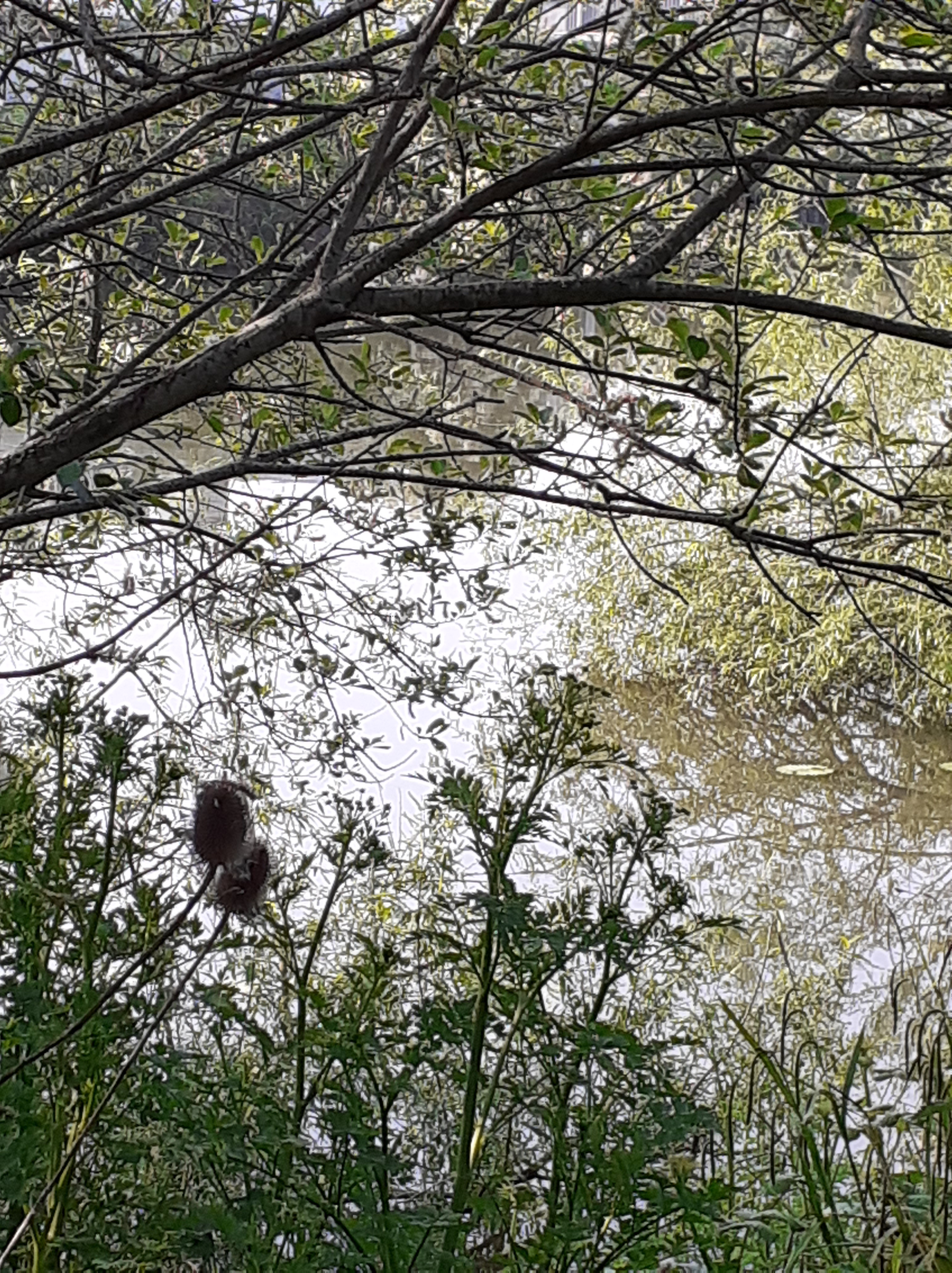

Seeing bluebells
In verdant grass.
Will summer really come?

In my wheel of the year tree mandala (1), hawthorn presides from 1-23 May. It celebrates Beltane and the rising strength of the sun. Looking forward to that time, I think particularly of a specific tree, the Glastonbury thorn at Wearyall Hill, to represent that period. But the tree is gone, and is now unlikely to return, though ever-living in my heart and imagination..
It was a variety of common hawthorn (crataegus monogyna biflora) that flowered twice a year – first around Christmas and then in spring. I took the photograph in a misty Imbolc moment in 2007, between flowerings. It is the only one I will ever have, and for that reason I treasure it. The much revered tree was vandalised in 2010. New shoots appearing from March 2011 mysteriously disappeared. A new sapling, grafted from a descendent or the original tree, was planted in 2012 and consecrated – only to be snapped in half and irreparably damaged 16 days later. In May 2019, after some years of hesitation, the tree was entirely removed by the landowner in a final acceptance that the tree was lost. Sacred thorn trees, said to be descended from the same original, can still be found in the ruins of Glastonbury Abbey and at the Church of St. John.
I particularly liked the Wearyall Hill tree, because it was physically removed from the bustle of Glastonbury as a twenty-first century spiritual centre. The hill just seemed quietly natural – pagan, if you wanted to think of it that way, or Christian, if you wanted to link it to the story of Joseph of Arimathea’s staff, and how it came to life and flowered when planted in a new land. I was shocked by the violence against the tree and against other people’s love for it.
An ancestor of thee thorn (the individual plants do not last forever) had been cut down before, probably in 1647 by a Parliamentary soldier in England’s civil war. For the thorn was strongly linked to royal patronage, the miracle of a Christmas flowering, and a link between sacred land and sacred kingship. The kind of Royalism represented by this constellation of ideas and images was strong in Somerset at that time, but so was religious Puritanism, allied to a wish for constitutional change. The war was bitterly fought within the county. The legend of the thorn, cultivated by one group of people, made it vulnerable to another group of people identified with different loyalties.
The modern destruction of the thorn also seems not to have been casual, or it wouldn’t have been repeated so systematically. But I am not sure of the motivation. I find myself understanding a seventeenth century act of violence better than the modern one. Was this venerated tree the victim of a current human culture war? Are there potential lessons for Avalonians? Whatever the case, I am still in mourning.
(1) This mandala is based on my personal experience of trees in the neighbourhood as well as traditional lore. Moving around the summer quarter from Beltane, 1 May, the positions and dates of the four trees are: Hawthorn, south-east, 1-23 May; Beech & Bluebell, south-south-east, 24 May – 15 June; Oak, south, 16 June – 8 July; Gorse, south-south-west, 9 – 31 July. The autumn quarter then starts with Apple at Lughnasadh/Lammas. For a complete list of the sixteen trees, see https://contemplativeinquiry.blog/2020/autumn-equinox-2020-hazel-salmon-awen/
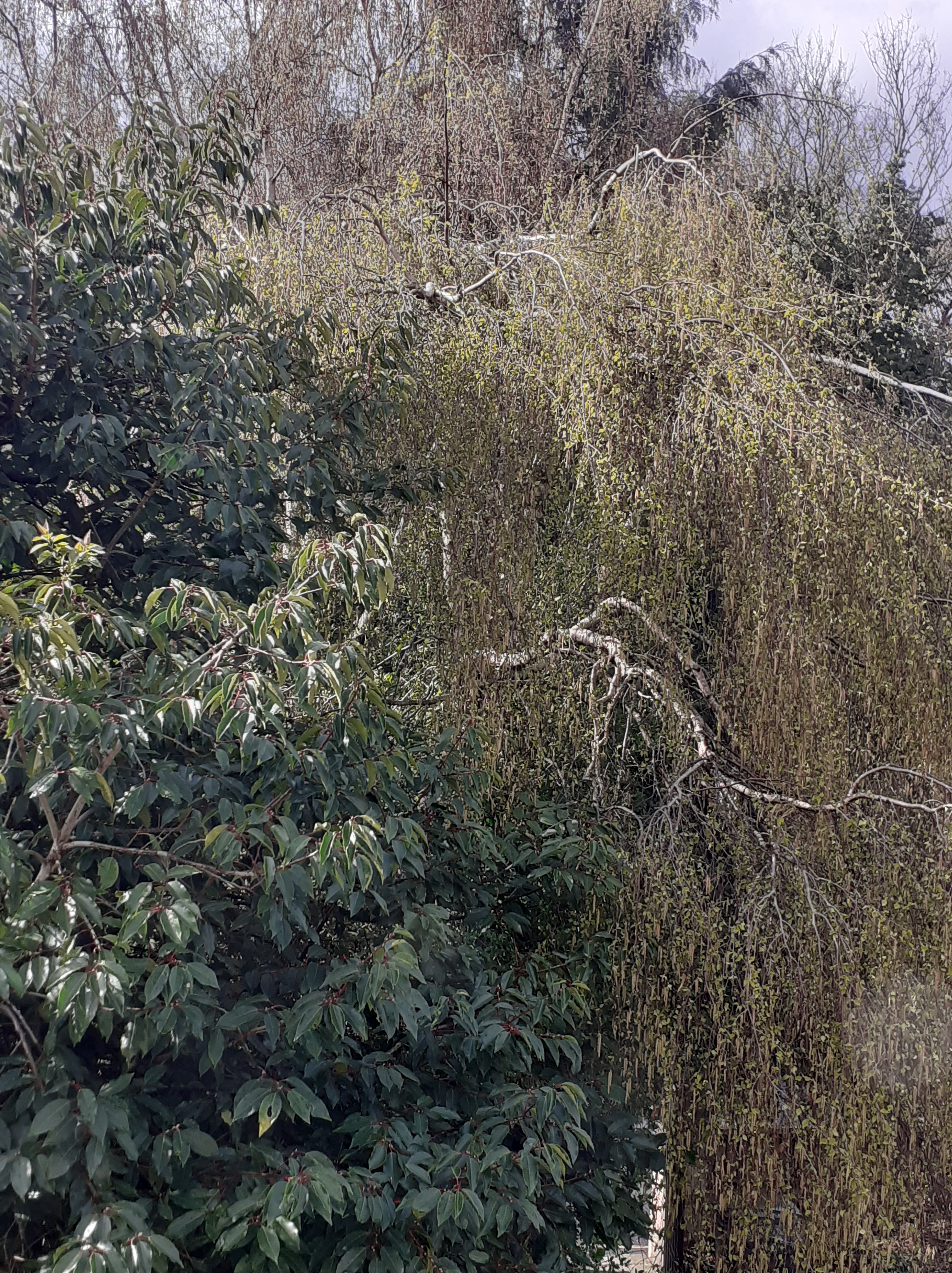
I am feeling more at home in a number of ways. A much loved view through a bedroom window is enough. I can look out and lose myself, holding an image both of continuity and change as the seasons move. One way in which I experience the year is in two halves. Beltane initiates the summer half of a two season year, with Samhain beginning winter.
I often find the extended six months ‘winter’ to be productive for my contemplative inquiry. In the six months now about to end, I have completed an important shift, a shift that reframes an inquiry insight dating from 2018. At that time I said: “I discovered an ‘at-homeness’ in the flowing moment, which nourishes and illuminates my life. Such at-homeness is not dependent on belief or circumstance, but on the ultimate acceptance that this is what is given.”
My view then was that it is best to steer away from metaphysical commitments, as the Buddha is said to have done. “At-homeness in the flowing moment” could work as a dignified existential choice for a humanist, an agnostic or a person with a stance of ‘sustainable nihilism’ (1). It could also work for people firmly based in contemplative versions of monotheist and polytheist spiritual traditions. Indeed it could work for anyone and would be blissfully light on doctrine and opportunities for argument and dissension.
That said, whist still fully embracing the original insight, I now find it incomplete. I have for some time been filled with the sense of a living cosmos, in a way that cuts across the grain of the culture I come from, with its parsimonious definition of ‘life’. I am animist in sharing Thich Nhat Hanh’s understanding of ‘Interbeing’, where everything is interconnected and nothing is really born, lives or dies in a state of separate selfhood (2). Life just changes. Now I have taken to heart the sense that the life which changes has a Source, or ground of Being, in which the whole web of life is embedded.
Hence I am human and I am also that ground of Being. Being cannot be found as an object, but I can apprehend Being in two ways. One is by looking in and finding my primordial and true nature in and as Being. The second is by looking out and finding Being everywhere and in everything. In each case, the inside/outside distinction finally dissolves. Humanly, I am distinct but not separate from Being, temporarily individuated in the world of space and time, as is everything else in this world. At the deepest level, as Being, I am no thing and yet present in and as everything.
I have reached a commitment to this view partly as a result of contemplative inquiry and partly as an act of faith, trusting my deepest understanding. In the wider world, this understanding is called ‘non-dual’ or ‘panentheist’. It is neither demonstrable nor falsifiable as a proposition, and I continue to appreciate that the map is not the territory. All words feel somehow wrong, just as the Tao Te Ching warns when it begins with “the name you can say isn’t the real name” (3). Yet Lao Tzu persisted with his writing, and gave the world one of its most loved scriptures. From time to time, the effort with language has to be made.
Modern movements (4,5) have made the experiential recognition of our true nature, or ultimate divinity, available to ordinary people through skilful means developed for our time. I have made connections with such movements, but I still anchor myself in Druidry. Humanly, a conscious I-I relationship with Source, or dwelling in and as Source, is not everything to me. I am drawn, too, to I-Thou relationship, honouring a devotional need that wants to be expressed. The Indian sages who first developed non-duality as a spiritual philosophy did not challenge or abandon the flourishing polytheism of their culture. They continued the practice of deity yoga. It serves the dance of being and becoming in this world. This, I believe, is the role of the Goddess in my life (6). I have much still to learn here. Meanwhile my at-homeness grows stronger.
(1) http://jonnyfluffypunk.co.uk/
(2) Thich Nhat Hanh The Other Shore: a New Translation of the Heart Sutra with Commentaries Berkeley, CA: Parallax Press, 2017
(3) Lao Tzu Tao Te Ching: A Book About the Way and the Power of the Way Boston & London: Shambhala, 1998 (New English version by Ursula K. Le Guin with the collaboration of J. P. Seaton)
(6) https://contemplativeinquiry.blog/2021/02/24/who-is-the-goddess-I-pray-to/

In my wheel of the year tree mandala (1), blackthorn (ogham, straif) covers 8-30 April, the final twenty-three days before Beltane. It has a beautiful white flower and elegant sharp thorns. I have seen descriptions of the latter as ‘vicious’, but they only hurt us if we invade the blackthorn’s space. The plant is not a triffid. It doesn’t come after us. So I don’t follow the line of tradition that links blackthorn to harsh fate. Blackthorn doesn’t ask to be turned into guardian hedges or crowns of thorn. That is down to our fellow humans.
The picture above comes from my magic year of 2007, happily well documented, when I was much engaged with trees and Druid study. I felt a pull towards blackthorn, more than towards the generality of hawthorn during that period. (I will write about the Glastonbury Thorn, the exception, at Beltane, my last tree mandala with a ‘memory lane’ theme).
I am drawn particularly to the strand of tradition that links blackthorn to powerfully creative magic – for it was long used in the making of wizards’ staffs. The text of The Green Man Oracle (2) suggests that “we have forgotten the magic that lies within us”. Blackthorn in particular has the ability to “foster waking dreams”. The Oracle adds that, “to access this personal magic, we must step away from busy, surface consciousness, and sink deeply into the ever flowing stream of our magical dreams. The ideas, scenes and presences that throng the deepest levels of our understanding require intense listening” Such magic, the Oracle continues, brings a light into the darkest places. For me that would mean just enough light to illuminate them, and not so much as to dazzle them into negation. How otherwise can the denizens of the dark be offered a welcome home if they want it, and in any event a better understanding?
(1) This mandala is based on my personal experience of trees in the neighbourhood as well as traditional lore. Moving around the spring quarter from 1 February, the positions and dates of the four trees are: Birch, north-east, 1-22 February; Ash & Ivy, east-north-east, 23 February – 16 March; Willow, east, 17 March – 7 April; Blackthorn, east-south-east, 8 – 30 April. The summer quarter then starts with Hawthorn at Beltane. For a complete list of the sixteen trees, see https://contemplativeinquiry.blog/2020/autumn-equinox-2020-hazel-salmon-awen/
(2) John Matthews & Will Worthington The Green Man Oracle London: Connections, 2003.

April has been called the cruellest month. But I am experiencing a much hoped-for kindness right now. I am expansive and energised. Finally, it feels like spring in my neighbourhood. Spring as it is meant to be.
The natural world is changing, and a tentatively recovering human population is beginning to reclaim the outdoors. Now is a moment for celebrating the life force – nwyfre, viriditas, whatever we may want to call it. I find my own feelings reflected back in the vitality and vigour of the world I see around me.

The greening of the trees, and hence much of my local landscape, has started. I hope for a fuller transformation by Beltane – now less than four weeks away.

There is an abundance of colour in the woods, with the emphasis changing from the delicate blossoms we have already seen to more robust and stronger coloured flowers.
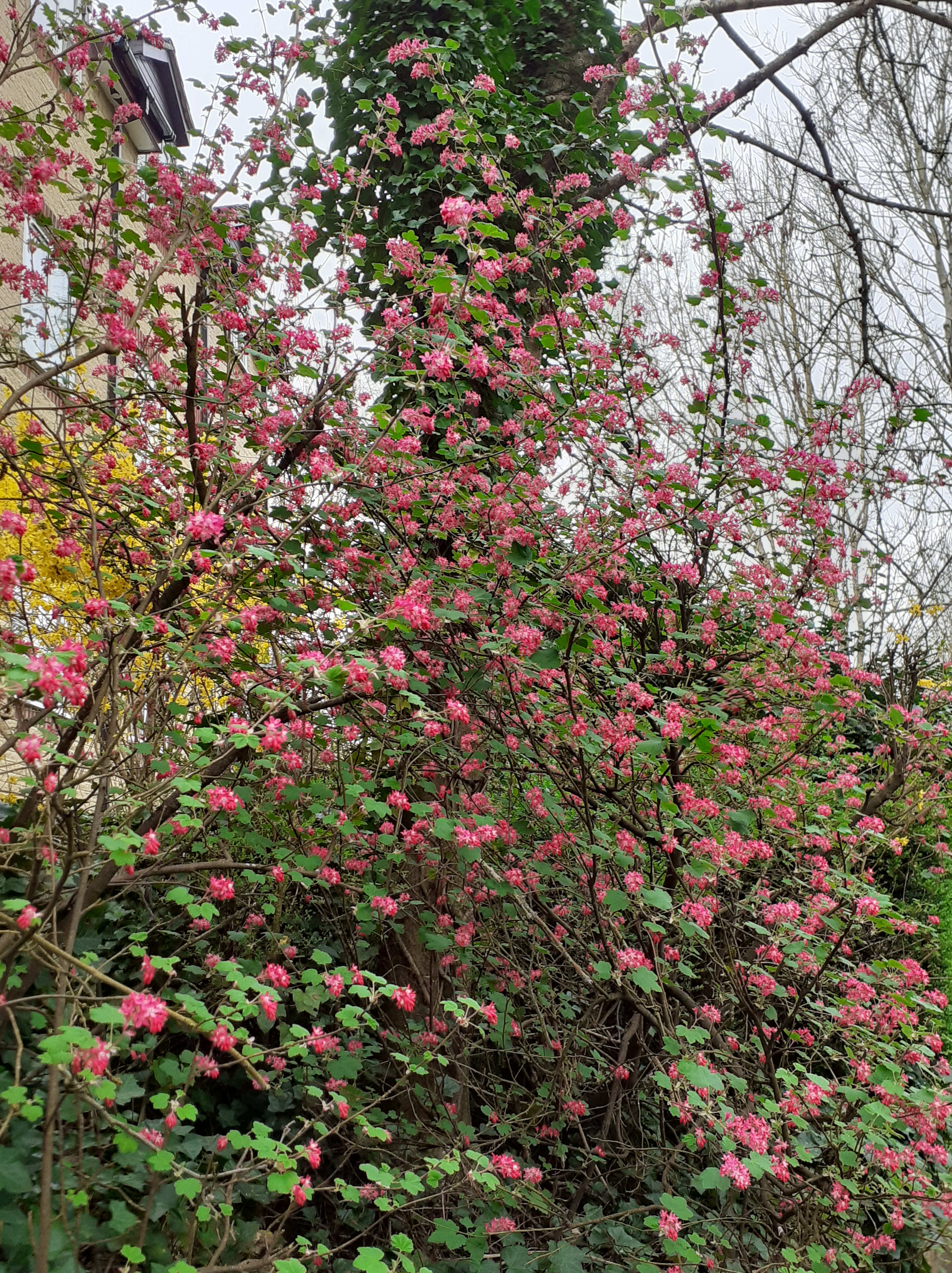
Even entering a built environment, floral energy arches across the paths.

In the animal kingdom, life is stirring too. On the canal, rivers and ponds around me, swans are now pairing and nesting. I hope they have another good year.
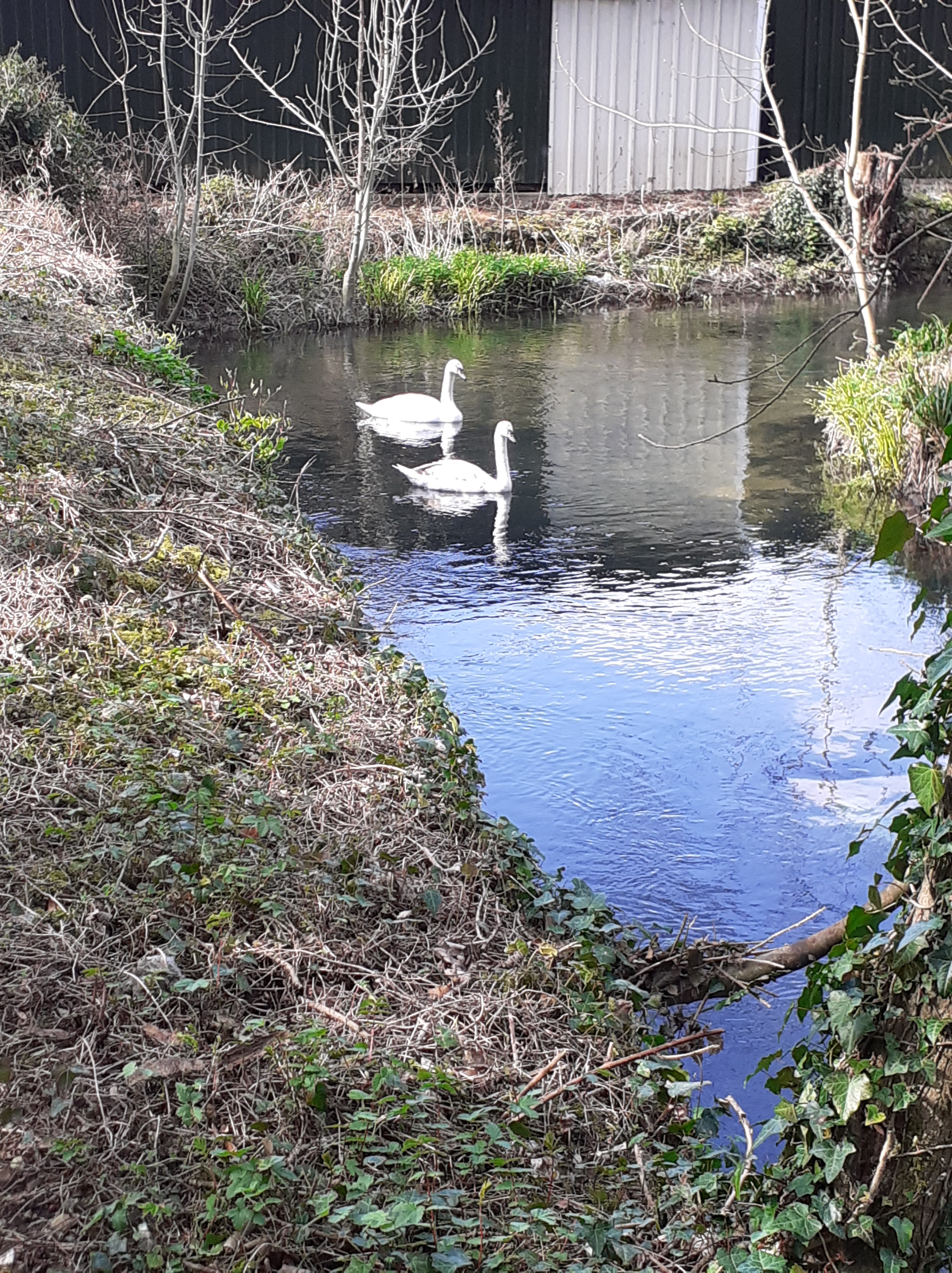

It almost hurts to know that life – so fleeting and variable – can be so good.

Where I live, we are in the last stages of the rising year, the sweet period from Beltane to the Summer Solstice. The sun’s energy is waxing. The days feel abundantly alive and are marked by beauty. It is my favourite time of year, easy to enjoy. It reminds me of my debt to the sun.
Yet this period and its bounty are also fragile and evanescent. They pass soon enough. For me, peonies in a bowl are a perfect representation and celebration of this early summer moment – speaking also to the tender poignancy of impermanence, as the wheel continues to turn.
music that celebrates Earth and speaks to the heart
Follow the Moon's Cycle
Meeting nature on nature's terms
A little bit of Mark Rosher in South Gloucestershire, England
A monastic polytheist's and animist’s journal
Selkie Writing…
Images and words set against a backdrop of outsider art.
living with metacrisis and collapse
The pagan path. The Old Ways In New Times
Spiritual journeys in tending the living earth, permaculture, and nature-inspired arts
a magickal dialogue between nature and culture
The gentle art of living with less
Thoughts about living, loving and worshiping as an autistic Hearth Druid and Heathen. One woman's journey.
An place to read and share stories about the celtic seasonal festivals
Just another WordPress.com site
Exploring our connection to the wider world
Become more grounded and spacious with yourself and others, through your own body’s wisdom
Good lives on our one planet
News for the residents of Hopeless, Maine
 Contemplative Inquiry