Contemplative Inquiry

This blog is about contemplative inquiry

Tag: Awen

POEM: PRIMARY CHIEF BARD

Gnostic Bardistry from The Book of Taliesin? These are just five of the verses, selected by me from one poem. What interests me is not so much working out what to us seems like a set of puzzles, but how something new and dialogical is created by interweaving indigenous material and biblical references. I say a few words in italics after each verse.

Primary Chief Bard

Primary Chief Bard

Am I to Elffin

And my native country

Is the region of the summer stars.


The first statement is a statement of identity. It begins with a local (though important) role, and goes on to the cosmic and transcendent. This taps into a sense of belonging somewhere else (whether perceived as a place or state). It makes me think that statements like ‘being here now, in the present’ and ‘my native country is the region of the summer stars’ only seem contradictory: meaning depends so much on context and the work that words are doing. If the two statements are separated and polarised, they diminish into limiting slogans. Taken together, they can lead us to a different quality of experience.

I was full nine months

In the womb of the hag Ceridwen.

Before that I was Gwion

But now I am Taliesin.

Taliesin’s current personal identity is explained in terms of a second birth, in this life, triggered by the actions of Ceridwen. This second birth fits him to be a Bard and take the Bardic name ‘Radiant Brow’, one that bespeaks major shifts in energy and consciousness. It also allows the sense of the summer stars as his ‘native country’ to be real within him. It orients him to his true home.

I was patriarch

To Elijah and Enoch.

I was there at the crucifixion

Of the merciful Mabon.

Elijah and Enoch ascended to heaven without dying. They have deep roles in Jewish mysticism. They are in the tradition of so-called ‘ascended Masters’. If we treat these metaphors (insofar as they are metaphors) as concerned with enlightenment, then – as their ‘Patriarch’ – Taliesin is claiming primacy over them. He is in some sense a Christ figure and so can be present at the crucifixion of another Christ figure, referred to here by the name of the magical child of British tradition ‘the Mabon’.


I was at the cross

With Mary Magdalene.

I received the Awen

From Ceridwen’s cauldron.

The poem presented here is a product of the later Middle Ages, likely as late as the fourteenth century. Traditions giving Mary Magdalene the role of major teacher and possibly spouse of Jesus were deep underground, but everyone in Christendom Knew of her witnessing role at both the crucifixion and the resurrection, and so as privileged in some way. She also shares her name with Mary the mother. The two couplets together bring the idea of Christ’s transformation through death on the cross with Taliesin’s transformation from Ceridwen’s cauldron, and the critical role of a feminine power in each.

I was in the larder

In the land of the Trinity

And no one knows whether my body

Is flesh or fish.

Despite all the above, Taliesin remains an enigma – a shape shifter and trickster. He defies definition and description and won’t fit into any box that attracts unwanted piety. Other readers may understand this verse much better than I do, but I see it as very tough minded and unwilling to let me parcel up this poem and tie it with a neat bow. To the extent that I get a sense of medieval Welsh literature, this seems very characteristic. However, in the most obvious ‘Land of the Trinity’ (Western Christendom) people want to know where everyone stands. The accepted narrative is that we’re with Jesus the avatar of Pisces and through the sign of the fish we know him. And yet the old Celtic world has many trinities and many fish, including the salmon of wisdom. And Taliesin’s body might be flesh after all. So we are thrown back on our resources, with riddling words and ambiguous images to reflect them.


The complete poem can be found in Taliesin: Shamanism and the Bardic Mysteries in Britain and Ireland by John Matthews London: The Aquarian Press, 1991.

BRIGHID AND THE ORAN MOR

Truly inspiring! I am greatly moved by Joanna’s  eloquent and powerful piece. It’s great when someone else in in the current of a similar yet distinct inspiration.

Joanna van der Hoeven's avatarDown the Forest Path

This is a reblog from my latest blog post at Moon Books. I hope you enjoy it, and do let me know if you’ve had similar experiences. 🙂

I had meditated and tranced for nearly an hour before my altar, to the sounds of the birds outside and Heloise Pilkington on my cd player. http://www.heloisepilkington.com/index.htm  My cats joined me, sleeping in their respective spots, their purrs vibrating along my spine.  As the incense burned out, I came back to myself, having danced with my goddess, diving in her mysteries and those of my own soul.

I was ready now. Time to go out, to seek her, to seek the awen.  I packed a small bag with more incense and some water and made my way out of the house and onto the heath. Taking my time, walking slowly, I feel more graceful after my time spent at my altar…

View original post 1,172 more words

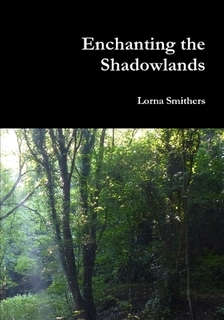
BOOK REVIEW: ENCHANTING THE SHADOWLANDS

product_thumbnailIn formal terms, this is a five star review of Enchanting the Shadowlands, a book of numinous poems and short stories by Lorna Smithers. She describes it as “gathered from my local landscape in response to an imperative from a Brythonic god called Gwyn ap Nudd”. If you have any interest in the lingering subtle resonance of the old Celtic and pre-Celtic world in parts of England like the poet’s native northwest, you will appreciate this volume. If you have any interest in ‘awen’ as an inspirational force or creative current, and what it is to be ‘awenydd’, you will appreciate this volume. If you have any interest in poetry and landscape, or what is now called psycho-geography, you are likely to appreciate this volume. I strongly recommend this book.

More deeply, I am hoping in a small way to share something of the magic of the work as I have experienced it. I find that the best way in is to say that, for me, the resonance of the project, its feeling-tone, can be found in the first two verses of ‘A Journeying Song’, one of the later poems in the collection.

1: Horse and Hound

She will carry me

down invisible horse paths.

He will lead us

to invisible lands.

She will carry me

beyond the stolen skyline.

He will lead us

to where horizons end.

2: The Dreaming Land

The dream is not a dream

it is the life force of the land.

A living memory,

it is the dawn. It is the damned.

The dream is not a sleep.

It is a wakefulness

of past people and their dreams.

It is mistakes and shining laughter.

When I read these lines, I can feel myself riding the mare who will “carry me down invisible horse paths”, led (in my mind’s eye) by a large and shaggy hound. I can easily accept that, surrendering to the instinctive wisdom of these animal powers, I might find myself beyond a “broken skyline” at a place where “horizons end”.  I can settle into the felt apprehension of a Dreaming Land where the dream is not a dream, but “the life force of the land, a living memory” and a “wakefulness of past people and their dreams”. The words are a portal to the living reality of the experience itself. In that sense, these two brief verses stand as a microcosm of the whole book.

Peneverdant/Penwortham, the locality described, is a watery place. Its first human inhabitants are called “The Dwellers in the Water Country”, drawn by the obvious attractions of auroch and deer and also by destiny and “the dream of a bard”.

They came with the splash of oars

and the steady splash of feet

drawn by auroch, deer and destiny,

the dream of a bard

who saw the green hill rising

from a wilderness of carr and marsh.

The awenydd poet’s own seership, her own process of inspired and connected reaching back, is caught in her ‘Prayer for Netholme’.

I write this prayer for the White One

Who loaned to me a mare of mist,

Led me across the marsh of time

And granted me the seer’s gift.

For later periods, the poetry is sometimes dialogical with older texts – such as the Domesday Survey of 1086, or James Flockhart’s ‘De Mowbray:A legend of Penwortham’. The latter is referenced in in ‘St. Mary’s Well, Twilight’ – a poem that also includes finely wrought observation of nature and the meaning it makes for the observer/the observer makes for it.

The setting sun is casting his vast aura

With a majesty I never dreamt him capable of

Enflaming clouds in luminescent orange and red,

Purple like mountains behind the trees.

The birds are singing as if it is their last dusk song.

I enlist bold robin, blackbird and little wren …

As if this is the evening of all evenings

And will be their last so better make it their best.

It is hard to write freshly about sunsets, though I do think this is well-managed even in the first four lines, especially through bringing in a delighted shift in the observer’s perception, and then going on to dare purple poetry. But what makes this section of the poem for me is the succeeding lines, which create a foreground for the majestic sunset background through the activity of the birds and their commitment to Being while it lasts.

Throughout the book we are aware of the interweaving of two worlds. This is done particularly well in the stories, which are every bit as inspired as the poetry. I was especially moved by the last, called ‘The Brown-Eared Hound: Rivington, October 31st. 1917’. It concerns sudden, shocking bereavement and also a direct experience of Gwyn’s wild hunt. I could almost see a novel, or at any rate novella, in this story – bringing together the world of Wilfrid Owen, D.H Lawrence and Virginia Wolf with that of living Brythonic myth. At the same time the piece as written did everything it needed to.

I don’t think it is possible to do this volume justice in a single review. It’s hard, with poetry. So I’m suggesting that readers also have a look at Crychydd’s review in https://barddos.wordpress.com/2015/02/04 and the author’s own discussions about her work and its continuing development at: http://lornasmithers.wordpress.com/

Lorna Smithers Enchanting the Shadowlands Lulu, 2015

HANES TALIESIN (THE CAULDRON OF CERIDWEN)

The Sage Ceridwen was the wife

Of Tegid Voel, of Pemble Mere:

Two children blessed their wedded life,

Morvran and Creirwy, fair and dear;

Morvran, a son of peerless worth,

And Creirway, lovely nymph of earth:

But one more son Ceridwen bare,

As foul as they before were fair.

She strove to make Avagddu wise;

She knew he never could be fair:

And, studying magic mysteries,

She gathered plants of virtue rare:

She placed the gifted plants to steep

Within the magic cauldron deep,

Where they a year and day must boil,

‘Till three drops crown the matrons toil.

Nine damsels raised the mystic flame;

Gwion the Little near it stood:

The while for simples roved the dame

Through tangles dell and pathless wood.

And when the year and day had passed,

The dame within the cauldron cast

The consummating chaplet wild,

While Gwion held the hideous child.

But from the cauldron rose a smoke

That filled with darkness all the air:

When through its folds the torchlight broke,

Nor Gwion, nor the boy, was there.

The fire was dead, the cauldron cold,

And in it lay, in sleep uprolled,

Fair as the morning-star, a child,

That woke and stretched its arms and smiled.

What chanced her labours to destroy;

She never knew, and sought in vain

If ‘twere her own misshapen boy,

Or little Gwion, born again:

And vexed with doubt, the babe she rolled,

In cloth of purple and of gold,

And in a coracle consigned

Its fortunes to the sea and wind.

The summer night was still and bright,

The summer moon was large and clear,

The frail bark, on the springtide’s height,

Was floated into Elphin’s weir:

The baby in his arms he raised:

His lovely spouse stood by, and gazed,

And, blessing it with gentle vow,

Cried “TALIESIN!” “Radiant brow!”

And I am he, and well I know

Ceridwen’s power protects me still:

And hence o’er hill and vale I go,

And sing, unharmed, what’er I will.

She has for me Time’s veil withdrawn:

The images of things long gone,

The shadows of the coming days,

Are present to my visioned gaze.

And I have heard the words of power,

By Ceiron’s solitary lake,

That bid, at midnight’s thrilling hour,

Eyri’s hundred echoes wake.

I to Diganwy’s towers have sped,

And now Caer Lleon’s halls I tread,

Demanding justice, now as then,

From Maelgon, most unjust of men.

This poem comes from The Misfortunes of Elphin written by Thomas Love Peacock in 1829. It is (very loosely) based on the last part of the Hanes Taliesin, in which the Bard Taliesin he has to free his patron Prince Elphin from imprisonment by Maelgon, the ruler of North Wales. Taliesin has to win a Bardic contest at the court of the High King, Arthur and thus be able to ask for Arthur’s support. Elphin is indeed liberated, through Arthur’s arrangement of a prisoner exchange. The poem above is presented as the Taliesin’s winning entry and concerns his mysterious birth. It differs somewhat from the version presented 20 years later by Lady Charlotte Guest, whilst being a recognisable if variant presentation of the same tale. The audience “shouted with delight” at this song, which wins the contest for Taliesin and entitles him to a boon from Arthur.

Thomas Love Peacock was a slightly older contemporary of the Romantic poet Shelley and a close friend from 1812 until the latter’s departure for Italy in 1816. Indeed they continued to correspond, in letters that have been preserved, giving us valuable information about Shelley’s life in Italy. Peacock too wrote poetry and within The Misfortunes of Elphin he offers a characteristically Romantic view of Awen as “the rapturous and abstracted state of poetical inspiration”, and also recommends the triad: “the three dignities of poetry: the union of the true and the wonderful; the union of the beautiful and the wise; the union of art and of nature”. Peacock travelled in Wales and lived in Maentwrog in Merionethshire for a time. I have used Peacock’s spellings of proper names throughout.

POEM: AVALLENNAU MYRDDIN (MERLIN’S APPLE TREES)

Fair gift to Merlin given

Apple trees seven score and seven;

Equal all in age and size;

On a green hill-slope, that lies

Basking in the southern sun

Where bright waters murmuring run.

Just beneath the pure stream flows;

High above the forest grows;

Not again on earth is found

Such a slope of orchard ground:

Song of birds, and hum of bees,

Ever haunt the apple trees.

Lovely green their leaves in spring;

Lovely bright their blossoming:

Sweet the shelter and the shade

By their summer foliage made:

Sweet the fruit their ripe boughs hold,

Fruit delicious, tinged with gold.

Gloyad, nymph with tresses bright,

Teeth of pearl, and eyes of light,

Guards these gifts of Ceido’s son,

Gwendol, the lamented one,

Him, whose keen-edged, sword no more

Flashes ‘mid the battle’s roar.

War has raged on vale and hill:

That fair grove was peaceful still.

There have chiefs and princes sought

Solitude and tranquil thought:

There have kings, from courts and throngs,

Turned to Merlin’s wild-wood songs.

Now from echoing woods I hear

Hostile axes sounding near:

On the sunny slope reclined,

Feverish grief disturbs my mind,

Lest the wasting edge consume

My fair spot of fruit and bloom.

Lovely trees, that long alone

In the sylvan vale have grown,

Bare, your sacred plot around,

Grows the once wood-waving ground:

Fervent valour guards ye still;

Yet my soul presages ill.

Well I know, when years have flown,

Briars shall grow where ye have grown:

Them in turn shall power uproot;

Then again shall flowers and fruit

Flourish in the sunny breeze,

On my new-born apple trees.

This is my second poem drawn from The Misfortunes of Elphin written by Thomas Love Peacock in 1829 and based (very loosely) based on the last part of the Hanes Taliesin. The Bard Taliesin has to free his patron Prince Elphin from imprisonment by Maelgon, the ruler of North Wales by winning a Bardic contest at the court of the High King, Arthur. Victory entitles him to ask for Arthur’s support. Elphin is indeed liberated, through Arthur’s arrangement of a prisoner exchange. The poem above is presented as the work of Merlin, also a contestant. The audience response is described thus: “this song was heard with much pleasure, especially by those of the audience who could see, in the imagery of the apple trees, a mystical type of the doctrines and fortunes of Druidism, to which Merlin was suspected of being secretly attached, even under the very nose of St. David”. In a future post I will also present Taliesin’s winning entry.

Thomas Love Peacock was a slightly older contemporary of the Romantic poet Shelley and a close friend from 1812 until the latter’s departure for Italy in 1816. Indeed they continued to correspond, in letters that have been preserved, giving us valuable information about Shelley’s life in Italy. Peacock too wrote poetry and within The Misfortunes of Elphin he offers a characteristically Romantic view of Awen as “the rapturous and abstracted state of poetical inspiration”, and also recommends the triad: “the three dignities of poetry: the union of the true and the wonderful; the union of the beautiful and the wise; the union of art and of nature”. Peacock travelled in Wales and lived in Maentwrog in Merionethshire for a time. I have used Peacock’s spellings of proper names throughout.

POEM: GORWYNION GAUAV (THE BRILLIANCES OF WINTER)

Last of flowers, in tufts around

Shines the gorse’s golden bloom:

Milk white lichens clothe the ground

‘Mid the flowerless heath and broom:

Bright are holly-berries, seen

Red, through leaves of glossy green.

Brightly, as on rocks they leap,

Shine on sea-waves, white with spray:

Brightly in the dingles deep,

Gleams the river’s foaming way;

Brightly through the distance show

Mountain summits clothed with snow.

Brightly where the torrents bound,

Shines the frozen colonnade,

Which the black rocks, dripping round,

And the flying spray have made:

Bright the ice drops on the ash

Leaning o’er the cataract’s dash.

Bright the hearth, where feast and song

Crown the warrior’s hour of peace,

While the snow storm drives along,

Bidding the war’s worst tempest cease:

Bright the hearth flame, flashing clear

On the up-hung shield and spear.

Bright the torchlight of the hall

When the wintry night winds blow;

Brightness when its splendours fall

On the mead-cup’s sparkling flow:

While the maiden’s smile of light

Makes the brightness trebly bright.

Close the portals; pile the hearth;

Strike the harp; the feast pursue;

Brim the horns; fire, music, mirth,

Mead and love, are winter’s due.

Spring to purple conflict calls

Swords that shine on winter’s walls.

This poem comes from The Misfortunes of Elphin written by Thomas Love Peacock in 1829.  The story is (very loosely) based on the last part of the Hanes Taliesin, in which the Bard Taliesin he has to free his patron Prince Elphin from imprisonment by Maelgon, the ruler of North Wales.  Taliesin has to win a Bardic contest at the court of the High King Arthur and thus be able to ask for Arthur’s support. Elphin is indeed liberated, through Arthur’s arrangement of a prisoner exchange. The poem above is presented as the work of Prince Llywarch, one of the contestants. It is well received: “Llywarch’s song was applauded, as representing a series of images with which all present were familiar, and which were all of them agreeable”.  It treats winter as, among other things, a period of respite from warfare. In future posts I will also present the entries of Merlin and the winner Taliesin.

Thomas Love Peacock was a slightly older contemporary of the Romantic poet Shelley and a close friend from 1812 until the latter’s departure for Italy in 1816. Indeed they continued to correspond, in letters that have been preserved, giving us valuable information about Shelley’s life in Italy.  Peacock too wrote poetry and within The Misfortunes of Elphin he offers a characteristically Romantic view of Awen as “the rapturous and abstracted state of poetical inspiration”, also recommending the triad: “the three dignities of poetry: the union of the true and the wonderful; the union of the beautiful and the wise; the union of art and of nature”. Peacock travelled in Wales and lived in Maentwrog, Merionethshire, for a time. I have used Peacock’s spellings of proper names throughout.

BOOK REVIEW: FOLLOWING THE DEER TRODS

jhp5423fc87b679cThe full title of this book is Following the Deer Trods: a practical guide to working with Elen of the Ways. It is written as part of Moon Book’s Shaman Pathways series, and is positioned as a stand-alone introduction to its topic, which includes working methods for the aspiring practitioner. As such this book certainly meets its criteria.

I personally think it works best in tandem with Elen Sentier’s other book on the topic, also a Shaman Pathways book, Elen of the Ways; following the deer trods – the ancient Shamanism of Britain, which I reviewed in July 2014. This earlier book establishes the overall context much better and for me they belong together.

Following the Deer Trods begins with a summary of the ideas offered in Elen of the Ways. This works well, even magically, in the opening pages – but I was saddened by a seeming loss of perspective when we get to the Romans and beyond. The author shows no recognition of Christianity as a diverse, complex and internally contested path, not least in the Celtic lands; or of the effects which holding political power can have on religious traditions, regardless of the actual faith. There’s also no clear flagging of the extent to which the positive, Pagan side of the story is necessarily reliant on intuitive reconstruction, relevant records being sparse and problematic, oral traditions highly mutable over time, and material remains providing only limited insight into hearts and minds. There is so much we don’t know, and will never know, about our ancestors, their traditions and what it was like to be them. When talking about them, we do best to avoid the language of certainty.

For me the book picks up from that point, providing the promised guide to working in a series of well-organised practice chapters. The main areas covered (in my language) are meditation, energy work, service, shamanic journeying, relationships with familiar spirits (power animals), and working with trickster figures. The author also discusses the ‘journey horse’ or method of trance induction – and the relative merits for this purpose of drumming, the sound of waves, rain, or a flowing stream; the steady roaring of wind; the recorded purring of cats. That bit of the discussion is a true gem, reflecting a lot of playful trial and experience.

These chapters also lay out a basic cosmology for the work – a cosmology of three worlds (middle, lower, and upper) on the vertical axis and four elements radiating out from the middle world on the horizontal, with the nigh universal notion of the world tree/tree of life very much in mind. Elen describes the image of the six armed cross as a means of bringing them together. She talks about her understanding of the inner world of the journey as a place of ‘interface’, the portal which she, as awenydd, and the Otherworld co-create as a meeting place between them.

The instructions for practice are highly specific and directive and therefore best-suited to people who are new to this kind of work, who don’t have access to hands-on teaching or established learning communities, and who need nonetheless to be strongly held as they begin their exploration. Other readers will look to the offerings provided as a source of new or variant ideas, or information about a specific way of working.

My heart didn’t sing, when I read this book, as it had when I read its predecessor. But it makes its contribution and, with the one significant reservation about the presentation of history, I’m happy to recommend it.

SWEET AWEN: A POEM

Sweet Awen

sing me a song

of direction

down hills,

over terraces,

past old mills

and factories.

Sing me a song

of poppies and bees

where the bramble

unbridled roams

hedgerows with ease.

Sing me a song

where the first fruits

are born by the light

of a sun who has never

known war.

Sing me a song

where loss no longer

beats like a smith

at her forge

in the summer’s heat.

Sing me the years

that I’ll never meet.

Sweet Awen

sing to me

my impossibilities.

A poet’s take on Awen, in the traditional sense of poetic and vatic inspiration, written by Lorna Smithers who is a poet and Druid based in Lancashire. This poem is from the collection ‘Moon Poets: Six Pagan poets’ published by Moon Books and edited by Trevor Greenfield. The collection also includes work by Robin Herne, Tiffany Chaney, Romany Rivers, Martin Pallot and Beverley Price.

AWEN SPACE

I’ve heard it said that attempting to describe actual spiritual practice is folly. It’s like pinning up butterflies for display – you retain the husk whilst losing the flight. But sometimes the endeavour seems worth the risk. I want to talk about the group practice of ‘awen space’ that forms a part of my Druidry.

My local contemplative Druid group met for two hours last Tuesday, 9 December. We connect for two hours in the afternoon on the second Tuesday of every month, except for May and November – a pattern that has now lasted for just over a year. In those months we meet for a full Saturday, sometime after the festivals of Beltane and Samhain. The days offer the advantage of time for a greater variety of practice, the presence of people from outside our local catchment area, and an introductory space for new members. 19 people are now at least provisionally involved, and we have decided to close the group. The Tuesday sessions offer a greater sense of continuity, a more intimate atmosphere, and even greater focus and simplicity. Attendance currently fluctuates between five and nine. This week eight of us were present.

Our usual structure for a two hour session tends to be

  • Pre-meeting for greetings and refreshments
  • Entry into sacred space through a brief ritual opening
  • Group check in
  • A period of silent sitting meditation (about 20 minutes)
  • A move into the awen field (for about 35-40 minutes)
  • Group check-out
  • Exit from sacred space
  • Farewells

Although our use of ritual is lean and parsimonious, it is a very important part of this process. It is the first step in making our attention intentional, and in turning a domestic hearth into a nemeton. Over time, we have tended to favour putting our personal check-ins and check-outs within the nemeton, since we are entering into sacred relationship as well as sacred space, tuning into each other as part of the practice – not just as a preliminary or warm-up. We use a talking stick process for this, to emphasise the intentional and ritualised aspect of what we are doing.

I think of the awen space as being the most distinctive part of the session. We enter the space through a repeated chanting of awen – how much, or whether we ‘cascade’, depends on our sense of the moment – and then enter silence, consciously together rather than meditating side by side as in the simple sitting meditation that precedes this practice. We may maintain this collective and relational silence or we may choose to sing, chant or say things. In this sense it is an interactive practice albeit a subtle one. It is most powerful when we can hold back from entering into actual dialogue and exchange whilst at the same time moving with the current of communication and relationship which we are generating both through our silence and our utterance. There’s a fine point of balance and tension here. When the awen space is over – it’s over, so it’s not strictly timed. There’s a person whose job it is to lead us both into and out of the space and they make the call. Usually it reflects everyone’s sense of the appropriate ending. We chant awen on our way out of this space as well as into it.

In this context we experience awen, Druidry’s subtle magic, as an energetic field in which we are inspired to be more open and receptive to each other – and at times to find authentic here-and-now language for our felt sense of co-presence and connection within an enlivened space. So it’s something within and between us when we are together, not so much a lightning flash from above. Sometimes our experience completely flows; sometimes it’s more halting. The space gives us a mirror, say rather an echo, of what we bring to it on the day. The physical space matters too – on Tuesday it was a space of wood burner glow and tiny lights in a deepening dusk, and a circle of people working gently together. For me, the feeling-tone and the imagery of this space, lodged in the shifting ever-now of memory, are my key reference point for ‘contemplative Druidry’ as a unique spiritual note. And I am made even more grateful to be able to practice in this way with a group of good companions.


BOOK REVIEW: THE AWEN ALONE

jhp53e87afc5058eThe Awen Alone, by Joanna van der Hoeven, is an economically and elegantly written introduction to modern Druidry for readers with a serious interest in practising. I like the use of awen, Druidry’s subtle magic, as the key word in the title. In the way that the author uses the term, it gets us straight to the point of why we practice.

The introduction skilfully builds rapport by bringing us into the rhythm of a normal working day. Only it isn’t quite everybody’s normal – it’s a reframed normal for a re-enchanted world and an intentional relationship with it. Joanna starts, in a matter-of-fact way, with a “Hail to the Day and Days Sons; farewell to Night and her Daughters” and ends with “Farewell to Day and Day’s Sons; hail to night and her Daughters”.  In between, there are grumbles about the price of ethical toiletries alongside an affirmation of their value; a commitment to emotional intelligence amidst the stresses of working life, a noticing of what is going on in the landscape whilst travelling and in the garden at home, a soft threshold prayer to Nemetona, Lady of the Sanctuary, and a period of formal meditation.

The messages I would get from this as an inquiring reader are the intended ones. Druid life is shown to be the same life as anyone else’s, albeit lived with a distinctive quality of wonder and attention. Moreover, it is entirely possible to live such a life without being part of a Druid community.

The book is carefully structured into three parts.

  • The first is about the basics of Druidry. It covers current views of Druid history; looks at what Druidry is; investigates the meaning of the key term awen (more about this below); explores deity in Druidry (some modern Druids are theistic and others not); affirms connection to ancestors (of blood, place and tradition); and describes the eightfold wheel of the year and its celebration.
  • The second is about Druidry in practice. This looks at the roles of meditation, prayer, inner pathworking (guided meditation), outer pathworking (walking with awareness outside); altar creation and sacred space; seasonal rituals and other work connected with the seasons; and craft names.
  • The third is about creating one’s own path and includes chapters on designing Druid ritual, daily practice and a more general consideration of “walking your own path”.

All of this work is well presented and gives a good overview of the way many Druids today think and practice. For me however, the really distinctive feature of this book is its discussion of awen. Awen is classically thought of as creative inspiration in a sudden, lightning flash form. But Joanna links awen, as inspiration, to the breath. The air we breathe is all around us. We take it in and give it back, a little bit changed. “The inspired Druid exhales the inspiration gained”. Awen is right here, in the web of what is, inherently present in the communication and relationships which make our interdependence work, enabling our creative choices and their results. For Joanna, awen is therefore linked also to our responsibility for personal awakening:

“Awake to our own energy and stretching out towards the energy of nature around us, we begin to see just what awen is.  It is the opening of oneself … to see into the nature of all beings and indeed to see into the nature of simply being. … For awen to exist there must be relationship. We cannot be inspired unless we are open and we cannot be open unless we are in relationship, whether that is with the thunder, the blackbird or a god”. Joanna develops this theme further, seeing a cyclical process of giving and receiving at the heart of awen as we release ourselves “into the flow”. Ultimately we can be so attuned to “the threads that connect us all” that we can be inspired all the time – moving into the “bigger picture” of a compassionate and integrated life.

With this view of awen, at least as I understand it from reading the book, Joanna integrates her ‘Zen’ more fully into her Druidry. In the original Zen Druidry book, ground breaking as it was, I still had a sense of their being on parallel tracks. Thus The Awen Alone, although an introductory book, also offers an evolutionary step in the ‘Zen’ iteration of Druidry. For this reason it has importance not only to the inquirer and the newcomer, but to also to any Druid practitioner interested in the questions raised by this valuable work. Highly recommended.

Joanna van der Hoeven (2014) The Awen alone: walking the path of the solitary Druid Winchester: Moon Books

Earth Eclectic

music that celebrates Earth and speaks to the heart

Sarah Fuhro Star-Flower Alchemy

Follow the Moon's Cycle

Muddy Feet

Meeting nature on nature's terms

Rosher.Net

A little bit of Mark Rosher in South Gloucestershire, England

Becoming Part of the Land

A monastic polytheist's and animist’s journal

selkiewife

Selkie Writing…

Charlotte Rodgers

Images and words set against a backdrop of outsider art.

Prof Jem Bendell

living with metacrisis and collapse

Towint

The pagan path. The Old Ways In New Times

The Druids Garden

Spiritual journeys in tending the living earth, permaculture, and nature-inspired arts

The Blog of Baphomet

a magickal dialogue between nature and culture

This Simple Life

The gentle art of living with less

Musings of a Scottish Hearth Druid and Heathen

Thoughts about living, loving and worshiping as an autistic Hearth Druid and Heathen. One woman's journey.

Wheel of the Year Blog

An place to read and share stories about the celtic seasonal festivals

Walking the Druid Path

Just another WordPress.com site

anima monday

Exploring our connection to the wider world

Grounded Space Focusing

Become more grounded and spacious with yourself and others, through your own body’s wisdom

The Earthbound Report

Good lives on our one planet

Hopeless Vendetta

News for the residents of Hopeless, Maine