
THE BOOK OF TALIESIN: A SONG OF THE WIND
by contemplativeinquiry
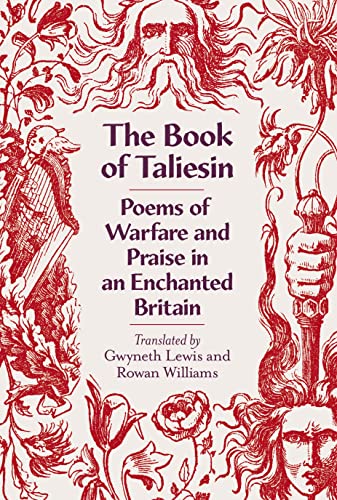
The Book of Taliesin: Poems of Warfare and Praise in an Enchanted Britain (1) is a modern English translation, first published in 2019, of the medieval Welsh collection brought together under the name The Book of Taliesin. It is translated and introduced by Gwyneth Lewis, National Poet of Wales 2005-6, who teaches at Middlebury College in Vermont, and Rowan Williams, formerly Archbishop of Canterbury and later Master of Magdalene College, Cambridge. Both are native Welsh speakers. I highly recommend this version to anyone who wants a translation tailored to a 21st century readership, and to improve their knowledge of the history and culture from which these poems spring.
The Song of the Wind, from which I present extracts, is an example of the Dyfalu (guessing) mode: the poet creates a sequence of riddles, metaphors and fanciful tropes in order to describe an object. When – as here – the answer is given by the title, the result is a performance of inventive paraphrase, designed to display the poet’s virtuosity. The evocation of the wind is connected to the part of Taliesin’s story in which Elffin, his patron, is imprisoned by Maelgwn Gwynedd in Deganwy Castle. Taleisin’s poetry conjures up a gale that demolishes the castle and frees Elffin. Evidently a capable bard could do that, back in the day.
“Guess who it is:
Made before the Flood,
A mighty creature,
No flesh, no bone,
No veins, no blood,
No head and no feet.
No older, no younger
Than he was before.
He’s not turned aside
By fear, nor by death.
He doesn’t experience
The needs of creatures.
…..
“He’s in fields, in woods,
With no hand, no foot;
Feels no age, isn’t struck
By pain or bad luck.
…
“And he wasn’t born,
So he can’t be seen.
He’s at sea and on land;
He’s unseeing and unseen.
…
“He’s brave, he’s bold
As he crosses the land.
He’s mute, he’s loud.
He’s full of sorrow,
He’s the noisiest one
On the face of the earth.
…
“He’s evil, he’s good,
He’s here, he’s there,
Creates a mess,
Makes no redress.
He makes no amends,
Because he’s blameless.
He’s wet, he’s dry;
He often comes by.”
(1) Gwyneth Lewis and Rowan Williams The Book of Taliesin: Poems of Warfare and Praise in an Enchanted Britain Penguin Random House UK, 2020 (First published in hardback Penguin Classics in 2019)
For the two other posts about this translation please see: https://contemplativeinquiry.blog/2023/08/10 and:
 Contemplative Inquiry