Contemplative Inquiry

This blog is about contemplative inquiry

Tag: Wheel of the Year

CAILLEACH

I was on a train and had reached my destination. Descending onto the platform at 5.30 pm, I found myself in complete darkness. It might as well have been midnight. I understood that winter had come.

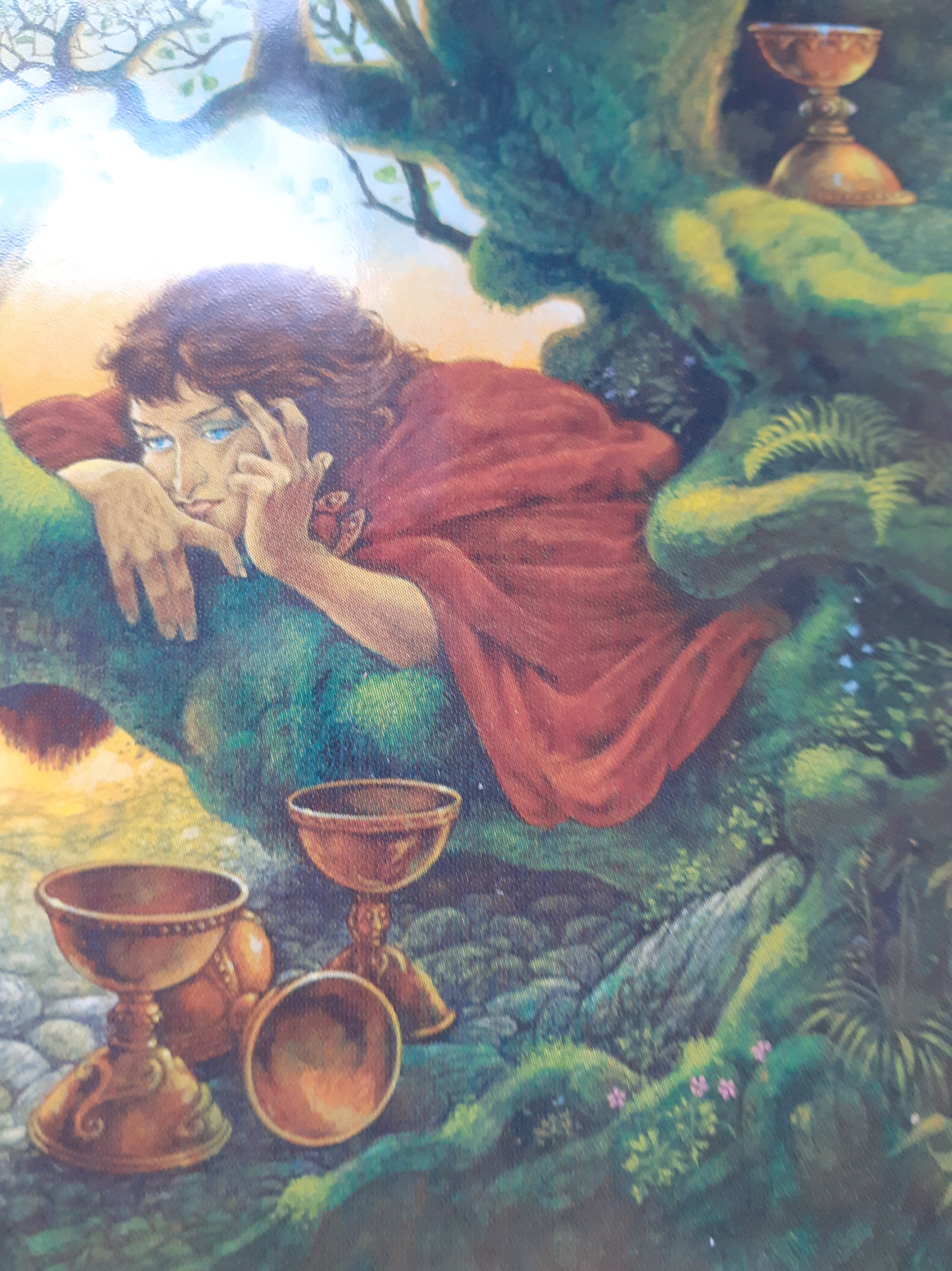
The Goddess in her cailleach, or crone, aspect presides over this time. She it is who determines the length and severity of winter. She is also embodied in the dark woman of knowledge who facilitates both death and transformation (1).

In the context of my contemplative inquiry/blog, I am experiencing a process of this kind, seemingly in a minor key. I want to call it ‘hibernation and renewal’, though I cannot predict how it will really be. In any event, I have decided to do no more posting until the new year. What happens then depends on what I am inspired to do at the time. But now is a time for surrender to endarkenment and sleep.

(1) Philip and Stephanie Carr-Gomm The DruidCraft Tarot: Use the Magic of Wicca and Druidry to Guide Your Life London: Connections, 2004. Illustrated by Will Worthington.

WHAT IS GIVEN

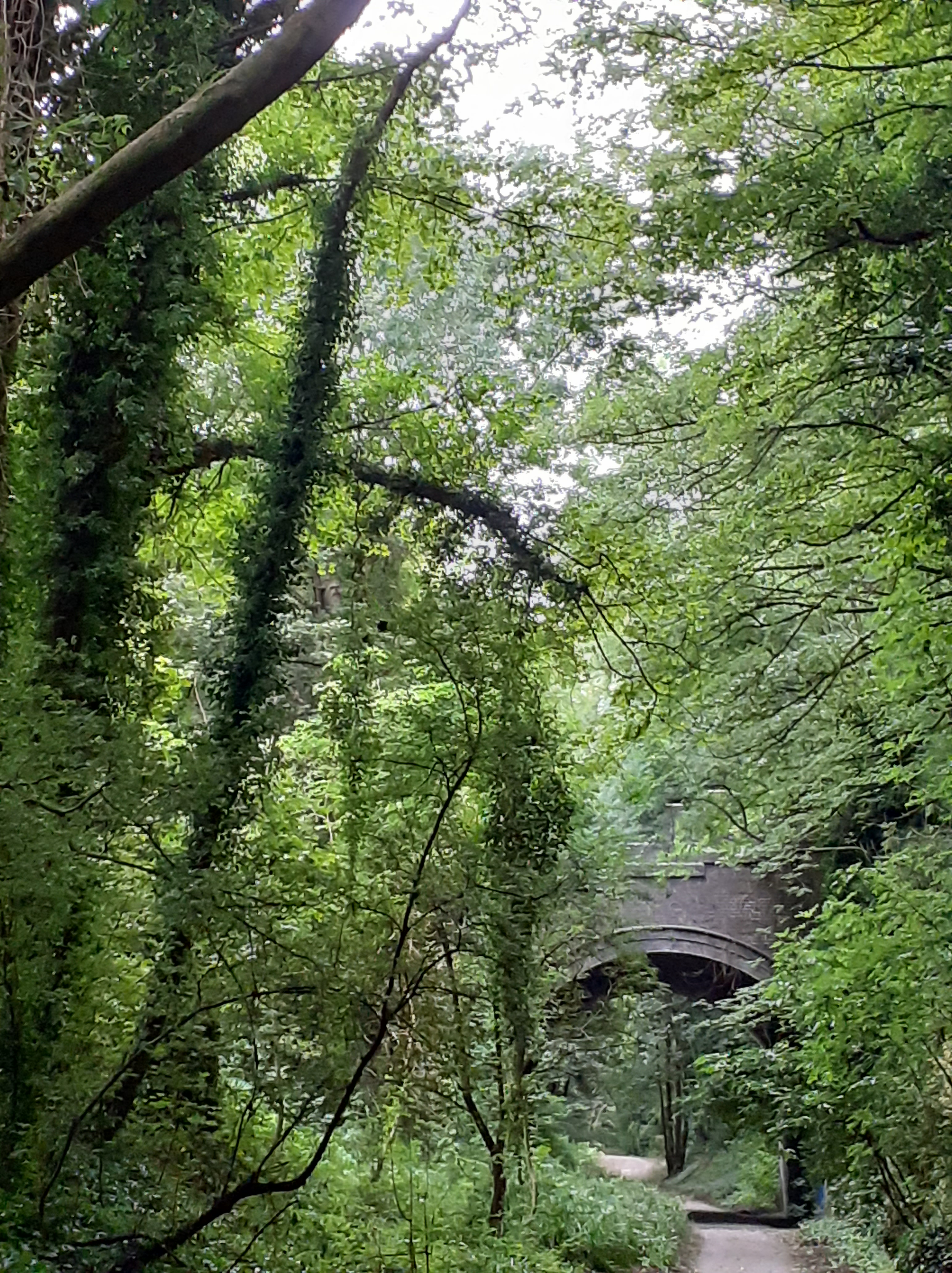
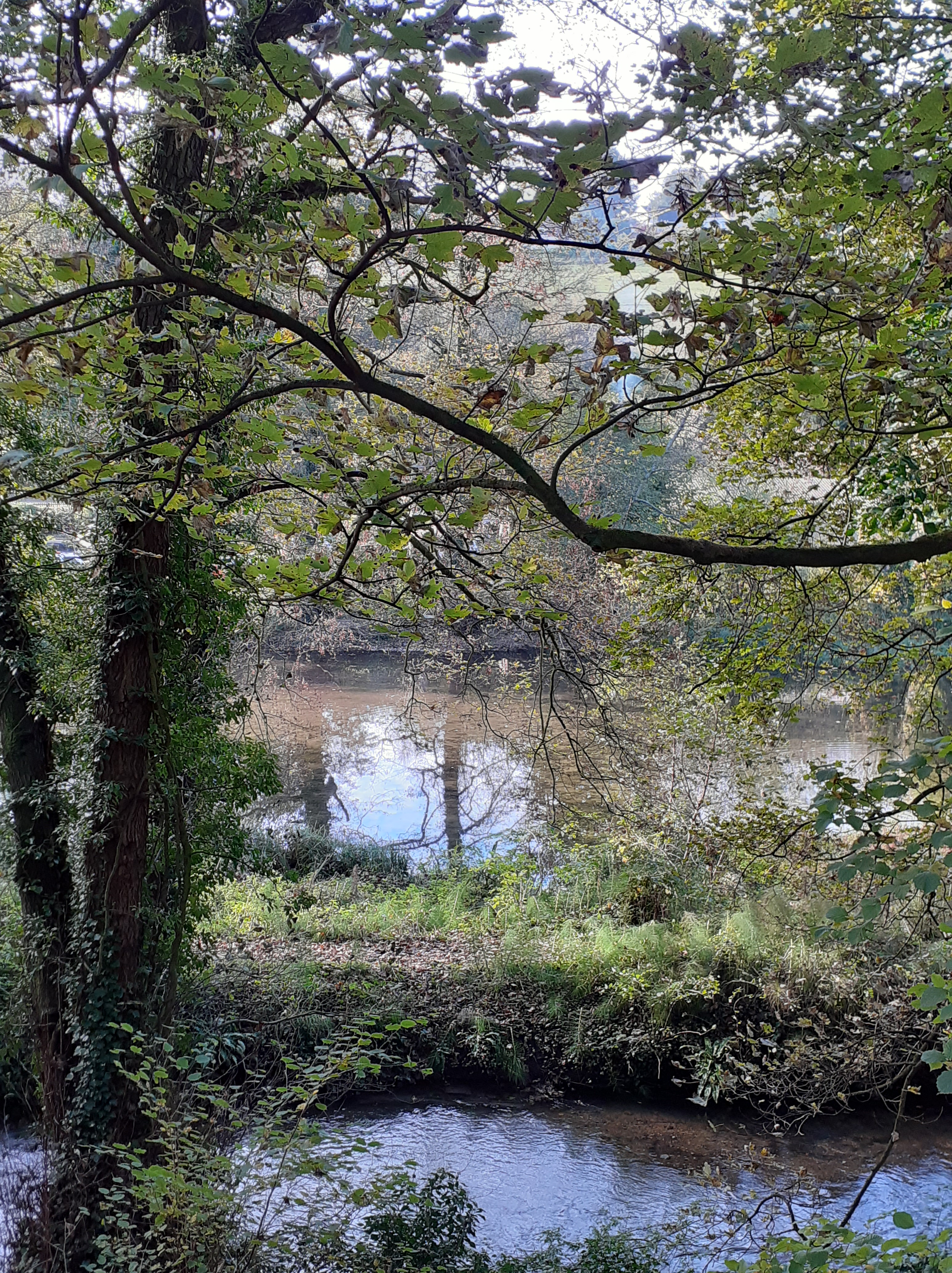
It is colder now, and gloomier indoors for much of the day. But outside, this November keeps on giving. My walking range has increased again with a walk to nearby Nailsworth, a leisurely lunch in this little town, and a walk back again: ten miles. The picture above includes both a stream beside my path and a small lake nearby.

But my attention hasn’t been all on the world around me. I have been reflecting on an old statement about my practice, currently included in my About section, and finding that it still holds. “My inquiry process overall has helped me to discover an underlying peace and at-homeness in the present moment, which, when experienced clearly and spaciously, nourishes and illuminates my life. It is not dependent on belief or circumstance, but on the ultimate acceptance that this is what is given. I find that this perspective supports a spirit of openness, an ethic of interdependence and a life of abundant simplicity.”

There is no reliance on metaphysics here. This allows me a pared down focus on experience and values. My practice has been relatively stable over a long period, whereas my thoughts about metaphysical questions are more volatile. I experience thinking as volatile by nature, and fine within its limits. Over the years this blog has found room for diverse approaches to the meaning, if any, of terms like divinity and consciousness. I have wondered about the possibility (or desirability) of establishing any foundational truth about absolute or indeed conventional ‘reality’. I notice now that when I explore these questions – especially when reading – I am more interested in seeing how people put their worlds together than I am in identifying insights or finding answers to the questions themselves. It has become a human interest rather than a philosophical quest.

I have noticed this especially over recent days when engaging with Carlo Rovelli’s discussion of the Buddhist philosopher Nagarjuna (1,2). My interest was in seeing how a distinguished physicist makes use of Nagarjuna’s emptiness doctrine. I have less stake in assessing the view itself, because my peace and at-homeness are the result of an experiential inquiry, and not of speculative thinking. I continue to find that this perspective supports “a spirit of openness, an ethic of interdependence, and a life of abundant simplicity”, My inquiry focus, if ‘inquiry; is even the right word, is about how best to walk the talk.

(1) Carlo Rovelli Helgoland global.penguinrandomhouse.com 2020 (Translated by Erica Segre & Simon Carnell, 2021). Carlo Rovelli is a theoretical physicist who has made significant contributions to the physics of space and time.

(2) https://contemplativeinquiry.blog/2021/11/08/exploring-emptiness-carlo-rovelli-and-nagarjuna

TOWARDS SAMHAIN 2021

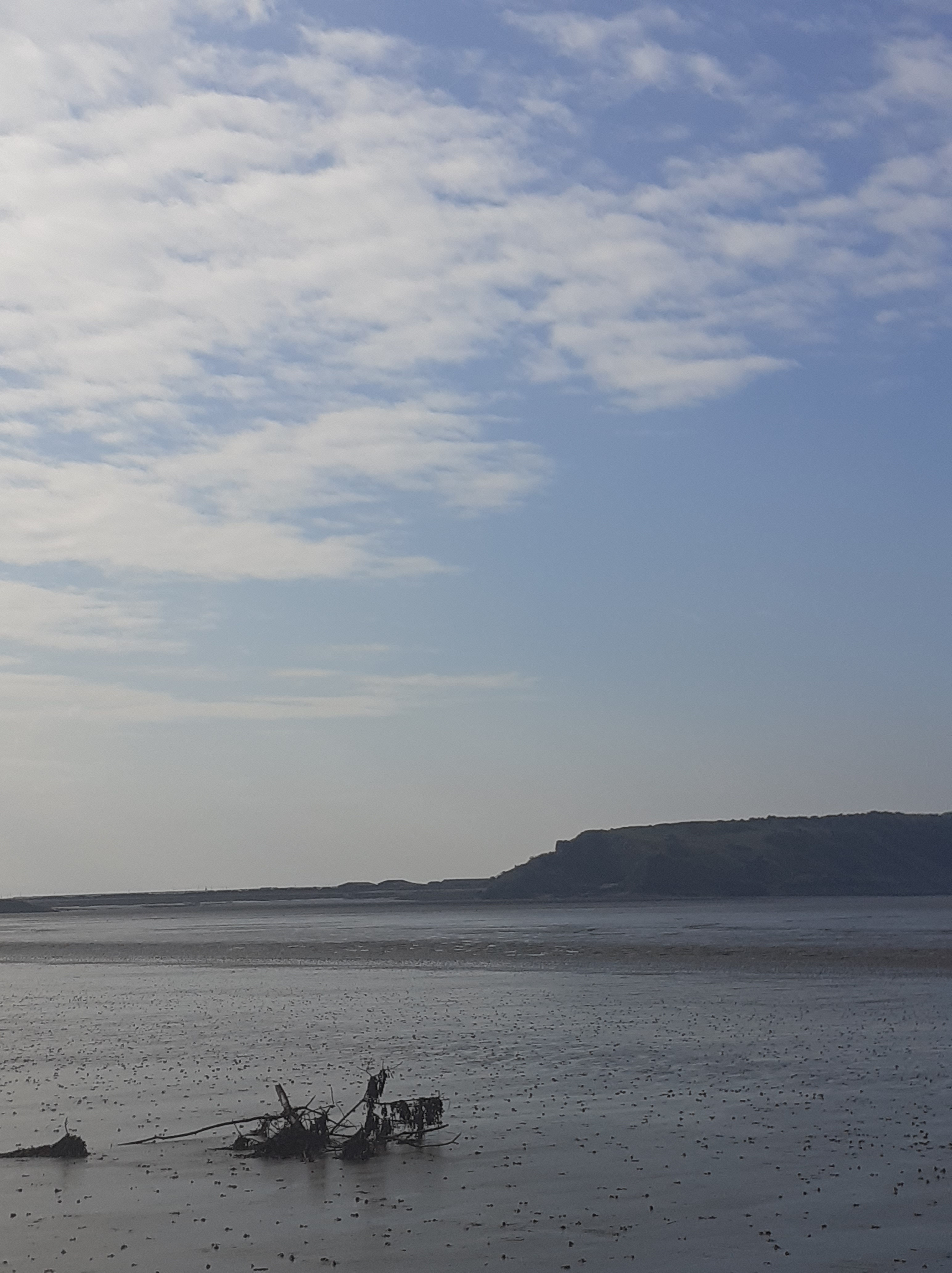
Approaching Samhain, I feel drawn to themes of paring down and letting go. Pictures from a recent visit to Weston beach reflect this minimalist mood. The tide was out, leaving an expanse of flat muddy beach, not easy to distinguish from the sea. Sea-wrack and bare wooden posts were prominent features here. I enjoyed the clarity and immediacy of this setting, and also a sense of a quiet latency, before the water returned.

Samhain initiates a time of endings and transitions. Where I live, the dying of the year is generally not dramatic, but there is nonetheless considerable change. This speaks to something in me. My notion of a ‘contemplative inquiry’ is morphing as it strips down to essentials, and dissolves into a gentle holding and observation of experience in flow. I will give this morphing process space, and see what emerges from the descent of the year. I expect to post less frequently for a period of time.

AFTER THE EQUINOX

After the equinox comes a deepening of autumn. Light, colour, texture – my sense of the world is different. Images of this moment in the year shape my sense of time as well as of place. I savour the turning of the wheel. All time is transitional, yet every time has its own uniqueness.

Contemplating images like this is for me a way of sustaining what modern Druids sometimes call a re-enchantment with and of the world. Simple attention to the living world is a renewing experience, and protects the heart from what can seem like the half-life of a Wasteland culture. Opening to a living cosmos, I plead guilty, with pride, to the charge of Romanticism.

It is after 9 a.m. on Sunday 26 September, Locally I enjoy orange as a colour of ripening, rich and shiny with life, as the season of bearing fruit moves on.

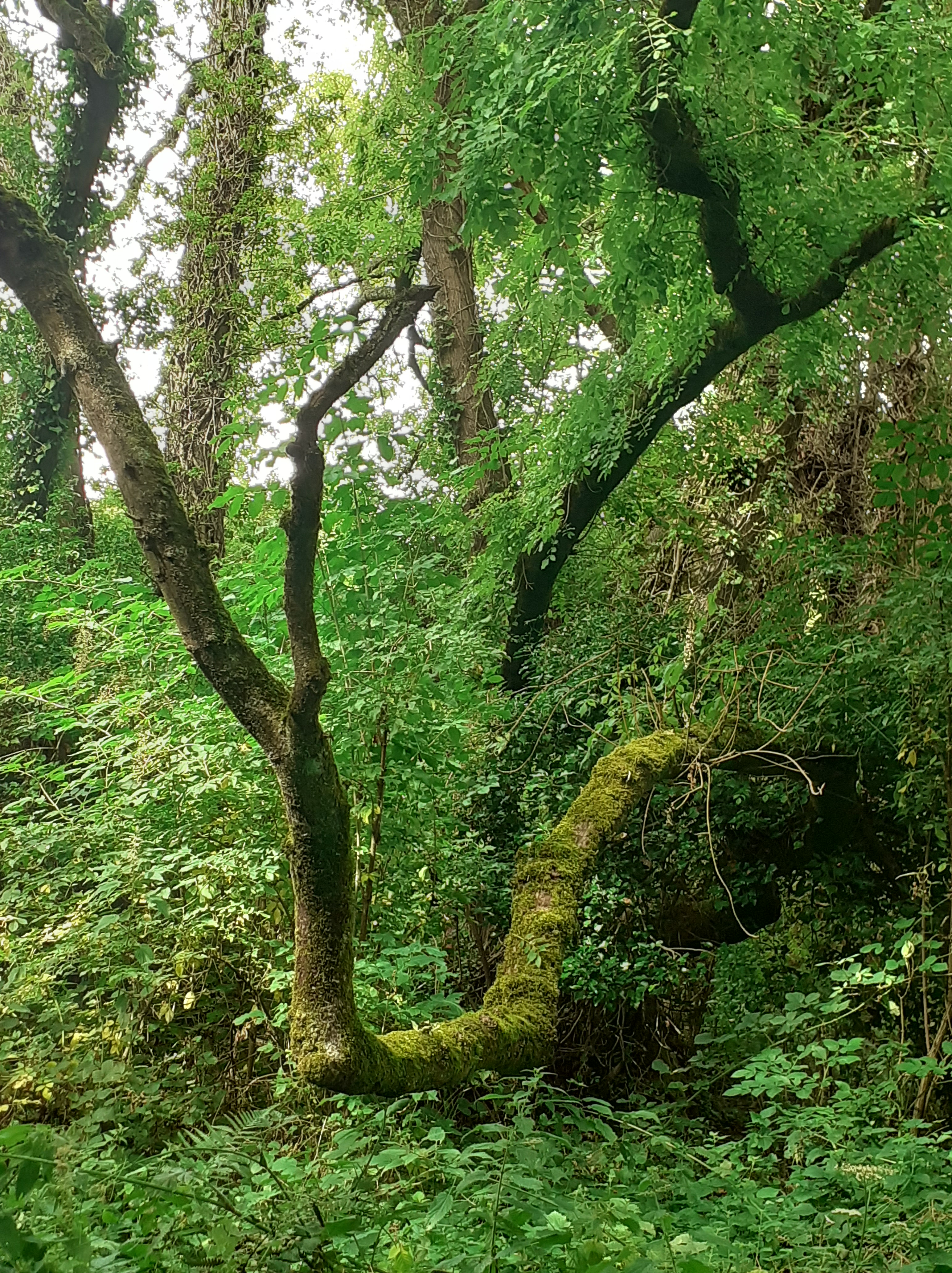
There are trees whose leaves have already turned, but will stay on their branches for awhile, giving these woods a more mixed, autumnal appearance.

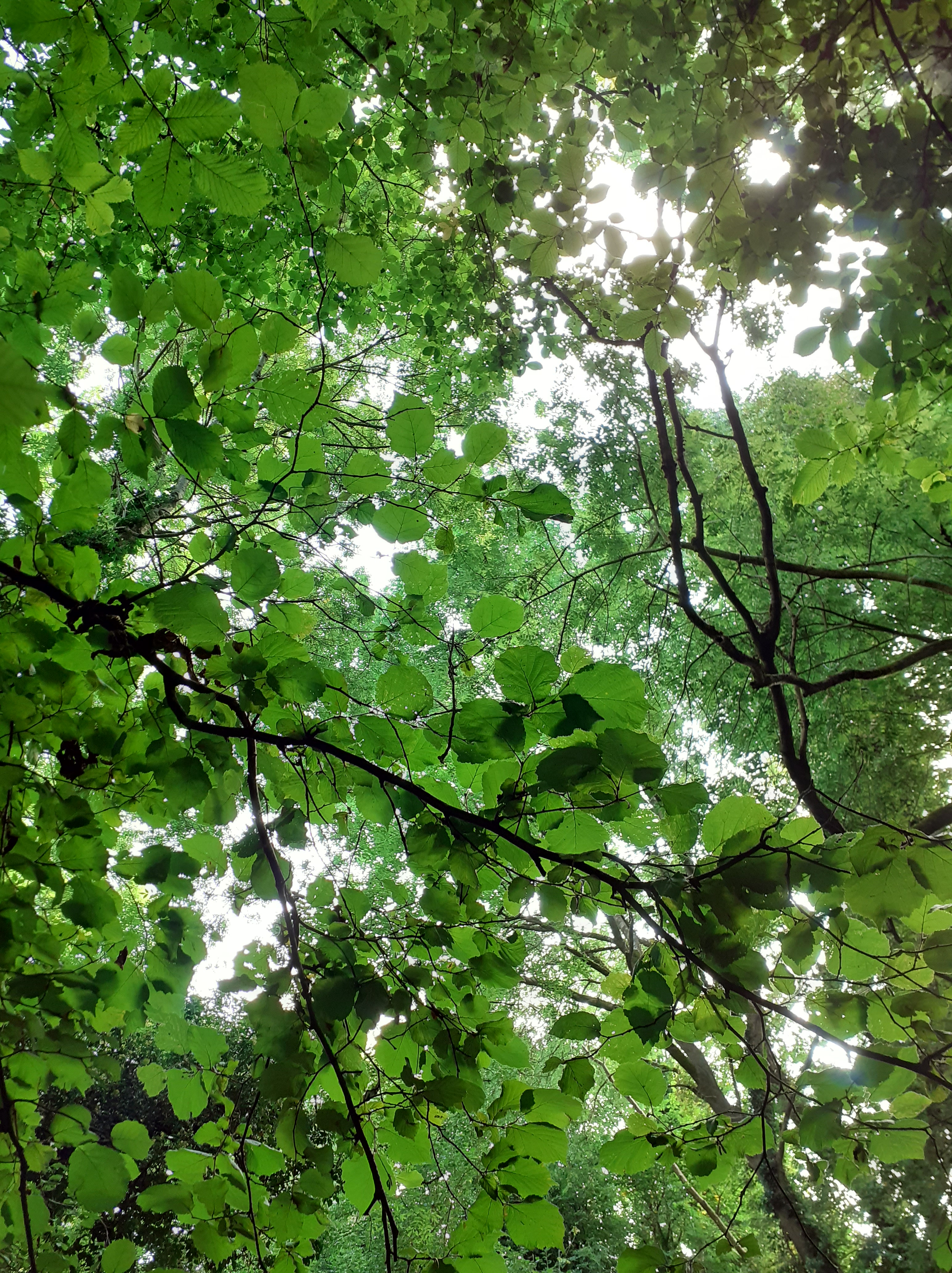
But there is still a preponderance of green, some of it surprisingly fresh. Here it provides a canopy of green light and shade.

The season is also asserting a downward pull, towards the earth and dissolution – a process, however, still in its early stages. The broken fence seems almost to be sharing this, beginning a return to the land.

Then there is the undergrowth, with its mix of living and dead wood, living and dead leaves, and the soil that holds them. The evergreen leaves are defiantly vivid. Taking pictures, I celebrate the time of year.

IN MEMORIAM: GRIEVING IN A TIME OF PANDEMIC

In Memoriam is a touring artwork by Bristol-based artist Luke Jerram. His installation, as shown on Weston beach on 16 September, is a temporary memorial for those lost to the COVID-19 pandemic, as well as a tribute to the NHS health and care workers who have been risking their lives during the crisis. I was in Weston with my wife Elaine at the time, and we explored the installation both separately and together.

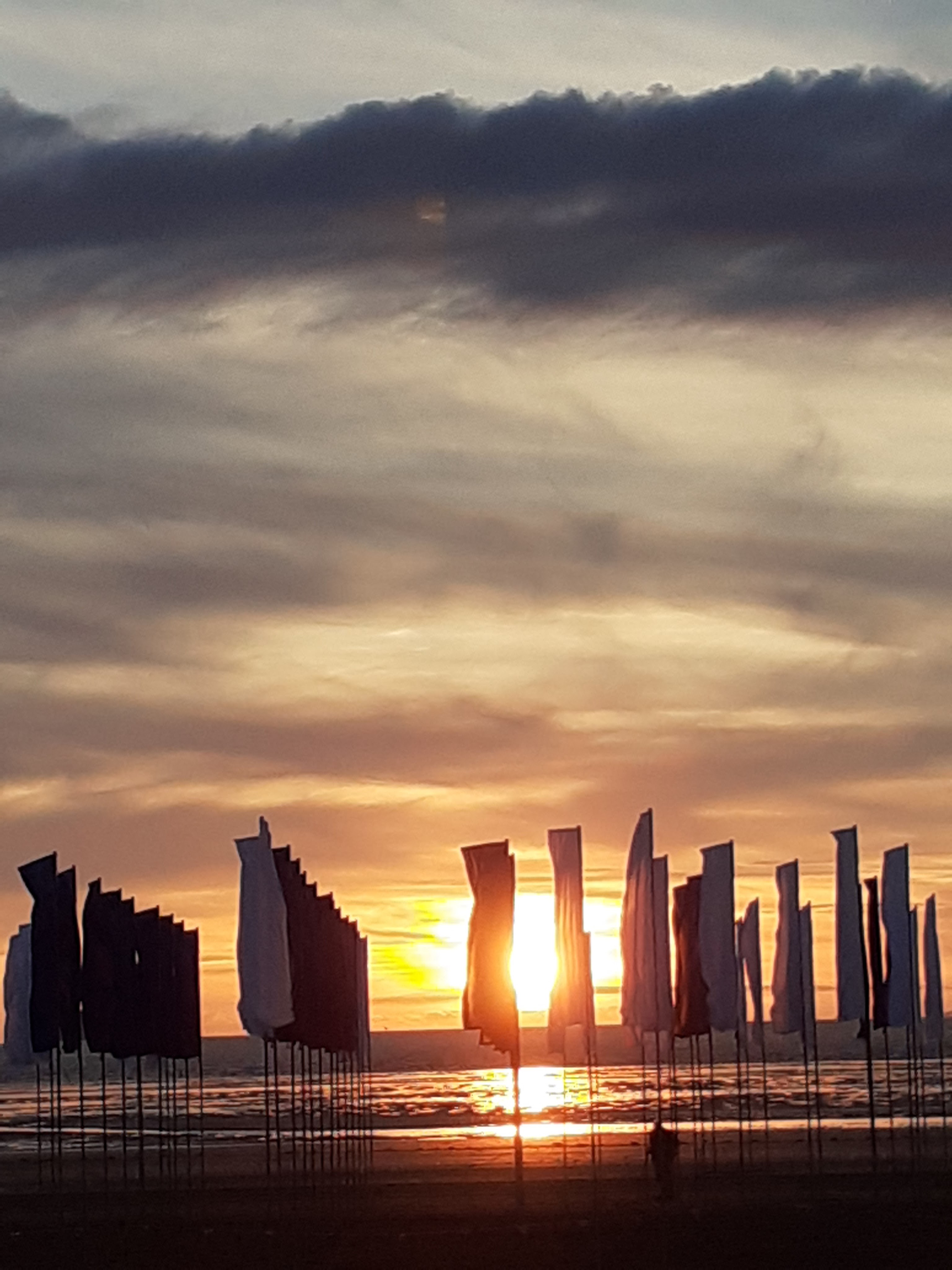
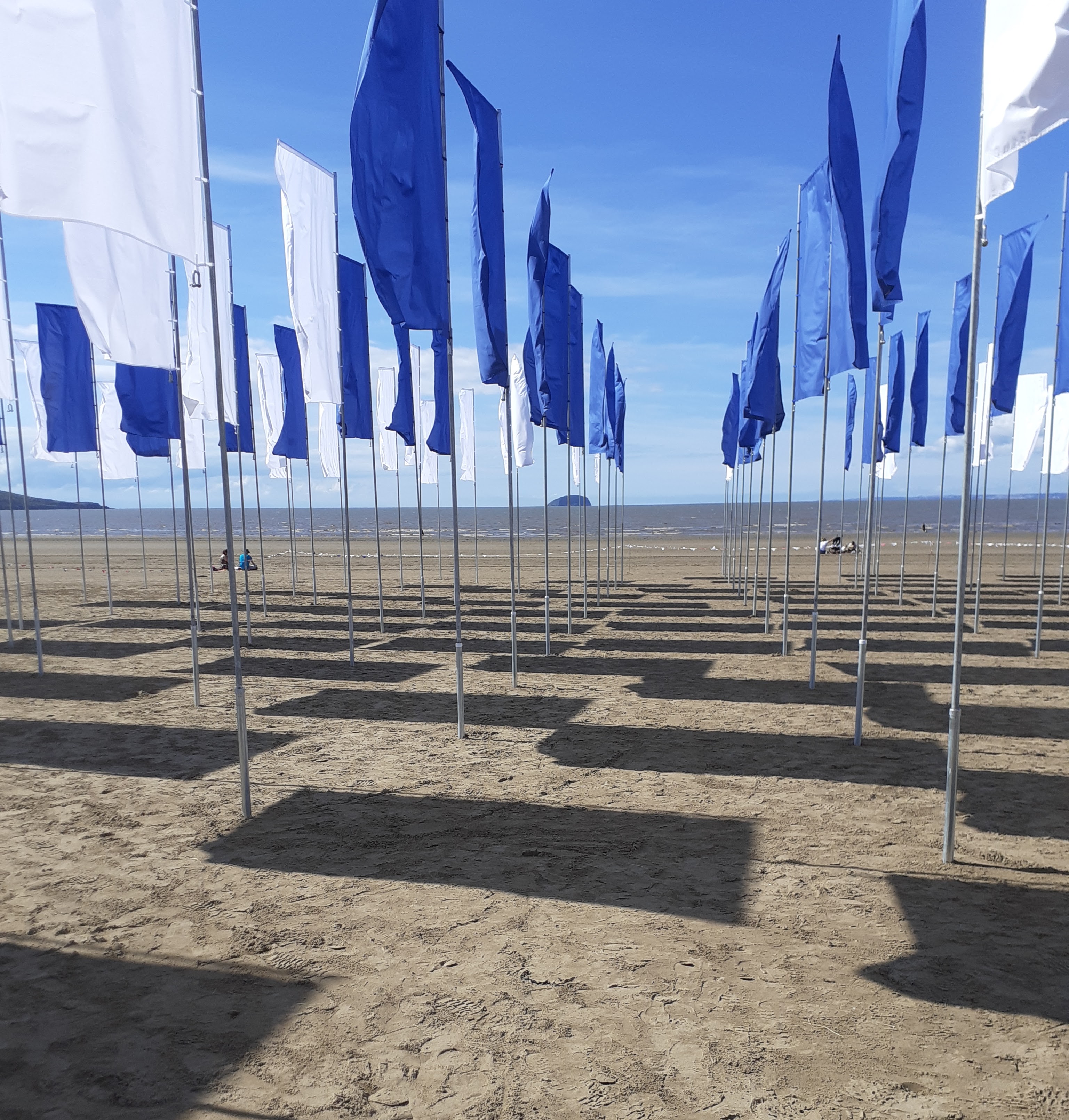
The exhibition is made up of 100 flags, originally hospital bed sheets, planted in the sand. A bird’s eye view would show a blue cross against as white background. When I photographed the installation at sunset on 16 September, it felt numinous to me and slightly reminiscent, in its feeling-tone, of an ancient ritual site. I wonder if our distant ancestors had portable and perishable structures for enhancing ritual space as well as the great stone ones that remain part of our landscape. It seems likely.

Luke says of his work: “As we move towards the end of this pandemic in the UK, it feels like, as a nation, we need to come to terms with everything we’ve been through. With funerals limited in their capacity and places of worship closed, it’s been hard for many people to grieve properly.  I hope this artwork will create a framed space and moment in time for personal and shared reflection”. http://www.memoriamartwork.com/about

The exhibition has been deliberately placed in the open air and in windy locations, inviting people to enter, contemplate and explore the artwork.  The experience recorded above combined shape, colour, sound and movement – all at twilight, leaning in to the autumn equinox, in a meeting place of land sea and sky. For me, both the time and place made a difference, manifesting the power of liminal times and spaces wherever they are found.

My earlier, day-time experience of the installation had been different. Then, the scene felt defined and organised, with clear edges. A blue sky with light patches of cloud matched the flags. At the same time, the sense of a darker ground was evident, with shadows like freshly dug graves.

The flags installation has been touring the UK for about a year. It is due to move to Bristol on leaving Weston, where it forms part of a local health and arts festival. Weston and Bristol are its home, for it was commissioned by Culture Weston https://cultureweston.org.uk and the University Hospitals Bristol & Weston NHS Foundation Trust. It is also supported by the Without Walls street art consortium https://www.withoutwalls.uk.com and the Welcome Trust funded Weather Lives project based at the University of Durham.

THE COMING OF AUTUMN

Walking in the woods yesterday I saw the coming of autumn, in the sky and in the trees. I felt it too, and not just in my physical sensation of coolness. I experienced a mood of loss and ending, not limited to the summer of 2021.

The natural wheel of the year, where I live, has classically been one of soft transitions. Our seasons have merged gently into each other, with September as a modified extension of summer. Leaves gently turn, but there is not much of a fall. For much of my life I enjoyed the sense of a predictable pattern in the the turning of the wheel. That sense has eroded in recent years and has now reached vanishing point. Hence the feeling of loss.

Summer 2021 seemed to die in August, after a short and faltering life. It may be succeeded by a once unseasonable hot spell, or it may not. Considering the effects of the climate crisis in other parts of the world, this is hardly dramatic. But this weird summer season, including a background awareness of developments elsewhere, has ended my already weakened feeling of security. The phrase ‘winds of change’ comes to mind. I think, what next? And when?

I feel challenged to be open to whatever happens, without obsolete expectations to confuse me. In the state of openness, I find that an inner peace and clarity are present. They act as my guides through a shifting, changing, world.

WOODLAND CONTEMPLATION

Becoming the single eye, the eye of contemplation, I am a stressless, frameless window. Unboundaried and immersed, beyond the sense of window, joyful experiencing is vivid and intimate. I am a broken branch, stuck in mud. I am a sticky ooze. I am the shadowy reflection of a tree. I am ripples on water.

Walking, I am a body in movement. Then I become a space for memories. I recall the words: “a green thought in a green shade”. Relishing these words, I become a green thought in a green shade. Then I fall into the role of self-conscious observer, morphing from my original state into another one – lacking the immediacy of the first, yet still worthy of welcome.

The woods reach out to me. They and I are distinct now, though we are still held together in the dynamism of a living world. The whole of life is in these woods as summer starts to wane.

CANAL BANK: LATE SUMMER

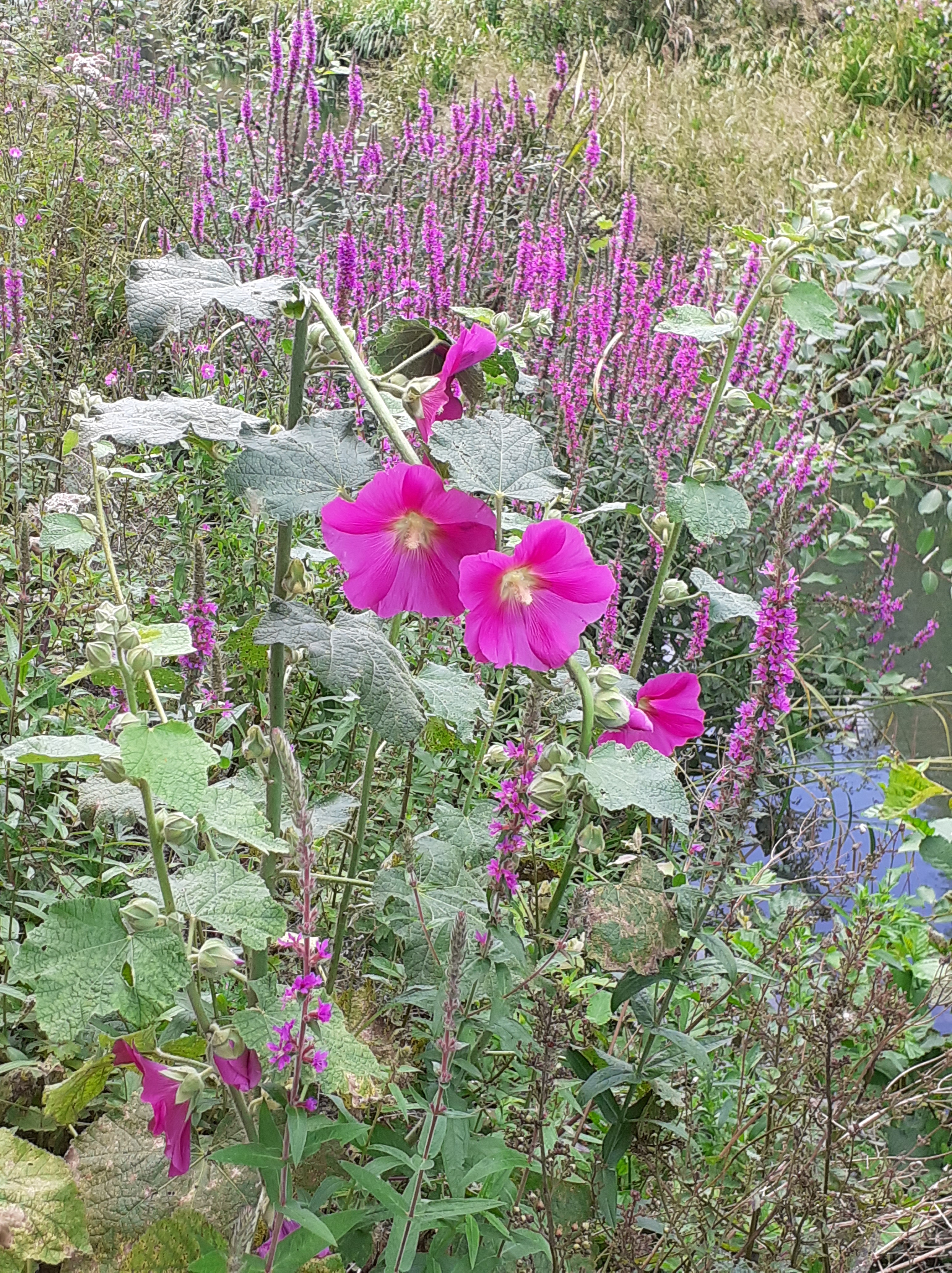
It is late summer now, where I live. I am conscious of earlier sunsets and darker evenings. I also notice the canal bank in floral abundance as the year begins to decline. This set of pictures was taken in a small area close to my home. The predominant colours are mauve/purple, white, and pink – all set within a rough carpet where green still predominates.

When I walk by this small stretch of land and water, I am astonished by a burst of colour and fecundity, an extraordinary profusion of life. It has the visual effect of a firework display, though silent and not perceptibly in motion to the human eye. The declining year technically makes this a decadent time, now giving the place itself an almost decadent feel. For me, the combination of mallow and purple loosestrife below illustrates this quality. I get a brief image of Morgause’s kitchen garden, seen through the eyes of a hostile Arthurian narrator, where the very lushness has a toxic and scary edge. Then the image disperses, and I am present, and myself, on the canal path once more.

Looking more deeply, I see life finding a way to flourish whenever and wherever it can. These plants, with their natural will to thrive, have found this land a good place to take root. This is good to know, providing a moment of simple happiness.

My last picture shows both sides of the canal at a narrow point. I particularly notice the grass on the far bank, waving with the breeze when it blows; otherwise still. On the near bank I see it largely as a background to more vivid and colourful plants. But on the far bank it is the foreground. I enjoy its taken-for-granted strength and tenacity for awhile, before continuing my walk.

INTIMATIONS OF RENEWAL

I took this picture on the North Somerset coast (UK) last September. It is an autumnal and sunset picture, which paradoxically offers me a vision of renewal. The location is Weston-super-Mare, at the Brean Down end and facing the Island of Steep Holm. It is a place that draws me, and I wrote about it at the time (1).

Elaine and I will be spending time there in September this year, investigating a possible move. We both have reasons for wanting this, and it has been in our minds for awhile. But the uncertainties of Covid-19, its wayward management in England, and our own separate health problems have slowed us down.

I have become unused to moving. On my return to the UK in 2003, I lived in Bristol before coming to Stroud at the end of 2008. By that time I was already familiar with this old Cotswold mill town, more recently the birthplace of Extinction Rebellion.. For many years I was essentially living a Stroud/Bristol life. It hardly felt like moving.

In the new plan, Bristol will still be our city. But I’m a different person now, and the move feels like a major operation. Almost daunting. I feel stable and secure in my current home, and a part of me is tempted to cleave to the apparent stability and security of a familiar property and community.

Another part is concerned with the energetic costs of stagnation. Yesterday I drew the 4 of Cups card from The Duidcraft Tarot (2). I am using the pack as a simple psychic mirror, rather than for classical divination. I draw a card when I feel a need to check-in with the oracle. In this instance, I found myself faced with a jaded youth. I am neither jaded nor a youth, But I do feel as if I have been in Stroud for long enough. I catch myself at times in moods of lassitude and an undefined discontent. I am looking for a different experience, and knowing this helps me to raise my energy levels and recover a willingness to take risks. Writing about it is an energiser.

The risks themselves are modest. Weston is familiar to us and the distance not great. There are shared pragmatic reasons for the choice. Beyond these, we both look forward to open ourselves to the local energy of earth, sea and sky in the liminal space where they meet. I also like the notion of living in the English west country, where I was born, and having the opportunity to re-connect with the psychogeography of the region and in particular its coasts, more deeply.

I vividly remember seeing this solitary crow on last year’s visit. It was busy, head down, making a living on the muddy, still estuarial beach. It was a peaceful moment, framed between sunlight and shade. I stepped into peace myself, better to capture the moment and to avoid disturbing the bird. I felt alive and receptive to the setting, which even then felt like a potential home.

Only time will tell.

(1) https://contemplativeinquiry.blog/2020/09/23/

(2) Philip and Stephanie Carr-Gomm The DruidCraft Tarot: Use the Magic of Wicca and Druidry to Guide Your Life London: Connections, 2004. Illustrated by Will Worthington.
TOWARDS THE SEASON OF HARVESTS: 2021

In the northern hemisphere we will soon be entering a quarter of harvests and waning light, starting with Lughnasadh/Lammas. In the south there will be the energy of rising light and growth. In the manner of the yin/yang symbol. a taste of that energy is present here too. As I approach Lughnasadh/Lammas this year, I am living largely day-at-a-time, and sense only the faintest outlines of what might be coming into my life. I intuit change, but not its nature, scale. or specific form.

So I look to harvesting possibilities that are within my power. I wrote recently that Druidry and the Eckhart Tolle Community are currently my key points spiritual reference. This invites a new synthesis and integration of spiritual practice and understanding. Druidry remains primary. It is the container. But there are two areas in which the Tolle work has strongly influenced me.

The first is through reframing my understanding of meditation. Instead of being a specialist activity, it has become the gateway to living from what Tolle calls ‘stillness’, ‘presence’ and the ‘Deep I’. These simple terms are pointers to a way of experiencing the world that cannot be accurately languaged but is easy to recognise if we are open to it. Meditation, here, is a state of openness and availability. It does not require extended time or any specific form.

I still value formal daily practice. It is a way of keeping fit in this domain. But while, in the past, I have seen meditation as a specific activity, I now see that anything can be a meditation if it is a gateway to stillness, presence, or the Deep I. Tolle tells a story about his early days as a teacher, when he would sometimes make presentations to the Theosophical Society in London. The first time he showed up with a set of notes virtually amounting to a script. His eyes were frequently on it and although he was received respectfully, many of his listeners’ eyes were glazing over. The next time he abandoned this approach, faced his listeners and simply waited, open and trusting, for the words to come. They did. He connected. Energy levels in the room were high, and the presentation was successful.

I’ve been taught versions of this lesson a number of times in my life, but I clearly needed to hear it again with a new and different language. For my second Tolle influence concerns ‘awen’. As a Druid I might want to use ‘awen’ in the context of Tolle’s story. But it doesn’t feel right. I love the awen chant and the awen symbol. I love the alchemy of the Hanes Taliesin and the way it points to possibilities of human transformation. But it belongs in a world that is not my own, that of Brythonic bardistry and seership. I feel more connected to my own experience when I use Eckhart Tolle’s language. It holds more possibilities for me. I do not count myself as among the awenyddion. But I can speak from stillness. I can speak from the Deep I.

Earth Eclectic

music that celebrates Earth and speaks to the heart

Sarah Fuhro Star-Flower Alchemy

Follow the Moon's Cycle

Muddy Feet

Meeting nature on nature's terms

Rosher.Net

A little bit of Mark Rosher in South Gloucestershire, England

Becoming Part of the Land

A monastic polytheist's and animist’s journal

selkiewife

Selkie Writing…

Charlotte Rodgers

Images and words set against a backdrop of outsider art.

Prof Jem Bendell

living with metacrisis and collapse

Towint

The pagan path. The Old Ways In New Times

The Druids Garden

Spiritual journeys in tending the living earth, permaculture, and nature-inspired arts

The Blog of Baphomet

a magickal dialogue between nature and culture

This Simple Life

The gentle art of living with less

Musings of a Scottish Hearth Druid and Heathen

Thoughts about living, loving and worshiping as an autistic Hearth Druid and Heathen. One woman's journey.

Wheel of the Year Blog

An place to read and share stories about the celtic seasonal festivals

Walking the Druid Path

Just another WordPress.com site

anima monday

Exploring our connection to the wider world

Grounded Space Focusing

Become more grounded and spacious with yourself and others, through your own body’s wisdom

The Earthbound Report

Good lives on our one planet

Hopeless Vendetta

News for the residents of Hopeless, Maine