Contemplative Inquiry

This blog is about contemplative inquiry

Tag: Walking

WATER ON THE PATH

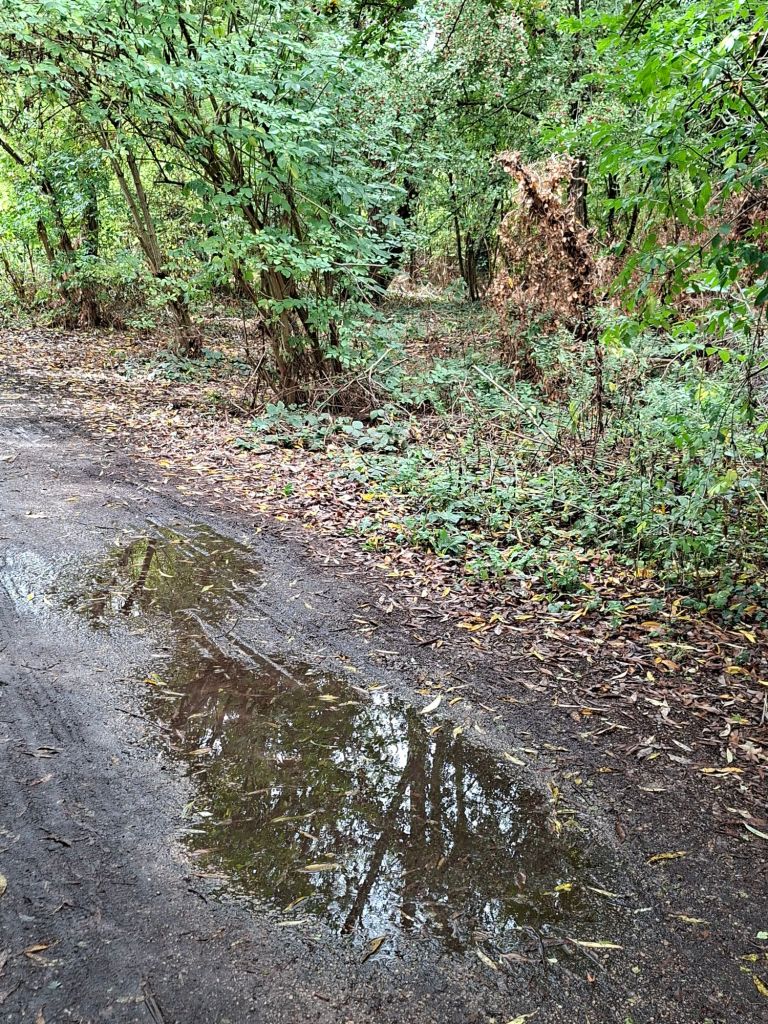
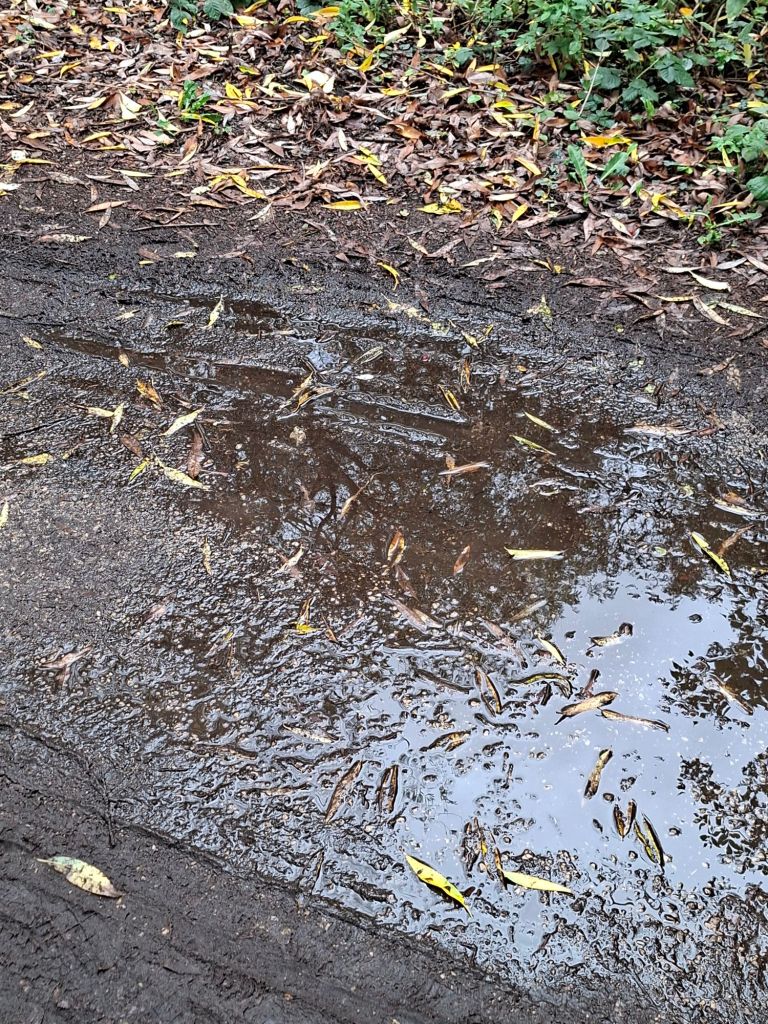
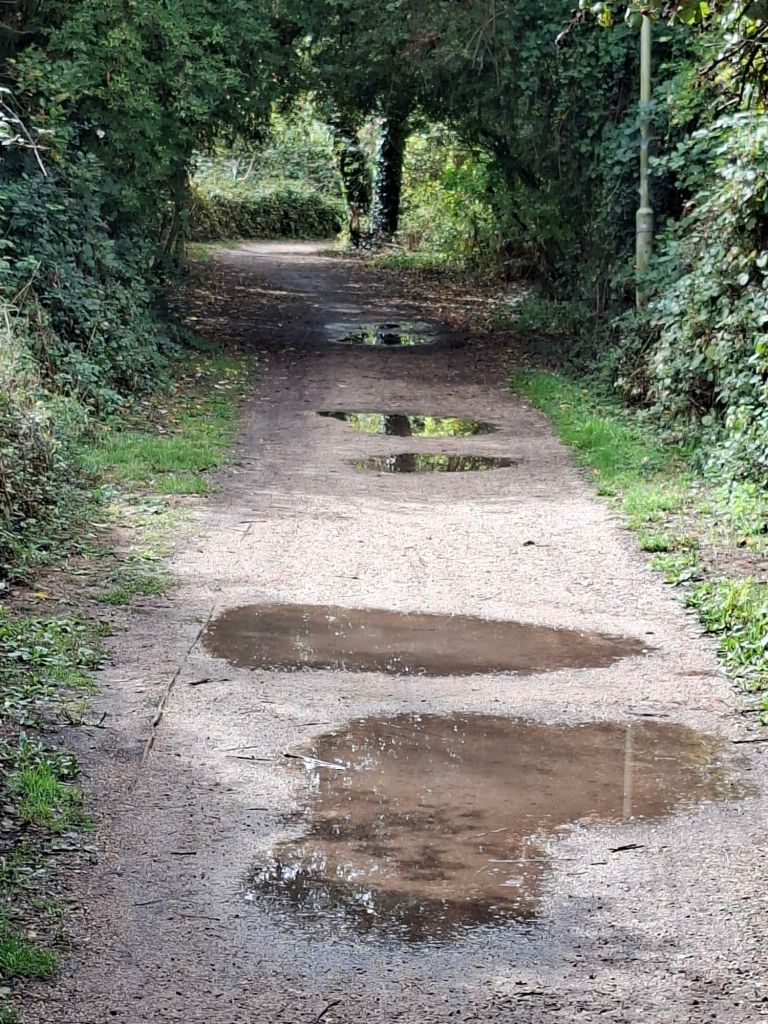
Walking on a familiar path, I found a trail of puddles in front of me. It felt exotic and refreshing. For this had been a parched and dry place for a many months. I dimly recall a past life of finding puddles a minor nuisance – almost an obstacle. Not today. They brought joy and fascination.

I found myself contemplating these small accumulations of fallen rain: noticing their shapes and patterns, seeing how the water creates mud so easily from dried soil, watching the slight movement fallen leaves in these tiny ponds. The circumstance of the long dry period and its ending made rainwater and its effects interesting and worthy of attention in ways that seemed new and almost strange. I opened myself up and became present to them, before moving on.

On my way home I was caught by a brief deluge. I made a brief video of rain on a puddle. I got wet too, yet it somehow completed my walk.

WALKING IN ARNOS VALE CEMETERY

Above, through the trees, we can see one of the chapels belonging to the Arnos Vale Cemetery in Bristol, England. It was built as a  garden cemetery extending over 45 acres in 1839, as the city’s old parish graveyards were becoming overcrowded and a health hazard. The new venture was designed to be spacious, with sunlight, fresh air, trees and shrubs.

It worked well for nearly 150 years. But in 1987 the owners announced their intention to clear a large section for ‘development’. An Association for the Preservation of Arnos Vale Cemetery swiftly sprang up. It fought successfully for a safe future for the site, gaining the support of the Bristol City Council, Bristol citizens and many people worldwide.

Now, as the Friends of Arnos vale, they continue to manage what they describe as “a hillside Victorian cemetery and conservation park, with heritage and wild life tours, plus a café”. It takes a lot of effort and activity to keep this precious space going, yet on my occasional visits I still find it tranquil and unspoilt.

For me it is a magical place, largely because the graves are being allowed to sink back into the land. There is something primal about the cross above, rough hewn, almost equal armed, and decorated with foliage. Still a cemetery, Arnos Vale has become something wilder than a garden. At this time of year, the paths become green tunnels, deftly concealing their destinations.

Yesterday I walked in Arnos Vale with a friend, and our direction of travel required a descent towards the main buildings. The steps we went down were not as overgrown as the ones below, but l found them challenging enough. The imagery and effortful activity of descent give me the feeling of a deep earth and underworld journey, and the sense of enchantment that goes with it.

Towards the bottom of the slope, my recognition of a re-enchanted space in a largely disenchanted world is further strengthened. A cross again. Evergreen ivy growing up it. Vivid summer blooms behind and in front. Tall wild grass. Trees in the background. Green abundance enhancing the gravestone rather than diminishing it. Life and death companioning each other without drama or fuss. Contemplating this natural harmony, I feel heartened and refreshed.

THE PLEASURE OF A SUMMER EVENING WALK

It is a little after 7 pm, and the mellowing evening of a hot day. The sky is clear. On 12 July, there are still nearly two and a half hours before sunset. It is about 31C/87.8F with a light breeze. Elaine and I feel comfortable enough to go for a walk in town.

We start quietly in our own neighbourhood. We are, we think, towards the end of a hot period that peaked at 35C/95F. This counts as serious heat in England. For several days, we have been staying indoors for much of the day. There have been quick forays in the mornings, mostly to an air conditioned shopping centre nearby.

We needed to get out at the first opportunity. We are rewarded, in this evening, by a freshness grown unfamiliar, and by powerful contrasts of light and shade as seen in the priory ruins below.

To leave our Greyfriars estate, we walk down a narrow lane that separates a pub from a church. We enter Southgate Street in the old town through an archway. Entering the street, we are conscious again of vivid  blue sky, and the mix of sunlight and shadow. The street is hardly crowded, but it is certainly peopled on this warm summer evening.

At this stage we are not sure of our destination. We just want to be free and mobile and outdoors. We decide to turn right. Soon we will be reaching the cross roads at the centre of the old town. If we turn left, we will  find ourselves in Westgate Street*, with the Cathedral Close (College Green) as our likely destination.

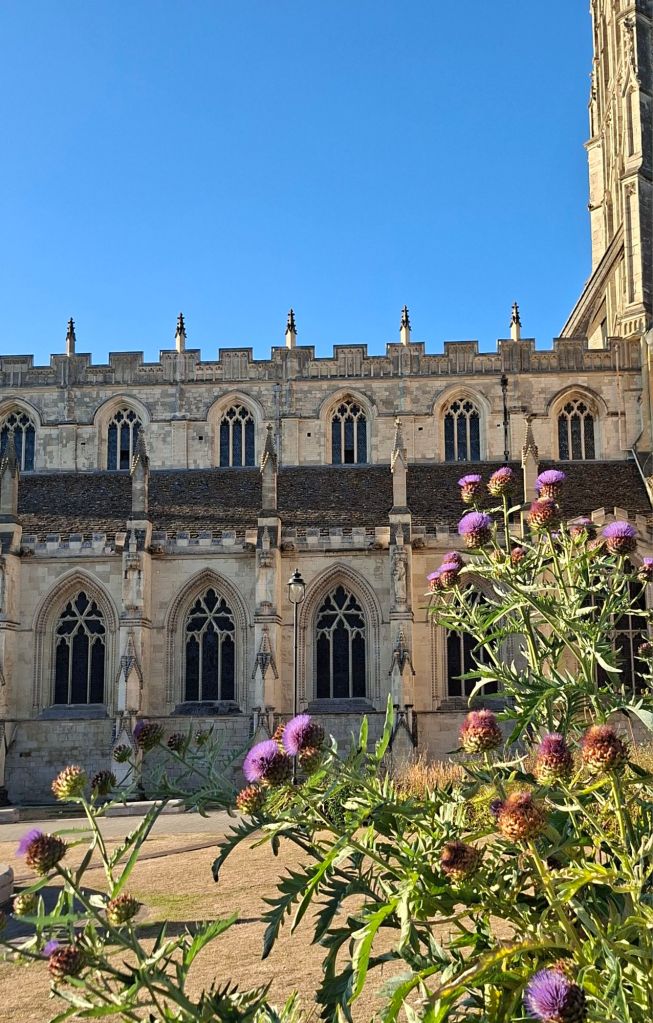
Gloucester Cathedral, and in particular College Green, are a friendly space for us. It is still the dominant set of buildings in the town centre, just a little set apart from the shopping streets. Often a busy place, it is also a contemplative one. As we sit there enjoying the opportunity to be out, we notice that the temperature is cooling as we move towards 8 pm.

Eventually we decide to return home, leaving College Green through another alley, this one a location for shops and restaurants. It’s been a nurturing time in the high summer city.

  • When Gloucester was first established by the Romans in 97 AD as Colonia Glevum, it was built as a walled city with gates in each of the four cardinal directions. Hence the streets Eastgate, Southgate, Westgate and Northgate. I believe that Aethelflaed, Lady of Mercia, brought the street  names back into use in their English form whilst based in Gloucester round about 900 AD.

BOOK REVIEW: THE 15-MINUTE CITY

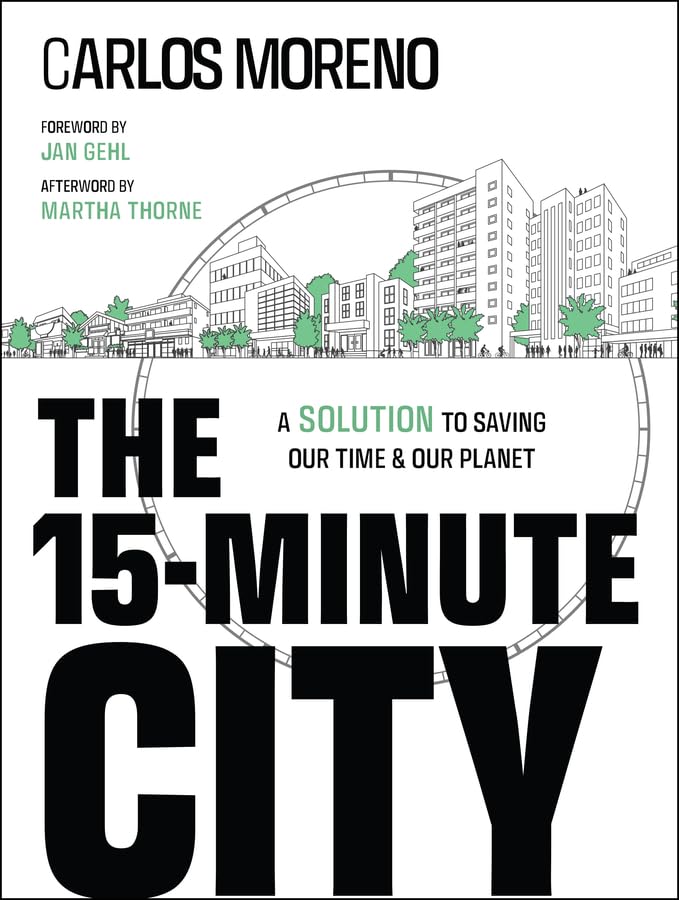
The 15-Minute City: A Solution for Saving Our Time and Our Planet (1) advocates that everyday destinations like schools, stores, and offices should only be a short walk or bike ride away from home. The intention is to make cars far less necessary for contemporary city-dwellers, and thereby “to reinvent our life-styles and rethink our relationship with space and time”. Its key values are proximity, interconnectedness and fulfilment.

This book is about how cities are run, who they are predominantly run for, and how they could be run more inclusively. It provides an inspiring store of information for people concerned with these issues, not least urban Druids. It has 21 chapters:

Chapter 1 is a call to action, emphasising “the urgency of reimagining urban ecosystems in the light of contemporary challenges”.

Chapters 2 to 4 discuss the ‘fragmentation’ of cities over time, especially due to city roads and zoning.

Chapter 5 is about learning lessons for “a more inclusive urban future”.

Chapters 6 & 7 look at changes beginning with the 1973 oil crisis and moving on to the “challenges and realisations of 2020”.

Chapters 8 to 11 focus on Paris, where the ’15-Minute City’ was invented.

Chapters 12 to 19 cover particular locations and their complex histories: Milan, Italy: Portland, Oregon, USA; Cleveland, Ohio, USA; Buenos Aires, Argentina; Sousse, Tunisia; Melbourne, Australia; Busan, South Korea.

Chapter 20 looks at the notion of the 20-Minute Territory as applied in Scotland and on the Ile de France.

Chapters 21 discusses the role of new technologies and summarises the book.

By 2050, 68% of the human population will be urban. Changes are needed in the ways that urban ecosystems work for people’s health and wellbeing, now more than ever because of the climate crisis. Author Carlos Moreno writes, “urban life is the heart of the problem, but it is also the solution if we enable it to be. Never in the history of humanity has survival been so compromised by lifestyle”.

Moreno also believes: “our journey through these cities is also an exploration of ourselves. By offering an urban setting that is conducive to conviviality and proximity, we can rediscover the value of mutual cooperation and sharing. We are nourished by authentic interaction and the solidarity of a reinvented urban life “

It may be that it is now too late to save the kind of civilisation in which  we are living. From a seemingly uninvolved and above-the-battle standpoint we may even see advantages in its fall. But I have come to think that it is better to work from the opposite point of view – that there is something worth working for, despite the apparent odds. The work itself can be a spiritual discipline, taken on for its own sake. Carlos Moreno offers us one neighbourly way of addressing our apparent spiral into a dystopian world.

(1) Carlos Moreno The 15-Minute City: A Solution to Saving Our Time and Our Planet Wiley, 2024. Foreword by Jan Gehl. Afterword by Martha Thorne.

PRE-SUNSET: A WALK IN THE PARK

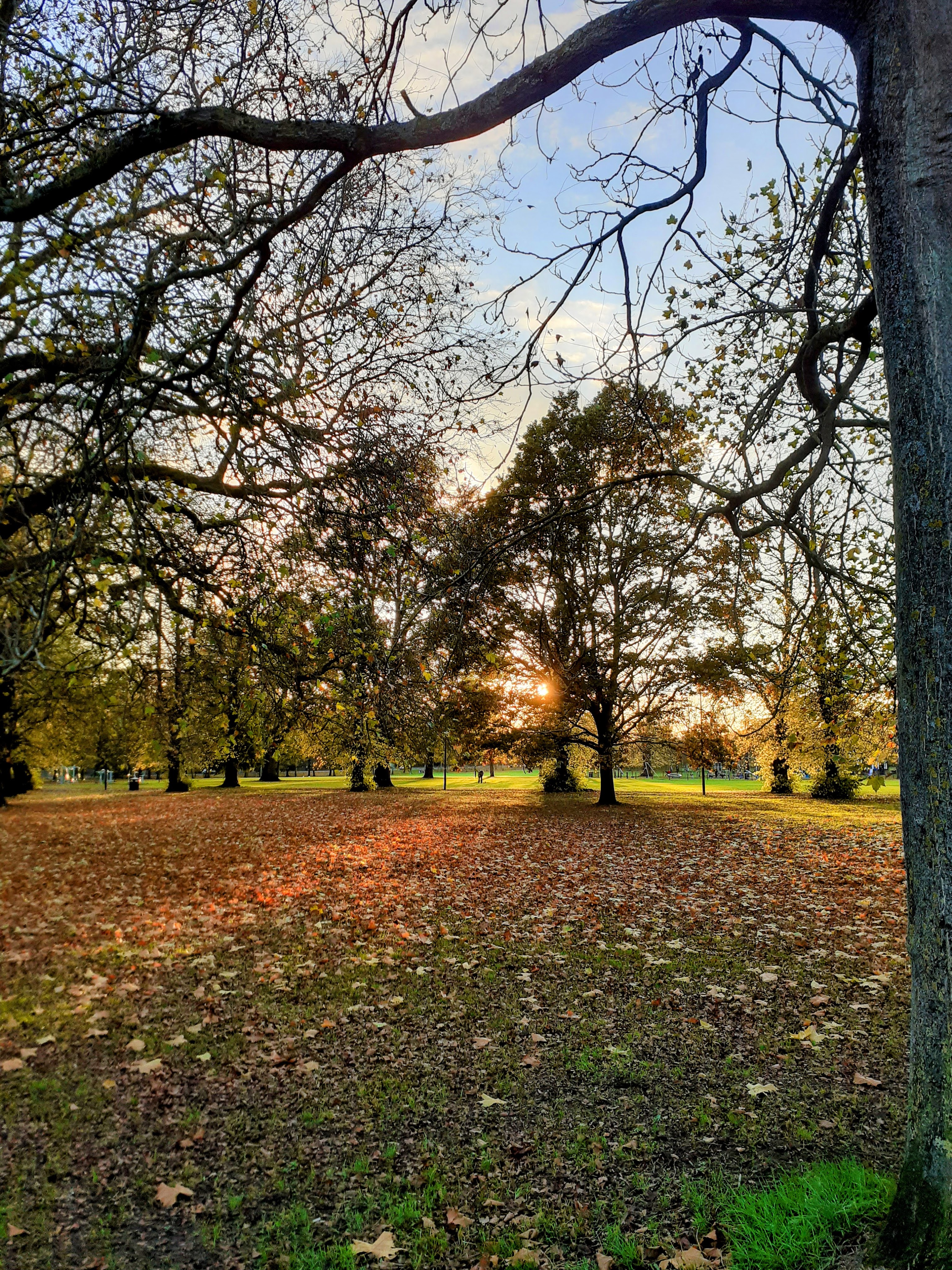
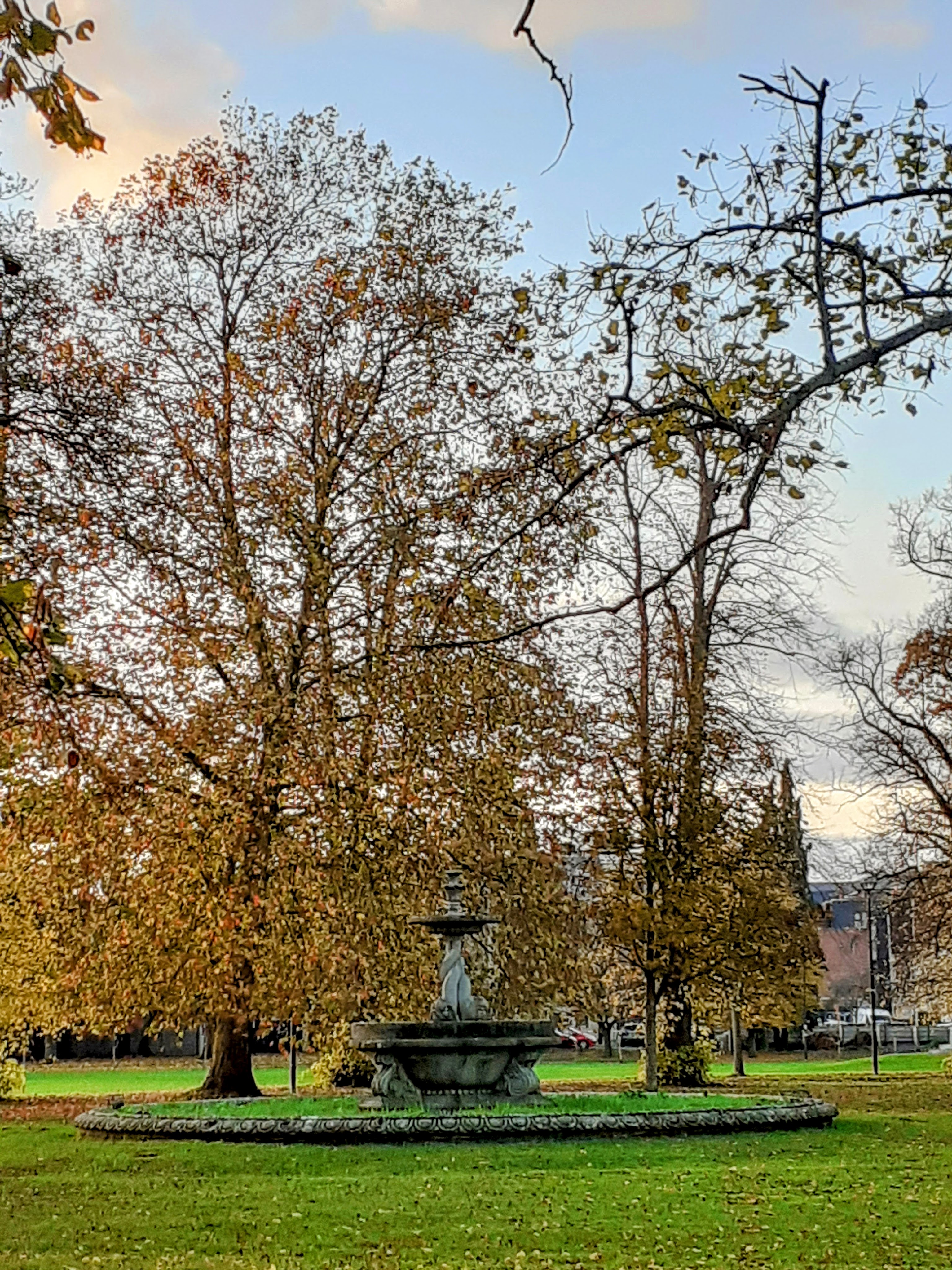
It’s about 3.45 pm on Thursday 14 November. For a few precious days there has been blue sky and a visible sun in my neighbourhood. But the days themselves are short and the sun is already falling in the sky. Its rays are brightly visible and they beautifully catch the leaves – those still on their trees, and those already on the ground. But much of the ground, apart from the carefully tended green lawns, is darker and more shadowy. It feels like a last hurrah of autumn before it gives way to winter.

I enjoy the park and the way that it is laid out. It is highly used and valued, and an important lung for the city. I am glad to have it here in Gloucester. Today is a quiet time, good for contemplation. It is easy to walk to from where I live and a good place to be with the land and the trees. My visits don’t require long periods of time or present much physical challenge. This is good for me at a time when I am unavailable for heroic physical journeys but very open to the magic of what is.

BOOK REVIEW: ELEGANT SIMPLICITY

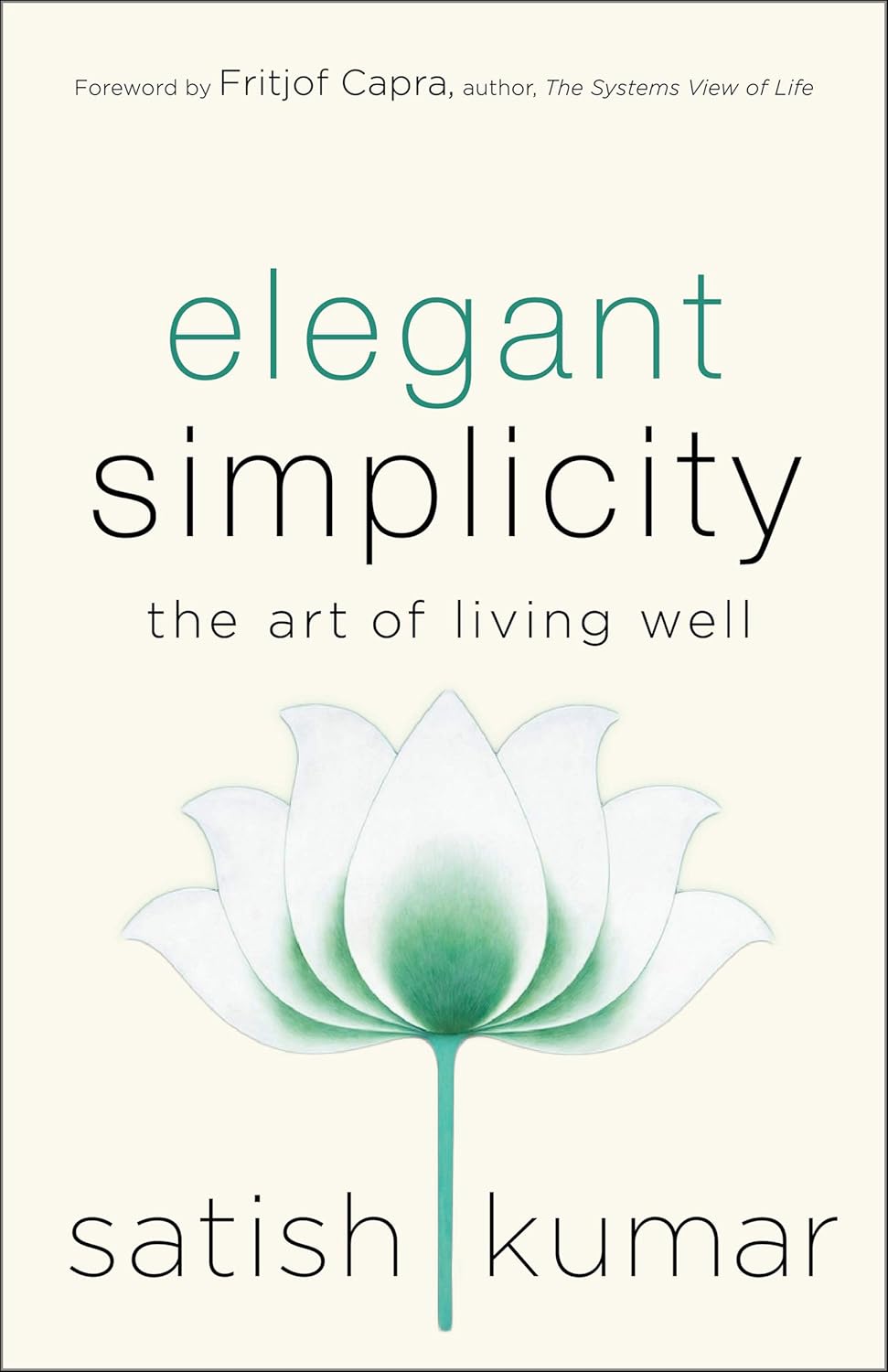
Highly recommended. Satish Kumar (born in 1936) published Elegant Simplicity: the Art of Living Well in 2019 (1). It begins with a foreword by Fritjof Capra and a preface by the author Let’s be Simple which quotes the 1848 Shaker song ‘Tis the gift to be simple, ‘Tis the gift to be free. The book summarises the author’s personal story as well as discussing his values. I have written posts based on some of his other work before (2). I especially recommend this book to anyone interested in knowing more about Satish Kumar’s practice (grounded in Jain spirituality and Gandhi’s non-violent activism) and his influence on deep ecology, creative arts and education.

Elegant Simplicity has a summarising quality, looking back on decades devoted to sacred activism in different forms. It is divided into fourteen chapters: Each is preceded by a brief and relevant quotation from another thinker. The chapter then becomes a meditation on the quote:

1 My Story: Beginnings – ‘True happiness lies in contentment’ Mahatma Gandhi.

2 Simplicity of Walking – ‘All truly great thoughts are conceived by walking’ Friedrich Nietzsche.

3 Life is a Pilgrimage – ‘Faith is not the clinging to a shrine but an endless pilgrimage of the heart’ Abraham Joshua Heschel.

4 Elegant Simplicity – ‘Any fool can make things complicated, it requires a genius to make them simple’ E. F. Schumacher.

5 A Society of Artists – ‘This world is but a canvas to our imagination’ Henry David Thoreau.

6 Yoga of Action – ‘Life is a process not a product’ Brian Goodwin.

7 Learning is Living – ‘Education is not preparation for life; education is life itself’ Thomas Dewey.

8 Right Relationships – ‘We are all related – relationships based on obligation lack dignity’ Wayne Dwyer.

9 Love Unlimited – ‘There is no charm equal to tenderness of the heart’ Jane Austin.

10 Power of Forgiveness – ‘It’s one of the greatest gifts you can give yourself, to forgive. Forgive everybody.’ Maya Angelou.

11 Dance of Opposites – ‘Life and death are one as the river and the sea are one’ Kahlil Gibran.

12 Deep Seeing – ‘To see clearly is poetry, prophecy, and religion, all in one’ John Ruskin.

13 Union of Science and Spirituality – ‘Science is not only compatible with spirituality; it is a profound source of spirituality’ Carl Sagan.

14 Soil, Soul and Society – ‘We live in an interconnected world and in an interconnected time so we need holistic solutions to our interconnected problems‘ Naomi Klein.

Fellow activist and author Vandana Shiva describes Elegant Simplicity as “the distillation” of Satish Kumar’s ideas and actions. “It shows the intimate connections between the inner and the outer world, soil, soul and society, beauty joy and non-violence. It indicates that the solutions to the big problems of our time – climate change, hate, violence, hopelessness and despair – lie in thinking and living with elegant simplicity, reducing our ecological footprint while enlarging our hearts and minds”.

For me, Satish Kumar is an inspiration rather than a direct model. Even in the conditions of the early 1960’s I would not have walked, or aspired to walk, from New Delhi to Washington DC without carrying any money. Yet Satish Kumar and his companion E. P. Menon succeeded and made a huge public impact at the time. Their peace pilgrimage gave oxygen to the campaign for nuclear disarmament. No state gave up its arms, but treaties limiting the numbers and testing of nuclear arms became normalised for some decades. Satish Kumar’s initiatives in deep ecology and education, especially the ‘small school’ and Schumacher College, have changed lives. Directly and indirectly, his influence has awakened many people from the dystopian trance of our dominant cultures. Satish Kumar is a widely revered elder: a peaceful warrior for a more liveable, generous and creative world.

(1) Satish Kumar Elegant Simplicity: The Art of Living Well New Society Publishers (https://www.newsociety.com): Gabriola Island, BC, Canada: 2019

(2) See previous posts:

NEWS OF A DEATH

TWO VIEWS OF THE DIVINE

OUTDOOR WALKING MEDITATION

NOTE: “Satish Kumar (born 9 August 1936)[1] is an Indian British activist and speaker. He has been a Jain monk, nuclear disarmament advocate and pacifist.[3]Now living in England, Kumar is founder and Director of Programmes of the Schumacher College international center for ecological studies, and is Editor Emeritus of Resurgence & Ecologist magazine. His most notable accomplishment is the completion, together with a companion, E. P. Menon, of a peace walk of over 8,000 miles in June 1962 for two and a half years, from New Delhi to MoscowParisLondon, and Washington, D.C., the capitals of the world’s earliest nuclear-armed countries.[4][5] He insists that reverence for nature should be at the heart of every political and social debate.” (Wikipedia)

JANUARY FEELINGS

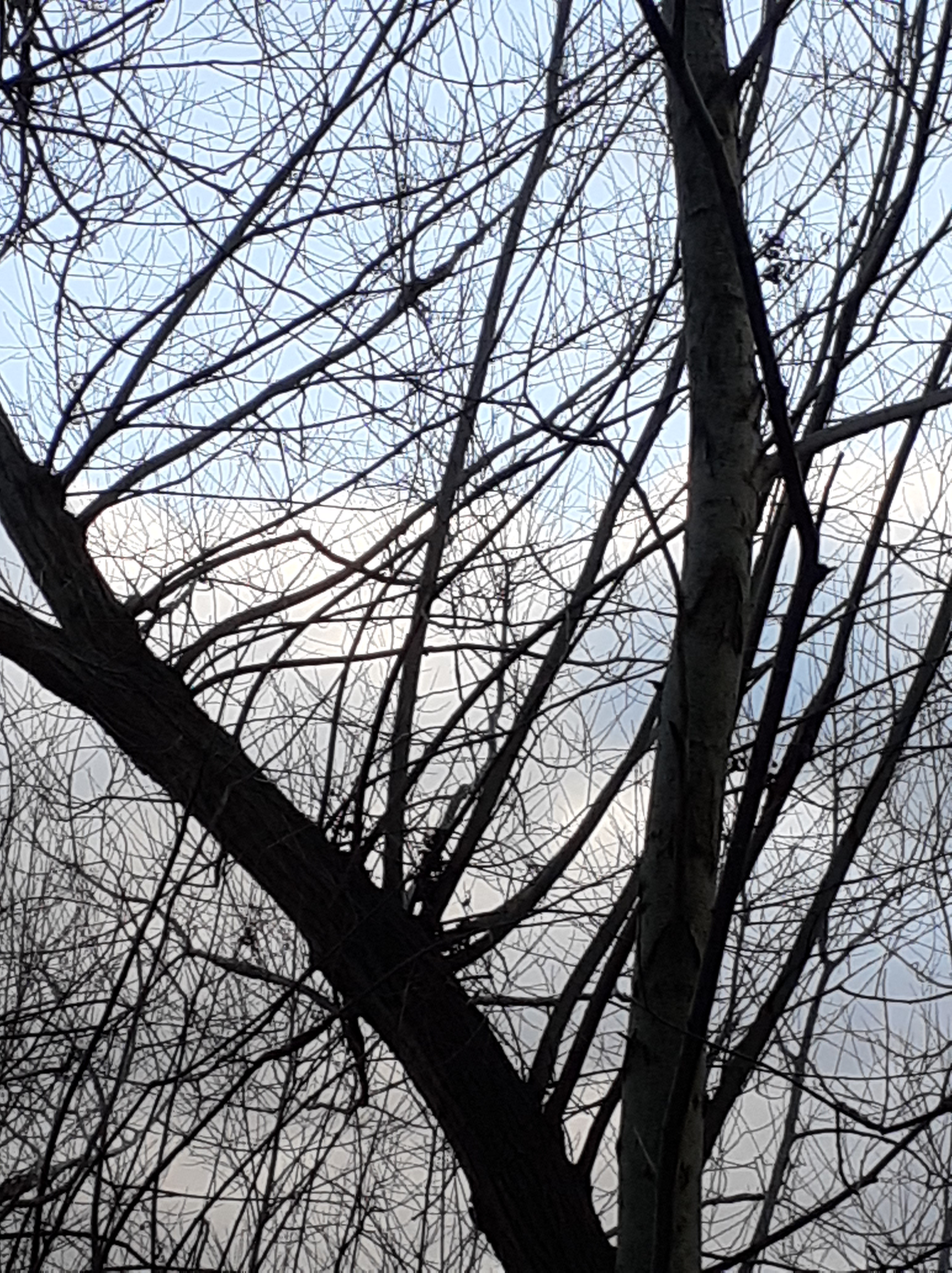
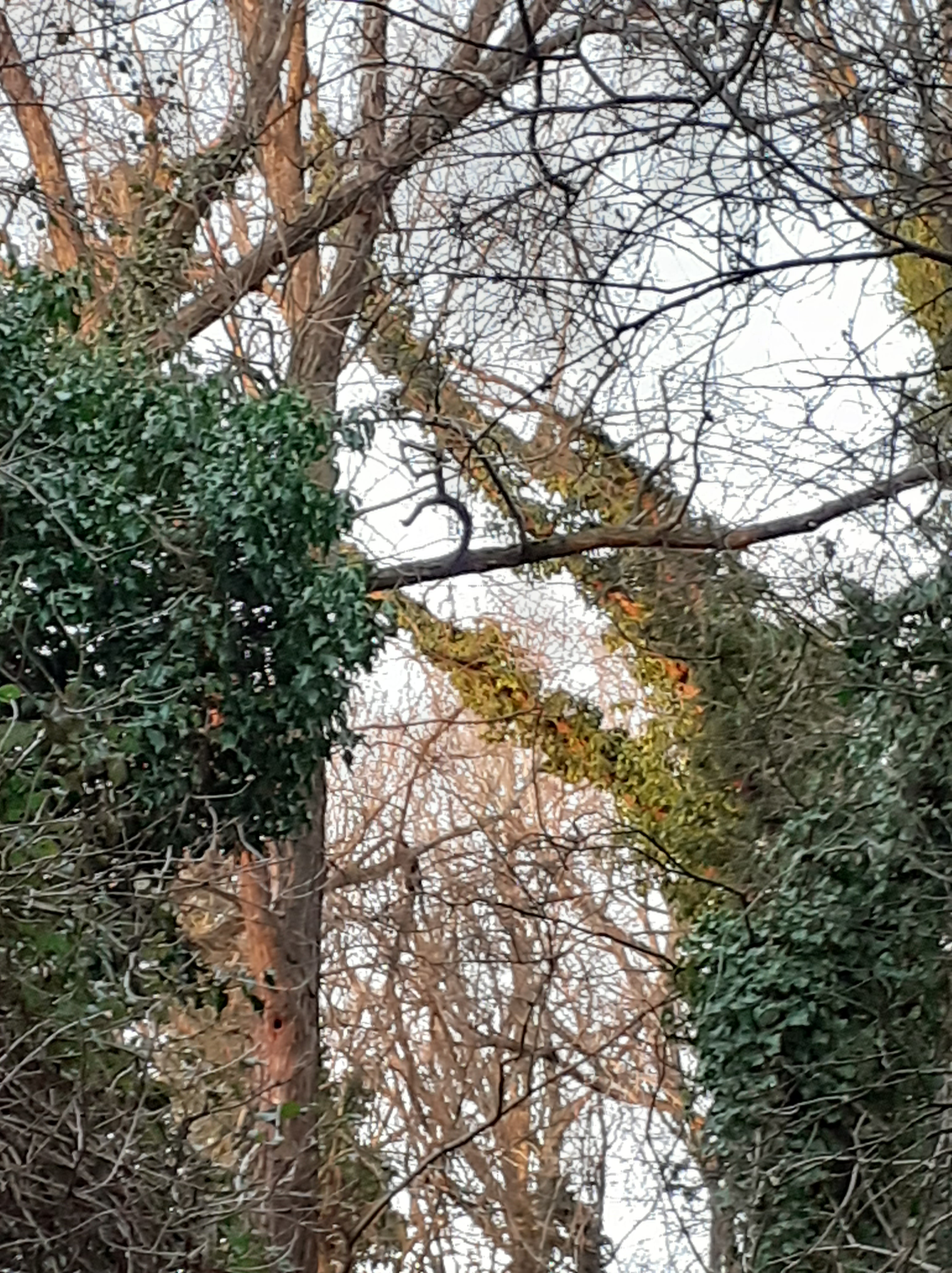
My sense of January this year is one of bleakness qualified by promise. I spent the first week of the year grounded by back pain. So it was a pleasure, when the time came, to walk once more among trees. Their very bareness has a certain majesty. Their simple presence suggests the prospect of transformation as the year goes on.

Here, at 3.30 pm on January 9th,, I am noticing the slow lengthening of the day. It would have been twilight at this time three weeks ago. The change has an expansive note. A new lightness and colour are suggested below. They lead me further from the lassitude and brain fog of recent days. They make the world a genuinely felt privilege to be in.

Yet a taste of disenchantment does have its value. More than once, I have experienced it shortly in advance of a creative shift in energy and direction. My wife Elaine and I will soon be moving to the long=term home we have been working towards for some time. We will be setting it up, not just chasing after it, over the coming weeks. Without quite seeing the future, I do feel a returning zest and optimism.

THE ALBION SAILS ON COURSE (NOVEMBER 2016)

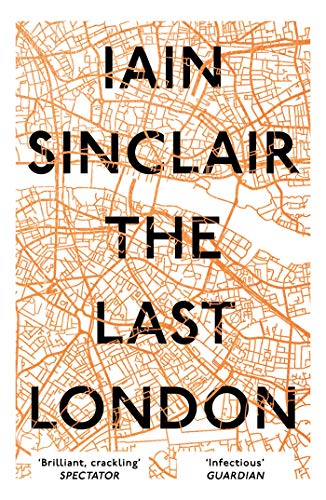
“The Albion sails on course. Black script on white wall. The spill-zone around Corbridge Crescent, the painted devil heads and hybrid monsters, the bare-breasted pin-ups from naughtier times mouthing Situationist slogans, are captured and made fit for purpose by film crews and television set-dressers, lighting technicians and catering caravans, responding to dissent as exploitable edge.

“LOADED WITH/ MEMORIES/ I WAS NOT AFRAID/TO SET OFF/ AN ADVENTURE/ ANY MORE.

“14 November 2016: the words I copied into my notebook yesterday are painted over with white undercoat, so that professionals can create rebellion suitable for television. For example, a Worholist head of Che Guevara – CHE GAY – inflated to cover an entire wall, with fake yelps about eating the rich to replace the groundwork of RIP and the Secret Society of Super Villains and Artists. NO PIGS ….

“The outlaw in his shack on the ledge by the canal sleeps through the entire fuss. He learnt his lesson after the first Immigration Enforcement raid. Now his shelter looks like the detritus of a lumberyard. ….

“A young boy cycles uncertainly to school, in the wake of his mother, wearing a silver skull mask. Welcome to the comic world, Hackney. At the base of the image swamp we find the sinister clown: child-catcher, grinning molester. The public joke, the big-haired politician who dissolves into the Joker of DC Comics.

“Extinguish fire with petrol. One of the latest Andrews Road defacements is a poster: SILENT BILL MUSE WANTED. Silence against the noise of imagery? The meditation of a hooded man sitting all day on a bench? Or another who dreams the fading city through all the hours in an Arsenal-branded sleeping bag? ‘Be silent in that solitude,’ said Edgar Allan Poe. ‘Let them come. The restless spirits of the dead are in death around thee’.” (1)

Iain Sinclair has a reputation as a leading figure in the practice of psychogeography, though he has now somewhat distanced himself from the word itself. He is quoted as saying (2) that “I buy into a union of writing and walking” and identifying with “the kind of writers who very definitely have, within their writing, this rhythm of journeys and walks and pilgrimages and quests”.

Sinclair’s work often celebrates London’s neglected and overlooked spaces, and draws on a visionary tradition of London writers from William Blake to Arthur Machen as well as the French situationists who developed psychogeography as a concept. His early reputation rests on the prose poem Lud Heat (1975) which was also influenced by Alfred Watkins and the earth mysteries school that followed in his wake. This work describes lines of force between Hawksmoor’s London churches to reveal the hidden relationship between the city’s financial, political and religious institutions. Peter Ackroyd drew on these themes for his later Hawksmoor (1985).

Last London (2017) is grittier and more concerned with a November 2016 witnessing of social breakdown in Hackney, a London borough that is being simultaneously gentrified. In the UK, it is also the year of the Brexit referendum (the Albion sails on course?) and in the US the month, November, of Donald Trump’s election as president (“at the base of the image swamp we find the sinister clown”).

Why am I drawn to this work? I lived in London for 17 years, from the late 1970s to the mid 1990s: there’s an element of nostalgia, and also of grief. Beyond that, my contemplative inquiry has led me in recent years to a practice of walking and writing. Are there lessons for me in Sinclair’s tradition?

My contemplative inquiry is not just about resting in the eternal moment – it also concerns life in place, time and culture. I’ve always liked walking meditation, mobile and open-eyed. Ideally, the still point and the moving line are both present, together as one. Often I stumble around between them, but that’s part of the journey: learning to be present in a field of living presence. I have a lot to learn.

(1) Iain Sinclair The Last London: True Fictions from an Unreal City London: OneWorld Publications, 2017

(2) Merlin Coverley Psychogeography Harpenden: Oldcastle Books Ltd, 2018 (first edition 2006) In his last chapter, Psychogeography Today, the author devotes a section to Iain Sinclair and the Re-branding of Psychogeography.

WATER MEADOW WALK

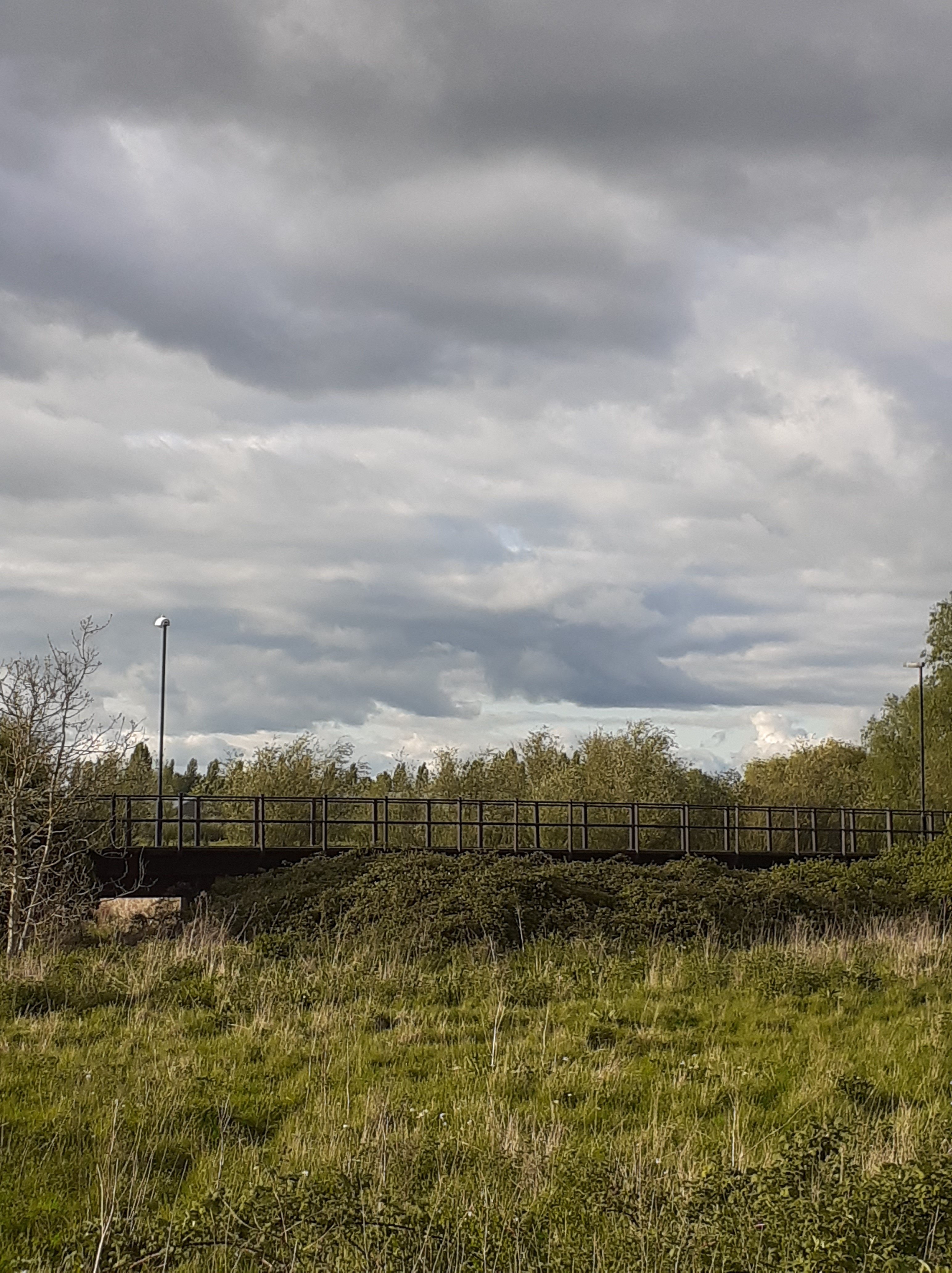
A water meadow during a dry spell. A secluded space on the fringe of the old city. Luckily for its own life, it facilitates the management of flooding. This space is available to the public, and on this walk it seems less frequented than I would have expected. It is not grandly wild, but feels different from anywhere else I have discovered in easy walking distance from my home. I like its flatness, its greenness, and its openness to the sky.

I walk here in the early evening, grateful for the path, challenging the pollen to do its worst. Lifelong hay fever has made me less of a nature boy than I might have been, certainly at this time of year. But I don’t like feeling restricted, even with my new health complications. Walking in an open space like this, particularly when there is a good breeze, lifts my spirits.

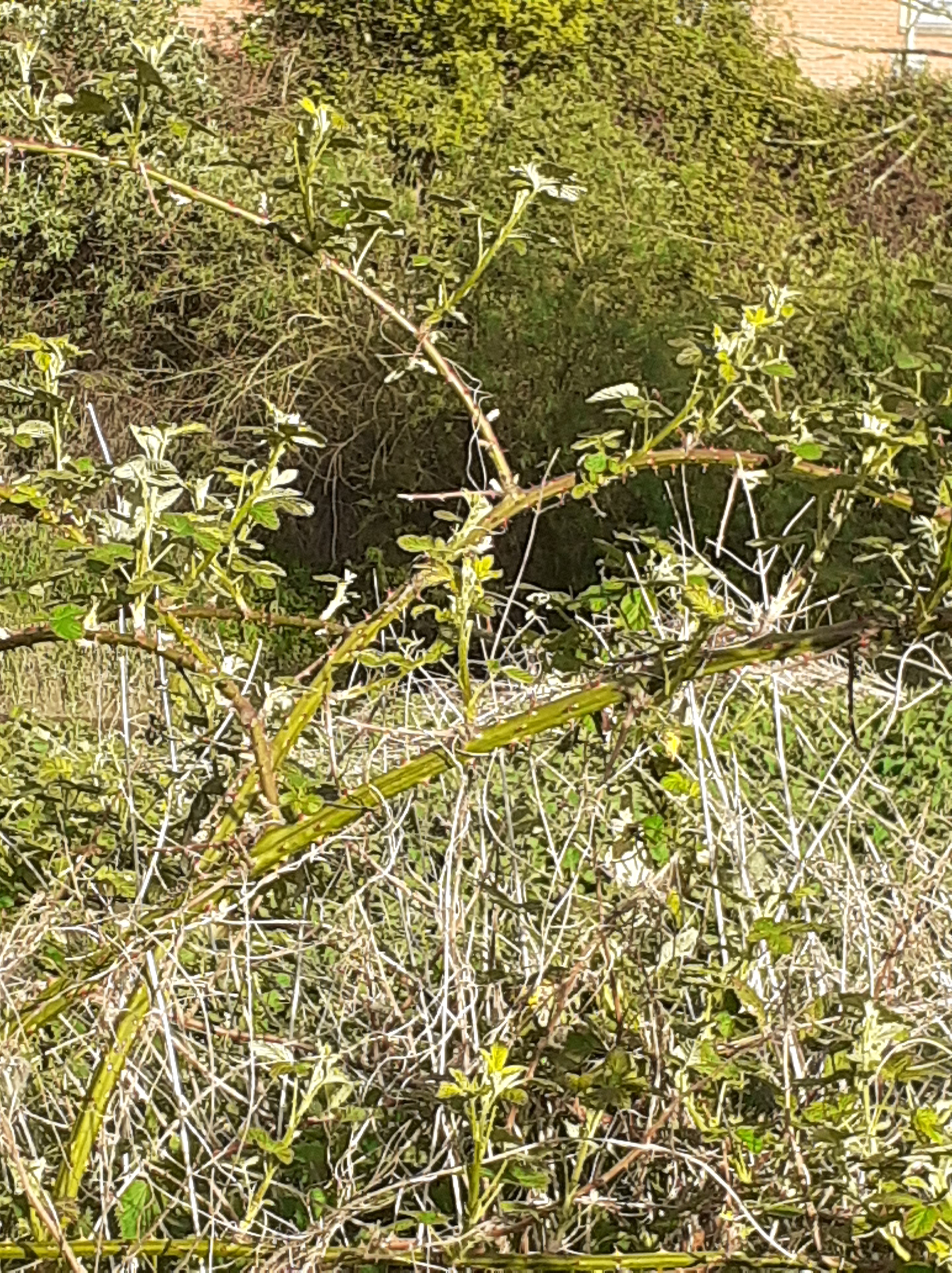
From a contemplative perspective, I am in very friendly territory. My senses relax into a more porous relationship with my surroundings. I begin to disappear into the landscape, losing myself in the experience of the moment. Very briefly, I am the path, the sky and the bramble.

Back in my envelope of skin I see grey above me, and I start to wonder about rain. I am not dressed for it. Luckily, at least for me, no rain falls. I do notice that the riot of life around me might like a good fresh soaking. But I’m conscious of my own interests now. I head for the shelter of my home.

LIMITS AND BLESSINGS

In my world, this is a time of laboured breath and limited capacity for walking. While medical investigations are underway, I am constrained in what I can do. But walking outside, taking slow deep breaths, and drinking plenty of water are medically and spiritually recommended. Today I went outside for the first time in some days, water bottle to hand, and a rhythm of slow, deep breathing established.

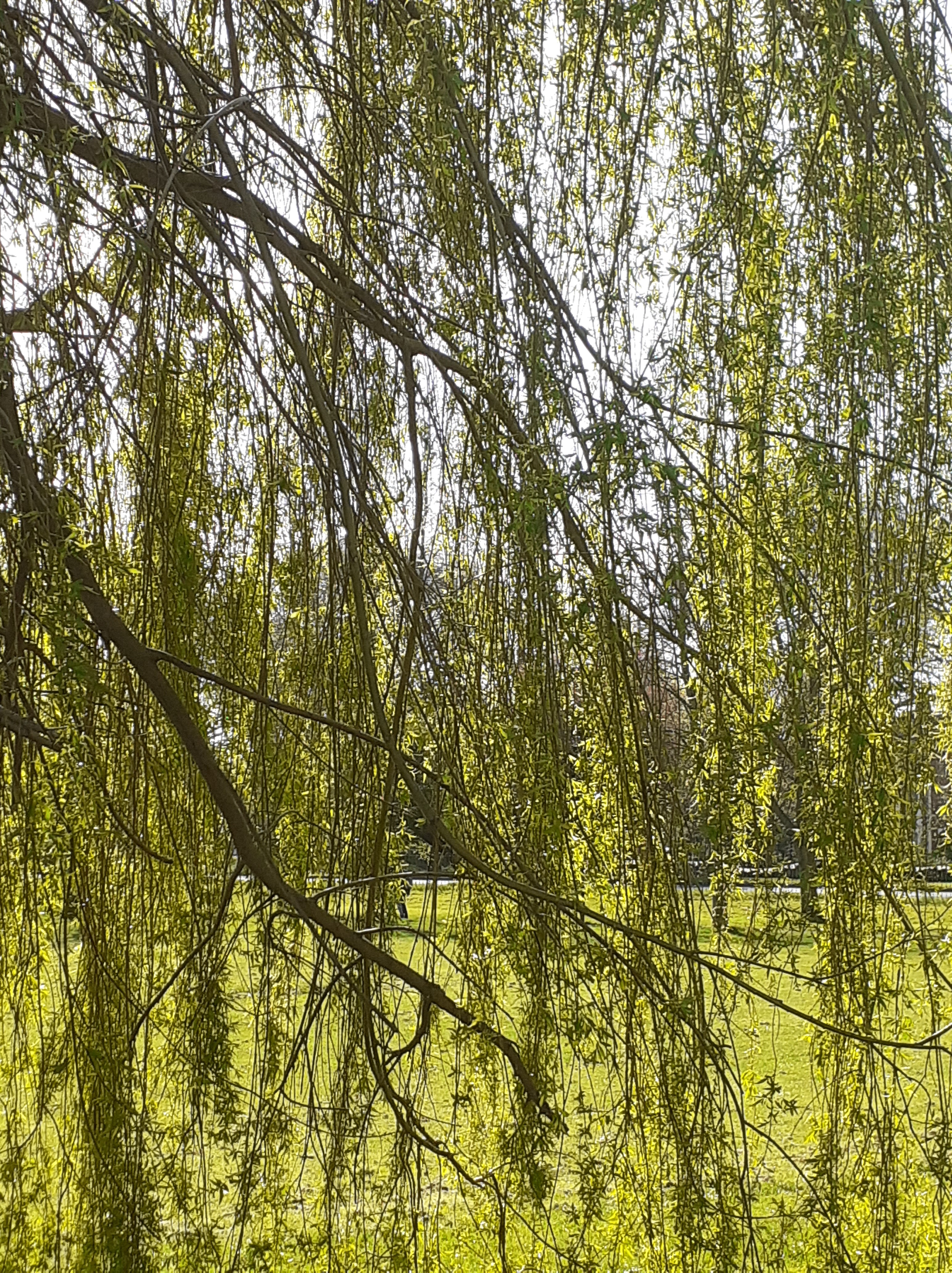
I walked in my neighbourhood and a nearby local park. The picture above is a treescape from that park. For me, it is images solidity and endurance alongside blue sky and spring growth. In itself, it occupies a unique niche in the web of life. I enjoy its company, and the opportunity to record its presence here.

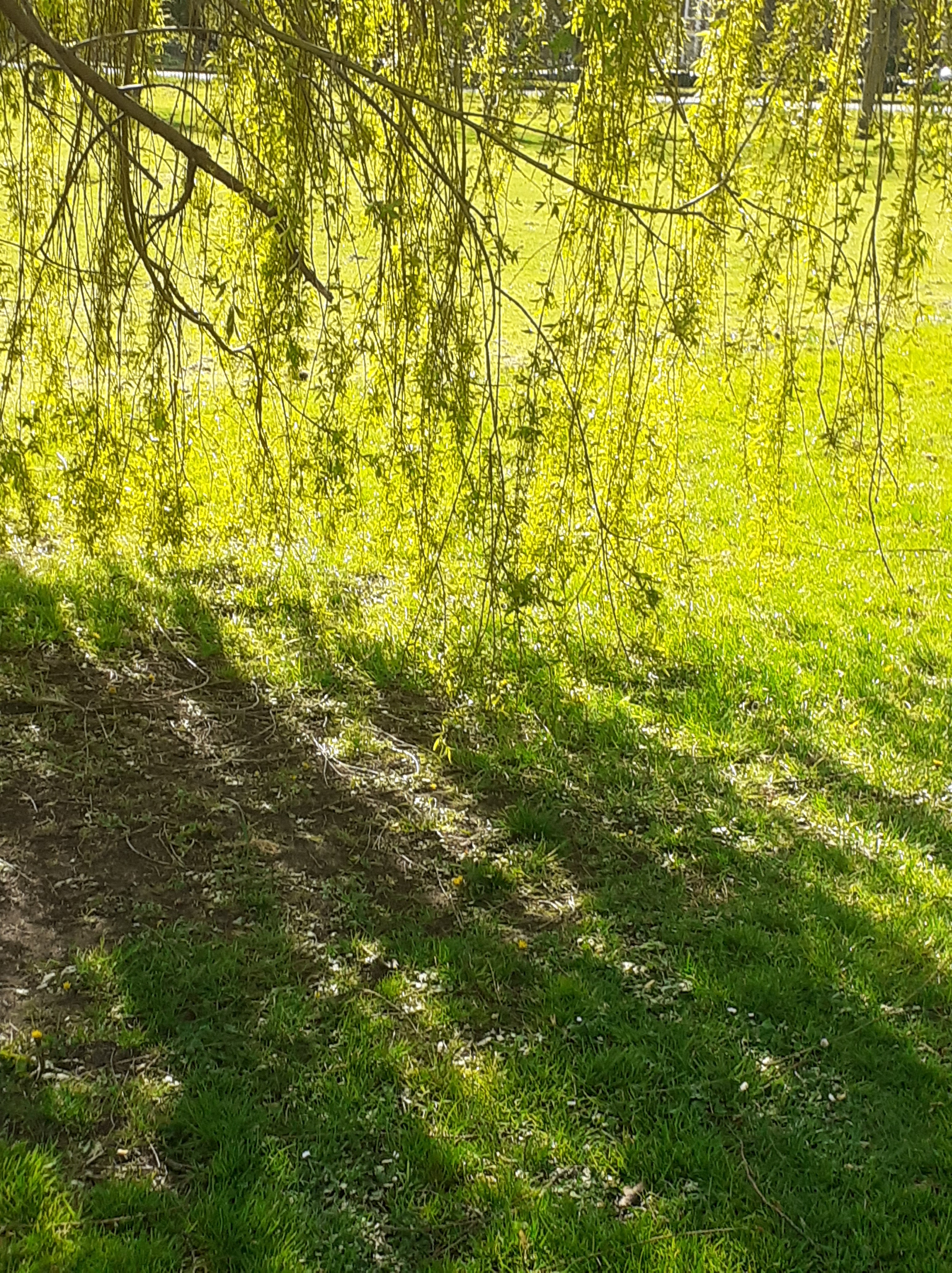
My world may seem, at least for the time being, to have shrunken. My own presence in it, and my perceptions when present to it, do not have to shrink along with the physical distance I can cover. A necessary slowing down contains it own opportunities. I have space and time to enjoy the willows here, their leaves, and the shadows of their leaves. I am constrained to take notice. I appreciate the experience of noticing. I am reminded that I am just outside the period assigned to willow in my personal tree mandala (1,2), but of course it is not too late to connect and commune. There are compensations nested in my unwanted condition.

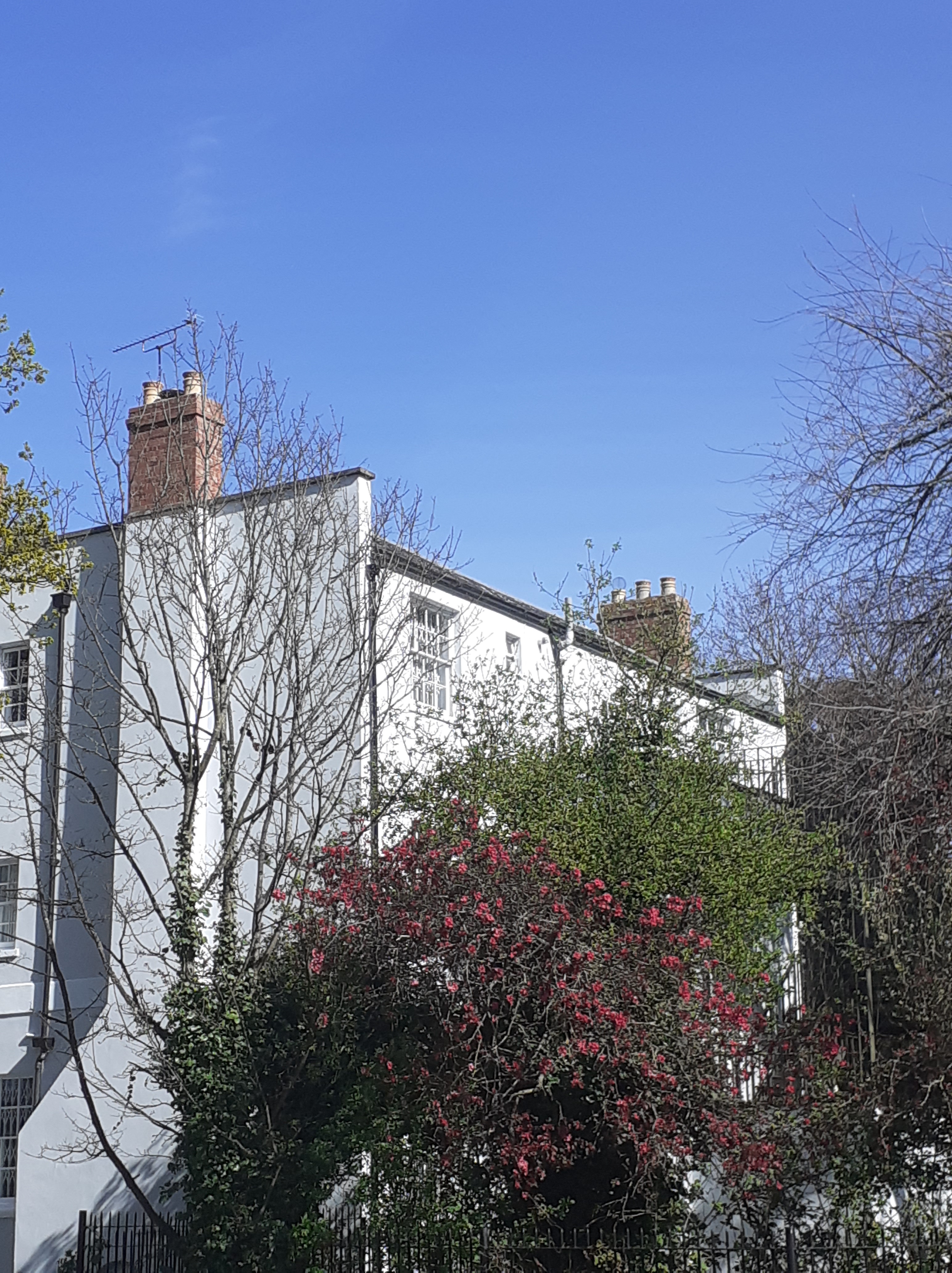
I find the houses and their surrounding plant life photogenic, not least under a blue April sky. The season has been advancing, the equinox now well past. Around me, I find an energetic acceleration towards summer. Hildegard von Bingen called this kind of natural power viriditas. I can recognise and enjoy it even when I’m lagging behind.

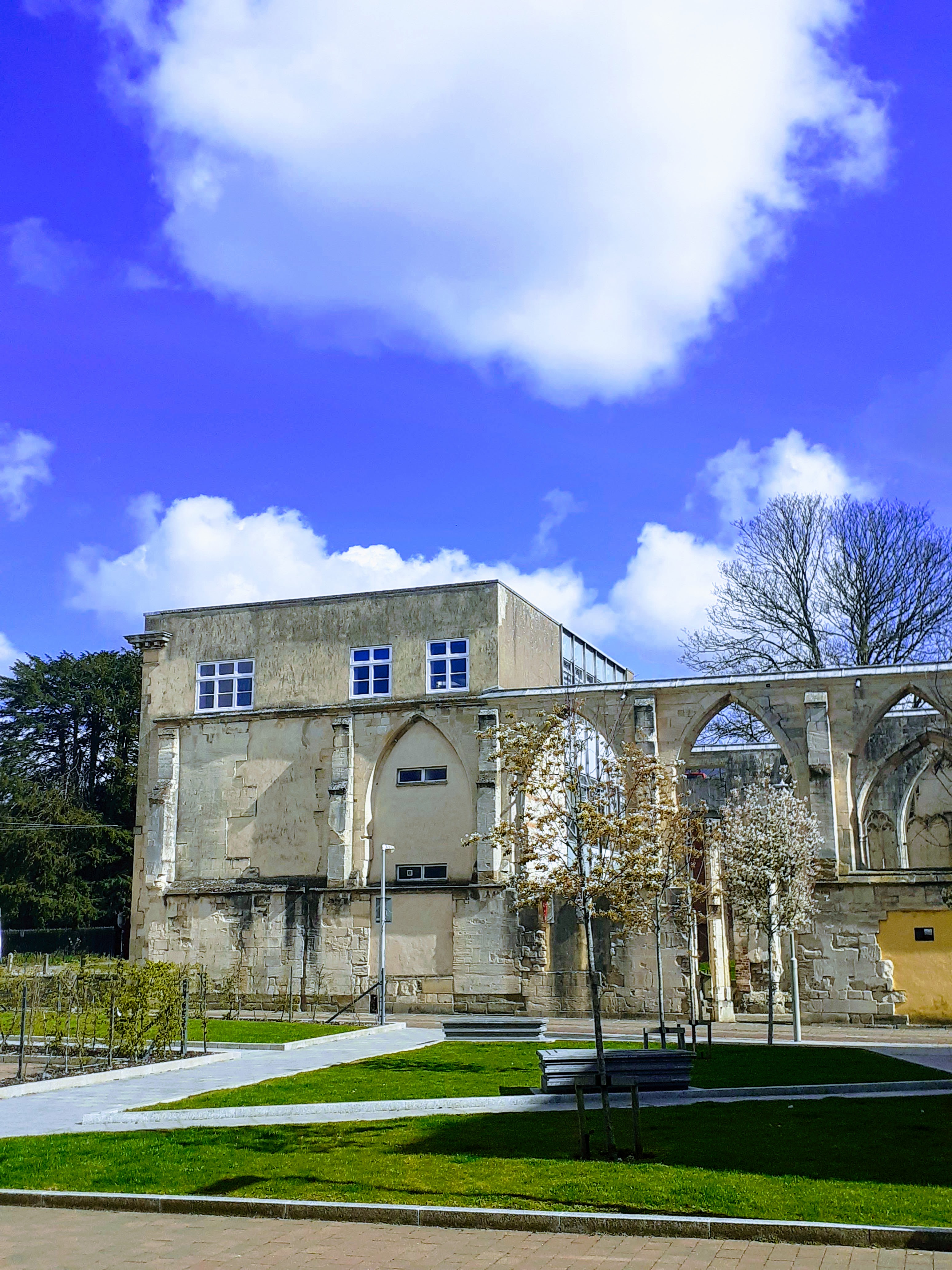
Very close to home I encounter the ruins of Gloucester’s Franciscan Priory, sadly with a nondescript mid C20th building tacked on behind them. They are a landmark for me on my return. I’m tired. I’ve about reached my limit. Although I’m sad that my walking distance is so limited, I feel blessed and nourished by what I find within the limitations. I am also glad to sit down and recognise feeling at once refreshed and exhausted.

(1) https://contemplativeinquiry.blog/2021/tree-mandala/willow/

(2) The mandala is based on my personal experience of trees in the neighbourhood as well as traditional lore. Moving around the spring quarter from 1 February, the positions and dates of the four trees for this quarter are: Birch, north-east, 1-22 February; Ash & Ivy, east-north-east, 23 February – 16 March; Willow, east, 17 March – 7 April; Blackthorn, east-south-east, 8 – 30 April. The summer quarter then starts with Hawthorn at Beltane. For a complete list of the sixteen trees, see https://contemplativeinquiry.blog/2020/autumn-equinox-2020-hazel-salmon-awen/

Earth Eclectic

music that celebrates Earth and speaks to the heart

Sarah Fuhro Star-Flower Alchemy

Follow the Moon's Cycle

Muddy Feet

Meeting nature on nature's terms

Rosher.Net

A little bit of Mark Rosher in South Gloucestershire, England

Becoming Part of the Land

A monastic polytheist's and animist’s journal

selkiewife

Selkie Writing…

Charlotte Rodgers

Images and words set against a backdrop of outsider art.

Prof Jem Bendell

living with metacrisis and collapse

Towint

The pagan path. The Old Ways In New Times

The Druids Garden

Spiritual journeys in tending the living earth, permaculture, and nature-inspired arts

The Blog of Baphomet

a magickal dialogue between nature and culture

This Simple Life

The gentle art of living with less

Musings of a Scottish Hearth Druid and Heathen

Thoughts about living, loving and worshiping as an autistic Hearth Druid and Heathen. One woman's journey.

Wheel of the Year Blog

An place to read and share stories about the celtic seasonal festivals

Walking the Druid Path

Just another WordPress.com site

anima monday

Exploring our connection to the wider world

Grounded Space Focusing

Become more grounded and spacious with yourself and others, through your own body’s wisdom

The Earthbound Report

Good lives on our one planet

Hopeless Vendetta

News for the residents of Hopeless, Maine