Contemplative Inquiry

This blog is about contemplative inquiry

Tag: Trees

SUMMER’S GATEWAY 2021

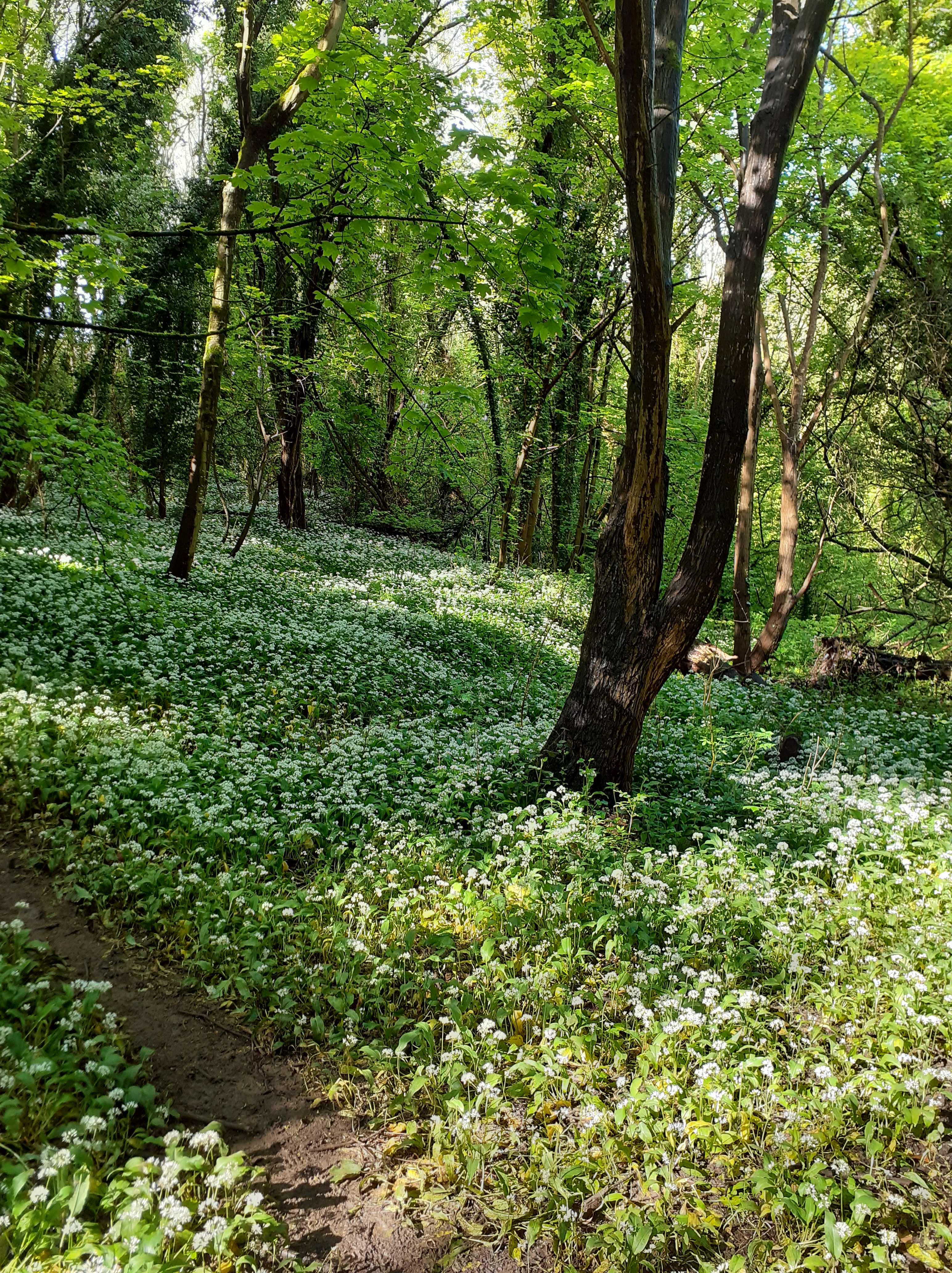
For me, 2021 has been a testing year so far. Part of the test has been a cold, wet and hesitant spring – very different from the tantalising splendour of 2020 and the first lockdown. But this morning, 19 May, I had two hours of what I most love in the transition from spring into summer. It was a refreshing and healing experience to be in the woods, hard to describe in words. I am letting pictures do most of the work.

The woodland I walk in is hardly pristine. It grows in a long-disused railway cutting, now refashioned into a cycle track. At this time of year, and throughout the summer, it is wonderfully green and vital. Here, in this early stage, it feels especially fresh and alive.

Although it is limited in size and partly defined by a path, there is enough room in this little domain for both a tangle wood effect and for a spacious carpet of wild garlic among the trees.

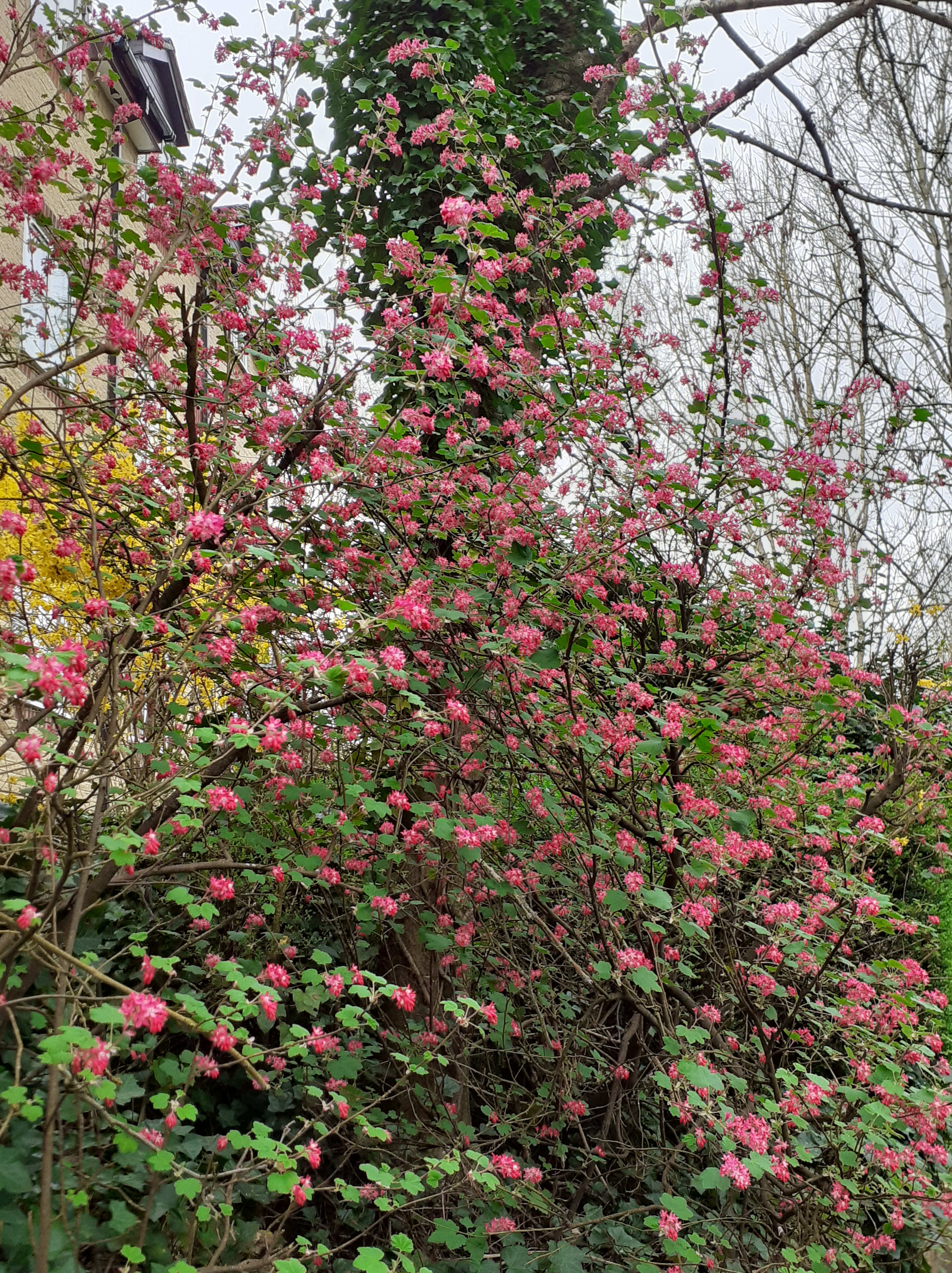
Since I was very young, hawthorn and cow parsley have been a feature of this time, in woods and hedgerows. I was pleased at their presence today, and glad to be able to show up and be present for them.

The overall effect was one of exuberant abundance, a life that will declare its power and beauty given any chance. I will give the last image to the hawthorn.

REMEMBERING THE GLASTONBURY THORN

In my wheel of the year tree mandala (1), hawthorn presides from 1-23 May. It celebrates Beltane and the rising strength of the sun. Looking forward to that time, I think particularly of a specific tree, the Glastonbury thorn at Wearyall Hill, to represent that period. But the tree is gone, and is now unlikely to return, though ever-living in my heart and imagination..

It was a variety of common hawthorn (crataegus monogyna biflora) that flowered twice a year – first around Christmas and then in spring. I took the photograph in a misty Imbolc moment in 2007, between flowerings. It is the only one I will ever have, and for that reason I treasure it. The much revered tree was vandalised in 2010. New shoots appearing from March 2011 mysteriously disappeared. A new sapling, grafted from a descendent or the original tree, was planted in 2012 and consecrated – only to be snapped in half and irreparably damaged 16 days later. In May 2019, after some years of hesitation, the tree was entirely removed by the landowner in a final acceptance that the tree was lost. Sacred thorn trees, said to be descended from the same original, can still be found in the ruins of Glastonbury Abbey and at the Church of St. John.

I particularly liked the Wearyall Hill tree, because it was physically removed from the bustle of Glastonbury as a twenty-first century spiritual centre. The hill just seemed quietly natural – pagan, if you wanted to think of it that way, or Christian, if you wanted to link it to the story of Joseph of Arimathea’s staff, and how it came to life and flowered when planted in a new land. I was shocked by the violence against the tree and against other people’s love for it.

An ancestor of thee thorn (the individual plants do not last forever) had been cut down before, probably in 1647 by a Parliamentary soldier in England’s civil war. For the thorn was strongly linked to royal patronage, the miracle of a Christmas flowering, and a link between sacred land and sacred kingship. The kind of Royalism represented by this constellation of ideas and images was strong in Somerset at that time, but so was religious Puritanism, allied to a wish for constitutional change. The war was bitterly fought within the county. The legend of the thorn, cultivated by one group of people, made it vulnerable to another group of people identified with different loyalties.

The modern destruction of the thorn also seems not to have been casual, or it wouldn’t have been repeated so systematically. But I am not sure of the motivation. I find myself understanding a seventeenth century act of violence better than the modern one. Was this venerated tree the victim of a current human culture war? Are there potential lessons for Avalonians? Whatever the case, I am still in mourning.

(1) This mandala is based on my personal experience of trees in the neighbourhood as well as traditional lore. Moving around the summer quarter from Beltane, 1 May, the positions and dates of the four trees are: Hawthorn, south-east, 1-23 May; Beech & Bluebell, south-south-east, 24 May – 15 June; Oak, south, 16 June – 8 July; Gorse, south-south-west, 9 – 31 July. The autumn quarter then starts with Apple at Lughnasadh/Lammas. For a complete list of the sixteen trees, see https://contemplativeinquiry.blog/2020/autumn-equinox-2020-hazel-salmon-awen/

TREE MANDALA: BLACKTHORN

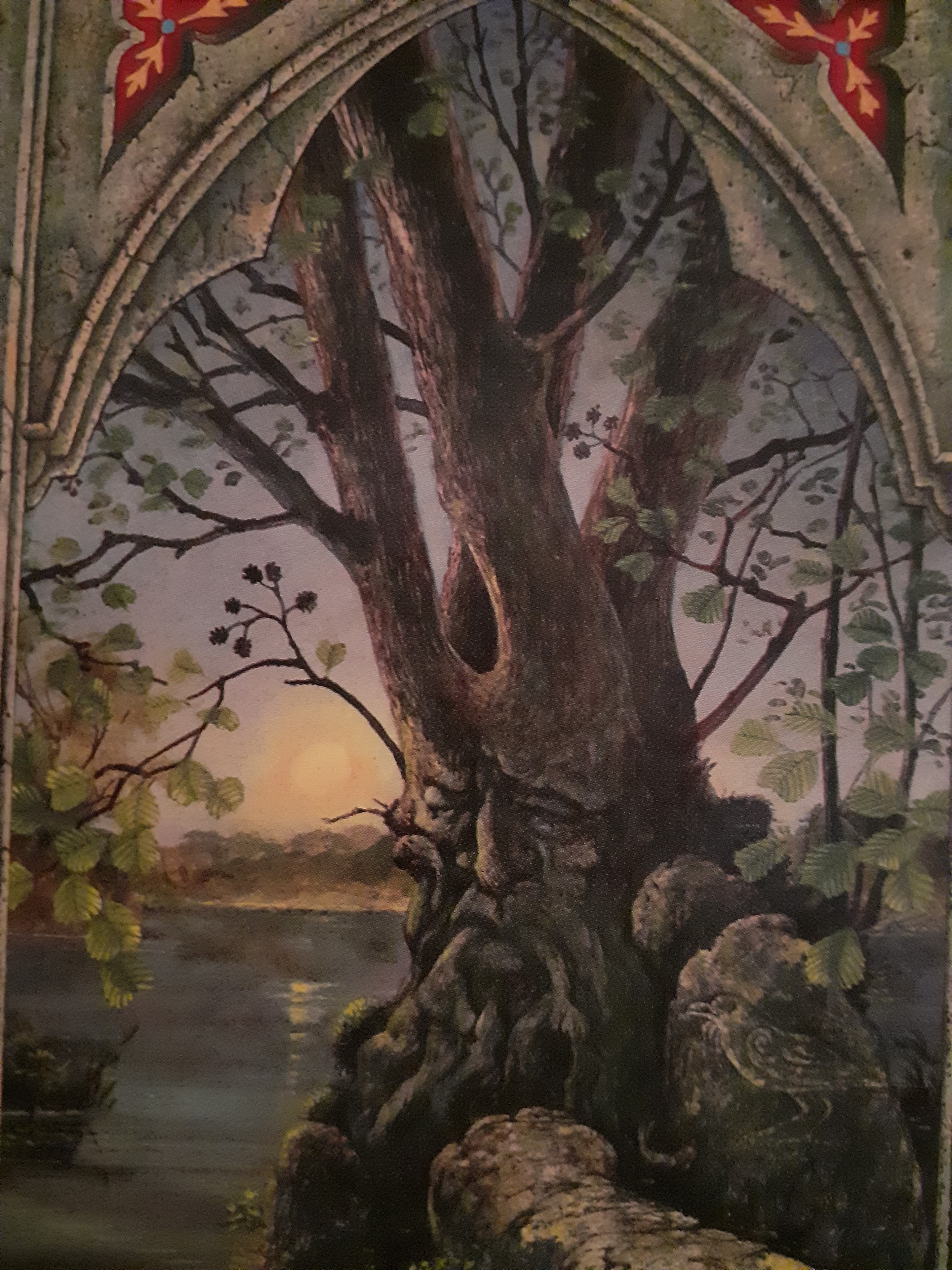
In my wheel of the year tree mandala (1), blackthorn (ogham, straif) covers 8-30 April, the final twenty-three days before Beltane. It has a beautiful white flower and elegant sharp thorns. I have seen descriptions of the latter as ‘vicious’, but they only hurt us if we invade the blackthorn’s space. The plant is not a triffid. It doesn’t come after us. So I don’t follow the line of tradition that links blackthorn to harsh fate. Blackthorn doesn’t ask to be turned into guardian hedges or crowns of thorn. That is down to our fellow humans.

The picture above comes from my magic year of 2007, happily well documented, when I was much engaged with trees and Druid study. I felt a pull towards blackthorn, more than towards the generality of hawthorn during that period. (I will write about the Glastonbury Thorn, the exception, at Beltane, my last tree mandala with a ‘memory lane’ theme).

I am drawn particularly to the strand of tradition that links blackthorn to powerfully creative magic – for it was long used in the making of wizards’ staffs. The text of The Green Man Oracle (2) suggests that “we have forgotten the magic that lies within us”. Blackthorn in particular has the ability to “foster waking dreams”. The Oracle adds that, “to access this personal magic, we must step away from busy, surface consciousness, and sink deeply into the ever flowing stream of our magical dreams. The ideas, scenes and presences that throng the deepest levels of our understanding require intense listening” Such magic, the Oracle continues, brings a light into the darkest places. For me that would mean just enough light to illuminate them, and not so much as to dazzle them into negation. How otherwise can the denizens of the dark be offered a welcome home if they want it, and in any event a better understanding?

(1) This mandala is based on my personal experience of trees in the neighbourhood as well as traditional lore. Moving around the spring quarter from 1 February, the positions and dates of the four trees are: Birch, north-east, 1-22 February; Ash & Ivy, east-north-east, 23 February – 16 March; Willow, east, 17 March – 7 April; Blackthorn, east-south-east, 8 – 30 April. The summer quarter then starts with Hawthorn at Beltane. For a complete list of the sixteen trees, see https://contemplativeinquiry.blog/2020/autumn-equinox-2020-hazel-salmon-awen/

(2) John Matthews & Will Worthington The Green Man Oracle London: Connections, 2003.

EARLY APRIL ENERGY 2021

April has been called the cruellest month. But I am experiencing a much hoped-for kindness right now. I am expansive and energised. Finally, it feels like spring in my neighbourhood. Spring as it is meant to be.

The natural world is changing, and a tentatively recovering human population is beginning to reclaim the outdoors. Now is a moment for celebrating the life force – nwyfre, viriditas, whatever we may want to call it. I find my own feelings reflected back in the vitality and vigour of the world I see around me.

The greening of the trees, and hence much of my local landscape, has started. I hope for a fuller transformation by Beltane – now less than four weeks away.

There is an abundance of colour in the woods, with the emphasis changing from the delicate blossoms we have already seen to more robust and stronger coloured flowers.

Even entering a built environment, floral energy arches across the paths.

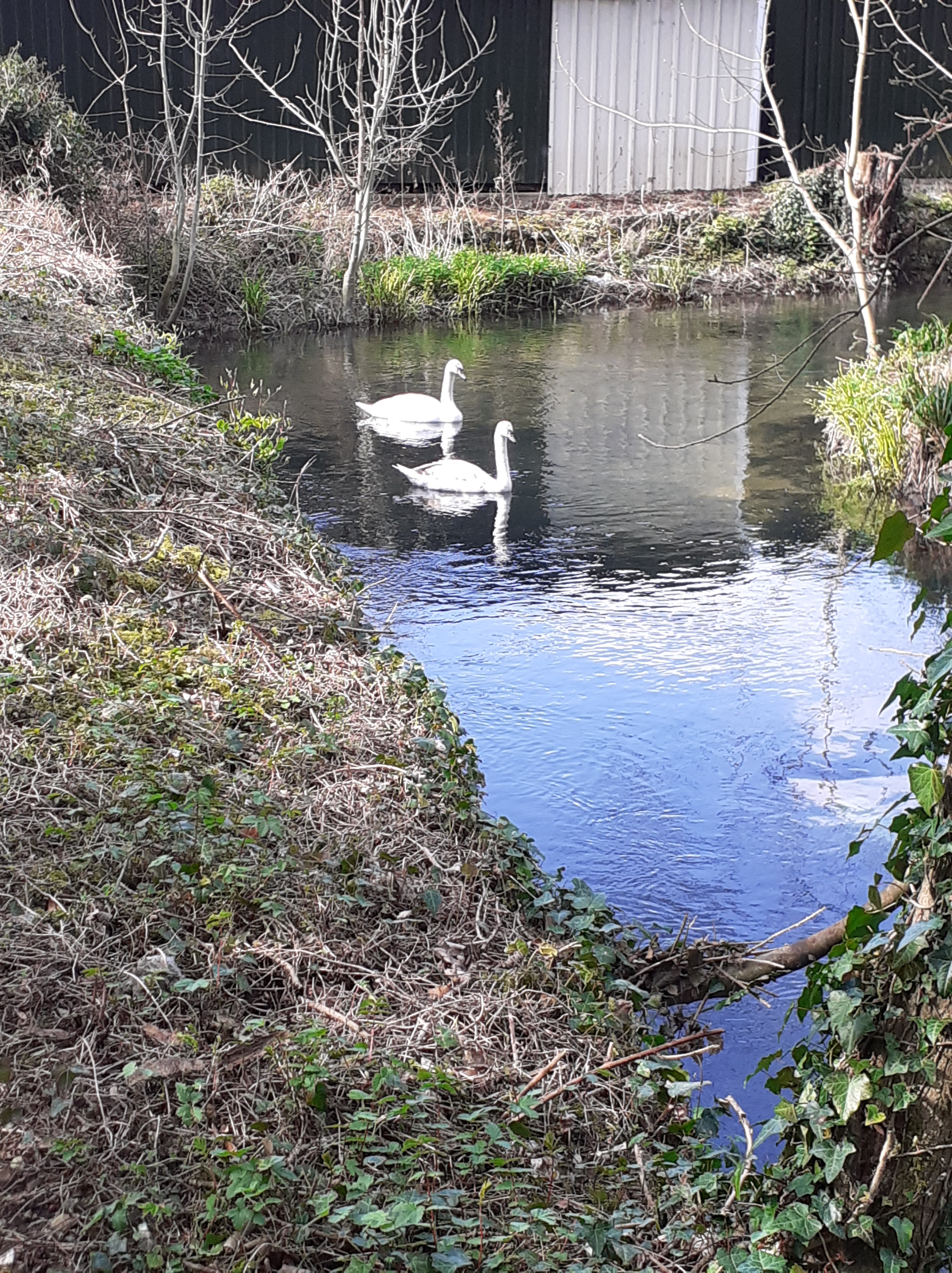
In the animal kingdom, life is stirring too. On the canal, rivers and ponds around me, swans are now pairing and nesting. I hope they have another good year.

It almost hurts to know that life – so fleeting and variable – can be so good.

TREE MANDALA: WILLOW

I walk past these willows and they awaken my joy in natural beauty. Their full splendour may yet be to come, but they are already abundant with new life and growth. I am lifted by the promise that’s in them.

In my mandala of the year (1), willow presides over period from 17 March to 7 April. Working with trees in my Druid training, I developed a close contact with a willow near to where I then lived in Bristol. I also made a willow wand, from a dead branch I found lying around in another part of town.

In the course of this work I developed a sense of willow that does not exactly match our inherited lore. My records tell me that my main personal impressions concerning willow were of “resilience and generativity” and of “vibrancy in early spring”. Those impressions still stand. I don’t link myself so much to associations with the dark side of the moon (and moon goddess) or the many uses of wicker.

I do make connections between willow and the energy of water, and I can know of willow as a portal to gently magical experiences. Below, I offer a digitised picture of my Bristol tree, taken on 21 March 2007, and an account of time spent with it that afternoon. I enjoy the chance to share this fourteen year old memory, and bring a small piece of my personal Druid history into the present. Intentional reminiscence can be a deeply satisfying here-and-now experience.

“This afternoon I went out to see the trees – beautiful sunshine. The willow I’ve connected with looked very willowy – buds, leaves, catkins. It seemed solid, vibrant, pulsing. Leaning against the trunk from shoulder to hip, I sensed a resonance connected to the contact. Tuning in, I began to make a sound. The note that developed was light and optimistic, but strong enough fully to reach me in the belly. It had a potency that surprised me. I felt carefree, I could take in the cool equinoctial breeze with the warm equinoctial sun and enjoy a moment of holy idleness after a time of rushing around and work.”

I avoid talking about this experience in the language of relationship with the tree, though part of me would like to. I do not know what it is like to be a willow tree, but I am sure it is like something. I know of no way to check in with the tree that allows it to contradict my own precious intimations of communion, should it want to. I suspect that it barely noticed me. Yet the experience felt healing, and I have never forgotten it.

(1) This mandala is based on my personal experience of trees in the neighbourhood as well as traditional lore. Moving around the spring quarter from 1 February, the positions and dates of the four trees are: Birch, north-east, 1-22 February; Ash & Ivy, east-north-east, 23 February – 16 March; Willow, east, 17 March – 7 April; Blackthorn, east-south-east, 8 – 30 April. The summer quarter then starts with Hawthorn at Beltane. For a complete list of the sixteen trees, see https://contemplativeinquiry.blog/2020/autumn-equinox-2020-hazel-salmon-awen/

ILLUSTRATED THOUGHT FOR NOW

“Whenever there is beauty, kindness, the recognition of the goodness of simple things in your life, look for the background to that experience within yourself. But don’t look for it as if you were looking for something. You cannot pin it down and say, ‘Now I have it, or grasp it mentally and define it in some way. It is like the cloudless sky. It has no form. It is space; it is stillness, the sweetness of Being and infinitely more than these words, which are only pointers. When you are able to sense it directly within yourself, it deepens. So when you appreciate something simple – a sound, a sight, a touch – when you see beauty, when you feel living kindness toward another, sense the inner spaciousness that is the source and background to that experience.”

Eckhart Tolle Oneness with All Life: Awaken to a Life of Purpose and Presence Penguin Random House UK, 2018 (First ed. published 2008)

TREE MANDALA: ASH AND IVY

Within my mandala of the year (1) Ash and Ivy together are part of a playful period extending to midsummer. The picture above holds memories of the year 2007, when the original photograph was taken in a wood near Bristol. It has recently been digitised and stylised by Elaine Knight, a frequent companion in my adventures with trees during that year.

I was enthusiastically connecting with them at the time, spurred on by an OBOD course (see http://www.druidry.org). My main focus was on being present in the presence of the living trees and connecting with them. I had a secondary concern with information about them. This includes traditional lore now often linked to the ogham alphabet. In that alphabet, ivy is gort and ash is nuin.

In my personal mandala of the year, ash and ivy preside from 23 February to 16 March. Ivy, as ever, is luxurious and abundant. Ash, at this time, is mostly tall and sleepy. I have a strong memory of finding them together as I walked up a tangled, sloping path. I felt an immediate connection with them, which I recorded at the time, though I hardly needed to. The occasion has stayed vividly in my mind ever since. Indeed the wish to celebrate that memory prompted me to include them in my tree mandala when it developed a year or so later.

In ogham lore, ash is connected with themes of rootedness and endurance (2). An ash can bear weight and absorb shocks. It has been the second most popular tree, after hawthorn, for planting at holy wells. It has also been a popular choice for maypoles. In the northern, Viking, tradition, it is Yggdrasil, world tree and wisdom steed of Odin. It links underworld, earth and heaven. It links macrocosm to microcosm, and the inner and outer worlds.

Ivy embodies the strength that can come from seeking support, whilst also being associated with poetry and intoxication. Its spiralling, labyrinthine dance turns both inwards and outwards. Ivy is a tenacious plant, skilled in binding and attachment. It is said also to connect us with our own inner resources, giving us “the ability to see through the eyes of the soul beyond the material world” (3).

I am fascinated by the way in which we can read the characteristics of our own hearts and imaginations into the life of trees whilst also connecting with their independent existence and what it can teach us about, for example, interdependence, a slower rhythm of life or the simple miracle of being. When among trees, I am taken up with the life of the tree on its own terms, more than with either botanical knowledge or inherited mythologies pointing to a larger life. It is when I am away from them that I turn fruitfully to their role in the collective imagination. There are different kinds of attention in play here, and I find that it helps to be aware of the difference without doing too far in disentanglement.

(1) This mandala is based on my personal experience of trees in the neighbourhood as well as traditional lore. Moving around the spring quarter from 1 February, the positions and dates of the four trees are: Birch, north-east, 1-22 February; Ash & Ivy, east-north-east, 23 February – 16 March; Willow, east, 17 March – 7 April; Blackthorn, east-south-east, 8 – 30 April. The summer quarter then starts with Hawthorn at Beltane. For a complete list of the sixteen trees, see https://contemplativeinquiry.blog/2020/autumn-equinox-2020-hazel-salmon-awen/

(2) The image is from: John Matthews & Will Worthington The Green Man Oracle London: Connections, 2003.

(3) Liz and Colin Murray The Celtic Tree Oracle: A System of Divination London: Eddison-Sadd, 1988 (Illustrated by Vanessa Card)


WOODS AND WATER

Yesterday, Thursday 18 February, was the first that felt like spring. The recent cold was gone. The rain that followed largely held off. I went out for a longer walk than for some time, and I felt a natural bubbling up of joy. It doesn’t take much, and I was able to open up to the renewing light and a sense of latent growth and possibility in the world around me. There are two months starting about now that have a sense of equinoctial wonder for me, with light and dark roughly in balance and a lot of change in the land. Yesterday felt like the beginning of this loved and valued time.

A good deal has been happening for me internally, which is influencing my spiritual practice and understanding in subtle but important ways. I will write about this in the weeks to come. But yesterday’s walk was a chance to be out in a woodland, as one being in the web of life connecting with others. Experiences like this are both simple and profound for me, and I feel grateful for the opportunity to have them.

BIRCH: NEW BEGINNINGS

Within my mandala of the year (1) Birch – Beith in the Irish ogham alphabet (2) – is the first tree for the spring quarter beginning at Imbolc. The overall theme of this quarter, in my world, is one of early growth. Birch presides from 1-22 February and will become one of the first trees to flower in spring, from March onwards. It is also one of the first trees to colonise new ground.

In ogham lore Birch is understood to support new beginnings and to encourage careful preparation, a skilful laying of the ground on which we will build. “In making your spiritual journey with this tree as your guide, remember to concentrate your mind on the uplifting slender whiteness of the tree, a whiteness that stands out clearly from the tangled undergrowth and confusion of shrubs and thorny bushes that cover the floor and, hence, may inhibit an easy journey” (3). The Green Man’s wisdom (1) is that a good beginning leads to a good conclusion.

In runic tradition (4), where Birch (Beorc, Berkana) is also linked to new beginnings, there is specific reference to the young Goddess, sexuality and birth, as well as beauty and creativity more generally. Birch may signal a laying aside of old patterns, whether merely redundant or positively toxic, and a willingness to welcome new, more energising and nourishing ways of being.

For me, this is a welcome shift from the necessary defensiveness and protectiveness of alder. This year, it comes just at the moment where such a shift is possible – as my wife Elaine continues her recovery from major illness and we begin to dream and think our way forward, into a new cycle of life. The wheel turns, and there is a promise of positive change in the air.

(1) The image is from: John Matthews & Will Worthington The Green Man Oracle London: Connections, 2003.

(2) This mandala is based on my personal experience of trees in the neighbourhood as well as traditional lore. Moving around the spring quarter from 1 February, the positions and dates of the four trees are: Birch, north-east, 1-22 February; Ash & Ivy, east-north-east, 23 February – 16 March; Willow, east, 17 March – 7 April; Blackthorn, east-south-east, 8 – 30 April. The summer quarter then starts with Hawthorn at Beltane. For a complete list of the sixteen trees, see https://contemplativeinquiry.blog/2020/autumn-equinox-2020-hazel-salmon-awen/

(3) Liz and Colin Murray The Celtic Tree Oracle: A System of Divination London: Eddison-Sadd, 1988 (Illustrated by Vanessa Card)

(4) Sweyn Plowright The Rune Primer: a Down to Earth Guide to the Runes Rune-Net, 2006

ALDER (FEARN) PROTECTION

Within my mandala of the year (1) Alder (2) is the fourth and final tree for the winter quarter that begins at Samhain. The overall movement of this quarter, in my world, is through death to regeneration. Alder presides from 8-31 January and links the regenerative aspect to a continuing need for protection already signalled by Holly (3). There is something foundational about protection. The late eighteenth century Druid prayer (4), which set the note for modern Druidry, begins by asking for protection, as the beginning of a journey that leads through the quest for justice to a place of universal love.

I live in a watery place and there are alders around, though – in contrast to willow – I have never been on hugging terms with this tree. But the oily and water resistant timber is well-adapted to its surroundings, and for humans has provided good timber for boats, bridges, and underwater foundations. Many medieval cathedrals were built on alder piling. Although the wood makes poor fuel, it is good for charcoal.

Round alder shields were once used as protection for warriors in Ireland, and “in Celtic myth, we read of palisades of alders that deter invasion of keep prisoners confined, and these fences are sometimes described as being decorated by a row of severed human heads” (2) . The Welsh hero Benedegeit Bran (Bran the Blessed) is reputed to have used his body to span the River Linon, forming a bridge to raise his followers above the dangerous waters, as the wood does when used as a building material. Later, when mortally wounded in a battle against the Irish, he gave them instructions to cut off his head and carry it with them. They were rewarded with song and prophecy from the head over many years.

Much more can be said about Bran (whose name means raven). My overall learning from alder is about a willingness and capacity to hold boundaries Bran adds sensitivity and openness to the larger context in which events are playing out. Placed at the end of the winter quarter, I see alder as guarding the tentative return of spring, as the light slowly returns and we find increasing signs of growth in the natural world. The weeks before Imbolc can be cold and dreary, but life is stirring both outwardly and inwardly. Alder reminds me of the need for protected spaces to nurture a latent abundance.

(1) The image is from: John Matthews & Will Worthington The Green Man Oracle London: Connections, 2003.

(2) This mandala is based on my personal experience of trees in the neighbourhood as well as traditional lore. Moving around the winter quarter from 1 November, the positions and dates of the four trees are: Yew, north-west, 1-23 November; Elder, north-north-west, 24 November – 16 December; Holly, north, 17 December – 7 January; Alder, north-north-east, 8 – 31 January. The spring quarter then starts with birch at Imbolc. For a complete list of the sixteen trees, see https://contemplativeinquiry.blog/2020/autumn-equinox-2020-hazel-salmon-awen/

(3) https://contemplativeinquiry.blog/2020/12/23/holly-tinne-the-turn/

(4) https://contemplativeinquiry.blog/2020/08/27/my-druid-prayer/

Earth Eclectic

music that celebrates Earth and speaks to the heart

Sarah Fuhro Star-Flower Alchemy

Follow the Moon's Cycle

Muddy Feet

Meeting nature on nature's terms

Rosher.Net

A little bit of Mark Rosher in South Gloucestershire, England

Becoming Part of the Land

A monastic polytheist's and animist’s journal

selkiewife

Selkie Writing…

Charlotte Rodgers

Images and words set against a backdrop of outsider art.

Prof Jem Bendell

living with metacrisis and collapse

Towint

The pagan path. The Old Ways In New Times

The Druids Garden

Spiritual journeys in tending the living earth, permaculture, and nature-inspired arts

The Blog of Baphomet

a magickal dialogue between nature and culture

This Simple Life

The gentle art of living with less

Musings of a Scottish Hearth Druid and Heathen

Thoughts about living, loving and worshiping as an autistic Hearth Druid and Heathen. One woman's journey.

Wheel of the Year Blog

An place to read and share stories about the celtic seasonal festivals

Walking the Druid Path

Just another WordPress.com site

anima monday

Exploring our connection to the wider world

Grounded Space Focusing

Become more grounded and spacious with yourself and others, through your own body’s wisdom

The Earthbound Report

Good lives on our one planet

Hopeless Vendetta

News for the residents of Hopeless, Maine