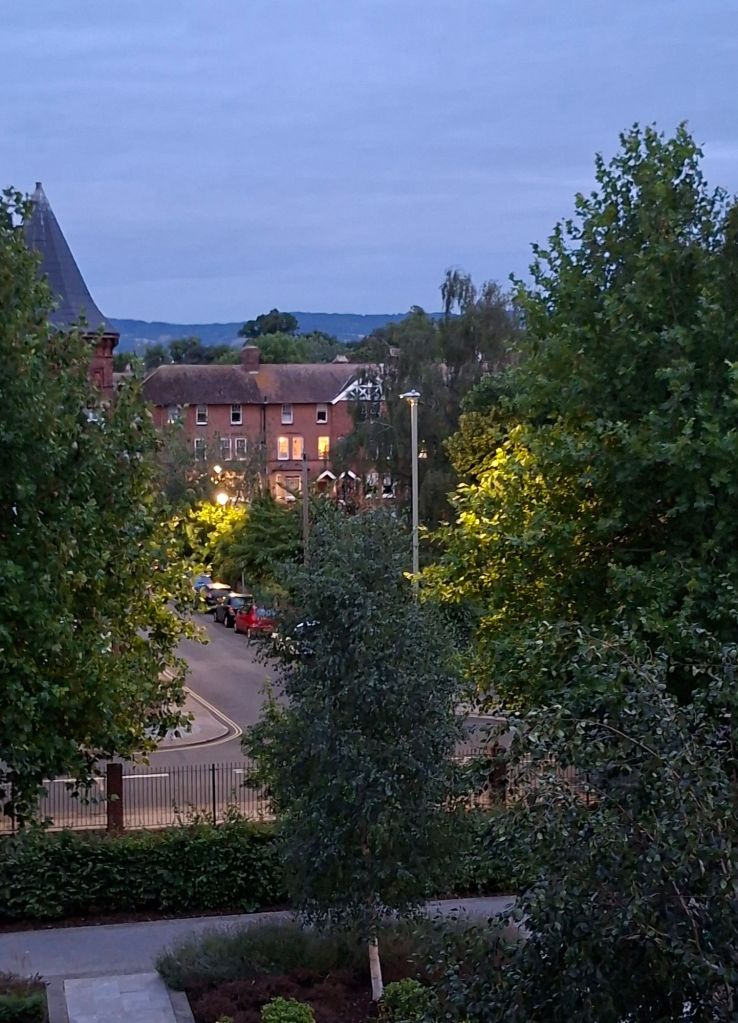
I see change in a familiar scene. Looking out from our apartment I contemplate a gentle twilight. It is modified by artificial light. During the recent heatwave I somehow had little consciousness of this moment in the day. But now, with lower temperatures and rain, my world is a tiny bit different. I discover myself in a twilit scene, and a twilight frame of mind, a little after sunset.
Although this sunset is only ten minutes earlier than the sunsets of the Solstice period, I feel, deep within me, the turning of the Wheel. It’s as if I am leaning in to the spirit of late summer, and the first of the harvest festivals that define the waning year. We are not there yet, though Lammas is but a fortnight away. I am simply becoming aware of a coming seasonal shift.
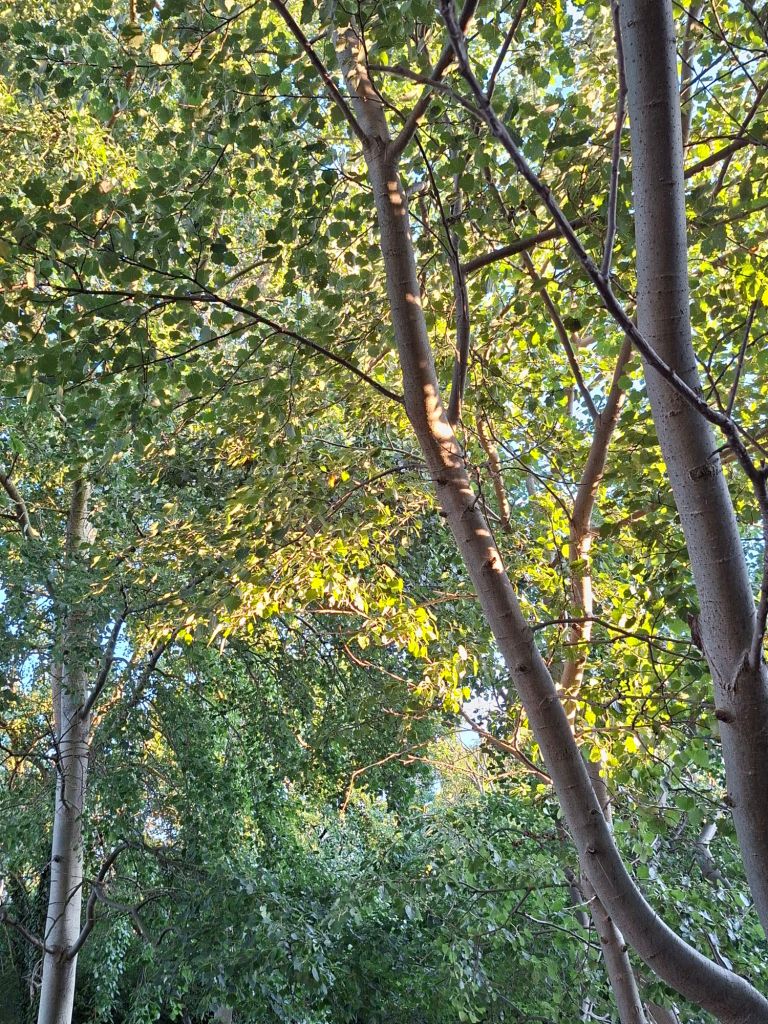
I am also aware of wanting to savour the sense of a change without wanting to hurry it on. Above, an image of trees, houses, hills and sky anchors me into a specific place and time. It’s a ‘now’ experience rather than an anticipation. Below, an image of birch leaves back-lit by electric light holds me in an appreciation of the pattern they make. I am held by the power of a simple pleasure.
I took the picture above at 8.35 pm on 2 July, a little less than an hour before sunset. The dial still hasn’t moved much since the Solstice. The days are still long and warm. The sky this evening is blue and clear. Sunlight plays in the trees. It is good to be here, now, and alive to this moment.
The moon, below, has reached its first quarter. The Anglo-Saxons called the July moon the Hay Moon. Celts called it, variously, the Claiming Moon, Mead Moon or Herb Moon. North American traditions speak of the Buck Moon and the Thunder Moon.
For me, contemplating this moon at its first quarter, it seems like empty potential and not ready for a name. There’s a sense of mystery here. I stand with that mystery as my world moves towards a high summer sunset.
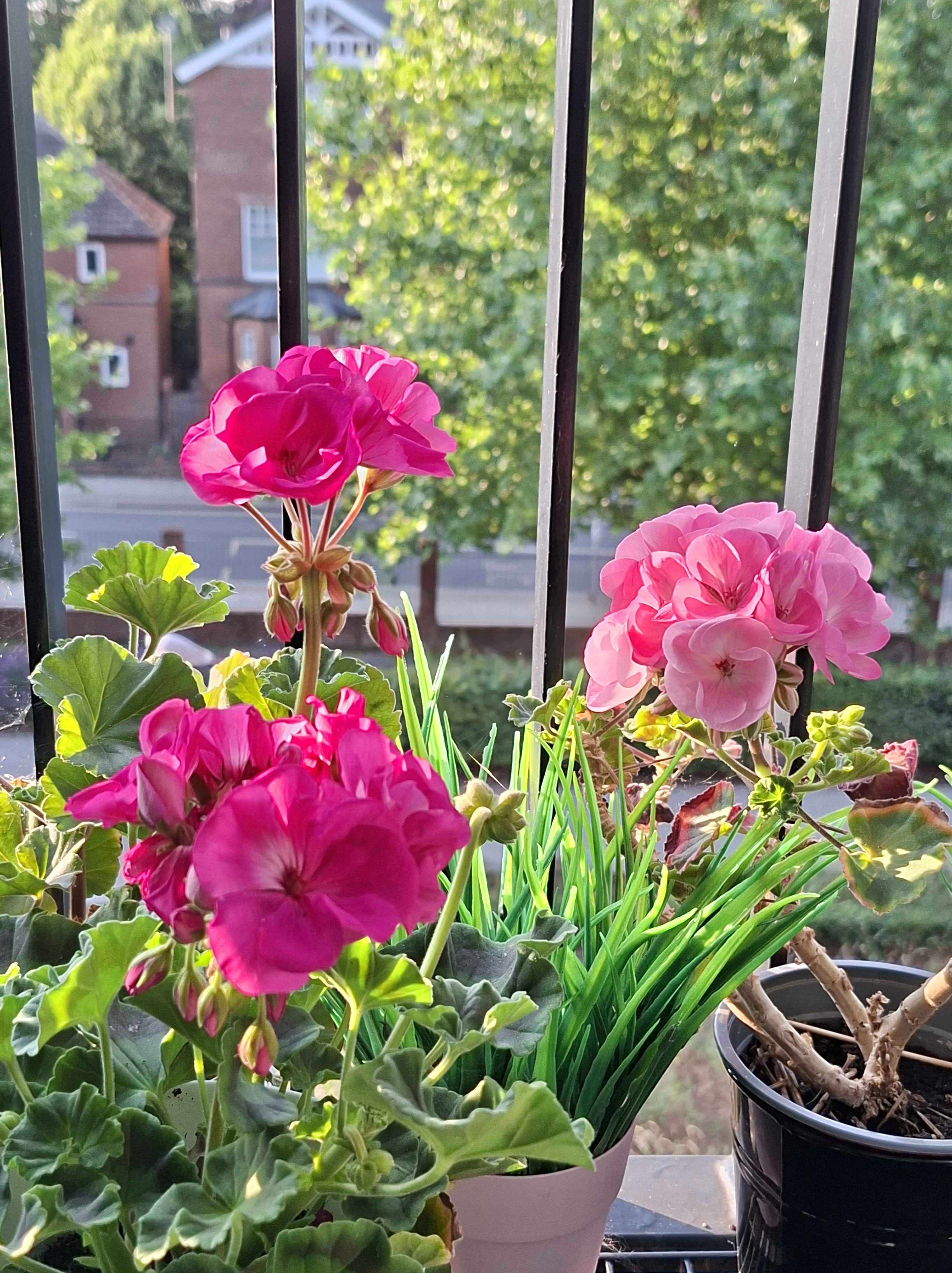
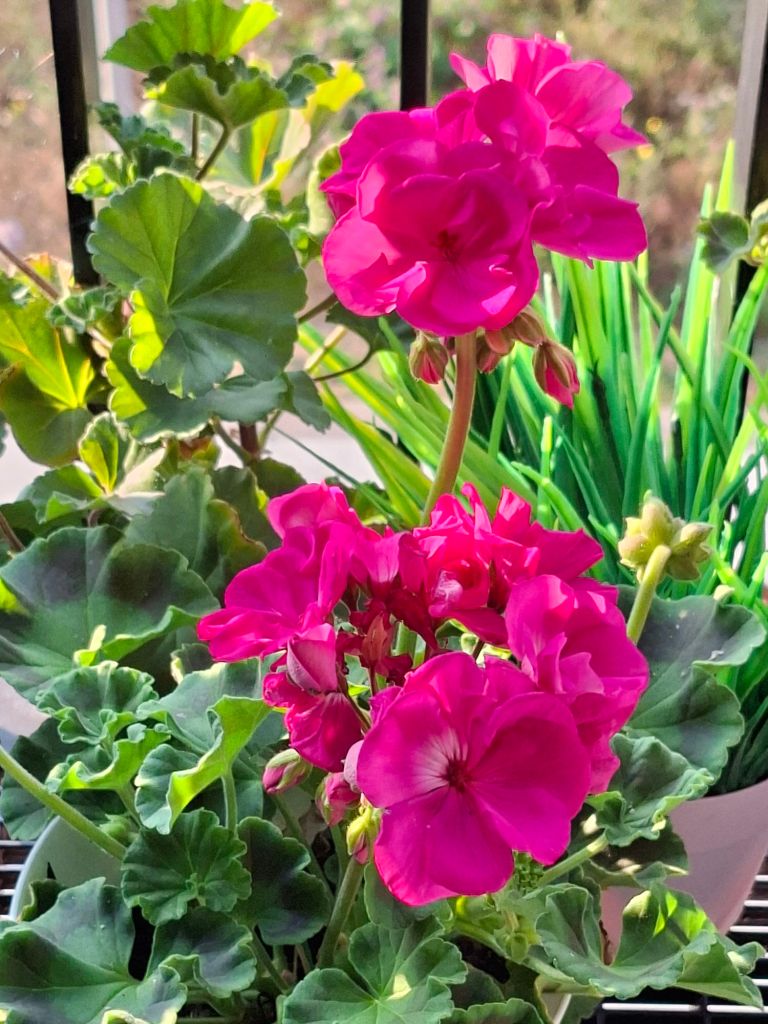
Early this morning I sat in contemplation of some geraniums in pots, for me a good Druid focus of attention. Purchased and tended by my wife Elaine, who is now mobile and active once more, they shone in the early morning light. This was about 6.45 am, some two hours after dawn, on 19 June. It is two days before the Solstice. Where did the time go?
I notice how my eye is drawn to plants and light effects. I find them nourishing and enabling. This has been a theme in my life for awhile. It is though sunlight and the plant world offer hope and reassurance in a bleak, shocking and disorienting historical moment. Life insists on flourishing. I can insist on flourishing too. I am not distracted from the wider world but resourced to engage with it.
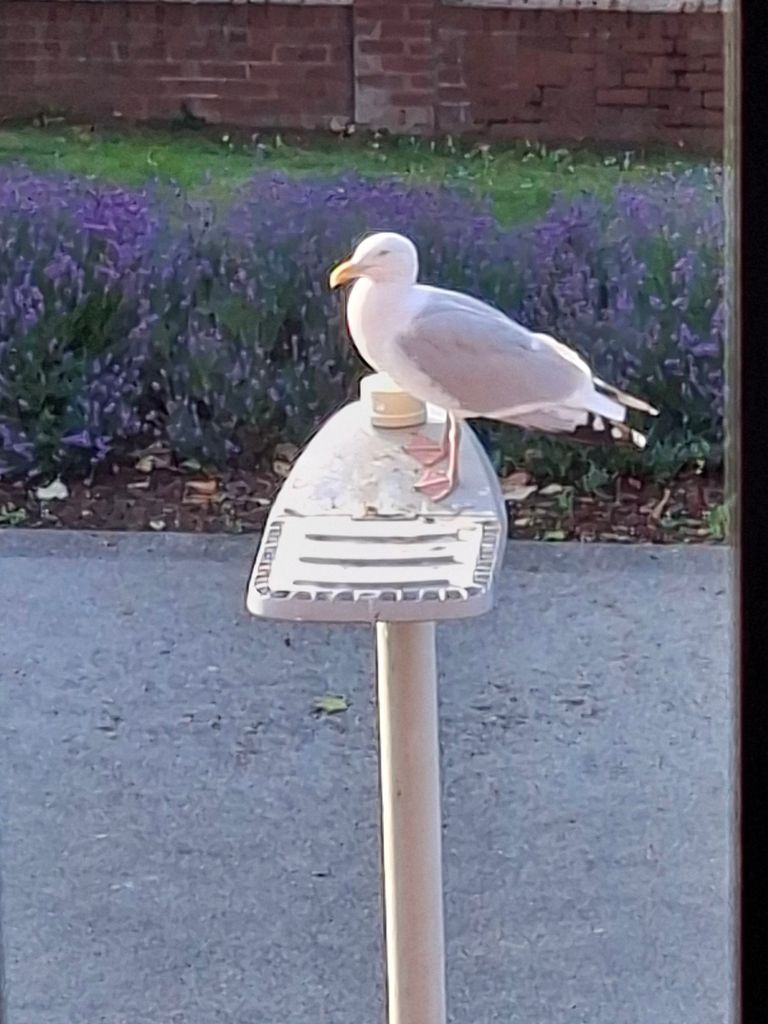
On a convenient lamp post, the seagull seeks an opportunity. This midsummer world is alive.
The five images in this blog record a dedicated solstice walk, an evening walk beginning 8 pm on 20 June. For me, the solstice period lasts around a week ending on 25 June. I like to acknowledge the stasis (standstill) element. My festival practice is not about a moment in time so much as honouring an extended pause before the wheel turns, at first slowly, towards the dark.
I sought immersion in the unique and sacred flavour of this day at this time in this place. I do not believe my images ‘capture’ that flavour – now gone with the moment it belonged to. But the pictures do provide a suggestive record of that time. They help my memory. They remind me especially that my experience of this practice in 2023 differs from that of 2022, when I first undertook it as a solo, contemplative form of midsummer celebration. (See: https://contemplativeinquiry.blog/2022/06/24/.)
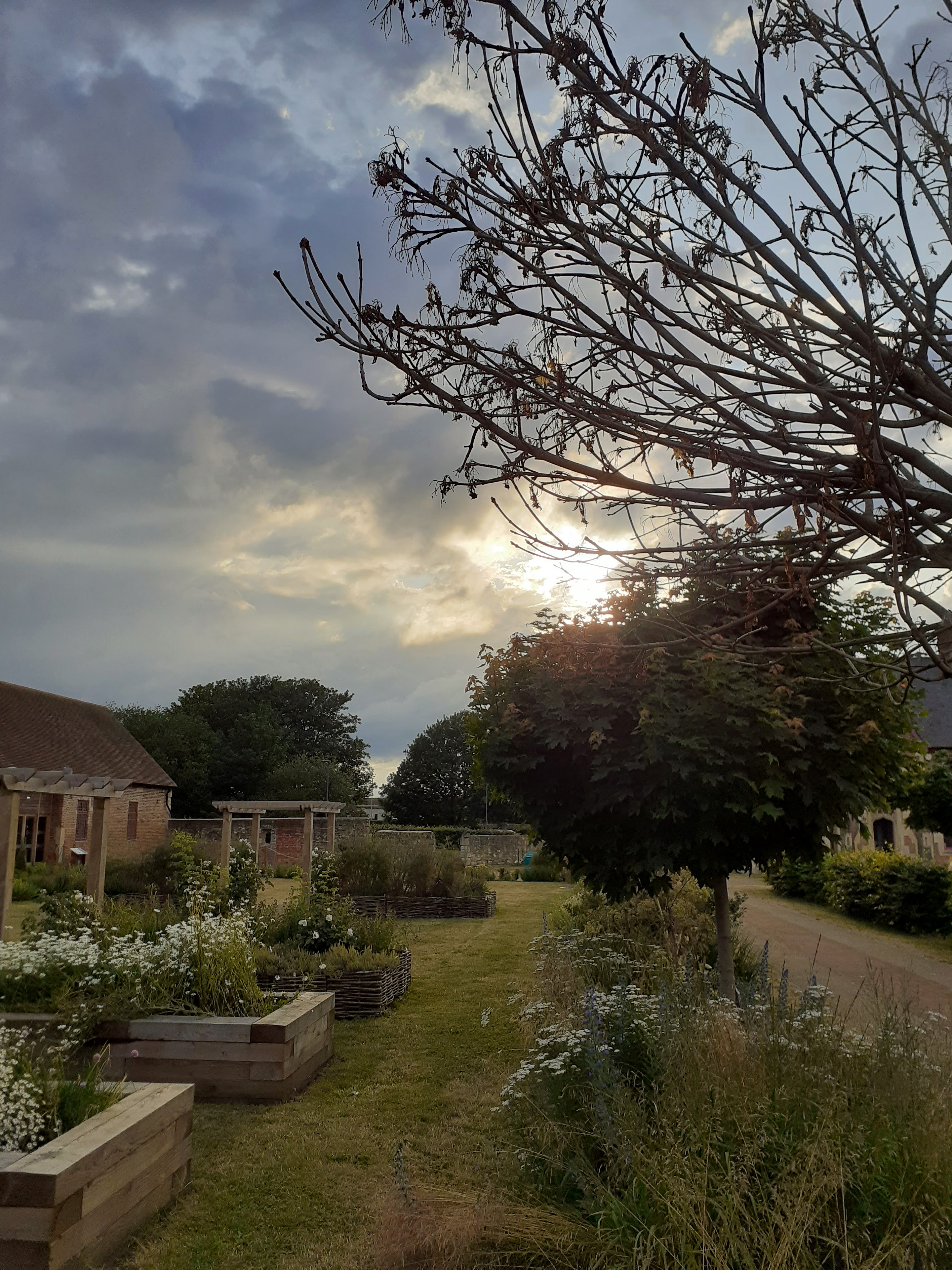
The first image (above) is of Llanthony Priory gardens, dominated this evening by a dramatic sky. Sunlight shines through heavy clouds, dark and suggestive of a storm that we had largely missed in Gloucester. Three canalside images (below) also display the energy of clouds with the sun backlighting them. I find both beauty and power here, indeed a strong sense of powers greater than mine, and indeed of ours collectively. This year, my seasonal immersion has an edge. A modern Druid, I celebrate the seasons and reverence the elements. But I certainly don’t own them, or decide how they are meant to be.
During my walk I spent a lot of time with my eyes turned upwards and skywards, with hints of both awe and foreboding. I understand how sky god spiritualites work. But I also looked across and down and found new life. A pair of swans and their cygnets were finding space on the water on a busy small marina. It is now surrounded by housing on three sides, yet they seemed flourishing and confident. Storm clouds of many kinds threaten. Life goes defiantly on.
The place is called Lower Parting, though it is actually a joining. The parting is 3km (just under two miles) up river. There, the River Severn divides into two channels, east and west, to flow around Alney Island. When taking the picture above, I was standing near the point where the channels meet again. It was around 9 a.m. on 22 June. I had not been there before.
Although every time and place is ultimately sacred, some times and places are easier for me to honour. In my experience this is partly a property of the times and places, partly down to culture and tradition, and partly to do with my own inner and outer availability.
On this occasion, I was within a midsummer period which for me lasts from a day or so before the solstice until around 25 June. I like to acknowledge the stasis (standstill) element within the solstice experience. It is not just about a point of time. Like its midwinter opposite and twin, my midsummer allows an extended pause before the wheel of the year turns. My walk on 22 June was an intentional celebration of the midsummer stasis, something between an outdoor walking meditation and a miniature festival pilgrimage. It was built around my first encounter with an intuited special place, now that I am fit enough once more to walk the required distance.
I can easily understand why people in many parts of the world have seen water, especially flowing water, as sacred. I am on a quiet part of a quiet island in the middle of Gloucester city. The wetland here is blissfully unfit for development, and now a nature reserve. I was able to stand here and look out at the joining of the waters, under a blue sky, and surrender to a benign spirit of place. I didn’t have to attend to my attention. In this extended, flowing, moment, nature was doing that for me. I found, here, a generous horizon, and a living peace that invites participation. I am glad and grateful to have discovered this place on this day.
In my tradition, at every seasonal festival, we are asked to think not only of the time we are celebrating, but also of its opposite. Walking back from Lower Parting, I see features in the landscape that help me. My pictures below do not evoke winter, but they do show light and shade within a single image. On planet Earth, the time of my summer is the time of someone else’s winter. These are both ways in which opposites complement each other in an interconnected world.
An evening walk on 10 June, around 7pm. We are approaching the summer solstice, Alban Hefin in OBOD Druidry. It is a late moment in the rising year. We are in a now familiar Georgian neighbourhood, where I often focus on sky and buildings. But here my attention is on the earth, and patches of green growth a little recessed from the kerbside. What draws me is a strong sense of light enabling life, relatively late in the day, touching the plants to ensure their thriving.
Flowering plants appeared quite late in this history of our planet, less than a hundred million years ago. Over time they helped to shape the habitat in which we have appeared and made our home. Seemingly fragile, they have, over time, exerted a tremendous collective power. It seems only right to honour them and recognise what they have done for us. May we preserve the habitat on which they and we depend.
It is some time since the solstice. Where I live, the time between sunrise and sunset has shortened by about 20 minutes. Though the change is still slow, it is noticeable now. But I do not yet feel a pull towards Lughnasadh/Lammas. I took these pictures on 11 July, and this is its own time, a time of abundance and ripening. They give me the sense of a summer that has kept its promise and is managing to mature despite a year of patchy weather.
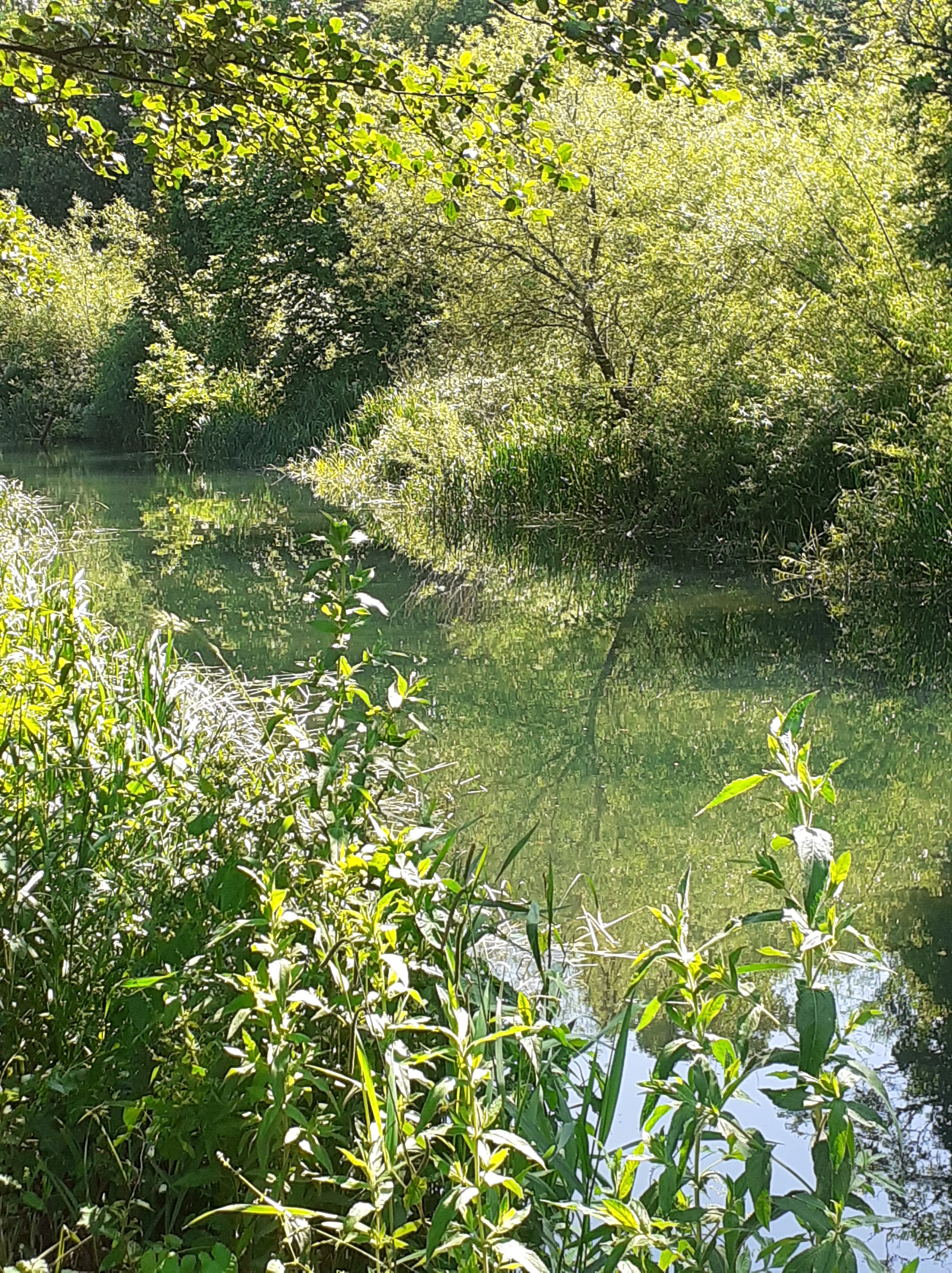
At this stage, the willows below, early to leaf, remain majestic in their abundance – whilst hinting at a tiredness that will manifest in late summer, when energy starts to withdraw, and turn inwards.
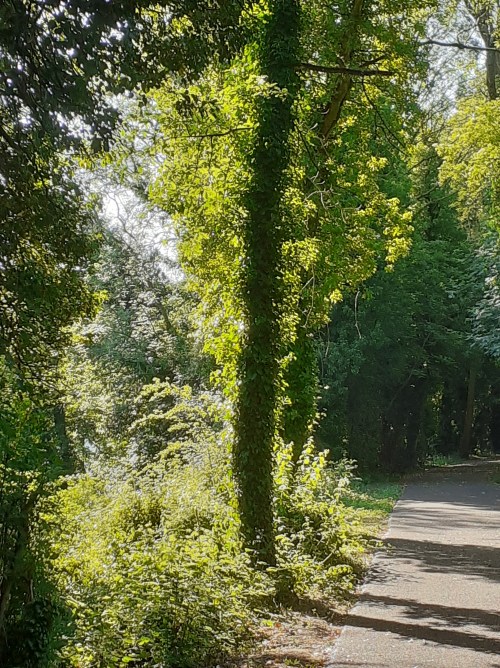
But this isn’t the case with the treescape as a whole. In the woods I continue to find the fresh green of a vigorous life energy. It is the time when I get the strongest sense of a canopy, even in a relatively small and modestly wooded space. It hints at the glories of old forest, even though it isn’t one.
Whilst there is a sense of flora moving into new stages of their cycle, the process is gradual. There is time and leisure for slow change. There is no sense of having to be perfectly one thing and then, immediately, perfectly another.
Above all. I notice subtle differences in shape and colour within a setting of predominantly green growth. My gaze is drawn by intricacies of variation, contrast and patterning within this always astonishing display of life, and its natural will to be and become.
In mid-July, life rests in its moment, with harvesting some way off.
A blue sky frames quiet branches. It is the midsummer standstill in my neighbourhood – a period extending over several days. I took the picture on 23 June, in the early afternoon, a time of soft warmth and sunshine, with me able to meet it. I had been prepared to miss it this year, and was delighted when the opportunity came.
The picture below shows the play of afternoon light and shade in a semi-sheltered spot, where a footbridge crosses a stream.
The next picture makes it clear that there is substantial built environment too here – one of the things I like about this landscape – in the form of weathered railway arches visible behind the foreground green.
The nearby canal looks sleepier than the stream, as if dreaming in the lushness of the moment.
Below, water margin nettles stand out as part of the richness and fecundity of this space, calling for my attention. Clearly capable of being an irritant and seen largely as a nuisance today, the nettle was highly valued by our ancestors for food, fibre and medicine. The Druid Plant Oracle (1) describes it as “a storehouse of goodness” bearing hidden gifts. Nettle tea is widely thought of as health promoting, and modern research confirms that it is rich in antioxidants and vitamins. It is suggested that its polyphenols are helpful in managing chronic illnesses that involve inflammation. I am taking it up as a drink.
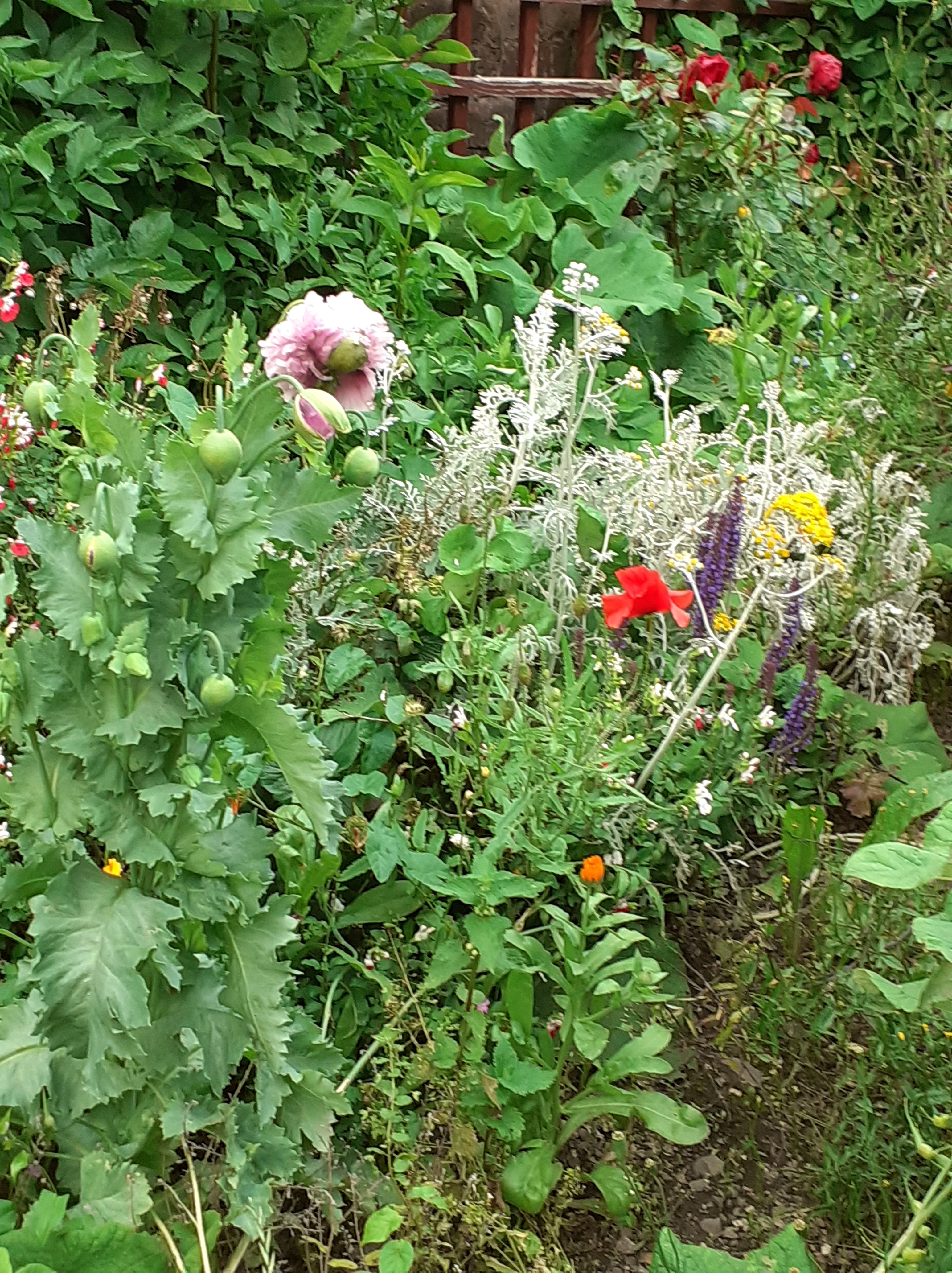
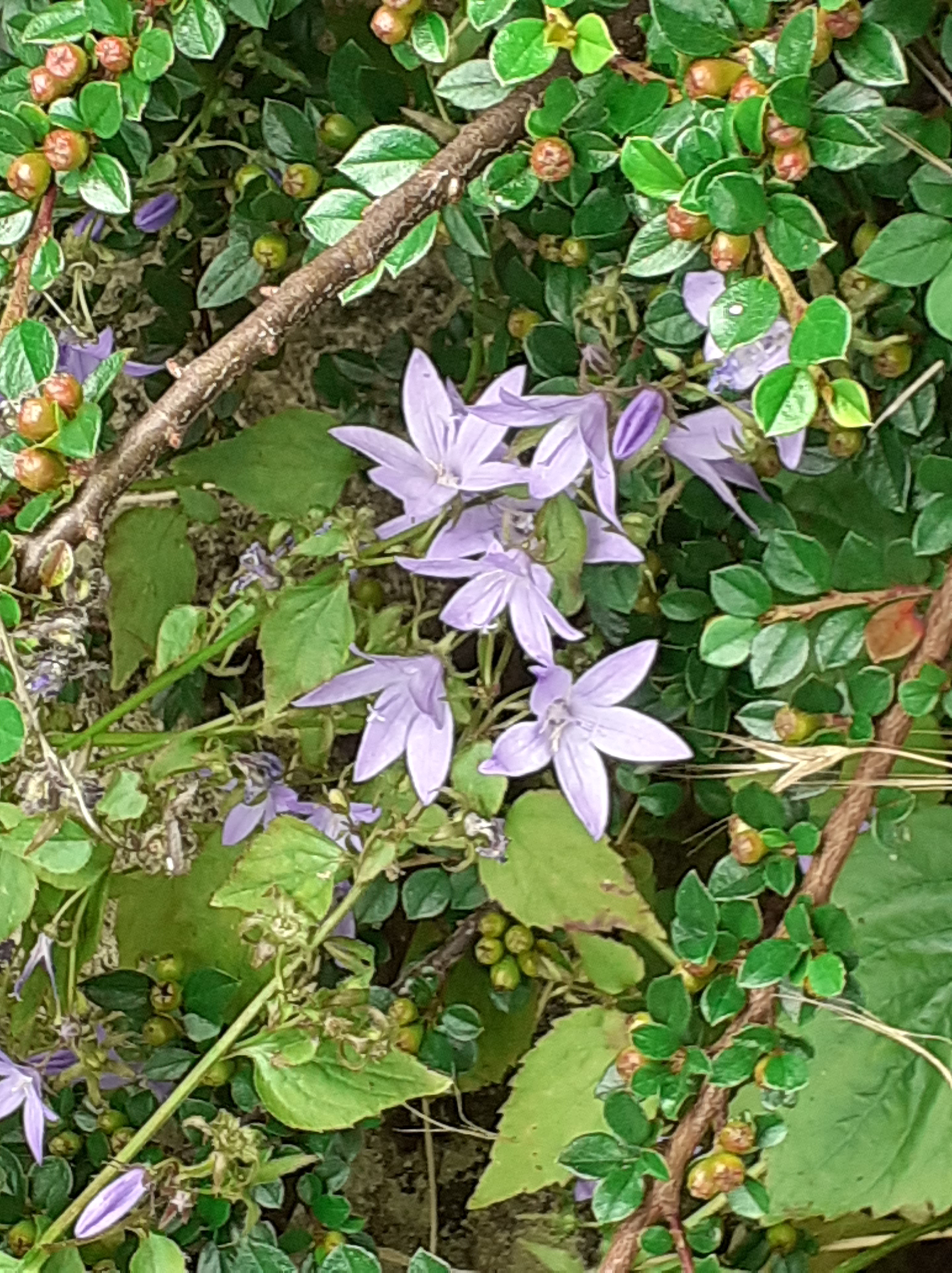
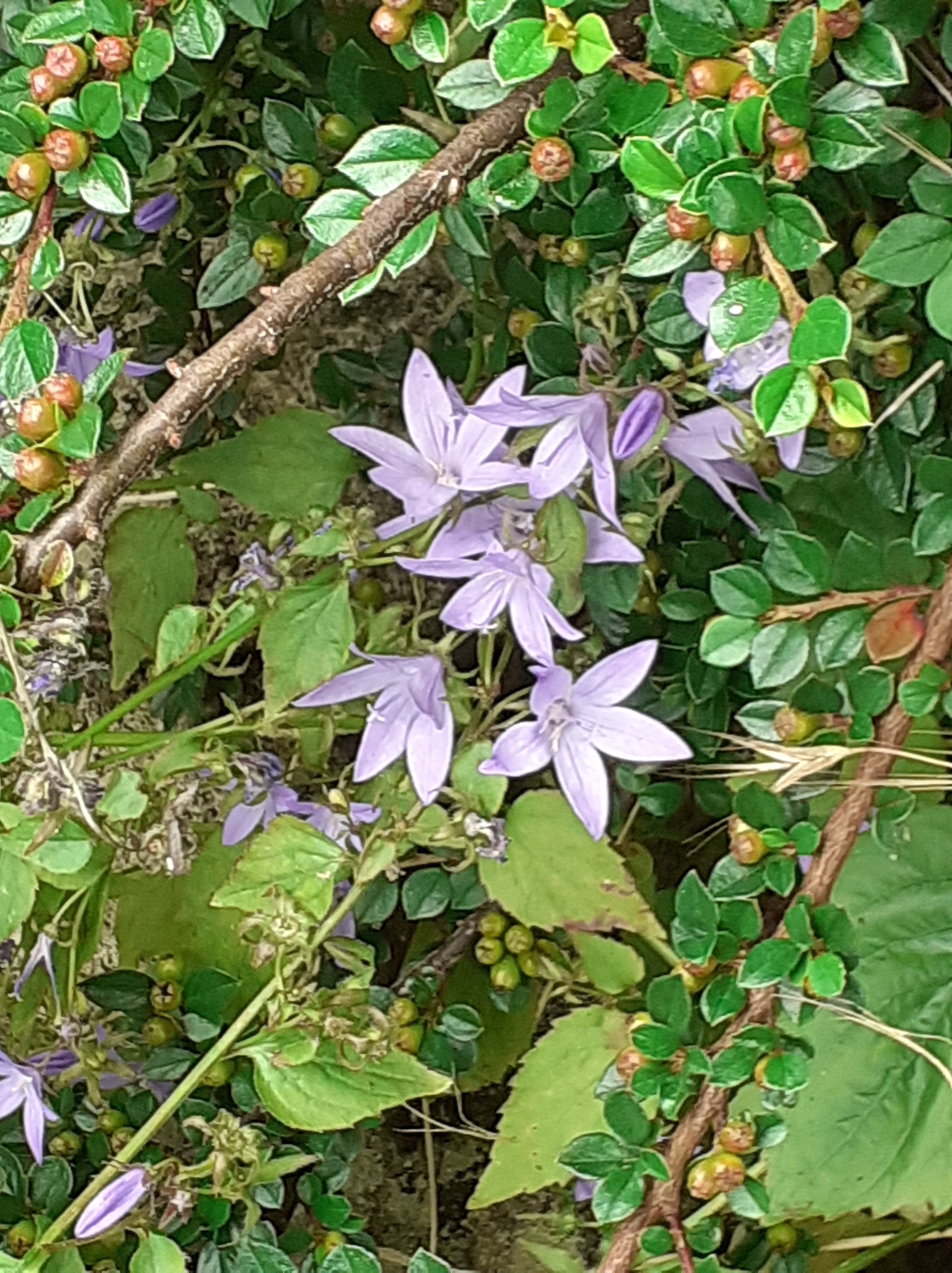
There are other, varied riches beside the path, easy to ignore, but also easy to notice and enjoy for their beauty and vitality alone.
I went for this walk without any intention of taking photographs and I travelled quite a way before I began. I felt as though the landscape was persuading me to record the day, and thus bear witness to the midsummer stasis. Yes, it happened in 2021, as it happens every year. Here is the evidence. I am glad I showed up to be part of it,
(1) Philip and Stephanie Carr-Gomm The Druid Plant Oracle: Working with the Magical Flora of the Druid Tradition London: Connections, 2007 (Illustrated by Will Worthington)
As its crown forms his mask and its leafage his features;
‘I speak through the oak’, says the Green Man.
‘I speak through the oak says he'” (1)
In my wheel of the year tree mandala (2), oak covers the period from 16 June-8 July and thus includes Alban Hefin, the summer solstice. I am starting to bring it in. The oak has many associations – regal strength, for example – but for me the sense of the green man, the archetype of our oneness with the earth, speaking through the oak, is the most numinous. At Dodona in ancient Greece (3) an oak shrine was “guarded by priestesses who interpreted the future from the rustling of leaves on the great tree, the voice of the sacred spring that rose at its root and the behaviour of birds in its branches”. Celtic tradition describes a number of sacred oak trees, themselves roosting places for sacred birds. I like the sense that the oak does not stand alone and autonomous in these stories. For leaves to rustle, the wind is needed. Birds and springs may also participate in the ecology, of a distributed wisdom – a wisdom of interdependence, of interbeing. The oak’s great branches are matched by still greater roots, and therefore an underground network of communication and exchange that we now know sustains a mature forest (4).
The ogham name for oak, duir, means door in both Sanskrit and Gaelic (5). This can bespeak solidity and protection, for the oak can survive lightning. It was sacred to Taranis, the Celtic god of lightning and storms, to Thor in the Nordic pantheon. and to Zeus among the Greeks. But a door isn’t just defensive. It is there to be opened as well, with a sense of welcome and relationship. Dagda, father god of Ireland, was associated with the oak and never failed to give hospitality to those who asked for it.
For Druids (whose name means ‘oak wisdom’) oak was the central tree in their mysteries. There is a theme, in these mysteries, of communication between worlds, with a sensed Otherworld being less than a heart beat away. The power of the oak combines strength and sensitivity. My mandala links oak to the period in which the light has its greatest expression, and then gives way, at first very slowly, to its necessary descent into the dark. The tree bears witness as the wheel continues to turn.
(1) William Anderson Green Man: Archetype of Our Oneness with the Earth Harper Collins: London & San Francisco, 1990.
(2) This mandala is based on my personal experience of trees in the neighbourhood as well as traditional lore. Moving around the summer quarter from Beltane, 1 May, the positions and dates of the four trees are: Hawthorn, south-east, 1-23 May; Beech & Bluebell, south-south-east, 24 May – 15 June; Oak, south, 16 June – 8 July; Gorse, south-south-west, 9 – 31 July. The autumn quarter then starts with Apple at Lughnasadh/Lammas. For a complete list of the sixteen trees, see https://contemplativeinquiry.blog/2020/autumn-equinox-2020-hazel-salmon-awen/
(3) John Matthews & Will Worthington The Green Man Tree Oracle London: Connections, 2003.
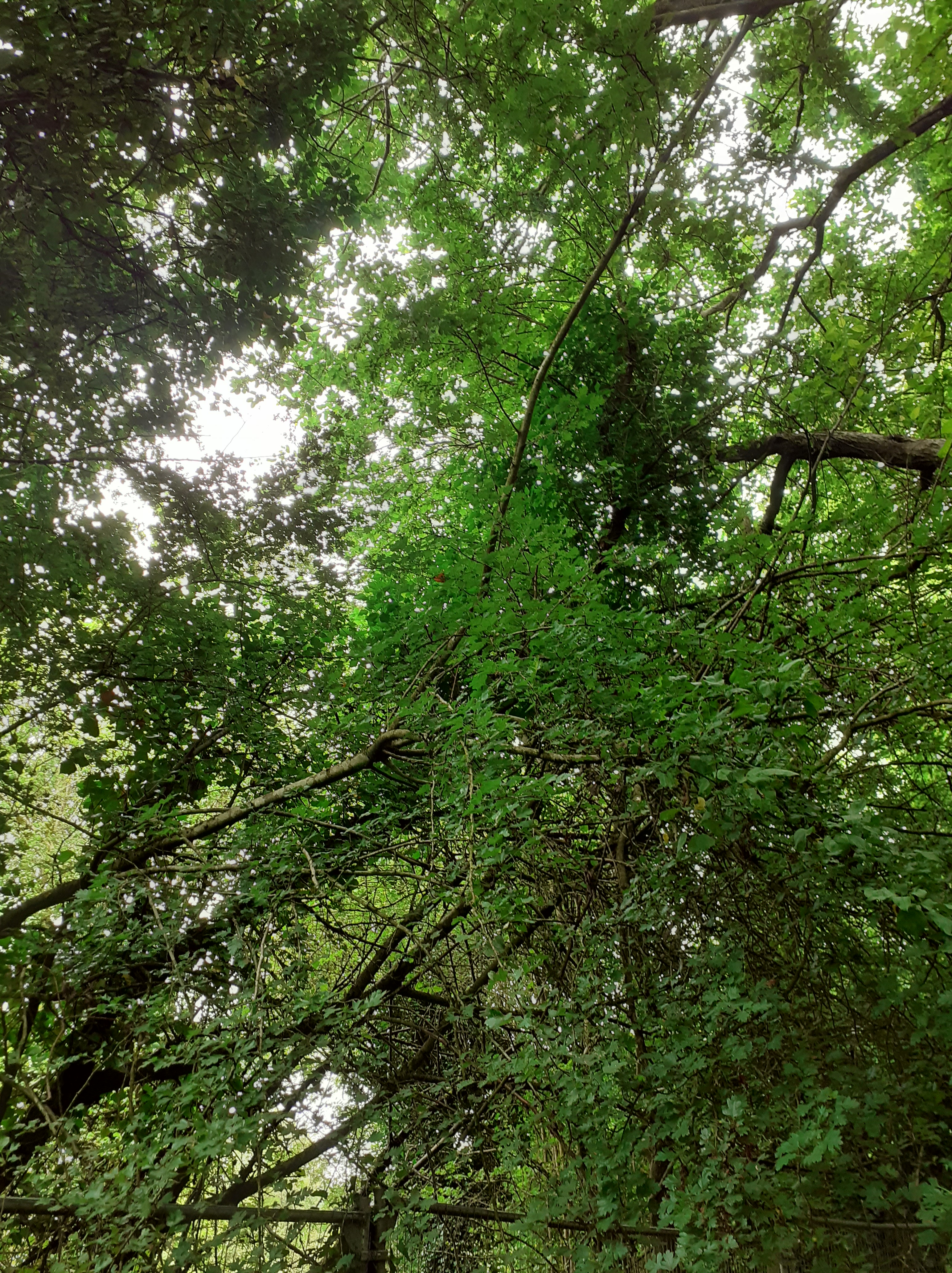
The picture shows the power of sunlight on trees to an observer – me, using my sight and my phone camera. I am not sure what it is like for the trees themselves, but I imagine it to be a positive experience.
This post is about the effects of the same power in my own psychic life. In a personal meditation, “I find myself in a walled garden. It has a fountain at the centre, surrounded by four flower beds of alternating red and white roses. There are fruit trees, apple, pear and plum, trained around the walls. It is a warm and radiant midsummer morning. The full bright sunlight strikes the dazzling water of the fountain, warming and illuminating each drop as it falls. I can hear the plashing of the fountain, and birdsong a little further off. My bare feet are on the lush grass. The air is sweet. The sun is at my back, recharging my energy, in particular activating the sun in my heart”. From that point, the meditation can continue and deepen in a number of ways.
This garden is the Garden of Wisdom, the Wisdom of William Anderson’s Green Man poem (1), a poem of 13 four-line verses, where each line covers a week. Though the Green Man has a lover in the spring, Wisdom is named, as Wisdom, in only one verse.
26 Oct-1 Nov: The reedbeds are flanking in silence the islands
2 Nov–8 Nov: Where meditates Wisdom as she waits and waits.
9 Nov-15 Nov: ‘I have kept her secret’, say the Green Man.
16 Nov -22 Nov: ‘I have kept her secret’, says he.
But at the present time of year, the focus is on the transformation of the Green Man himself, his head having been offed between 25 May and 7 June.
8 June – 14 June: Green Man becomes grown man in flames of the oak
15 June-21 June: As its crown forms his mask and its leafage his features
22 June -28 June: ‘I speak through the oak’, says the Green Man,
29 June – 5 July: ‘I speak through the oak’, says he.
Late in 2019, I stopped calling my inquiry path a ‘Sophian Way’ and re-centred it in Druidry. It was the right decision, and I have found it very fruitful. But at the psychic, Innerworld level, I have experienced a sense of loss concerning aspects of the Sophian Way, especially the space I called Sophia’s Garden. Now, thankfully, I have found that a simple re-naming as Wisdom’s Garden has been enough to re-integrate it within my current Druid practice. A more specific link with William Anderson’s Pagan, earth-centred poem also helps. Wisdom speaks through the wheel of the year, and acts as a companion and guide within my Druid path, on both the physical and psychic levels. She is also Zoe, the life beyond time, and the Green Man Bios, the life which is born, dies and is born again. It seems to me that we are both of them. Perhaps that is Wisdom’s secret.
(1) William Anderson Green Man: Archetype of Our Oneness with the Earth: London and San Francisco: HarperCollins, 1990 (Photography by Clive Hicks)












 Contemplative Inquiry