Contemplative Inquiry

This blog is about contemplative inquiry

Tag: Sulis Minerva

BOOK REVIEW: SULIS, SOLAR GODDESS OF THE SPRING WATERS
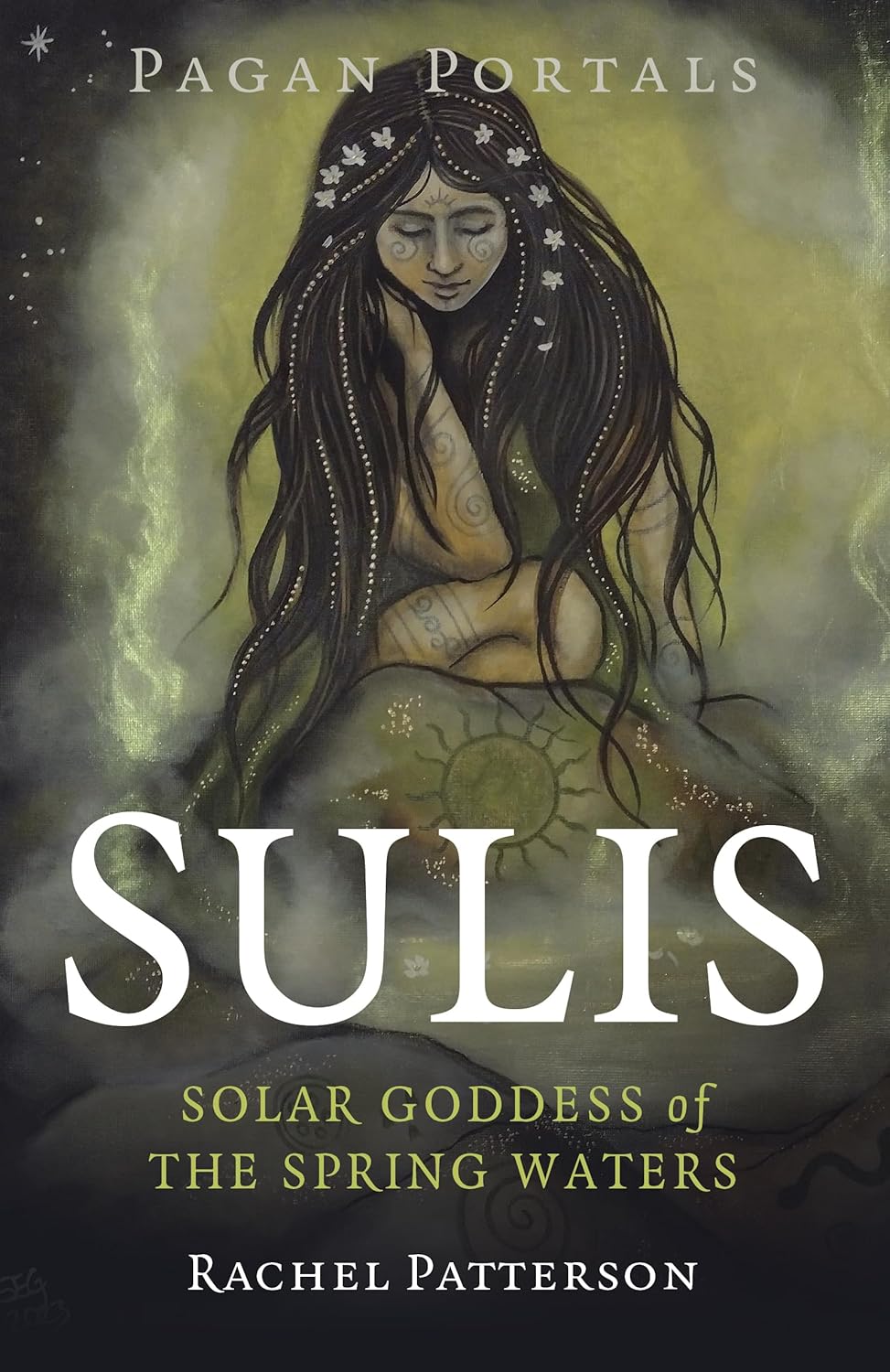
Recommended especially to two overlapping groups: first, readers interested in Sulis (later Sulis-Minerva) the presiding deity of the hot springs at Bath, UK; second, readers interested in polytheist Paganism in Britain, both ancient and modern. Author Rachel Patterson describes her heart as that of an English Kitchen Witch and her craft “a combination of old religion witchcraft, Wicca, hedge witchery and folk Magic”. Hence in this book she focuses not only on the history of Sulis and her springs but also on how to work with Sulis today.

The hot springs at Bath are the only ones in the country, appearing after the last Ice Age around 12,000 years ago. The people who re-settled the land as hunter gatherers began leaving offerings at the springs around 9,500 years ago. They continued to do so for several thousand years until the appearance of farming. We have no record of their beliefs, but for them the numinous power may well have been the living presence of the springs themselves, rather than a presiding deity.

The farmers, when they came, seem to have left the springs alone. But early in the first century CE a causeway of gravel and mud was placed in the main spring pool. Offerings were made, principally of coins minted by the local Celtic tribe, the Dobunni. Pottery was also found but there were no buildings. In 43 CE the Romans invaded Britain and quickly established themselves in the south. The Dobunni chose peace and an accommodation with the Romans, who soon created a spa, building on top of the natural springs. They adopted the local goddess Sulis, now to be known as Sulis Minerva. A town gradually grew up, named Aquae Sulis (The Waters of Sulis). A temple and sanctuary began to be built in 70 CE. The baths are now well-kept after an up-and-down history, and are open to visitors. See http://www.romanbaths.co.uk.

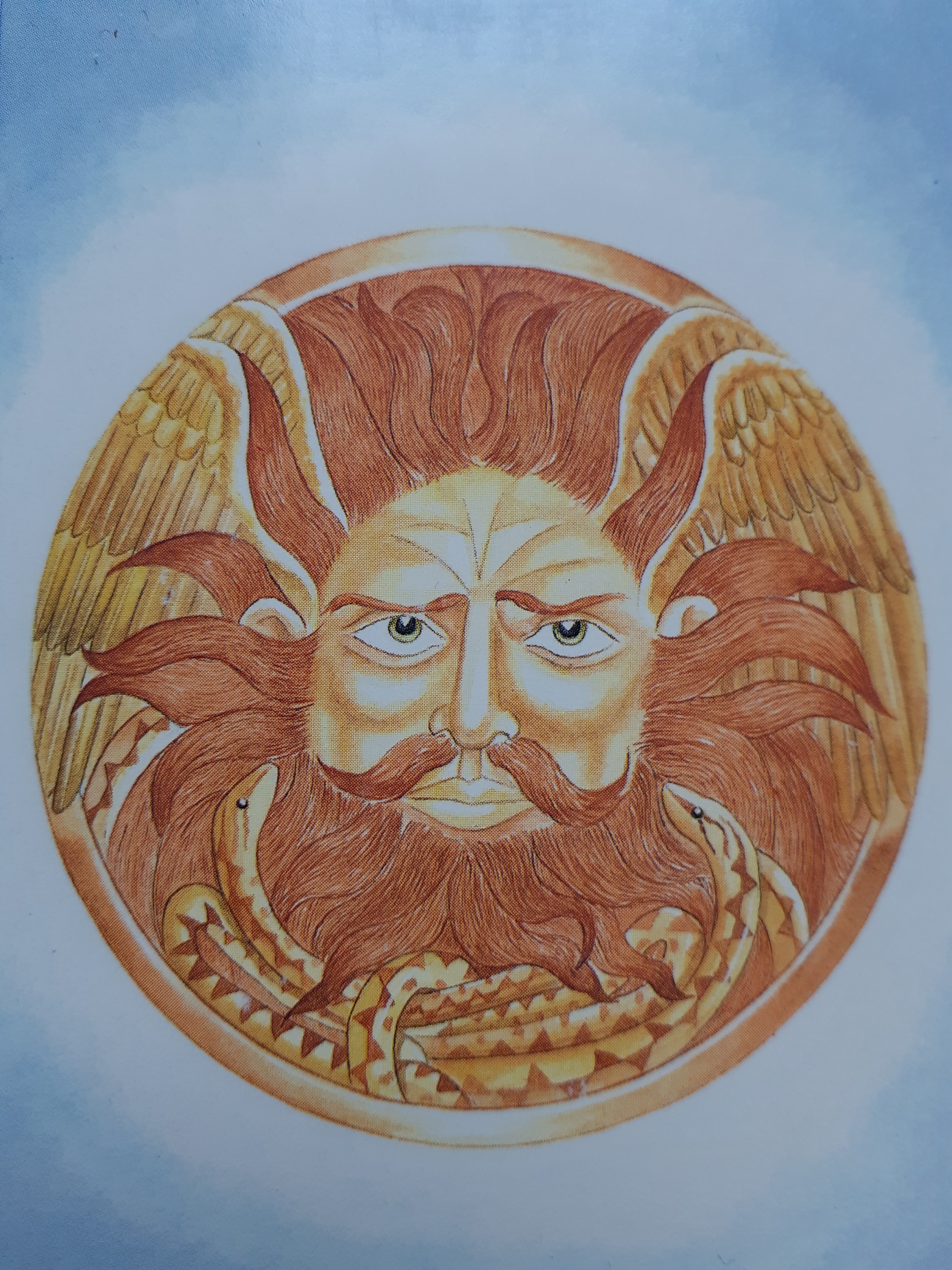
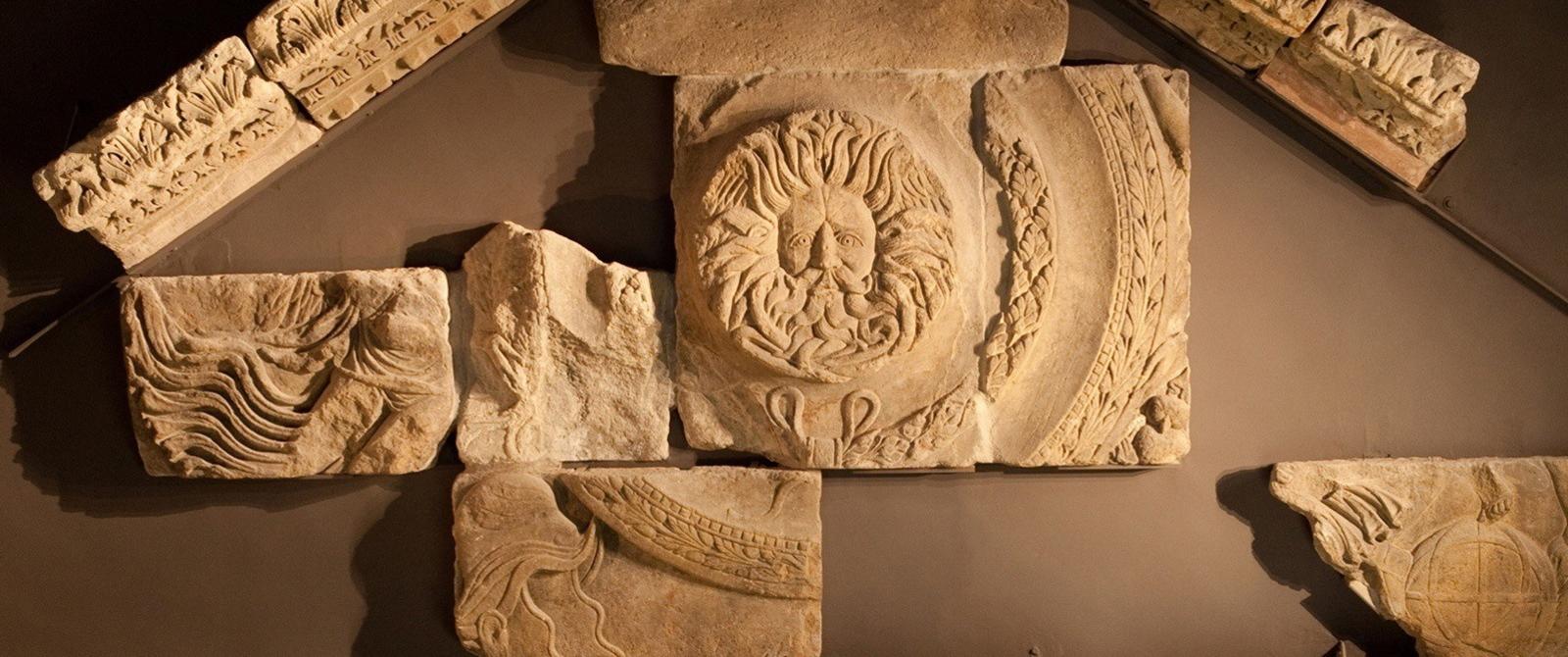
Rachel Patterson describes how the temple worked in the Roman period. Many of the extant records are written curses from people whose clothes and possessions were stolen while they bathed. They asked the Sulis for retributive action in return for offerings and the lost possessions themselves (1). Patterson also describes the decoration of the temple and artifacts from it. The best known was once called the gorgon’s head but is clearly the head of a male figure. He seems to be associated with a god named Belenus, who may in turn be connected with the legendary King Bladud included in Geoffrey of Monmouth’s History of the King’s of Britain (2,3).

The second half of Rachel Patterson’s book is about working with Sulis. It is a thorough and practical guide for readers who may want to go down that path. It includes sections on making candles and altars dedicated to Sulis; on finding Sulis; building a relationship with her; advice on oath-taking; and the development of rituals and meditations dedicated to her. There is relevant advice on the use of herbs, crystals, forms of divination, petitions and curses. There are sections on animal companions and (pigs and wild boar as the Celtic contribution, owls and dolphins related to Minerva). As a Kitchen Witch, Rachel Patterson also provides a number of recipes.

I have lived both the first and most recent 20 years of my life within a forty mile radius of Bath. I don’t go there very often. But I have known it from an early age and bathed in the waters during the more recent period. There is indeed something magical about them. So I’m glad to see Sulis taken more seriously. There is a familiar problem about limited information from the past and Rachel Patterson discusses this in her book But for me there is enough resonance from the old times, here, to dream the myth onwards. I can’t assess the practical guidance offered in Sulis: Solar Goddess of the Spring Waters because I don’t work in the same way. But I do know it is comprehensive and comes from a seasoned practitioner. It feels to me like a timely addition to the Pagan Portals series, and I am grateful to have it.

(1) Further information about religion in Roman Britain, and its rather transactional nature, can be found in Prof- Ronald Hutton’s Gresham College lecture on Paganism in Roman Britain. See https://contemplativeinquiry.blog/22/12/12/paganism-in-roman-britain/ – where a link to the lecture is provided,

(2) see picture and narrative at https://contemplativeinquiry.blog/2021/03/23/the-sacred-head-of-bladud/

(3) For creative treatments of the story of Bladud and the Goddess Sulis, see Kevan Manwaring’s account in The Bardic Handbook and two novels by Moyra Caldecott: The Winged Man and The Waters of Sul
PAGANISM IN ROMAN BRITAIN

This post concerns Ronald Hutton’s Gresham College lecture about Paganism in Roman Britain (1). In it, he summarises our current academic knowledge, and asks: how Romanised was British religion within the Roman Empire? It proves to be a hard question to answer, for three main reasons.

The first is that we know little about British religion immediately before the occupation, apart from the fact that Druids had a leading role in at least some religious activity.

The second is that, although the Romans generally honoured local gods and their worshippers, they made an exception for war gods and religious communities hostile to Roman rule. British Druids belonged to the latter category, so any ongoing British Druid activity is off the record. The Druids were in any case averse to written records about their calling.

The third is that we know the names of only a few people from this period, so get only occasional glimpses of individuals and their practices. Britons of any social standing tended to adopt Roman names, at least for the written record, but the records are too sparse to distinguish between the developing cultures of Romanised Britons and localised Romans. All we have is the Roman names. People who made do without Roman names go unrecorded.

These three limitations mean that we have limited knowledge, and that this knowledge is heavily tilted towards Roman practices and understandings. We do however have the names of a number of indigenous deities from the Roman period, and some understanding of their roles. According to Hutton, such deities tended to be highly localised, and connected to specific activities – like Coventina looking after the sacred spring at Carrowburgh not far from Hadrian’s wall. On the whole Goddesses were linked to the land, hills, rivers, springs and wells. Gods were concerned with war, protection, trade and travel.

Other gods were imported during the centuries of occupation. Continental Celtic culture brought Rosmerta, the Matres and Epona. Widely acknowledged Roman gods included Jupiter, Mars, Silvanus and Mercury. Other parts of the empire contributed Apollo, Bacchus, Mithras, Cybele and Athys, Isis and Serapis.

Hutton finds in both Romans and Celts a very different attitude to deity from that of the later arriving Christian faith. Pagan Gods asked for acknowledgement and respect. Beyond that they were not greatly interested in us. They did not make laws, issue commands or monitor our performance. The Latin word superstitio referred to excessive fear of the divine. Hutton characterises mainstream Roman British religion as largely transactional. Roman priesthood was a job for the local magistrates.

Hence, according to Hutton, there was no theology. If you wanted the gods’ help, and had the support and resources, you built shrines, enacted rituals and offered sacrifice. (Animal sacrifice was required to be swift and painless, or it did not please the gods.) If you looked for a deeper or more intense religious experience, and were deemed eligible, you sought initiation into a mystery school. If you were concerned with speculation about the cosmos and our place in it, or wanted a set of values and practices to live by, you turned to philosophy. The one religious demand made by the state was a public reverencing of the Emperor’s numen (the divine power within him) which the early Christians, other than Gnostics, risked martyrdom rather than acknowledge.

The lecture includes a discussion of hybridised (or ‘twinned’) deities and the high esteem in which they could be held – Sulis Minerva at Aquae Sulis (Bath), Apollo Maponus (with a major shrine a little beyond Hadrian’s Wall at Lochmaben) and Mars (or possibly Mercury) Nodens, at Lydney, close to the River Severn in the Forest of Dean.

Hutton ends with a rare opportunity to acknowledge a real, named person, Magnius. He is known to have been a Briton, a commoner with some resources. He had a tomb erected at Aquae Sulis for his daughter, who had died aged only eighteen months. A tomb for one so young was very rare, and the poignancy of this act reaches across the centuries to us, connecting humans who, from very different times and cultures, are united by the same capacity to love and to grieve. I found this a good note on which to end a lecture which provides some insight into a subject where much will always be unknown.

(1) https://www.gresham.ac.uk/ (Go to browse by series then lecture series 2022-23 then Finding Britain’s Lost Gods. The specific lecture is Paganism in Roman Britain.)

See also: https://contemplativeinquiry.blog/2022/10/06/learning-about-our-pagan-ancestors-and-learning-from-them/

Ronald Hutton is Professor of History at the University of Bristol, a specialist in Pagan and Druid studies, and enjoys a very high reputation within both the academic and Pagan communities.

THE SACRED HEAD OF BLADUD

The historic city of Bath is about thirty miles from where I live and – from another direction – thirty miles from where I was born. It has always been part of my psychogeography. This post concerns both its ‘historical’ and ‘legendary’ past.

“A satisfying connection between modern archaeology, ancient legend, sacred kingship and Celtic religion is found at Aquae Sulis, the Roman name for Bath, England. In his legendary Historia Regum Britanniae [History of the Kings of Britain] (1) Geoffrey of Monmouth reports that King Bladud, grandfather of Bran and Branwen, founded the site and taught the druidic arts of ancestor magic and flight, eventually crashing to his death on the site of what is now London (the name Bladud means ‘light-dark’ or ‘bright-shadow’). In his Vita Merlini [Life of Merlin] (2), Geoffrey of Monmouth has Bladud and his consort Aleron (‘wings’) presiding over the hot springs of Bath, which are at the centre of the Bardic universe described by Taliesin to Merlin, forming the gateway to the Otherworld.

On show in the museum at Bath is a superb Celtic solar head (often inaccurately called a Gorgon’s head). The carving is a circular relief of an imposing male face with wild hair, long moustaches and staring eyes. He has wings on either side of his head and is surrounded by flames. Beneath his chin are two serpents, linked in the manner of a torque, the Celtic symbol of royalty. This solar deity is probably the being called Bladud in the legendary histories, connected to magic, flight and a fall from the heights to the depths. He has upon his brow the mark of the three rays, which are very often described as the primal three powers of universal creation.

The goddess at Bath, presiding over the sacred hot springs, was called Sul or Sulis, which means ‘eye’ or ‘gap’ (with a sexual connotation), for she is a variant of Ceridwen, the goddess of the Underworld. The entire Celtic/Roman complex of Aquae Sulis is an excellent example of ancestral Underworld magic refined by Roman politics into a temple of Minerva.

“The sacred or prophetic head is an embodiment of the relationship between the three worlds, for it is aware in all worlds, through all time. While we may have ideas that an anthropologist would suggest originated in primitive head-hunting magic, the theme of the sacred head becomes an allegory of divine and human perception and declaration.

“There is a further element to the sacred-head theme, for it is also interlinked with beliefs and practices concerning the regeneration of life, particularly with the cauldron. Titanic figures such as Bran, acting as sacred kings and guardians of the land, also partake of the mystery of the sun at midnight, light regenerating out of darkness. And this, after all, is the secret of inspiration, a sudden light born out of fruitful darkness.”

R. J. Stewart and Robin Williamson Celtic Bards, Celtic Druids London: Blandford, 1996

(1) Geoffrey of Monmouth History of the Kings of Britain London: Penguin, 1966 (Translated with an introduction by Lewis Thorpe)

(2) Mark Walker Geoffrey of Monmouth’s Life of Merlin: A New Verse Translation Stroud: Amberley, 2011

NOTE: the first illustration is from R. J. Stewart The Merlin Tarot London: Element, 2003 , illustrated by Miranda Grey. The Bladud image is on the reverse of each card, implicitly re-ascribed to Merlin as embodying the same archetype in a different way. The second illustration can be found on http://www.romanbaths.co.uk – click on discover and then walkthrough.

WALKING TOWARDS SUNRISE

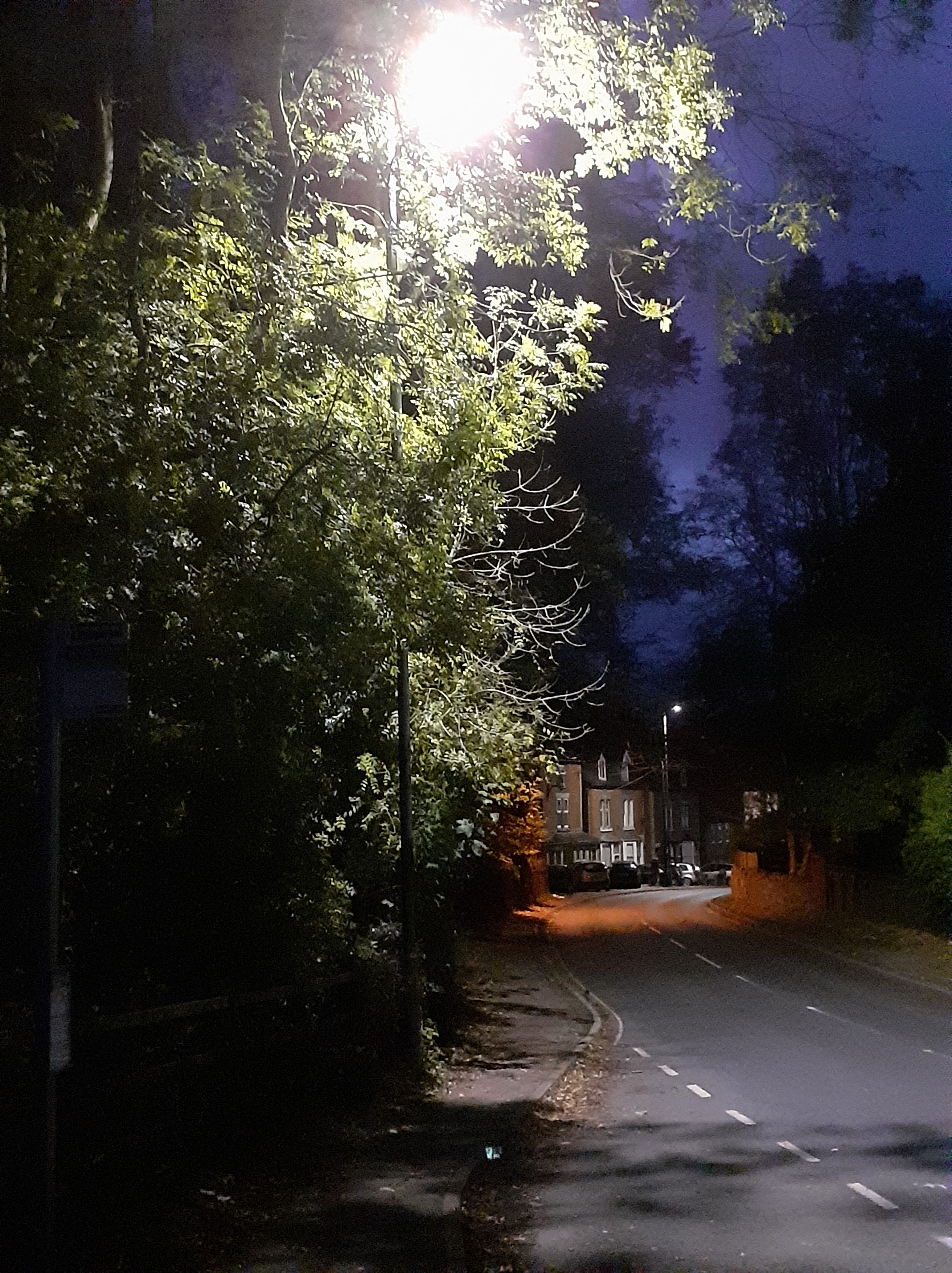
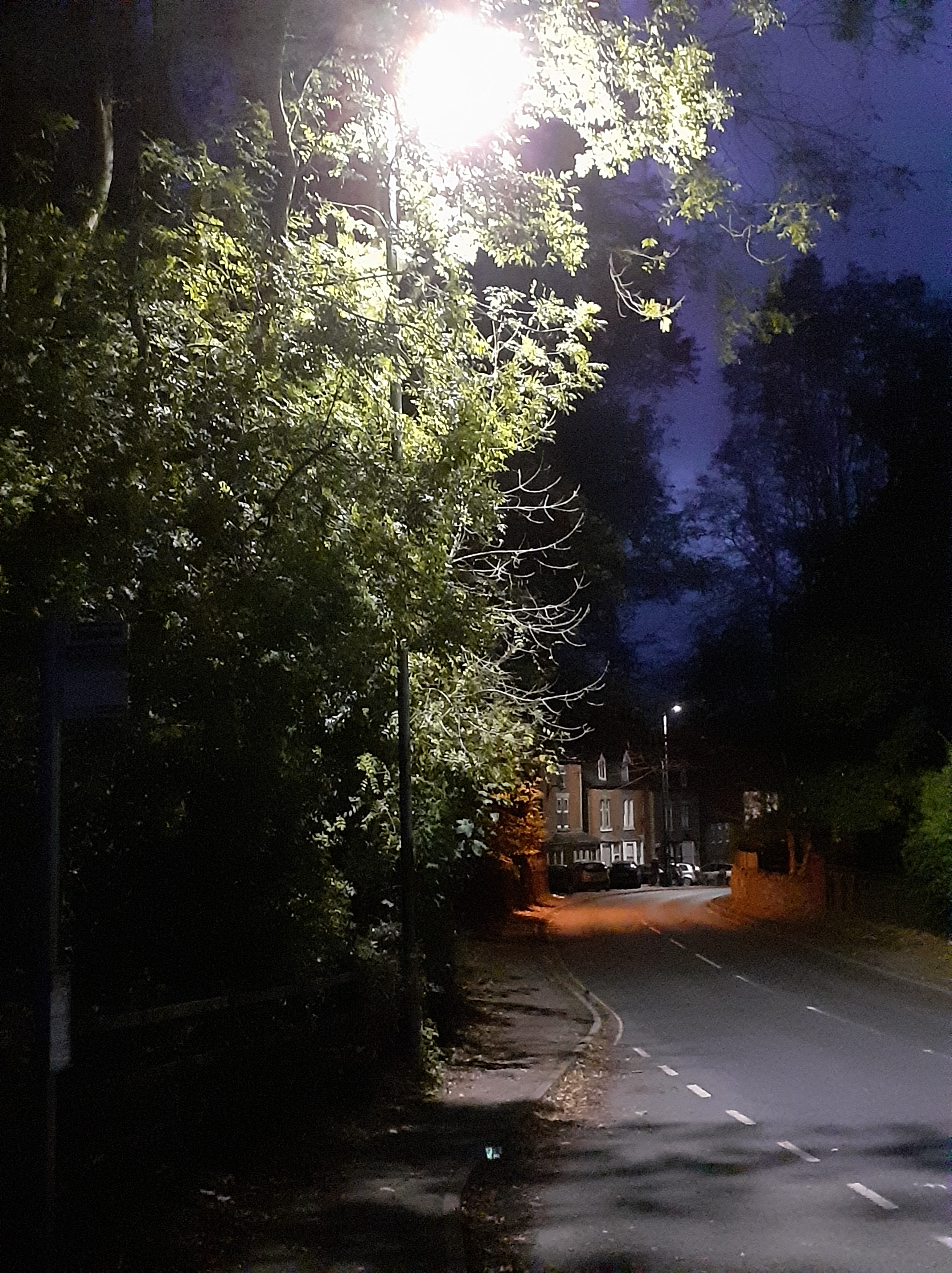
Sunday, 11 October, 6.40 am. My plan is to walk towards the dawn of a new day, but I take time to stop and photograph this liminal moment. It is still, on this normally busy road. It makes me almost nostalgic for the early days of lockdown in the spring.

In this moment, there are no cars and no other people. I am fine with the artificial light. I like the contrast of the street lights (bright and focused) with the softer light in the sky, dim yet with a promise of expansiveness. I enjoy the shadows and the presence, too, of outright darkness at this stage of my walk.

It takes me twenty minutes of enchanted meander to reach my next point, pictured above. The scene is inherently more spacious. Water and sky are prominent. It takes notable artefacts to make their presence felt. The main theme of the picture, as I look in a generally eastern direction, is the coming of the light. Clouds do not obscure it. The buildings have become more than silhouettes. There are the beginnings of colour and the detail it brings. I judge it OK to walk on the canal path itself, just visible on my right.

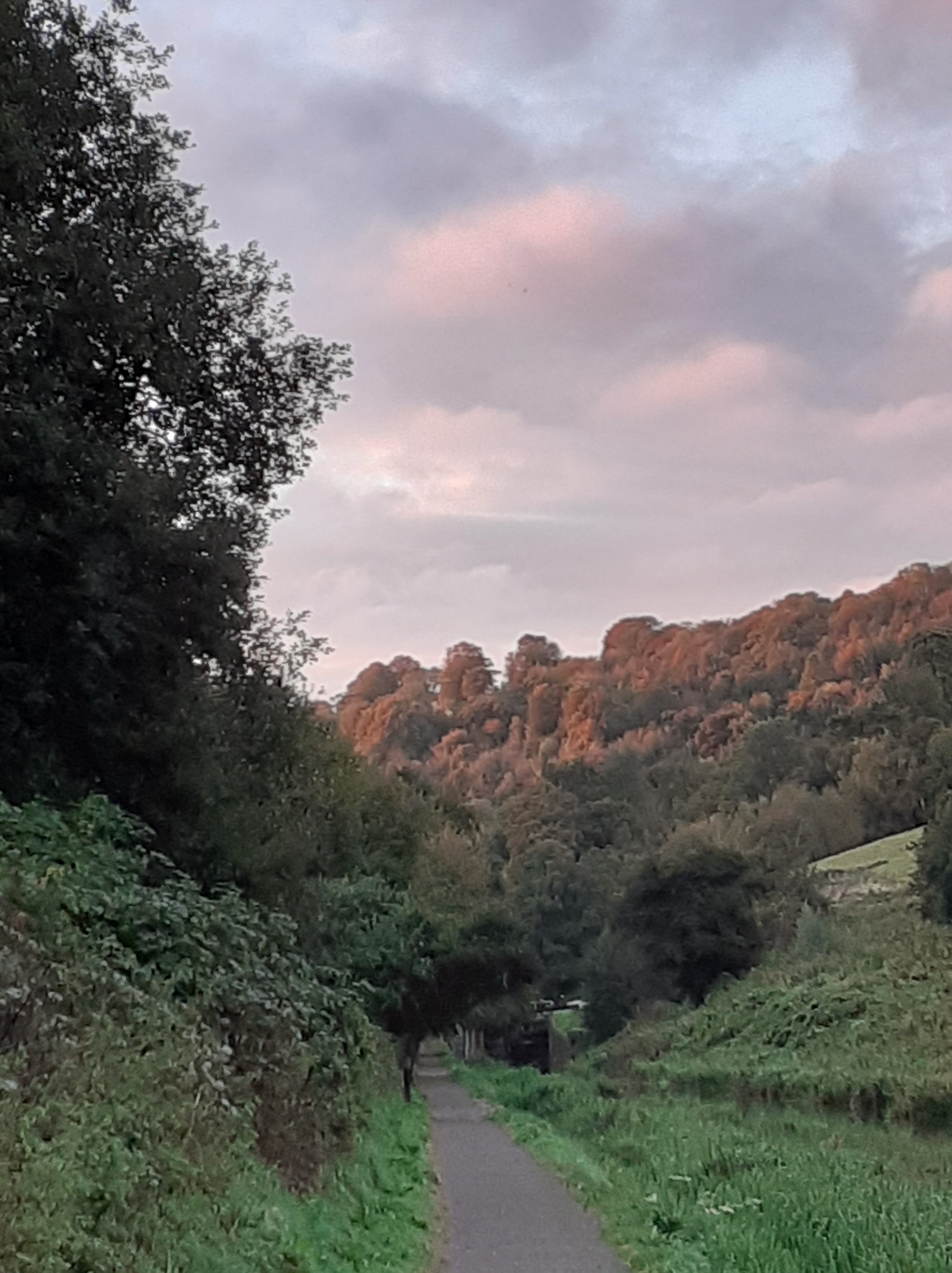
Another twenty minutes and the light seems to predominate, though I am not yet in full daylight. I am on the canal path. Even though the surroundings of the towpath are lushly green, the world I stand in is a little dusky, or dawny if there were such a word. Crepuscular. Looking up, I see pinkness in the sky, white clouds, hints of blue. I feel heartened and strangely moved by the effects of light on the autumn trees. They give me a warm sense of walking towards the sunrise, and encourage me to move on.

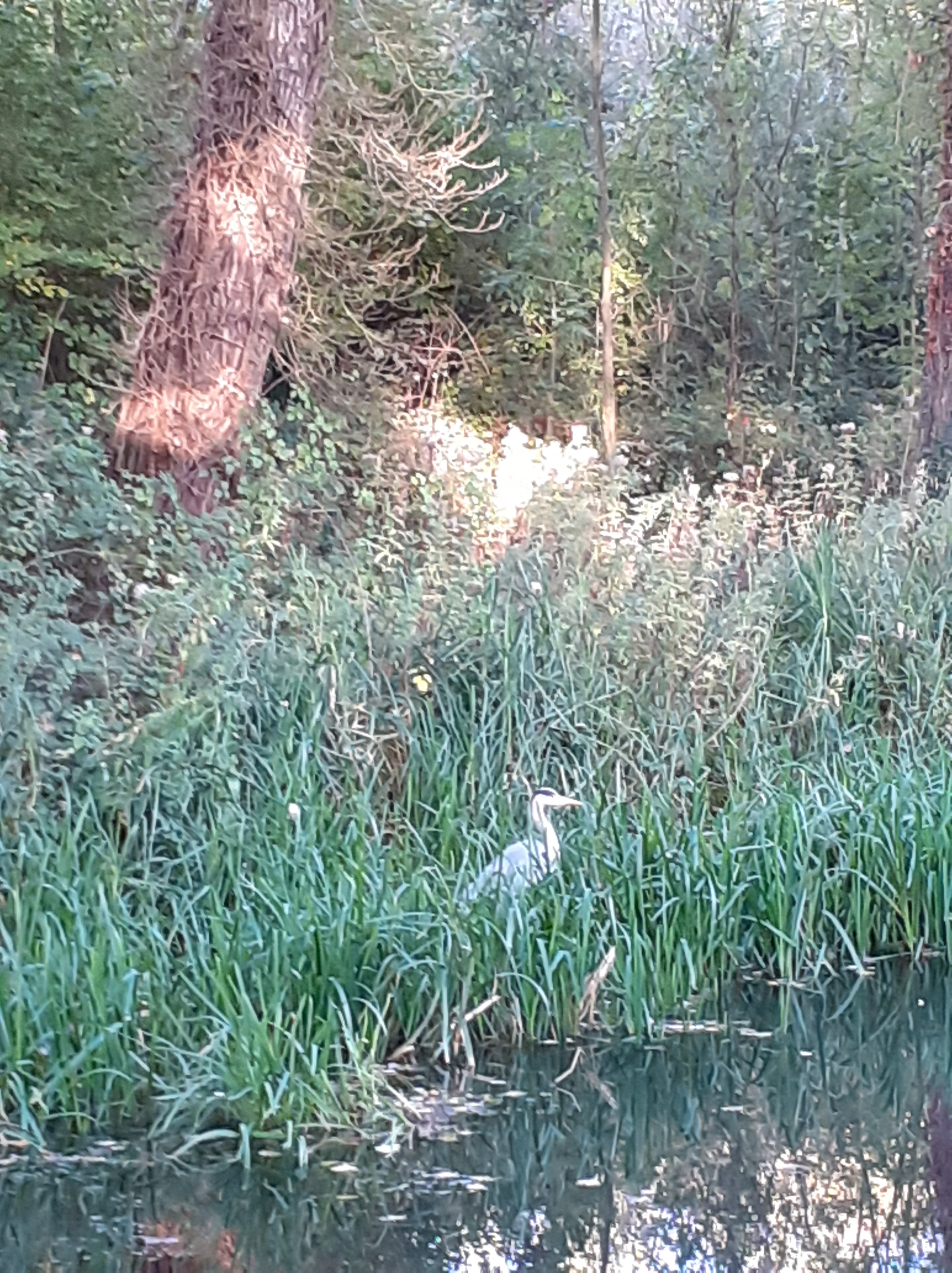
The picture immediately above is not part of my plan. It stems from delighted surprise followed by purposeful calm. Knowing about the heron in advance, I would likely have botched my picture in an anxious, clumsy effort to put the bird on record. I always have before. I think that herons fly away from me out of disdain rather than fear. This time I am a quiet human in a quiet world. I stand still for awhile and am almost elegant in my use of the phone. I wait for an intuited ‘right time’ before pressing the button. There is no drama at all. I do not know if the heron even notices me. The whole incident feels like a blessing of the still early morning.

Now, further on in my walk, the sun is on its ascent through the sky and I can picture it indirectly. The contrast between the sun kissed light areas and the shady ones is strong and vivid. I notice that, as the fading trees accept that their season is over, the ‘parasitic’ mistletoe – even the Druid Plant Oracle (1) calls it that – is gleefully green.

Now I am on my way back home. What draws my attention, after a little exploration, is the white owl. To me it looks very present and collected, situated just where it wants to be. It seems also to be acting as gatekeeper for its own arch.

I make stream of consciousness connections. I began my walk on the Bath Road. Bath is less than 30 miles away. There, the Romans turned a Celtic shrine into a city and called it Aquae Sulis (see http://www.romanbaths.co.uk/), acknowledging Sulis the Celtic goddess of the shrine. She was concerned with its waters and their healing potential whilst doubling up as a solar deity as well. The Romans called her Sulis Minerva, and that links her with owl wisdom. The white owl has a rich hinterland of associations for me. It makes the encounter significant. I note that two resonant avian images have met me on this walk into the sunrise, offering avenues for further contemplation.

(1) Philip & Stephanie Carr-Gomm The Druid Plant Oracle: Working with the Magical Flora of the Druid Tradition London: Connections, 2007. Illustrated by Will Worthington.

Earth Eclectic

music that celebrates Earth and speaks to the heart

Sarah Fuhro Star-Flower Alchemy

Follow the Moon's Cycle

Muddy Feet

Meeting nature on nature's terms

Rosher.Net

A little bit of Mark Rosher in South Gloucestershire, England

Becoming Part of the Land

A monastic polytheist's and animist’s journal

selkiewife

Selkie Writing…

Charlotte Rodgers

Images and words set against a backdrop of outsider art.

Prof Jem Bendell

living with metacrisis and collapse

Towint

The pagan path. The Old Ways In New Times

The Druids Garden

Spiritual journeys in tending the living earth, permaculture, and nature-inspired arts

The Blog of Baphomet

a magickal dialogue between nature and culture

This Simple Life

The gentle art of living with less

Musings of a Scottish Hearth Druid and Heathen

Thoughts about living, loving and worshiping as an autistic Hearth Druid and Heathen. One woman's journey.

Wheel of the Year Blog

An place to read and share stories about the celtic seasonal festivals

Walking the Druid Path

Just another WordPress.com site

anima monday

Exploring our connection to the wider world

Grounded Space Focusing

Become more grounded and spacious with yourself and others, through your own body’s wisdom

The Earthbound Report

Good lives on our one planet

Hopeless Vendetta

News for the residents of Hopeless, Maine