Contemplative Inquiry

This blog is about contemplative inquiry

Tag: Spirituality

ACTIVE IMAGINATION: BEYOND MICHAELMAS

In my Active Imagination post on 18 August this year, I wrote about an image of a wild park, a tree, deep twilight, the moon, a river, a gorge, and a bridge, a city of lights, a messenger and a message. I owned every feature of the image as part of myself.

I’ve had another one, loosely connected to the first and also numinous for me, and compelling. I’m in a walled garden, now within the city of lights. It’s as if I’ve got the message and crossed the bridge. So there’s an element of journeying in the process after all, hidden behind the images themselves.

The city is surprisingly spacious and offers a sweet slowness as well. It could also be described as a little run down and depopulated. But an easy place to be, not a stressful one. The specific place in which I find myself seems familiar, though subtly changed.  I am in Sophia’s Garden, with its unmistakeable fountain in the centre surrounded by red and white rose beds. And there are fruit trees – apple, pear and plum – trained around the walls. In memory it is a noon time place where bright sunlight shines on the scene and strikes the dazzling water of the fountain.

Now it is late afternoon and the sunlight is muted.  The water from the fountain cascades from its bubbling centre, and individual drops – each the whole of H20 – fly out for their moment in the sun before falling into a pool below. The fountain seems eternal. Its water seems eternal. The roses seem eternal. The rest of the garden is in an advanced autumnal stage – certainly beyond Michaelmas. At best, a limited time (overtime?) left for harvesting. The Goddess is dispersed in everything, as everything. I as observer am very much involved. In this realm I am her eyes and must stand as her wisdom too. There is no one else to do it.  For there is a sense in which, like Neo in The Matrix, we are each the One in our own Universe.

BOOK REVIEW. THE JOURNEY INTO SPIRIT: A PAGAN’S PERSPECTIVE ON DEATH DYING AND BEREAVEMENT

51bkGc06cCL__AA160_An important, multi-layered, deeply rewarding book. Especially useful for Druids and Pagans with any concern for death and dying, bereavement and grief, or what, if anything, lies beyond our 3D existence.  Also of potential interest to people with similar concerns in other spiritual traditions or none. Highly recommended.

Kristoffer Hughes says of himself: “In my spiritual life I have developed into a priest of the dead, a walker between the worlds, a psychopomp.” He is a priest of the Celtic Druid tradition who leads the Anglesey Druid Order. He is also an autopsy technologist working for the UK Crown Coroner’s Service. ‘The Journey into Spirit’, draws on both of these roles. It also draws on other, more closely personal experiences. These include the loss of near kin and friends, shared in a moving, loving way. They include the author’s ‘clairsentience’, a psychic gift that enables a felt sense of presence, or spirit, in relation to those who have died. All of these aspects together make for an unusual richness of narrative and subtlety of approach. The inclusion of ‘contemplations’ – reflective exercises – invites us to extend our own lived understandings. Hughes’ own conclusion is that “through death I have learned the meaning of life, and I am comforted by my understanding and experience of the hereafter”.

The book is divided into four parts, the first three based on the system of three circles of existence outlined in the ‘Barddas of Iolo Morganwg’. The first circle is Abred (AH-bred), the realm of necessity, the physical world of 3D reality. The second is Gwynvyd (goo-IN-vid), the realm of spirit, a psychic/subtle realm usually not perceived yet interwoven with Abred. The third is Ceugant (KAY-gant), the realm of infinity, a source or causal realm.

In the section on Abred, the author quotes the triad: “the three principal calamities of Abred: necessity, forgetfulness, death”. This is where we learn to be human, surrounded by life, subjected to death, governed by the cycle of birth, life and death. The author explores ‘apoptosis’ (the dropping off of petals or leaves) and the need for organic life to die to make room for new growth. Yet a divine spark continues to live in everything. The whole section explores life and the consciousness of death, including fear of it, and our questions about what if anything comes after, drawing on a wealth of knowledge, experience and anecdote.

The section on Gwynvyd looks at the grief process – including a wonderful section on the ‘seasons of grief’, more fluid than familiar ideas about ‘stages’ of grief, let alone medicalized views of grief that now want to treat it as depression after the first 14 days. Part of this is coming to terms with the reality and finality of death. Yet the section also identifies what survives. For the author, the personality dies with the body, yet a substrate of witness consciousness, understood as unchanging, continues in some sense as the stuff of spirit. The forgetfulness of Abred, held in the flow of experience, leads us to forget this substrate. Yet it is eternally there: never born, it cannot die. “What remains constant is the spirit, and upon it is the imprint of the human that lived and breathed here in this world”. This is where a felt sense of connection, if the feelings are strong and the senses attuned, is possible. Gwynvyd is also described as the realm of gods, archetypes, and any beings including discarnate humans who have a role in mediating between Gwynvyd.

Ceugant is the place, or state, of origin. “It is from Ceugant that existence originates and it is to Ceugant that the Universe sings”. Yet it is no-thing, like Ain Sof in the Kabbalah. The author says that this realm, or core reality, can be intuited through visions and meditations, but that no attempt to describe or point to it can be more than an indication. Hughes’ most suggestive metaphor is of a return to a primal sea of potential. In terms of English etymology, he links this to the word ‘soul’, originally a sea-referenced word – and it is universal soul, rather than any personal soul, that he has in mind. He does strongly hold the view that Ceugant represents an ultimate belonging for us all, and so is not something to be achieved through long arduous tasks and learning. It is just there, twice removed from us in our present state.

The final section offers a set of rituals and practices – including a vigil for the dying; preparation of the body; funeral for a Druid; saying goodbye, and a treatment of Samhain as a three day festival of the dead with appropriate practices for each day. Like the rest of the book, these are creative suggestions, based on experience and insight, which we are invited to look at and take on board to whatever extent is right for us.  A welcome text on a sensitive topic.

DRUID CONTEMPLATION AS PAGAN RELIGION?

Up until recently I’ve practised Druidry as a ‘spiritual path’ rather than religion, and I’ve not strongly identified as Pagan. On launching my contemplative inquiry at the end of 2011, I assumed that this stance would be reinforced through the adoption of practices more widely associated with other spiritual families.

Now I’m taking stock. I begin to see my contemplative work as a Pagan religious practice. Three developments in the past year have made a difference. One is the consolidation of the Gloucestershire contemplative group within a regular and more committed meeting cycle. The second is the work of gathering contributions for the ‘Contemplative Druidry’ book due to appear later this year, which I will talk about in later posts. The third is my personal contemplative practice, my main focus in this one. Overall I’m finding a specific Pagan Druid note and seeing it mirrored in others.

Practices change their meaning according to the tradition in which they are located. Meaning-making is as much cultural as personal, though cultures – and particularly sub-cultures – are also influenced by persons.  When a group of contemplative Christians adopted a version of vipassana (insight or mindfulness) meditation from Theravadin Buddhism in the 1970’s, they looked deeply into their own tradition and called the practice ‘centering prayer’.  This was not just a re-branding, but a re-framing. Christian contemplative prayer is a “blind intent stretching to God” according to the English 14th Century ‘Cloud of Unknowing’ (1), a favourite text of centering prayer practitioners. It is a devotional theism, a focused synthesis of love and will. By contrast the Insight Meditation Society, from whom Father Thomas Keating got the practice, talks about “fundamental techniques for sharpening your awareness and releasing painful mental habits” (2), and thereby loosening the hold of pervasive underlying unease (dukka).

The procedure is much the same for both traditions– silent sitting whilst the restless surface mind is asked to attend to the breath and so undergoes an attentional training. But the larger aims are not the same. Christian contemplatives indeed sharpen awareness and release painful habits on the way to more directly encountering the Divine: they call it divine therapy. Buddhist meditators may enter the state of ‘bodhicitta’, the awakened heart – a space that becomes available when enough of this work has been done. Yet at a more fundamental level one tradition holds Deity as central and the other is not concerned with it. Theravadins are strict about this. They do not share the view of ‘Buddha nature’ or ‘original face’ found in Mahayana and Tantric traditions.

So what about me working specifically as a Druid, and not just someone with a background in Druidry who also meditates?  I prefer to talk of meditation rather than prayer, though I like the sense of dedicating the meditation (and myself) as an offering. In my Pagan Druid universe, where logos and mythos work together, the offering is to the Goddess, as the generativity, energy and consciousness of the cosmos.

I like ‘centering’ as an idea – establishing a centre, drawing myself into the still point, almost a vanishing point, at the centre, and radiating out again into 3D reality, bringing some of the stillness with me. For me the still point at the centre is within the heart, making a link to heart awakening (bodhicitta) and heart wisdom, a term used by some champions of centering prayer (3). The heart sits between the belly and sexual/sacral centres below, and the head, the place of reflexivity and self-awareness, above. Heart wisdom draws both into itself, validating and balancing them. For it is a wisdom of organic life in nature, as lived by a human – the life of extended sensory perception and reflective consciousness, always responsively in relationship of some kind, both without and within. In doing this, drawing energy and attention to the centre, heart wisdom contradicts archaic transcendentalist notions of a stairway to heaven.

I think that’s enough to give my practice a distinctive Pagan Druid note, though it’s still a work in progress. I share the work of attentional training, sharpening awareness and releasing painful habits that gets done, within the process, whoever does it. But it’s in the context of a specific and developing view, or meta-narrative.

That being the case, why not call it part of a religion? The core meaning of religion, like yoga, is about being tied or yoked to a discipline: connection to theistic beliefs is secondary. Religion has a tougher and more intentional ring than ‘spirituality’, and now sounds appropriate to me.  So I now call my contemplative practices – solo meditation included – both religious and Pagan. I will continue to learn from any source I value. But my personal inquiry is focused on deepening within my chosen path – deepening in experience and deepening in understanding.

1: Anonymous (late 14th century) A book of contemplation which is called the Cloud of Unknowing, in the which a soul is oned with God. (Edited from the British Museum MS. Harl. 674 with an introduction by Evelyn Underhill) London: John M. Watkins, 1924

2: Salzberg, Sharon & Goldstein, Joseph (1996) Insight Meditation: an in-depth correspondence course Boulder, CO: Sounds True

3: Bourgeault, Cynthia (2011) The Wisdom Jesus: transforming heart and mind – a new perspective on Christ and his message Boston & London: Shambhala

BOOK REVIEW: TREES OF THE GODDESS

jhp52d894a224871Highly recommended. ‘Trees of the Goddess’ is the latest in a series of books written by Elen Sentier for Shaman Pathways. It is both deeply traditional and highly innovative – very much this author’s note. It goes with her championship of the way of the awenyddion, standing for the ever-renewing indigenous seership of Britain.

The innovation is simple yet profound. This book directly concerns our relationship with the trees, rather than letters or divination. That relationship, like everything on the planet, has a context of cycles and seasons. Our life-world, and that of the trees, is defined by the dance of earth, moon and sun. We have this in common with our ancestors, attested by their lore and stories, and it establishes our continuity with them. The book is a reflective celebration of these simple truths and their archetypal resonance. The framework of the ogham tree alphabet provides a strong and focused conceptual foundation, in service to direct experience. The suggested activities at the end – in sections on ways to work with the trees, moon bath, allies, making your ogham staves and spirit keeping, are an invitation to experiential exploration.

The book is traditional in its use of the ogham tree alphabet and largely faithful to Robert Graves’ ‘The White Goddess’. The author endorses his linking of 13 of the trees to Ogham consonants as they move through the 13 months of the lunar year from the winter solstice; and the linking of the 5 Ogham vowels to 5 stations of the solar year (the solstices, equinoxes and Samhain). She largely follows Graves’ trees, in his order, though there are some exceptions – the vine is banished, leaving bramble to take the full weight of Muinn; and there are some changes of terminology, like guelder rose instead of ‘dwarf elder’. I realise that many people today are highly sceptical of Graves’ work, but its problems are for me not relevant to this book. For ‘Trees of the Goddess’ is not much concerned with the history of ogham, its specific cultural origin, or its use as an alphabet. It is about here-and-now relationship with the trees, honouring the Goddess and aware that our ancestors had some such relationship too.

TRANSFORMATIONS OF A SPIRITUAL DRAGON

Here are some Taoist thoughts about the way of the ‘spiritual dragon’, which seems like a good Druid topic. They come from Awakening to the Tao, by Liu I-Ming, a set of ‘contemplations’ translated by Thomas Cleary (1). Liu I-Ming was a Taoist adept and a scholar of Buddhism and Confucianism. Born around 1737 he started writing on Taoism in the 1790’s and continued until around 1826.

“A dragon, as spiritual luminosity, can be large or small, can rise or descend, can disappear or appear, can penetrate rocks and mountains, can leap in the clouds and travel with the rain. How can it do all this? It is done by the activity of the spirit.

“What I realize as I observe this is the Tao of inconceivable spiritual transmutation. The reason humans can be humans is because of the spirit. As long as the spirit is there, they live. When the spirit leaves, they die.

“The spirit penetrates heaven and earth, knows the past and present, enters into every subtlety, exists in every place. It enters water without drowning, enters fire without burning, penetrates metal and rock without hindrance. It is so large that it fills the universe, so small that it fits into a hairtip. It is imperceptible, ungraspable, inexplicable, indescribable.

“One who can use the spirit skilfully changes in accordance with time, and therefore can share the qualities of heaven and earth, share the light of sun and moon, share the order of the four seasons, command nature in the primordial state, and serve nature in the temporal state. This is like the transformations of a spiritual dragon, which cannot be seen in the traces of form.”

In this piece a dragon is equated with “spiritual luminosity”, which elsewhere in Liu I-Ming’s work is linked to the experience of ‘Tao mind’, mind in accord with original nature. In this understanding, the individual human mind is the very vehicle that blossoms into Tao mind. Human mind, uncultivated, is a state of understandably confused and distracted latency. It is not, in this presentation, the dubious Old Adam of ‘ego’ we find in the semi-Christian New Age. The promise of cultivation is that, “great though the universe may be, it is as though in the palm of your hand; many though the myriad transformations may be, they are not outside the body” (2). This I think is what is meant by the capacity to “command nature in the primordial state, and serve nature in the temporal state”. It is not the statement of an arrogant or dissociated magician. It is more that the essence of nature is deeply within. So in Tao mind the practitioner stands and acts as that essence.

I like Liu I-Ming’s use of dragon imagery in this context. From my very human point of view, the vision of the sage (or Druid) with spiritual dragon as deeper identity works for the boy inside me as well as holding a complex and elusive teaching.

1: Liu I-Ming (1988) Awakening the Tao Boston & London: Shambhala (Translated by Thomas Cleary)

2: Cleary, Thomas (ed.) (1991) Vitality, energy, spirit: a Taoist sourcebook Boston & London: Shambhala (Shambhala Dragon edition)

TREE, GODDESS AND SERPENT

Time was, according to Anne Baring and Jules Cashford (1) when “the Tree of Life was one of the primary images of the goddess herself, in whose immanent presence all pairs of opposites are reconciled. Growing on the surface of the earth, with roots below and branches above, the tree was the great pillar that united earth with heaven and the underworld, through which the energies of the cosmos poured continuously into earthly creation. The animating spirit that moved within it was the serpent, guardian also of the fruit or treasure of the tree, which was the epiphany of the goddess, therefore the experience of unity”.

Without necessarily romanticizing the lived experience of the Bronze Age, we can honour the power and beauty of this imagery. Indeed, in our own time, kundalini yoga, based on a serpent metaphor (2), and Qabalah, based on a tree metaphor (3), have become popular working models. They are inscribed on the body and its subtle energy systems, allowing for an embodied contemplation; they connect earth to heaven and back again; they affirm the possibilities of both immanence and transcendence, energy and consciousness. They have a view of wholeness, realization, and integration.

But much of Western (and Middle Eastern) spiritual history has repudiated this frame of reference and followed a divergent path. Orthodox forms of Abrahamic religion are heirs to a radical reframe of the older goddess iconography, namely the Eden myth in Genesis, and hold to a doctrine of the two trees. Joseph Campbell (4) calls this a “mythic dissociation by which God and his world, immortality and mortality, are set apart in a separation of the Tree of Knowledge from the Tree of Immortal Life. The latter has become inaccessible to man through a deliberate act of God, whereas in other mythologies, both in Europe and in the Orient, the Tree of Knowledge is itself the Tree of Immortal Life and, moreover, still accessible to man”.

In the specific case of Western Christianity, the sense of dissociation increased with the victory of St. Augustine’s doctrines of original sin (intensifying the consequences of the fall) and predestination (the fall was always in the mind of God, its consequences already decided). These emphasize the moral impotence of human will and provide for an absolute alienation from the divine for anyone not of the faith, with a doubtful prospect of grace for those in it. To Augustine’s supporters this confirmed the need for external control (a Christian state and an imperially supported Church) in matters of religion (5).

This meant that contemplative mysticism was subject to forms of doctrinal surveillance that could be suspicious and unsympathetic even towards respected insiders. The contemplative could not legitimately aim for, or claim, unity or oneness as an experience, since God and the world were divided. Even in a period of doctrinally softened Christianity and increasing secularism, we are still living out the ill-effects of this inheritance. This is why, with a natural pre-disposition to a contemplative spirituality, I chose to locate it within Druidry, as an emerging tradition that keeps its feet on the ground.

1: Baring, Anne & Cashford, J. (1993) The myth of the Goddess: evolution of an image Harmondsworth: Penguin Arkana Books

2: Swami Satyananda Saraswati (1984) Kundalini Tantra Munger, Bihar, India: Yoga Publications Trust

3: Stewart, R. J. (2003) The miracle tree: demystifying the Qabalah Franklin Lakes, NY: New Page Books

4: Campbell, Joseph (1964) Occidental mythology: the masks of God Harmondsworth, England: Penguin

5: Pagels, Elaine (1989) Adam, Eve and the Serpent New York: Vintage

BOOK REVIEW: WHEN A PAGAN PRAYS

jhp5322da8f27f31Highly recommended When a Pagan Prays by Nimue Brown is an ambitious book, and a courageous one. On my reading it blends two voices. The first offers a cool appraisal of prayer by a Pagan Druid strongly influenced by existentialist philosophy. It tells us that value and meaning are not written in the stars: we have to provide them for ourselves, and it’s our responsibility as self-aware humans to do so. The second voice describes a personal journey, essentially a recovery story centred on re-connection with the “numinous”. This leads to a re-frame of scepticism about prayer and a hard-won willingness to say: “I like prayer. I’m not angry with it any more. I’ll keep doing it, keep asking and searching, doubting and wondering”.

I will start with the second voice, for me the predominant voice of the book, though it takes a while to be heard. This is at least in part because of the author’s decision not to make retrospective changes to early chapters in which this “somewhat agnostic Druid took an academic interest in prayer” and had not yet found that this “wasn’t going to work”. The shift came when she began an experimental practice and stayed with it long enough for it to bear fruit. She was helped by Thich Nhat Hanh’s view of how prayer affects us: “when love and compassion are present in us, and we send those outwards, then that is truly prayer”. This allowed a move away from an originally limited framing of prayer as petitionary prayer to named Deity/Deities) into something more spacious and allowing. As a Druid, she was also partly influenced by the idea of kami – the spirits or phenomena revered in Japanese Shinto. As spirits of the elements in nature, or ancestors, or animals, creationary forces in the universe, part of nature and not separate from it, such beings seemed on a scale approachable through attunement, potentially available for conversation.

At night and on the edge of sleep, the author decided to see what happened when she opened her heart and sought peace with herself. She wasn’t seeking “grace or purity”, but “wholeness, wellness, connection”. Prayer became “an act of opening awareness”, of being open to the numinous, open to the divine. She stood before the unknown, holding her mind in a state of readiness, not expecting coherence, in a place that is perhaps beyond both doubt and belief. And she was thus willing, both to say “my prayer has had real and discernable effects for me” and that “this proves nothing”. In the end she says: “there are aspects of being that cannot be usefully discussed in terms of ‘realness’. That may be where the gods live”. A voice that at first has been buried, and then emerged in a hesitant way, can now celebrate re-connecting with the felt numinosity of early life, able to let go of the “defensive rationalism” that for a time played a necessary role.

The rational voice, the first voice, still has its place. This book isn’t all personal story. It considers the nature of prayer, the ethics of prayer, the social functions of prayer, and practicalities of prayer. It looks at the relationships between prayer and ritual, prayer and magic, and the idea of life itself as prayer if lived prayerfully. The author thinks through prayer as a concept (or set of related concepts), and its context, and how most effectively and ethically to pray. This voice too is an honest voice. It does not make assumptions, or hypnotise the reader into agreement. We are asked to think and reflect. In the end, the first voice becomes the servant of the second. It’s questioning both demands and enables the integrity of the author’s personal experiment in prayer. The resulting fruits of practice, and the conclusions of the book, are owed to the presence of both voices, and the author’s willingness to be loyal to them both through a time when they were as yet unreconciled.

ACTIVE IMAGINATION

For some while most of my meditation has been about cultivating awareness in the here-and-now, somewhat in the manner now widely packaged as ‘mindfulness’. But it wasn’t always so. Over my life as a whole, I’ve had more investment in meditations that explore inner world imagery. These include the contemplation of still images (like Tarot trumps), OBOD’s sacred grove practice, visualisations involving journeys and encounters, and active imagination – Jung’s name for spontaneous and meaningful ‘daydreams’.

A little while ago I had such a daydream, and it got me wondering whether this kind of experience will again find a place in my life. It was during the day, in high summer. But I had a powerful and compelling image of a late twilight, lit by a near full moon, well into the autumn. I was standing in an altered, or stylised, version of a real place. I was at the edge of a park in Bristol (although it was wilder in the vision) overlooking the Bristol Avon. My eyes turned left, and I could see a more primitive version of the Clifton suspension bridge, a small city of lights in what is now Clifton on the far bank of the river, and the vague shape of the gorge. I was standing by a willow tree (a real one, with which I have had a connection for many years). I was approached by an androgynous young person, clearly a messenger from the city of lights visible above me on the Clifton side. And I was invited to remember that in this scene I am everything that I can imagine, or I would not be imagining it.

So over time I have become the wild park, the tree, deep twilight, the moon, the river, the bridge, the gorge, the city of lights, the messenger and the message. I can make a story about them all and interpret it. The symbolism is archetypal and so in a sense obvious enough. But I’ve held off doing too much of that. I’m more concerned with the power and suggestiveness of the individual images. Overall, I take it as a declaration that my active imagination channel is open, with a strong sense that I should allow the images their spontaneity and not turn this into a formal practice. I already have a formal practice, and it is fine as it is. This is something different.

THE EYE OF CONTEMPLATION

In the middle of the ninth century the Irish scholar and contemplative mystic John Scotus Eriugena got into trouble with the leaders of his church. He publicly opposed St. Augustine’s doctrines of original sin (intensifying the consequences of the fall) and predestination (the fall was always in the mind of God, its consequences already decided). He called them “a most cruel and stupid madness”.

John lived in France, working for Charlemagne’s grandson Charles the Bald, King of the West Franks. John’s role was to superintend the palace school and to translate rare Greek texts. Although a layman, he had been educated in an Irish monastic school – the Irish monastic schools at the time being among the very few places in Western Europe where Greek was still taught. He countered the Augustinian orthodoxy with the Neo-Platonist argument that ultimately God, the One, must necessarily contain everyone and everything, or not be the One. His arguments were dismissed, in an interesting choice of calumny, as “pultes Scottorum” (Gaelic porridge – since ‘Scotus’ then referred to a language group rather than a place). Nonetheless he stuck to his position, under the protection of his king, and managed to avoid obeying a summons to Rome to explain himself.

John makes a somewhat pointed statement about the spirit of contemplation versus a certain kind of activism in his Homily on the Prologue to the Gospel of St. John. As I read it, Peter founded the church in Rome is identified with the papacy, whereas John Scotus is modelling himself on the gospel writer. “Peter is always presented as the model of faith and action, while John portrays the type of contemplation and knowledge. The one indeed leans on the bosom of the Lord, which is the sacrament of contemplation, while the other often hesitates, which is the symbol of restless action. For the execution of divine commands, before it becomes habitual, may shatter the pure brilliance of virtue and fall short in its judgements, clouded by the fog of sense-bound thinking. The keenness of profoundest contemplation, on the other hand, once it has perceived the countenance of the truth, neither hesitates, nor slips, nor is darkened by any cloud”. In a sense contemplation becomes a quiet resistance: resistance supported by a way of stillness and insight.

(This story is told in Christopher Bamford’s (2000) The voice of the eagle: the heart of Celtic Christianity: John Scotus Eriugena’s homily on the prologue to the Gospel of St. John Great Barrington, MA: Lindisifarne Books (New translation, with reflections and commentary. Foreword by Thomas Moore.) the book was published in 2000 and there is a Kindle edition.

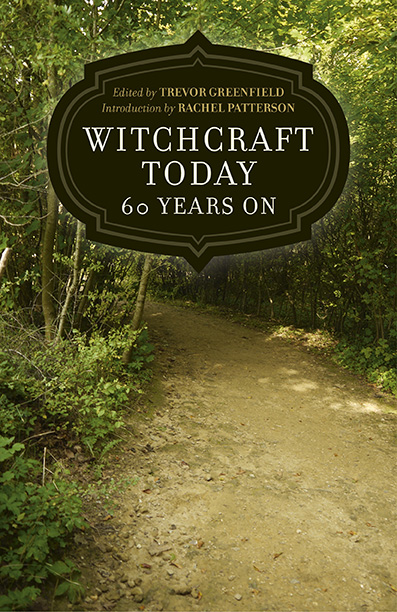
BOOK REVIEW: WITCHCRAFT TODAY – 60 YEARS ON

jhp530b85f08e66fThis is a timely addition to Pagan literature, highly recommended to anyone interested in the modern heritage of witchcraft, paganism and new (or new old) spiritual movements more generally. This book celebrates the 60 years since the publication of Gerald Gardner’s Witchcraft Today in 1954, affirming the confidence, dynamism and increasing openness of this growing tradition from a diverse range of insider perspectives.

The book is divided into two parts. The first, ‘Forms, Themes and Values’, begins with an account by Philip Heselton of how Gardner came to write Witchcraft Today. It goes on to look at ten specific forms of modern witchcraft that diverge from Gardner’s own, starting with Alex Sanders and going on to look at more radical departures like  Seax Wica and the feminist Dianic tradition. Some of the other paths described are less formal and ceremonial than the original models. Some are group based and others solitary.

Some can be distinguished from witchcraft altogether (the Egyptian Magical Tradition and Hekatean practice based on the approach of the Chaldean Oracles, to name two). The same issue arises at the end of the book, where a contributor talks about a journey through an Ovate Grade training in the Order of Bards, Ovates and Druids (OBOD).  In each case, it matters to the practitioner that they are practising these traditions as a form of witchcraft.  Their inclusion in the book affirms the value of self-identification in spirituality and adds to an overall feel of inclusiveness. Any question would be about the potential weakening of the term witchcraft itself, in a context of such porous boundaries.

Part 1 also includes a chapter on the male experience of witchcraft and ends with one on ‘Witchcraft Tomorrow’ by David Salisbury, which demonstrates optimism about future possibilities and explores the issues of community building and leadership. Common themes in Part 1 include tensions between ‘preservation’ and ‘invention’ in lineage development, and ways of reconciling them. Common values include an avoidance of evangelism and a commitment to the ultimate autonomy of the practitioner.

Part 2, ‘Journey on a Crooked Path’, presents ten personal journeys.  It is particularly good at describing the ways in which people sense unmet spiritual needs in early life and make the connections (through reading, significant life events or personal encounters) that lead them on to their chosen paths. Throughout the book, there’s the sense of person and path choosing each other. They know when it’s right – and often have to go to some trouble to find their home.  The finding is reflected in the enthusiasm and commitment of the many people who have contributed to this valuable book.

Earth Eclectic

music that celebrates Earth and speaks to the heart

Sarah Fuhro Star-Flower Alchemy

Follow the Moon's Cycle

Muddy Feet

Meeting nature on nature's terms

Rosher.Net

A little bit of Mark Rosher in South Gloucestershire, England

Becoming Part of the Land

A monastic polytheist's and animist’s journal

selkiewife

Selkie Writing…

Charlotte Rodgers

Images and words set against a backdrop of outsider art.

Prof Jem Bendell

living with metacrisis and collapse

Towint

The pagan path. The Old Ways In New Times

The Druids Garden

Spiritual journeys in tending the living earth, permaculture, and nature-inspired arts

The Blog of Baphomet

a magickal dialogue between nature and culture

This Simple Life

The gentle art of living with less

Musings of a Scottish Hearth Druid and Heathen

Thoughts about living, loving and worshiping as an autistic Hearth Druid and Heathen. One woman's journey.

Wheel of the Year Blog

An place to read and share stories about the celtic seasonal festivals

Walking the Druid Path

Just another WordPress.com site

anima monday

Exploring our connection to the wider world

Grounded Space Focusing

Become more grounded and spacious with yourself and others, through your own body’s wisdom

The Earthbound Report

Good lives on our one planet

Hopeless Vendetta

News for the residents of Hopeless, Maine