GREYFRIARS PRIORY HAIKU
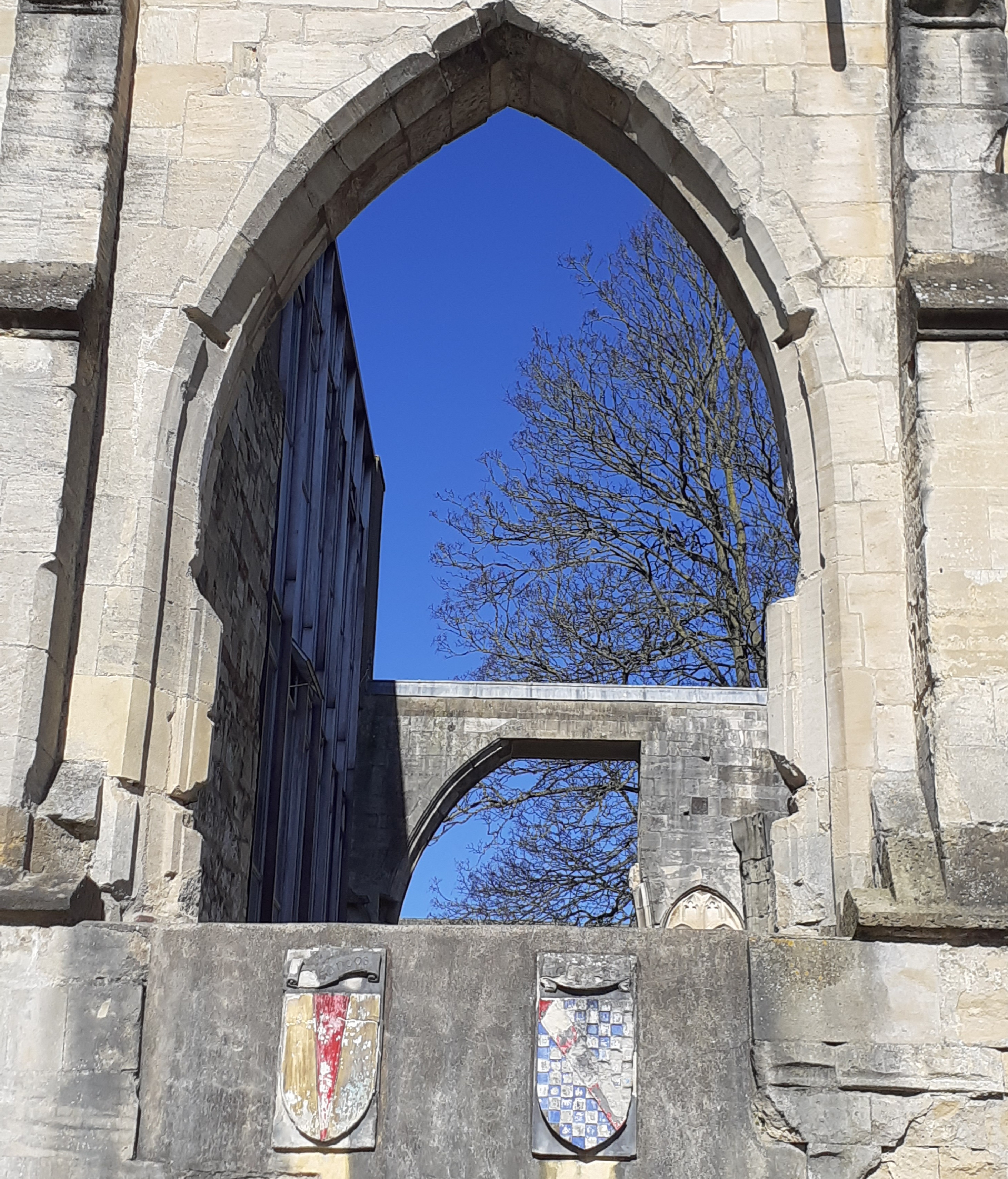
within the Priory ruins
this weathered arch
frames a living sky.
Note: The priory is the Greyfriars Priory, Gloucester, England

within the Priory ruins
this weathered arch
frames a living sky.
Note: The priory is the Greyfriars Priory, Gloucester, England
Recently I have wondered whether to change the name of this blog from Contemplative Inquiry to Contemplative Diary. I won’t, because the inquiry focus has been very strong over the years. It is ancestral to the diary approach and a deep influence upon it. Some of the older inquiry posts continue to be read. The most popular is A Parable About a Parable first published in July 2018 – https://contemplativeinquiry.blog/2018/07/31/.
But most of my current posts are not like that. They tend to be more informal, more embedded in daily life, more obviously situated in time, place and everyday personal experience. My most recent post, Spring Forward – https://contemplativeinquiry.blog/2025/03/31/ – is a case in point.
This shift in emphasis developed in the years of the Covid pandemic and is characterised by living the Wheel of the Year day-by-day (rather than festival by festival) in a specific location. I use my own photographs much more than in the early days of the blog. For me, these changes fit with a name like Contemplative Diary.
Yet the diary approach is itself a fruit of inquiry. It has emerged as I become relatively less concerned with fundamental questions. They are now settled for me as far as they can be in this life. My current work comes out of an individual life practice grounded in modern Druidry, with a firm ethical basis and a light touch in formal ritual and meditation. All of these are illuminated by the sense of a divine presence from which the world, including me, is not separate.
Contemplation and inquiry are still at the heart of my work, in simpler and more relaxed forms than was right for the early years. The diary approach marks an emerging phase of my contemplative inquiry, rather than a break with it. Where it will take me going forward, I cannot yet say.
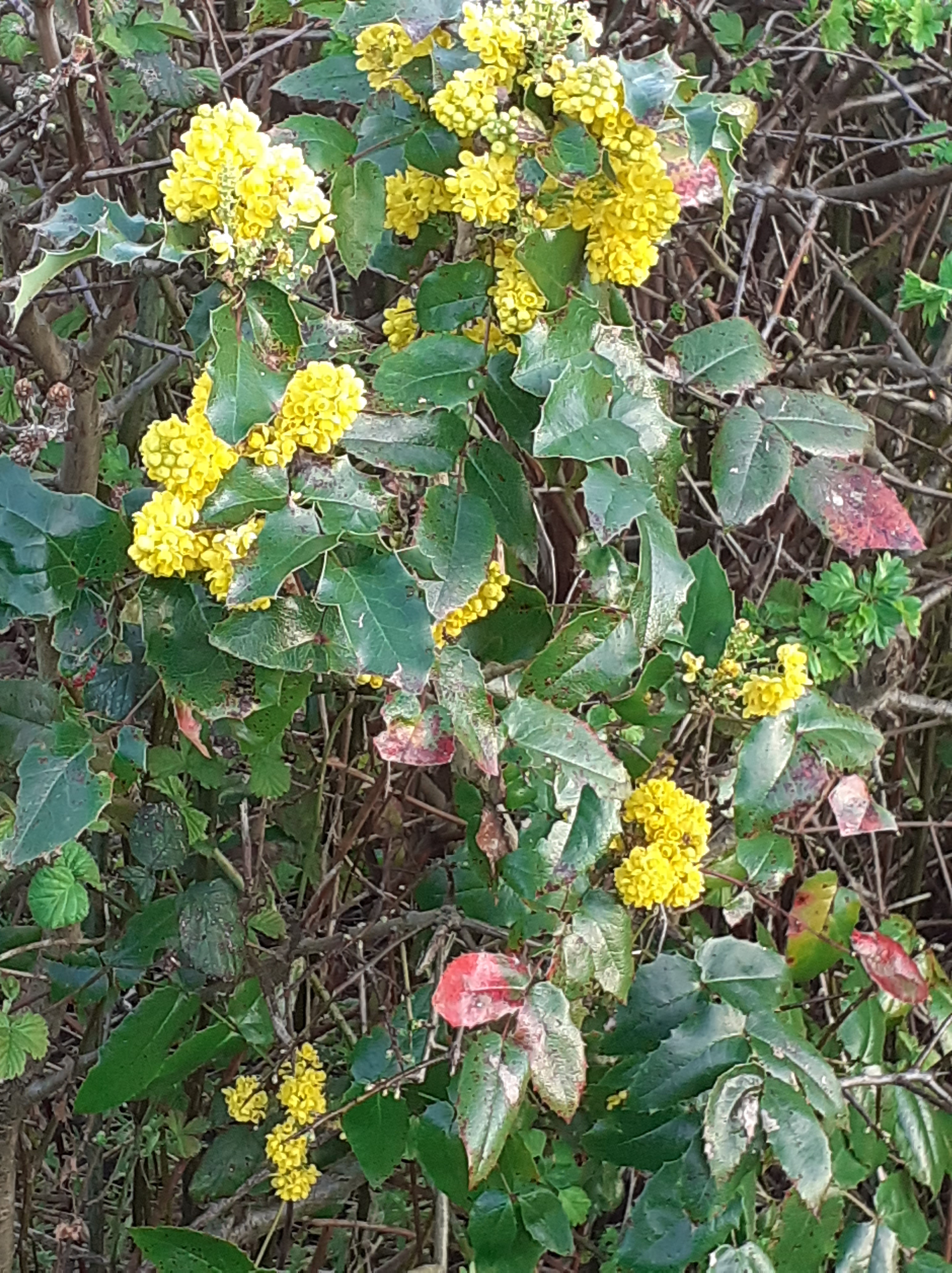
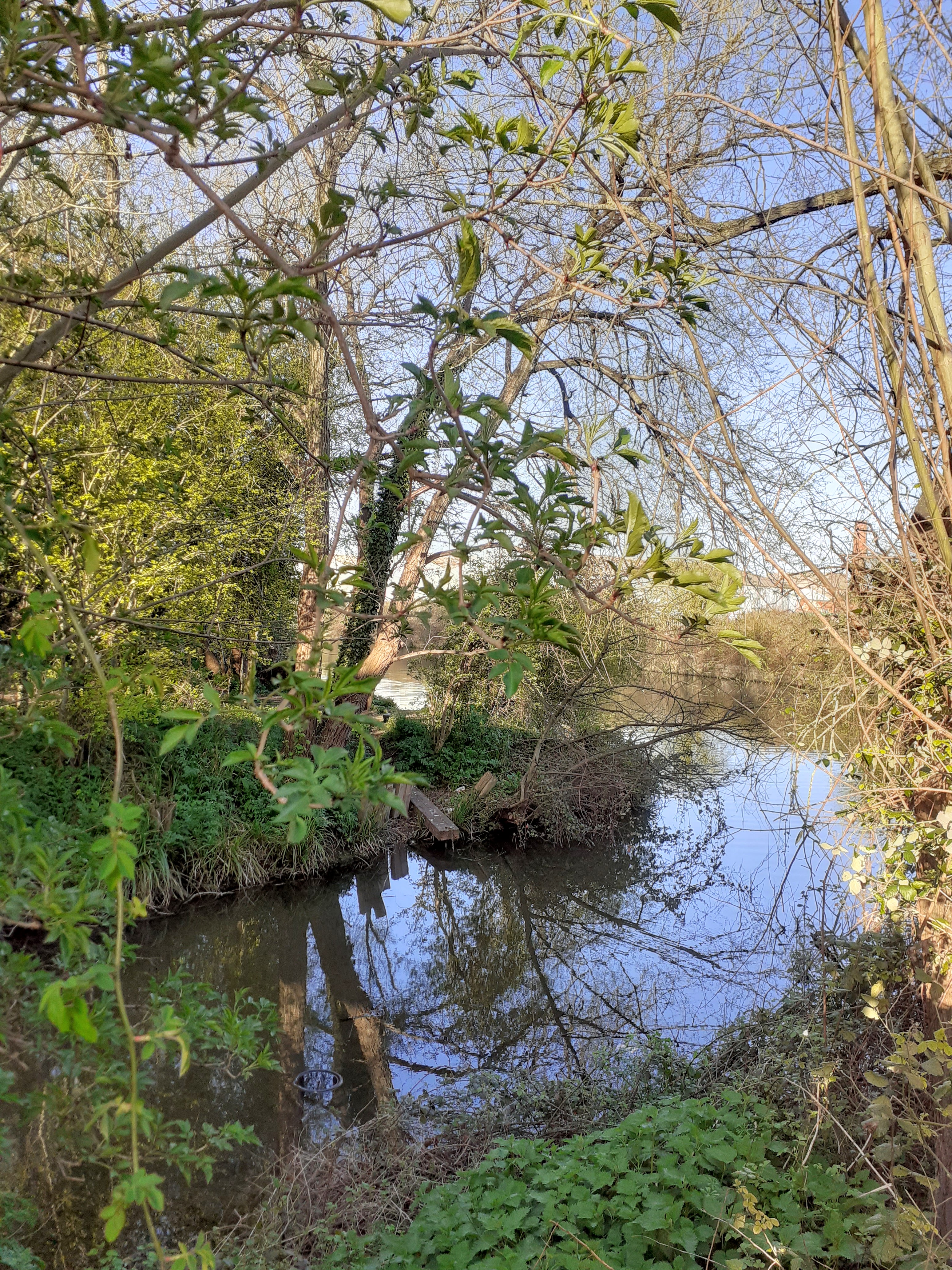
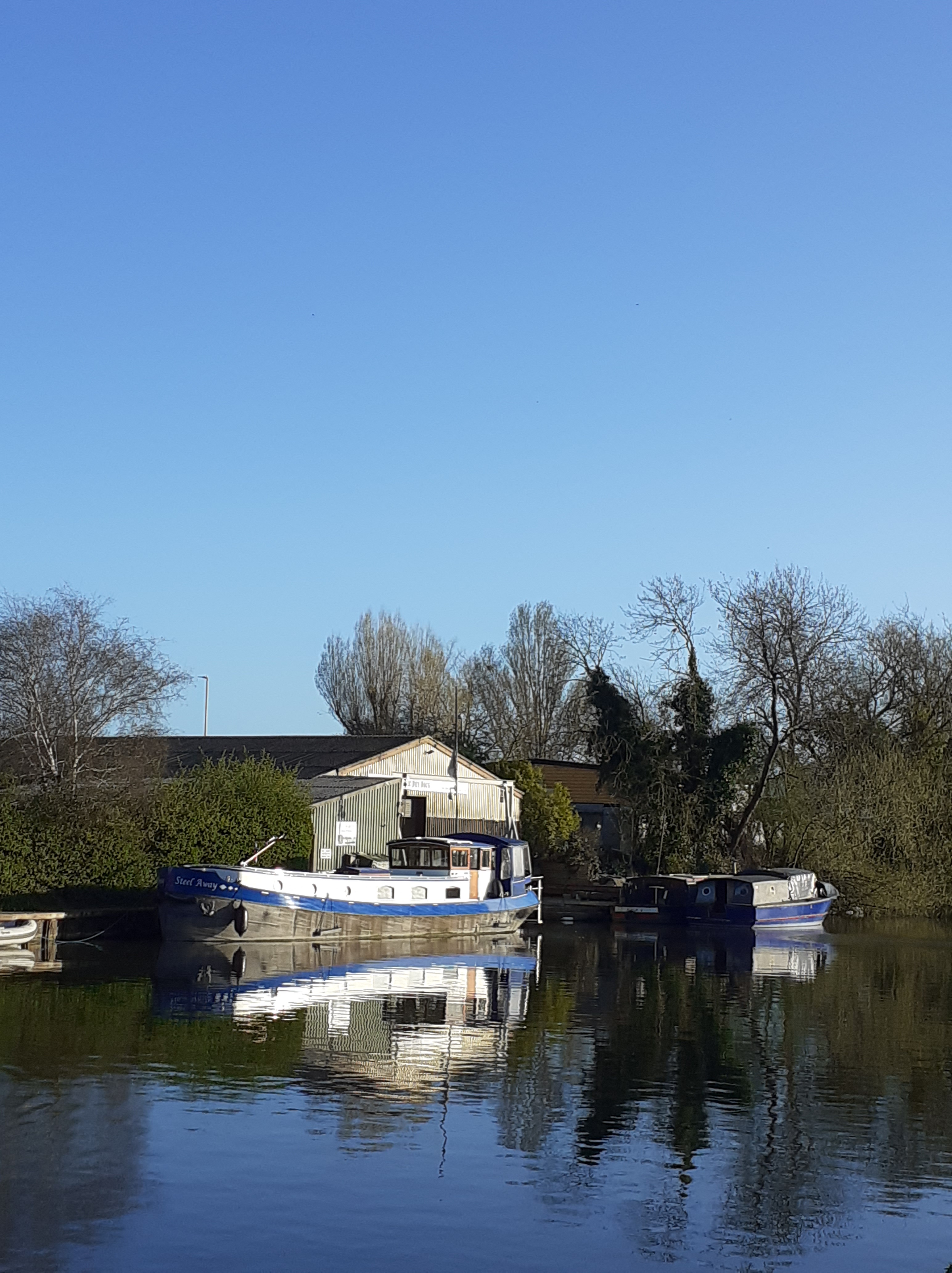
I’m on my first canal walk in a while. The picture above shows a small inlet into the bankside woods. It is Sunday 30 March, the first day of British Summer Time. I am encountering a long sunlit evening and feeling energised by the experience. I am drawing power from the clarity and strength of the light.
Sunset will be around 7.30 pm. The pictures above and below were taken a little before 6. I am glad to see blackthorn, a wood said to be used for wizard’s staffs, proclaiming the magic of spring.

A little later, I focus my attention on a vivid yet tranquil blue sky, presiding over the canal scene below. I have the same powerful sense of of clarity and strength in the light, and of drawing energy from it.
Later on, at about 6.45 pm, I find a softer, gentler quality of light as I walk homewards through the woods. Looking down, I see it on my path.


Looking up, I see soft light on slender branches and the foliage below them. It feels like celebration.
My final image is of sunlight reflected in Gloucester Docks, both on a warehouse window and on the water. The sun is low now and beginning to set. Rather than pointing at it, as it descends, I point away from it to honour and record its power in another way. This marks the completion of a rejuvenating and regenerative spring forward walk.


Blessings of the season! The picture above was taken at 6.46 am, a little over half an hour after sunrise here in Gloucester. It is 20 March, the day of the Spring Equinox, which will be at 9.01 am this year. It is traditionally a time of celebration, a point of balance as we move into the light half of the year and the promise it brings. After a tough, and largely housebound year, I dare to hope that Elaine and I will be able to widen our horizons as her healing continues.


I use the word ‘myth’ in a positive sense. Myth is a gift of imagination. It is a way of seeing beyond the limiting horizons of everyday life and culture. We can intuit a fuller, more spacious and generous reality, a reality with multiple dimensions. The specific myth of the journey, or quest, has had a powerful role in human history at both the personal and collective levels.
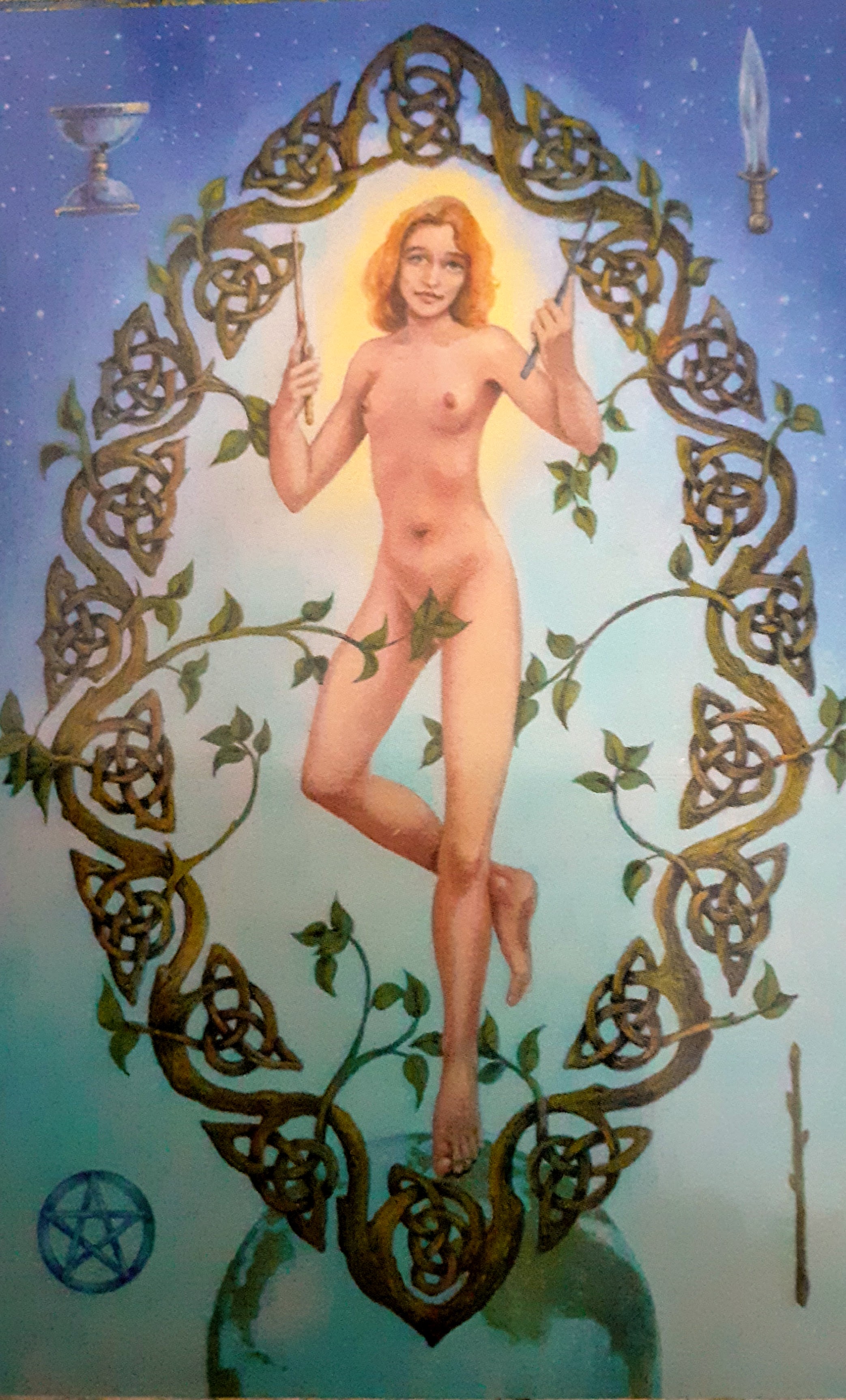
The picture above is the Fool, or innocent, as depicted the The Druidcraft Tarot (1). Trusting their inner knowing, the Fool steps over a cliff. It is a spring dawn, and a new beginning. The major Arcana are a map of the journey, which in essence, here, is seen as a refinement of the soul to the point where union with the divine is a lived experience. This experience is available here, in the world, and so the card indicating the completion of the journey (see picture below) is here called The World.
The mythology of the deck draws on the Welsh Celtic story of Taliesin and Ceridwen as well as the pan-European Arthurian grail quest, and broader Western Mysteries understandings derived from the Hermetic Order of the Golden Dawn. But any individual journey is its own new beginning and its fruits depend of making the journey in real time, and not clinging too tightly to traditional understandings.
In my own spiritual life, I have drawn both on the myth of the journey and another, apparently contradictory myth – that of the eternal moment, the transfigured here-and-now. Again, I find no disparagement in the word myth. This says that non-separation from the divine is a given. There is nowhere to go and nothing to do. Ultimately, there is no ontological difference in being awake to this reality than in being asleep to it. Yet lived experience is transformed by being awake to this reality and living from the awareness.
From a human perspective, coming to this awareness and then living it are, experientially, a journey in themselves. Another way of looking at it would be to say that I am the Fool and the Universe (my preferred term for the final card) at the same time, every day. In this way, I reconcile the myth of the journey with the myth of the now, and draw strength from both.
(1) Philip & Stephanie Carr-Gomm The Druidcraft Tarot: Using the Magic and Wicca and Druidry to Guide Your Life London, UK: Connections, 2004 (Illustrations by Will Worthington)

I am connecting with spring and its urgent affirmation of life – its green shine and fecundity. It is the sunrise season, the season of early growth. For me, where I live, the immediate pre-equinox period often generates a strong feeling of dynamism and emergent potential. I am in sync with the awakening earth.
Elaine’s return from hospital and the enhanced clinical support she is receiving are helping me to live this season more fully. In our joint lives we are both feeling more agency in shaping a new phase in our life together.
In this moment I feel refreshed and optimistic within my Druid contemplative path. I have adjusted my formal practice so that I have two practice sessions in the day, both of them roughly twenty minutes long. The first, at the beginning of the day and standing, is affirmative and dynamic. It includes body and energy work and a theme of healing and rejuvenation. The second, at the end of the day and sitting, is contemplative. It includes breathwork, a mantra meditation using beads, and prayer. In the modern Druid manner it includes a commitment to the collectively imperilled qualities of love, peace and justice. This shift is having a renewing and reinvigorating effect on me, as befits the season: another way of gratefully affirming the gift of a human life.


Celebrating a moment as sunlight floods the room. I am happy to point my phone camera more or less at the sun. It is not the done thing and the result may be odd. But it does reflect my experience of the moment itself.
My wife Elaine has just come home from a week in hospital. It was a necessary week, and she is the better for it. Nonetheless we both have a slight sadness that it coincided with the best and brightest weather of 2025 so far, while our attention was otherwise engaged.
This moment is one of celebration of her return to an apartment wearing its warmest and brightest face. It is a contemplative moment, extending in time until it morphs into gentle action. We go outside. Elaine basks in the sun, recuperating and healing.

I am energised and curious. I move closer to the blossoms I saw through the window and take a picture. I am grateful to be reunited with Elaine and freed from my own worst fears. I am grateful for a spring that is now offering both brightness and warmth. I am glad of this day.


4.30 pm, 25 February 2025. Sunrays are caught in willow branches. The sun is a little stronger today than it was in full winter. The willows have begun a tentative greening. But there is much shadow in this picture. The day has begun its decline.
The world retains a winter feel for me. I aware of the change in my local park, but I do not altogether trust this spring. In the moment of taking this picture, I see a world in shadow, softly darkened. This is partly because of where I have chosen to stand. It is the image I seem to want.
In the brighter picture below, I show daffodils growing among dead leaves. Daffodils are iconic harbingers of spring, yet not my sole focus. Both pictures were taken intuitively and without any mentally registered intent. It seems as if something in me wanted to make a statement.
I know and accept that I am in the winter of my life. In the wheel of my own life, I can’t quite see how my winter will move into spring, certainly in any personal sense. Dissolving into interbeing is easier to imagine.
My customised Druid liturgy names winter as the season of dying and regeneration. It has associations with law and faith. I understand law in a karmic or ‘natural law’ sense. But it can also be an acknowledgement of the nature we see around us. Faith, in part, concerns the willingness to accept dying and regeneration without knowing what they are like. In my last post, I discussed (1) ‘being nobody’. My current reflections take this suggestion a step further. Evidently, I still have much to learn.
(1) https://contemplativeinquiry.blog/2025/02/21/being-nobody

“I’m nobody.
So are you.
What ecstasy!
Join me.” (1)
According to Andrew Harvey (1), the translator of this brief poem by Kabir, “Kabir is far more than a poet; he is a universal initiatory field, as expansive as Rumi and as embodied, radical and ferocious as Jesus”. I certainly experience a creative shock in Kabir’s celebration of being ‘nobody’ in a world where being ‘somebody’ is such a highly valued social accomplishment. But what if the accomplishment distracts from something else, something of greater value? Kabir invites us to share the ‘ecstasy’ of being nobody. In another of his verses, which were performed as songs, Kabir links this ecstasy with love:
“You can’t grow love in gardens
Or sell it in markets.
Whether you’re a king or peasant
If you want it
Give your head and take it”.
In my experience, Kabir’s work opens a door to forms of contemplation and creativity in which my personality and personal biography are not the primary focus. Especially in darkening times, bearing witness to the way of the heart, and drawing strength from it, is a form of sacred activism. The liturgy of modern Druidry speaks of a love of justice and a love of all existences, embedded in a living relationship with Spirit. This for me is a commitment to live from.
(1) Kabir Turn Me To Gold: 108 Poems of Kabir Unity Village, MO: Unity Books, 2018 Translations by Andrew Harvey. Photographs by Brett Hurd.
(2) See also https://contemplativeinquiry.blog/2021/01/30/turn-me-to-gold/
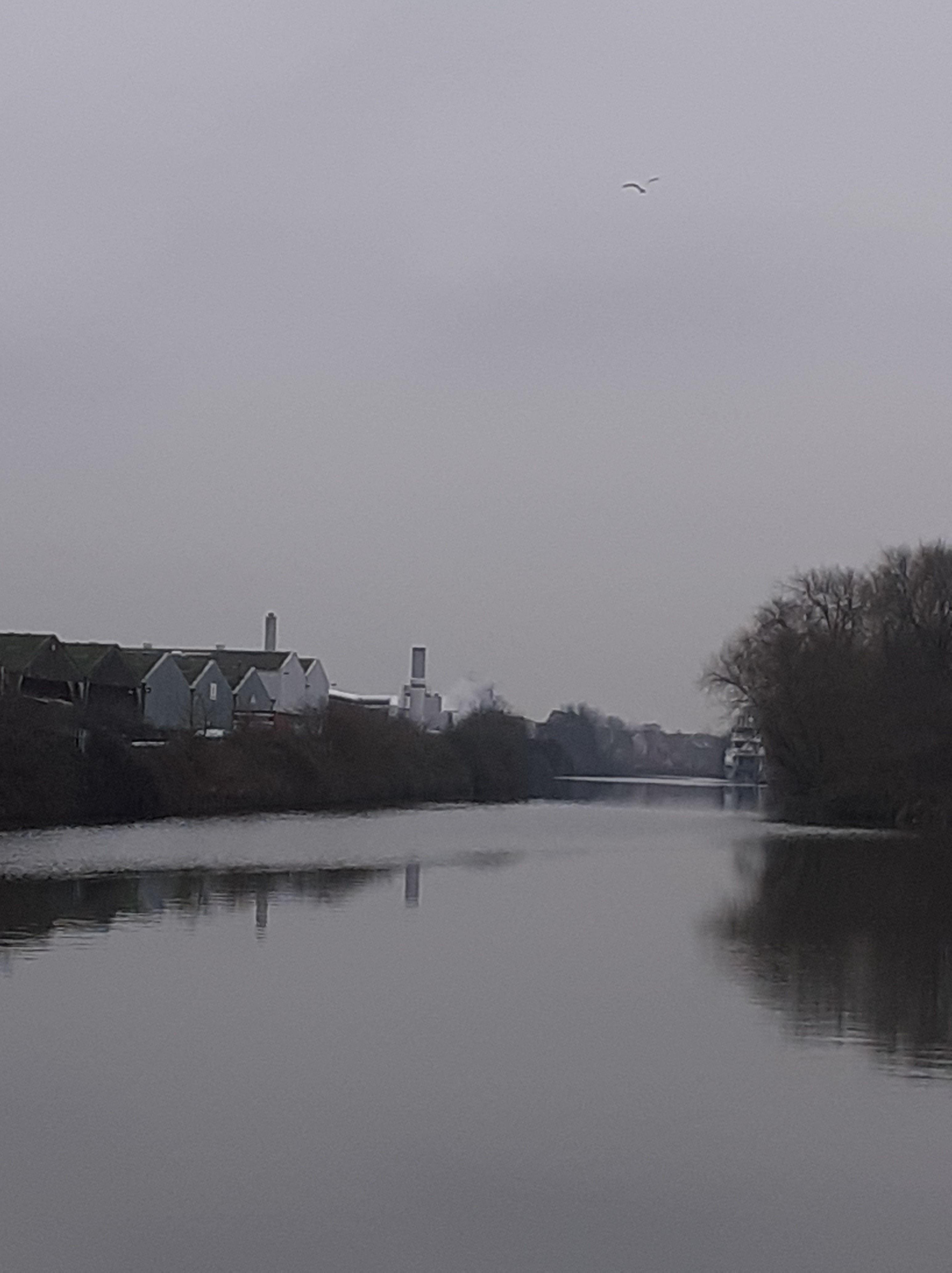
I am standing in a favourite spot, enjoying the expanse of water in front of me. I am missing the sun. I have been missing it for awhile, as the bright days of early February disappear into memory. I am living among shades of grey.
Standing in this space, I feel both sadness and reassurance. The late winter has turned gloomy and I am somewhat depleted. Not much energy or bounce. At the same time I continue to feel held, powerfully, within this landscape and my life.
Looking now at my apparently monochromatic picture, I see subtle variations within the grey. I am drawn to the ripples and reflections in the water. I am aware of the shapes of buildings and trees against a background leaden sky in which a seagull is flying. There are life and movement here, and their promise that the wheel of the year will continue to turn.
music that celebrates Earth and speaks to the heart
Follow the Moon's Cycle
Meeting nature on nature's terms
A little bit of Mark Rosher in South Gloucestershire, England
A monastic polytheist's and animist’s journal
Selkie Writing…
Images and words set against a backdrop of outsider art.
living with metacrisis and collapse
The pagan path. The Old Ways In New Times
Spiritual journeys in tending the living earth, permaculture, and nature-inspired arts
a magickal dialogue between nature and culture
The gentle art of living with less
Thoughts about living, loving and worshiping as an autistic Hearth Druid and Heathen. One woman's journey.
An place to read and share stories about the celtic seasonal festivals
Just another WordPress.com site
Exploring our connection to the wider world
Become more grounded and spacious with yourself and others, through your own body’s wisdom
Good lives on our one planet
News for the residents of Hopeless, Maine
 Contemplative Inquiry