Contemplative Inquiry

This blog is about contemplative inquiry

Tag: Spiritual inquiry

ALNEY ISLAND IMAGES

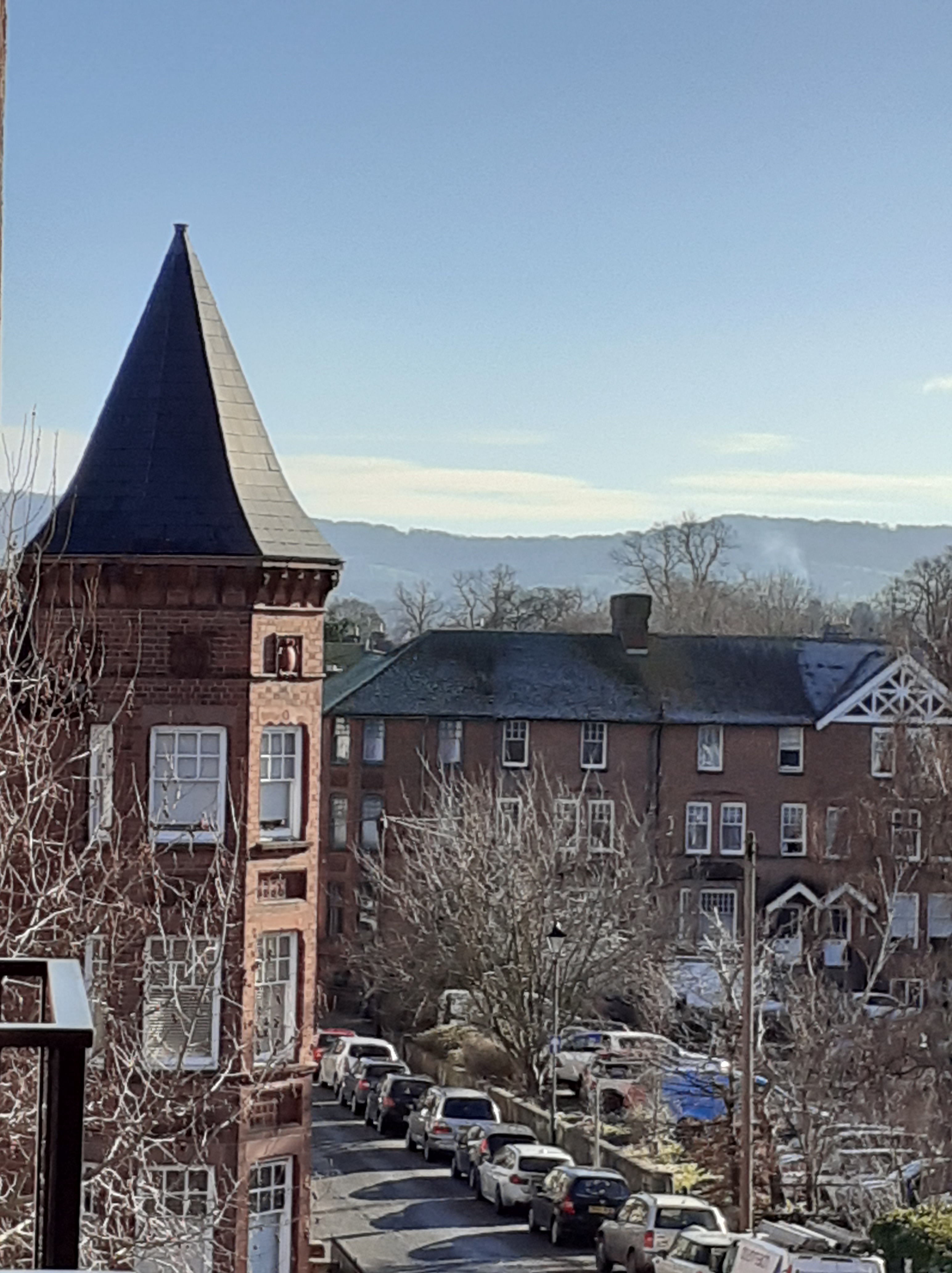
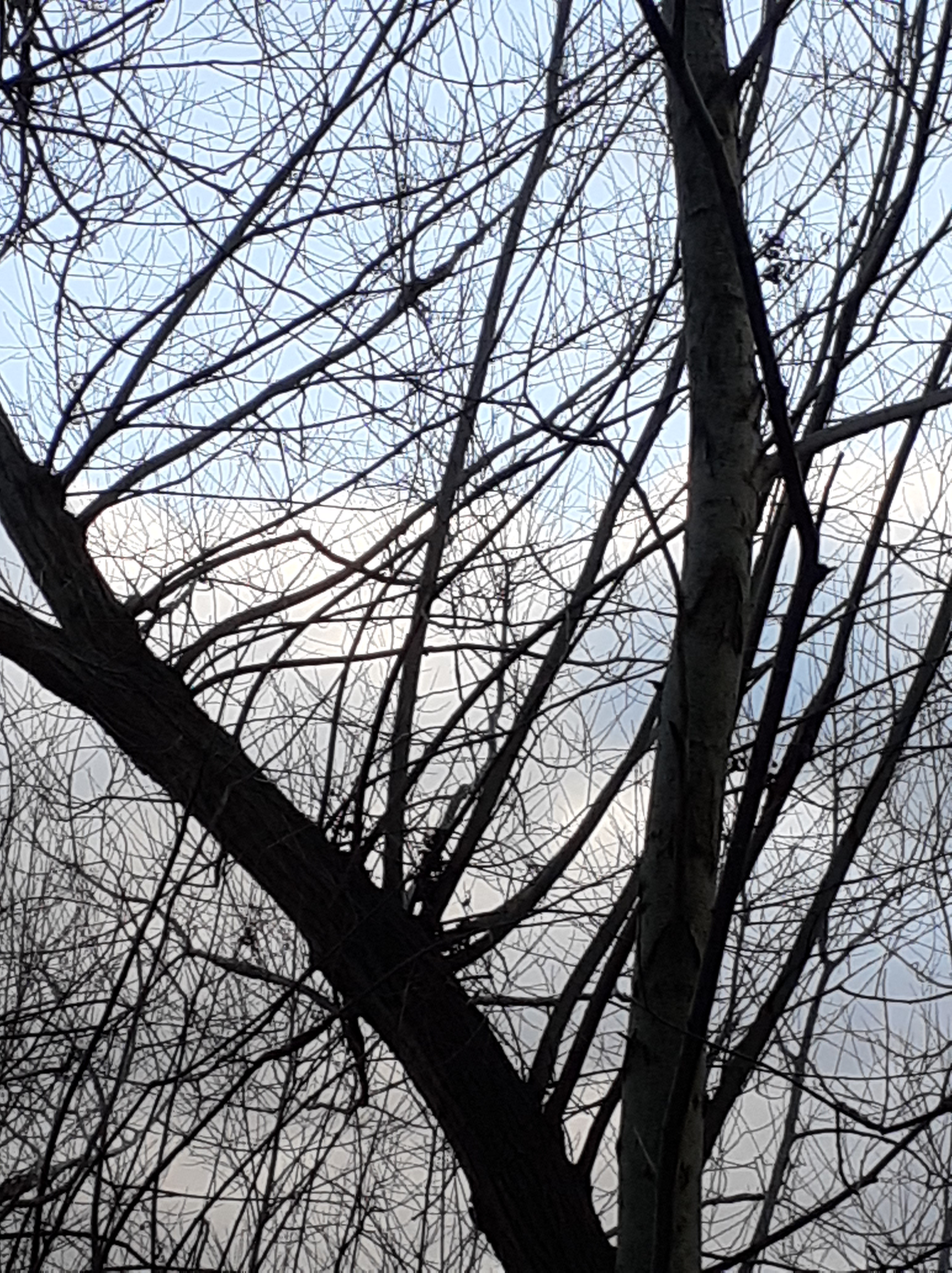
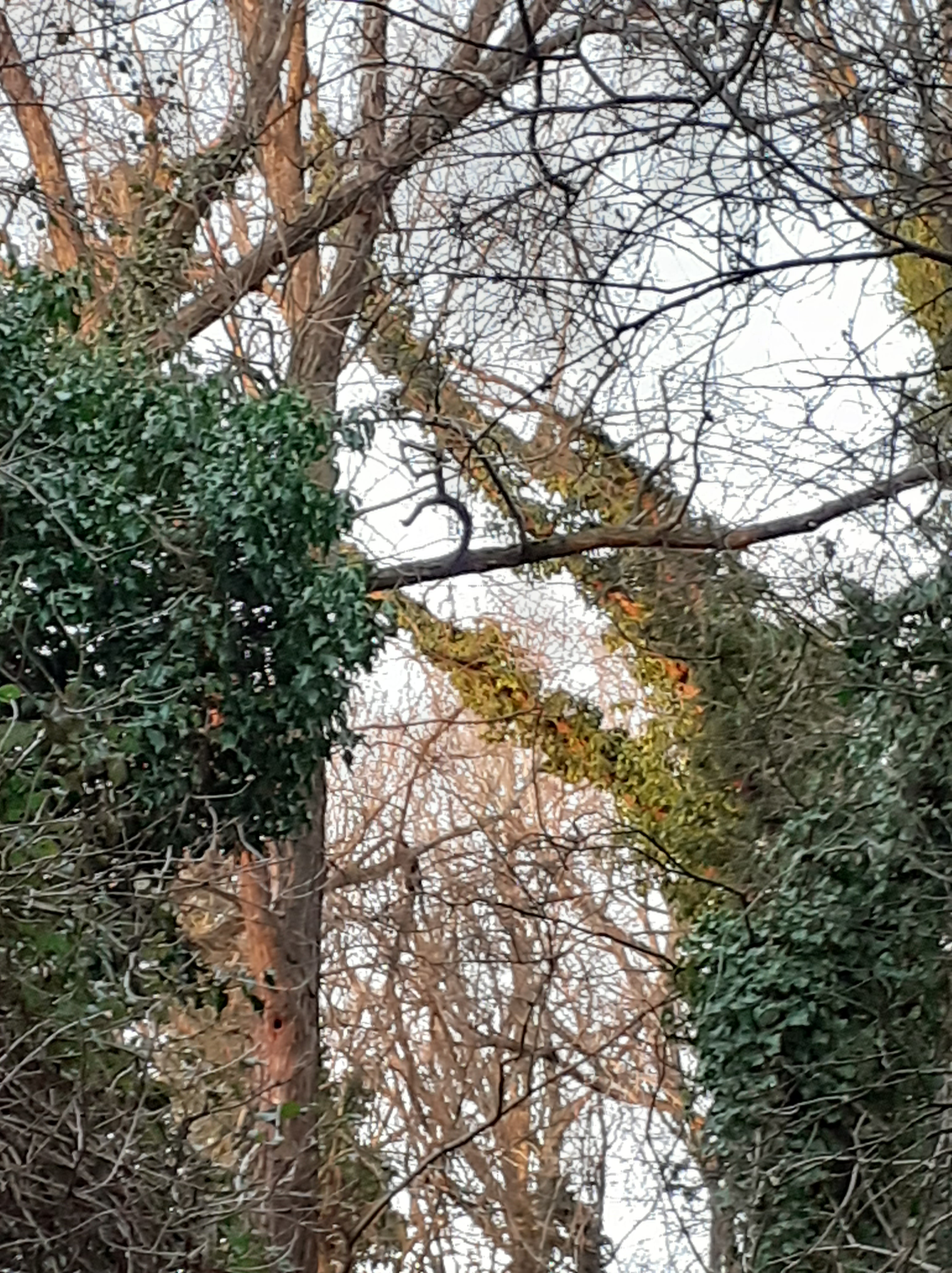
Alney Island is surrounded by the River Severn at Gloucester. It is mostly a water meadow and largely free of ‘development’. I have written about it before. I took the pictures on 15 January, greatly moved by this landscape, the water margin feel, and the energy of the river, whose ‘left channel’ flowed past me close by. I’m short on words, today. So I’m letting the pictures speak for me. In a certain light, they are a kind of visual hymn.

SKY

“Isaac spent all his time reading in a dark house, refusing to go out into the sunshine. His next-door neighbor was a hidden spiritual master, who periodically dropped by to say to Isaac, ‘don’t spend your whole life hunched over your desk in this dark room. Get out and look at the sky!’ Isaac would nod and keep on reading. Then one day his house caught fire. Grabbing what possessions he could, he ran outside. There, he saw the master, pointing upwards. ‘Look,’ said the master, ‘Sky!’ In this story, there are three elements that represent the process of awakening: the fire, the master, and the sky. Kali is all of them.” (1)

(1) Sally Kempton Awakening to Kali: The Goddess of Radical Transformation Boulder, Colorado: Sounds True, 2014

Sally Kempton belongs to the tradition of Kashmir Shaivism, and has described her path as a contemplative and devotional Tantra. For this tradition, a subtle vibratory energy is the substratum of everything we know, and the expression of a divine feminine power called Shakti. This power has five faces – the power to be conscious, the power to feel ecstasy, the power of will or desire, the power to know, and the power to act.

All of these powers come together in the act of cosmic creation, when divine intelligence spins a universe out of itself in Shakti’s dance. Her powers are constantly at play in ourselves and the world, nudging us towards an evolution of consciousness, with which we must align when we seek conscious transformation. Shakti, the formless source of everything, takes multiple forms. Indeed the whole complex Indian pantheon, gods and goddesses alike, are forms of Shakti.

Sally Kempton says that anthropologists have identified two basic versions of Kali, specifically, in popular Indian religion. There is a forest and village Kali represented as scary and half-demonic, and the urban and more modern Kali Ma – “a benign and loving source of every kind of boon and blessing”. Here, her wildness is largely symbolic. Kempton’s Kali seems to be a challenging, ruthlessly compassionate teacher and guide.

In a recent post I wrote: “it is as if I am resourced by a timeless, unboundaried dimension from which I am not separate”. (2) It is my current experiential understanding of the spiritual approach knowns as ‘non-dualism’. Kashmiri Shaivites, Including Sally Kempton, are non-dualists. They are entirely at ease with deity devotion as part of the path.

I am wondering now if, and how, a greater element of deity oriented and devotional practice might add to my own path. Just over three years ago I let go of a ‘Way of Sophia’ thread, with some pain, because it no longer felt authentic. All that’s left is my address to the Goddess (Primal Cosmic Mother, Lady Wisdom) in the Druid’s prayer. Something is missing, I think, and I feel close to another shift. Frankly, I feel nudged.

(2) https://contemplativeinquiry.blog/2022/12/31/a-direction-for-2023/

JANUARY FEELINGS

My sense of January this year is one of bleakness qualified by promise. I spent the first week of the year grounded by back pain. So it was a pleasure, when the time came, to walk once more among trees. Their very bareness has a certain majesty. Their simple presence suggests the prospect of transformation as the year goes on.

Here, at 3.30 pm on January 9th,, I am noticing the slow lengthening of the day. It would have been twilight at this time three weeks ago. The change has an expansive note. A new lightness and colour are suggested below. They lead me further from the lassitude and brain fog of recent days. They make the world a genuinely felt privilege to be in.

Yet a taste of disenchantment does have its value. More than once, I have experienced it shortly in advance of a creative shift in energy and direction. My wife Elaine and I will soon be moving to the long=term home we have been working towards for some time. We will be setting it up, not just chasing after it, over the coming weeks. Without quite seeing the future, I do feel a returning zest and optimism.

A DIRECTION FOR 2023

I am writing on the last day of 2022. My very best wishes for 2023 to all readers. Many blessings for the year ahead!

The picture above was taken on 26 December (in England called Boxing Day/St. Stephen’s Day) – this year a chilly day of bright blue sky. The truncated spire* of St. Nicholas Church, Gloucester, reaches up towards the vivid sky, despite its history of damage. For me, this image of spire against sky is one of clarity, definition and spaciousness. It is a breath of fresh air.

I don’t know what 2023 will bring. I do want to bring clarity, definition and spaciousness to whatever unfolds. As my contemplative inquiry continues, I find that it subtly modifies its purpose. Discovering and re-discovering the purpose involves an element of divination, since my thinking personality is not exactly in charge.

It is as if authentic clarity and definition come out of the spaciousness itself, not out of cognitive review or ‘brain-storming’. These may be aids, but I have also to wait for signs. When I began this blog, I surprised myself by calling it ‘contemplative inquiry’ rather the ‘contemplative Druidry’. I see now that contemplative inquiry is the root description for my path.

For me, contemplation is a yin quality, an open and receptive engagement with experiences – most especially, with forms of relationship. Inquiry is a yang quality, actively deepening knowledge, refining understanding and seeking meaning. Together they support my path. Druidry is a vehicle that supports spiritual self-direction, and also challenges disastrous social norms concerning both nature and culture. Today I have revised the ABOUT section of this blog, on the eve of 2023, and my key statements are below:

“My contemplative inquiry began in 2012. It is grounded in modern Druidry, though not wholly defined by it. I acknowledge the influence of other sources, especially the wider turn towards an eco-spirituality that meets our historical moment. The inquiry process itself is my core practice, from which others radiate out.

“Over my inquiry years, I have found an underlying peace and at-homeness at the heart of experience. Here, it is as if I am resourced by a timeless, unboundaried dimension from which I am not separate. I find myself guided towards a spirit of openness, an ethic of interdependence and a life of abundant simplicity.”

*NOTE ON ST. NICHOLAS’ SPIRE: the church was first built in 1190 and added to over the centuries. A 200 ft. spire was built in the fifteenth century, but received a direct hit from cannon fire in 1643, during the English Civil War. The final repair waited until 1783, when the spire was reduced in height and capped.

MIDWINTER CONTEMPLATION 2022

The picture above, taken in the mid-afternoon of the recent Winter Solstice, shows a local water meadow after heavy rain. My eyes are drawn downwards, to the reflections in the water and beyond. But height is there too, with trees and an early sunset sky. All with a sense of stillness. I felt in touch with the unknown within and beyond me, and open to the world.

Earlier in the day I had already been profoundly moved by the live-streamed funeral of John Heron, an elder for me in the field of humanistic and transpersonal psychology, and also in what he called ‘participatory spirituality’. This describes a ‘spiritual animation’ that occurs ‘between people, between people and place and other kinds of beings in place’. He saw this as a spiritual inquiry process, largely outside the traditions.

Over the last several days, I have been contemplating words, not by John himself but by Carl Rogers, the originator of person-centred counselling, about this kind of openness and its power. He wrote them in continuous prose, but I have re-arranged the spacing to help with my contemplative process. I find that they help me to better understand both my failures and my successes. They are a kind of direction for me. Although they are about being with people, they have become linked also with this landscape, because of the openness I felt there, in this liminal space.

“I find that

when I am closest to my intuitive self

when I am somehow in touch with the unknown in me

then whatever I do seems full of healing.

Then simply my presence is releasing and helpful to the other.

When I can be relaxed and close

to the transcendental core of me

it seems that my inner spirit has

reached out

and touched

the inner spirit

of the other.

Our relationship transcends itself

and becomes a part of something larger.”

PAGANISM IN ROMAN BRITAIN

This post concerns Ronald Hutton’s Gresham College lecture about Paganism in Roman Britain (1). In it, he summarises our current academic knowledge, and asks: how Romanised was British religion within the Roman Empire? It proves to be a hard question to answer, for three main reasons.

The first is that we know little about British religion immediately before the occupation, apart from the fact that Druids had a leading role in at least some religious activity.

The second is that, although the Romans generally honoured local gods and their worshippers, they made an exception for war gods and religious communities hostile to Roman rule. British Druids belonged to the latter category, so any ongoing British Druid activity is off the record. The Druids were in any case averse to written records about their calling.

The third is that we know the names of only a few people from this period, so get only occasional glimpses of individuals and their practices. Britons of any social standing tended to adopt Roman names, at least for the written record, but the records are too sparse to distinguish between the developing cultures of Romanised Britons and localised Romans. All we have is the Roman names. People who made do without Roman names go unrecorded.

These three limitations mean that we have limited knowledge, and that this knowledge is heavily tilted towards Roman practices and understandings. We do however have the names of a number of indigenous deities from the Roman period, and some understanding of their roles. According to Hutton, such deities tended to be highly localised, and connected to specific activities – like Coventina looking after the sacred spring at Carrowburgh not far from Hadrian’s wall. On the whole Goddesses were linked to the land, hills, rivers, springs and wells. Gods were concerned with war, protection, trade and travel.

Other gods were imported during the centuries of occupation. Continental Celtic culture brought Rosmerta, the Matres and Epona. Widely acknowledged Roman gods included Jupiter, Mars, Silvanus and Mercury. Other parts of the empire contributed Apollo, Bacchus, Mithras, Cybele and Athys, Isis and Serapis.

Hutton finds in both Romans and Celts a very different attitude to deity from that of the later arriving Christian faith. Pagan Gods asked for acknowledgement and respect. Beyond that they were not greatly interested in us. They did not make laws, issue commands or monitor our performance. The Latin word superstitio referred to excessive fear of the divine. Hutton characterises mainstream Roman British religion as largely transactional. Roman priesthood was a job for the local magistrates.

Hence, according to Hutton, there was no theology. If you wanted the gods’ help, and had the support and resources, you built shrines, enacted rituals and offered sacrifice. (Animal sacrifice was required to be swift and painless, or it did not please the gods.) If you looked for a deeper or more intense religious experience, and were deemed eligible, you sought initiation into a mystery school. If you were concerned with speculation about the cosmos and our place in it, or wanted a set of values and practices to live by, you turned to philosophy. The one religious demand made by the state was a public reverencing of the Emperor’s numen (the divine power within him) which the early Christians, other than Gnostics, risked martyrdom rather than acknowledge.

The lecture includes a discussion of hybridised (or ‘twinned’) deities and the high esteem in which they could be held – Sulis Minerva at Aquae Sulis (Bath), Apollo Maponus (with a major shrine a little beyond Hadrian’s Wall at Lochmaben) and Mars (or possibly Mercury) Nodens, at Lydney, close to the River Severn in the Forest of Dean.

Hutton ends with a rare opportunity to acknowledge a real, named person, Magnius. He is known to have been a Briton, a commoner with some resources. He had a tomb erected at Aquae Sulis for his daughter, who had died aged only eighteen months. A tomb for one so young was very rare, and the poignancy of this act reaches across the centuries to us, connecting humans who, from very different times and cultures, are united by the same capacity to love and to grieve. I found this a good note on which to end a lecture which provides some insight into a subject where much will always be unknown.

(1) https://www.gresham.ac.uk/ (Go to browse by series then lecture series 2022-23 then Finding Britain’s Lost Gods. The specific lecture is Paganism in Roman Britain.)

See also: https://contemplativeinquiry.blog/2022/10/06/learning-about-our-pagan-ancestors-and-learning-from-them/

Ronald Hutton is Professor of History at the University of Bristol, a specialist in Pagan and Druid studies, and enjoys a very high reputation within both the academic and Pagan communities.

RUMI: TWO QUATRAINS ON NIGHT

“Night comes so people can sleep like fish

In black water. Then day.

Some people pick up their tools.

Others become the making itself.”

“Night goes back to where it was.

Everyone returns home sometime.

Night, when you get there,

Tell them how I love you.”

From the collection Unseen Rain: Quatrains of Rumi translated by John Moyne and Coleman Barks Putney, VT: Threshold Books, 1986. The translators note that “in some languages of the Middle East the word for ‘rain’ and the word for ‘grace’ are the same”.

I am very conscious at this time of year not just of darkness, but of a longer night. Here Sufi poet and teacher Rumi evokes qualities of night, suggesting potential forms of relationship with it.

ACCEPTING THE ARRIVAL OF WINTER

It was 26 November 2022, 11 a.m. I was at the Gloucester end of the Gloucester-Sharpness canal. I found myself accepting the arrival of winter. I was observing three cygnets, now without their parents but still keeping company with each other. The underlying temperature was around 7 C (44.6 F) and good for walking, But I was feeling the pinch of a cold wind. In memory I am feeling it now. The water and sky looked grey. The trees were starting to feel skeletal, whilst still retaining some leaves. My lingering sense of autumn had finally drained away.

To accept winter’s arrival in the presence of swans felt numinous. Swans are otherworldly birds in Celtic tradition. The three together, not yet in their full adult plumage, seemed auspicious. They suggested coming opportunities for creativity, love and celebration. Winter can be a preparation for renewal, both as season and as state of mind. My acceptance goes with a faith in winter’s regenerative darkness, and the riches this can bring.

BOOK REVIEW: THE CIRCLE OF LIFE IS BROKEN

Highly recommended. Brendan Myers’ The Circle of Life is Broken (1) is subtitled “an eco-spiritual philosophy of the climate crisis”. Myers is a Pagan identified author and a professional philosopher who teaches at Heritage College, Gatineau, Quebec. His Paganism is naturalistically oriented, and animist in a sense that “the things of the natural world are in some hard-to-express manner alive and spiritually present”.

The book begins with an view of the Earth from outside, through the loving eyes and words of astronauts. “It is as if the Earth as a whole was only discovered in 1968, when Apollo-8 astronaut William Anders shot the famous Earthrise photograph; the image of the Earth coming out from behind the edge of the moon”. This ‘overview effect’ is balanced at the end of the book by an invitation to immerse ourselves more fully and awarely within the world, through the practices of a weekly green sabbatical and an annual ecological pilgrimage.

Between this beginning and ending there are three main sections, each addressing a ‘root question’. Each question is rigorously explored, before receiving a carefully formulated answer.

The first question asks: what is the circle of life? A key understanding is that ecologists today do not see the Earth as “an aggregate of individuals competing for resources and survival”. Rather, they “are teaching us to see the Earth as a complex system in which everything is directly or indirectly involved in all the life around it, and in which symbiosis and cooperation, across multiple levels, keep the system as a whole flourishing”. This is the circle of life that is now breaking down. “It isn’t simply changing form. It is also short-circuiting; it is falling apart”.

The second root question asks: who faces the circle of life? This concerns humans and how we deal with realities of a higher order than our own. The exploration includes a look at how people see the world at different life stages. Myers wants to know “what becomes of the human reality when cast in terms of the encounter with the Circle of Life as the ultimate reality?” He notes that the Circle goes almost unmentioned in the history of Western philosophy, and also explores a perceived a tension between our ‘being-ecological’ and our ‘being-free’.

The third root question asks: can the circle be healed? Myers quotes a saying of the philosopher Hegel: “the owl of Minerva takes its flight only when the shades of night are gathering”. When things are bad, new ideas and possibilities can emerge and philosophers especially are challenged to think big. Myers looks at the political and cultural obstacles to any healing process, with good sections on ‘eco-fascism’ and the ‘gatekeepers of human nature’. He also makes a number of specific positive proposals.

Although written in plain English as far as possible, The Circle is Broken is not a book to read in one sitting. Myers’ thinking is holistic, with room for scientific information, complex argument, deep feeling, contemplation and engagement. It is written with love and a sense of wonder, generously drawing on personal experience. I think of it as a long-term companion, a gift to anyone concerned with the climate crisis and creative responses to it.

(1) Brendan Myers The Circle of Life is Broken: An Eco-Spiritual Philosophy of the Climate Crisis Winchester UK & Washington USA: Moon Books 2022 (Earth Spirit series)

(2) For other posts about Brendan Myers’ work, see:

https://contemplativeinquiry.blog/2015/05/22/the-worship-of-the-gods-is-not-what-matters/ (Reblog from Naturalistic Paganism)

BOOK REVIEW: THE EARTH, THE GODS AND THE SOUL

BOOK REVIEW: RECLAIMING CIVILIZATION

ETHICS AND ‘CIVILIZATION’

BRENDAN MYERS: A FOREST ENCOUNTER

BRENDAN MYERS: A FOREST ENCOUNTER

“Over the last twelve years I have walked every trail, every hillcrest, every stream-edge within a two hour walking radius of my house: everything between Lac-Des-Fees and Pink Lake, and a little beyond. …. I still encounter things I never saw before. Last year I saw a Great Horned Owl in the park for the first time. Its swift yet stately flight above my head caught my eye; a dark shadow in front of the sun, silent, and powerful in its silence.

“It rested on a tree branch not more than twenty meters away, and regarded me. I regarded him in turn. I had known for years that there are owls in the area: I’ve heard their hooting, and seen their pellets on the ground. But until that day and for ten years, I hadn’t seen one here before. Further, and I think more importantly, since I had entered the forest that day for no particular purpose but to enjoy a warm afternoon, to reaffirm my love of for the park’s landmarks and vistas, and to experience a few hours of pure human freedom, in simpler words to play, the encounter with the owl could take on a magical meaning.

“In the light of such magic, what a magnificent animal he was! How proud he seemed, as though in charge of the world, as though I required his permission to take another step. How unpretentious too: this owl had no need to pretend to be something he was not. The size of his claws, the laser-focus of his eyes meeting mine, was proof enough that he was a predator. No need to flex his weapons or brandish them. And what a delightful conversation we might have, if he were to speak. How much he could tell of the places he had seen, the adventures he had while hunting, and the pleasure of flight… Much as I would have loved to stay and hear him speak, I decided to move on after a few minutes. I did not know whether meeting his eyes might be provocative. And much as I might enjoy telling the story of how I got owl-claw scars on my face, I would certainly not enjoy getting them.

“…. Such is the magic of the forest. It can mean what you want it to mean under the aspect of play, yet at the same time it can surprise, and threaten and reveal itself, in ways no human artifact can do. It can suggest a kind of magic no human artifact can adopt: the dramatic discovery of a world not made by human hands. Thus it participates in the play, bringing its own contribution to the emergence of meaning.” (1)

(1) Brendan Myers The Circle of Life is Broken: An Eco-Spiritual Philosophy of the Climate Crisis London UK & Washington USA: Moon Books (Earth Spirit Series)

NOTE: Brendan Myers is a Canadian philosopher and author currently living in Quebec, where he teaches philosophy at Heritage College, Gatineau. He has written extensively on Pagan themes from a philosophical perspective, and his most recent book takes them further through an exploration of the climate crisis. I will review the book in my next post.

Earth Eclectic

music that celebrates Earth and speaks to the heart

Sarah Fuhro Star-Flower Alchemy

Follow the Moon's Cycle

Muddy Feet

Meeting nature on nature's terms

Rosher.Net

A little bit of Mark Rosher in South Gloucestershire, England

Becoming Part of the Land

A monastic polytheist's and animist’s journal

selkiewife

Selkie Writing…

Charlotte Rodgers

Images and words set against a backdrop of outsider art.

Prof Jem Bendell

living with metacrisis and collapse

Towint

The pagan path. The Old Ways In New Times

The Druids Garden

Spiritual journeys in tending the living earth, permaculture, and nature-inspired arts

The Blog of Baphomet

a magickal dialogue between nature and culture

This Simple Life

The gentle art of living with less

Musings of a Scottish Hearth Druid and Heathen

Thoughts about living, loving and worshiping as an autistic Hearth Druid and Heathen. One woman's journey.

Wheel of the Year Blog

An place to read and share stories about the celtic seasonal festivals

Walking the Druid Path

Just another WordPress.com site

anima monday

Exploring our connection to the wider world

Grounded Space Focusing

Become more grounded and spacious with yourself and others, through your own body’s wisdom

The Earthbound Report

Good lives on our one planet

Hopeless Vendetta

News for the residents of Hopeless, Maine