Contemplative Inquiry

This blog is about contemplative inquiry

Tag: Spiritual inquiry

POEM: WELCOME RAIN, SPRING NIGHT

“The good rain knows its season.

When spring arrives it brings life.

It follows the wind secretly into the night

And moistens all things softly, soundlessly.

On the country road the clouds are all black,

On a river boat a single fire bright.

At dawn you see this place red and wet:

The flowers are heavy in Brocade City.”

(Brocade City = Chengdu, in southwestern China)

Michael Wood In The Footsteps of Du Fu: China’s Greatest Poet London: Simon and Schuster, 2023

This poem welcomes spring and also celebrates arrival at a place of safety. For a brief period in the early 760s the Chinese poet Du Fu (712 – 770 CE) had a cottage and garden in Chengdu, the Brocade City. It was a time of social breakdown in China and although from the landowning and mandarin class, Du Fu and his family had become refugees in their own country. At times, during their wanderings in the rugged terrain of western China, they were shelterless and close to starvation. Nonetheless, Du Fu retained an underlying resilience. Despite everything his capacity to notice, contemplate, feel, care and write were not compromised. One of his earlier poems, written when trapped in the rebel occupied capital Chang’an (City of Eternal Peace, now Xi’an), begins:

“The state is destroyed, but the country remains.

In the City in spring grass and weeds grow everywhere.

Grieving for the times, even the blossom sheds tears

Hating the separation birds startle the heart.”

As part of his following in Du Fu’s footsteps, Michael Wood visited Chengdu and talked to local people and tourists from other parts of China. Why does Du Fu matter to them now? One older local resident said that he came to the garden – now a well kept heritage site – “at least once a month” to reflect on Du Fu’s poetry. “For a long time we suffered, now we are better off, but today society is very materialistic, and spiritual things are going away. But I feel these things still matter, and here in this place you can go right into his mind: the thoughts and feelings of someone from so long ago. To me, this is a miracle. The garden here is big enough to get lost in, away from the public, especially if you come early in the morning. I sit in a corner and recall him, maybe read out one of his poems out loud, and reflect on it”. He described this as his meditation.

Below is an imaginary portrait of Du Fu by the artist Jiang Zhaohe (1904 -1986). It was done in 1959, during Mao’s Great Famine, described by Michael Wood as “one of China’s most shattering disasters”.

ESSENTIAL RUMI

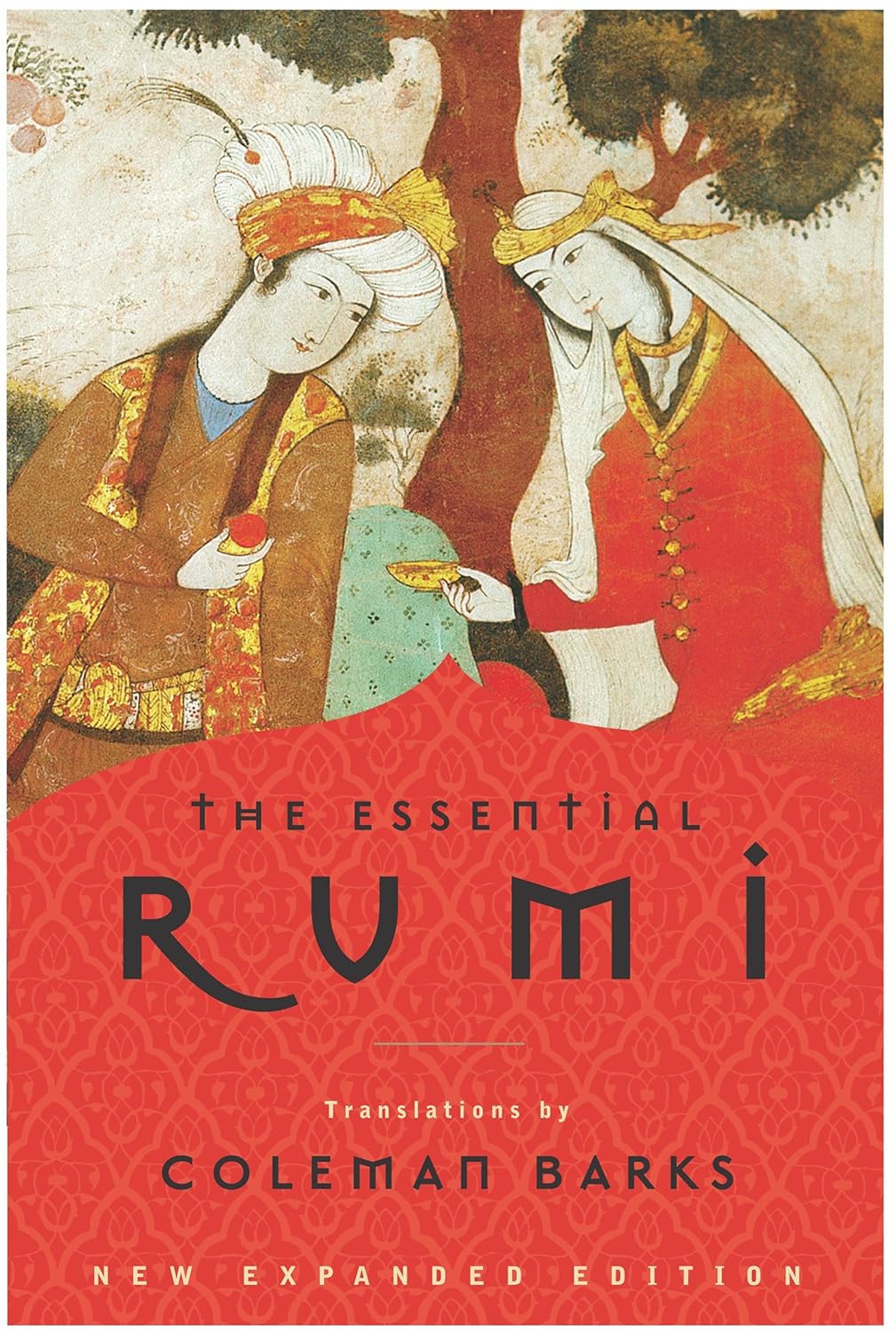
I have long been an admirer of Rumi’s poetry and have recently been dipping into my copy of Coleman Barks’ accessible English translations in his The Essential Rumi (1). This is a substantial volume of poetry and teaching – with the two aspects not really distinguishable.

It is not a new book. My edition is from 2004, and still in print. Coleman Barks provides good information about Rumi in the context of his life and spiritual path as a Sufi Dervish (2), which I have condensed into a note at the end of this post. I think that Barks’ translation works well for people on a spiritual journey, not necessarily Sufis themselves. This seems fitting because Rumi reached out well beyond the world of religious scholars and jurists. He was remarkably ecumenically minded, in a culture where people of many faiths lived side by side.

The poem I offer here is Solomon’s Crooked Crown. Here the archetypal wise ruler, who is also anyone and everyone, learns from his own errors. Solomon doesn’t represent wisdom through being right all the time. He isn’t. He needs to be called out on occasions by his ‘crown’, or higher power. He is wise because he recognises inconvenient truth and answers the call.

“Solomon was busy judging others,

when it was his personal thoughts

that were disrupting the community.

His crown slid crooked on his head,

He put it on straight, but the crown went

awry again. Eight times this happened.

Finally he talked to his headpiece.

‘Why do you keep tilting over my eyes?’

‘I have to. When your power loses compassion,

I have to show what such a condition looks like.’

Immediately Solomon recognised the truth.

He knelt and asked forgiveness.

The crown centered itself on his crown.

When something goes wrong,

Accuse yourself first.

Even the wisdom of Plato or Solomon

can wobble and go blind.

Listen when your crown reminds you

of what makes you cold towards others,

as you pamper the greedy energy inside.”

NOTE (taken largely from Coleman Barks’ introduction, On Rumi)

Rumi was born on September 30, 1207, in Balkh, Afghanistan. Iranians and Afghans call him Jelaluddin Balkhi. At that time, Balkh was part of the increasingly hard-pressed Abbasid Caliphate. Fleeing from invading Mongol armies, his family emigrated to Konya, in modern Turkey, sometime between 1215 and 1220.

The name Rumi means ‘from Roman Anatolia’, now in modern Turkey and already by Rumi’s day long lost to the Romans and their Byzantine successors. Rumi’s father was a theologian, jurist and mystic. On his death Rumi took over the position of sheikh in his dervish (2) learning community in Konya. Rumi’s life seems to have been a fairly normal one for a religious scholar – teaching, meditating, helping the poor – until 1244 when he met the wandering dervish Shams of Tabriz. Shams had spent years travelling throughout the Middle East searching and praying for one who could ‘endure my company’.

Their encounter, and the mystical friendship that ensued, influenced Rumi into becoming the artist we remember. “He turned into a poet. began listening to music, and sang, whirling around, hour after hour” (1). Shams disappeared in 1248. He was most likely murdered with the connivance of one of Rumi’s sons and other disciples. They thought of Shams as a bad influence on Rumi as well as themselves feeling excluded by Rumi and Shams’ relationship.

After the heartbreak of Shams’ death, Rumi went on to compose the Mathnawi, “that great work that shifts so fantastically from theory to folklore to jokes to ecstatic poetry (1)”.

(1) The Essential Rumi Translated by Coleman Barks, with Reynold Nicholson, A. J. Arberry, John Moyne. New York, NY: HarperOne, 2004 expended edition

(2) Dervish – member of a Muslim, specifically Sufi, religious order who has taken vows of poverty and austerity. Dervish orders first appeared in the 12th century CE. The Mevlevi Order of Whirling Dervishes was founded by followers of Rumi.

‘SACRED AGNOSTICISM’

In the later stages of a post mostly about the spiritual benefits of ‘deep adaptation’ (1), Jem Bendell discusses “sacred agnosticism, where the mystery of consciousness is surrendered”. I wish that I had come up with ‘sacred agnosticism’ myself, and the use of ‘surrendered’ in that context. I see it as a highly skilful use of language, that tricky medium, and resonant in the present stage of my own life and practice.

Describing his journey to this position, Bendall says: “for many years, I’d ditched religious stories of a soul that exists, like my current consciousness, in an afterlife. I’d also realised that aspects of reality and consciousness are ineffable. Meaning, once we use concept and language to describe the ultimate truth, we are moving away from reality.”

However, he goes on to acknowledge that: “I still had part of me that wanted to know. Will I still be conscious after death? Will I merge, will I reincarnate, will I experience nothing? Will I leave no trace in the universal information field or akashic record? Did I even exist much in the first place?”

Through reflection and meditation Bendall discovered that any narrative of this kind would, for him, “have originated in fear, where the ego needs to map, order and control reality and assert that to others”. In the absence of such stories he suggests that “the mystery itself is an invitation to transcend the ego.” So he decided that: “I wanted to cultivate a way of being where I will actually celebrate that ‘not-knowingness’ and would naturally feel that way at the time of dying”.

The content of the reflections isn’t new to me. Yet I do strongly feel that I’ve been gifted the right words at the right time. I am grateful to Jem Bendall for his post.

(1) https://jembendell.com/2024/02/13/major-life-changes-become-the-least-risky-option/

GREY AND GREEN IN FEBRUARY 2024

A familiar sight, in a familiar place. I’ve been living in Gloucester for two years now. This is the first February since 2019 in my personal life that I might call ‘normal’. The Covid-19 pandemic and relocations dominated the February’s of 2020-2023. Hyper-vigilant states aren’t such a feature for me in February 2024. My reduced anxiety has allowed a certain laziness and I have found it welcome.

Contemplating the image above, I greet these winter-skeletal trees as friends, today part of my internalised psychic territory. On this occasion, a 9 February walk, I call the afternoon ‘grey’ because of my initial response to the sky. The label has meaning for me as a first impression though it does over-generalise. Looking more closely, I find the sky turbulent and mixed. White hides the afternoon sun. There are indications of movement and change, and hints of blue. A slender branch yearns upwards to the hidden sun, pursuing fresh life and growth. That sun has moved well beyond midwinter. It may not yet be spring, but the days are longer and at times I experience a real warmth.

Moving on and now looking downwards, I discover a different world. Here there is evidence of both sunlight and shadow on the path. Mud and the puddles from refreshing rain too, with vivid green grass beside on the verges..

But the the most obviously verdant signs of annual regeneration in February 2024 are in the undergrowth beside the path. Here, in the picture below, is a feast of green freshness. New-appearing nettles are strongly present. They may sting to protect themselves yet they also nourish and heal. They have enriched our lives in many ways for a very long time. When I was ill with respiratory problems at times in 2021 and 2022 I valued them as a tea. I was pleased to meet the rising generation on my walk.

My memory of February 2024 will feature the colours grey and green as strong markers of this intermediate season. A blessing our lives, and a blessing on the land!

HOW WE INTERPRET PAIN

Atul Gawande’s Being Mortal: Illness, Medicine and What Matters at the End (1) is about life when independent living is no longer an option, and also about the end-game. I intend to review the book fully in a later post. Here, I have extracted a passage about how we evaluate the experience of pain and suffering, and how they vary according the the stories we tell about ourselves and our lives. The author draws on his experience as a physician, a teacher and a family member.

“The brain gives us two ways to evaluate experiences like suffering – there is how we apprehend such experiences in the moment and how we look at them afterward – and the two ways are deeply contradictory. … People seem to have two different selves – an experiencing self who endures every moment equally and a remembering self who gives all the weight of judgement to two single points in time, the worst moment and the last one.

“The remembering self seems to stick to the Peak-End rule even when the ending is an anomaly”. In a hospital-based experiment (2) “just a few minutes without pain at the end of their medical procedure dramatically reduced the patients’ overall pain ratings even after they’d experienced more than half an hour of high level pain. ‘That wasn’t so terrible,’ they’d reported afterward. A bad ending skewed the pain scores upwards just as dramatically. …

“Research has also shown that the phenomenon applies just as readily to the way people rate pleasurable experiences. Everyone knows the experience of watching sports when a team, having performed beautifully for nearly the entire game, blows it at the end. We feel that the ending ruins the whole experience. Yet there’s a contradiction at the root of that judgement. The experiencing self had whole hours of pleasure and just a moment of displeasure, but the remembering self sees no pleasure at all.

“If the remembering (or anticipating) self and the experiencing self can come to radically different opinions about the same experience, then the difficult question is which one to listen to. …. In the end, people don’t view their life as merely the average of all of its moments – which, after all, is mostly nothing much plus some sleep. For human beings, life is meaningful because it is a story. A story has a sense of a whole, and its arc is determined by the significant moments, the ones where something happens. Measurements of people’s minute-by-minute levels of pleasure and pain miss this fundamental aspect of human experience. A seemingly happy life may be empty. A seemingly difficult life may be devoted to a great cause. We have purposes larger than ourselves. Unlike your experiencing self – which is absorbed in the moment – your remembering self is attempting to recognize not only the peaks of joy and valleys of misery but also how the story works out as a whole. That is profoundly affected by how things ultimately turn out.”

(1)Atul Gawande Being Mortal: Illness, Medicine and What Matters in the End London: Profile Books in association with Wellcome Collection, 2014 (UK edition)

(2) NOTE: Gawande describes research by Daniel Kahneman and Donald Redelmeier involving 287 hospital patients who underwent colonoscopy and kidney stone procedures while awake. The patients were given a device that let them rate their pain every sixty seconds on a scale of 1 (no pain) to 10 (intolerable pain), a system that provided a quantifiable measurement of a moment-by-moment experience of suffering. At the end the patients were also asked to rate the total amount of pain they experienced during the procedure. The procedures lasted anywhere from 4 minutes to more than an hour. The patients typically reported extended periods of low to moderate pain punctuated by moments of significant pain. A third of the colonoscopy patients and a quarter of the kidney stone patients had a pain score of 10 at least once during the procedure. Patients’ final ratings were not based on the whole experience and its duration but by what Kahneman called the ‘Peak-End rule’, an average of the pain experienced – the single worst moment of the procedure and the very end. This research is described in Daniel Kahneman’s book Thinking Fast and Slow.

UNFREEZING (SLOWLY) IN WINTER SUN

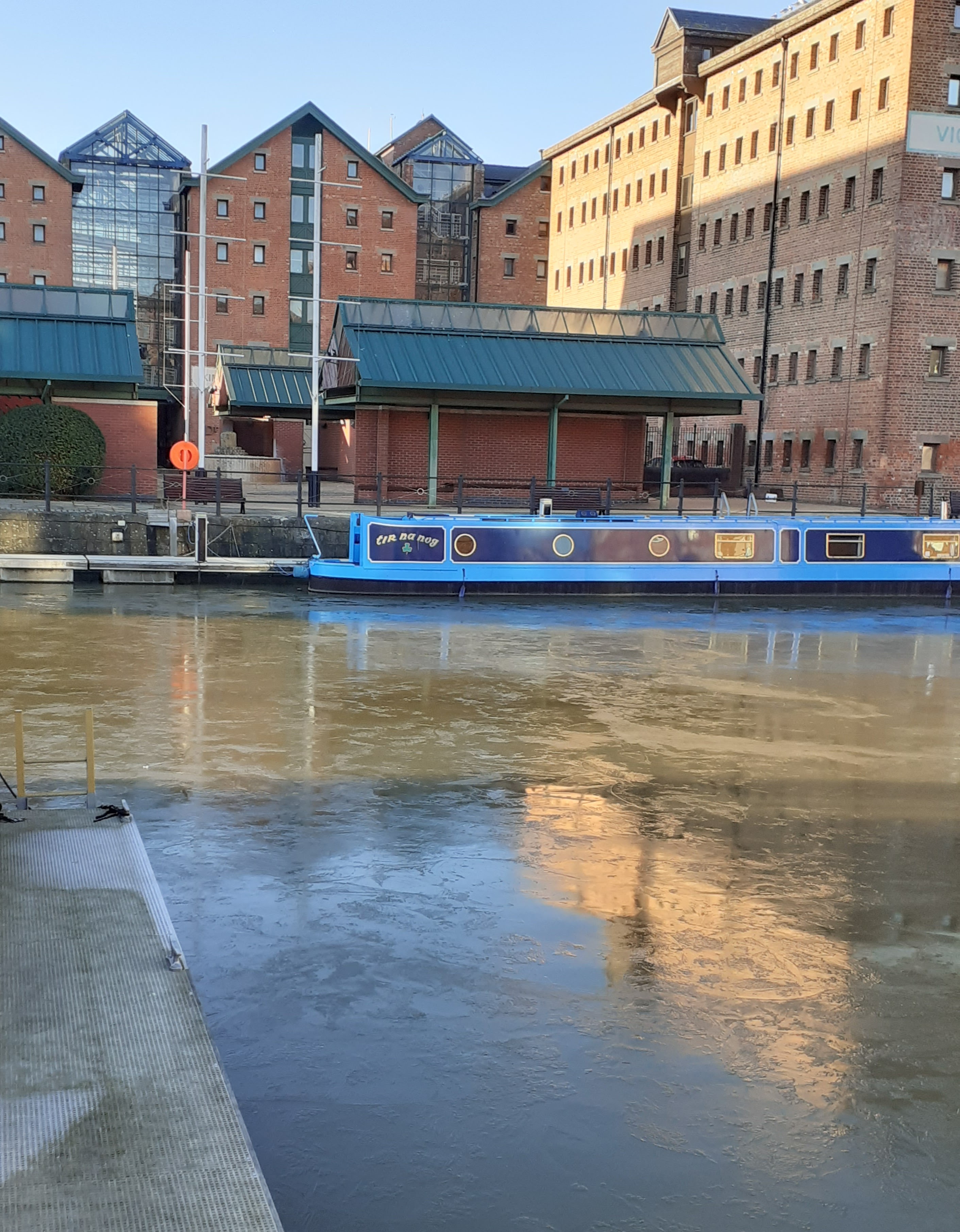
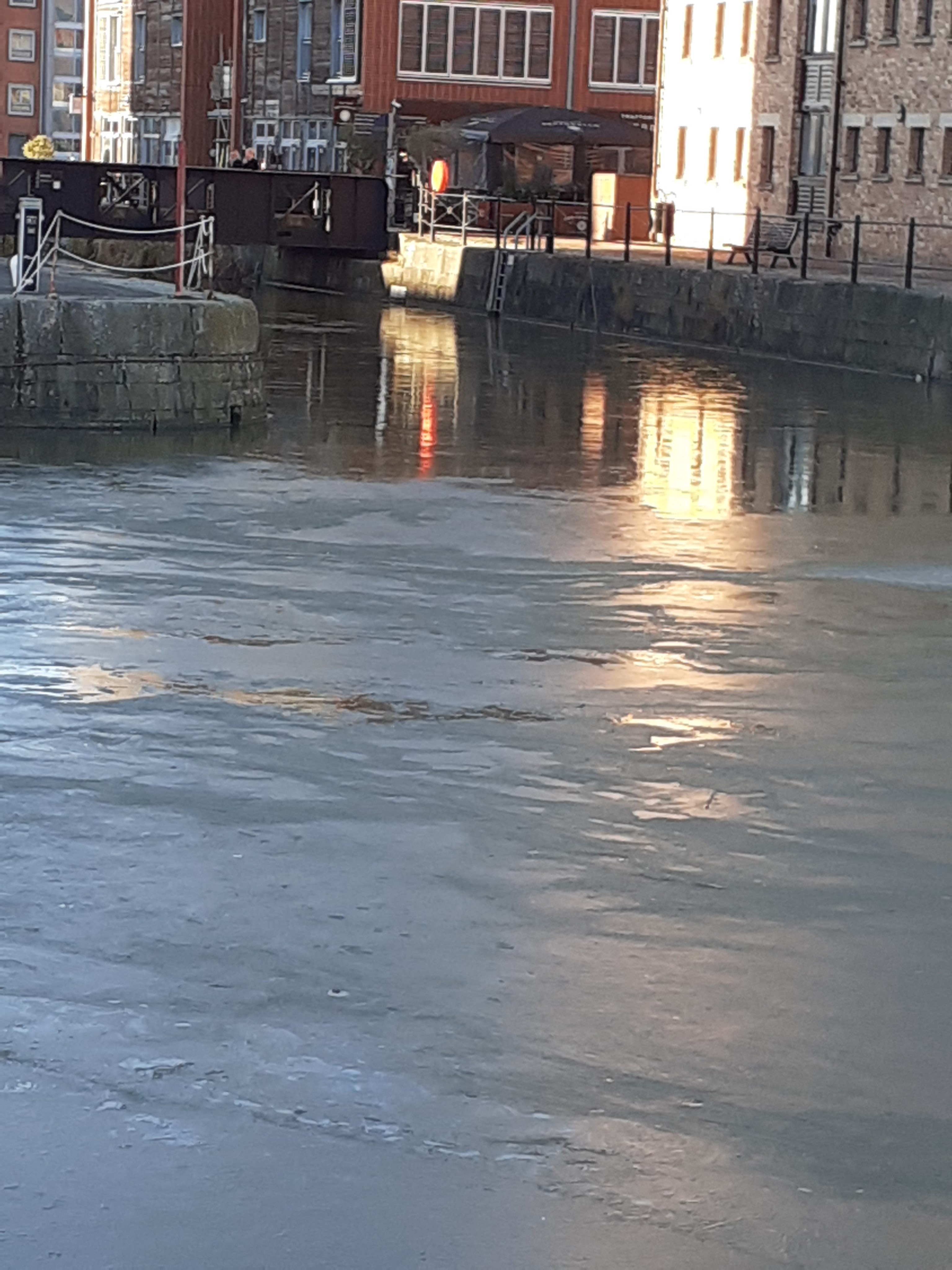
Yesterday – 3.30 pm or so – I was walking home swiftly from a shopping expedition. I was slowed down and halted by the water in Gloucester docks. It drew my eye and asked for a closer look. It had clearly been iced up in the previous cold night, and had been slowly melting in this bracing but above-zero day.

The sky is clear and I experience a strengthening sun now. I recollect that we are now several weeks beyond the solstice. The balance of light, shade, stillness and fluidity sends me into a more deeply meditative state, entirely trumping my original sense of domestic mission and wanting to be home.

Ice and water are made of the same stuff, manifesting in different ways. The patterns on the surface look still but tell a story of transformation – here, from fixed to free. Another drop in temperature could easily end and indeed reverse this process. In this space I see the same essence adopting different forms under different conditions. But here the change is gentle. The contemplative moment extends itself. I am open to the magic of nature. In such beauty, I find peace and stillness within my own being.

POEM: SUCH A LONG JOURNEY

We had a theory. It meant travelling westward.

At first, simple. We each had resources.

We lost most of them on the Straits of Hormuz;

our boatman betrayed us to pirates.

Perhaps that was the moment to turn back

after we’d bargained our release for gold and incense

leaving only a few coins sewn into an old hat.

But we had come so far

          and a theory

can become a story you would wander the world to tell.

We were in trouble, sometimes, misunderstood,

always there for each other – always walking westward,

taken on by an Ethiopian eunuch, even though by then

only one of us was fit to work – slipping away

by night when we sensed we were near.

He was a philosopher and carried his own coffin;

we raided it for myrrh. Took millings

from the edge of one of his ingots,

saved a last joss-stick. We had read our Isaiah.

And we had a theory

that a some place under a setting star

three gifts could be exchanged for peace

passing all understanding. What we ended up giving

were some much-needed hints on run-routes

for a family of refugees.

From the collection Losing Ithaca by Christopher Southgate Nottingham: Shoestring Press, 2023

In the Christian year, the twelve days of Christmas are over. 6 January is the festival commemorating the Epiphany, the manifestation of Christ to the the three Magi, the wise men from the east who came to pay homage to him. Their story is told in the Gospel of Matthew Chapter 2, verses 1-12.

Christopher Southgate is described as “a bio-chemist, a house-husband, a chaplain in university and mental health contexts, and a teacher of theology. He lives with his wife Sandy on the edge of Dartmoor and works at Exeter University”. Elaine and I attended an event at Gloucester Cathedral on the evening of 6 January this year, where he read a selection of his poems, naturally including this one.

The title references T. S. Eliot’s poem on the same theme, Journey of the Magi, but in other ways I find them very different. Southgate’s companions-with-a-theory have a considerably harder time than Eliot’s magisterial Magi. They arrive like refugees and meet with a family about to become refugees. Matthew describes King Herod’s efforts to eliminate any potential rival, as he sees it, to his throne, and the families’ consequent flight to Egypt.

I like the way in which Southgate shows how a somewhat transactional attempt at acquiring a “peace passing understanding” runs up against the realities of the world we live in. I also like the way he doesn’t invalidate the companions’ intent or their journey. They still had a gift to offer, sharing their experience and opening their hearts. Peace was present in that shared space.

2024: INQUIRY AT THE DAWN OF THE YEAR

It is 3 January 2024, around 8.30 am. I repeat my best wishes to all readers for 2024 from inside the new year, as it begins to unfold. I contemplate the sky, uncertain about what this new year may bring. At some level I feel open and uncluttered, free of over-determined intentions. It is as if I have surrendered to a current.

My Contemplative Inquiry, once a formal structured project, has gradually evolved into a simpler and more natural-seeming contemplative inquiry in no need of capitalisation. This inquiry is wired in, no longer in need of much external input or formalised internal effort. I am aware of owing a debt to the formal structured project, with its inputs and efforts, for it enabled this evolution to occur.

The result of the early, more formal, years is recorded in my ABOUT section. It was simultaneously a gnosis and the discovery of a place to stand that felt right and made sense. “My inquiry has been a pathway to greater understanding, healing and peace. In the contemplative moment,  I am living presence in a field of living presence, at home in a living world. This is not dependent on belief or circumstance, but on the recognition of what is given, joy and sorrow alike. I find that this simple recognition moves me towards a spirit of openness, a fuller acceptance that nothing stays the same, an ethic of interdependence and a life of abundant simplicity”. My inquiry today is about deepening, and living more congruently and confidently from this place. It is part of me now, and I foresee no end.

MIDWINTER LIGHT IN 2023

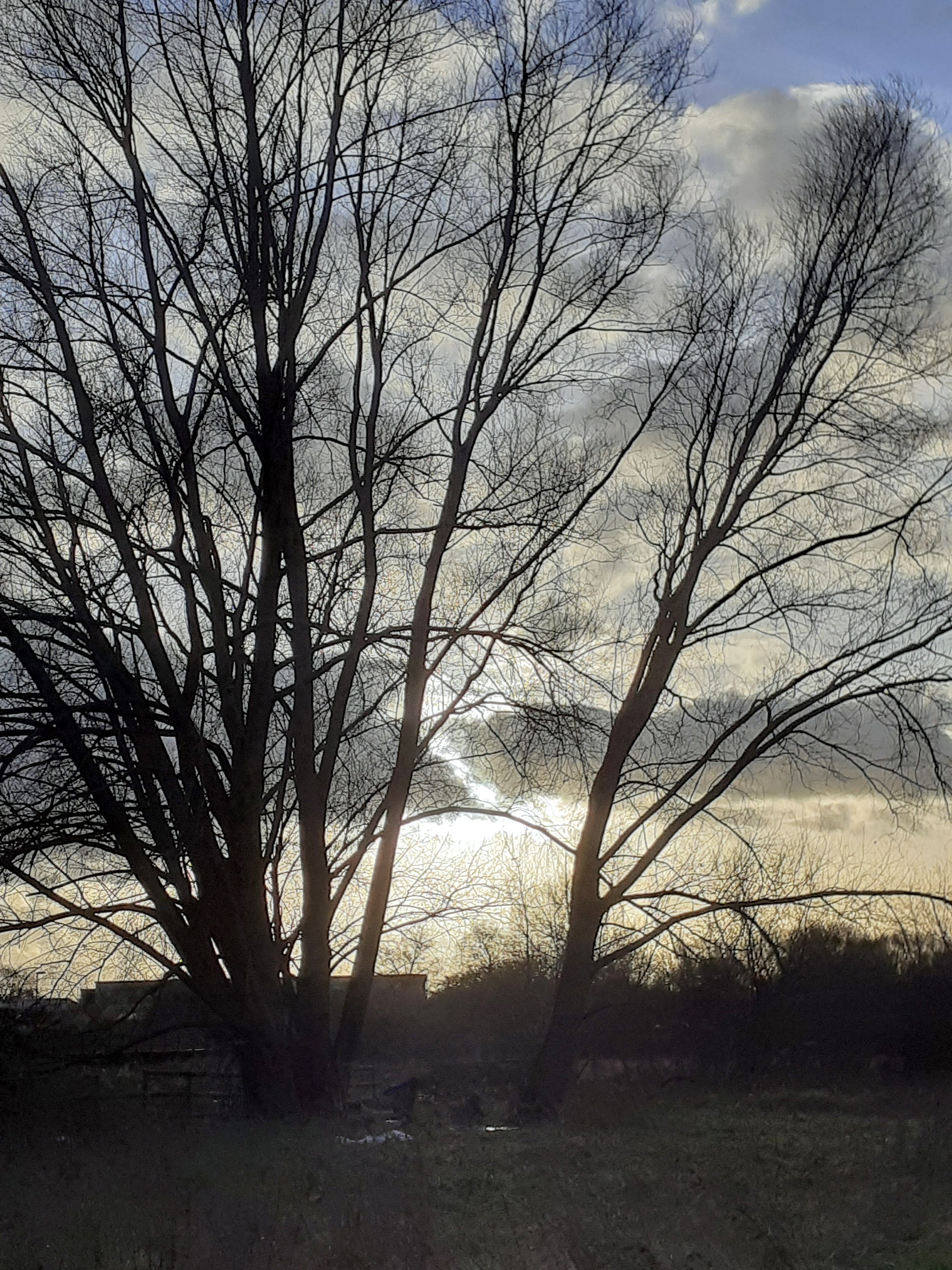
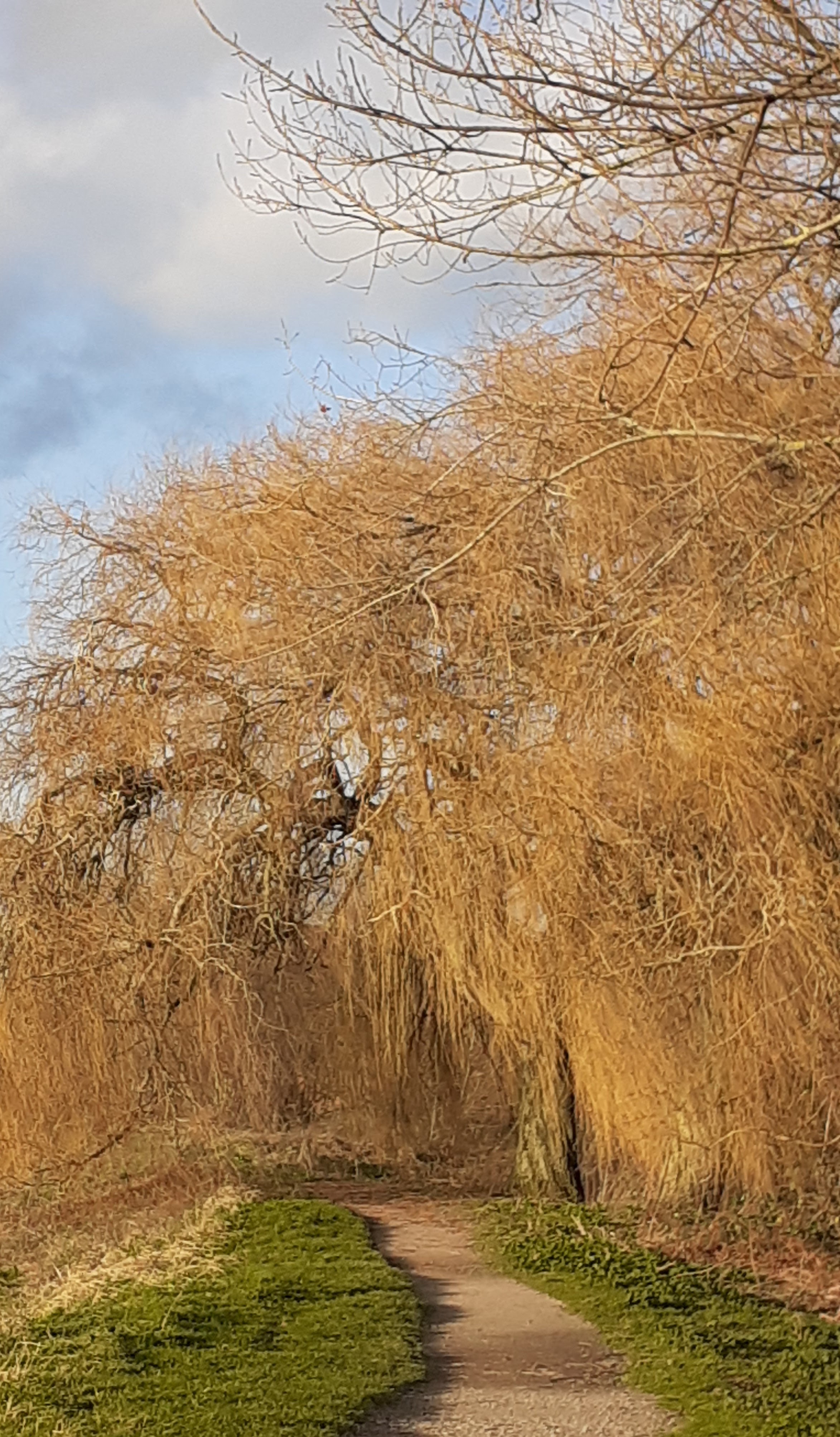
Seasonal Blessings to all readers, and my best wishes for 2024! I took these photos between 2.20 and 2.50 pm on 21 December, the last day before the Solstice, and a little more than an hour before sunset in Southern England.

The location is Alney Island, Gloucester, which I had not been to for some time. I encountered a sun that was low in the sky, clearly sinking, but still having an obvious influence on the landscape. Above, you can see a powerful luminescence behind the starkness of the trees. Immediately below, you can see light effects on the river and the trees themselves.

In the picture below, the midwinter sunshine is clearer and stronger. I love the way in which the willows show their vitality and abundance even when they have lost their leaves. The path is relatively dry, yet surrounded by green grass. There is a play of light and shade. There is blue as well as cloud in the sky.

On the ground, in the afternoon, and now in the evening as I write, I am thinking of light and dark, and of waxing and waning, as natural phenomena. I am not thinking in moral or metaphysical terms. These are different considerations, with a tendency moreover towards abstraction and absolutism. In my experience, nature tends to be nuanced. Different things are going on at the same time. Certainly where I live, there is always some balance of light and dark. The balance shifts, but both are always in play.

We treat tomorrow’s sunrise as the beginning of a turn. Here, in 2023, the afternoon before the change seems like a friendly one for an annual nadir of the light. This is also a bit how I am thinking about myself. Towards the end of November, when I last wrote a post of this type, I was celebrating a recovery from illness, and the opportunity of a good day. A good day was about what it was. Many people have pointed out in the last year or so that Covid-19 seems to have a long tail. I have been physically restricted beyond what I think of as normal.

I’m aware of a 75th birthday coming up next year, at which time our government will no longer consider my death as premature. Yet I am in good heart and feeling resilient. Without being presumptuous, I’m leaning in to longevity. I’m checking my capabilities and energy levels, anticipating some adjustments, and noticing the many rays of light which present themselves in my world.

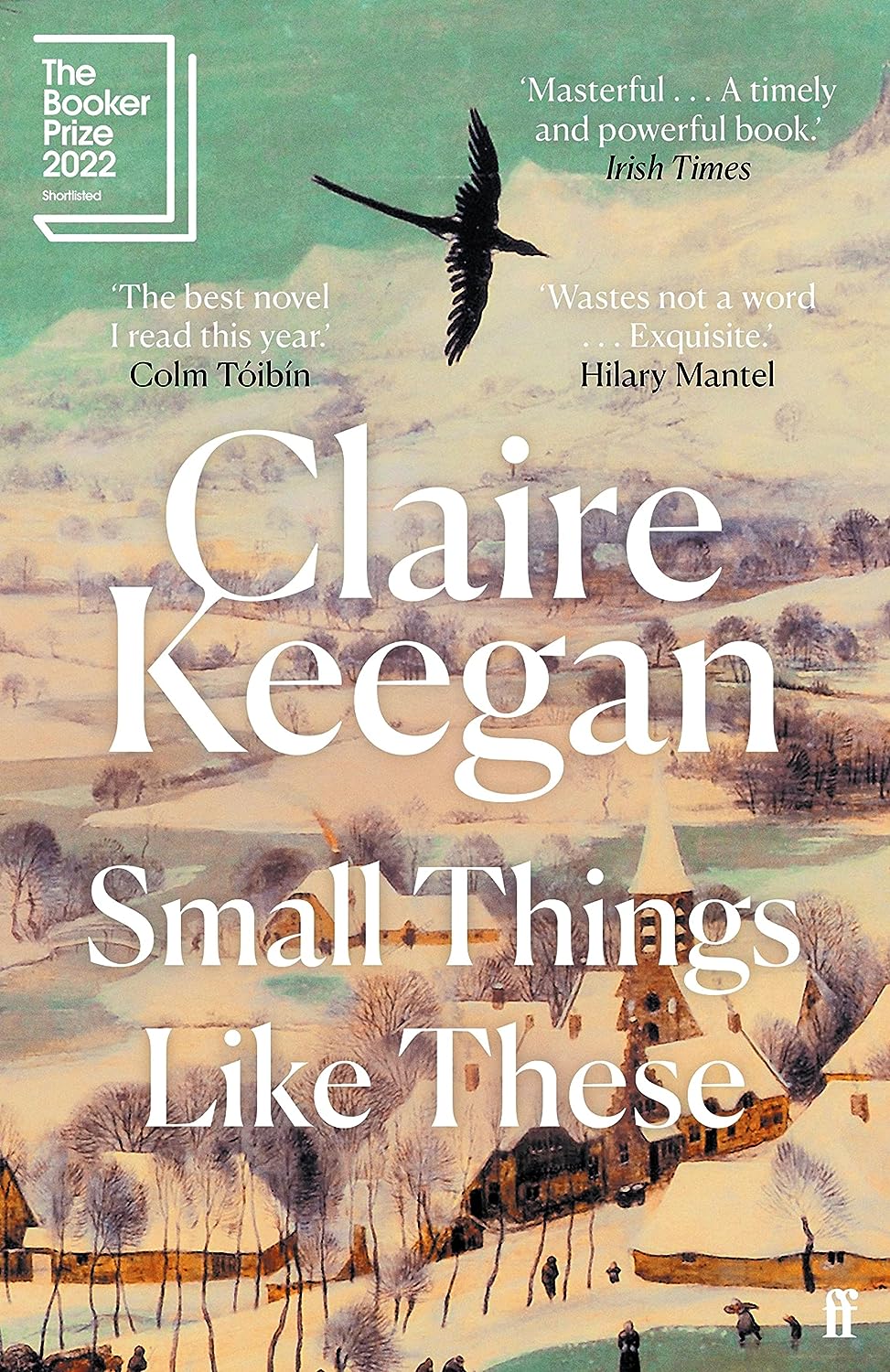
BOOK REVIEW: SMALL THINGS LIKE THESE

Beautifully written, and highly recommended. Claire Keegan’s Small Things Like These (1) is a novella set in the small Irish town of New Ross in the cold December of 1985, “a December of crows”. New Ross is in many ways a strong community, but business is bad. There are closures, poverty and emigration. The central, point-of-view character is Bill Furlong, a coal and timber merchant, adequately prosperous and very busy at this time of year. Born on 1 April 1946, he is a pillar of his community, a regular if tepid church goer, married with five daughters. The older of these are at St. Margaret’s, “the only good school for girls in town”.

But Bill is also something of an outsider. His father is unknown. ‘Furlong’ is his mother’s family name. She herself becomes pregnant at the age of 16, whilst working as a maid for the Protestant widow Mrs. Wilson, comfortable on a military pension and a decent sized farm. Mrs. Wilson chooses to keep her on and takes an interest in the boy. This interest continues after his mother’s sudden death when he is 12. Technical School leads to an opportunity at the coal yard where he works his way up and subsequently becomes the owner. When he gets engaged to Eileen, Mrs. Wilson gives him some thousands of pounds to establish himself. He enjoys being a family man and a good provider. The Christmas season, with its time at home, rich food and present giving is a welcome opportunity to celebrate.

Bill is naturally generous, refuses to judge people harshly and is prone to spontaneous acts of kindness, the “small things like these” of the title. The main action of the novella begins when he personally delivers a Christmas coal and wood order to the local convent, a powerful-looking place on the hill, where the nuns run both a “training”, or possibly “reforming”, school for girls” and a popular laundry business. There is some lack of clarity over the detail. They might be involved in arranging adoptions as well. Although a little set apart, it is one of the major institutions of the town.

Arriving in the dark at the covent coal house door Bill finds the bolt stiff with frost and has to force it open. There he finds a young girl, Sarah, who has clearly been locked in there for some time. She asks him to take her away or at least ask the whereabouts of her 14 month old baby who has been taken from her. The Mother Superior becomes involved and embarks on an unconvincing performance of compassion involving tea and cake for both Bill and the girl, and a story about Sarah’s incarceration as the result of a game with other girls.

Bill, going home, realizes that he forgot to ask about the baby. He recollects the numerous locks in the convent buildings and broken glass on the tops of walls. He is unhappy and misses his way home, fetching up in a remote spot he doesn’t recognize. In one of the novella’s occasional fairytale moments, he asks an old man with a billhook: “will you mind telling me where this road will take me?” The old man replies: “this road will take you wherever you want to go, son”.

On his return he tells Eileen and, separately, two friends his story. They are keen to talk him out of any public comment or further action. The convent is powerful. Other church institutions would rally round it. It is also his largest customer with the capacity to influence others. Bill has worked very hard to get where he is. Why risk financial disaster? But he is strongly affected by his encounter with Sarah. He finds himself becoming reluctant even to attend mass, let alone take the sacrament. He thinks of what Mrs. Wilson did for him, particularly since he is now fairly sure that his father was not one of her own relatives.

Late on Christmas Eve he goes back to the convent on foot, unbolts the coalhouse door, finds Sarah, and begins the walk through town to his home, “the excitement in his heart matched by the fear of what he could not yet see but knew he would encounter”. On this journey, he also recognizes a “fresh, new, unrecognisable joy in his heart … some part of him was going wild, he knew … never once in his whole and unremarkable life had he known a happiness akin to this”. The narrative ends when he reaches the door of his family home. On the other side of that door lies the beginning of another story, and another day.

(1) Claire Keegan Small Things Like These London: Faber & Faber, 2021

The author has dedicated this story to the women and children who suffered time in Ireland’s mother and baby homes and Magdalen laundries. In a note on the text she adds: “Ireland’s last Magdalen laundry was not closed down until 1996. It is not known how many girls and women were concealed, incarcerated and forced to labour in these institutions. Ten thousand is the modest figure; thirty thousand is probably more accurate. Most of the records from the Magdalene laundries were destroyed, lost or made inaccessible. Rarely was any of these girls’ or women’s work recognised or acknowledged in any way. Many girls and women lost their babies. Some lost their lives. Some or most lost the lives they could have had. … These institutions were run and financed by the Catholic Church in concert with the Irish State. No apology was issued by the Irish government until Taoiseach Enda Kelly did so in 2013”.

Earth Eclectic

music that celebrates Earth and speaks to the heart

Sarah Fuhro Star-Flower Alchemy

Follow the Moon's Cycle

Muddy Feet

Meeting nature on nature's terms

Rosher.Net

A little bit of Mark Rosher in South Gloucestershire, England

Becoming Part of the Land

A monastic polytheist's and animist’s journal

selkiewife

Selkie Writing…

Charlotte Rodgers

Images and words set against a backdrop of outsider art.

Prof Jem Bendell

living with metacrisis and collapse

Towint

The pagan path. The Old Ways In New Times

The Druids Garden

Spiritual journeys in tending the living earth, permaculture, and nature-inspired arts

The Blog of Baphomet

a magickal dialogue between nature and culture

This Simple Life

The gentle art of living with less

Musings of a Scottish Hearth Druid and Heathen

Thoughts about living, loving and worshiping as an autistic Hearth Druid and Heathen. One woman's journey.

Wheel of the Year Blog

An place to read and share stories about the celtic seasonal festivals

Walking the Druid Path

Just another WordPress.com site

anima monday

Exploring our connection to the wider world

Grounded Space Focusing

Become more grounded and spacious with yourself and others, through your own body’s wisdom

The Earthbound Report

Good lives on our one planet

Hopeless Vendetta

News for the residents of Hopeless, Maine