Contemplative Inquiry

This blog is about contemplative inquiry

Tag: Seasons

A HIDDEN SUN

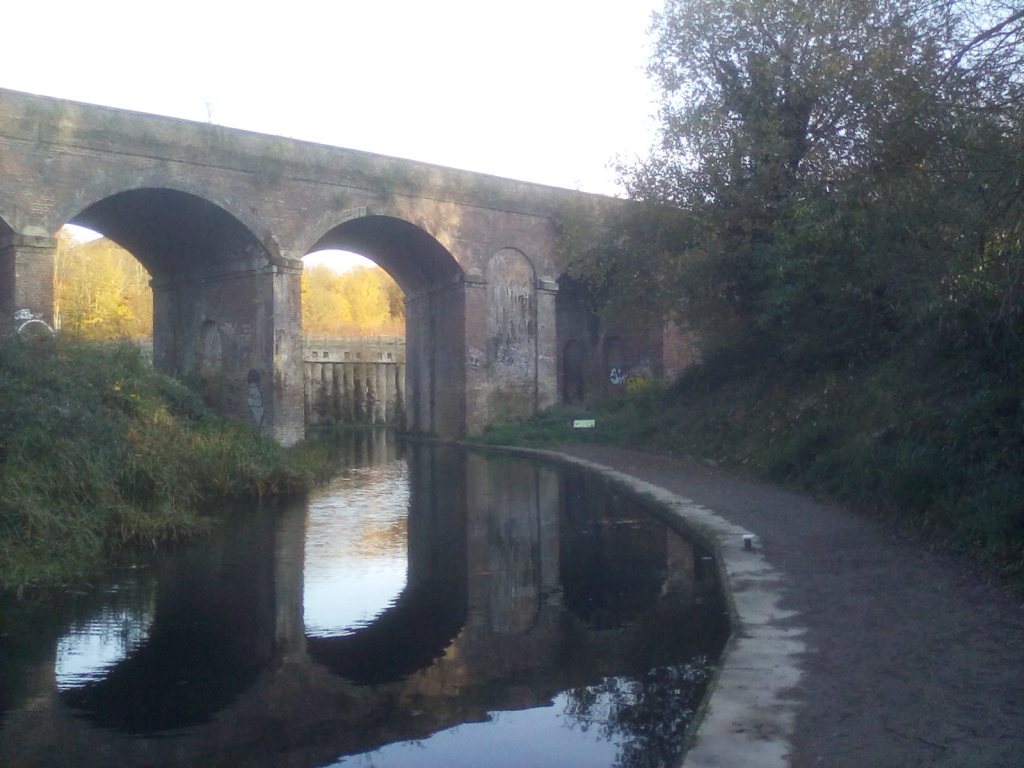
The sun is there, of course. There could be no picture without it. But this is a moment in my world where the sun is hidden, slow to advance and light up the day. As I continue looking through the window, the mist seems thicker, more dominant than the picture records. I am glad to be warm and in the house. I am glad not to be going out to work. I am glad not to be going out to walk, content with the view through a widow. It looks cold out there. Today, I am willing to let the Mystery be.

But the Mystery takes different forms and I find myself peering into a different unknown. There is another hidden sun, within. Thanks to this interior sun I glimpse a direction for my inquiry after the end of this cycle, as we move beyond midwinter into a new calendar year. First, I see the inquiry continuing, supported by curiosity, wisdom and compassion – three qualities for me to cultivate. Second, I am aware of an emerging question about ‘healing’, and what it means for me at this time in my life and the world’s. I am especially drawn to ways in which healing and contemplation matter to each other, and to senses of healing that are not over-preoccupied with ‘fixing’. Third, I realise that I have already begun gathering resources that can support me in this venture. In a somewhat dreary time, I have just enough light to find my way.

ELDER (RUIS) ENDING A CYCLE

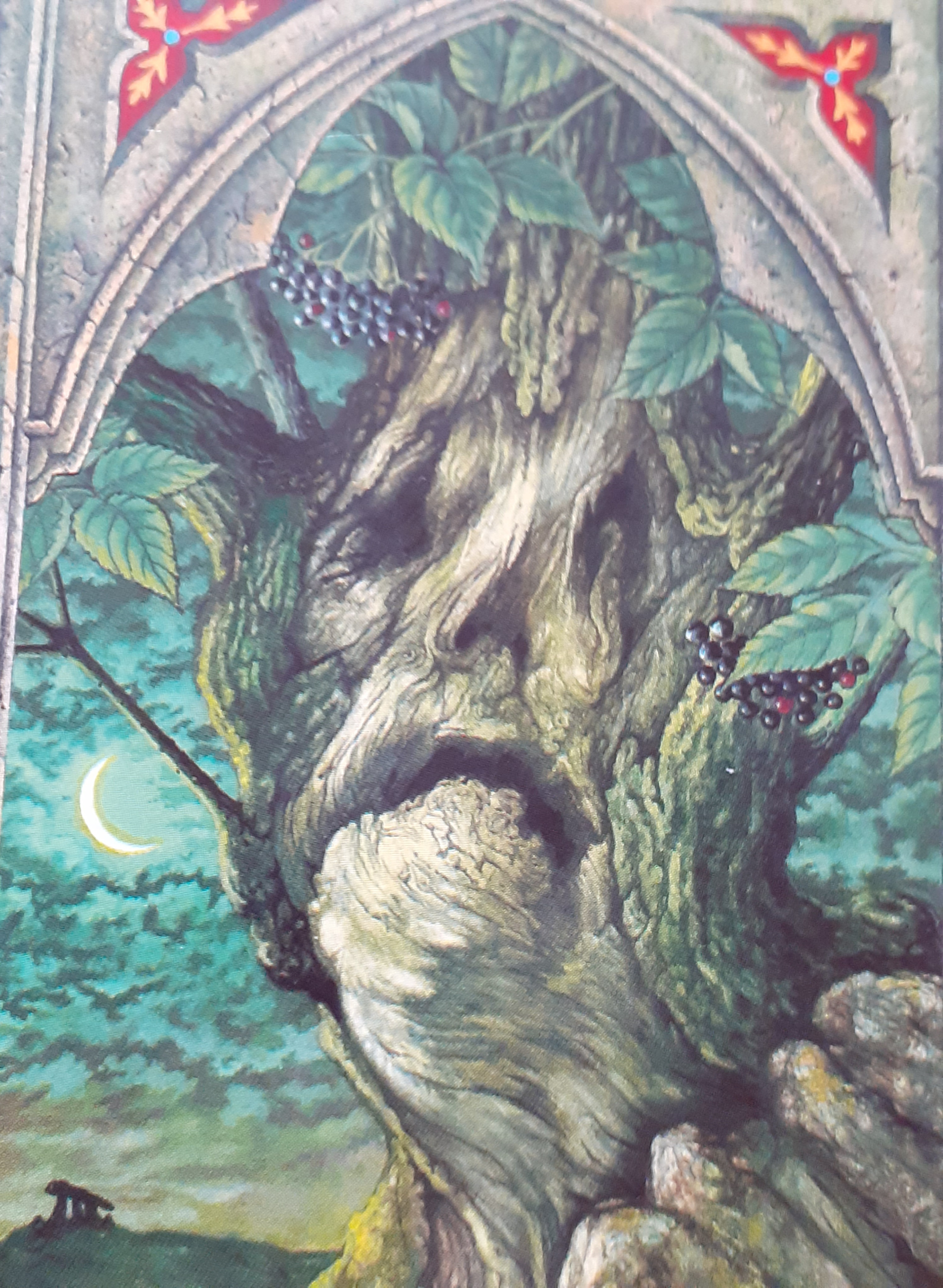
Elder is the tree of the caileach, the crone, the wise older woman. The image above comes from the Green Man Tree Oracle (1), but for me an earlier work, Liz and Colin Murray’s The Celtic Tree Oracle: A System of Divination (2), offers a more illuminating narrative:

“This Ogham card is linked to the eternal turnings of life and death, birth and rebirth. It represents the end in the beginning and the beginning in the end; life in death and death in life; the casting out of the devils of the old year and the renewal of creativity of the new; the timelessness of the cycle by which the fading of old age is always balanced by the new start of birth.

“The card has no reversed position. The circle will always turn afresh, change and creativity arising out of the old and bringing about the new. All is continuously linked as phases of life and experience repeat themselves in subtly different forms, leading always to renewal”.

In my sixteen tree mandala of the year (3) elder covers the period from 24 November to 16 December, following Yew and preceding Holly. If the winter quarter beginning on 1 November is a time of dying and regeneration, then elder deepens the descent into death signalled by the yew, whereas holly brings in the note of regeneration and makes the transition into rebirth. So it is not surprising to me that in Christian folklore elder provided the wood both for the cross of Christ and the self-hanging of Judas Iscariot. There was also a belief that people living in houses built in the shadow of the elder were likely to die young. Indigenous folklore, more benignly, said that to sleep beneath an elder tree is to wake in the Otherworld. If you stood under an elder tree on Midsummer’s Eve you would see the faery troop go by. Casting away fear, and whatever the weather, we may find magic in this tree.

(1) John Matthews & Will Worthington The Green Man Oracle London: Connections, 2003.

(2) Liz & Colin Murray The Celtic Tree Oracle: A System of Divination London: Eddison/Sadd Edition, 1988. (Illustrated by Vanessa Card).

(3) NOTE: This mandala is based on my personal experience of trees in the neighbourhood as well as traditional lore. Moving around the wheel of the year from 1 November, the positions and dates of the trees are:

Yew, north-west, 1-23 November

Elder, north-north-west, 24 November – 16 December

Holly, north, 17 December – 7 January

Alder, north-north-east, 8 – 31 January

Birch, north-east, 1 – 22 February

Ash & Ivy, east-north-east, 23 Feb. – 16 March

Willow, east, 17 March – 7 April

Blackthorn, east-south-east, 8 – 30 April

Hawthorn, south-east, 1 – 23 May

Beech & Bluebell, south-south-east, 24 May – 15 June

Oak, south, 16 June – 8 July

Gorse, south-south-west, 9 – 31 July

Apple, south-west, 1 -23 August

Blackberry & Vine, west-south-west, 24 August – 15 September

Hazel, west, 19 September – 8 October

Rowan, west-north-west, 9 – 31 October.

See also https://contemplativeinquiry.blog/2020/autumn-equinox-2020-hazel-salmon-awen/

PATTERNS OF MIND

William Anderson’s Green Man poem (1) describes winter branches as like “veins in the brain” making “patterns of mind” on the sky. This is the bleak beauty I see through my bedroom window. Anderson uses imagery of this kind to affirm an aspect of his Green Man’s identity.

“I am thought of all plants”, says the Green Man.

“I am thought of all plants”, says he.

I am experiencing a beautiful bleakness right now, grounded, lethargic, and shut away from the world – yet keenly sensitive to “patterns of mind”, or rather bodymind. As I wrote in my last post (2) I strained my back two weeks ago, without any obvious triggering event, and have only just recovered my normal mobility. My recovery process has been slower, with more setbacks, than similar processes in the past, in part I am sure as a consequence of ageing. My sleeping patterns have been disrupted and not well calibrated to times of night and day. Within a weatherperson’s ‘dry spell’ on Wednesday, I found that simply being able to leave the house and sweep leaves off a garden path gave me a great sense of pleasure and accomplishment. I began to feel confident of recovery, and my recovery has gathered pace from that time.

At the same time, I believe there is a larger context for my sense of vulnerability to stresses and strains. My contemplative life is centrally about giving myself to the flowing moment, as living presence in a field of living presence. The moment holds everything. If the Green Man is ‘thought of all plants’, we as humans hold the life of the world, and its collective stresses and strains, within our extended sensitivities. At the personal level I ask myself, how much can I hold? Intuitively I answer that I am already holding more, like it or not, than I allow myself to realise. ‘Can’ doesn’t come into it. I speak from a place, individually, of relative safety and security, for which I am very grateful. But this personal life is only part of the story. I am involved, too, in a larger life. My current vulnerabilities have their own unique features, and also reflect the vulnerabilities of the world. I don’t feel alone in this experience. I believe that I share it with many other people, each with their own story about how it presents itself.

(1) William Anderson Green Man: archetype of our oneness with the Earth Harper Collins: London & San Francisco, 1990. See:

POEM: GREEN MAN

(2) https://contemplativeinquiry.blog/2020/11/10/bare-bones-bare-experience/

BARE BONES, BARE EXPERIENCE

Trees – at least the deciduous ones – are becoming skeletal in my neighbourhood. But I am grounded, after ‘doing my back in’ last Friday morning. I cannot go out among them and be present for their continuing transitions. Instead, my entry into the winter quarter this year is marked by lessons in bare experience.

During this period I have been able to lie and stand, with an element of clumsy ouchy drama when shifting between the two. I can walk, too, in an impaired and limited way. Today for the first time I can also sit on a chair, provided I don’t stay too long. I do best when I slow down and attend closely to my bodymind and environment as a single gestalt. I find this especially useful when moving. It is also a good alternative to roof brain chatter when I am lying down and not asleep. But I do not attempt to operate this way all the time. It is enough to be able to tune in at will. Distraction and diversion also have their place and I don’t want to fetishise special states of awareness. Awareness is already special.

I feel confirmed in my sense of contemplation, a sacrament of sentience, as a plain attentiveness that holds the apparent world in its embrace. The rest is lifestyle choice. A very stripped down form of experience, such as I am having now, is its own kind of blessing.

THE YEW AT SAMHAIN 2020

In my tree mandala of the year (1), yew is my Samhain tree, and to a large extent my November tree. It is an obvious choice, as I leave a quarter concerned with autumn and bearing fruit and enter one of winter and the dying of the year. Regeneration too, but that is some way off.

I admire the power and longevity of the yew, and am in some ways drawn to its energy. But I do not find the relationship easy. I can find it spiky and obscurely demanding. I can find myself resistant to the sensed demand. The alignment of tree and season alerts me to my own mortality and creates space for a reflective moment. But this year I’ve been alert to my mortality for much of the time. In reaction, at Samhain 2020, I feel naturally sluggish and drowsy. Something in me is happy to go down into the dark without too much awareness. Let the dying of the year be the dying of the year, it whispers. Just let it happen. Just let me go down into the dark and sleep.

The Green Man Tree Oracle (2) links the yew with perseverance, for ‘perseverance leads to achievement’. Right now I’m not much interested in achievement, but I notice that I can think of perseverance in another way. This has to do with sticking with the experience that presents itself, rather than life-coaching my way out of it.

I have been working with an intensified wheel of the year for the last 45 weeks. I have seen how easy it is to impose impose conventional or surface-willed patterns on my experience. The seasonal structure is real. I see, feel, hear, taste and smell it manifesting itself in the apparent world as the wheel turns. But the idea of the wheel still has the power to displace lived experience through formalised words, images and expectations. Perseverance on the path asks for two things, I think. One is permission to let go of any sense of project or practice when it loses authenticity. The other is to be truly sensitive and discriminating when I’m happy to be awake.

(1) NOTE: This mandala is based on my personal experience of trees in the neighbourhood as well as traditional lore. Moving around the wheel of the year from 1 November, the positions and dates of the trees are:

Yew, north-west, 1-23 November

Elder, north-north-west, 24 November – 16 December

Holly, north, 17 December – 7 January

Alder, north-north-east, 8 – 31 January

Birch, north-east, 1 – 22 February

Ash & Ivy, east-north-east, 23 Feb. – 16 March

Willow, east, 17 March – 7 April

Blackthorn, east-south-east, 8 – 30 April

Hawthorn, south-east, 1 – 23 May

Beech & Bluebell, south-south-east, 24 May – 15 June

Oak, south, 16 June – 8 July

Gorse, south-south-west, 9 – 31 July

Apple, south-west, 1 -23 August

Blackberry & Vine, west-south-west, 24 August – 15 September

Hazel, west, 19 September – 8 October

Rowan, west-north-west, 9 – 31 October.

See also https://contemplativeinquiry.blog/2020/autumn-equinox-2020-hazel-salmon-awen/

(2) John Matthews & Will Worthington The Green Man Oracle London: Connections, 2003. Also source of the image at the top.

ATLANTIC ANCESTORS

I am beginning to feel the pull of Samhain. It is not here yet, but its themes are drawing my attention. One of these is the remembrance of ancestors.

A recent post by poet and awenydd Lorna Smithers (1) has prompted me to look again at Barry Cunliffe’s work, and the book I have to hand is Facing the Ocean (2). It is about early human history in Atlantic maritime Europe. including Britain and Ireland. One of its threads concerns living with the ocean. Another, related to the first, looks at communication by sea at a time when land travel was difficult. I will follow up these threads in future posts. In the meantime, Cunliffe’s sense of the interaction between nature and culture is shown in the extract below.

“To stand on a sea-washed promontory looking westwards at sunset over the Atlantic is to share a timeless human experience. We are in awe of the unchanging and unchangeable as all have been before us and all will be. Wonder is tempered with reassurance: it is an end, but we are content that the cycle will reproduce itself the sun will reappear. The sea below creates different, more conflicting, emotions. True, there is the comfortable inevitability of the tides, but there is also an unpredictability of mood, the sea constantly changing, sometimes erupting in crescendos of brute force destroying and remoulding the land and claiming human life. The sea is a balance of opposites. It gives and takes. It can destroy quickly and build new; it sustains life and it can kill. Small wonder that through time communities have sought to explain these forces in terms of myth and have attempted to gain some puny influence over them through propitiation.

“Nowhere is this relationship more apparent than in the legends and folk traditions of Brittany. In the howl of the wind can be heard the screams and laments of those drowned at sea, and much of human life – birth and the gender of the newborn and death – was believed to be conditioned by the tides. Below a thin veneer of Christianity lie beliefs deeply rooted in time. A century ago, in the parish of Ploulec’h on the north Breton coast, the first Sunday in May saw the people in procession climb to La Croix du Salut – an isolated landmark that could be seen from far out to sea offering assurance of the approach to a safe haven. Here the sailing community gave thanks for their safe returns before descending to the chapel of Notre-Dame across the bay on the headland of Le Yaudet. In the church today, fine model sailing ships hanging from the roof beams are among the more evocative offerings made to the Virgin by grateful mariners. The deep underlying awe of the ocean is poignantly expressed by the Breton poem

War vor peb ankenn

War vor peb peden

(Sur la mer toute angoisse, sur mer toute priere

At sea all is anguish, all is prayer).”

(1) https://lornasmithers.wordpress.com/2020/10/04/britain-begins-debunking-the-myth-of-celtic-invasions/

(2) Barry Cunliffe Facing the Ocean: The *Atlantic and Its Peoples 8000 BC-AD 1500 Oxford: the University Press, 2001

*NOTE: I wish the subtitle had specified ‘eastern Atlantic’, since every corner of the Americas has been populated for periods ranging from 12,000-24,000 years. The western Atlantic coastal people amongst them are not my focus, but in a post about ancestors I don’t want them to be implicitly erased.

WANDERER

The Wanderer is the Fool of the Wildwood Tarot (1). To become the Wanderer is to let go of formless potential and take on identity and aspiration. Entering the Wildwood world, I find myself at midwinter. As I gradually get my bearings, I lean towards the first signs of a strengthening sun, and the distant promise of spring.

In my first use of the cards, I chose an eight-card spread. Four of the cards belong to Vessels, the water suit (2). They include both ace and king. Where I live, this fits with two or three months of rain and flood, well beyond what used to be normal. The placement of these cards suggests reasons to be hopeful, at a price. Another card, indicated as a helpful resource, is the Pole Star, the name given to Major Trump 17 in this pack.

These results have triggered memories of two Anglo-Saxon poems, often anthologised together: The Wanderer and The Seafarer. Both are voices from a Christianised culture in the old northern world. The first part of The Seafarer, possibly a separate composition from the second, “has variously been regarded as literal or allegorical, and related to such figures as the pilgrim.” (3). The extract below emphasises endurance in the face of adverse conditions. I like the seafarer for being an ordinary man of his time, and not an idealised hero. He does what he needs to, and won’t give up. He can find beauty and communion with bird life, in a harsh and lonely setting. But he also owns feelings of distress, sorrow and complaint. He belongs to history rather than myth.

“I sing my own true story, tell my travels,

How I have often suffered times of hardship

In days of toil, and have experienced

Bitter anxiety. My troubled home

On many a ship has been the heaving waves,

Where grim night-watch has often been my lot

At the ship’s prow as it beat past the cliffs.

Oppressed by cold my feet were bound by frost

In icy bonds, while worries simmered hot

About my heart, and hunger from within

Tore the sea-weary spirit. He knows not,

Who lives most easily on land, how I

Have spent my winter on the ice-cold sea,

Wretched and anxious, in the paths of exile,

Lacking dear friends, hung round by icicles,

While hail flew past in showers. There heard I nothing,

But the resounding sea, the ice-cold waves.

Sometimes I made the song of the wild swan

My pleasure, or the gannet’s call, the cries

Of curlews for the missing mirth of men,

The singing gull, instead of mead in hall.

Storms beat the cliffs, and icy-winged

The tern replied, the horn-beaked eagle shrieked.

No patron had I there who might have soothed

My desolate spirit. He can little know

Who, proud and flushed with wine, has spent his time

With all the joys of life among the cities,

Safe from such fearful venturings, how I

Have often suffered weary on the seas.

(1) Mark Ryan & John Matthews The Wildwood Tarot Wherein Wisdom Resides London: Connections, 2011. Illustrations by Will Worthington

(2) See also https://contemplativeinquiry.wordpress.com/2019/12/30/

(3) Extract from The Seafarer in A Choice of Anglo-Saxon Verse London: Faber & Faber, 1970 (Selected with an introduction and a parallel verse translation by Richard Hamer)

NOVEMBER REFLECTIONS

In recent years, I have experienced November as a special month. Moving on from Samhain, it begins winter, and where I live it sees most of the fall. It is a reorientation towards darkness and inwardness. I began my contemplative inquiry, at first limited to OBOD, then to Druidry more widely, finally becoming universal, in November 2011 following a Samhain ritual.

I find November calmer than December, where I tend to feel jangled by the agitated dominance of capitalist consumerism and its appropriation of a Christian festival, itself the appropriation of a Pagan one. The old festivals had an offer for everyone, at least in principle. Now you have to have money to participate, and increasing numbers of people don’t. So I find December an awkward, uneasy time, a ‘festive season’ that, collectively, doesn’t quite ring true.

This sense of a problematic December has made the whole month of November special to me, and powerful for my inquiry. This year I have rejigged my daily practice and replaced a long morning session with shorter sessions in the morning and evening. In the morning I wake up and greet the day with a slightly ritualised (thanks to Druidry) set of exercises. Before going to bed I do a yoga nidra meditation, listening to an audio download. Both practices are grounded in what I would now call a sacrament of presence, and awareness that every experience points towards a source of being from which I am not separate. In this intersection of time and eternity I find my home. I don’t need special ‘spiritual’ experiences. This spirituality doesn’t require them: the work is to enhance my capacity to welcome any experience, including my resistance to negative ones, and find ways to respond. Hence I look to simple, regular practices that provide pragmatic benefits and also remind me of this core insight.

I find that the inquiry aspect of my contemplative inquiry is shifting its focus to personal life, relationships, culture and nature. What’s going on? How am I placed? How am I responding? What difference does my Sophian Way – with contemplative inquiry as its main expression – actually make? These are my November reflections for 2019.

A NEW WINTER

I’ve been in transit to winter for the last three weeks. Today is the day that I got here. The part of me that senses this movement is aware of only two seasons, summer and winter. There is a debatable zone twice a year, over varying lengths of time depending on events on the ground. I notice that the heavens are less important – sun, moon and stars impact only through the way they look and feel to me, and the way they affect my light. I am not, in this mode, a maker of calculations.

I’m not bringing in cattle for preservation or slaughter, the classic harbinger of Samhain. So I look for other signs. This year’s process began on my visit to Yeovil, where I was born and lived with my parents many decades ago. They are long gone, but I have naturally been thinking about them, and the life that we had there. Our old home is desolate and the picture above is a shop front from the same street. The Unknown sign is from well after my time, presumably once a catchy name for a modest business. Now it too is stripped out and empty, so that I don’t even know what Unknown once meant. This unknown is scripted only as a single word, a fuller story hard to find.

Yet there the sign is – Unknown – on the door, and I cannot help but wonder about it. Imaginatively I entered that door when I took the picture, in the limited sense that I’ve been conscious of it for the last three weeks, and it has flavoured my experience. I knew that I would write about it at some point. I’ve had dreams of disconnection, dislocation and dissolution. They haven’t stimulated anything so gothic as terror, but they have created a low level discombobulation, a sense of the times being out of joint. Two people close to me have had to weather unexpected misfortunes. There has been a theme of grey skies and heavy rain, interspersed though with jewel-like periods of sunshine in the continuing fall.

I recognised the decisive shift to winter when I saw ice today, outside the kitchen door. I embraced winter, and surrendered to it: a simple act of will, as I responded to the sight of ice. To some extent, during today, I have felt, briefly, the reassurance of being in a ‘season’, where the world follows its appointed course. Winter is here. It happens every year. But I still see that bleak door marked Unknown. The much celebrated wheel of the year, with its times and seasons, basis for a bedrock practice in modern Druidry and Paganism, is itself volatile and perceptibly changing. I don’t find much comfort or certainty there. I feel as if I have been woken out of a trance – and am called to a fuller relationship with unknowns and unknowing.

Earth Eclectic

music that celebrates Earth and speaks to the heart

Sarah Fuhro Star-Flower Alchemy

Follow the Moon's Cycle

Muddy Feet

Meeting nature on nature's terms

Rosher.Net

A little bit of Mark Rosher in South Gloucestershire, England

Becoming Part of the Land

A monastic polytheist's and animist’s journal

selkiewife

Selkie Writing…

Charlotte Rodgers

Images and words set against a backdrop of outsider art.

Prof Jem Bendell

living with metacrisis and collapse

Towint

The pagan path. The Old Ways In New Times

The Druids Garden

Spiritual journeys in tending the living earth, permaculture, and nature-inspired arts

The Blog of Baphomet

a magickal dialogue between nature and culture

This Simple Life

The gentle art of living with less

Musings of a Scottish Hearth Druid and Heathen

Thoughts about living, loving and worshiping as an autistic Hearth Druid and Heathen. One woman's journey.

Wheel of the Year Blog

An place to read and share stories about the celtic seasonal festivals

Walking the Druid Path

Just another WordPress.com site

anima monday

Exploring our connection to the wider world

Grounded Space Focusing

Become more grounded and spacious with yourself and others, through your own body’s wisdom

The Earthbound Report

Good lives on our one planet

Hopeless Vendetta

News for the residents of Hopeless, Maine