Contemplative Inquiry

This blog is about contemplative inquiry

Tag: Seasonal Festivals

FIVE IMAGES: MIDSUMMER CELEBRATION 2023

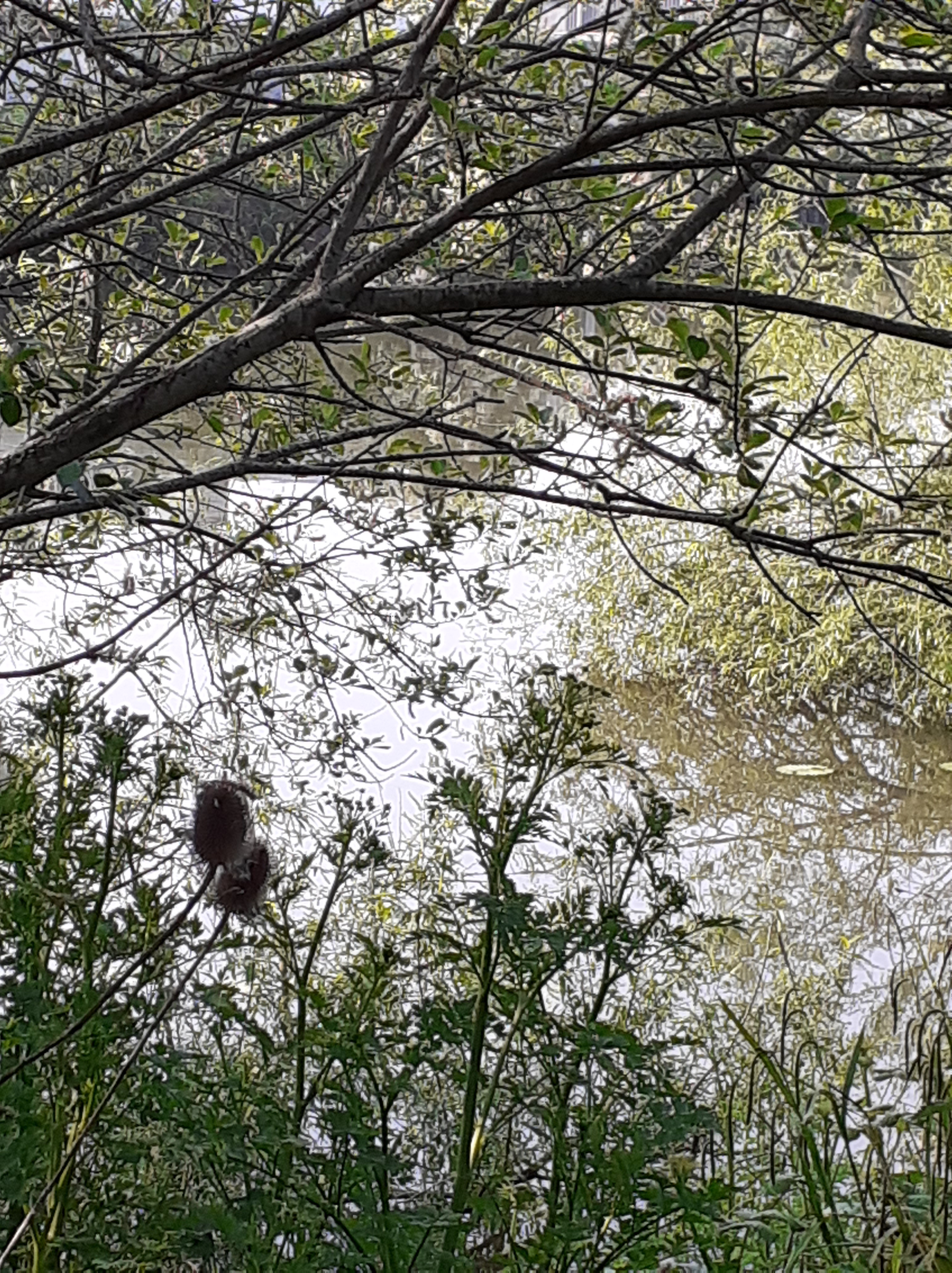
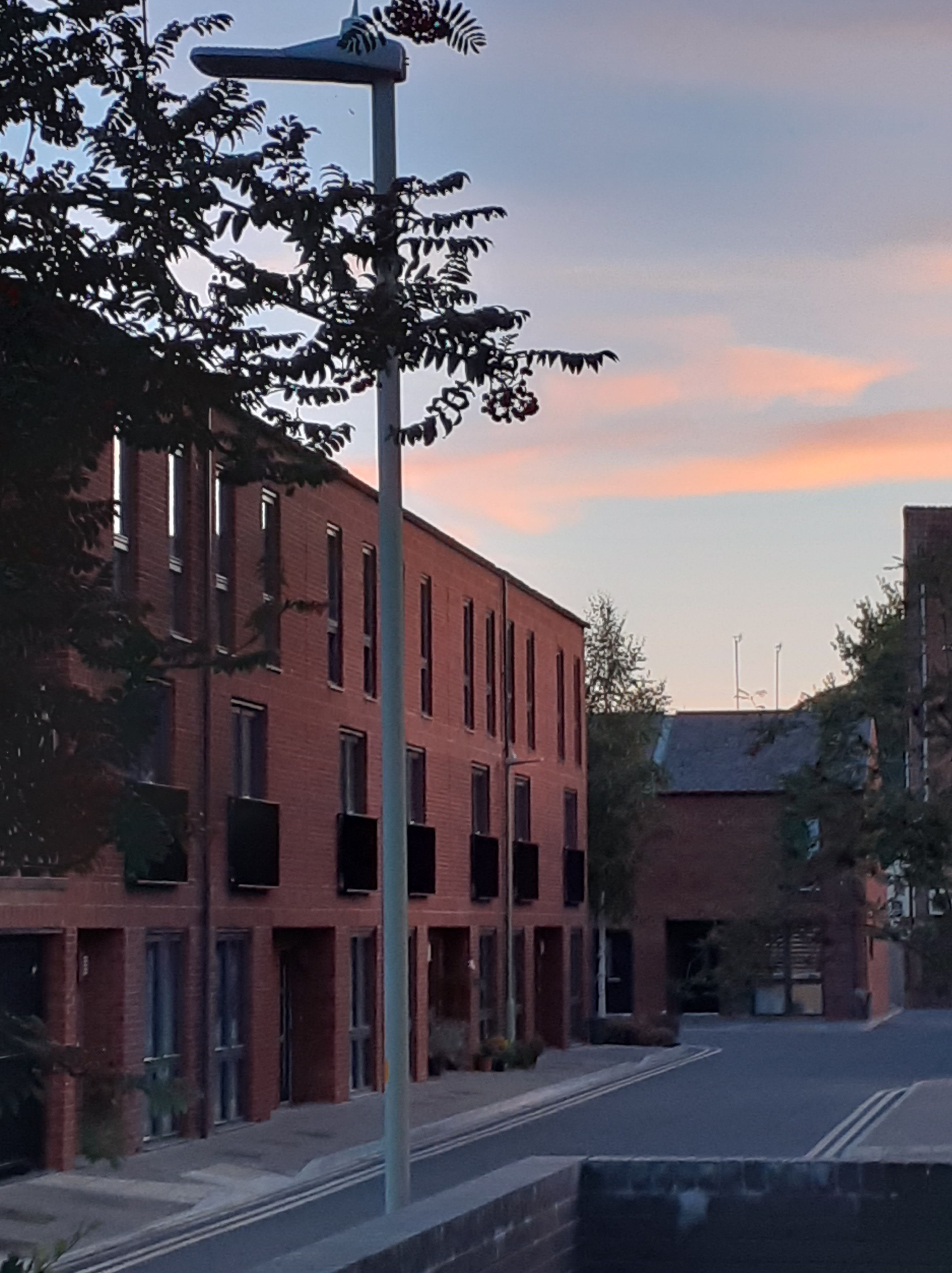
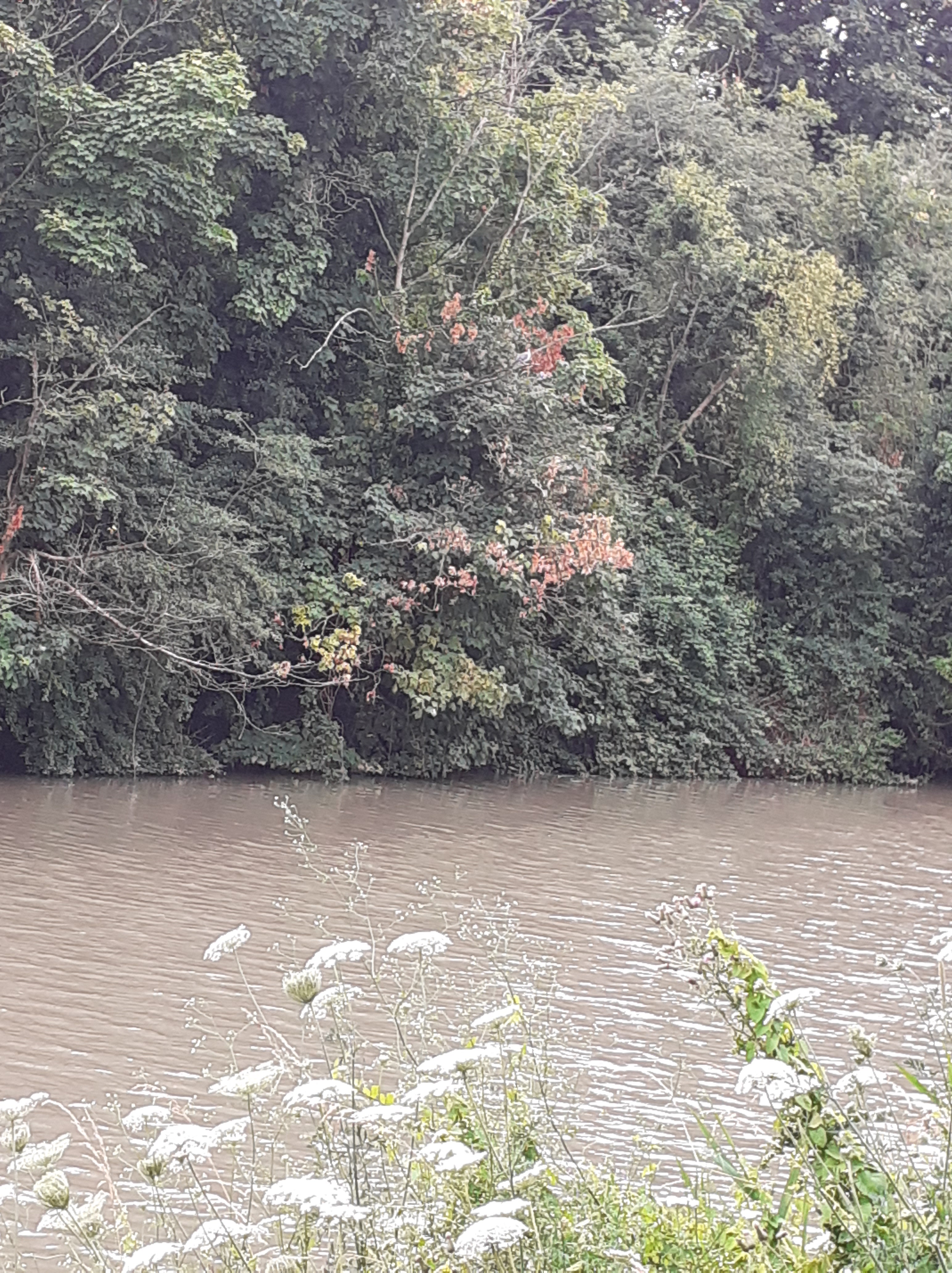
The five images in this blog record a dedicated solstice walk, an evening walk beginning 8 pm on 20 June. For me, the solstice period lasts around a week ending on 25 June. I like to acknowledge the stasis (standstill) element. My festival practice is not about a moment in time so much as honouring an extended pause before the wheel turns, at first slowly, towards the dark.

I sought immersion in the unique and sacred flavour of this day at this time in this place. I do not believe my images ‘capture’ that flavour – now gone with the moment it belonged to. But the pictures do provide a suggestive record of that time. They help my memory. They remind me especially that my experience of this practice in 2023 differs from that of 2022, when I first undertook it as a solo, contemplative form of midsummer celebration. (See: https://contemplativeinquiry.blog/2022/06/24/.)

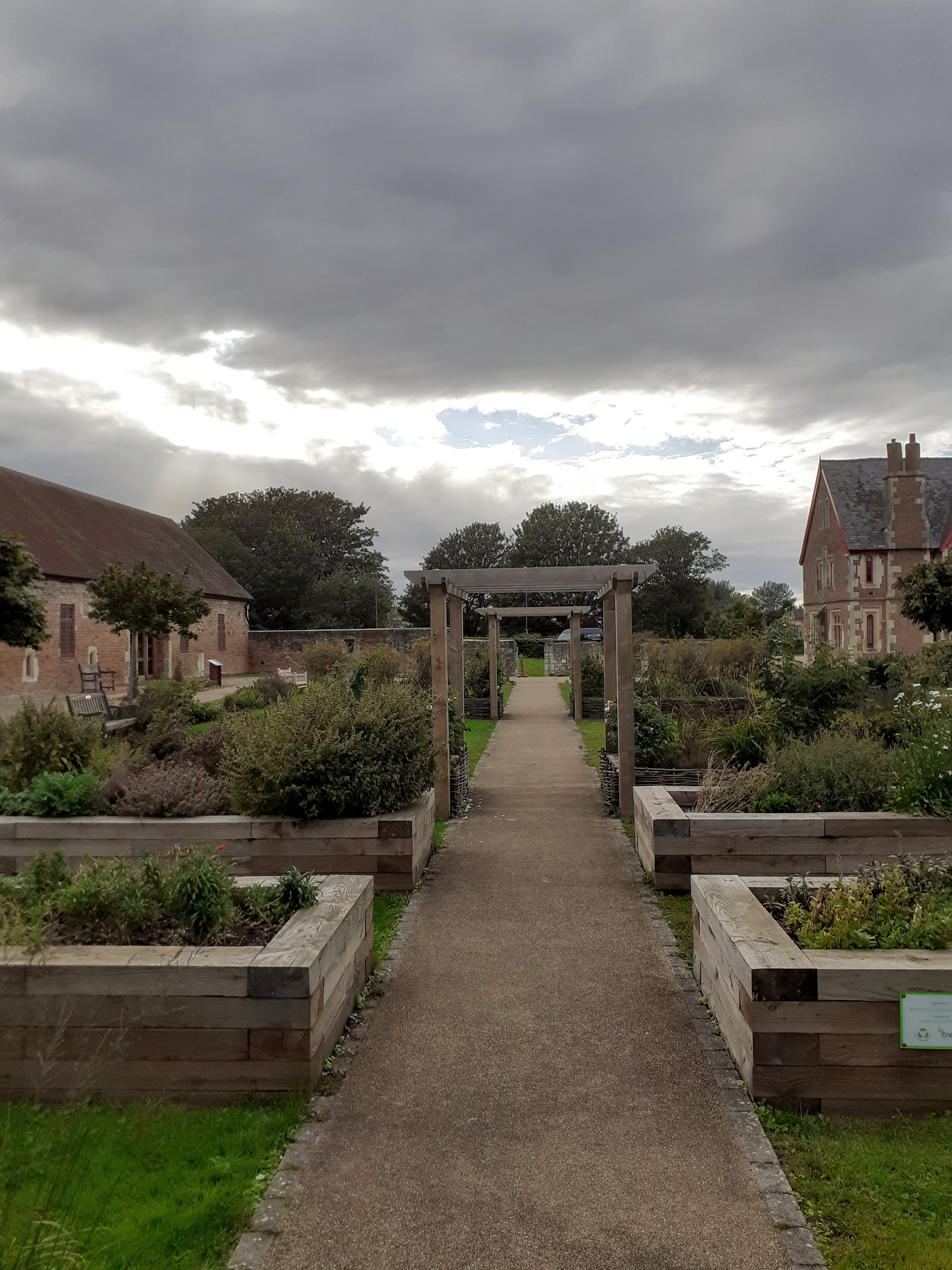
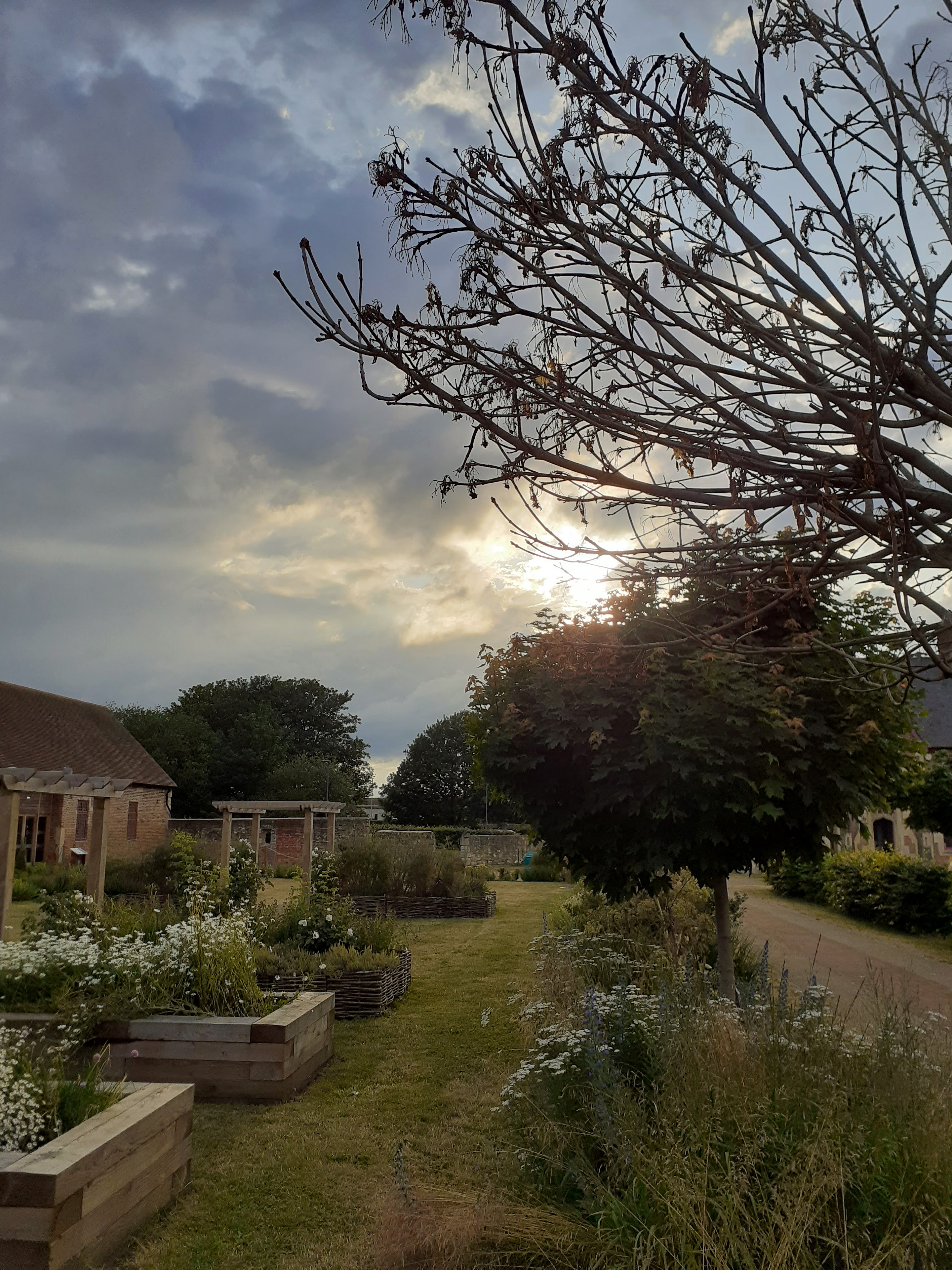
The first image (above) is of Llanthony Priory gardens, dominated this evening by a dramatic sky. Sunlight shines through heavy clouds, dark and suggestive of a storm that we had largely missed in Gloucester. Three canalside images (below) also display the energy of clouds with the sun backlighting them. I find both beauty and power here, indeed a strong sense of powers greater than mine, and indeed of ours collectively. This year, my seasonal immersion has an edge. A modern Druid, I celebrate the seasons and reverence the elements. But I certainly don’t own them, or decide how they are meant to be.

During my walk I spent a lot of time with my eyes turned upwards and skywards, with hints of both awe and foreboding. I understand how sky god spiritualites work. But I also looked across and down and found new life. A pair of swans and their cygnets were finding space on the water on a busy small marina. It is now surrounded by housing on three sides, yet they seemed flourishing and confident. Storm clouds of many kinds threaten. Life goes defiantly on.

BOOK REVIEW: THE TORCH OF BRIGHID

Highly recommended for anyone interested in Brighid, Celtic spirituality and the evolving culture of modern Paganism. In The Torch of Brighid, Erin Aurelia eloquently describes her flame tending path as a devotee of the Goddess Brighid. For her, this is a path of celebration, contemplation, creativity and deep personal change. Her book shares the fruits of a remarkable journey.

The author makes clear that she is not reconstructing a past Pagan practice. No such practice is known. She references a Christian history dating from 480 CE, where nuns maintained a sacred flame at Kildare in Ireland. This was documented as still in place in the later 12th century CE by Gerald of Wales in his History and Topography of Ireland. It was repressed by the English King Henry VIII – who also ruled Ireland – as part of his violent religious revolution of the 1530s and 40s. On 1 February 1993, flame tending was revived both by Catholic Brigantine sisters in Kildare by the neo-Pagan Daughters of the Flame in Vancouver, BC. Both groups were influenced by Gerald of Wales’ description.

Erin Aurelia has been a flame tender for 20 years. She began in the Daughters of the Flame and then founded her own Order, the Nigheanan Brigde Flametending Order, going on to lead it for eight years. The original model involved moving through cycles of twenty days, in which nineteen flame tenders take a day each to tend the flame, leaving the Goddess to take care of the twentieth. Erin found that she wanted an intensified practice and a closer fellowship with other Brighid devotees. During those years, she writes: “Brighid inspired me to develop guided meditations to use during vigils, seasonal feasts, and lunar phases”. Later came “the template for a whole new way to practice flame tending: the way that the flame tending cycle matches with the twenty letters of the traditional Irish tree ogham alphabet, in which each alphabet letter is denoted by a tree and infused with esoteric meaning”. She describes herself as “enthralled and excited” by this discovery, which lead on to daily communing with Brighid and a fuller development of her work.

She found the process transformative, and learned that “growth is not only made through obtaining wisdom, but by implementing it. And Brighid showed me that I can effectively implement it by embodying her own skills as Shaper, Healer, Seer, and Transformer. Through embodying her skills, I became empowered”. In the narrative of her own journey, Erin shows her willingness to innovate, take initiatives, lead when called to do so, and also step back from leadership. Her relationship with ancient culture is to be inspired by it without being bound by it. I see her as modelling the best of modern Pagan practice in these respects.

Erin provides extensive information on her flame tending vigils, and how to set them up. She shares prayers, meditations and path workings. She includes her unique approach to ogham work, and also her own way of working energetically with the traditional ‘three cauldrons’ (of warming, vocation and knowledge). She shares her ways of working through the four Irish fire festivals from Imbolc (1 Feb.) to Bealtaine (1 May} to Lughnasadh (1 Aug.) to Samhain (1 Nov.). She has an Imbolc advent practice centred around the four Sundays prior to Imbolc – because it starts the year in this tradition and is specifically dedicated to Brighid. Her book is a powerful addition to the growing literature about Brighid as a much loved Goddess.

CELEBRATING THE MONTH OF MAY

The Irish name for May is Bealtaine. Linguistically at least, the May Day festival sets the scene for a calendar month. As I experience the wheel of the year in my own life, this feels right. May, the merry month, has always been special to me. Born towards the end of the month in 1949, I continue to feel newer and fresher in May, with a heightened sense of life. Changes happening around me, in the rest of nature, feed that sense. I’m part of something bigger.

The demarcation of time might be a product of human counting and naming, but it doesn’t feel arbitrary to me. Counting and naming have a powerful magic of their own. On 14 May 2023 I went on a morning walk, reaching a small wooded area at about 7.45 am. It was a time of dispersing mists and strengthening light. A time of warming up. I enjoyed it from the start, but there came a moment when my experience of the walk changed radically.

I see the wood. I stand at its edge. Hawthorn invites me in, decked in the green and white of the May season. I understand this as a moment for slowing down and shifting into a softer, more intuitive connection with the realm I am entering. I am moving into a kind of sacrament – a communion with nature in a unique time and place. I feel a joyful kind of reverence here, free of solemnity and unction. As I continue slowly on the path, sunlight, striking a slender tree trunk, illuminates my way.

Then comes a tanglewood immersion. Variations in wood. Variations in green. Variations in light – especially light. This place could be dark and dank. At times, no doubt, it appropriately is. But it is May now, and wonderfully backlit. There’s a yellowing of green that points to new light and growth rather than their decay. I have a strong sense of participating in a living world. My own vitality is boosted.

I am now drawn towards water. Again, some foliage is shaded. Other foliage is vividly lit up. On the water, the mist is still clearing. It is still fairly early in the day. It is at times like this that I feel most Druidic, very at home and blessed in this quiet connectedness.

A little later, I crouch at the water margin’s edge. Whereas the previous scene had a spacious serenity, this has intimations of activity, a small but crowded world of its own, with thriving plants and and a thriving sub aquatic realm beside them. Even in this small space, life is complex and abundant. The same holds, on a somewhat expanded scale, to this vulnerable scrap of woodland as a whole. I emerge from my sacrament refreshed and renewed, with the imprint of Bealtaine 2023 upon me.

LEARNING ABOUT OUR PAGAN ANCESTORS, AND LEARNING FROM THEM

Recently I watched Ronald Hutton’s first Gresham College lecture about Gods of Pagan Britain on youtube (1). It sets the scene for a series, raising questions about what we can know about the spiritual lives of our ancestors, what we can fruitfully imagine, and how to tell the difference.

Professor Hutton explores two specific topics. The first is our current archaeological understanding of the Stonehenge monument on Salisbury Plain, England, together with its legendary history and place in the public imagination. The second is the case of the Lindow Man, who was violently killed and thrown into a peat bog in Derbyshire, thus partly preserving his body for conceivably (but probably not) 2,000 years. He has been widely considered, including at times by archaeologists, to be the victim of a Druid sacrifice, though Hutton points out that there are good reasons to question this.

I was drawn to this lecture, both informative and entertaining, by my interest in learning from an ancestral culture without its own texts, as well as about it. This is part of my reason for following a modern Druidry that embraces indigenous themes long pre-dating the Druidry of the Celtic iron age. The people who built Stonehenge in the third millennium BCE bequeathed us the wheel of the year, with its circle and cycles, and its focus on the solstices and equinoxes. We can be inspired by this and honour the ancestors by embedding it in our own lives in ways that suit our time and culture.

For readers who have not yet seen and heard the lecture, I recommend that you take a look at the video.

(1) https://youtube.com/watch?v=QjC0lGr4h04&t=5s/

Ronald Hutton is Professor of History at the University of Bristol, a specialist in Pagan and Druid studies, and enjoys a very high reputation within both the academic and Pagan communities.

ALBAN ELFED: A TIME FOR RECEPTIVITY?

Blessings of the season! Where I live, the sun is descending but still has a certain power. We have entered the period of the Autumn Equinox, honoured by modern Druids in the festival of Alban Elfed. Traditionally, the emphasis has been on harvest, but Dana O’Driscoll (1) suggests ‘receptivity’ as a resonant theme, “because with receptivity, rather than cultivating an expectation of what we want and expect to come, we are open to what is and what comes our way”.

She relates her approach to the changes that the world is experiencing now. “It is a counter balance to the effort-reward cultural narrative that is tied to the Fall Equinox and themes of harvest. There is one enormous problem with the effort/reward theme on a larger cultural level. It belongs to a different age. It belongs to the Holocene, an 8,000-11,000 year period of stable climate that allowed humans to develop agriculture, allowed humans to have some predictability about their surroundings, and allowed us to develop symbolic understandings like those drawn upon for the modern wheel of the year. … But we are not in the Holocene any longer, both climate-wise and culturally; we’ve moved on to the Anthropocene … characterized by human-driven planetary changes which destabilize every aspect of our lives.”

I find the call to receptivity challenging. Part of me wants the late Holocene back, in a reformed version – socioeconomically, culturally, technologically. Part of me accepts that it has gone for good but doesn’t want to acknowledge the speed and severity of the transition. Currents of anger, fear and grief cry out for recognition. These are as much part of my life-world as are the climate crisis itself, initiatives for adaptation, and the forces undermining those initiatives. I somehow have to find a receptive space for all of the above, without being overwhelmed.

The good news is that my ‘receptivity’ seems to be sourced by a deep peace at the heart of experience, a peace that grows rather than diminishes with time. In my daily practice as a modern Druid I call for peace in the east, south, west, north, deep earth & underworld [below], and starry heavens [above]. Then I say: “I stand in the peace of the centre, the bubbling source from which I spring, and heart of living presence”. These words are vibrant with life for me however often I declaim them. I experience this deep peace as a fruit of my contemplative inquiry. Perhaps there is a harvest aspect here after all.

Certainly, to stand in such peace empowers my receptivity, linking it to other qualities like reverence, delight and awe. None of this changes the world. But it allows me to contemplate it with an underlying confidence, and to face its challenges in a more resourceful way. I am very happy to mark Alban Elfed as a feast of receptivity.

(1) https://thedruidsgarden.com/ – see Fall Equinox: a Spirit Walk and its internal reference to Equinox on Receptivity

NOTE: Pennsylvania-based Dana O’Driscoll is steeped in Druidry and the US homesteading movement. She is Grand Archdruid of the Ancient Order of Druids in America (AODA) and an OBOD Druid. She is a Mount Haemus scholar, lecturing on Channeling the Awen in 1912.

See also: https://contemplativeinquiry.blog/2021/06/09/book-review-sacred-actions/ )

For AODA, see: https://aoda.org/

STATES OF LIGHT

This is the face of dawn outside my window, just after 6.30 a.m. I welcome the mid September day, appreciating this moment in the year. I like the infusion of pink into grey clouds, and the suggestion of warmth in the old church tower.

I have now grown used to getting up in the dark, and to beginning my morning practice with an awareness of darkness outside. The nurturing dark and enabling light are both part of my experience. A transient time of balance has begun. It feels numinous to me, and a time of great potential. I am energetically alert and alive.

Later, a little before 9 a.m., I am walking by the Gloucester-Sharpness canal. I notice light on leaves, and its influence on the gaps between trunks. The view, here, is over water. But it is the influence of sunlight that makes the greatest impression on me – captured in the picture as well as in real time.

By contrast, the spaces furthest away from the light source are able to show their earthiness, their woodiness and the depth of their green. The light is everywhere, but it is subtle and not over-bearing. It reveals its influence in different ways. Rather than radiating raw power, it allows possibilities in this small, fragile habitat. Contemplating autumnal states of light, as I approach the autumn equinox, I have been shown something about power and its manifestation.

LUGHNASADH 2022: RE-ENCHANTING TIME

A familiar sight at this time of year: a family of swans, adolescent cygnets with their parents. A superficial glance at the picture gives me a satisfying sense of near completion, of an annual cycle showing its results. It is a still image, literally a snapshot. Nothing in it can change.

Yet when I took the photo, the swans were highly mobile, constantly shifting their relative positions while sometimes gliding elegantly along the canal and sometimes pausing to investigate its banks. I also foresaw their likely passage through a more extended time. Soon enough, the cygnets will be grown up and on their own. A new beginning enabled by an ending.

I live in southern England, where daylight hours have begun noticeably to shorten. Lughnasadh (Lammas) marks the beginning of August. This festival initiates a quarter that moves through the autumn equinox and ends at Samhain. These three months embrace decline, decay and eventually death, whilst also celebrating grain and fruit harvests and (in past times) the culling of livestock to see us through the winter. The themes belong together.

I treasure this attunement to cycles of time. Part of my contemplative life rests in the timeless. Another part, more worldly, enriches my experience of time. By contrast mainstream western culture characterises time as a limited resource to be measured and priced; to be ‘spent’ productively and not ‘wasted’. The phrase ‘time is money’ comes to mind. This time hurtles onwards like a runaway train into a future always packaged as better, even redemptive, but now looking increasingly dystopian.

But any time we can know is a matter of human perception, and therefore malleable. There are, and have been, many ways for humans to live in time. For me, living the cyclical time of the eightfold wheel of the year, widely practised in Druid and Pagan culture, continues to be a re-enchanting experience.

MIDSUMMER CELEBRATION 2022

The place is called Lower Parting, though it is actually a joining. The parting is 3km (just under two miles) up river. There, the River Severn divides into two channels, east and west, to flow around Alney Island. When taking the picture above, I was standing near the point where the channels meet again. It was around 9 a.m. on 22 June. I had not been there before.

Although every time and place is ultimately sacred, some times and places are easier for me to honour. In my experience this is partly a property of the times and places, partly down to culture and tradition, and partly to do with my own inner and outer availability.

On this occasion, I was within a midsummer period which for me lasts from a day or so before the solstice until around 25 June. I like to acknowledge the stasis (standstill) element within the solstice experience. It is not just about a point of time. Like its midwinter opposite and twin, my midsummer allows an extended pause before the wheel of the year turns. My walk on 22 June was an intentional celebration of the midsummer stasis, something between an outdoor walking meditation and a miniature festival pilgrimage. It was built around my first encounter with an intuited special place, now that I am fit enough once more to walk the required distance.

I can easily understand why people in many parts of the world have seen water, especially flowing water, as sacred. I am on a quiet part of a quiet island in the middle of Gloucester city. The wetland here is blissfully unfit for development, and now a nature reserve. I was able to stand here and look out at the joining of the waters, under a blue sky, and surrender to a benign spirit of place. I didn’t have to attend to my attention. In this extended, flowing, moment, nature was doing that for me. I found, here, a generous horizon, and a living peace that invites participation. I am glad and grateful to have discovered this place on this day.

In my tradition, at every seasonal festival, we are asked to think not only of the time we are celebrating, but also of its opposite. Walking back from Lower Parting, I see features in the landscape that help me. My pictures below do not evoke winter, but they do show light and shade within a single image. On planet Earth, the time of my summer is the time of someone else’s winter. These are both ways in which opposites complement each other in an interconnected world.

STILLNESS IN A TURNING WORLD

Late on Christmas morning, I went out for a midwinter walk. It was relatively warm outside (8C/46F). The world seemed static and still. Yet I had the sense of a new year quietly being born, somewhere under the surface. Ripples in the water seemed to me to confirm this.

The midwinter season that I observe in nature can be like that – superficial dullness masking dynamic transformation. Life is strong in this watery place. The wheel continues to turn. There may be harsh weeks ahead, but the overall movement of time is already leaning towards regeneration, rather than the seasonal dying of late autumn and early winter.

At times like this I sense the presence of an ancient cosmic motherhood that gives me hope for the coming year. May all beings be blessed.

A DANCE OF LIGHT AND SHADE

Sunday, 31 October. Hallowe’en. Greetings of the season! A chance for a ghost tree to move and dance?

Where I live, a change in clock time has made the morning a little lighter, wet and gloomy though it might be. The evening, of course, will be darker. It will launch an endarkening seven weeks for those open to the spiritual opportunities of this time.

I am noticing a dance of light and shade, at moments not defined by heavy cloud and rain. In these recent pictures I sense a yin/yang contrast where clear shafts of light illuminate, but do not dominate, spaces inclined to be shady. For me there is a living balance here – one thing that still pictures do not show is that the detail is constantly changing.

I celebrate the miracle of existence – my ability, or life’s ability, to see a world and be immersed in it. To respond to it and to share it. Sometimes this seems enough, with no need for any framework to explain or contextualise this astonishing fact. Here, from identifying a dance of light and shade, I can notice how this dance has different effects in different settings, a small sample of the vast diversity in our living world. As we move without illusions into the Cop26 summit, may it be preserved and protected!

text

text

Earth Eclectic

music that celebrates Earth and speaks to the heart

Sarah Fuhro Star-Flower Alchemy

Follow the Moon's Cycle

Muddy Feet

Meeting nature on nature's terms

Rosher.Net

A little bit of Mark Rosher in South Gloucestershire, England

Becoming Part of the Land

A monastic polytheist's and animist’s journal

selkiewife

Selkie Writing…

Charlotte Rodgers

Images and words set against a backdrop of outsider art.

Prof Jem Bendell

living with metacrisis and collapse

Towint

The pagan path. The Old Ways In New Times

The Druids Garden

Spiritual journeys in tending the living earth, permaculture, and nature-inspired arts

The Blog of Baphomet

a magickal dialogue between nature and culture

This Simple Life

The gentle art of living with less

Musings of a Scottish Hearth Druid and Heathen

Thoughts about living, loving and worshiping as an autistic Hearth Druid and Heathen. One woman's journey.

Wheel of the Year Blog

An place to read and share stories about the celtic seasonal festivals

Walking the Druid Path

Just another WordPress.com site

anima monday

Exploring our connection to the wider world

Grounded Space Focusing

Become more grounded and spacious with yourself and others, through your own body’s wisdom

The Earthbound Report

Good lives on our one planet

Hopeless Vendetta

News for the residents of Hopeless, Maine