Contemplative Inquiry

This blog is about contemplative inquiry

Tag: Seasonal Festivals

WINTER SOLSTICE BLESSINGS

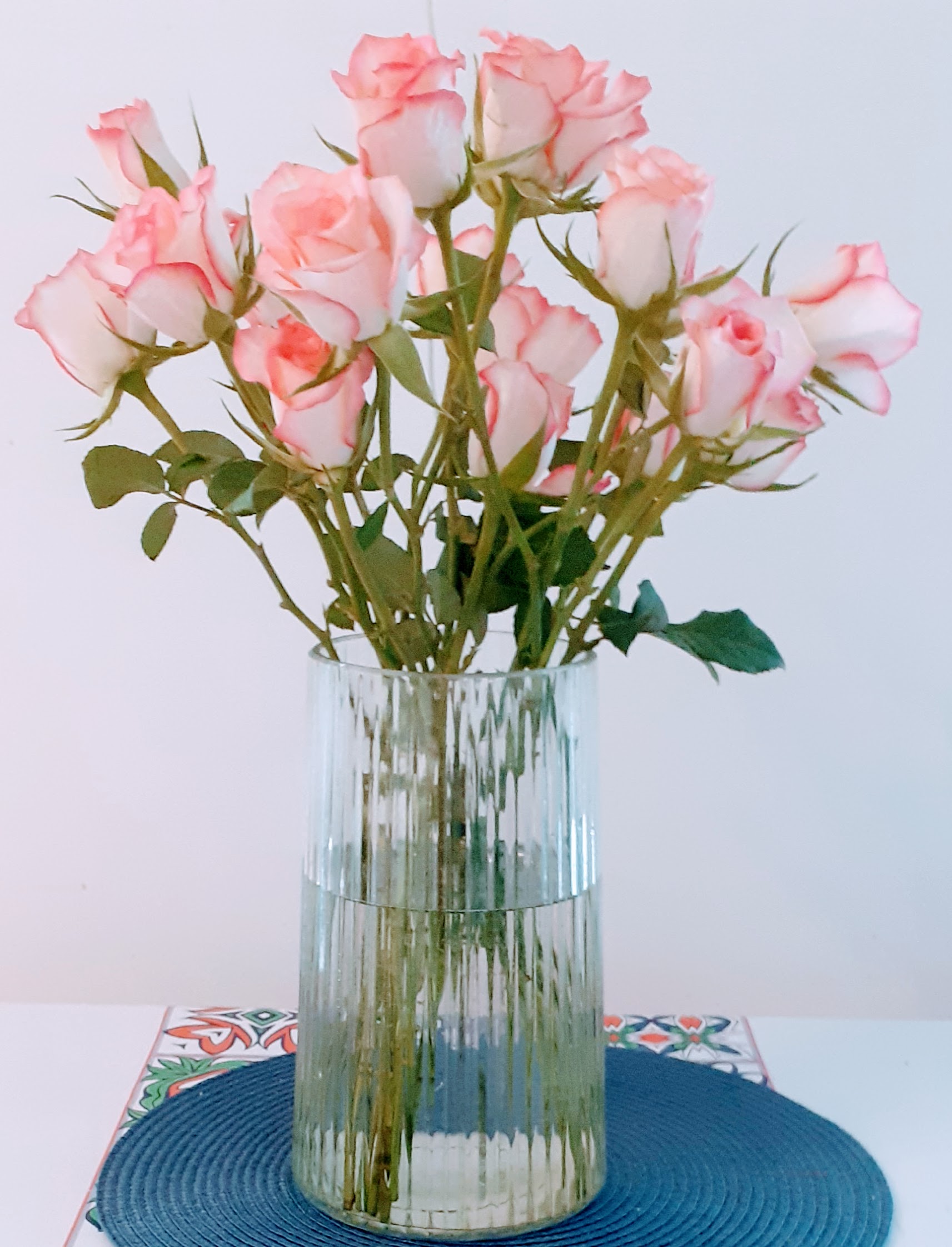
Midwinter roses

with understated elegance

Offer their Solstice blessings.

THE SUN SETS ON 2024

It is very close to the turn of the year. The sun is now setting on 2024. The sunset pictures above and below are from 15 December at 4pm, taken from a balcony window. Vivid imagery after long days of sunless grey. It feels weird and alien, almost as if I’m looking out on another planet. 2024 has often felt like that, at times beautiful, at times scary and disorienting, at times a test of endurance.

Looking back at 2024 in a seasonal but non-festive way, I find a hard year with extraordinary moments. Personally, it was dominated by my wife Elaine’s accident in Gran Canaria and her gradual and ongoing recovery. A roller coaster of a year. Currently I feel good about my spiritual inquiry and practice, which I experience as a great blessing. But I do not want to impose any expectations on 2025. Let the new year be what it will.

LIGHTS IN DARKNESS

Stars in a night sky. Candles in a dark room. Cleverly crafted decorations for Yule. These, for me, are ideal images of light in winter. When I came into Druidry, I was moved by the liturgical use of the phrase ‘the illumination of lights’. In a reality of many lights, which can also be a reality of one light and many lamps, the light is not overwhelming.

Darkness makes light bearable when containing a plurality of lights. There is space for freedom here, and likewise space for relationship and connection. This winter, I am not energetically hibernating, as I sometimes do. I find myself going deeply into Innerworld landscapes and connections in a way I have become unused to in recent years. Yet I do not feel alone or self-absorbed. I feel like a little light in a field of lights, each contributing its own individual illumination to the field, whist nested in a nurturing dark. It feels like the right focus for the time of year, and the end of 2024.

OLD MIDSUMMER’S EVE 2024

23 June 2024, around 8.15 pm. I’m enjoying my first contemplative walk for some days. I’m looking at an old wall, once part of the Llanthony Priory estate in Gloucester. The day has been one of rising temperatures and humidity. Even now, as the shadows deepen, I feel an energy and expectancy in the evening light.

The Priory here was for a time the largest landlord in the city and its surrounding district. In those days, midsummer was celebrated on 23/24 June. The Church celebrated the birth of John the Baptist, at the opposite end of the year from that of Jesus. (His beheading is remembered on 29 August). Popular celebrations on the evening/night of 23 June involved bonfires, and local festivities could be attributed to the saint, the season, or both.

In many cultures, the year has been divided into two contending halves, whether at the solstices, the equinoxes, or with the Beltane/Samhain division. Traditional Christianity flirts with this theme. I might think of summer and winter kings, king-slaying and the Goddess. I might also think of John, Jesus, and their respective human fates. In the case of John, Salome and her royal mother Herodias are a presence, along with their fateful demand for his head. These stories are not the same, but in the European Christian imagination they have at times been interwoven.

I might also think of the Green Man maturing to the point where he can “speak through the oak”, as “its crown forms his mask and its leafage his features” (1). To speak through the oak is to speak at another level, or from another dimension, a developmental moment that occurs at the year’s zenith (life’s zenith?) This maturation flows from from a willingness to surrender to a greater power. The purely personal direction can only be towards winter and death. But that’s not the whole story, even to a ‘sacred agnostic’ like me (2.) This is the midsummer evening’s tale that intrigues me the most.

The image below comes from a small patch in Llanthony Priory’s current garden, on the site of the original physic garden. I simply found it beautiful.

(1) Green Man Poem In:  William Anderson Green Man: archetype of our oneness with the Earth Harper Collins: London & San Francisco, 1990 See: https://contemplativeinquiry.blog/2017/05/11/poem-green-man

(2) https://contemplativeinquiry.blog/2024/02/16/sacred-agnosticism

2024: INQUIRY AT THE DAWN OF THE YEAR

It is 3 January 2024, around 8.30 am. I repeat my best wishes to all readers for 2024 from inside the new year, as it begins to unfold. I contemplate the sky, uncertain about what this new year may bring. At some level I feel open and uncluttered, free of over-determined intentions. It is as if I have surrendered to a current.

My Contemplative Inquiry, once a formal structured project, has gradually evolved into a simpler and more natural-seeming contemplative inquiry in no need of capitalisation. This inquiry is wired in, no longer in need of much external input or formalised internal effort. I am aware of owing a debt to the formal structured project, with its inputs and efforts, for it enabled this evolution to occur.

The result of the early, more formal, years is recorded in my ABOUT section. It was simultaneously a gnosis and the discovery of a place to stand that felt right and made sense. “My inquiry has been a pathway to greater understanding, healing and peace. In the contemplative moment,  I am living presence in a field of living presence, at home in a living world. This is not dependent on belief or circumstance, but on the recognition of what is given, joy and sorrow alike. I find that this simple recognition moves me towards a spirit of openness, a fuller acceptance that nothing stays the same, an ethic of interdependence and a life of abundant simplicity”. My inquiry today is about deepening, and living more congruently and confidently from this place. It is part of me now, and I foresee no end.

MIDWINTER LIGHT IN 2023

Seasonal Blessings to all readers, and my best wishes for 2024! I took these photos between 2.20 and 2.50 pm on 21 December, the last day before the Solstice, and a little more than an hour before sunset in Southern England.

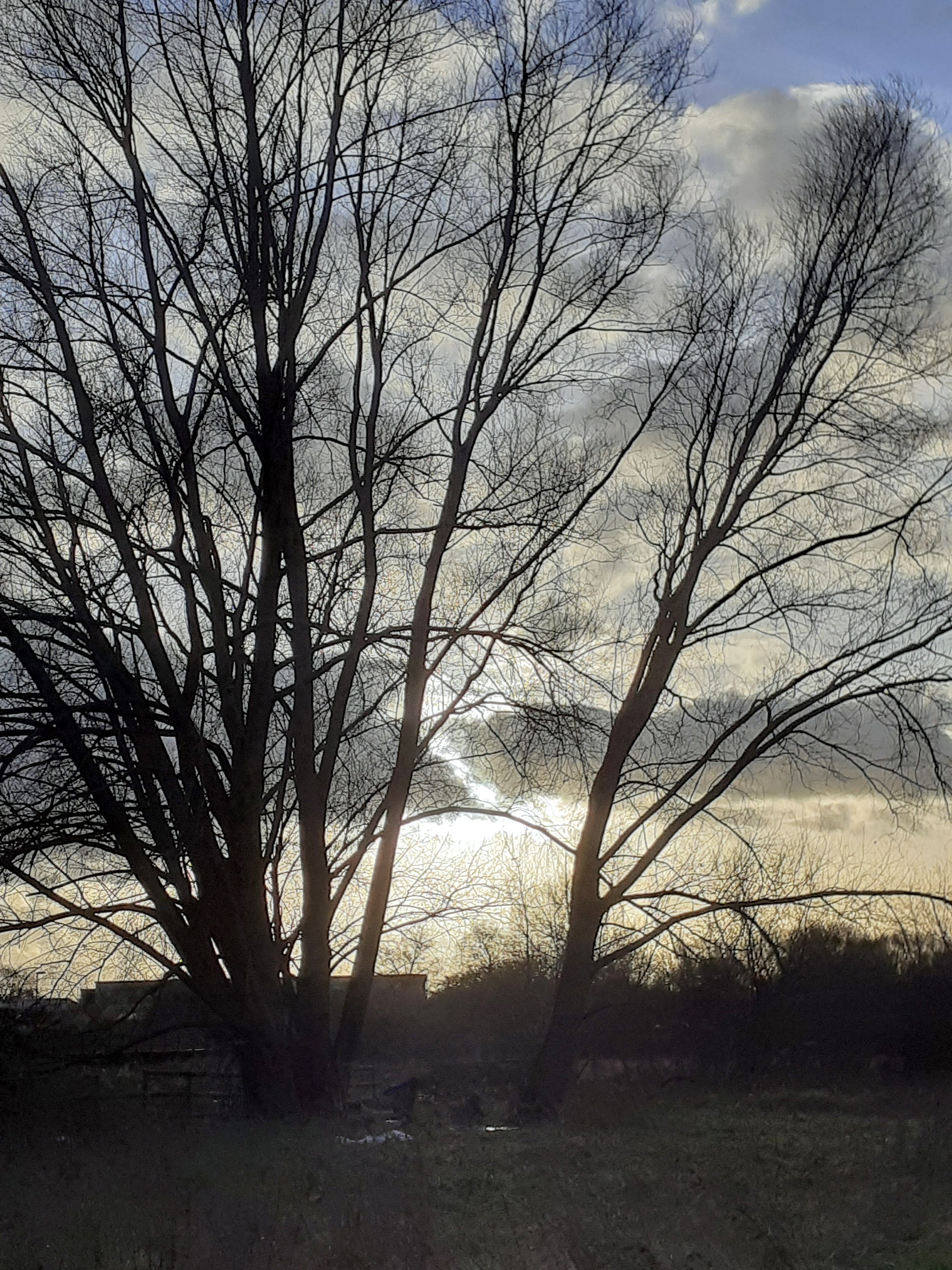
The location is Alney Island, Gloucester, which I had not been to for some time. I encountered a sun that was low in the sky, clearly sinking, but still having an obvious influence on the landscape. Above, you can see a powerful luminescence behind the starkness of the trees. Immediately below, you can see light effects on the river and the trees themselves.

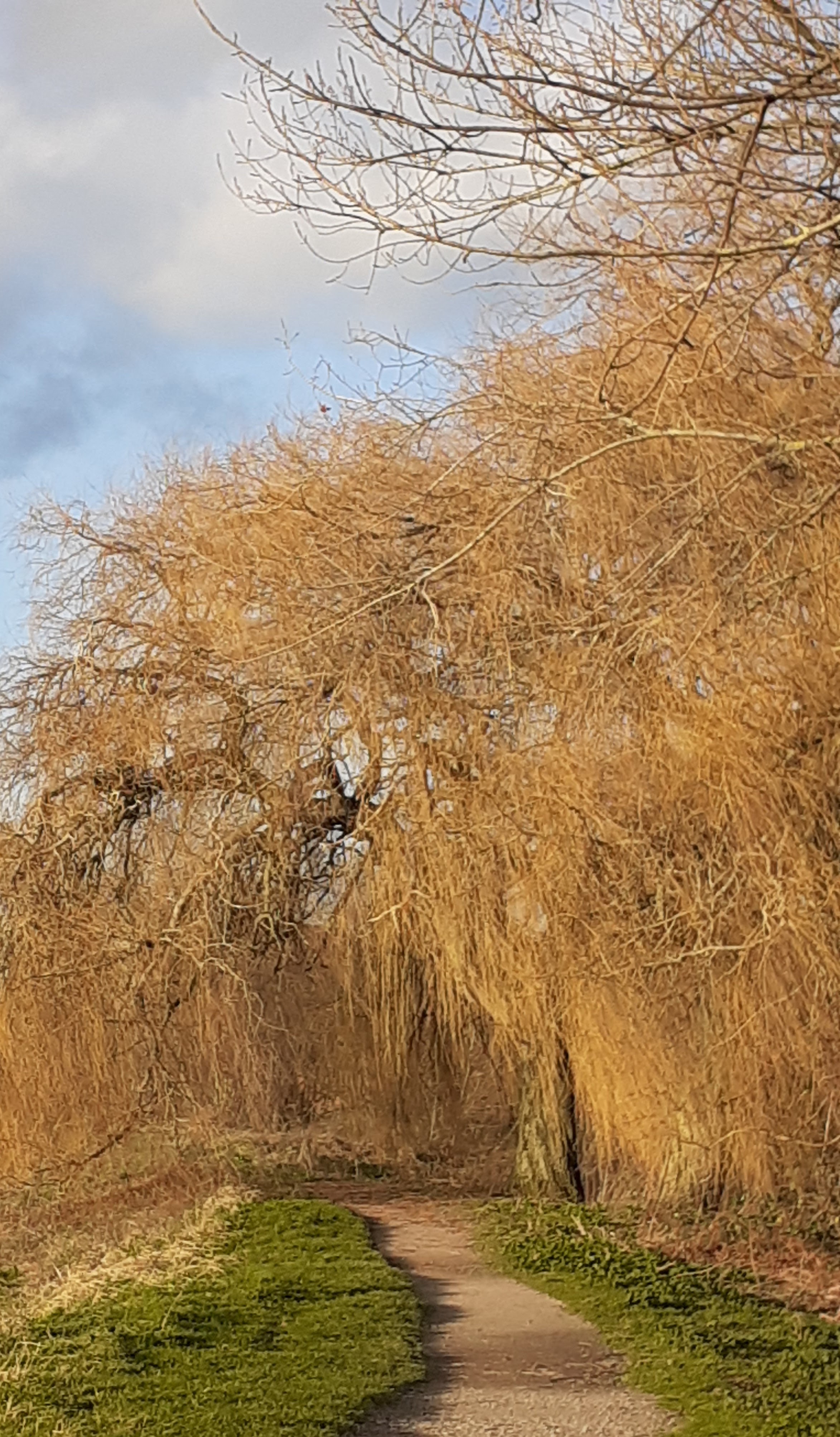
In the picture below, the midwinter sunshine is clearer and stronger. I love the way in which the willows show their vitality and abundance even when they have lost their leaves. The path is relatively dry, yet surrounded by green grass. There is a play of light and shade. There is blue as well as cloud in the sky.

On the ground, in the afternoon, and now in the evening as I write, I am thinking of light and dark, and of waxing and waning, as natural phenomena. I am not thinking in moral or metaphysical terms. These are different considerations, with a tendency moreover towards abstraction and absolutism. In my experience, nature tends to be nuanced. Different things are going on at the same time. Certainly where I live, there is always some balance of light and dark. The balance shifts, but both are always in play.

We treat tomorrow’s sunrise as the beginning of a turn. Here, in 2023, the afternoon before the change seems like a friendly one for an annual nadir of the light. This is also a bit how I am thinking about myself. Towards the end of November, when I last wrote a post of this type, I was celebrating a recovery from illness, and the opportunity of a good day. A good day was about what it was. Many people have pointed out in the last year or so that Covid-19 seems to have a long tail. I have been physically restricted beyond what I think of as normal.

I’m aware of a 75th birthday coming up next year, at which time our government will no longer consider my death as premature. Yet I am in good heart and feeling resilient. Without being presumptuous, I’m leaning in to longevity. I’m checking my capabilities and energy levels, anticipating some adjustments, and noticing the many rays of light which present themselves in my world.

BOOK REVIEW: SMALL THINGS LIKE THESE

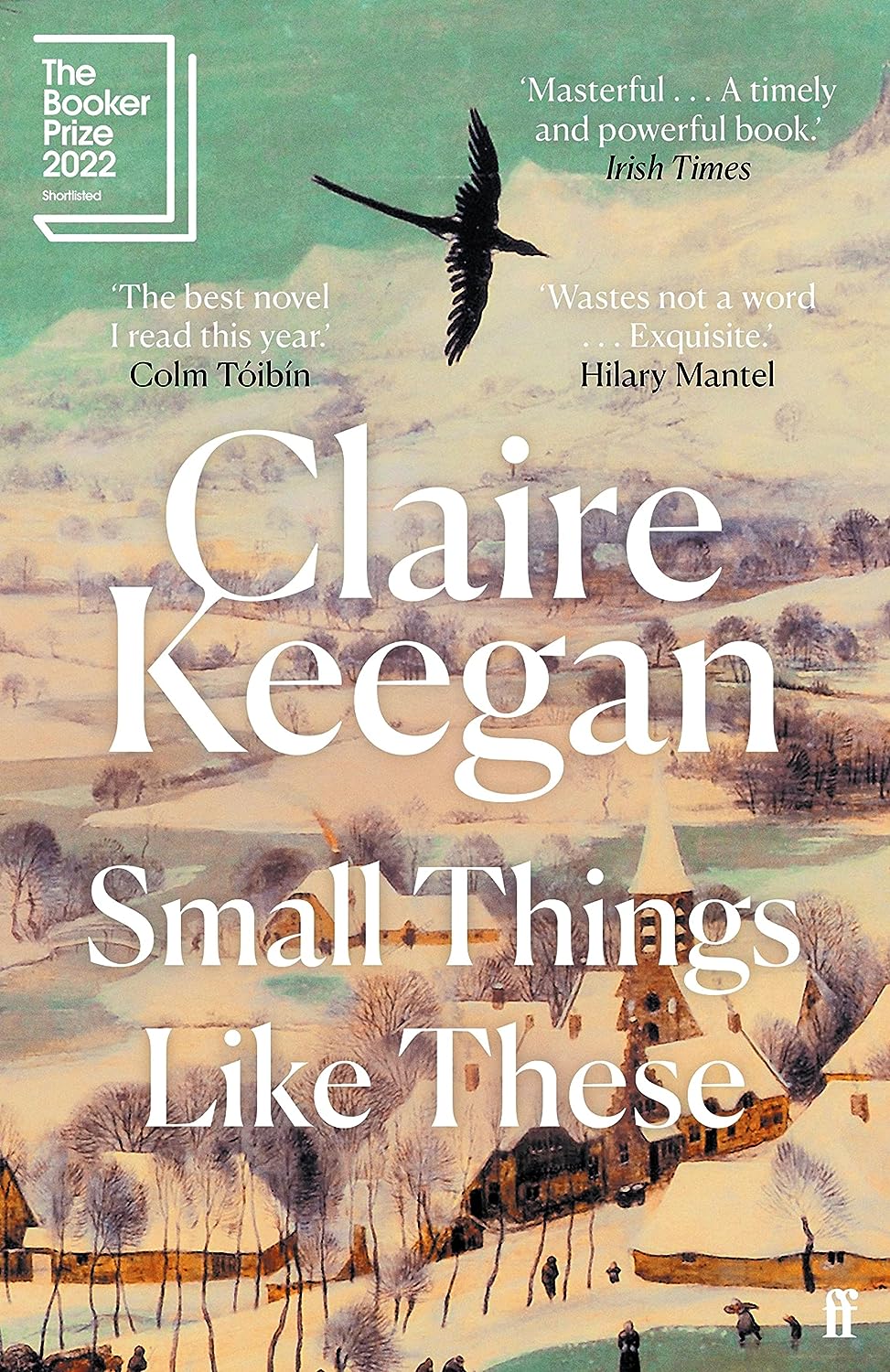
Beautifully written, and highly recommended. Claire Keegan’s Small Things Like These (1) is a novella set in the small Irish town of New Ross in the cold December of 1985, “a December of crows”. New Ross is in many ways a strong community, but business is bad. There are closures, poverty and emigration. The central, point-of-view character is Bill Furlong, a coal and timber merchant, adequately prosperous and very busy at this time of year. Born on 1 April 1946, he is a pillar of his community, a regular if tepid church goer, married with five daughters. The older of these are at St. Margaret’s, “the only good school for girls in town”.

But Bill is also something of an outsider. His father is unknown. ‘Furlong’ is his mother’s family name. She herself becomes pregnant at the age of 16, whilst working as a maid for the Protestant widow Mrs. Wilson, comfortable on a military pension and a decent sized farm. Mrs. Wilson chooses to keep her on and takes an interest in the boy. This interest continues after his mother’s sudden death when he is 12. Technical School leads to an opportunity at the coal yard where he works his way up and subsequently becomes the owner. When he gets engaged to Eileen, Mrs. Wilson gives him some thousands of pounds to establish himself. He enjoys being a family man and a good provider. The Christmas season, with its time at home, rich food and present giving is a welcome opportunity to celebrate.

Bill is naturally generous, refuses to judge people harshly and is prone to spontaneous acts of kindness, the “small things like these” of the title. The main action of the novella begins when he personally delivers a Christmas coal and wood order to the local convent, a powerful-looking place on the hill, where the nuns run both a “training”, or possibly “reforming”, school for girls” and a popular laundry business. There is some lack of clarity over the detail. They might be involved in arranging adoptions as well. Although a little set apart, it is one of the major institutions of the town.

Arriving in the dark at the covent coal house door Bill finds the bolt stiff with frost and has to force it open. There he finds a young girl, Sarah, who has clearly been locked in there for some time. She asks him to take her away or at least ask the whereabouts of her 14 month old baby who has been taken from her. The Mother Superior becomes involved and embarks on an unconvincing performance of compassion involving tea and cake for both Bill and the girl, and a story about Sarah’s incarceration as the result of a game with other girls.

Bill, going home, realizes that he forgot to ask about the baby. He recollects the numerous locks in the convent buildings and broken glass on the tops of walls. He is unhappy and misses his way home, fetching up in a remote spot he doesn’t recognize. In one of the novella’s occasional fairytale moments, he asks an old man with a billhook: “will you mind telling me where this road will take me?” The old man replies: “this road will take you wherever you want to go, son”.

On his return he tells Eileen and, separately, two friends his story. They are keen to talk him out of any public comment or further action. The convent is powerful. Other church institutions would rally round it. It is also his largest customer with the capacity to influence others. Bill has worked very hard to get where he is. Why risk financial disaster? But he is strongly affected by his encounter with Sarah. He finds himself becoming reluctant even to attend mass, let alone take the sacrament. He thinks of what Mrs. Wilson did for him, particularly since he is now fairly sure that his father was not one of her own relatives.

Late on Christmas Eve he goes back to the convent on foot, unbolts the coalhouse door, finds Sarah, and begins the walk through town to his home, “the excitement in his heart matched by the fear of what he could not yet see but knew he would encounter”. On this journey, he also recognizes a “fresh, new, unrecognisable joy in his heart … some part of him was going wild, he knew … never once in his whole and unremarkable life had he known a happiness akin to this”. The narrative ends when he reaches the door of his family home. On the other side of that door lies the beginning of another story, and another day.

(1) Claire Keegan Small Things Like These London: Faber & Faber, 2021

The author has dedicated this story to the women and children who suffered time in Ireland’s mother and baby homes and Magdalen laundries. In a note on the text she adds: “Ireland’s last Magdalen laundry was not closed down until 1996. It is not known how many girls and women were concealed, incarcerated and forced to labour in these institutions. Ten thousand is the modest figure; thirty thousand is probably more accurate. Most of the records from the Magdalene laundries were destroyed, lost or made inaccessible. Rarely was any of these girls’ or women’s work recognised or acknowledged in any way. Many girls and women lost their babies. Some lost their lives. Some or most lost the lives they could have had. … These institutions were run and financed by the Catholic Church in concert with the Irish State. No apology was issued by the Irish government until Taoiseach Enda Kelly did so in 2013”.

A SAMHAIN SHIFT

An old man, left handed like me, pauses over his writing. He is held in his concentration, and somewhat lost to the world. He faces away from the sky and the crescent moon. He relies on an interior candle to light him. But the moon sees and influences him anyway. None of the seven swords is drawn for martial combat. He wields a quill instead: the metaphorical sword of discrimination is an essential feature of thinking and writing, and sometimes it can bite. The number seven suggests a level of experience and resource, perhaps also a creative pleasure in his task. He’s been around a bit, taken a few knocks, and had his epiphanies as well. He perseveres on the journey, come what may.

The image comes from the first of a three card Druidcraft Tarot (1) reading. I did it on 26 October, early in the run up to Samhain and before the October moon was full. I had just completed a ritual that ended my formal contemplative inquiry within and beyond Druidry. I am still a Druid. I am still temperamentally inclined to contemplation and inquiry, both separately and together. There will be a great of deal continuity in my practice. But the structure of a dedicated project has quietly disintegrated, now redundant, and this needed a formal recognition. The image above reveals a constellation of consciousness, energy and activity that is now in the background. There, it has a continuing presence and influence – as a kind of internal ancestry. In the foreground, something new has the freedom to emerge.

The card below indicates how I stand now. Whereas I found it easy to identify with the Seven of Swords image, the Prince of Pentacles came as a shock. But the teaching behind the Tarot is that time runs differently in the psychic realms and doesn’t exist in the causal. Child and youthful parts of me still live. The young adult depicted here is at home and confident in the material world. He is not a compulsive warrior like some of his brothers but will take a stand when needed, using skilful means. He is an Earth defender. Health, home and material security matter to him and in these domains he leans toward practicality and realism about the world he is living in. He turns towards this world, not away from it, and does not position himself as above the battle. He is a counterweight to some of the spiritual movements I have explored in my inquiry, which would think of him as ‘unevolved’. He has, however, been an active presence over my last couple of years of relocation and now steps forward to reclaim an acknowledged space in my life.

The third card of the triad is the Six of Wands, and traditionally indicates what may be emerging. The sixes are all auspicious, suggestive of balance, union, and integration. In the active energised fire element, it suggests success, through the image of a landowner and his servants returning home after a successful outing with his hawk. The card seems to ask me what I understand by success at this time in my life, and how much I value it. What motivates and energises me to be successful by my current criteria? What skills, resources and help might I need to achieve successful outcomes? What role might magic play?

I notice, here and now, an unfamiliarity with this way of approaching life. I have thought of myself as too old, with no worldly ambition and nothing I need to prove. This card may be challenging me to review those understandings. Have I lapsed into limiting self-caricature? Have I overdone retirement? Asking those questions I find that I do still have energy and resources, and that I am also concerned about overestimating them. Balance and proportion matter, and I do not want to be consumed or over-taxed by a new project. Nonetheless, this reading opens up space and potential for new active ventures in the world. This reading, overall, has facilitated a significant Samhain shift in my sense of possible futures. For this is a season of not only endings, but of beginnings too.

(1) Philip and Stephanie Carr-Gomm The Druidcraft Tarot: Use the Magic of Wicca and Druidry to Guide Your Life London: Connections, 2004 (Illustrated by Will Worthington)

EQUINOX TRANSITIONS 2023

I am grateful to the Druid community for its varied ways of working with the 8-fold wheel of the year – especially when the festivals are placed in the context of the gradually turning wheel. Within that patterning of both nature and experience, I find the equinoctial periods and my response to them the least predictable of times.

The picture above shows a pre-equinoctial evening in Weymouth harbour, Dorset, England, round about 6 pm. I found this moment gentle and relaxing. The soft sunlight on the houses, boats and water seemed like a welcome home. I was born only 30 miles from Weymouth and it is part of my childhood landscape, my motherland. I took the picture on 18 September, the first day of my first visit for decades. I felt as if I was in a final afterglow of summer, content on familiar ground.

My wife Elaine and I spent only four days in Weymouth. Even over this brief period, we both had a strong sense of the advancing dark, in the mornings and the evenings alike, a shifting alternation of night and day that increasingly favoured night. One of our days was also dominated by high winds and driving rain, followed by a night in which we felt damp and chilled to the bone, unused as we now are to old buildings.

That night I had a rare experience of broken sleep and uncanny dreams. Eventually I woke up fully to a startling level of condensation on old window panes, obscuring an otherwise stunning view. For me this equinoctial period has, at least psychically, emphasised a shift towards the dark rather than a moment of poise and balance. Not a full dark, perhaps, but drained of colour, direction unknown.

The turning of the wheel never stops. On 23 September, the morning of the equinox, I felt the pleasure that can come from enjoying home after a break. I also noticed that the world beyond our many balcony doors was very clearly proclaiming a victory for the darker half of the year. This will be the setting for my journey for some time to come.

Whereas in the world I feel currently secure, I am conscious of uncertainties within. I do not quite see my critical-creative direction. In my 75th year, I wonder about ‘creative ageing’ (an old catch-phrase for me) and ‘critical wisdom’ (a new one). Hot air? Or genuine signposts? The Weymouth visit has stirred me up, but to what specific purpose I don’t yet know.

COLOURS OF AUGUST, 2023

The haws are red and shiny on their hawthorn bushes. Blackberry remains tentative, its pale green fruit visible but still unripe. I see green leaves now leaning towards yellow. I am walking in a scrap of local woodland, bounded by a canal* on my left and housing some distance to my right. It is around 7.30 pm on 13 August, and I am opening up to the colours of late summer as they show themselves this year.

Looking up, I see a healthy crop of crab apples at different stages of ripening on their tree. The ripest apples are red, though their red is softer than that of the haws. The leaves of the apple tree are shinier than those in the background. I am aware of a light grey sky.

Nature in various forms finds a niche everywhere. This time has its own flowers, and again I see yellow. I am not the greatest botanist. and I cannot name with certainty these plucky if slightly battered blooms, saying hello from behind a fence. But I imagine them as poor relations of even the lesser celandine, and therefore almost certainly official weeds**. I hope and pray they remain safe here in these woods.

Below, looking at tangled leaves, I find a truly autumnal scene, in the yellowing and browning of leaves. It feels a bit early for this neighbourhood. The wheel of the year is still following its seasonal course, so far, but is becoming more erratic and unpredictable than in the past. I wonder about the future of the jet stream – and indeed the Gulf stream too. But in the moment, my heart opens and I love this pattern of plant life moving through its cycle and gradually, subtly, changing in appearance.

I photograph two teazel stalks, below, because I enjoy their shapes, because they are a further illustration of the browning theme, and also because of the visibility of the canal behind them. They don’t live in the canal, like bullrushes, but they like to be close. The image also includes an almost ghostly barge on the water below.

After leaving the woods, I am confronted (below) with the sky. I am facing west, across the Llanthony Priory gardens. I see dark stormy clouds, whose edgy brooding energy is somewhat modified by a blue opening in the distance. This dark grey, and the rain and storm it sometimes brings, have certainly been a feature of summer this year. There’s a strong contrast with last year at this time, when there was a heat wave, which for us still means C 30-35/F 86-95 with anything more being exceptional. In July 2022 part of the country briefly reached over C40/F 104 for the first time since records began. This year the grass is still green. Last year it burned up and the ground was parched and cracked.

Following the wheel of the year carefully, as it turns, is a valuable discipline for modern Druids, among others concerned with deep ecology (sacred ecology?) and the climate crisis. We don’t confine ourselves to celebrating our seasonal festivals, though we enjoy them too. For we now know experientially that the world is changing. The traditional rhythms of nature are not an eternal verity to rely on.

In some ways I find small personal observations emotionally more impactful than my limited knowledge of climate science and deep time geology. These are very helpful for context and framing, but personal experience is more immediate than these. It is also more deeply immediate, though less dramatic and disturbing, than reports of disaster elsewhere. Following the wheel of the year, we are doing more than making observations. We are celebrating and bearing witness to the life that surrounds us, offering our attention and energy to its continued flourishing. Blessings on the land.

*The Gloucester-Sharpness canal, England. Beyond the Gloucester docks, but not yet out of the city.

** A reader comments: “I think your mystery plant is ragwort, a much maligned ‘weed’ the destruction of which is encouraged by the UK government as it can be harmful to grazing animals yet is actually one of the best forage plants for pollinators”.

Earth Eclectic

music that celebrates Earth and speaks to the heart

Sarah Fuhro Star-Flower Alchemy

Follow the Moon's Cycle

Muddy Feet

Meeting nature on nature's terms

Rosher.Net

A little bit of Mark Rosher in South Gloucestershire, England

Becoming Part of the Land

A monastic polytheist's and animist’s journal

selkiewife

Selkie Writing…

Charlotte Rodgers

Images and words set against a backdrop of outsider art.

Prof Jem Bendell

living with metacrisis and collapse

Towint

The pagan path. The Old Ways In New Times

The Druids Garden

Spiritual journeys in tending the living earth, permaculture, and nature-inspired arts

The Blog of Baphomet

a magickal dialogue between nature and culture

This Simple Life

The gentle art of living with less

Musings of a Scottish Hearth Druid and Heathen

Thoughts about living, loving and worshiping as an autistic Hearth Druid and Heathen. One woman's journey.

Wheel of the Year Blog

An place to read and share stories about the celtic seasonal festivals

Walking the Druid Path

Just another WordPress.com site

anima monday

Exploring our connection to the wider world

Grounded Space Focusing

Become more grounded and spacious with yourself and others, through your own body’s wisdom

The Earthbound Report

Good lives on our one planet

Hopeless Vendetta

News for the residents of Hopeless, Maine