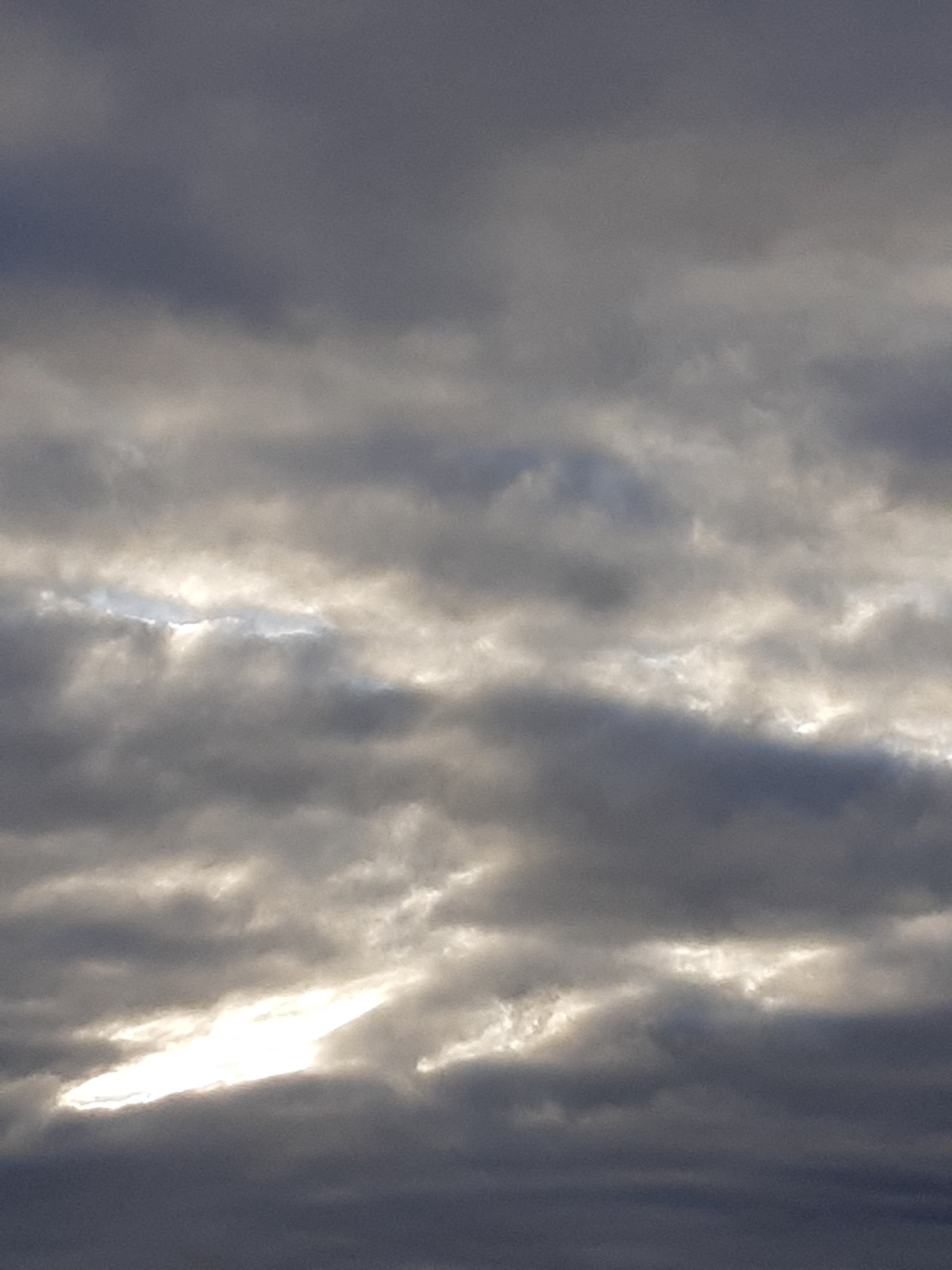
I took these pictures one recent evening in the wetlands of Alney Island, on the River Severn at Gloucester. It felt dark and broody most of the time. There was a threat of rain and storm though not the actuality. The feeling-tone suggested raw nature and remoteness: a place where I as a human didn’t exactly belong. Boggy land and turbulent sky were elementally indifferent to me and my concerns. I was simultaneously inspired and edgy.
Then the sky changed and I changed with it. I noticed the sun. It was declining but that didn’t matter. It was signalling its presence to me from a suitably safe distance. Comfort and familiarity returned. I was on a small reserve in the middle of a city. I had lost a moment of wildness and gained a perceived security. Being human, I both took the deal and wondered about the possibilities I may have abandoned..
Pagan iconography in mainstream life? Sabrina, goddess of the River Severn/Hafren, appeared in King’s Square, Gloucester on Saturday 1 July. She was part of a civic celebration focused on the renovation of the Square. She was very well received. Responses seemed to range from friendly curiosity to enthusiastic delight. I include two photos I took at the time.
Later on, Sabrina processed through the town to the Anglican Cathedral, amidst music and dancing – captured on video by Nicola Haasz, recognised expert and devotee, on her facebook page at: https://www.facebook.com/sabrinarivergoddess
In these hard times, it seems that there is a public appetite for solidarity and spectacle. I hope that Sabrina makes many more appearances, in Gloucester and other places in her extensive Severnside domains.
Alney Island is surrounded by the River Severn at Gloucester. It is mostly a water meadow and largely free of ‘development’. I have written about it before. I took the pictures on 15 January, greatly moved by this landscape, the water margin feel, and the energy of the river, whose ‘left channel’ flowed past me close by. I’m short on words, today. So I’m letting the pictures speak for me. In a certain light, they are a kind of visual hymn.
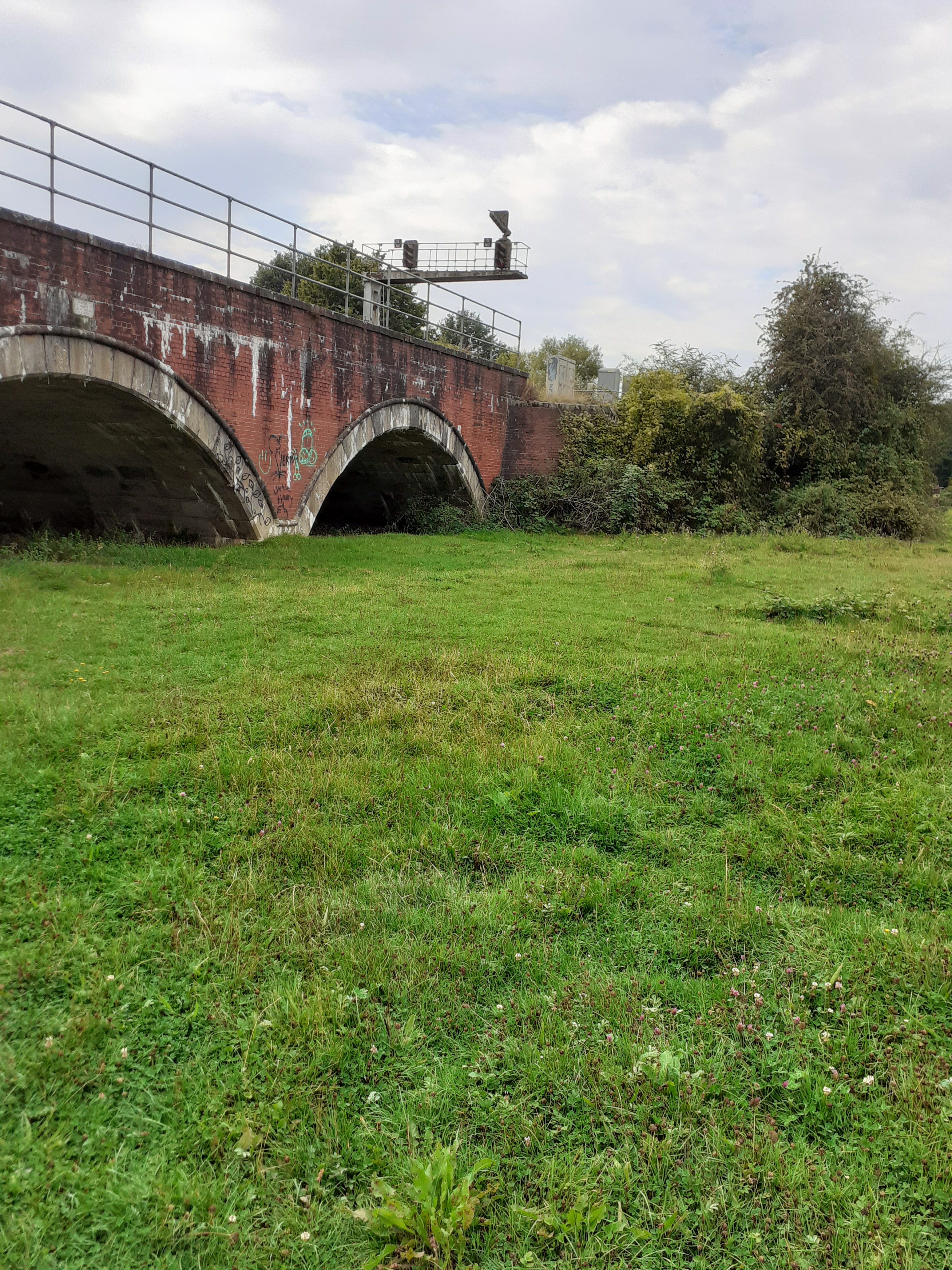
I am in Alney Island again, on the River Severn as it passes through the ancient city of Gloucester. Above, I am looking at the weaker, eastern channel of the river as it flows around the island. After rain, the water level seems adequate if relatively low, and the willows still seem lush. At first glance, as I walk past, the plant life seems healthy in this watery habitat. Stopping to look more closely, the scars of a summer both hot and dry become evident. The horse chestnut leaves, below, are dramatically shrivelled and their conkers are appearing early. Summer is becoming autumn swiftly and abruptly this year.
Much of Alney island is rough water meadow, as below, and it is a joy to see green grass. Normal? No longer a useful word in this, as other, contexts. In a time of climate chaos fatefully intertwined with runaway wealth, ‘normal’ loses shape and definition. Half-reluctantly, I am adjusting to a new, more dislocating and unpredictable reality.
On this walk I discovered a woodland on the island, shown below. It is far from ancient, being planted in 1983 to commemorate the 500th anniversary of a charter given to the people of Gloucester by King Richard III. A rare monument to the monarch in question.
Richard’s Wood is pleasant enough, although subject to somewhat whimsical curation. A decision was first made to plant non-native trees – red oak, turkey oak and horse chestnut; then to add native trees as well; and later still to thin out the trees so as to create a “wood/pasture habitat to contrast with the wetland meadows on the rest of the reserve”. ‘Rare breed’ cattle were introduced, though I have yet to see any.
I may be doing an injustice, but I get a sense of conservation by human taste and fancy, the manufacture of ‘scenery’ on a handy piece of wasteland that isn’t safe to build on. I don’t get any organic sense of the island, its history or its potential. I don’t get any sense of a wondering about what trees might be brought together to create a viable and self-sustaining woodland community, ‘native’ or otherwise. The horse chestnut, imported from Turkey in the sixteenth century, is now a well-loved English tree. The turkey oak is better suited to the southern England of today than the native species. I suspect they are a good choice. But I’m sorry about the thinning out. There’s no shortage of pasture in England. Overall I believe this kind of management to be a relatively innocent manifestation of the very mindset that is killing us.
Perhaps the trees will have a chance to develop in their own way. My feeling on being among them is gentle but muted. If I compare them with the crowded and chaotic wood that has grown up beside the Stroud cycle path, I sense a relative lack of viriditas – Hildegard of Bingen’s word for the green life energy in nature. It is a relative lack, not absolute. But as I go home, I feel a certain sadness all the same.
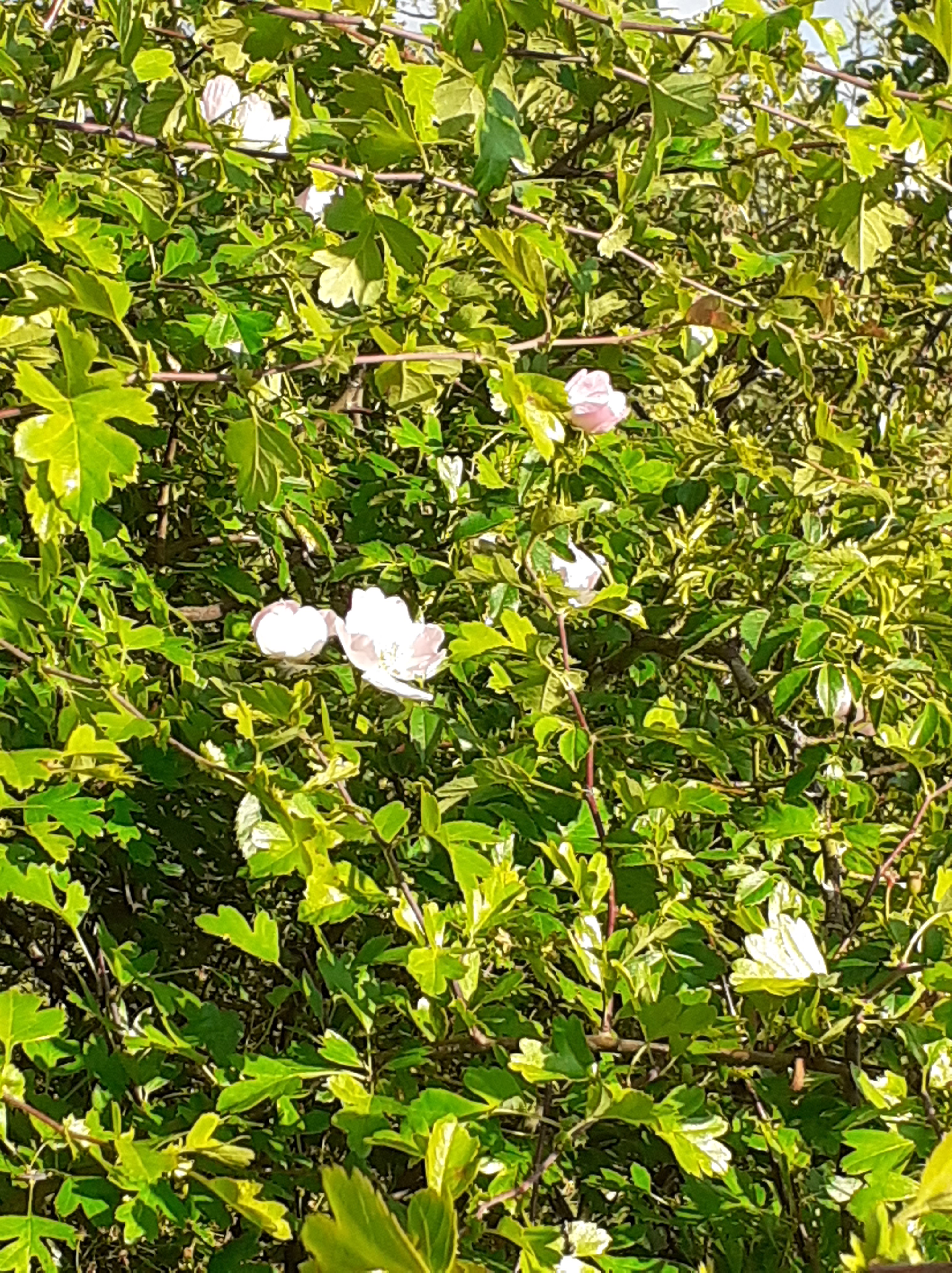
Alney Island is now established as a place where I come up for air. Yesterday evening I went there with my wife Elaine, feeling on good form. It was a relatively cool evening, easy to walk in. This picture, which looks back from the island to Gloucester Docks, records the appearance of wild roses. I associate them with midsummer, but there they are, a little early this year. They may seem fragile, but they have established a position in this riot of green.
Two weeks ago I had a spirometry test which showed that my core health problem was asthma, not COPD, though I have a mild COPD as well. This has led to a change in medication as well as understanding, and thereby increased my confidence. This walk was freed to be all pleasure, companionship and celebration. Namaste to Elaine.
Wild roses have had a special meaning for me since an encounter with them on the banks of the Tweed near Melrose Abbey in the Scottish border country many years ago. In my Contemplative Druidry (1) I describe how I walked into “A wholly unexpected and not at all dramatic epiphany” triggered by simple observing a wild rose on the river bank. Subject/object distinctions dissolved, busting me out of the limited experience (prison?) of ‘self’, as that term is generally used and understood. The direct experience was brief. The after effects were longer lasting, and the consequence was a reframe of my Druidry.
Yesterday I was surprised by wild roses again, and I feel blessed.






 Contemplative Inquiry