Contemplative Inquiry

This blog is about contemplative inquiry

Tag: resilience

IN-BETWEEN TIMES

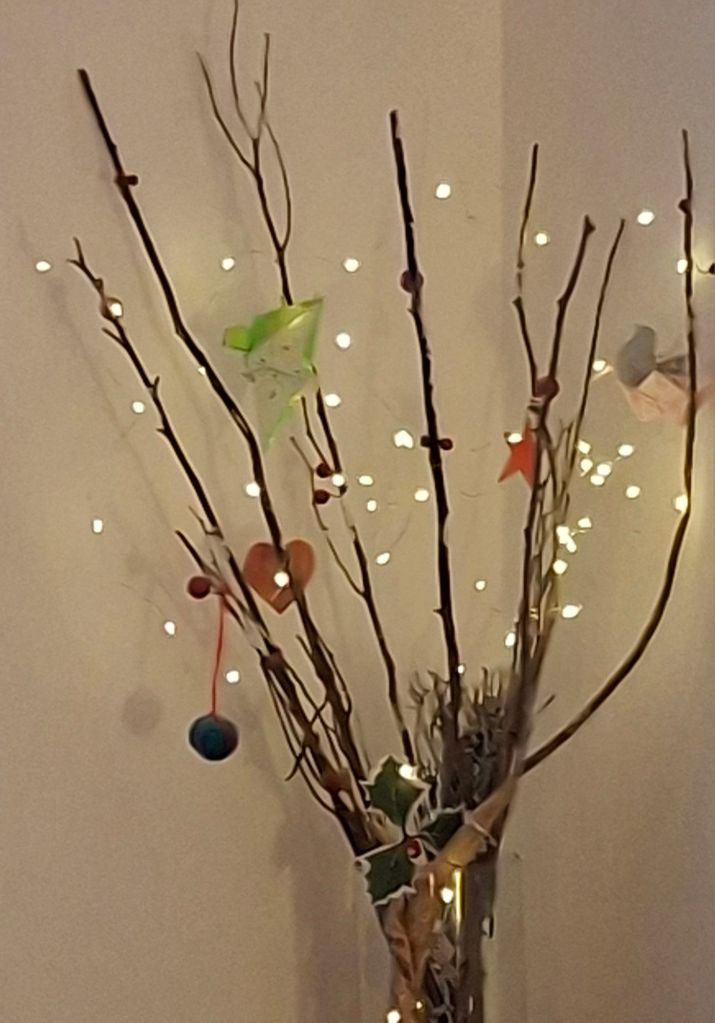
Monday 29th December. It is  a normal working day here, in this period between the Christmas holiday and the new year. It is still dark outside, at 6.30 am, and likely to remain grey after sunrise at 8.15. Indoors, our minimalist decorations still proclaim a festive season. For us, this lasts from the Winter Solstice on 26 December until the Christian Epiphany on 6 January.

I’ve been experiencing an energy of latency throughout this period. I live in a place of winter gestation. In the natural world, birth doesn’t come quite yet. In this quiet in-between moment of a conceivably nondescript day, I can’t see 2026. I do not discern its likely shape or character.

That’s OK. I find that I don’t do want to strain at foreknowledge or resort to divination. A day-at-a-time approach, being alert and ready for anything, seems best. I know I want to be more open to the pleasure in simple things. I want to look for spontaneous festive moments that don’t depend on custom or calendar. They are part of my resilience. They make it easier for me, alone or with others, to face the challenges that come. In good heart, I am bracing for 2026.

RETURN TO THE WATER MARGIN

For the first time since I fractured my shoulder in a heavy fall, I have walked beside the Gloucester canal. The period between 2pm and 4.30 on 28 October was particularly auspicious. Cool but clear. Blue sky and sunshine.

On this occasion, as I tentatively walked the paths, I found myself in a living world dominated by yellow and green. A fall was happening, but was not very advanced. I noticed my confidence in walking becoming  more consistent and reliable. I felt good. I was at ease in the woodland world.

The walk was part of my coming to terms with an advancing age, in which   the possibility of a damaging fall is priced in. I felt a little nostalgic for a distant past. At a time when I was impatiently looking forward to my fourth birthday I fell down a flight of stairs and simply got up again. I was pleased to have a story to tell my parents, but  couldn’t understand their alarm when I told it. 1953 is indeed another country.

However most of my attention, on this walk, was on the walk itself. Pragmatically, it needed to be, and I was also  increasingly held by the spirit of place and time on this benign late October day. I had a strong sense of here, now and home.

I had a goal of reaching a newly refurbished bridge for pedestrians and cyclists only. This would give me time to turn around and get home before sunset (roughly 4.45 now that the clocks have changed). A slowish two and a half hours is as much as I can manage as yet. From a recovery perspective, I feel on track.

BOOK REVIEW: BOURNEBRIDGE OVER TROUBLED WATERS

Highly recommended, especially for readers interested in local initiatives to address the climate crisis. Bournebridge over Troubled Waters (1) is a sequel to Tony Emerson’s Unlikely Alliances, which I reviewed in October 2022  – (https://contemplativeinquiry.blog/2022/10/27/book-review-unlikely-alliances/). Although the new book stands on its own, I think it works best after reading Unlikely Alliances, now republished as Creating Hope in the Valley of the Bourne. The setting continues to be a fictional community  on England’s south coast.

In the new book, we have reached the year 2030. The publisher’s blurb describes it as ‘a story of love and friendship’ as well as commitment to climate action. On my reading, the ways in which people do ‘love and friendship’ are integral to the action itself.

This is shown in a group of leading characters who gradually assemble together in an old rectory building. This is less by design than the need for decent housing and a belief that larger dwellings should be fully occupied. But the rectory evolves into a strong base for its residents’ flourishing.

In many ways they are a diverse group. But they all, sometimes with a little tlc, reveal themselves as naturally affectionate and ethically grounded. The culture of the house nurtures these co-operative qualities.  It is a creative and supportive place to live. As part of the life of the house, the residents develop a system of peer mentoring for their work in the wider world. There’s also a concern, for some of them, about a progressive Christianity that honours the world and the flesh and is ecologically aware. I am reminded of Matthew Fox’s use of the term ‘original blessing’.

As was the case in Unlikely Alliances, the government is committed to climate action. The earlier book describes their Climate Action Plan, which has put  serious wealth taxes in place, rationed fuel and food (especially meat), placed restrictions on air travel, created  a Civilian Community Service Corps to provide training and jobs for the unemployed and 2 years national service for school and college leavers. Housing policy is not all about new build, but also addresses better use of existing resources.

The fields covered by our band of rectory activists and their colleagues include agriculture, hospitality, renewable energy, relevant university research, transport, housing, trades union development, clothing (new and renewed), second hand shops, and renovation, repair and maintenance services of various kinds. These are practical needs and also model a cultural shift away from throwaway consumerism. All of this work is depicted as dynamic and gaining momentum.

Temperatures are continuing to rise, and there is an unprecedented level of flooding to contend with. At the same time, vested interests and violent climate deniers, branded as ‘True Britannia’, continue to undermine the Climate Action Plan. Life goes on. Lovers get together. Children are born. Older people die and are lovingly remembered. Music is made. Rugby is played. Hospitality is exchanged. Events are organised and enjoyed. People maintain contact with family members further away, travelling throughout Britain and Ireland, though rarely further than that. It is not clear what the future will hold, but there are some grounds for optimism.

When I finished reading Bournebridge over Troubled Waters I felt as if pitched back into my own timeline. It’s as though my 2025 couldn’t be the one that led to their 2029-2034. I didn’t feel that way even when I read Unlikely Alliances in 2022. My reading of books like this seems to depend not only on who I am but when I am. If I become timeless, I can respond to these books as parables reminding us that we have the power to be better than we are. We just don’t use it enough. That’s a call to respond to whatever the outward circumstances or likely outcomes.

(1) Tony Emerson Bournebridge over Troubled Waters UK: The Conrad Press, 2O24 (www.the conradpress com)

BRIGHT MORNING

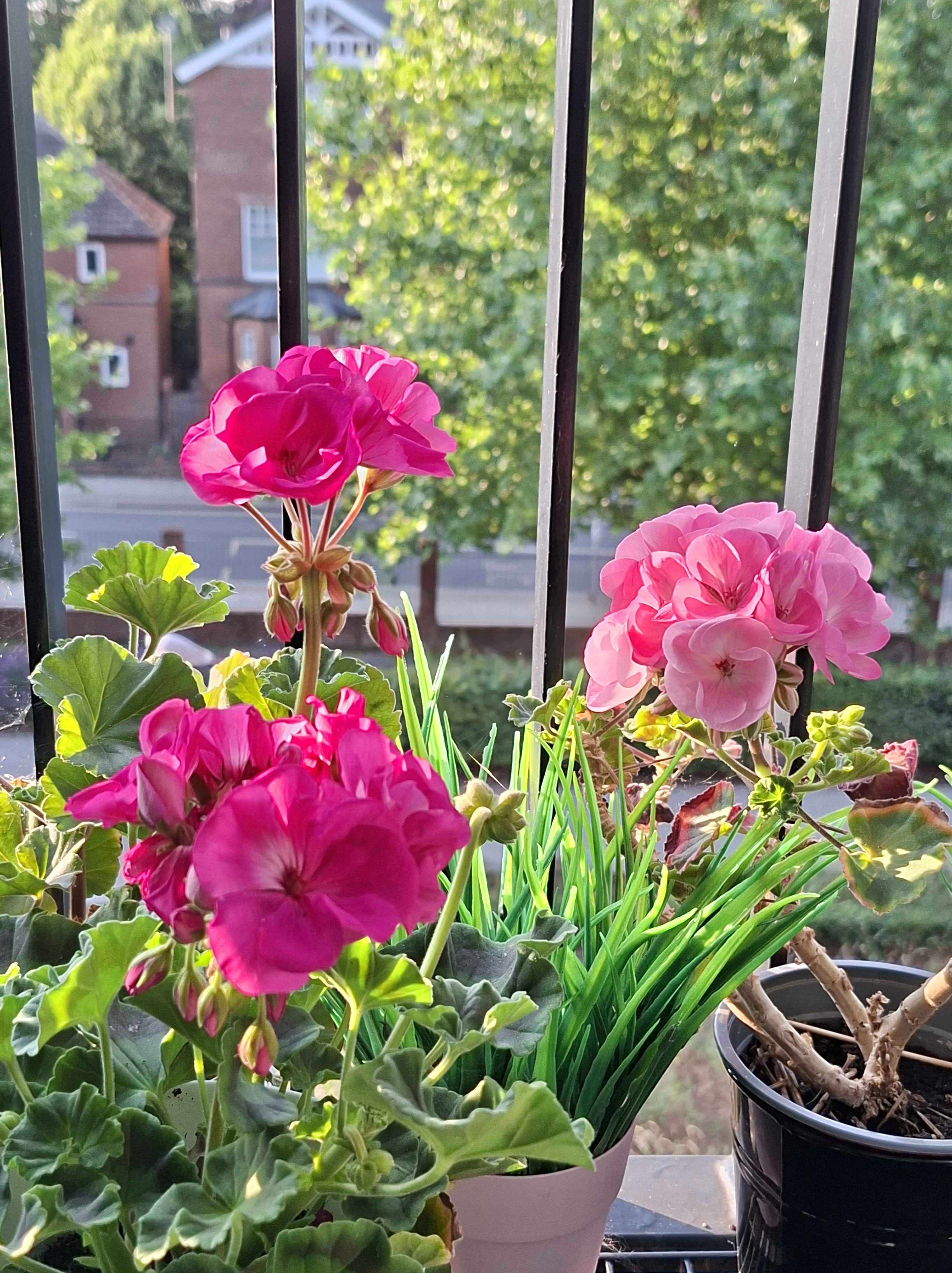
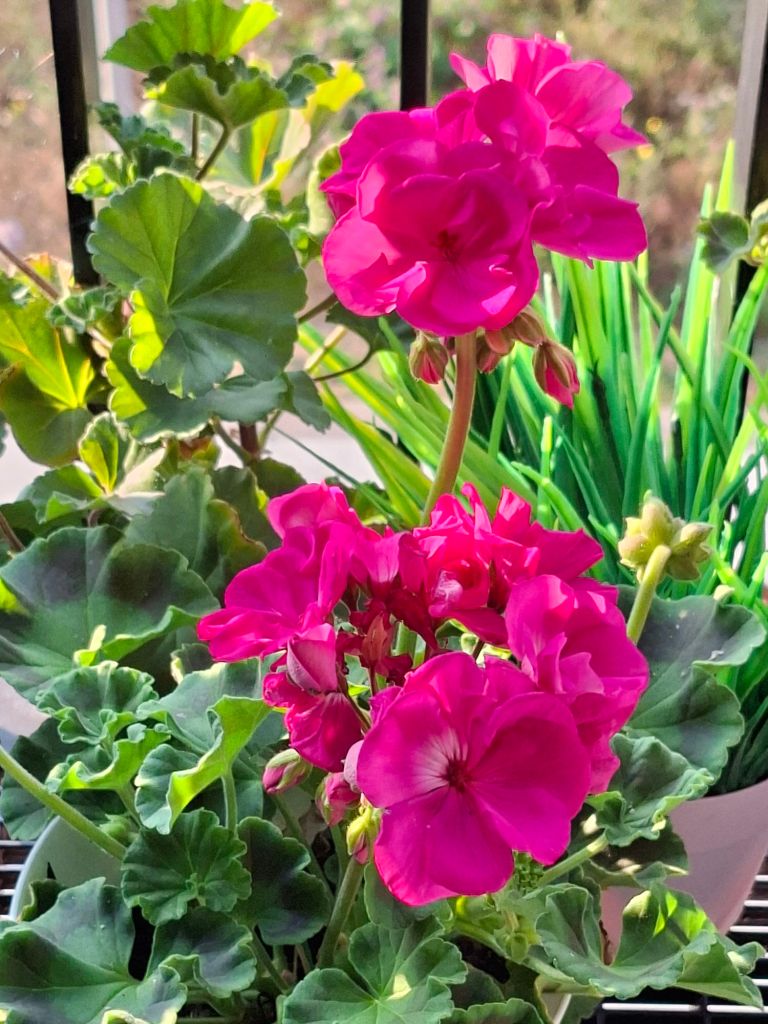
Early this morning I sat in contemplation of some geraniums in pots, for me a good Druid focus of attention. Purchased and tended by my wife Elaine, who is now mobile and active once more, they shone in the early morning light. This was about 6.45 am, some two hours after dawn, on 19 June. It is two days before the Solstice. Where did the time go?

I notice how my eye is drawn to plants and light effects. I find them nourishing and enabling. This has been a theme in my life for awhile. It is though sunlight and the plant world offer hope and reassurance in a bleak, shocking and disorienting historical moment. Life insists on flourishing. I can insist on flourishing too. I am not distracted from the wider world but resourced to engage with it.

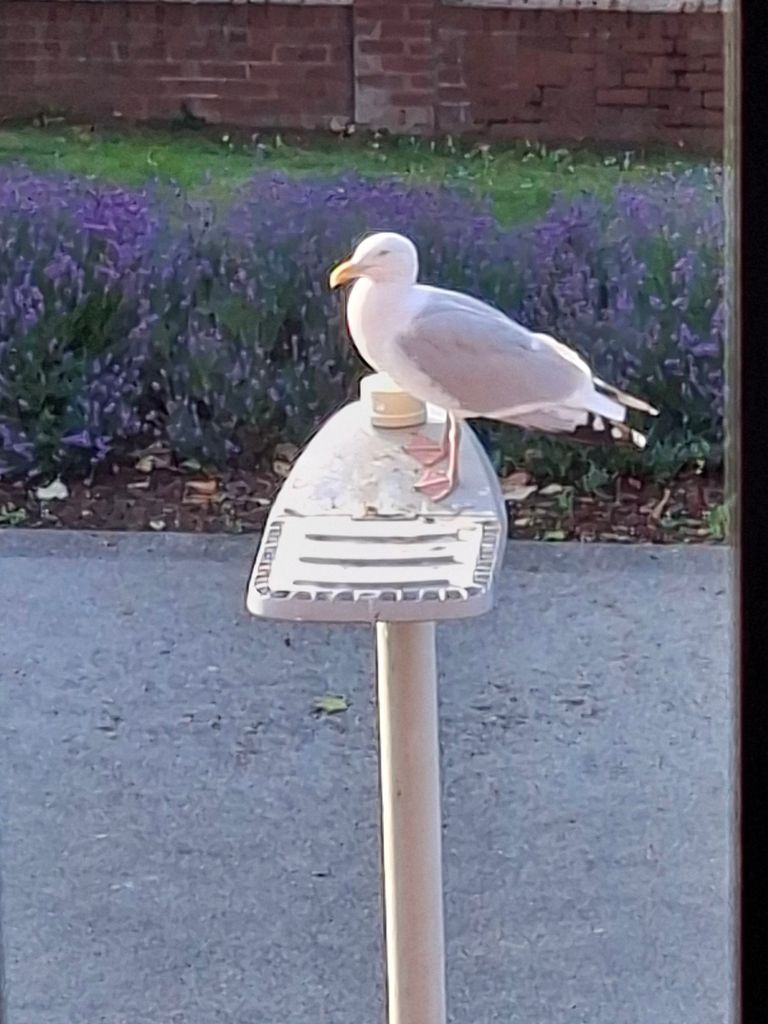
On a convenient lamp post, the seagull seeks an opportunity. This midsummer world is alive.

POEM: WELCOME RAIN, SPRING NIGHT

“The good rain knows its season.

When spring arrives it brings life.

It follows the wind secretly into the night

And moistens all things softly, soundlessly.

On the country road the clouds are all black,

On a river boat a single fire bright.

At dawn you see this place red and wet:

The flowers are heavy in Brocade City.”

(Brocade City = Chengdu, in southwestern China)

Michael Wood In The Footsteps of Du Fu: China’s Greatest Poet London: Simon and Schuster, 2023

This poem welcomes spring and also celebrates arrival at a place of safety. For a brief period in the early 760s the Chinese poet Du Fu (712 – 770 CE) had a cottage and garden in Chengdu, the Brocade City. It was a time of social breakdown in China and although from the landowning and mandarin class, Du Fu and his family had become refugees in their own country. At times, during their wanderings in the rugged terrain of western China, they were shelterless and close to starvation. Nonetheless, Du Fu retained an underlying resilience. Despite everything his capacity to notice, contemplate, feel, care and write were not compromised. One of his earlier poems, written when trapped in the rebel occupied capital Chang’an (City of Eternal Peace, now Xi’an), begins:

“The state is destroyed, but the country remains.

In the City in spring grass and weeds grow everywhere.

Grieving for the times, even the blossom sheds tears

Hating the separation birds startle the heart.”

As part of his following in Du Fu’s footsteps, Michael Wood visited Chengdu and talked to local people and tourists from other parts of China. Why does Du Fu matter to them now? One older local resident said that he came to the garden – now a well kept heritage site – “at least once a month” to reflect on Du Fu’s poetry. “For a long time we suffered, now we are better off, but today society is very materialistic, and spiritual things are going away. But I feel these things still matter, and here in this place you can go right into his mind: the thoughts and feelings of someone from so long ago. To me, this is a miracle. The garden here is big enough to get lost in, away from the public, especially if you come early in the morning. I sit in a corner and recall him, maybe read out one of his poems out loud, and reflect on it”. He described this as his meditation.

Below is an imaginary portrait of Du Fu by the artist Jiang Zhaohe (1904 -1986). It was done in 1959, during Mao’s Great Famine, described by Michael Wood as “one of China’s most shattering disasters”.

DEEP ADAPTATION AND CRITICAL WISDOM

In recent months I have felt an increasing pull towards better understanding our current ecological, cultural and political crises. From a Druid perspective, I am mindful of my commitments to nature and all beings, and accountability to all our ancestors and descendants. From a contemplative perspective, I am bearing witness to the world in which I breathe: any ‘beyond’ is accessible only from within. From an inquiry perspective there is much to inquire about.

So Jem Bendall’s new book, Breaking Together: a Freedom Loving Response to Collapse (1), is important for me both to learn from and to write about. In this post I describe two concepts that I see as driving the book: ‘deep adaptation’ and ‘critical wisdom’. Bendall explains these concepts in a way that gives me questions to ask and tools to use. Boiled down, they are not complicated. The words that follow are his, not mine.

Deep Adaptation

“Deep Adaptation refers to the personal and collective changes that might help us to prepare for – and live with – a collapse of the societies we live within. Unlike mainstream work on adaptation to ecological and climate change, it doesn’t assume that our current economic, social and political systems can be resilient in the face of rapid climate change. The ethos is one of curious and compassionate engagement with this new reality, seeking to reduce harm and learn from the process, rather than turn away from the suffering of others and nature.

“There is an emphasis on dialogue, with four questions to help people explore how to be and what to do if they have this deep outlook on the future.

“What do we want to keep and how is a question of resilience.

“What do we need to let go of, so as not to make matters worse, is a question of relinquishment.

“What could we bring back to help us with these difficult times, is a question of restoration.

“With what and who shall we make peace as we awaken to our mutual mortality, is a question of reconciliation.”

Critical Wisdom

“What I term ‘critical wisdom’ is the elusive capability for understanding oneself in the world that combines insight from mindfulness, rationality, critical literacy, and intuition.

“A capability for mindfulness involves our awareness of the motivations for our thought, including our mind states, emotional reactions and why we might want to ‘know’ about phenomena.

“A capability for rationality involves an awareness of logic, logical fallacies and forms of bias.

“A capability for critical literacy involves awareness of how the tools by which we think, including linguistically constructed concepts and stories, are derived from, and reproduce, culture, including relationships of power.

“A capability for intuition involves awareness of insights from non-conceptual experiences including epiphanies and insights from non-ordinary states of consciousness.”

For me, Jem Bendall provides an invaluable set of questions to ask and tools to use under the headings of Deep Adaptation and Critical Wisdom. The questions refine my understanding of Deep Adaptation. The combination of understandings that lead to wisdom are, as a set, new to me, though I was already aware of the individual elements. ‘Critical Wisdom’ reframes my sense of wisdom, more clearly experienced as a dynamic processes of wise-ing.

(1) Jem Bendell Breaking Together: A Freedom-Loving Response to Collapse Bristol: Good Works, 2023 (Good Works is an imprint of the Schumacher Institute – see also https://www.schumacherinstitute.org.uk). I can certainly recommend this book now, on the grounds of both its wide knowledge and deep wisdom. I may write a full review in future.

NB: Jem Bendell is a world-renowned scholar on the break-down of modern societies due to environmental change. A full Professor with the University of Columbia, he is a sociologist specialising in critical integrative interdisciplinary research analysis on topics of major social concern. His Deep Adaptation paper influenced the growth of the EXtinction Rebellion movement in 2018, and he created a global network to reduce harm in the face of societal collapse (the Deep Adaptation Forum). Although recognised as a Young Global Leader by the World Economic Forum in 2012, Bendell has been increasingly critical of the globalist agenda on sustainable development.”

BOOK REVIEW: UNLIKELY ALLIANCES

Highly recommended. Unlikely Alliances (1) is set in the years 2029-2033, in a fictional town on England’s south coast. It offers a degree of hope about the climate crisis, presenting a positive response to its challenges at the global, national and, especially, local levels. Towards the close of the book, one of the characters reflects on a benign economic austerity that includes social justice: “limited food in the shops, clothes and shoes having to last many years, trips abroad requiring special license … but look around us, are we really worse off?” The answer is a qualified no, on the grounds that everyday life has become less constrained and less stressful, thanks to the choices that have been made.

Unlikely Alliances offers a gentle, compassionate and good-humoured lens on a subject that can seem grim and edgy. The title refers to the changing political, professional and above all personal relationships of people working on adaptation goals in their Bourne Valley community. They are from a wide variety of backgrounds, including local government, academia, trade unions, churches, the voluntary sector, management consultancy, the hospitality industry, sports organisations and farming. Unexpected synergies are generated. The novel shows how its band of protagonists find themselves, each other and a new sense of purpose in this work. As fiction, the book has the space to be about lives as well as issues. New culture, adapted to new times, is created in the lived experience of friendship, romance and community building.

The Climate Action Plan of a progressive coalition government provides a political framework, drawing on ideas from the US 1930’s New Deal and the UK reconstruction post World War 2. It is in power because of a wake-up call resulting from a huge inundation in the Netherlands and the presence of a large number of Dutch refugees in Britain – a disaster too close to ignore. For the first time since the mid twentieth century, serious wealth taxes are in place. Food and fuel are rationed: everyone gets at least something at an affordable price. There are new approaches to housing. A Civilian Community Service Corps provides training and jobs for the unemployed and a two-years national community service for school and college leavers.

In crisis conditions, this government is broadly popular. Even so, it is vulnerable to defections within its own Parliamentary ranks, the vigorous opposition of vested interests and those who speak for them, and the violence of militant climate denialists on the street. These struggles are not minimised, and they are vividly portrayed in the book. But most of the focus is on resource and resiliency building at the local and regional levels, and on the changes in the lives of the main characters, as they open up to each other’s influence and affection. It is their efforts that prevail, since they come to make practical sense to more and more people.

A brief review cannot do full justice to a book that deals with a civilisation at the edge, presented from a stance of generosity and warm commitment to human flourishing. Tony Emerson has long experience of working with environmental issues and is also an accomplished storyteller. I found Unlikely Alliances heartening and enjoyable to read, and a well-informed glimpse into a possible near future.

(1) Tony Emerson Unlikely Alliances https://FeedARead.com 2021 – e-book created by White Magic Studios – http://www.whitemagicstudios.co.uk 1922. Available on Amazon (UK and USA).

BEING IN PLACE

The first days of November were kind to me, with bright sunshine and temperatures good for walking. I have felt fitter and healthier than for awhile, and completed a 7 mile walk on 1 November without much sense of wear and tear. I felt alive in an everyday kind of way and appreciative of the spaces I moved through. My main focus was movement itself, and I took photographs only of places beyond my current ‘normal’ range. Nothing mystical: just the simple pleasure of being in place.

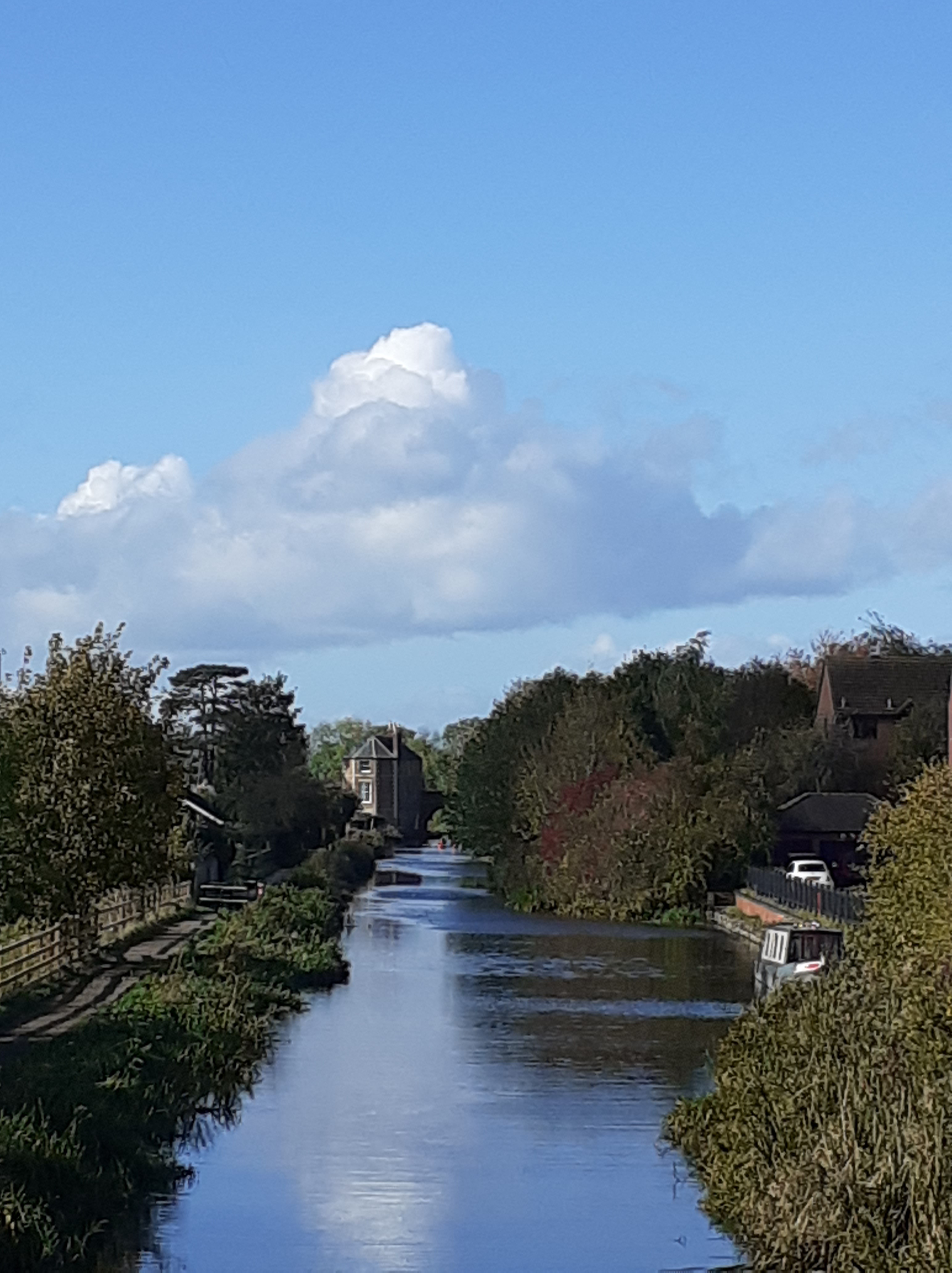
1 November gave me autumn at its best rather than any sign of winter. The canal had, in places, a kind of dappled intimacy, aided both by unmanicured foliage and architecture on a human scale. The quality of light was heart-lifting too, always significant for me.

There were also other spaces, more open, allowing an overview of the canal landscape. The picture below gives an indication of how much blue sky there was, on the day. It was a delight to be able to see so far, and so clearly. I realise how much my resilience, at times wobbly, is supported by simple experiences like this.

THE PASSAGE OF TIME

The years roll on, with ever increasing speed. This is me in 1952, sitting to have my picture taken in a photographer’s studio. I just about remember the occasion as a significant event, for which I was carefully dressed and coached. I am pleased to report that this eager, inquisitive (if slightly anxious?) boy has never died, though at times he is hard to find. His image reminds me of the magical, light bringing child in each of us, whatever else we have become. Buried, it may be. Wounded, confined or hiding, in some cases, at some times. But still there, still embodied in old and hidden places, awaiting renewed recognition and love.

This is midwinter and a time of reminiscing and stocktaking. On 20 December 2019 I wrote: “I’m peering in to the 2020s. Calendar numbers might be arbitrary, but they are numbers of power in our culture. They award shape and identity to years and decades. Part of me sees the 2020s as pure science fiction, with an increasingly dystopian tilt. Themes of alarm, determination, resourcing and resilience come up for me at multiple levels”. (https://contemplativeinquiry.blog/2019/12/20/approaching-the-years-turn/).

At that time I undertook to give more attention to the wheel of the year, and to cultivate certain values: lovingkindness; positive health and well-being; a life of abundant simplicity; and a spirit of openness, creativity and wisdom (https://contemplativeinquiry.blog/2019/12/27/values-for-2020). Sometimes during the year I have been on point and sometimes I have not. I do feel overall that these were good choices for the year of Covid-19 and I have at least paid them conscious attention.

I do not approach 2021 with new and different thinking. I expect it to be another challenging year, especially in the early months, no doubt in a slightly different way. I will bring the same approach to 2021 as to 2020, perhaps enhancing the qualities of simplicity and openness, leaning more towards the centre rather than the periphery of the wheel. This could be the role of the elder within. There is room both for youth and age in one person.

RESILIENCE AND REGENERATION

In my world, early March is a pre-equinoctial period of its own. In the emergence from winter, it manifests both resilience and regeneration. This year I have experienced an elephant’s ears plant (bergenia cordifolia) as an marker for resilience. This evergreen lives close to our back garden gate. It has been flowering, and it leaves have kept shiny, for most of 2020 so far. It has given me a lift every time I have walked past it, in all manner of weather. I feel grateful to it just for being there.

Why have I noticed it this year in particular? In the past I’ve taken this plant for granted. I’ve walked past without seeing it. I’ve only paid attention when the leaves need pruning, having strayed onto a path. Yet now this plant feels like a friend and nourishes me with its presence. It doesn’t just demonstrate its own resilience. It supports mine. I’ve been experiencing 2020 as tough and likely to stay that way, so I suppose that something in me has been looking for ways of feeling resilient. As a result, I’ve been able to notice something that’s been there all along, though largely neglected.

As well a resilience, I’ve been having a sense of regeneration, though the dynamics are a little different. One difference is that I expect to be leaning into regeneration at this time because it’s part of my wheel of the year narrative. I also expect it to be linked to the presence of willow trees (see picture below) because I befriended one many years ago. I have stayed in touch even after moving to a different town. The early re-greening of willow trees is part of my direct experience, and also part of my myth. It feels as if I am being taken by the hand and led towards the equinox.

I don’t want to get there prematurely. A patient, attentive journey emphasises the freshness and novelty of each year. I took the photograph below a couple of days ago on impulse, and it felt like a nudge into a process of renewal that I don’t want to undertake too quickly and don’t want to make assumptions about. Regeneration happens. Although I’m starting to feel my age, I’m still part of it. Let’s see how it goes in 2020.

Earth Eclectic

music that celebrates Earth and speaks to the heart

Sarah Fuhro Star-Flower Alchemy

Follow the Moon's Cycle

Muddy Feet

Meeting nature on nature's terms

Rosher.Net

A little bit of Mark Rosher in South Gloucestershire, England

Becoming Part of the Land

A monastic polytheist's and animist’s journal

selkiewife

Selkie Writing…

Charlotte Rodgers

Images and words set against a backdrop of outsider art.

Prof Jem Bendell

living with metacrisis and collapse

Towint

The pagan path. The Old Ways In New Times

The Druids Garden

Spiritual journeys in tending the living earth, permaculture, and nature-inspired arts

The Blog of Baphomet

a magickal dialogue between nature and culture

This Simple Life

The gentle art of living with less

Musings of a Scottish Hearth Druid and Heathen

Thoughts about living, loving and worshiping as an autistic Hearth Druid and Heathen. One woman's journey.

Wheel of the Year Blog

An place to read and share stories about the celtic seasonal festivals

Walking the Druid Path

Just another WordPress.com site

anima monday

Exploring our connection to the wider world

Grounded Space Focusing

Become more grounded and spacious with yourself and others, through your own body’s wisdom

The Earthbound Report

Good lives on our one planet

Hopeless Vendetta

News for the residents of Hopeless, Maine