Contemplative Inquiry

This blog is about contemplative inquiry

Tag: Peace

PEACE AS A VIRTUE

I have been thinking of peace, at the personal level, as something other than an energy or state. I am learning to understand it as a virtue to be cultivated, in the sense described by modern Pagan philosopher Brendan Myers. ‘Virtue ethics’, first articulated by the ancient Greeks, is the branch of philosophy that investigates character and identity (1).

To live a fulfilling and happy life, according to Myers, we need to install ways of understanding and being in the world that support our aim: these are the virtues. He specifically talks about the virtues of wonder, such as open-mindedness, curiosity, creativity; the virtues of humanity, such as care, courage, respect and generosity; and the virtues of integrity, like reason, acknowledged vulnerability, forgiveness and the will to let go.

I like Brendan Myers’ approach to virtue ethics. I find it inspiring. I particularly appreciate his account of both the work and rewards of practising virtue ethics: “through the process of identifying and working with virtues, we reach towards the person we want to be and the world we want to live in”. He points to “the possibility of a greater depth of life experience that can appear when I am willing to let go of my illusions, willing to risk harm and despair, in pursuit of a more honest relationship with reality”.

Myers’ approach has influenced my practice, to the extent of creating, working with and revising my own list of personal commitments (2). This is a working document, not a set of commandments or protocols from elsewhere. The commitments are not coterminous with virtues, but virtues are identified and included in them. The first to be named in my list is peace. I say: “I will live from the peace of the centre”. This statement has primacy over the others and is formulated differently. “I will live from …” is different from the “I will cultivate” that begins my other statements. It is linked to my regular use of a (slightly modified) Druid peace prayer: “Deep within my innermost being I find peace; silently, in the stillness of this space, I cultivate peace; heartfully, within the wider web of life, may I stand in peace”. The commitment “I will live from the peace of the centre”, draws on the whole prayer.

I notice that peace, rather than love, is currently the foundation of connection with my innermost being, or the divine within me. Spiritually, heartful peace best describes the reality of my lived experience of non-separation from the divine. This is what I feel moved to take into the world as a form of action (living from). I find this more challenging than finding peace in my innermost being in meditative spaces. Turning outwards, I find often find the world distressed, deluded and difficult to navigate. I am part of this world and therefore obviously vulnerable to my own distress and delusion, and also to a certain ignorance about falling into the mire myself.

Finding and modelling peace are consequently at the top of my list and it is this peace practice that I frame in terms of virtue. The ultimate peace that I experience within is something else, an inspiring gift for which I feel grateful: it is not a personal possession or attainment. Nonetheless, it supports in the work of bringing peace into my daily life.

(1) Brendan Myers Reclaiming Civilization: A Case for Optimism for the Future of Humanity Winchester, UK & Washington, USA: Moon Books, 2017

(2) Personal Commitments (Revised May 2024):

I will live from the peace of the centre.

I will cultivate skilful will and strong will, always within the context of good will, towards self and others.

I will cultivate positive health and well-being, within whatever constraints that may apply.

I will cultivate discernment, creativity and wisdom, to the best of my understanding and capacity.

I will cultivate a life of abundance in simplicity, living lightly on the earth.

EARLY SPRING: AFFIRMING LIFE

I am connecting with spring and its urgent affirmation of life – its green shine and fecundity. It is the sunrise season, the season of early growth. For me, where I live, the immediate pre-equinox period often generates a strong feeling of dynamism and emergent potential. I am in sync with the awakening earth.

Elaine’s return from hospital and the enhanced clinical support she is receiving are helping me to live this season more fully. In our joint lives we are both feeling more agency in shaping a new phase in our life together.

In this moment I feel refreshed and optimistic within my Druid contemplative path. I have adjusted my formal practice so that I have two practice sessions in the day, both of them roughly twenty minutes long. The first, at the beginning of the day and standing, is affirmative and dynamic. It includes body and energy work and a theme of healing and rejuvenation. The second, at the end of the day and sitting, is contemplative. It includes breathwork, a mantra meditation using beads, and prayer. In the modern Druid manner it includes a commitment to the collectively imperilled qualities of love, peace and justice. This shift is having a renewing and reinvigorating effect on me, as befits the season: another way of gratefully affirming the gift of a human life.

BOOK REVIEW: ELEGANT SIMPLICITY

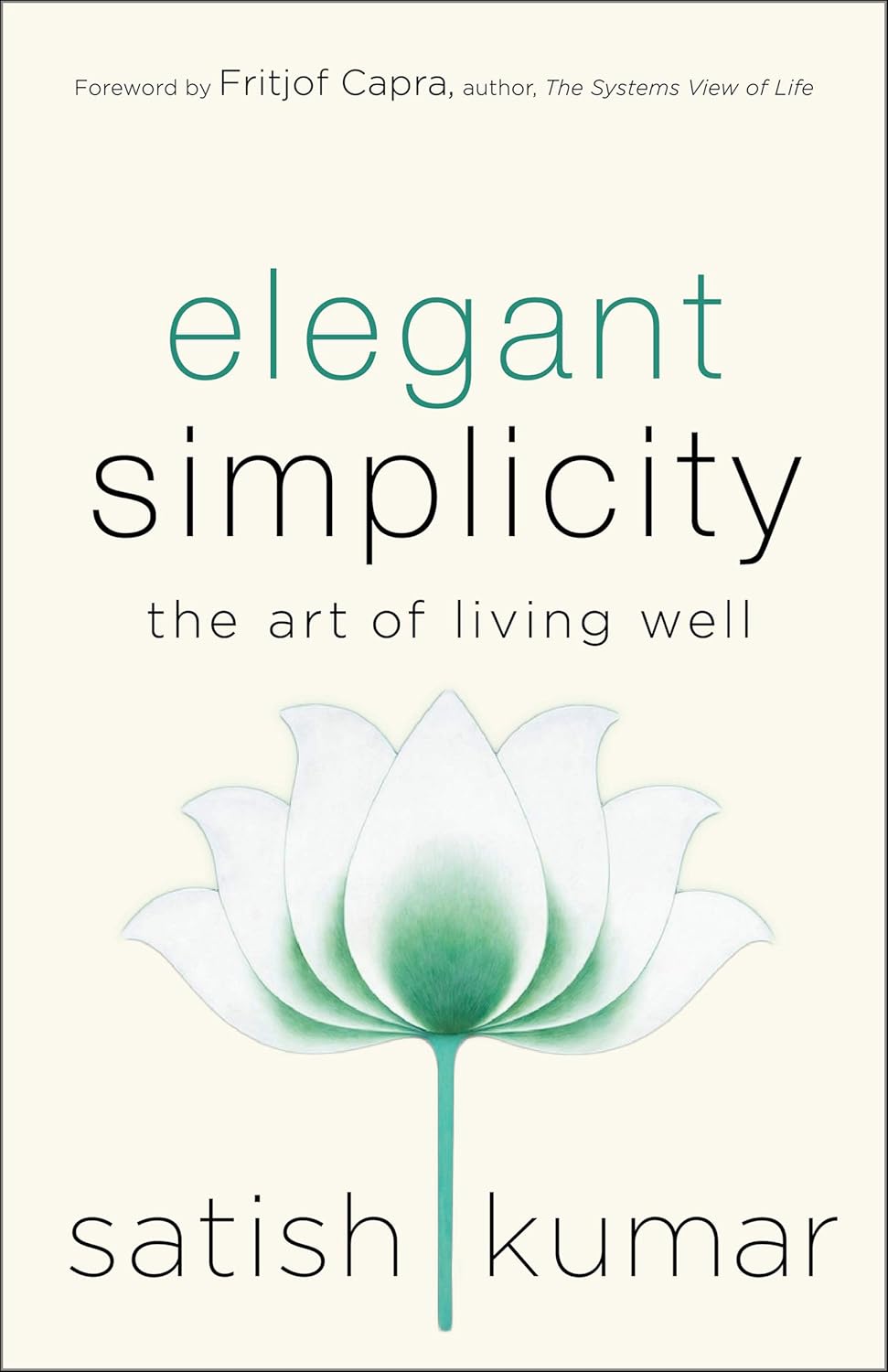
Highly recommended. Satish Kumar (born in 1936) published Elegant Simplicity: the Art of Living Well in 2019 (1). It begins with a foreword by Fritjof Capra and a preface by the author Let’s be Simple which quotes the 1848 Shaker song ‘Tis the gift to be simple, ‘Tis the gift to be free. The book summarises the author’s personal story as well as discussing his values. I have written posts based on some of his other work before (2). I especially recommend this book to anyone interested in knowing more about Satish Kumar’s practice (grounded in Jain spirituality and Gandhi’s non-violent activism) and his influence on deep ecology, creative arts and education.

Elegant Simplicity has a summarising quality, looking back on decades devoted to sacred activism in different forms. It is divided into fourteen chapters: Each is preceded by a brief and relevant quotation from another thinker. The chapter then becomes a meditation on the quote:

1 My Story: Beginnings – ‘True happiness lies in contentment’ Mahatma Gandhi.

2 Simplicity of Walking – ‘All truly great thoughts are conceived by walking’ Friedrich Nietzsche.

3 Life is a Pilgrimage – ‘Faith is not the clinging to a shrine but an endless pilgrimage of the heart’ Abraham Joshua Heschel.

4 Elegant Simplicity – ‘Any fool can make things complicated, it requires a genius to make them simple’ E. F. Schumacher.

5 A Society of Artists – ‘This world is but a canvas to our imagination’ Henry David Thoreau.

6 Yoga of Action – ‘Life is a process not a product’ Brian Goodwin.

7 Learning is Living – ‘Education is not preparation for life; education is life itself’ Thomas Dewey.

8 Right Relationships – ‘We are all related – relationships based on obligation lack dignity’ Wayne Dwyer.

9 Love Unlimited – ‘There is no charm equal to tenderness of the heart’ Jane Austin.

10 Power of Forgiveness – ‘It’s one of the greatest gifts you can give yourself, to forgive. Forgive everybody.’ Maya Angelou.

11 Dance of Opposites – ‘Life and death are one as the river and the sea are one’ Kahlil Gibran.

12 Deep Seeing – ‘To see clearly is poetry, prophecy, and religion, all in one’ John Ruskin.

13 Union of Science and Spirituality – ‘Science is not only compatible with spirituality; it is a profound source of spirituality’ Carl Sagan.

14 Soil, Soul and Society – ‘We live in an interconnected world and in an interconnected time so we need holistic solutions to our interconnected problems‘ Naomi Klein.

Fellow activist and author Vandana Shiva describes Elegant Simplicity as “the distillation” of Satish Kumar’s ideas and actions. “It shows the intimate connections between the inner and the outer world, soil, soul and society, beauty joy and non-violence. It indicates that the solutions to the big problems of our time – climate change, hate, violence, hopelessness and despair – lie in thinking and living with elegant simplicity, reducing our ecological footprint while enlarging our hearts and minds”.

For me, Satish Kumar is an inspiration rather than a direct model. Even in the conditions of the early 1960’s I would not have walked, or aspired to walk, from New Delhi to Washington DC without carrying any money. Yet Satish Kumar and his companion E. P. Menon succeeded and made a huge public impact at the time. Their peace pilgrimage gave oxygen to the campaign for nuclear disarmament. No state gave up its arms, but treaties limiting the numbers and testing of nuclear arms became normalised for some decades. Satish Kumar’s initiatives in deep ecology and education, especially the ‘small school’ and Schumacher College, have changed lives. Directly and indirectly, his influence has awakened many people from the dystopian trance of our dominant cultures. Satish Kumar is a widely revered elder: a peaceful warrior for a more liveable, generous and creative world.

(1) Satish Kumar Elegant Simplicity: The Art of Living Well New Society Publishers (https://www.newsociety.com): Gabriola Island, BC, Canada: 2019

(2) See previous posts:

NEWS OF A DEATH

TWO VIEWS OF THE DIVINE

OUTDOOR WALKING MEDITATION

NOTE: “Satish Kumar (born 9 August 1936)[1] is an Indian British activist and speaker. He has been a Jain monk, nuclear disarmament advocate and pacifist.[3]Now living in England, Kumar is founder and Director of Programmes of the Schumacher College international center for ecological studies, and is Editor Emeritus of Resurgence & Ecologist magazine. His most notable accomplishment is the completion, together with a companion, E. P. Menon, of a peace walk of over 8,000 miles in June 1962 for two and a half years, from New Delhi to MoscowParisLondon, and Washington, D.C., the capitals of the world’s earliest nuclear-armed countries.[4][5] He insists that reverence for nature should be at the heart of every political and social debate.” (Wikipedia)

MY OCTOBER 2024

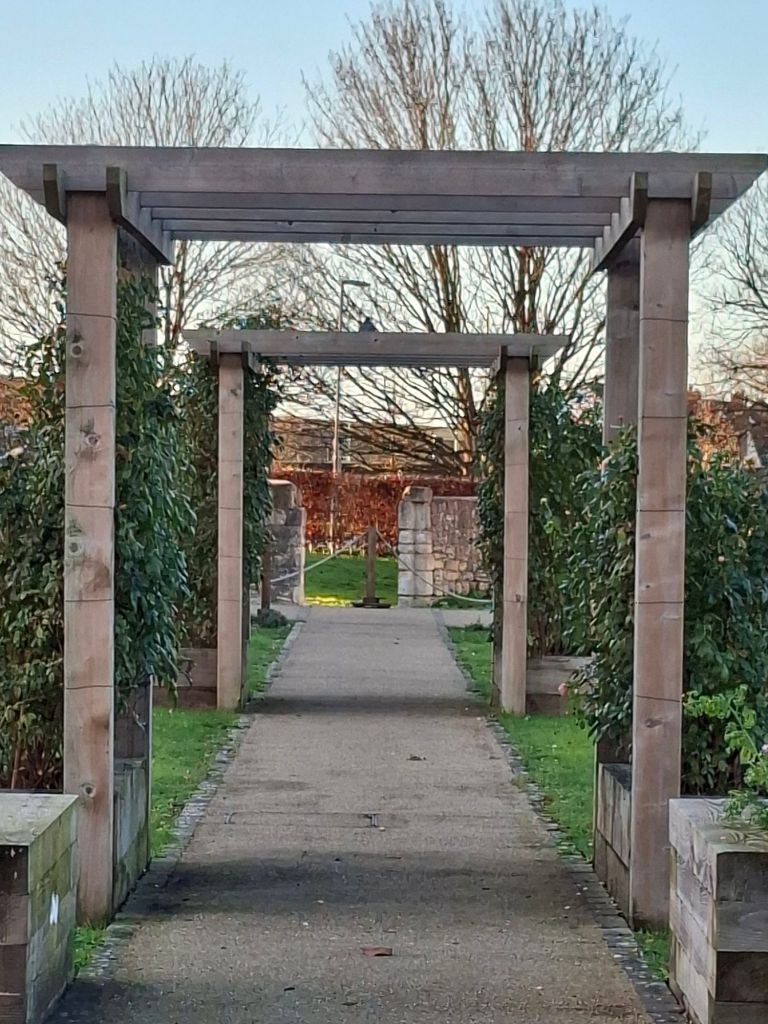
October, 2024. Outside, leaves turn and fall. The days shorten, long evening walks no longer part of my day. But six months after her accident in Gran Canaria, my wife Elaine is re-learning to walk. A great blessing – we both wondered if she would.

A gift from Awen – three words tumbling into manifestation with no thinking effort from me: healing, peace power (1). A kind of Druid koan. Easy to see that peace might follow healing, and that healing might be a condition of true peace. But the power following on from that peace? – very different from the kinds of ‘power’ most visible in the world today. What do I need to learn?

I had a dream in which I read a map to get to a school. I arrived at the school and was happy enough with my experience. Then I read the map again and saw that it was the wrong school. The one I should have gone to was further away, to the north-west.

At Samhain, the culmination of October, we think of of the dead, and a loosening divide between the dead and the living. What can we say to them – ancestors and recent dead alike? What might they say to us?

(1) see: https://contemplativeinquiry.blog/2024/10/17/awen

MENTAL HEALTH UNDER SIEGE

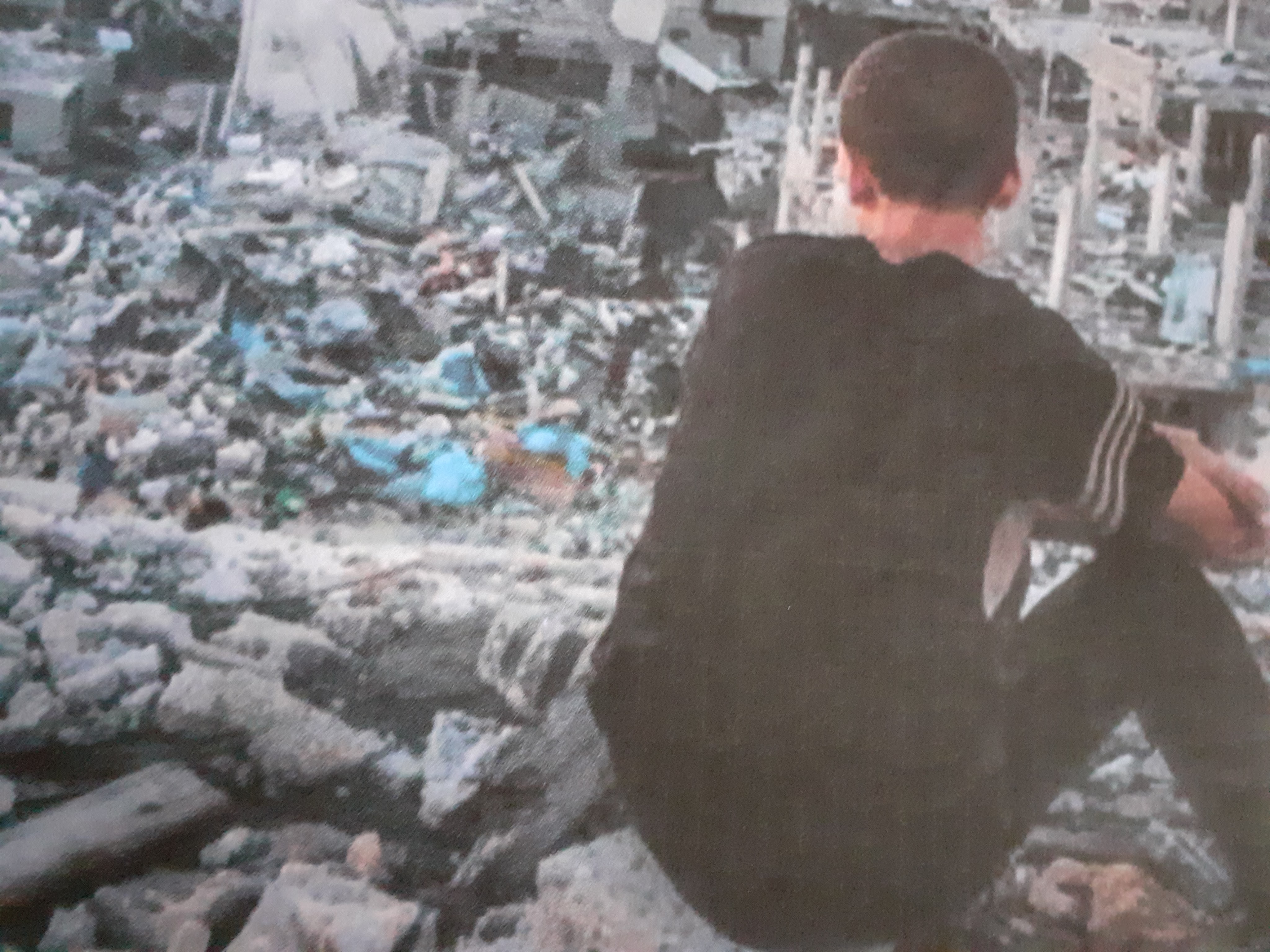
“In Gaza, there is no ‘post’ [traumatic] because the trauma is repetitive and ongoing and continuous.” Dr. Samah Habr is Head of Mental Health Unit, Palestine Ministry of Health. She wrote these words in 2021, after the 11 day Israeli day air assault carried out in May of that year. It was the fourth war since the beginning of the blockade of Gaza in 2007. Recently I attended a Zoom event, predominantly for Amnesty International volunteers (1). Dr. Habr gave a presentation about mental health in the Palestinian territories occupied by Israel since 1967, with a focus on Gaza from 2007-2021, where there is good enough data to process scientifically. Clearly the situation is much worse today.

The blockade itself created deep poverty, an ongoing water crisis and a severe curtailment of opportunities. A mental health study of children at that time showed that 80% of Gaza’s children had experienced personal trauma and 54% met the official diagnostic criteria for PTSD. Dr. Sabr describes this prevalence of psychological trauma as ‘the disaster of helplessness’ and identifies three forms of it at play:

  • chronic trauma prolonged. pervasive distressing events such as poverty and institutionalized discrimination
  • inter-generational trauma psychological trauma experienced by the descendents of a person who has survived a traumatic event
  • acute trauma an extremely distressing individual event

She goes on to use the word ‘humiliation’ to describe “the pervasive and fundamental experience of the Palestinian people as a whole, under occupation, underlying the varied military, social, economic, and human rights violations that have been imposed over generations”.

One of Dr. Sabah’s principles is that “we cannot treat what we do not acknowledge”. A psychiatrist herself, she says that the Western-based medical model of mental health, codified in the DSM series, is over-individualised. Palestine has few resources for mental health provision, and few mental health practitioners. (There have been some, even in Gaza – 12 of the 67 children killed in the 2021 action were participating in a trauma recovery program.)

Dr. Sabah introduces the concept of Sumud and defines it as a combination of of endurance and steadfastness, both individual and collective. A mental state as well as action oriented, it:

  • is prosocial and community oriented
  • fosters endurance and steadfastness
  • enables defiance against oppression
  • promotes solidarity
  • is committed to keep loving despite injustice

Dr. Habr suggests that historical/collective trauma needs to be reprocessed collectively. “It can be alleviated through cohesive and collective efforts such as recognition, remembrance, solidarity, creativity, community psychology and mass cooperation. In youth work particularly (the Palestinians are predominantly a young population), a suggested model is that trauma informed-teachers, medical staff and parents offer community-based interventions in safe spaces – open studios, symbolic expression, theatre of the oppressed).

Dr. Sabr concludes that positive mental health cannot be achieved without justice. “Human rights are the cornerstone upon which mental health flourishes. Without dignity, without freedom, without justice, our emotional well-being is torn apart, leaving us adrift in a sea of suffering.”

All of the crimes in Israel/Gaza from 7 October 2023 have haunted me. This is my second second post about ongoing destruction of Gaza and the deadly consequences for its people (2). Do such posts have an appropriate place in my contemplative inquiry? Yes. If I am held within interbeing (3), I cannot separate myself from these events. If they enter my head, heart and dreams, they are present anyway. I am asked to be conscious and mindful or I will be prey to disabling distress and unskilful ideation. In an outer ripple kind of way, they become an issue for my own mental and emotional wellbeing.

There’s not much I can do other than be conscious and bear witness. But that, at least, is something. On behalf of her people Dr. Habr has asked the people of the West not to abandon them. So today I am moved to write about an aspect of Palestinian experience even in ‘normal’ times.

I believe that Dr. Habr has also given a gift to us. Reading her account of Sumud, it seems to me that its population based take on mental health is portable. I am confident that it can be applied with appropriate cultural modifications in other settings with potentially emancipatory results.

(1) Amnesty International, as anon-partisan human rights organisation, does not take a position on what an eventual settlement in Israel/Palestine should look like. But it does advocate an immediate cease-fire, an embargo on military sales, and a dismantling of the apartheid system operating in the whole territory both for Arab Israelis and Palestinians living under occupation. The event I attended included presentations on possible pathways to peace and Jewish opposition to the current war. For general information about Amnesty in the UK, see https://amnesty.org.uk/

(2) https://contemplativeinquiry.blog/2023/12/11/poem-if-I-must-die/

(3) https://contemplativeinquiry.blog/2018/05/10/the-notion-of-interbeing/

Picture Credit: Dr. Samah Jabr

UNFREEZING (SLOWLY) IN WINTER SUN

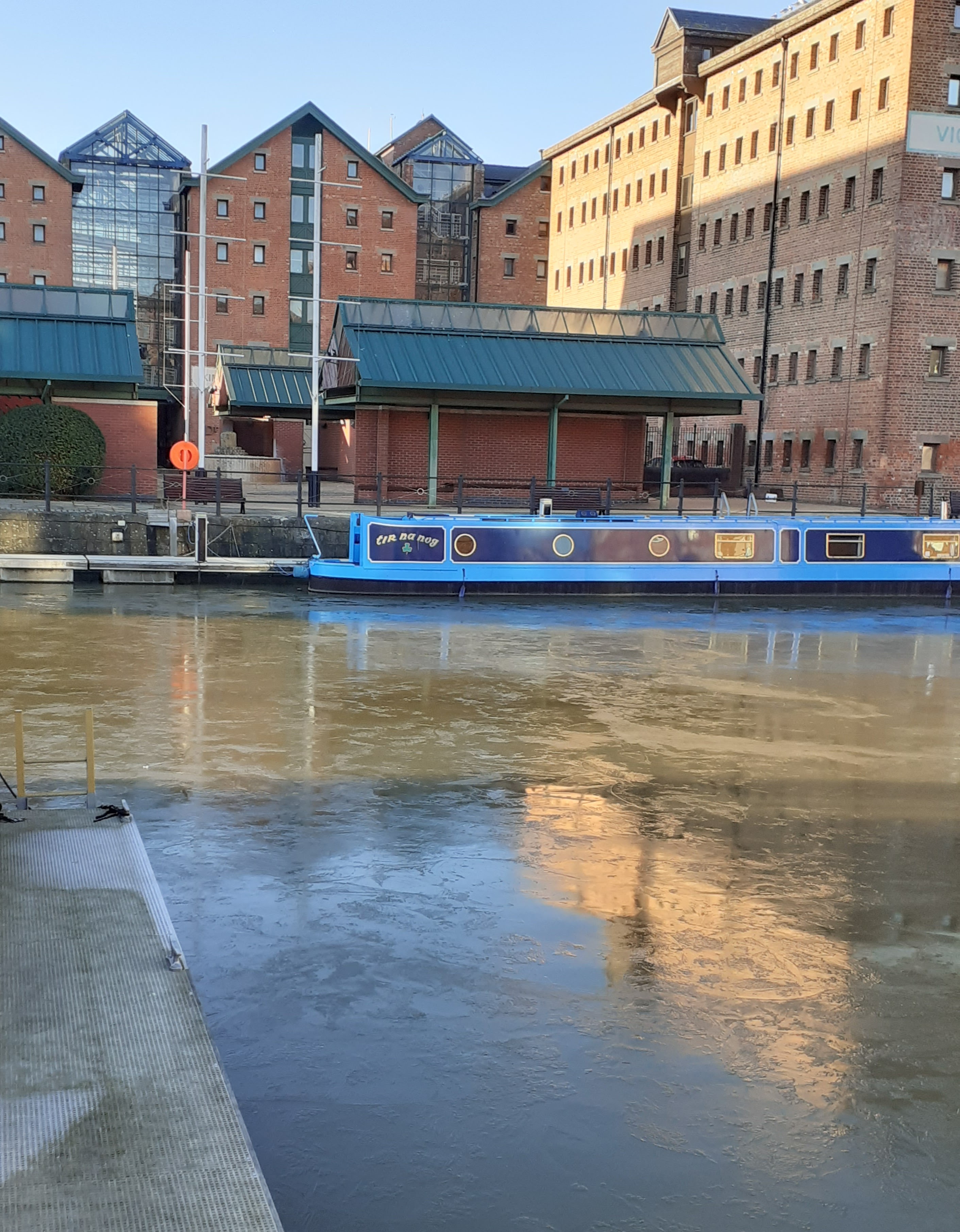
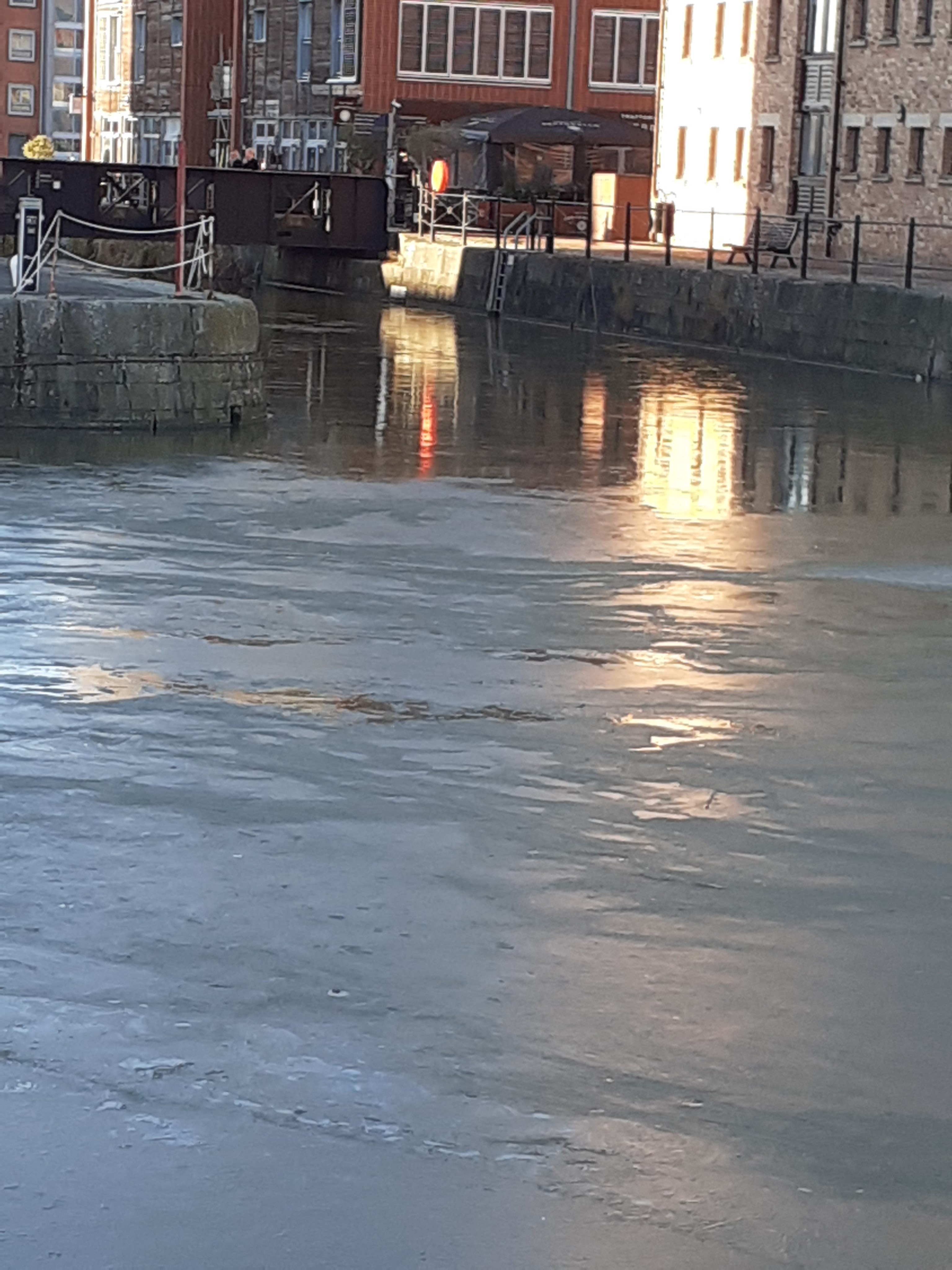
Yesterday – 3.30 pm or so – I was walking home swiftly from a shopping expedition. I was slowed down and halted by the water in Gloucester docks. It drew my eye and asked for a closer look. It had clearly been iced up in the previous cold night, and had been slowly melting in this bracing but above-zero day.

The sky is clear and I experience a strengthening sun now. I recollect that we are now several weeks beyond the solstice. The balance of light, shade, stillness and fluidity sends me into a more deeply meditative state, entirely trumping my original sense of domestic mission and wanting to be home.

Ice and water are made of the same stuff, manifesting in different ways. The patterns on the surface look still but tell a story of transformation – here, from fixed to free. Another drop in temperature could easily end and indeed reverse this process. In this space I see the same essence adopting different forms under different conditions. But here the change is gentle. The contemplative moment extends itself. I am open to the magic of nature. In such beauty, I find peace and stillness within my own being.

POEM: SUCH A LONG JOURNEY

We had a theory. It meant travelling westward.

At first, simple. We each had resources.

We lost most of them on the Straits of Hormuz;

our boatman betrayed us to pirates.

Perhaps that was the moment to turn back

after we’d bargained our release for gold and incense

leaving only a few coins sewn into an old hat.

But we had come so far

          and a theory

can become a story you would wander the world to tell.

We were in trouble, sometimes, misunderstood,

always there for each other – always walking westward,

taken on by an Ethiopian eunuch, even though by then

only one of us was fit to work – slipping away

by night when we sensed we were near.

He was a philosopher and carried his own coffin;

we raided it for myrrh. Took millings

from the edge of one of his ingots,

saved a last joss-stick. We had read our Isaiah.

And we had a theory

that a some place under a setting star

three gifts could be exchanged for peace

passing all understanding. What we ended up giving

were some much-needed hints on run-routes

for a family of refugees.

From the collection Losing Ithaca by Christopher Southgate Nottingham: Shoestring Press, 2023

In the Christian year, the twelve days of Christmas are over. 6 January is the festival commemorating the Epiphany, the manifestation of Christ to the the three Magi, the wise men from the east who came to pay homage to him. Their story is told in the Gospel of Matthew Chapter 2, verses 1-12.

Christopher Southgate is described as “a bio-chemist, a house-husband, a chaplain in university and mental health contexts, and a teacher of theology. He lives with his wife Sandy on the edge of Dartmoor and works at Exeter University”. Elaine and I attended an event at Gloucester Cathedral on the evening of 6 January this year, where he read a selection of his poems, naturally including this one.

The title references T. S. Eliot’s poem on the same theme, Journey of the Magi, but in other ways I find them very different. Southgate’s companions-with-a-theory have a considerably harder time than Eliot’s magisterial Magi. They arrive like refugees and meet with a family about to become refugees. Matthew describes King Herod’s efforts to eliminate any potential rival, as he sees it, to his throne, and the families’ consequent flight to Egypt.

I like the way in which Southgate shows how a somewhat transactional attempt at acquiring a “peace passing understanding” runs up against the realities of the world we live in. I also like the way he doesn’t invalidate the companions’ intent or their journey. They still had a gift to offer, sharing their experience and opening their hearts. Peace was present in that shared space.

2024: INQUIRY AT THE DAWN OF THE YEAR

It is 3 January 2024, around 8.30 am. I repeat my best wishes to all readers for 2024 from inside the new year, as it begins to unfold. I contemplate the sky, uncertain about what this new year may bring. At some level I feel open and uncluttered, free of over-determined intentions. It is as if I have surrendered to a current.

My Contemplative Inquiry, once a formal structured project, has gradually evolved into a simpler and more natural-seeming contemplative inquiry in no need of capitalisation. This inquiry is wired in, no longer in need of much external input or formalised internal effort. I am aware of owing a debt to the formal structured project, with its inputs and efforts, for it enabled this evolution to occur.

The result of the early, more formal, years is recorded in my ABOUT section. It was simultaneously a gnosis and the discovery of a place to stand that felt right and made sense. “My inquiry has been a pathway to greater understanding, healing and peace. In the contemplative moment,  I am living presence in a field of living presence, at home in a living world. This is not dependent on belief or circumstance, but on the recognition of what is given, joy and sorrow alike. I find that this simple recognition moves me towards a spirit of openness, a fuller acceptance that nothing stays the same, an ethic of interdependence and a life of abundant simplicity”. My inquiry today is about deepening, and living more congruently and confidently from this place. It is part of me now, and I foresee no end.

POEM: BOATING ON A RIVER

Cranes called through the spray of surging waters

Ch’u skies were free of clouds and rain

at the end of a quiet day of boating

I was fishing among green rushes

when petals landed on my outdoor robe

a light breeze was blowing upstream

as I worked my way to their unreachable source

among distant trees I saw a hint of green

From: In Such Hard Times: the Poetry of Wei Ying-wu Red Pine (Translator) Port Townsend, WA: Copper Canyon Press, 2009

Wei Ying-wu was a poet of the later 8th. century CE, as we count time. It was a period when the later-remembered-as-glorious T’ang dynasty had begun to unravel (a hesitant centre, Mongol incursions, Warlordism at home). Translator Red Pine says that “Wei lived his life wondering what went wrong”, giving a melancholy tinge to many of his poems. He was distantly related to the Imperial family, a scholar in both the Buddhist and Confucian traditions who spent many years as a state official without much enjoying it. This poem was written in 785 – in England, the time of the Venerable Bede and eight years before the Viking sack of the monastery at Lindisfarne.

In the background of this poem is a traditional story about a fisherman who traces peach petals upstream and discovers them coming from a hidden world where people live in peace. But after returning to his village to tell others, the fisherman is unable to find the way there again.

PHILIP CARR-GOMM: PEACEMAKING

I was moved and inspired by Philip Carr-Gomm’s recent Peacemaking podcast on his Tea with a Druid. In the first five minutes he checks in with his live viewers, as is his custom, and finds a theme of anxiety and distress about world events. He speaks of the need for ‘islands of sanity’ – enclosures of calm and peace. He introduces the hope that the people gathered together by the podcast itself can become one. A guided meditation later in the podcast does the job. The gathering becomes an enclosure of calm and peace in real time. It still worked for me well after the event. Such is the magic of Druidry.

Before the meditation, Philip explains the role of Druids, ancient and modern, as peacemakers. The ancient Druids were exempted from military service and had a pan-Celtic authority. A Roman author depicts Druids as walking between warring tribes, urging calm and asking the fighters to put down their weapons: they were “shaming Mars before the Muses”. The God of war and destruction had to bow down before the Goddesses of creativity and inspiration. The Druids of that time were also lawmakers and judges. In Ireland, St. Patrick valued their Brehon Laws so highly that they were written down and continued in force. Peacemaking, peacekeeping and jurisprudence worked together.

In modern Druidry, Philip emphasises the attention given to peace in ritual, where the intention is to begin and end in peace both inward and outward. Our Druid prayer asks for justice, because where there is justice in the world there is also peace. Justice isn’t about killing. It’s about peace: right action, right speech, right thought, right behaviour. We trust the power of prayer and of consciousness directed by love. Sitting in meditation or prayer influences the people involved, and creates a field of consciousness and energy which acts as a patch of calm and peace in bad psychic weather.

I recommend readers to watch the video and, if you are willing, enter into its meditative space. I also include The Modron Prayer (Modron being the Ancient Mother) in this post, as a way of ending it:

“Deep within the still centre of our being,

May we find peace.

Silently, within the quiet of the Grove,

May we share peace.

Powerfully, within the greater circle of humankind,

May we radiate peace.

May peace prevail on Earth.

May it be so. May it be so. May it be so.”

Earth Eclectic

music that celebrates Earth and speaks to the heart

Sarah Fuhro Star-Flower Alchemy

Follow the Moon's Cycle

Muddy Feet

Meeting nature on nature's terms

Rosher.Net

A little bit of Mark Rosher in South Gloucestershire, England

Becoming Part of the Land

A monastic polytheist's and animist’s journal

selkiewife

Selkie Writing…

Charlotte Rodgers

Images and words set against a backdrop of outsider art.

Prof Jem Bendell

living with metacrisis and collapse

Towint

The pagan path. The Old Ways In New Times

The Druids Garden

Spiritual journeys in tending the living earth, permaculture, and nature-inspired arts

The Blog of Baphomet

a magickal dialogue between nature and culture

This Simple Life

The gentle art of living with less

Musings of a Scottish Hearth Druid and Heathen

Thoughts about living, loving and worshiping as an autistic Hearth Druid and Heathen. One woman's journey.

Wheel of the Year Blog

An place to read and share stories about the celtic seasonal festivals

Walking the Druid Path

Just another WordPress.com site

anima monday

Exploring our connection to the wider world

Grounded Space Focusing

Become more grounded and spacious with yourself and others, through your own body’s wisdom

The Earthbound Report

Good lives on our one planet

Hopeless Vendetta

News for the residents of Hopeless, Maine