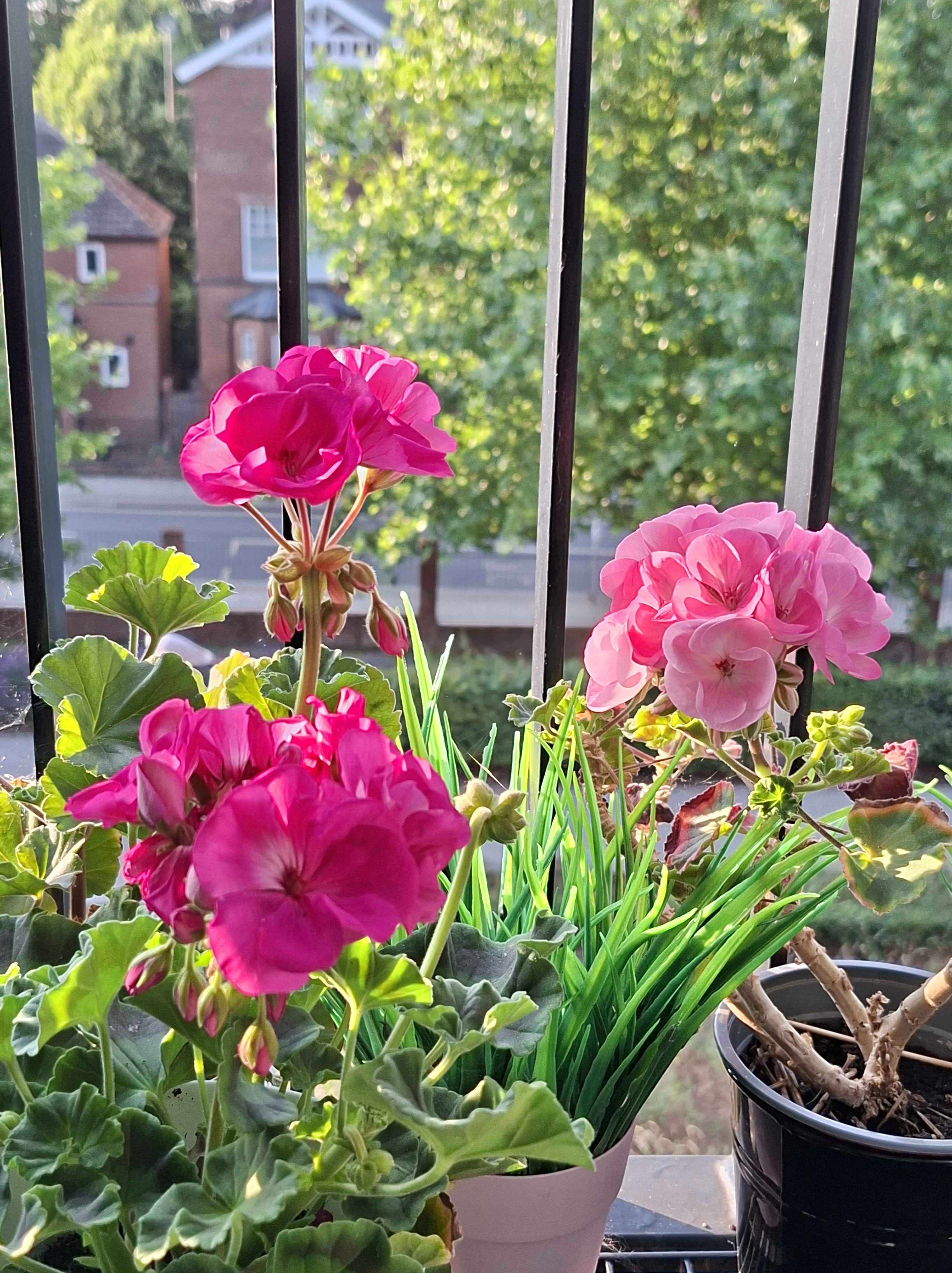
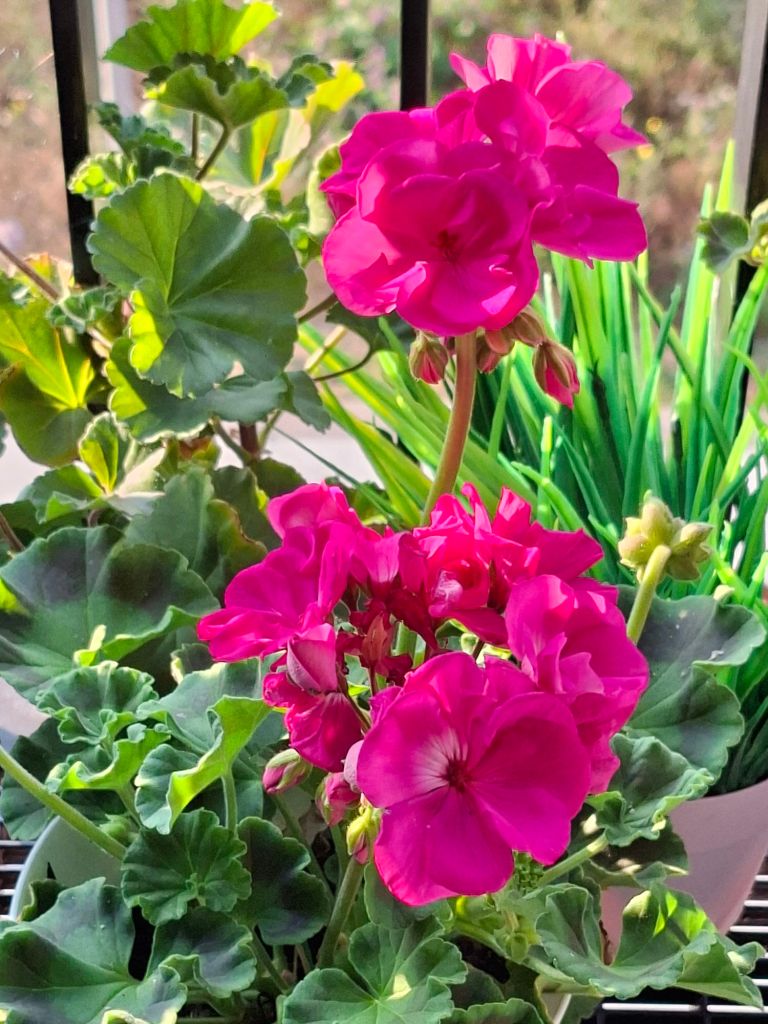
Early this morning I sat in contemplation of some geraniums in pots, for me a good Druid focus of attention. Purchased and tended by my wife Elaine, who is now mobile and active once more, they shone in the early morning light. This was about 6.45 am, some two hours after dawn, on 19 June. It is two days before the Solstice. Where did the time go?
I notice how my eye is drawn to plants and light effects. I find them nourishing and enabling. This has been a theme in my life for awhile. It is though sunlight and the plant world offer hope and reassurance in a bleak, shocking and disorienting historical moment. Life insists on flourishing. I can insist on flourishing too. I am not distracted from the wider world but resourced to engage with it.
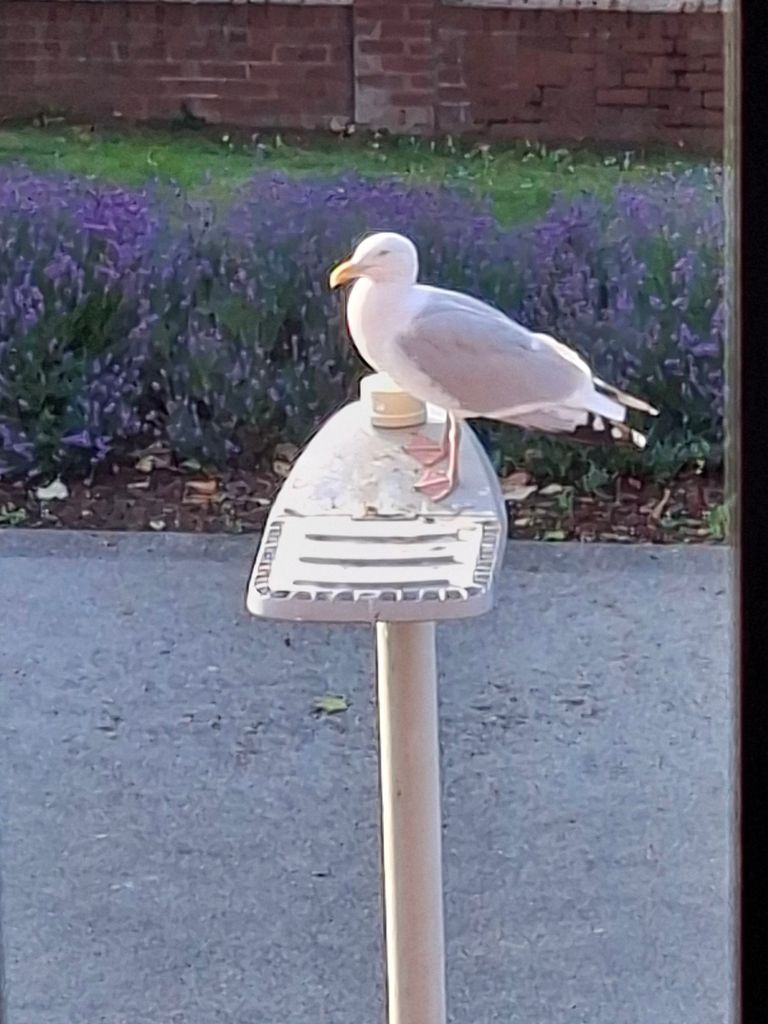
On a convenient lamp post, the seagull seeks an opportunity. This midsummer world is alive.
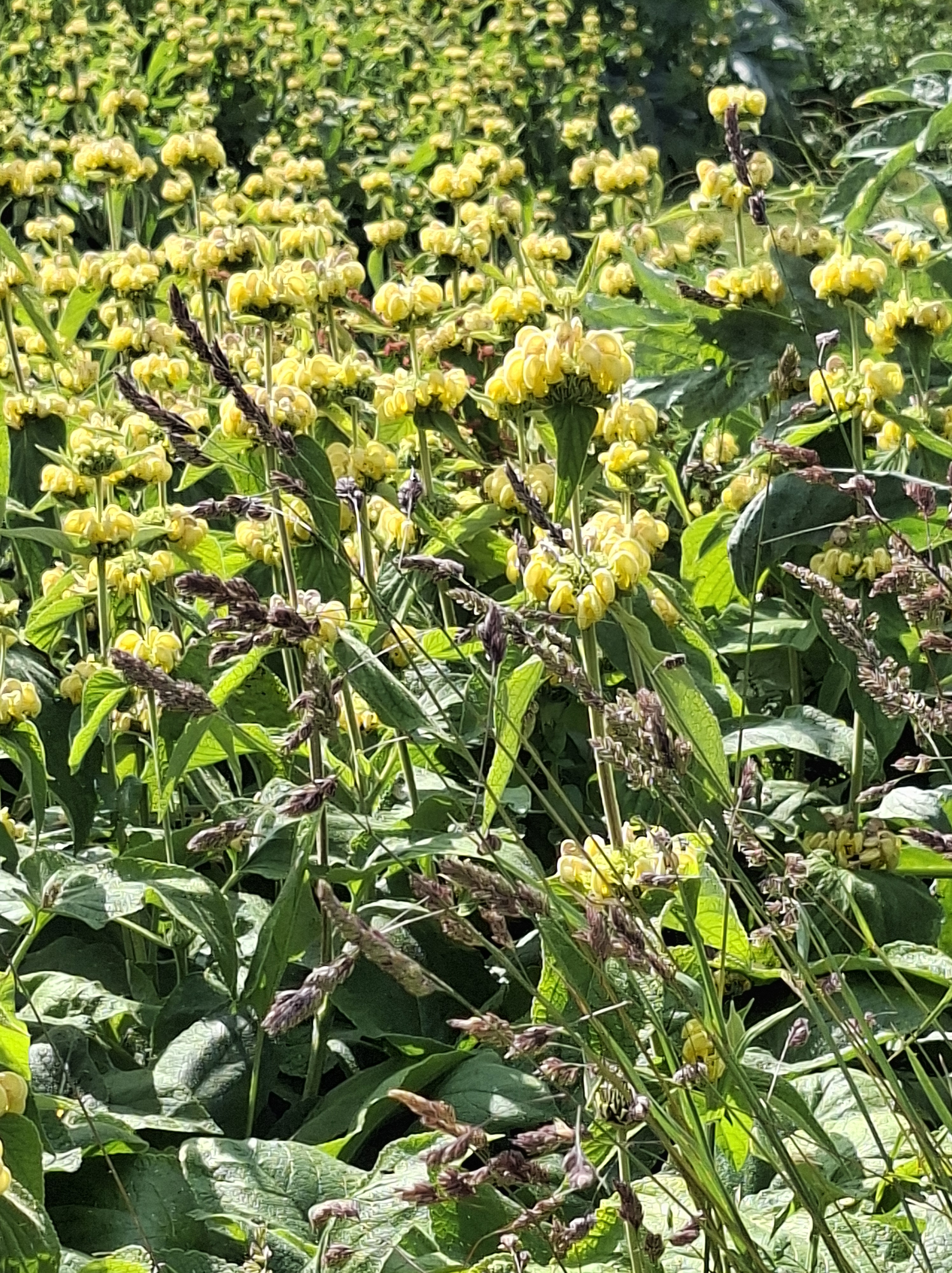
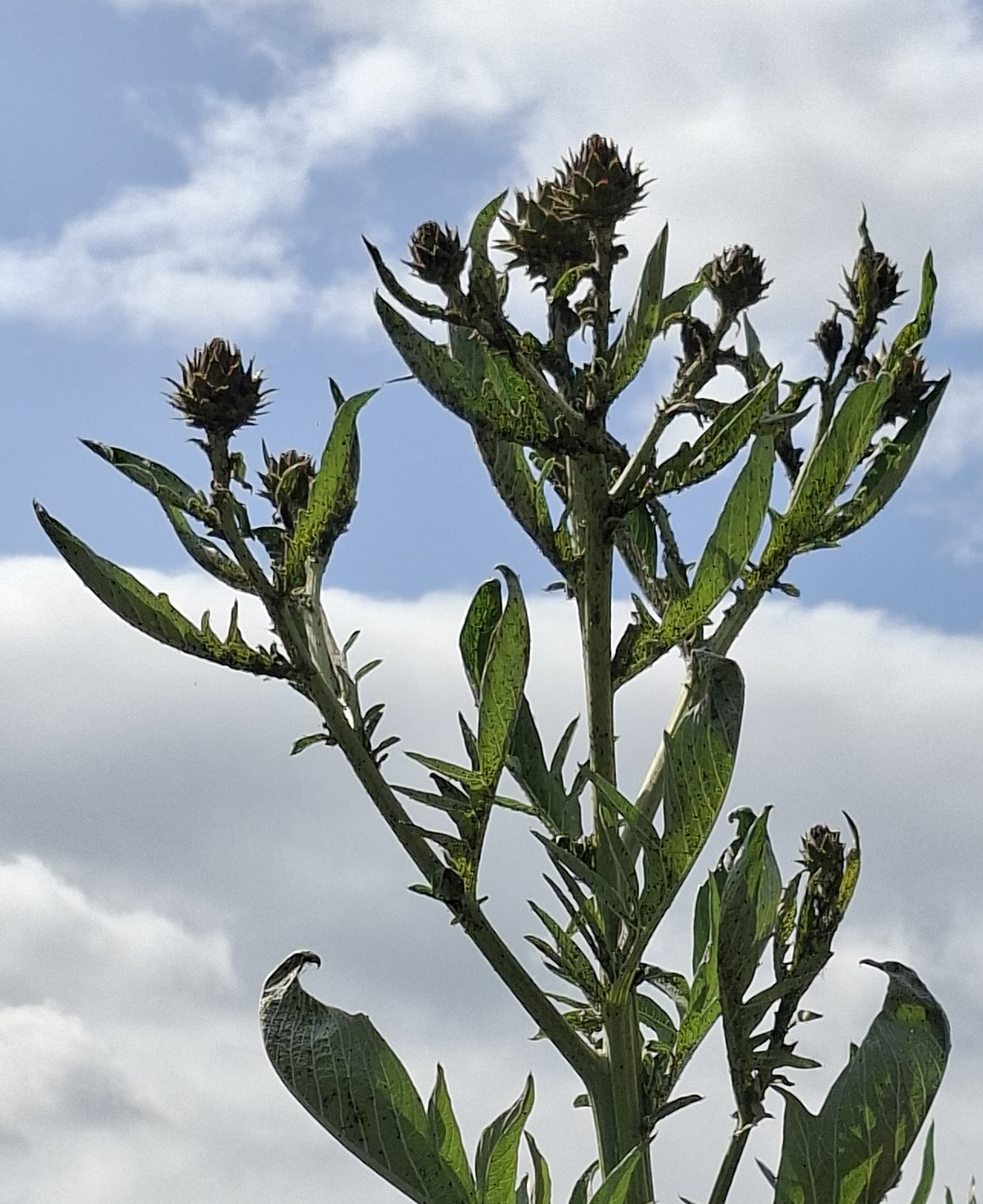
The garden in Gloucester Cathedral’s close is currently a magnificent riot. I was on a walk there with Elaine and we particularly noticed two powerful seeming plants that we couldn’t identify. We simply sat with them, unnamed, and bathed in their energy. It was a glorious 1 June, the first day of our official meteorological summer, and one to savour and enjoy. Only later did we do any research.
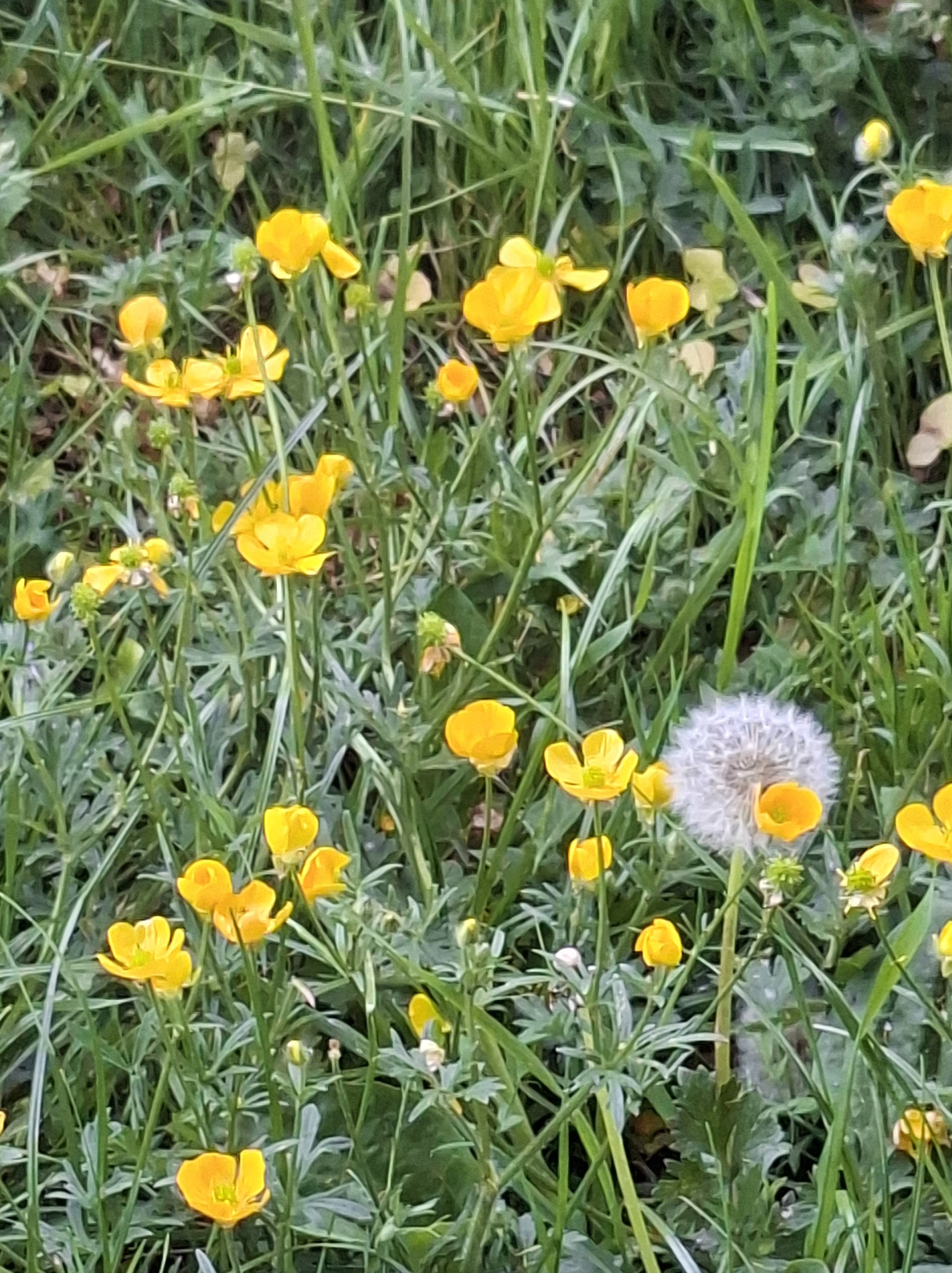
We are fairly sure that the plant above is yellow archangel and the plant below, looking like a giant thistle, is cardoon (canara cardunculus) aka prickly artichoke. Friendly feedback from readers on these identifications is welcome. If we are right both plants have long been recognised as sources of power and healing.
In our older traditions, yellow archangel was a symbol of harmony between flora and fauna. A custodian of wildlife, it fostered a bond that transcends mere survival. Herbalists still use this plant to relieve gout, sciatica and other pains of the joints and sinews. It has also been used to draw out splinters and thorns, clean and heal persistent sores, and to dissolve tumours. Yellow archangel can be used as food, in salads, soups and teas. In the wheel of our year, yellow archangel flowers fully after the bluebells die away.
Cardoon is also a plant of power. Traditionally associated with Mars, it has the virtues of strength, protection and abundance. It is has been credited with the power to ward off evil spirits. It is also connected to ideas of nourishment, the riches of nature and, latterly, sustainable gardening. The plant can grow to 2.5 metres in height. Its thick stalks are used as a vegetable. Its full flowering is in late summer and autumn, with thistle-like purple flowers.
These plants, in this garden, are a celebration of values as well as of nature and healing. I see our world through the lens of Modern Druidry and Paganism. The custodians of this space will have a Christian lens. I am happy to note that in this context they seem to be much the same. When in this space, I feel that I am in a beautiful and energising oasis in the city.
I have been thinking of peace, at the personal level, as something other than an energy or state. I am learning to understand it as a virtue to be cultivated, in the sense described by modern Pagan philosopher Brendan Myers. ‘Virtue ethics’, first articulated by the ancient Greeks, is the branch of philosophy that investigates character and identity (1).
To live a fulfilling and happy life, according to Myers, we need to install ways of understanding and being in the world that support our aim: these are the virtues. He specifically talks about the virtues of wonder, such as open-mindedness, curiosity, creativity; the virtues of humanity, such as care, courage, respect and generosity; and the virtues of integrity, like reason, acknowledged vulnerability, forgiveness and the will to let go.
I like Brendan Myers’ approach to virtue ethics. I find it inspiring. I particularly appreciate his account of both the work and rewards of practising virtue ethics: “through the process of identifying and working with virtues, we reach towards the person we want to be and the world we want to live in”. He points to “the possibility of a greater depth of life experience that can appear when I am willing to let go of my illusions, willing to risk harm and despair, in pursuit of a more honest relationship with reality”.
Myers’ approach has influenced my practice, to the extent of creating, working with and revising my own list of personal commitments (2). This is a working document, not a set of commandments or protocols from elsewhere. The commitments are not coterminous with virtues, but virtues are identified and included in them. The first to be named in my list is peace. I say: “I will live from the peace of the centre”. This statement has primacy over the others and is formulated differently. “I will live from …” is different from the “I will cultivate” that begins my other statements. It is linked to my regular use of a (slightly modified) Druid peace prayer: “Deep within my innermost being I find peace; silently, in the stillness of this space, I cultivate peace; heartfully, within the wider web of life, may I stand in peace”. The commitment “I will live from the peace of the centre”, draws on the whole prayer.
I notice that peace, rather than love, is currently the foundation of connection with my innermost being, or the divine within me. Spiritually, heartful peace best describes the reality of my lived experience of non-separation from the divine. This is what I feel moved to take into the world as a form of action (living from). I find this more challenging than finding peace in my innermost being in meditative spaces. Turning outwards, I find often find the world distressed, deluded and difficult to navigate. I am part of this world and therefore obviously vulnerable to my own distress and delusion, and also to a certain ignorance about falling into the mire myself.
Finding and modelling peace are consequently at the top of my list and it is this peace practice that I frame in terms of virtue. The ultimate peace that I experience within is something else, an inspiring gift for which I feel grateful: it is not a personal possession or attainment. Nonetheless, it supports in the work of bringing peace into my daily life.
(1) Brendan Myers Reclaiming Civilization: A Case for Optimism for the Future of Humanity Winchester, UK & Washington, USA: Moon Books, 2017
(2) Personal Commitments (Revised May 2024):
I will live from the peace of the centre.
I will cultivate skilful will and strong will, always within the context of good will, towards self and others.
I will cultivate positive health and well-being, within whatever constraints that may apply.
I will cultivate discernment, creativity and wisdom, to the best of my understanding and capacity.
I will cultivate a life of abundance in simplicity, living lightly on the earth.
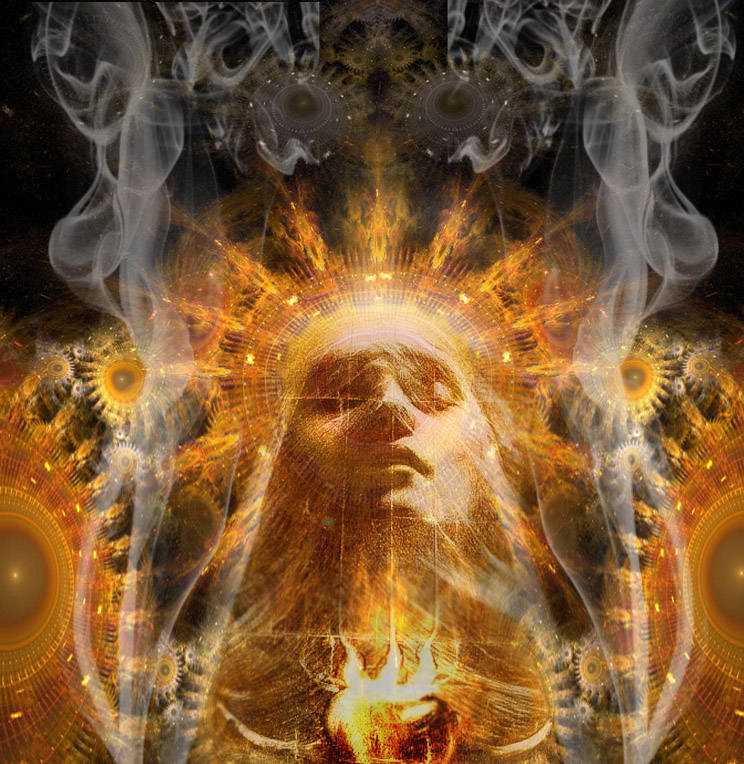
Hertha (Nerthus, Erth) was a Germanic Goddess of the Earth, associated with fertility, domestic animals and nature. She was believed to live in an island grove, whilst also touring the land in a cow drawn chariot to bring peace and joy to those who celebrated her. Our ancient information is derived from the Roman author Tacitus, in his Germania (1). Current accounts also link her to themes of rebirth, kinship, health, longevity and tradition. It is said that she can descend through the smoke of any fire to bring gifts. See: https://journeyingtothegoddess.wordpress.com/2012/12/25/goddess-hertha/
Algernon Charles Swinburne’s Victorian poetry is mentioned in two of Ronald Hutton’s Divinity lectures at Gresham College (2,3). In particular he describes the poem Hertha (3) as an important example of Pagan currents in Victorian British culture. Although widely seen then and (for some people) since as transgressive, Swinburne’s voice is confident and strong – as I hope these extracts show:
“I am that which began:
Out of me the years roll;
Out of me God and man;
I am equal and whole;
God changes, and man, and the form of them bodily;
I am the soul.
“Before ever land was,
Before ever the sea,
Or soft hair of the grass,
Or fair limbs of the tree,
Or the flesh-coloured fruit of my branches, I was, and thy soul was in me.
“First life on my sources
First drifted and swam;
Out of me are the forces
That save it or damn;
Out of me man and woman, and wild beast and bird; before God was, I am.”
As I read these verses, Swinburne’s Hertha is cosmic as well as local, universal as well as tribal. Swinburne clearly values Hertha’s specific name and lineage and he identifies Hertha with the World Tree in some verses. But he does not simply revive the old North European traditions. His Paganism models a new culture for a new time.
Although another 150 years have passed since Swinburne wrote this poem, I find it directly relatable. For me, it contains one of the most powerful affirmations of Panentheist Paganism I have heard: “I am the mouth that is kissed and the breath in the kiss, the search, and the sought, and the seeker, the soul and the body that is”. What better time than Beltane to celebrate Hertha and the 19th century seeding of Modern Paganism.
(1) Tacitus Agricola and Germania London: Penguin, 2009 (rev ed)
Thursday 24 April was a landmark afternoon for my wife Elaine and me. We were able to walk, sit and have coffee in Gloucester Docks. Such ordinary and taken for granted pleasures – until April last year, when Elaine broke her hip. Later, as her bones slowly recovered, her underlying heart problems were triggered at the turn of the year, setting back her overall recovery.
We are in a different place now. Elaine’s physical recovery, and her recovery of agency, are creating a new reality. The picture above is generally tranquil, yet includes the energy of a seagull in flight. The sun is getting warmer. We can relax a little, and celebrate, enjoying the promise of a new season, in the run-up to Beltane 2025.
Now, contemplating the image of a still boat against the background of Alney Island in its spring abundance, I feel grateful for the moment and grateful for our lives.
Modern Druids is the most recent public lecture (2 April 2025) presented by Professor Ronald Hutton in his tenure as Professor of Divinity at Gresham College, London. I provide a link below (1). This is the second of two posts about the lecture, focusing on Modern Druid movements in Britain from 1781. The first, concerning Hutton’s take on early modern perceptions of ancient Druidry, is published at https://contemplativeinquiry.blog/2025/04/08/ . It distinguishes four understandings, named by Hutton as Nationalist, Green, Demonic and Confessional.
Turning to modern Druid movements, Hutton also distinguishes four different kinds, emerging from the later eighteenth century up to the present:
Masonic Druids The Ancient Order of Druids was launched in London in 1781, as a closed society with initiation rites, secret memberships, signs and passwords, loosely modelled on Masonry. Its purpose was to give working men opportunities for participation in the performing arts. By 1820 it had become a huge success, moving beyond London to the Midlands and North of England. Some members wanted more focus on the insurance side of friendly society life, and in 1833 the United Ancient Order of Druids was formed, splitting off from the AOD. The UAOD lasted until the late twentieth century. The original AOD still exists.
Theosophical Druids emerged in the period from 1910 as an esoteric spiritual group. It followed the ideals of the Theosophical Society and worked towards the recovery of ancient mystical wisdom from all religions and philosophies. Founded by George Watson MacGregor Reid, and originally called the Order of the Universal Bond, the new group mixed Egyptian, Greek, Zoroastrian, Muslim, Jewish and Buddhist ideas with Irish and Welsh literature and using Druid names, roles and status. In 1912 a group of members went to Stonehenge to celebrate the Winter Solstice. Increasingly identified as The Ancient Druid Order they continued their association with Stonehenge for over 70 years. Always unpopular with the archaeologists of that period, the ADO sometimes had the support of the government and site administrators and sometimes not. In 1985 the festival that had grown up on the site was banned under Margaret Thatcher.
New Age Druids is the name Hutton gives to the Order of Bards Ovates and Druids (OBOD). The first iteration of OBOD was a split-off from the ADO in 1964 led by Ross Nichols, who took the new group to Glastonbury for their public ceremonies. On his death in 1975, the Order went into hibernation until 1988, when Philip Carr-Gomm, who had been a youthful apprentice of Ross Nichols, re-awakened it. By 1988 the human potential movement, and a new Celtic revival strand in western alternative spiritualty, were both gathering in strength. True to its Theosophical roots, OBOD declared itself to be a spirituality rather than a religion and opened itself up to people of all religions and none. The bulk of the membership identified as either Pagan, Christian or Buddhist. OBOD declared an aim of “uniting humans with the natural world and their own true selves”, to “heal the disorientation implicit for many in an urbanised and atomised social existence” and “to give peace”. Hutton goes on to mention The British Druid Order (BDO) and The Druid Network (TDN) but doesn’t say much about them. Although they hived off from OBOD, dual or multiple membership is common.
Counter Cultural Druids When the Stonehenge Festival was banned in 1985, many people felt they had lost a clergy and a temple as well as a festival. Some wanted to fight for a religion they saw as under attack. (Hutton does not specifially mention the ‘Battle of the Beanfield’.) The single most prominent leader who arose was Arthur Pendragon, ex-soldier, ex-biker gang leader, and mystic. He was prominently associated with the Glastonbury Order of Druids (GOD), the Secular Order of Druids (SOD) and the Loyal Arthurian Warband (LAW). These groups campaigned for civil liberties and preservation of the countryside. They held demonstrations against laws that limited the former, and organised protest camps on the routes of controversial road and building schemes. Arthur was frequently prosecuted and invariably acquitted by juries. Hutton identifies Arthur as part of a long tradition of working class protest, in which the use of costume and theatre is used to make disempowered people visible. Arthur himself had a more mystical view of his mission. Once, while looking for a sign, he noticed an attractive ceremonial sword in a local shop. Asked where it had come from, he was told that it had been Excalibur in the movie of that name.
Modern Druidry in Britain continues to mutate and develop, but Hutton ends his analysis at this point. I recommend readers to visit the link below and draw their own conclusions.
Modern Druids is Ronald Hutton’s most recent public lecture (2 April 2025) in his role of Professor of Divinity at Gresham College, London. I provide a link below (1). This is the first of two posts about the lecture, summarising Hutton’s take on early modern perceptions of ancient Druidry. The lecture goes on to describe the Modern Druid movements that have come out of an already existing inspiration. That will be the focus of my next post.
Most of what we have believed ourselves to know about the ancient Druids is derived from comments by a limited number of Roman authors. The most prominent of these are Julius Caesar, Tacitus and Pliny. According to Hutton, recent scholarship has tended to undermine the reliability of these sources. Both Caesar and Tacitus are known to have invented material for their histories. Pliny wrote after the Druids in both Britain and Gaul (= much of modern France, parts of the Netherlands and the Rhineland) had been repressed. Nonetheless, what these authors said has strongly influenced later beliefs about Druids. Fascination with Druids, as custodians of lost ancient knowledge, has been a feature of Northwestern European culture from the sixteenth century onwards.
Over this period, Hutton identifies eight distinct ways of imagining Druids and Druidry. The first four are visions of the Celtic Druid past. In his analysis Hutton names them as Nationalist, Green, Demonic and Confessional. They are all projections onto the past from somewhat different groups of people, which also speak to contemporary British concerns of the seventeenth, eighteenth and nineteenth centuries. I describe these four ways below. (I will cover the remaining four ways, concerned with Modern Druid movements, in my next post.)
Nationalist Druids (favourable) They are understood as patriotic, as defenders of the nation, representatives of piety and wisdom, and a link to tradition and the past. However, in a UK context, or even within the island of Britain, there are questions about what the nation is and whose traditions are being celebrated. By the end of the eighteenth century, a time when most Welsh people still spoke the Welsh language, Wales was the nation that most strongly identified with Druid heritage. A key figure in this was Iolo Morganwg, who I have written about in other posts (2,3).
Green Druids (favourable) Druids are associated with woods, caves and natural spaces. They are therefore an antidote to industry, urbanisation, modernity and forms of ‘civilisation’ about which many people had strong misgivings. (My own observation is that this early modern image of ancient Druidry, in its late modern deep ecology form, is the most influential current in 21st century Druidry – JN)
Demonic Druids (unfavourable) The ancient Druids were said to be a despotic heathen priesthood who practiced human sacrifice and ruled through fear, ignorance and superstition. The Romans did the Celts a service by breaking their power. This account appealed to imperialists and evangelical Christians whilst also being a gift to Gothic fiction.
Confessional Druids (favourable): The story here is that, sometime between the days of Noah and Abraham, wise men, inspired by God, set forth from Palestine to Britain to teach a pure religion. These were the original Druids. British Christianity was therefore, in a sense, both native and ancient. William Stukeley (1687-1765) Druid enthusiast, Church of England priest, and the first scientific archaeologist, held this view.
I am grateful to Ronald Hutton for his analysis. By understanding the cultural soil out of which modern Druid movements, beginning as least as far back as 1781, emerged, he helps to explain why some people over the last 250 years have chosen to claim the name for ourselves. More about that in my next post (4).
I use the word ‘myth’ in a positive sense. Myth is a gift of imagination. It is a way of seeing beyond the limiting horizons of everyday life and culture. We can intuit a fuller, more spacious and generous reality, a reality with multiple dimensions. The specific myth of the journey, or quest, has had a powerful role in human history at both the personal and collective levels.
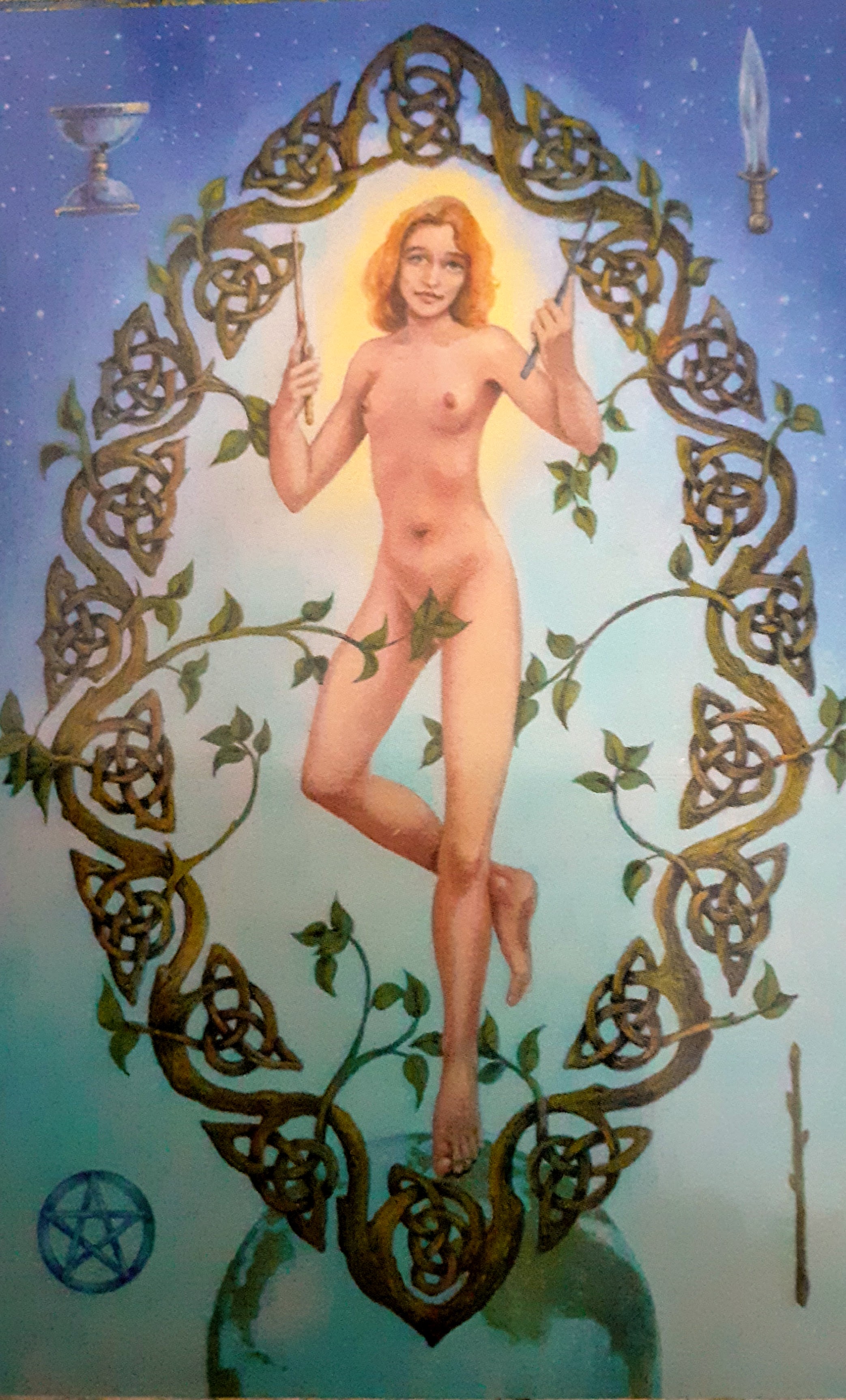
The picture above is the Fool, or innocent, as depicted the The Druidcraft Tarot (1). Trusting their inner knowing, the Fool steps over a cliff. It is a spring dawn, and a new beginning. The major Arcana are a map of the journey, which in essence, here, is seen as a refinement of the soul to the point where union with the divine is a lived experience. This experience is available here, in the world, and so the card indicating the completion of the journey (see picture below) is here called The World.
The mythology of the deck draws on the Welsh Celtic story of Taliesin and Ceridwen as well as the pan-European Arthurian grail quest, and broader Western Mysteries understandings derived from the Hermetic Order of the Golden Dawn. But any individual journey is its own new beginning and its fruits depend of making the journey in real time, and not clinging too tightly to traditional understandings.
In my own spiritual life, I have drawn both on the myth of the journey and another, apparently contradictory myth – that of the eternal moment, the transfigured here-and-now. Again, I find no disparagement in the word myth. This says that non-separation from the divine is a given. There is nowhere to go and nothing to do. Ultimately, there is no ontological difference in being awake to this reality than in being asleep to it. Yet lived experience is transformed by being awake to this reality and living from the awareness.
From a human perspective, coming to this awareness and then living it are, experientially, a journey in themselves. Another way of looking at it would be to say that I am the Fool and the Universe (my preferred term for the final card) at the same time, every day. In this way, I reconcile the myth of the journey with the myth of the now, and draw strength from both.
(1) Philip & Stephanie Carr-Gomm The Druidcraft Tarot: Using the Magic and Wicca and Druidry to Guide Your Life London, UK: Connections, 2004 (Illustrations by Will Worthington)
This morning, 2 February, sunlight streamed into our flat. Soon we realised that warmth was coming in along with the light. There was no need for artifical heating.
This may not yet be spring, by most people’s reckoning. But the day has had a spring- like quality. Elaine and I both felt lifted. For me, it was as if a weight had come off my shoulders: a weight to which I had become acclimatised. I had stopped even noticing it until it was so gloriously removed.
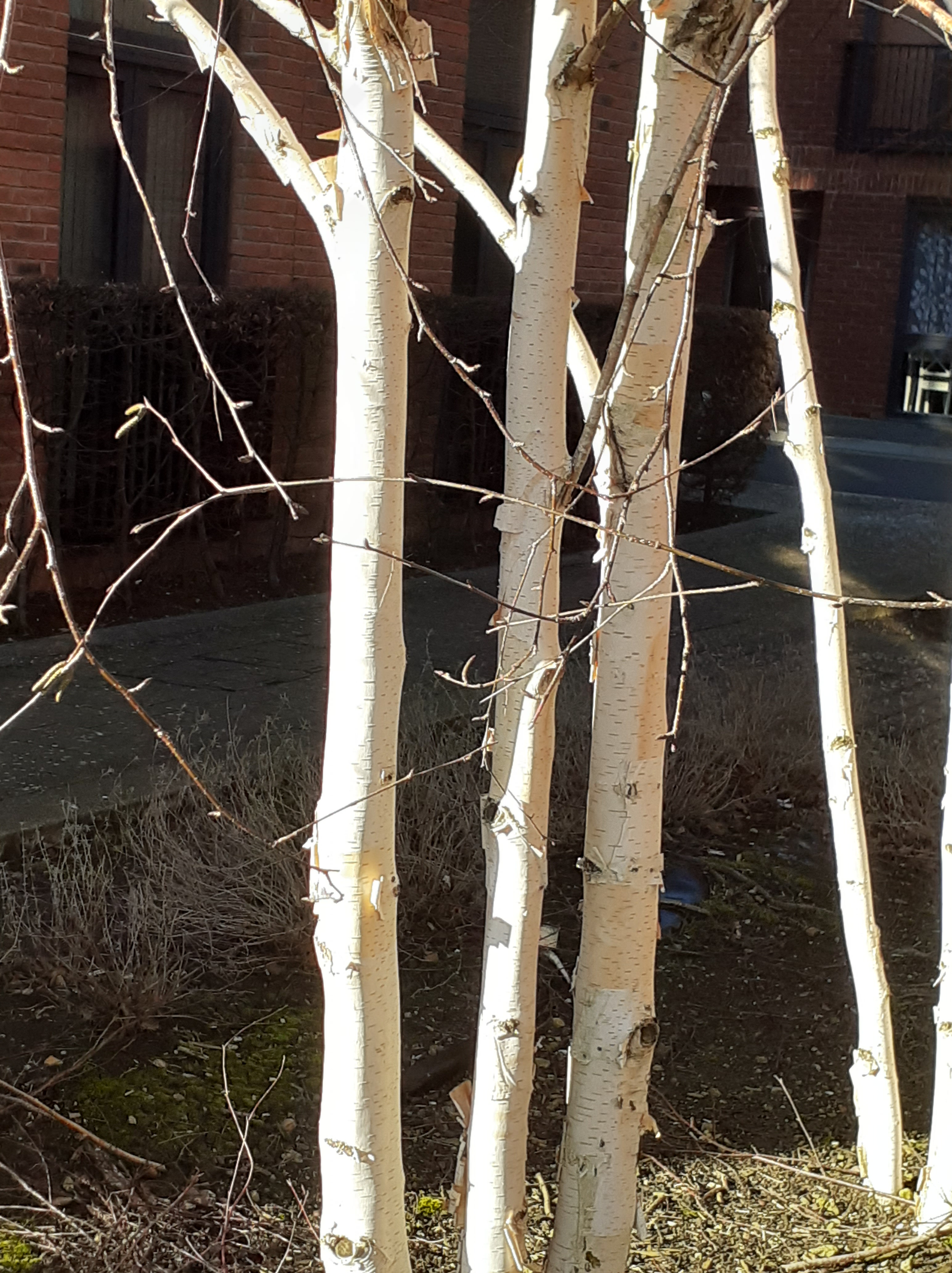
We made two trips out during the day. In the later morning we stayed near home. Elaine walked using her rollater and spent welcome time sitting in the sun. The same sun also shone on our adopted birches. Though it’s not shown in the picture below, the catkins are greener now.
In the afternoon, using the wheelchair, we visited Gloucester docks and sat there until not long before 4 pm. The heat was beginning to drain away by the time we left, and shadows were lengthening. Yet the two pictures below show, respectively, the dazzle of sunlight on water, and a canal barge lifting its solar panels to the sun.
A great day for a festival of lights, and a welcome opportunity for exuberance.









 Contemplative Inquiry