Contemplative Inquiry

This blog is about contemplative inquiry

Tag: Paganism

EVERGREEN OVERVIEW

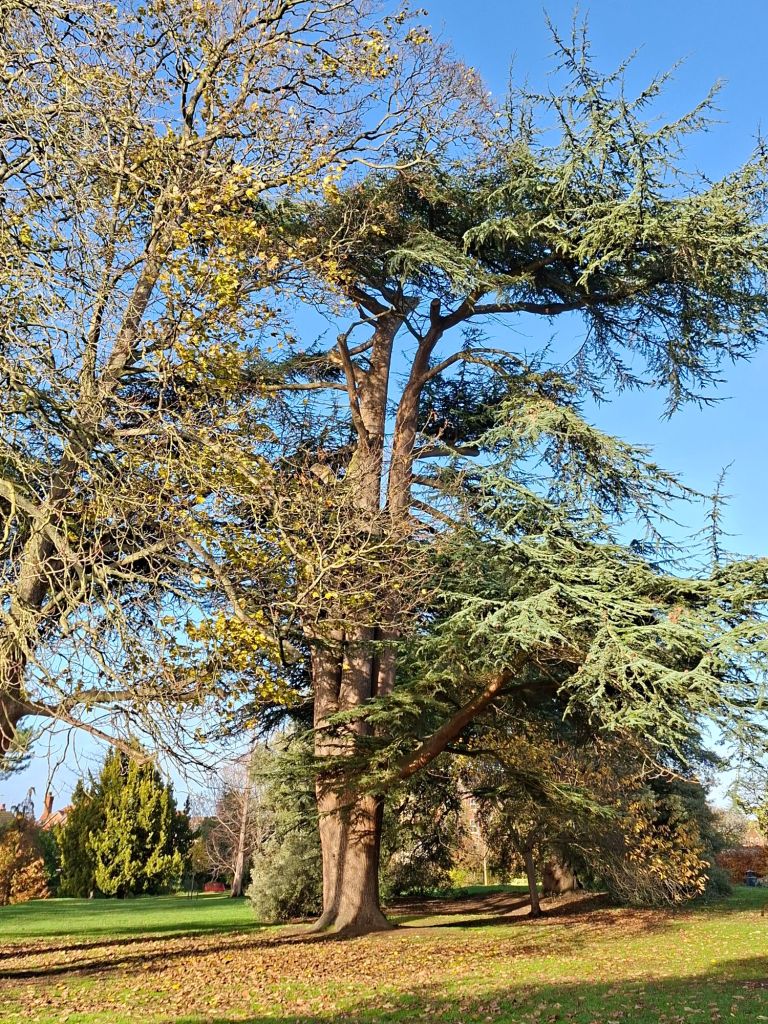
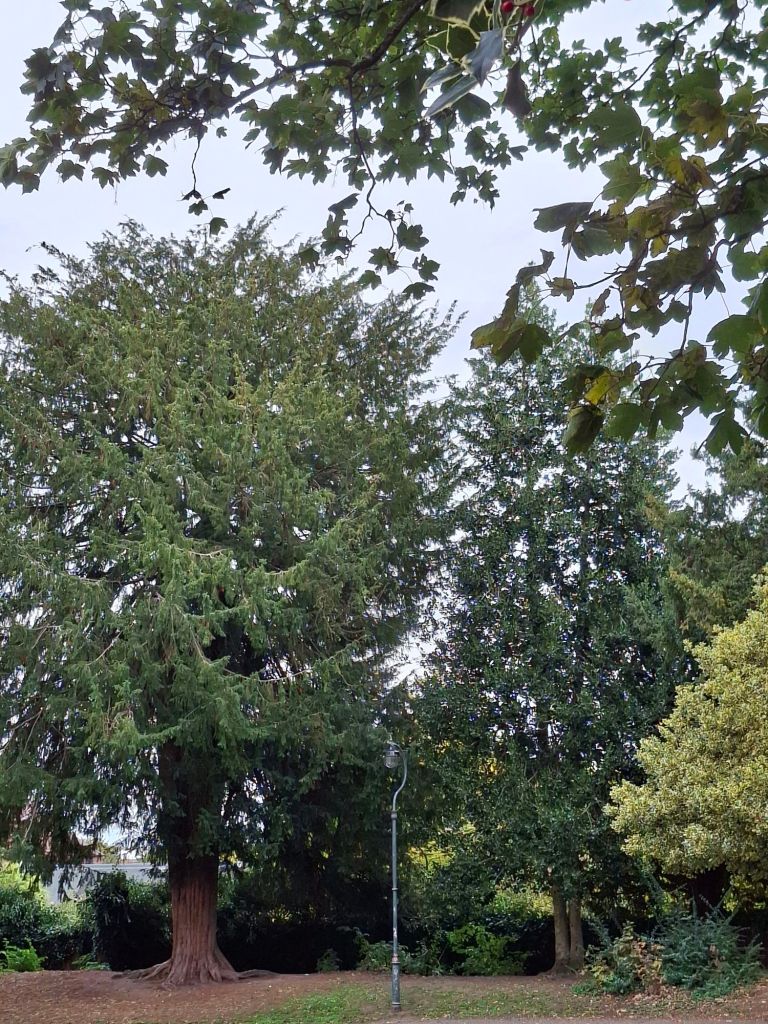
A Scots pine in Hillfield Gardens (1), 28 November, 10.32 am. It stands out both as a tall tree and an evergreen. It asks me to look up and pay attention to it, and beyond it, almost  losing sight of its deciduous neighbour. For me, this representative of the ‘eternal green’ has a commanding presence.

The Scots pine is one of the oldest trees native to Britain. It is also one of the trees associated with ogham lore (2), where the Scots pine is linked to the wisdom of overview. According to The Green Man Tree Oracle, ancient shamans of many traditions would literally climb to the top of a central tent pole or tree and “from this vantage point they could see clearly into the spirits’ inner world and come back with knowledge for the tribe or family they served” (2).

For me as for many people, the end of the calendar year is a time for reflection and taking stock. New year resolutions are a possible modern version of this process, but mine never really worked.  They were overprescriptive and a way of setting myself up to fail.

‘Overview’ asks for a less driven and more contemplative approach, one more connected with Spirit. This is a good reminder as I start to wonder about how I am going to navigate 2026: divining what my contributions and satisfactions might look like as the Wheel continues to turn.

(1) Re Hillfield Gardens, Gloucester, see https://contemplativeinquiry.blog/2024/11/22/

(2) John Matthews and Will Worthington The Green Man Tree Oracle: Ancient Wisdom from the Greenwood London: Connections, 2003

DEEP AUTUMN 2025

“All things ripen and rot that rose up at first,

And so the year runs away in yesterdays many,

And here winter wends again, as by the way of the world it ought,

Until the Michaelmas moon has winters boding brought.” (1)

Even today, deep autumn opens the door to winter. This was even more the case in the North Staffordshire and Derbyshire regions of 14th century England, where Sir Gawain and the Green Knight was written. Even in castles, people were less sheltered from the growing cold and damp than we are. So readers and listeners of the period are reminded that the coming of winter is both natually and divinely ordained.

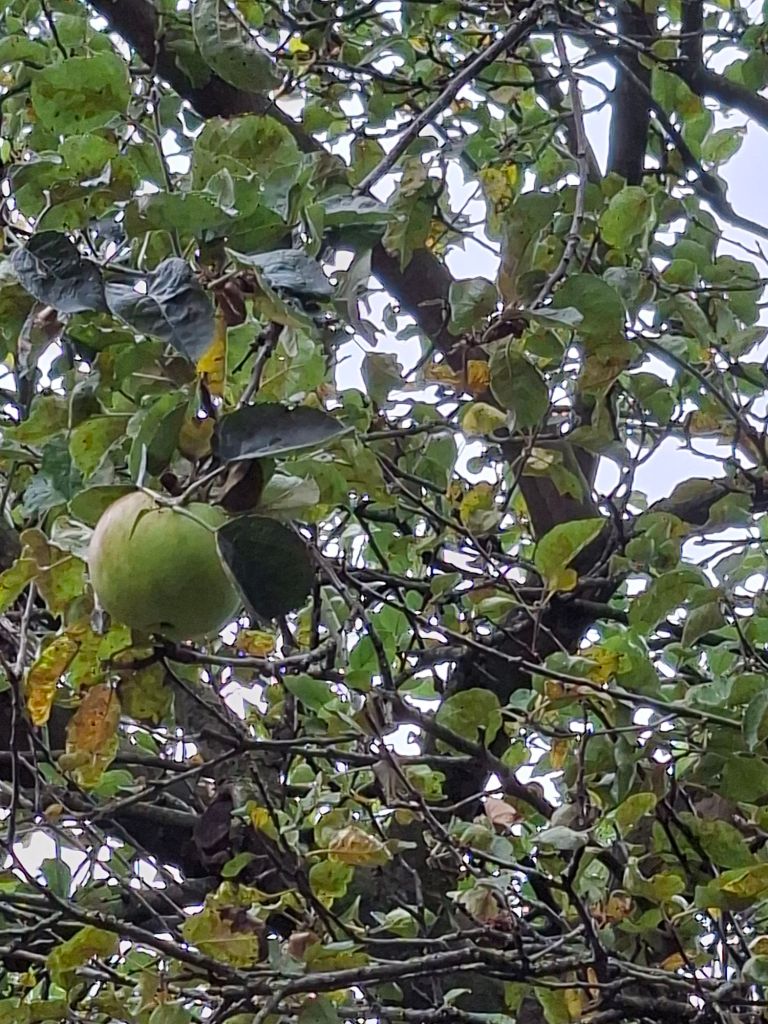
Here and now, the sight of the apple harvest in its later stages (pictured above) seems quite different than in the early ones (2) – less bright, less novel, less shiny. Rotting apples lie on the ground, now fallen outside the wall of  Gloucester Cathedral’s orchard. From Nature’s exuberant perspective, this is all part of the plan.  Waste is built in.

This time draws me further into the declining year. I am in the cathedral’s  grounds, now looking at a yew tree and its associations with death. I’m thinking of the approach of Samhain (aka Halloween/All Hallows) at the turn of the month. Once it marked the 3rd harvest of the year – the blood harvest, where animals were slaughtered in preparation for winter. Now it is more a time to remember our ancestors, and our dead more widely.

Yet the seasonal moment, and the yew, can also be linked to wisdom and transformative change in life. I launched my contemplative inquiry at Samhain 2011. Like many people, I find that this period can be a resonant and creative time.

Below the yew, I have included a section of the cathedral itself. I have old personal associations linking medieval Gothic architecture with the feeling-tone of the declining year. I am also aware that this building is linked to the trees I picture and discuss. Gloucester Cathedral was a monastery when Sir Gawain and the Green Knight was written but many of its features were already in place.

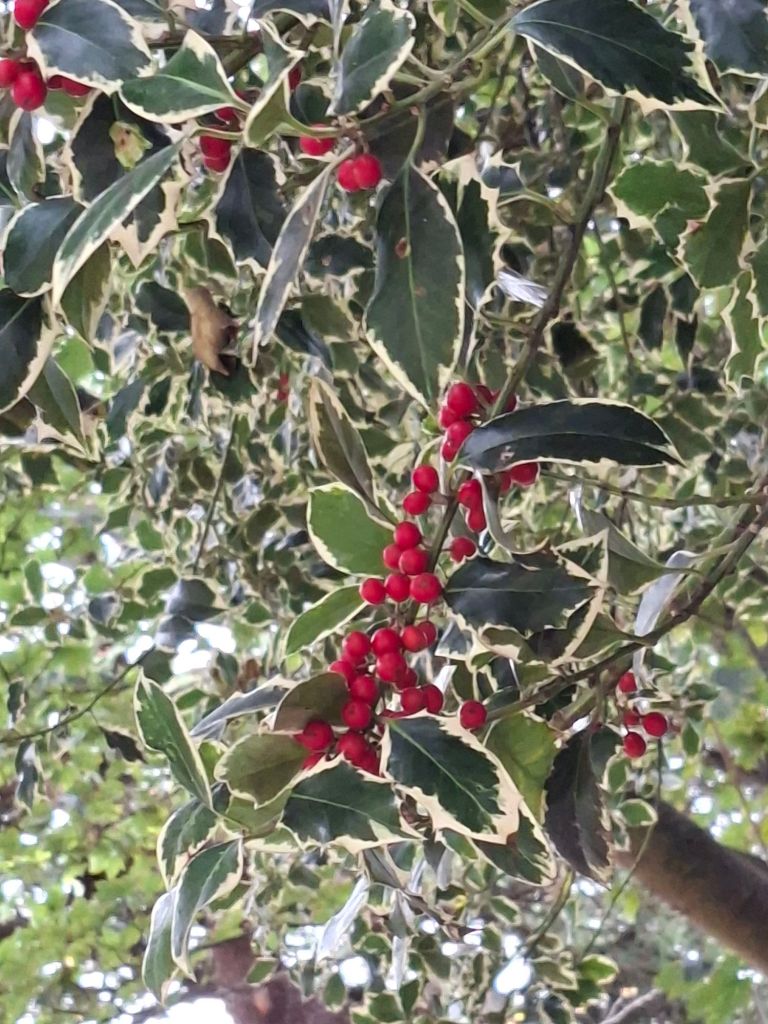
In the same space, I find both holly and ivy, with berries on the holly tree.  I immediately thought of the Christmas carol The Holly and the Ivy. It is an ancient folk carol, which interweaves Christian themes and others that belong with the land. The version which is now popular was collected by Cecil Sharp in 1909 in Gloucestershire from Mary  Clayton.

Many people think that the indigenous Pagan themes are the oldest, and that the central focus here is on the holly. The authors of The Green Man Tree Oracle say: “Holly’s connection with the Green Man is especially strong. In his guise as the Holly King – an ancient giant and symbol of fertility – the Green Man makes a notable appearance in the 14th century poem Gawain and d the Green Knight. Here he takes the form of a fearsome knight, who comes to King Arthur’s court to offer a midwinter challenge, carrying a club of holly and wearing a holly crown (as symbols of his true identity).” This challenge happens every year, where the Green Man/Holly King demands that we encounter him through our dealings with the natural world.

Elaine and I went to the Gloucester Cathedral Close and its surroundings on Saturday afternoon 18 October to outrun an  extended period of gloom, wind and rain. We are now in it, so the lessons of the trees in deep autumn, anticipating the coming of winter, are not lost on us. The dark of the year is on its way.

(1) J.R R. Tolkien (translation of anonymous texts) Sir Gawain and the Green Knight, Pearl, Sir Orfeo New York: Ballantine Books, 1980.

(2) https://contemplativeinquiry.blog/2025/08/22/ (3rd photo)

(3) John Matthews & Will Worthington The Green Man Tree Oracle: Ancient Wisdom from the Greenwood London: Connections, 2003

NUMINOUS IMAGES: SKY TO EARTH

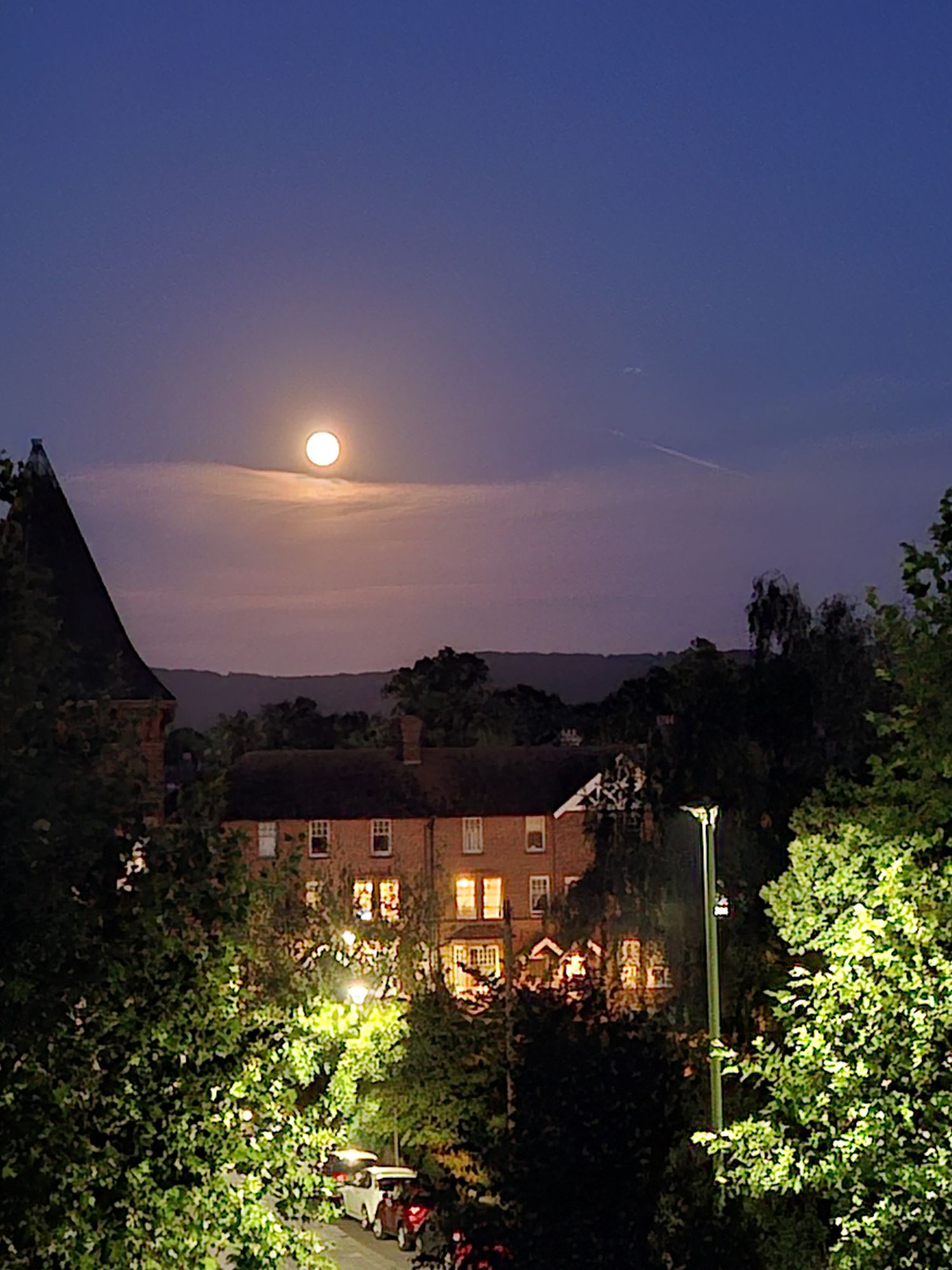
Recent days have been rich in numinous images. Images that for me mark the divinity within our material reality. Above, the recent full moon: clear light at the centre and a blood moon halo suggesting a link with the earth, later to manifest in an eclipse. The sky  is deep violet leaning into indigo. The shaded trees absorb the energy of the sky as well as of the earth. The whole image feels moving and inspiring – an image for contemplation which doesn’t need esoteric analysis. Its simple presence is enough.

The same is true for the images that follow. Immediately below is a day time sky image. The day was frequently stormy, with high winds and hard rain.  Dark clouds testify to moments of lightning, loud thunder and tumultuous rain. But the image itself records a period of respite. In a gap between the clouds, blue sky can be seen and the light pours strongly in.

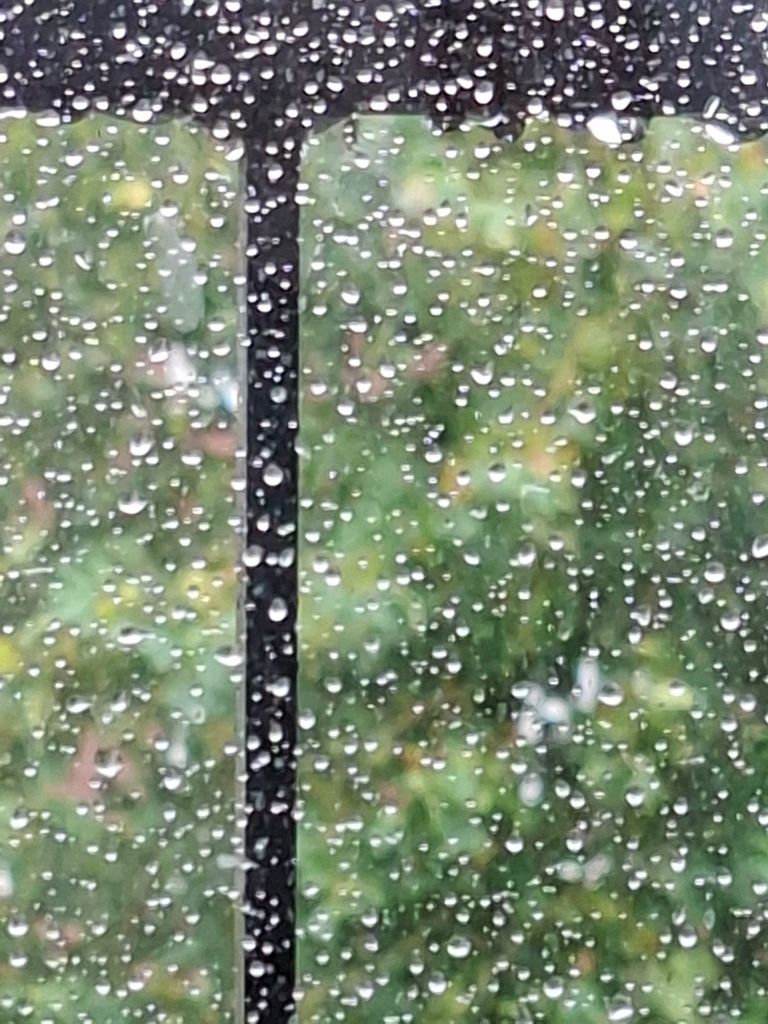
Rain on a window pane is central to the next image. The rain drops are the primary subject. What’s on the other side (a balcony garden) isn’t entirely clear in the picture and doesn’t need to be. I experience a great sense of cleansing and refreshment here – the water of life as it falls from the sky, each drop itself an ocean. I look out from my interior space, two stories above the ground floor, and connect with this bounty.

The two remaining images come from  a recent walk on Alney Island – outdoors and on normally marshy ground. The first is a woodland space with its fresh entangled green. The ground still looks drier than it sometimes does, yet I  sense health and recovery here. In the second image, I see a re-greened path with benignly rioting verges. Seeing what I see, I follow the green path.

MOON

This August moon

Full and Risen

Transforms an urban scene.

(Picture taken at 9.45 pm Friday 8 August.)

HARVESTING INSIGHT

Noticing a single corn stalk under our neighbouring birch trees, I wonder whether the seed simply blew in or was planted by an unknown hand. If the latter, what was their intention? I realise that I will never know.

I do know how much I enjoy its presence in this space at this time. I experience it as a miracle inviting gratitude and it has marked the seasonal moment for me, this first harvest of a now declining year.

With increasing clarity I understand that I do not work well with personified and individualised images of the divine. Something seems subtly off, as if I am failing to sound my own authentic note in the Great Song of the world.

I believe that we are given different gifts in our encounters with the Cosmos, leading to legitimately different understandings. When I lean in to the notion of divine personality – even when using the term ‘Spirit’ in that sense – I am not fully living my own truth. I subtly disempower myself and weaken my connection.

For in my universe, when I rest in my own clarity, there is no separation between nature (including culture) and spirit. In the awkward activity of identification and labelling, I answer to terms like animist, panentheist and nondualist.

These words are approximations, with the power to be distracting and slightly depressing. I can find words that point to my experience well enough. But the explanatory words, the more formal and generalised terms, feel clumsy. There’s a necessary level of unknowing that these isms don’t recognise.

When consciously living in spirit, I am neither alone, as a single human person, nor am I with another being. I am simply in a different dimension of embodied awareness, supported and empowered by the bubbling source from which I spring. For me, Nature is more than the ‘nature’ of dualist spiritualities and of the scientific humanism that grew out of them.

As I harvest the learning, or relearning, of this lesson, I renew my commitment to practice and path, once again revising the beginning and end of the modern Druid’s prayer (1). I move from from ‘Grant, Spirit your protection, and in protection, strength … ‘ to ‘In spirit I find protection, and in protection, strength …’. I end with ‘and in the love of all existences, the love of this radiant Cosmos’ rather than ‘the love of God/Goddess/Spirit and all goodness’. These small changes formalise and anchor my understanding.  For me, they are an important affirmation, illuminating my path.

(1) Traditionally, this prayer runs:

Grant O God/Goddess/Spirit, your protection,

And in protection, strength,

And in strength, understanding,

And in understanding, knowledge,

And in knowledge, the knowledge of justice

And in the knowledge of justice, the love of it

And in the love of it, the love of all existences

And in the love of all existences, the love of God/Goddess/Spirit and all goodness”.

NB Providing the options of God/Goddess/Spirit is I think an OBOD (Order of Bards, Ovates and Druids) innovation. The original version, from the late 18th century, simply said ‘God’. Some modern Druids say ‘God and Goddess’.

FIRE ON WATER

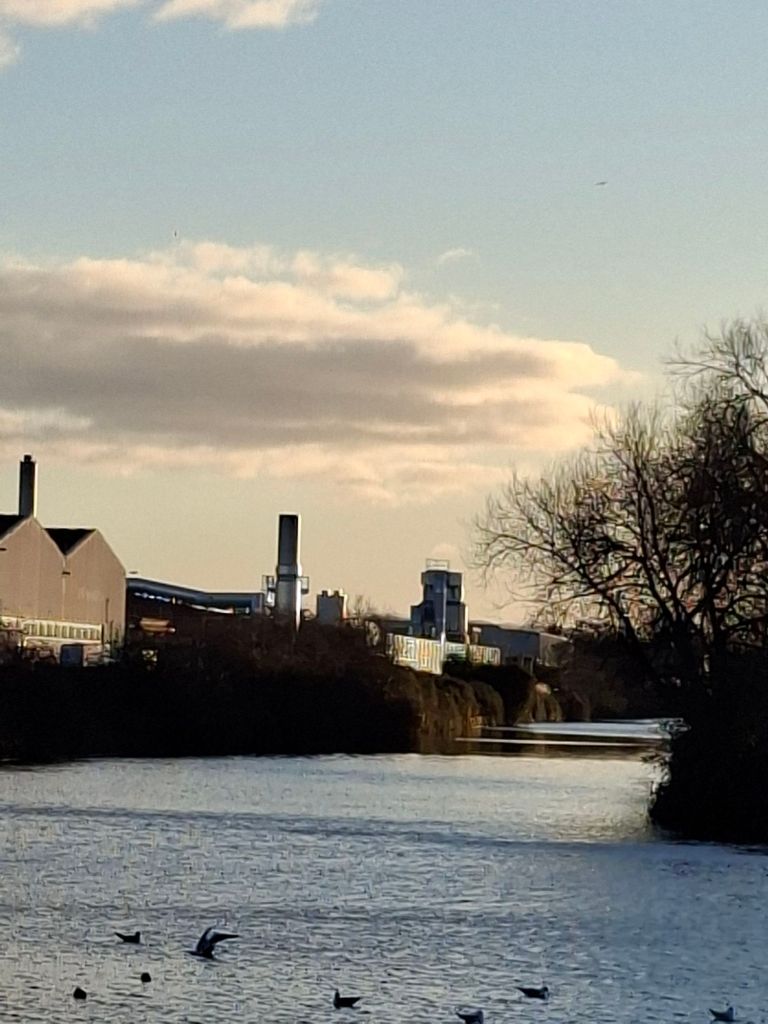
8pm, 25 July. Alchemy on the canal. The evening sun, low and potent in the sky, strikes the flowing water. At points the union of the two creates a molten liquid light, clearly defined in the still image above.

By contrast, the short video below reveals light and water together in movement. Flow, and patterns in the flow, draw my attention. They show me an energised harmony, becoming more than the sum of their parts.

I notice also that when I play the video without sound, I find it contemplative and reflective. When I play it with sound, the birds immerse me in living nature. I value both experiences.

I usually feel a transition into late summer about now, a little before Lammas/Lughnasadh. The days here are still long, though now clearly not as long as they have been. It’s a warm time, often the warmest of the year. Blackberries have appeared on their bushes, a foretaste of autumnal fruit bearing.

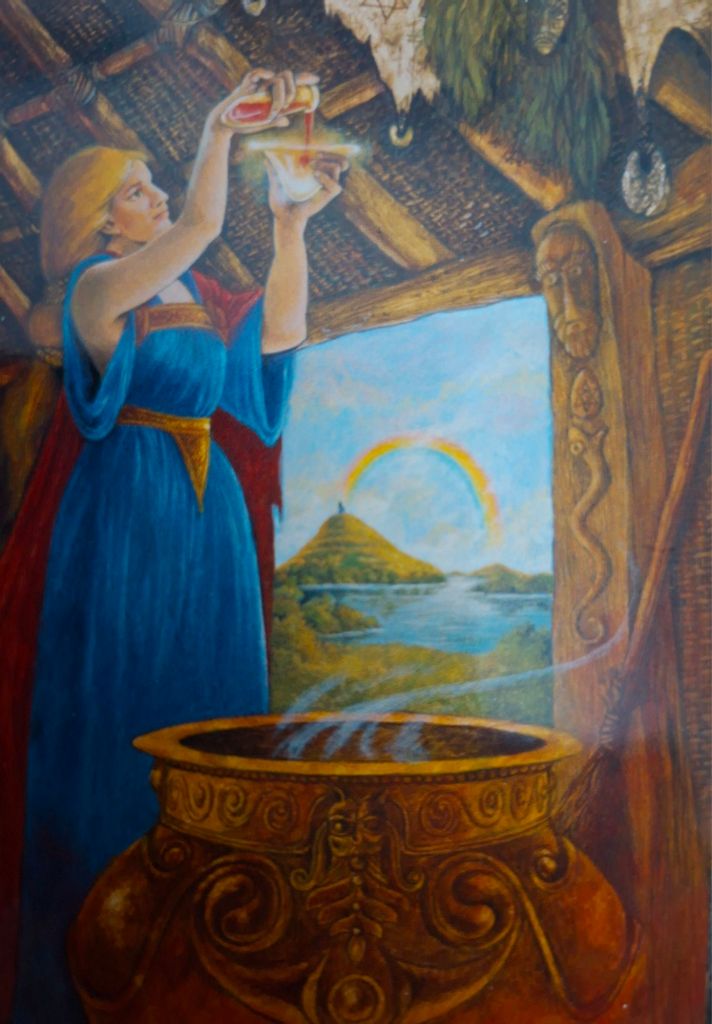
I am reminded, too, of the Fferyllt, the Druid alchemist in OBOD tradition. She is a woman of power and a devotee of Brigid. In the Druidcraft Tarot (1) she is represented by Trump XIV, standing for fluency between worlds, creativity, harmony, peace, alchemy and magic. My canal side encounter with fire on water nudged my imagination towards this figure, who somehow completed it.

(1) Philip and Stephanie Carr-Gomm The DruidCraft Tarot: Use the Magic of Wicca and Druidry to Guide Your Life London: Connections, 2004. Illustrated by Will Worthington.

WALKING IN ARNOS VALE CEMETERY

Above, through the trees, we can see one of the chapels belonging to the Arnos Vale Cemetery in Bristol, England. It was built as a  garden cemetery extending over 45 acres in 1839, as the city’s old parish graveyards were becoming overcrowded and a health hazard. The new venture was designed to be spacious, with sunlight, fresh air, trees and shrubs.

It worked well for nearly 150 years. But in 1987 the owners announced their intention to clear a large section for ‘development’. An Association for the Preservation of Arnos Vale Cemetery swiftly sprang up. It fought successfully for a safe future for the site, gaining the support of the Bristol City Council, Bristol citizens and many people worldwide.

Now, as the Friends of Arnos vale, they continue to manage what they describe as “a hillside Victorian cemetery and conservation park, with heritage and wild life tours, plus a café”. It takes a lot of effort and activity to keep this precious space going, yet on my occasional visits I still find it tranquil and unspoilt.

For me it is a magical place, largely because the graves are being allowed to sink back into the land. There is something primal about the cross above, rough hewn, almost equal armed, and decorated with foliage. Still a cemetery, Arnos Vale has become something wilder than a garden. At this time of year, the paths become green tunnels, deftly concealing their destinations.

Yesterday I walked in Arnos Vale with a friend, and our direction of travel required a descent towards the main buildings. The steps we went down were not as overgrown as the ones below, but l found them challenging enough. The imagery and effortful activity of descent give me the feeling of a deep earth and underworld journey, and the sense of enchantment that goes with it.

Towards the bottom of the slope, my recognition of a re-enchanted space in a largely disenchanted world is further strengthened. A cross again. Evergreen ivy growing up it. Vivid summer blooms behind and in front. Tall wild grass. Trees in the background. Green abundance enhancing the gravestone rather than diminishing it. Life and death companioning each other without drama or fuss. Contemplating this natural harmony, I feel heartened and refreshed.

NOTICING TWILIGHT

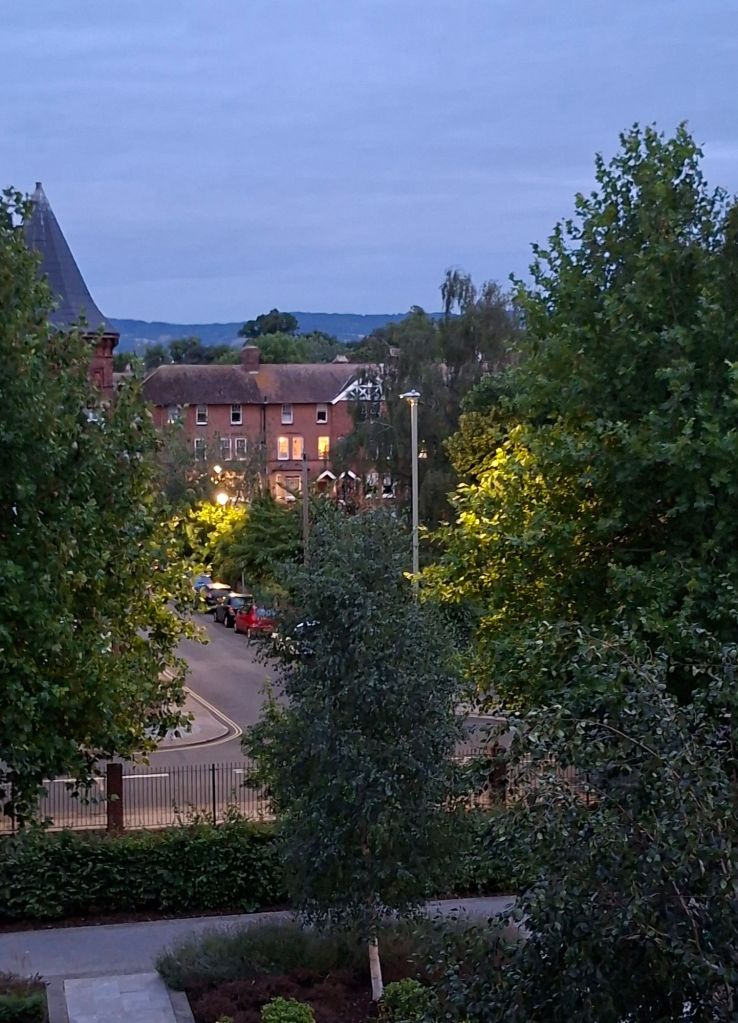
I see change in a familiar scene. Looking out from our apartment I contemplate a gentle twilight. It is modified by artificial light. During the recent heatwave I somehow had little consciousness of this moment in the day. But now, with lower temperatures and rain, my world is a tiny bit different. I discover myself in a twilit scene, and a twilight frame of mind, a little after sunset.

Although this sunset is only ten minutes earlier than the sunsets of the Solstice period, I feel, deep within me, the turning of the Wheel. It’s as if I am leaning in to the spirit of late summer, and the first of the harvest festivals that define the waning year. We are not there yet, though Lammas is but a fortnight away. I am simply becoming aware of a coming seasonal shift.

I am also aware of wanting to savour the sense of a change without wanting to hurry it on. Above, an image of trees, houses, hills and sky anchors me into a specific place and time. It’s a ‘now’ experience rather than an anticipation. Below, an image of birch leaves back-lit by electric light holds me in an appreciation of the pattern they make. I am held by the power of a simple pleasure.

BRIGHT MORNING

Early this morning I sat in contemplation of some geraniums in pots, for me a good Druid focus of attention. Purchased and tended by my wife Elaine, who is now mobile and active once more, they shone in the early morning light. This was about 6.45 am, some two hours after dawn, on 19 June. It is two days before the Solstice. Where did the time go?

I notice how my eye is drawn to plants and light effects. I find them nourishing and enabling. This has been a theme in my life for awhile. It is though sunlight and the plant world offer hope and reassurance in a bleak, shocking and disorienting historical moment. Life insists on flourishing. I can insist on flourishing too. I am not distracted from the wider world but resourced to engage with it.

On a convenient lamp post, the seagull seeks an opportunity. This midsummer world is alive.

PLANT POWER IN A CATHEDRAL CLOSE

The garden in Gloucester Cathedral’s close is currently a magnificent riot. I was on a walk there with Elaine and we particularly noticed two powerful seeming plants that we couldn’t identify.  We simply sat with them, unnamed, and bathed in their energy. It was a glorious 1 June, the first day of our official meteorological summer, and one to savour and enjoy.  Only later did we do any research.

We are fairly sure that the plant above is yellow archangel and the plant below, looking like a giant thistle, is cardoon (canara cardunculus) aka prickly artichoke. Friendly feedback from readers on these identifications is welcome. If we are right both plants have long been recognised as sources of power and healing.

In our older traditions, yellow archangel was a symbol of harmony between flora and fauna. A custodian of wildlife, it fostered a bond that transcends mere survival. Herbalists still use this plant to relieve gout, sciatica and other pains of the joints and sinews. It has also been used to draw out splinters and thorns, clean and heal persistent sores, and to dissolve tumours. Yellow archangel can be used as food, in salads, soups and teas. In the wheel of our year, yellow archangel flowers  fully after the bluebells die away.

Cardoon is also a plant of power. Traditionally associated with Mars, it has the virtues of strength, protection and abundance. It is has been credited with the power to ward off evil spirits. It is also connected to ideas of nourishment, the riches of nature and, latterly, sustainable gardening. The plant can grow to 2.5 metres in height. Its thick stalks are used as a vegetable. Its full flowering is in late summer and autumn, with thistle-like purple flowers.

These plants, in this garden, are a celebration of values as well as of nature and healing. I see our world through the lens of Modern Druidry and Paganism. The custodians of this space will have a Christian lens. I am happy to note that in this context they seem to be much the same. When in this space, I feel that I am in a beautiful and energising oasis in the city.

Earth Eclectic

music that celebrates Earth and speaks to the heart

Sarah Fuhro Star-Flower Alchemy

Follow the Moon's Cycle

Muddy Feet

Meeting nature on nature's terms

Rosher.Net

A little bit of Mark Rosher in South Gloucestershire, England

Becoming Part of the Land

A monastic polytheist's and animist’s journal

selkiewife

Selkie Writing…

Charlotte Rodgers

Images and words set against a backdrop of outsider art.

Prof Jem Bendell

living with metacrisis and collapse

Towint

The pagan path. The Old Ways In New Times

The Druids Garden

Spiritual journeys in tending the living earth, permaculture, and nature-inspired arts

The Blog of Baphomet

a magickal dialogue between nature and culture

This Simple Life

The gentle art of living with less

Musings of a Scottish Hearth Druid and Heathen

Thoughts about living, loving and worshiping as an autistic Hearth Druid and Heathen. One woman's journey.

Wheel of the Year Blog

An place to read and share stories about the celtic seasonal festivals

Walking the Druid Path

Just another WordPress.com site

anima monday

Exploring our connection to the wider world

Grounded Space Focusing

Become more grounded and spacious with yourself and others, through your own body’s wisdom

The Earthbound Report

Good lives on our one planet

Hopeless Vendetta

News for the residents of Hopeless, Maine